TBI – Survivors, Caregivers, Family, and Friends

Posts tagged ‘Brain Awareness’

Survivors SPEAK OUT! . . . . . . . Carole Starr

Survivors SPEAK OUT! Carole Starr

presented

by

Donna O’Donnell Figurski
 

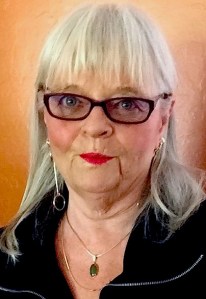
Carole Starr Survivor Speaker

Carole Starr – Brain Injury Survivor – Author of “To Root and to Rise”

1. What is your name? (last name optional)

Carole Starr

2. Where do you live? (city and/or state and/or country) Email (optional)

Maine, USA

3. On what date did you have your brain injury? At what age?

I had my brain injury on July 6, 1999. I was 32 years old.

4. How did your brain injury occur?

I was in a car accident. My vehicle was broadsided on the driver’s side by someone going about 50 mph.

5. When did you (or someone) first realize you had a problem?

My brain injury was diagnosed about six weeks after my accident. It was the physical therapist I saw for the whiplash who realized that I also had a brain injury. It became apparent to me when I tried to return to my regular life and struggled with tasks that used to be easy.

6. What kind of emergency treatment, if any, did you have?

After my accident, I was transported by ambulance to the emergency room. They diagnosed me with severe whiplash and other soft tissue injury. The signs of the brain injury were there, but they were missed.

7. Were you in a coma? If so, how long?

I was not in a coma.

8. Did you do rehab? What kind of rehab (i.e., inpatient or outpatient and occupational and/or physical and/or speech and/or other)? How long were you in rehab?

I didn’t receive any brain injury rehab until nearly a year after my injury. That was the worst year of my life, as I tried and failed numerous times to return to my old life. A physiatrist referred me to outpatient brain injury rehab. I’ve had physical, occupational, speech, and recreation therapies and counseling. I’ve also found help from alternative therapies, including cranial osteopathy, neuro-optometry, and homeopathy. I received rehab therapies on and off for several years. I still see several medical professionals, and I continue to make slow progress, even after more than eighteen years.

9. What problems or disabilities, if any, resulted from your brain injury
(e.g., balance, perception, personality, etc.)?

tired-womanI am plagued by extreme mental fatigue, sound and light sensitivities, balance issues, memory loss, visual midline shift, and difficulties with decision-making and problem-solving.

10, How has your life changed? Is it better? Is it worse?

My life changed dramatically after my brain injury. I had to give up my teaching career and my classical music hobby. I struggled to manage everyday-life tasks. I felt dependent on family and friends. For many years, I grieved the loss of my old life. I hated the new me. It was a long process to work through that grief and start to build a new life. I try really hard not to judge whether my life is better or worse. It’s just different. That helps me with the acceptance process.

11. What do you miss the most from your pre-brain-injury life?

I miss performing as a musician. I miss being able to go a whole day without needing to rest. I miss being able to trust my brain to do what I want it to.

12. What do you enjoy most in your post-brain-injury life?

Brain injury gave me the passion for a cause that was missing in my old life. This has become my life’s work. I like being able to use my experience to help other brain injury survivors. I do that through my book (To Root & To Rise: Accepting Brain Injury), my keynotes at brain injury conferences, and the volunteer group I lead (Brain Injury Voices).

Carole Starr & Book To Root and to Rise

Carole Starr – Brain Injury Survivor

13. What do you like least about your brain injury?

I dislike having to rest every day and missing out on activities I’d like to do. I never know when too much sound, light, motion, talking, or thinking is going to overwhelm my brain and require hours or days of rest to recover from.

14. Has anything helped you to accept your brain injury?

For a long time, I didn’t think I could ever accept my brain injury. It was a long process. Some things that helped me were support-groups, reading books by other survivors, counseling, journaling, crafts, learning to laugh at myself, finding silver linings, and focusing on what I’m thankful for.

15. Has your injury affected your home life and relationships and, if so, how?

For a long time, I felt like I was a burden – the one who always needed help. I had to learn to accept help from my family and friends and not resist their advice. I can now manage taking care of my home, but everything requires strategies. 67-Help_me

16. Has your social life been altered or changed and, if so, how?

My life is much smaller. My daily activities are short and quiet. If I want to do something bigger, I know that the price will be days on the couch recovering my mental energy.

17. Who is your main caregiver? Do you understand what it takes to be a caregiver?

I’ve been able to live on my own. Family, friends, and medical professionals have helped me learn strategies to take care of myself.

18. What are your plans? What do you expect/hope to be doing ten years from now?

kids-hand-writing-clip-art-hand_with_pencil_5CI plan to continue writing and speaking about brain injury. I want to use my experience to make a difference. I’ve spoken at brain injury conferences and events in six states so far. I’d like to speak in all fifty! I’d also like to help other survivors create education/advocacy groups like Brain Injury Voices in other states.

19. Are you able to provide a helpful hint that may have taken you a long time to learn, but which you wished you had known earlier? If so, please state what it is to potentially help other survivors with your specific kind of brain injury.

Find an activity that the new you can enjoy and do successfully. Start small, find success and build on it. Over time, small successes can grow into large achievements and lead you in directions you never imagined.

20. What advice would you offer to other brain-injury survivors? Do you have any other comments that you would like to add?

Find ways to connect with other survivors – either through an in-person support-group or online. Interacting with others who “get it” is invaluable.


Know that progress doesn’t stop after the first year or two after brain injury. Our brains are always healing. We may never be able to return to our old lives, but we can continue to grow into this new one.

Please feel free to contact me, either through StarrSpeakerAuthor.com or BrainInjuryVoices.org.

Brain Injury Voices Logo

If you would like to be a part of the SPEAK OUT! project, please go to TBI SPEAK OUT! Survivors Interview Questionnaire for a copy of the questions and the release form.

(Clip Art compliments of Bing.)

As I say after each post: Please leave a comment by clicking the blue words “Leave a Commentanim0014-1_e0-1 below this post.

Feel free to follow my blog. Click on “Follow” on the upper right sidebar.

If you like my blog, share it with your friends. It’s easy! Click the “Share” buttons below.

If you don’t like my blog, “Share” it with your enemies. I don’t care!

Feel free to “Like” my post.

New NEWS: Countdown to Prisoners without Bars: A Caregiver’s Tale

Can’t wait for the release of my book, Prisoners without Bars: A Caregiver’s Tale


04.29.18

184 days to the release of Prisoners without Bars: A Caregiver’s Tale

4,440 hours to the release of Prisoners without Bars: A Caregiver’s Tale

266,400 minutes to the release of Prisoners without Bars: A Caregiver’s Tale

15,984,000 seconds to the release of Prisoners without Bars: A Caregiver’s Tale

But–WHO’S Counting?

Me! Me! Me! I am!

Check out my new website:  donnafigurski.com


SURVIVORS SPEAK OUT! Michelle Bartlett

Survivors SPEAK OUT!  Michelle Bartlett

presented

by

Donna O’Donnell Figurski


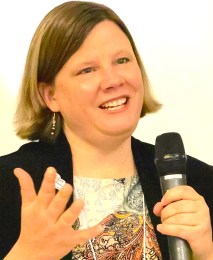
Michelle Bartlett 2

Michelle Bartlett – Survivor of Brain Injury

1. What is your name? (last name optional)

Michelle Bartlett

2. Where do you live? (city and/or state and/or country) Email (optional)

St. Stephen, New Brunswick, Canada

3. On what date did you have your brain injury? At what age?

I had my brain injury in March of 2004 at age 36.

4. How did your brain injury occur?

Two days after open heart surgery, I had a severe anoxic brain injury.

5. When did you (or someone) first realize you had a problem?

It was known immediately, as I was still in hospital.

6. What kind of emergency treatment, if any, did you have?

I have been told the doctors did CPR and other life-support methods for hours.

7. Were you in a coma? If so, how long?

Yes. I was in a coma for ten to twelve days.

8. Did you do rehab? What kind of rehab (i.e., inpatient or outpatient and occupational and/or physical and/or speech and/or other)? How long were you in rehab?

I did inpatient rehab for three weeks and outpatient rehab for over a year. I had speech, occupational, and physical therapies.

9. What problems or disabilities, if any, resulted from your brain injury
(e.g., balance, perception, personality, etc.)?

I have problems with balance, executive functions, and memory. I deal with fatigue and personality change.

10. How has your life changed? Is it better? Is it worse?

My life now isn’t what I planned it would be. It is what it should be.

11. What do you miss the most from your pre-brain-injury life?

Working

12. What do you enjoy most in your post-brain-injury life?

I enjoy helping others.

13. What do you like least about your brain injury?sleeping_on_job_5

The fatigue

14. Has anything helped you to accept your brain injury?

It helped to remember how accepting my grandfather was during times of stress.

15. Has your injury affected your home life and relationships and, if so, how?

Yes. It is difficult for me to express myself, and it is difficult for people to understand.

16. Has your social life been altered or changed and, if so, how?

Yes. Before my brain injury, I would never have had the confidence to do any public speaking. Now I have spoken at two national brain injury conferences. I also have numerous newspaper articles and radio interviews in Canada.

17. Who is your main caregiver? Do you understand what it takes to be a caregiver?

I’m pretty much independent now.

18. What are your plans?

I will continue to cherish my second chance.

What do you expect/hope to be doing ten years from now?

I intend to continue my advocating/support and education work in Canada, focusing on the east coast.canadian-maple-leaf-clip-art-42678

19. Are you able to provide a helpful hint that may have taken you a long time to learn, but which you wished you had known earlier? If so, please state what it is to potentially help other survivors with your specific kind of brain injury.

Patience can be your best and worst enemy.

Michelle Bartlett Survivor 040318

Michelle Bartlett – Brain Injury Survivor

20. What advice would you offer to other brain-injury survivors? Do you have any other comments that you would like to add?

Life is hard, no doubt about it, BUT always remember you are NOT alone. There is always someone else hiding in the shadows or around a corner who has a brain injury you may not know about.


If you would like to be a part of the SPEAK OUT! project, please go to TBI SPEAK OUT! Survivors Interview Questionnaire for a copy of the questions and the release form.

(Clip Art compliments of Bing.)

As I say after each post: Please leave a comment by clicking the blue words “Leave a Commentanim0014-1_e0-1 below this post.

Feel free to follow my blog. Click on “Follow” on the upper right sidebar.

If you like my blog, share it with your friends. It’s easy! Click the “Share” buttons below.

If you don’t like my blog, “Share” it with your enemies. I don’t care!

Feel free to “Like” my post.
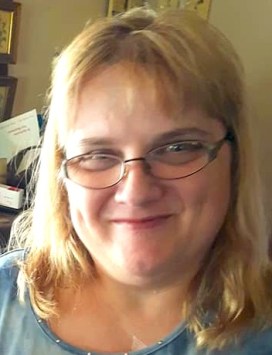
Survivors SPEAK OUT! Christine Durant

Survivors SPEAK OUT!  Christine Durant

presented

by

Donna O’Donnell Figurski


28722393_1570405716328305_1310268133_n1. What is your name? (last name optional)

Christine Durant

2. Where do you live? (city and/or state and/or country) Email (optional)

Connecticut, USA

3. On what date did you have your brain injury? At what age?

I was 21.

4. How did your brain injury occur?

Medical neglect

5. When did you (or someone) first realize you had a problem?

I did when I was 13.

28829269_1570406372994906_1587925987_n

Christine Durant – Brain Injury Survivor

6. What kind of emergency treatment, if any, did you have?

Brain surgery

7. Were you in a coma? If so, how long?

No coma

8. Did you do rehab?

Yes

What kind of rehab (i.e., inpatient or outpatient and occupational and/or physical and/or speech and/or other)? How long were you in rehab?

I went to inpatient rehab for a week or so.

28740893_1570406139661596_1150992867_n

Christine Durant – Brain Injury Survivor

9. What problems or disabilities, if any, resulted from your brain injury
(e.g., balance, perception, personality, etc.)?

I have balance and visual memory issues and some difficulty with visual identification. I had a LARGE personality change that included explosive issues and lack of impulse control. I also had double vision.

10. How has your life changed? Is it better? Is it worse?

The medical neglect caused excruciating neurological pain, but it stopped with my first brain surgery. I was a diagnostic educator. My issues made me better at what I dith-2d because I finished my undergraduate work like this and did all four of my graduate degrees with strategies I developed for myself. I believe I am better off.

11. What do you miss the most from your pre-brain-injury life?

Energy

12. What do you enjoy most in your post-brain-injury life?

My ability to see things differently than most folks

13. What do you like least about your brain injury?

Lack of energy and visual memory issues

14. Has anything helped you to accept your brain injury?

28741255_1570405966328280_1345947392_n

Christine Durant – Brain Injury Survivor and partner.

Meeting my wife and having a 25-year relationship … all post TBI

15. Has your injury affected your home life and relationships and, if so, how?

I am more sensitive to other people’s moods now. I can become what they are feeling.

16. Has your social life been altered or changed and, if so, how?

Everyone who was my friend at that point is not a friend now. However, I chose better after my recent brain surgery because they all helped us through it.

17. Who is your main caregiver? Do you understand what it takes to be a caregiver?

I don’t really have a caregiver. I have a “care-partner.” We had an accident together twenty years ago. Someone was late for lunch and went over the yellow line – into us head-on. We help each other as life necessitates.

18. What are your plans? What do you expect/hope to be doing ten years from now?

I would like to travel on the money from the accident while we still can. In ten years, I will be retirement age!Travel

19. Are you able to provide a helpful hint that may have taken you a long time to learn, but which you wished you had known earlier? If so, please state what it is to potentially help other survivors with your specific kind of brain injury.

Know that you will adjust to your new personality. Find life-giving, happy people to get you there. I went home to my mother at 21. She was always an angry woman. I didn’t realize what a toll that was taking on me until I met my sweet, wonderful, happy wife.

28829065_1570406592994884_447684030_n-1

Christine Durant – Brain Injury Survivor & partner

20. What advice would you offer to other brain-injury survivors? Do you have any other comments that you would like to add?

Give it time. Don’t be hard on yourself. Find a passion that you are able to do within the confines of your new body. My wife has a broken foot from the accident that can’t be fixed. She used to paint theatrical scenery for Broadway. She can’t do that from a wheelchair. So, she discovered she has a passion for pottery.


If you would like to be a part of the SPEAK OUT! project, please go to TBI SPEAK OUT! Survivors Interview Questionnaire for a copy of the questions and the release form.

(Clip Art compliments of Bing.)

As I say after each post: Please leave a comment by clicking the blue words “Leave a Commentanim0014-1_e0-1 below this post.

Feel free to follow my blog. Click on “Follow” on the upper right sidebar.

If you like my blog, share it with your friends. It’s easy! Click the “Share” buttons below.

If you don’t like my blog, “Share” it with your enemies. I don’t care!

Feel free to “Like” my post.

Caregivers SPEAK OUT! . . . Pattie Welek Hall . . . . . . . . (caregiver for her son)

Caregivers SPEAK OUT!

Pattie Welek Hall  (caregiver for her son)

presented by

Donna O’Donnell Figurski


Pattie Welek-Hall 3

Pattie Welek Hall (caregiver for son) Author of “A Mother’s Dance”


1. What is your name? (last name optional)

Pattie Welek Hall

2. Where do you live? (city and/or state and/or country) Email? (optional)

Summerville, South Carolina, USA     pattie@pattiewelekhall.com

3. What is the brain-injury survivor’s relationship to you?

He’s my son.

How old was the survivor when he/she had the brain injury?

19 years old

What caused your survivor’s brain injury?

Motorcycle accident

4. On what date did you begin care for your brain-injury survivor? 

MotorcycleOctober 6, 2002

Were you the main caregiver?

Yes

Are you now?

We live in different states now, but I’d have to say that emotionally I am his main caregiver.

How old were you when you began care?

56

5. Were you caring for anyone else at that time (e.g., children, parents, etc.)?

I was in the process of finalizing a divorce and also raising my other two children, Annie (freshman in college) and Bo (junior in college).

6. Were you employed at the time of your survivor’s brain injury?

th

Yes – at Barnes & Noble in Charlotte, North Carolina

If so, were you able to continue working?

No. Mid-October, I was scheduled to step into new position – Community Relations Manager at Barnes & Noble in Huntersville, North Carolina. The manager held my position until I was able to return.

7. Did you have any help?

Yes

If so, what kind and for how long?

When Casey returned home, he went to outpatient care in Charlotte, North Carolina. At that time, his dad’s insurance paid for a driver to take and pick him up from rehab so I could return to work. Casey remained in rehab until April 2003.

8. When did your support of the survivor begin (e.g., immediately – in the hospital; when the survivor returned home; etc.)?

For the first eleven days after my son’s accident, I slept on the floor in the ICU (Intensive Care Unit) at the Medical University of South Carolina, and then I moved to Marriott Courtyard for the remaining days of his six-week stay.

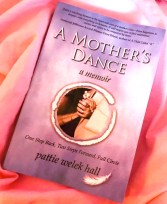
A Mother's Dance

“A Mother’s Dance’ by Pattie Welek Hall

9Was your survivor in a coma?

Yes. Twice.

If so, what did you do during that time?

I prayed out loud to him; I talked to him; I relayed how his day unfolded (Guess who visited; I recounted what they said) . . . and I told him stories.

10. Did your survivor have rehab?

Yes

If so, what kind of rehab (i.e., inpatient and/or outpatient and occupational, physical, speech, and/or other)?

Outpatient—speech, occupational, and physical

How long was the rehab? kc8oAg59i

Five months

Where were you when your survivor was getting therapy?

At work

11. What problems or disabilities of your brain-injury survivor required your care, if any?

12. How has your life changed since you became a caregiver? Is it better? Is it worse?

13. What do you miss the most from pre-brain-injury life?

I miss my boy’s easy-going nature.

14. What do you enjoy most in post-brain-injury life?

Pattie Welek Hall

Pattie Welek Hall (caregiver of son) Author of “A Mother’s Dance”

That my son is alive

15. What do you like least about brain injury?

That my son has frontal lobe damage which affects those he loves

16. Has anything helped you to accept your survivor’s brain injury?

17. Has your survivor’s injury affected your home life and relationships and, if so, how?

Relationships are up and down – mostly due to frontal lobe damage.

18. Has your social life been altered or changed and, if so, how?

19. What are your plans? What do you expect/hope to be doing ten years from now?

I hope that my son’s life is filled with love, laughter, and peace.

20. What advice would you offer other caregivers of brain-injury survivors? Do you have any other comments that you would like to add?


(Clip Art compliments of Bing.)

(Photos compliments of contributor.)

As I say after each post: Please leave a comment by clicking the blue words “Leave a Commentanim0014-1_e0-1 below this post.

Feel free to follow my blog. Click on “Follow” on the upper right sidebar.

If you like my blog, share it intact with your friends. It’s easy! Click the “Share” buttons below.

If you don’t like my blog, “Share” it intact with your enemies. I don’t care!

Feel free to “Like” my post.

SPEAK OUT! . . . . . . . . . . . . . Faces of Brain Injury . . . . . . Darlene Watson Mabry (caregiver for her son, Gage)

SPEAK OUT! Faces of Brain Injury

Darlene Watson Mabry (caregiver for her son, Gage)

presented by

Donna O’Donnell Figurski

Brain Injury is NOT Discriminating!

bigstock-cartoon-face-vector-people-25671746-e1348136261718It can happen to anyone, anytime, . . . and anywhere.

The Brain Trauma Foundation states that there are 5.3 million people in the United States living with some form of brain injury.

On “Faces of Brain Injury,” you will meet survivors living with brain injury. I hope that their stories will help you to understand the serious implications and complications of brain injury.

The stories on SPEAK OUT! Faces of Brain Injury are published with the permission of the survivor or designated caregiver.

If you would like your story to be published, please send a short account and two photos to me at neelyf@aol.com. I’d love to publish your story and raise awareness for Brain Injury.

Darlene Watson Mabry (caregiver for her son, Gage)

Mabry, Darlene Watson Caregiver

Mabry, Darlene Watson – Caregiver


My son, who is now 22, suffered his TBI (traumatic brain injury) two years ago in a work-related accident. That’s when the nightmare began, and our lives were forever changed.

This altered state of reality is so overwhelming at times that I just have to sit down and cry. There are good days, but it seems like for every good one, there are three bad ones – for every advancement, there comes a setback. The everyday struggle to maintain wears you down. It’s like going the wrong way on a one-way street.

Right Way Wrong Way
The company that my son was working for when the accident happened is still fighting this, and Worker’s Compensation in Missouri is unscrupulous! For the last year-and-a-half, they have refused to pay for treatment and prescriptions or provide temporary-disability pay. Resources are limited in this situation until this claim is settled, so, financially, we are bankrupt. Not only are they making my son’s already-burdensome recovery more difficult, but they are actually hindering it. I have cried, thrown fits, prayed, been depressed, and had anxiety attacks that I thought were heart attacks, and that was just today.

Darlene Watson Mabry & Son, Gage

Darlene Watson Mabry – Caregiver for son, Gage – Brain Injury Survivor

Crayon

So, I have erased this, and tomorrow we will begin again. (I’m thinking of using a crayon, so I can color outside the lines – LOL.)

At the end of the day, I’m grateful – my son is alive and highly functional, unlike some who have suffered this type of injury. God has blessed us with another day, and for that I’m thankful.


(Clip Art compliments of Bing.)

(Photos compliments of contributor.)

As I say after each post: Please leave a comment by clicking the blue words “Leave a Commentanim0014-1_e0-1 below this post.

Feel free to follow my blog. Click on “Follow” on the upper right sidebar.

If you like my blog, share it intact with your friends. It’s easy! Click the “Share” buttons below.

If you don’t like my blog, “Share” it intact with your enemies. I don’t care!

Feel free to “Like” my post.


Survivors SPEAK OUT! . . . Jason Westhoff

Survivors SPEAK OUT!   Jason Westhoff

presented

by

Donna O’Donnell Figurski


Jason Westhoff IMG_9574

Jason Westhoff – Brain Injury Survivor

1. What is your name? (last name optional)

Jason Westhoff

2. Where do you live? (city and/or state and/or country) Email (optional)

Phoenix, Arizona, USA     jrwesthoff1@gmail.com

3. On what date did you have your brain injury? At what age?

March 11, 2012     Age 29

4. How did your brain injury occur?

I was assaulted after leaving a club in Peoria, Illinois.

5. When did you (or someone) first realize you had a problem?

I realized I had a problem around eight months after the assault. I was in the Emergency Room and honestly realized I had lost all control. I had no clue how to go about regaining that control and made many wrong attempts over the next five years.

6. What kind of emergency treatment, if any, did you have?

Hospital thI was knocked unconscious from the assault, and I was transported by ambulance to the hospital. The medical staff noticed the swelling, and, as a result, I was taken into emergency surgery. I had a craniotomy to relieve the swelling.

7. Were you in a coma? If so, how long?

After the emergency surgery, I was placed in an induced coma for approximately three weeks. I had another two surgeries during this time.

8. Did you do rehab? What kind of rehab (i.e., inpatient or outpatient and occupational and/or physical and/or speech and/or other)? How long were you in rehab?

I had approximately three weeks of inpatient rehab before I was discharged. Afterwards, I continued physical, occupational, and speech therapies on a twice-weekly basis for approximately three months before I returned to school. At this time, I knew something was different, but I did not understand the battles I was fighting.

9. What problems or disabilities, if any, resulted from your brain injury
(e.g., balance, perception, personality, etc.)?

After my TBI (traumatic brain injury), I was a completely different person. It took me years to realize the extent of my injury. My balance and normal body functions were the easiest to check and the most obvious. The major changes, which I am still trying to adjust to daily, are my personality and perception during normal life-events. My injury has placed strains on every previous relationship I had and the new ones I have developed. I honestly feel like two completely different people. I still have the same general personality, but my ability to adjust to unplanned change is the ability most affected. I have a problem with the skill of adjusting in the moment.

10. How has your life changed? Is it better? Is it worse?Better Worse

My life has been extreme on both sides. It seems as if everything is extremely better or extremely worse on a rotating cycle. I am thankful on the whole because of the strength I have found to deal will all issues that have occurred. I am still working every day on my recovery, but I know, through this fire, I will become a better human being.

11. What do you miss the most from your pre-brain-injury life?

I miss my intellect and communication skills. It always feels as if I’m grasping for, but never quite reaching my projected goal.

12. What do you enjoy most in your post-brain-injury life?

I enjoy the communities I never knew about and the social interaction within the “brain-injury-support community”. There is a bond, which I have never quite been able to explain to others, of just knowing how something feels.

13. What do you like least about your brain injury?

Medicine side-effects!Medicine bottle 7Ta6Ezr8c

14. Has anything helped you to accept your brain injury?

Time. It has been extremely difficult to adjust and accept my brain injury.

15. Has your injury affected your home life and relationships and, if so, how?

Yes. It has been hard to be a successful father without the resources desired. Relationships in general have been a struggle because I don’t completely understand myself at all times. There is a constant unbalance in my life since the injury.

16. Has your social life been altered or changed and, if so, how?

Yes. I had struggles – extreme struggles – in my social life, primarily involving drugs and alcohol. Alcohol was a bigger problem than the drugs. I often get so stressed and/or anxious I want to drown my thoughts away. It is very easy just to give up at times.

Jason Westhoff Sheria & Darryl Eubanks

Jason Westhoff – Brain Injury Survivor with Parents, Sheria & Darryl Eubanks

17. Who is your main caregiver? Do you understand what it takes to be a caregiver?

My parents have been my main caregivers, my mother in particular for emotional support, which is where it has been needed most. It took me 2-3 years to start to comprehend the stress involved in being a caregiver, until I really tried to manage Jayla (my daughter) by myself for an extended period of time.

18. What are your plans? What do you expect/hope to be doing ten years from now?

My plans as of this moment are just trying to get my medications set and lowering my mental-fatigue issues. My focus is primarily on understanding my new mind and body so I then have the ability to make the proper adjustments. I love it here in Arizona! By the time I do my radio interview with Donna, I will have been in Arizona for fourteen months. I am currently looking forward to doing more work in the brain-injury community.

19. Are you able to provide a helpful hint that may have taken you a long time to learn, but which you wished you had known earlier? If so, please state what it is to potentially help other survivors with your specific kind of brain injury.

Listen! Listen! Listen! I am one of the worst listeners. I have proved this point time and time again. I would suggest to swallow your pride and let people help you.Ear_clip_art-1

20. What advice would you offer to other brain-injury survivors? Do you have any other comments that you would like to add?

My best advice to give to any survivor is to never stop growing. Don’t become content with your situation. We can always improve!


If you would like to be a part of the SPEAK OUT! project, please go to TBI SPEAK OUT! Survivors Interview Questionnaire for a copy of the questions and the release form.

(Clip Art compliments of Bing.)

As I say after each post: Please leave a comment by clicking the blue words “Leave a Commentanim0014-1_e0-1 below this post.

Feel free to follow my blog. Click on “Follow” on the upper right sidebar.

If you like my blog, share it with your friends. It’s easy! Click the “Share” buttons below.

If you don’t like my blog, “Share” it with your enemies. I don’t care!

Feel free to “Like” my post.


SPEAK OUT! . . . . . . . . . . . . . . . Faces of Brain Injury . . . . . . . . Shelley Taylor and her daughter, Taylor Trammell (survivors)

SPEAK OUT! Faces of Brain Injury

Shelley Taylor and her daughter, Taylor Trammell (survivors)

presented by

Donna O’Donnell Figurski

Brain Injury is NOT Discriminating!

bigstock-cartoon-face-vector-people-25671746-e1348136261718It can happen to anyone, anytime, . . . and anywhere.

The Brain Trauma Foundation states that there are 5.3 million people in the United States living with some form of brain injury.

On “Faces of Brain Injury,” you will meet survivors living with brain injury. I hope that their stories will help you to understand the serious implications and complications of brain injury.

The stories on SPEAK OUT! Faces of Brain Injury are published with the permission of the survivor or designated caregiver.

If you would like your story to be published, please send a short account and two photos to me at neelyf@aol.com. I’d love to publish your story and raise awareness for Brain Injury.

Shelley Taylor and her daughter, Taylor Trammell (survivors)

Taylor, Shelley survivorValentine’s Day 2010 would turn into a complete game-changer – a day we will never forget. It’s a day I’ve documented so, if the day comes when my memory is gone, I can always reflect back on God’s goodness and mercy. Following is my account of the night we were poisoned. God provided the most beautiful second chance.

We were experiencing a “Texas Winter” and had received about six inches of snow. We had been without power for three days. On day 3, we ran a generator in the driveway, near our garage. The garage door and windows were open. The Fire Chief later told us that, since it was so cold and there was no wind, the carbon monoxide gas probably just settled. Instead of blowing away, it just crept back into the house via the eaves.

Trammell, Taylor Survivor 050617

Taylor Trammell – Brain Injury Survivor

Taylor (my daughter; 13 at the time) and I had gone to bed. She told us that someone had called her name and she was trying to get up to see who it was. She got up, fell face-first into the wall, collapsed and crawled out of her bedroom, shimmied up the wall, and collapsed again. The thud of Taylor falling on the concrete floor is what woke me up. Charlie (her dad and my ex-husband) heard this as well from the living room. We went to the hallway and found Taylor passed out and lying on her face. We couldn’t get her to respond! Charlie sent me for the flashlight that was by my bed. On my way, I felt like I was not right either. I got the flashlight and ran back to the hall so I could get to Charlie to let him know I wasn’t OK. I knew that if I collapsed in the bedroom, he wouldn’t know to come for me.

Everything was spinning out of control, and I was experiencing the worst feelings I had ever had! When I turned the corner to the hallway, I collapsed face-first (without using my hands or arms to brace myself). I fell onto the metal flashlight and severely cut my forehead. I told Charlie I felt blood running down my face. He looked at me with the flashlight and said he had to get me to the hospital! My head began to pulse blood. Taylor, I, and the walls were covered in blood. Meanwhile, Taylor was in and out of consciousness. I was having convulsions and banging my face into the concrete floor. Charlie then called 9-1-1.

First to respond were the police. Charlie told them we had no power, so they used their flashlights. They immediately saw my blood and the bloody handprints in our hallway, and Charlie had my blood on him as well. Immediately they accused Charlie of a crime. Shortly thereafter, the fire department arrived, and luckily Charlie knew one of the firefighters who quickly came to Charlie’s defense. Charlie told the Fire Chief of the generator, and immediately the Chief went to the truck to get the carbon monoxide detector. Even at the entrance to our driveway, the readings on the detector began to rise quickly. The readings went higher as he got closer to the house. Upon reaching the door, he called for his crew to exit the house and got Charlie, Taylor, and our dogs out as well. Paramedics were left inside with me to get me stable enough for transport to the hospital. Eventually I left by ambulance, and Charlie and Taylor left in Charlie’s truck.ambulance6

At Mansfield Methodist Hospital, Taylor’s and my blood gases were checked. They were found to be “through the roof.” We were then transported to Dallas Methodist to use their hyperbaric chamber. First, my head injury was closed up with fifteen stitches, and I had to have a CT (computerized tomography) scan to make sure I was transportable. Off we went in the ambulance. Upon arriving at Dallas Methodist, a doctor explained the procedures for going into the hyperbaric chamber. (I was trying to comprehend all of this while the carbon monoxide was still doing damage to my brain!) We found out that the family that had just been in the chamber before us had all died, except the father – not comforting!

When we came home, my sister Kimberley moved in for approximately a month. Physically, my head was healing, but, mentally, I was left with a traumatic brain injury. I literally started over with kindergarten flashcards (I would look at an apple and say “library”), and my friends and family completed most of my sentences. My neurologist was a great comfort to me as I struggled with memory and cognitive skills.

My neurologist also told me that people don’t survive what we went through. He said they really don’t know how to treat me. He said carbon monoxide goes into your brain and destroys whatever it attaches to, and we have no control over what functions are affected.CO-Danger

Taylor and I struggle daily, but some recovery continues every day for both of us. Taylor is young, and healing has come differently for her. Memory and migraines are big battles she continues to face.

I’ve come a long way, but I continue to deal with balance, breathing, vision, and memory. It seems I have fallen more times than I’ve stood. By far, my greatest challenge is breathing. Every day, at some point I struggle to breathe. Coughing has become my norm.

Memory LossMy memory is horrible at times, and I’ve lost so many precious memories. Taylor and I have a routine when it comes to trying to remember things. We just look at each other and ask, “Did we have fun?” The one who remembers says to the other, “Yes, we had fun!” That’s all that matters.

What a Valentine’s Day! Taylor saved us by miraculously waking. We endured my bloody head injury which required fifteen stitches, a concussion, a CT scan, blood gas analyses, ambulance rides, and approximately three-hour “dives” in a hyperbaric chamber. (And, we’re both very claustrophobic!) Nothing says “I love you” like a brain injury.

To be alive is amazing, in whatever capacity! God is good – no, great!


Thank you, Shelley Taylor and Taylor Trammell, for sharing your story.

Surviving Brain Injury - Stories of Strength & InspirationNOTE 1:

Taylor Trammell and her mother, Shelley Taylor, are contributing authors in “Surviving Brain Injury: Stories of Strength & Inspiration,” edited by Amy Zellmer. Shelley and Taylor’s story is titled, “Our Story of Poisoning — and of Grace.” It can be found in Chapter 75 on page 299.

NOTE 2:

My story, “Nightmare in the Disability Lane,” can be found in Chapter 29 on page 114 of the same book, “Surviving Brain Injury: Stories of Strength & Inspiration,” edited by Amy Zellmer.

(Clip Art compliments of Bing.)

(Photos compliments of contributor.)

As I say after each post: Please leave a comment by clicking the blue words “Leave a Commentanim0014-1_e0-1 below this post.

Feel free to follow my blog. Click on “Follow” on the upper right sidebar.

If you like my blog, share it intact with your friends. It’s easy! Click the “Share” buttons below.

If you don’t like my blog, “Share” it intact with your enemies. I don’t care!

Feel free to “Like” my post.

Survivors SPEAK OUT! Taylor Trammell

Survivors SPEAK OUT! Taylor Trammell

presented 

by

Donna O’Donnell Figurski

Taylor Trammell – Brain Injury Survivor

1. What is your name? (last name optional)

Taylor Trammell

2. Where do you live? (city and/or state and/or country) Email (optional)

Grand Prairie, Texas, USA     taylor.dot24@gmail.com

3. On what date did you have your brain injury? At what age?

I had my brain injury on February 14th, 2010, at age 13.

4. How did your brain injury occur?

Carbon monoxide poisoning

(Donna’s note: The story of the poisoning of Taylor and her mother, Shelley Taylor, will be published later on this blog under “Faces of Brain Injury.”)

5. When did you (or someone) first realize you had a problem?

The problem was apparent the night we were poisoned.

6. What kind of emergency treatment, if any, did you have?

I was put into a hyperbaric chamber.

7. Were you in a coma? If so, how long?

No

8. Did you do rehab? What kind of rehab (i.e., inpatient or outpatient and occupational and/or physical and/or speech and/or other)? How long were you in rehab?

No

9. What problems or disabilities, if any, resulted from your brain injury
(e.g., balance, perception, personality, etc.)?

Afterward, I started to sleep poorly or not to sleep any at night. I also suffer from horrible migraines. Sometimes, when I hold on to something, I just drop it. But overall, it’s a mystery because every day could be something different.

10. How has your life changed? Is it better? Is it worse?

Now I have sleeping problems, and I get horrible migraines. But, I can’t really say if my life is better or worse. I mean, it’s not fun on some days, but at least I have a life to live.

11. What do you miss the most from your pre-brain-injury life?

I miss being able to go to a concert or an event and not having to turn away from the stage or to have my boyfriend hold my head in his chest to block the light. I miss being able to talk normally and not forget what I was saying. Most of all, I miss not being able to sleep.

12. What do you enjoy most in your post-brain-injury life?

I enjoy just living in general. I mean that because it was such a close call to be living. God saved me, so I will live my life to the fullest and not let my TBI (traumatic brain injury) hold me back.

13. What do you like least about your brain injury?

Not sleeping and my migraines

14. Has anything helped you to accept your brain injury?

Yes. I’ve been helped by knowing that God saved me and that He is always right beside me.

15. Has your injury affected your home life and relationships and, if so, how?

I’m not sure. Sometimes it’s hard for people to understand my migraines or that I’m grumpy from not sleeping.

16. Has your social life been altered or changed and, if so, how?

Yes, it has. I realize that life is short, so I try to do everything I want to do. I have fun. I love music and going to concerts, but that has changed due to the lights.

17. Who is your main caregiver? Do you understand what it takes to be a caregiver?

N/A

18. What are your plans? What do you expect/hope to be doing ten years from now?

I am graduating in a few weeks with my degree in ASL (American Sign Language) Interpreting. I plan to become an interpreter and to be married next year and start our lives.

19. Are you able to provide a helpful hint that may have taken you a long time to learn, but which you wished you had known earlier? If so, please state what it is to potentially help other survivors with your specific kind of brain injury.

No matter what has become the new you, you have to remember that there is a you because God saved you. I had to accept who the new me was and just roll with it. I mean, there wouldn’t be a you if you were not saved. SO, accept it, and learn what you need to do to live your life every day.

Taylor Trammell – Brain Injury Survivor

20. What advice would you offer to other brain-injury survivors? Do you have any other comments that you would like to add?

Just remember to be thankful, even in the hardest times. Life isn’t easy, and it never will be. Be strong and be supportive to everyone because you never know what the other person is going through. I know a lot of people in my life who have no idea what I go through every day, so just be strong and remember God is with you.


Surviving Brain Injury - Stories of Strength & Inspiration

Surviving Brain Injury: Stories of Strength and Inspiration

NOTE 1:

Taylor Trammell and her mother, Shelley Taylor, are contributing authors in “Surviving Brain Injury: Stories of Strength & Inspiration,” edited by Amy Zellmer. Shelley and Taylor’s story is titled, “Our Story of Poisoning — and of Grace.” It can be found in Chapter 75 on page 299.

NOTE 2:

My story, “Nightmare in the Disability Lane,” can be found in Chapter 29 on page 114 of the same book, “Surviving Brain Injury: Stories of Strength & Inspiration,” edited by Amy Zellmer.


If you would like to be a part of the SPEAK OUT! project, please go to TBI SPEAK OUT! Survivors Interview Questionnaire for a copy of the questions and the release form.

(Clip Art compliments of Bing.)

As I say after each post: Please leave a comment by clicking the blue words “Leave a Commentanim0014-1_e0-1 below this post.

Feel free to follow my blog. Click on “Follow” on the upper right sidebar.

If you like my blog, share it with your friends. It’s easy! Click the “Share” buttons below.

If you don’t like my blog, “Share” it with your enemies. I don’t care!

Feel free to “Like” my post.

TBI Tales: . . . . . . . . . . . . . . . . . . . . I Tripped & Stumbled, but Did Not Fall by Donna O’Donnell Figurski

I Tripped & Stumbled, but Did Not Fall

by

Donna O’Donnell Figurski

Donna O’Donnell Figurski

Recently, as I got out of my car, I stumbled on the curb. Somehow in the darkness, I did not see it. Though the event took less than a second, one thought ran through my head. It was not, “Oh, no! I am going to break a bone or scrape my knee.” It was not, “What a klutz! I’ll ruin my clothes.” And it was not about how embarrassed I would be. All of those possibilities probably would have been my first thoughts – before brain injury entered my life when my husband had a traumatic brain injury in 2005.

Now my mind is only a thought away from brain injury. So, as I tripped and stumbled, but did not fall, my mind raced to, “Please don’t let me hit my head.” I didn’t care how silly I looked or about my clothes being ripped or about getting any broken bones (they would heal). I worried about getting a brain injury. I worried about how a brain injury could change my life forever. I worried that if I were hurt, I could not sufficiently care for my husband, who needs my daily attention. Yes, those thoughts did race through my head in that fleeting second.

It only takes a second for a brain injury to occur. Most brain injuries occur because of an accident. Though we may be aware of the possibility of accidents, they cannot all be avoided. Fortunately, my accident was avoided – just barely. I can only hope that my potential accidents will be few and far apart in the future. I hope yours will be too.

As I say after each post: Please leave a comment by clicking the blue words “Leave a Commentanim0014-1_e0-1 below this post.

Feel free to follow my blog. Click on “Follow” on the upper right sidebar.

If you like my blog, share intact it with your friends. It’s easy! Click the “Share” buttons below.

If you don’t like my blog, “Share” it intact with your enemies. I don’t care!

Feel free to “Like” my post

diemodi jewelry

uniquely hand-crafted jewelry by donna

Welcome to Harmony Kent Online

The home of all things books

Pete Springer

Passionate Teacher and Future Children's Author

HOPE TBI

Helping Other People Excel - To Be Independent

For the Love of Books, Old and New

Katie Fischer, Writer and Reader of Stories

Charlie Bown

Children's Author

Jessica Hinrichs

“We write to taste life twice, in the moment and in retrospect.” ― Anais Nin

VIVIAN KIRKFIELD - Writer for Children

Picture Books Help Kids Soar

Mindy’s Writing Wonderland

For authors, parents, teachers & everyone who loves children’s books.

Kaitlyn Leann Sanchez

Literary Agent

Surviving Traumatic Brain Injury

TBI - Survivors, Caregivers, Family, and Friends

The Care Factor

Loving someone with a Traumatic Brain Injury

Brain Injury Support Group of Duluth-Extension

Brain Injury Information and SUPPORT

Brain Aneurysm Global Insight

Brain Aneurysm, cerebral hemorrhaging, hemorrhage stroke