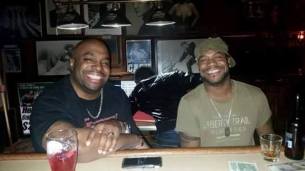
TBI – Survivors, Caregivers, Family, and Friends

Posts tagged ‘blogtalkradio.com/braininjuryradio’

Survivors SPEAK OUT! Bonnie Weikel

Survivors SPEAK OUT!  Bonnie Weikel

presented by

Donna O’Donnell Figurski
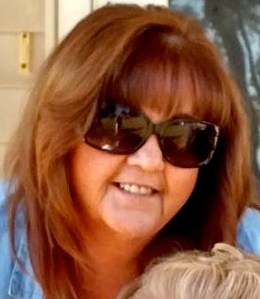
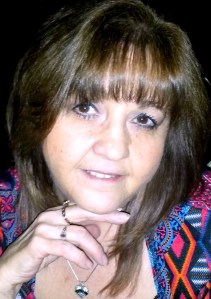
Bonnie Weikel – Brain Injury Survivor

1. What is your name? (last name optional)

Bonnie Weikel

2. Where do you live? (city and/or state and/or country) Email (optional)

New Bethlehem, Pennsylvania, USA

3. On what date did you have your brain injury? At what age?

I was 47. My brain hemorrhage was in 2004.

4. How did your brain injury occur?

I had a subarachnoid hemorrhage (blood leaking into the space between two of the membranes that surround the brain; mine was from a ruptured brain aneurysm). I always like saying the correct medical terminology because I can actually remember how to spell it. For the majority of the time, I refer to it as “My head blowing up.” I also had a stroke during my craniotomy.

5. When did you (or someone) first realize you had a problem?

I was aware of my problems after I woke up from surgery. (The doctor wasn’t able to guarantee what kind of shape I would be in if I survived the surgery.)

6. What kind of emergency treatment, if any, did you have?

First, the hospital ruled out a stroke, and, because I complained of “the headache from hell,” they did a CT (computerized tomography) scan and found the bleed on my brain. They packed me up and transported me to Allegheny General Hospital in Pittsburgh, where I had my brain surgery done.

operating-theatre-illustration-surgeon-patient-hospital-41734906.jpg7. Were you in a coma? If so, how long?

No, thank God. I recognized everyone when I came out of surgery. I just couldn’t remember who was there to visit from one minute to the next. My daughter took pictures of me with everyone who came to see me.

8. Did you do rehab? What kind of rehab (i.e., inpatient or outpatient and occupational and/or physical and/or speech and/or other)? How long were you in rehab?

I was in inpatient therapy for a month and then in outpatient therapy for about five weeks. I had to learn to do everything all over again – starting with feeding and dressing myself.

9. What problems or disabilities, if any, resulted from your brain injury
(e.g., balance, perception, personality, etc.)?

I have short-term memory loss and issues with balance, vision, and hearing. I have worked very hard over the past ten years to get to where I am today, and I did it all by myself.

10. How has your life changed? Is it better? Is it worse?

My life has changed dramatically. It is better. I love the “new” me much better than the old version. I also found out who my true friends are.

11. What do you miss the most from your pre-brain-injury life?

I did lose one thing I used to love to do. I used to sew for hours. I had my own sewing business. I made anything from window treatments to wedding gowns, and I was good at it. I lost all desire to sew; it is no longer something I love to do. It is more of a chore.

12. What do you enjoy most in your post-brain-injury life?

I like that I am back in school. I am taking college courses online. It is the biggest challenge I have taken on since the TBI (traumatic brain injury).

13. What do you like least about your brain injury?

I have an invisible disability, and some people think I am faking it and living off the system.

14. Has anything helped you to accept your brain injury?

Yes. Changing my attitude about people and life in general has helped. One day, I decided I could sit and cry for the rest of my life about all that I have lost, or I could be happy with my new life and live it.

15. Has your injury affected your home life and relationships and, if so, how?

My home life has been affected, but in a positive way.

I take pride in myself and in my accomplishments. Relationship-wise, it’s been a curse.

I haven’t been able to find people who can deal with my issues because they just do not understand. I am thankful they don’t understand how life is for a TBI survivor because, if they did, it would mean they also suffered a TBI. (The only way anyone can truly understand what life is like for a survivor is to live it themselves.)

16. Has your social life been altered or changed and, if so, how?

Yes. My social life has changed a lot. During the first year, I found out who my real friends are. Now I have a small circle of friends who I know I can trust. I go out dancing once a week with friends. I do this because I still can.

17. Who is your main caregiver? Do you understand what it takes to be a caregiver?

After living with my daughter for about a year, I am now on my own. I do everything myself – I am even back to driving. I will say this much: I thank God for my GPS! Ha, Ha! Yes, I understand what it is to be a caregiver, and it takes a special kind of patience for a caregiver of someone with a TBI.

18. What are your plans? What do you expect/hope to be doing ten years from now?

I am working on a Communications degree and changing to Community Service and Social Work. My goal is to work with other survivors as a life-coach/advocate. I am getting better grades now than I ever did in high school. I can only handle two classes a semester, so it will take twice as long as normal to get my degree. But, I will see it through to the end.

19. Are you able to provide a helpful hint that may have taken you a long time to learn, but which you wished you had known earlier? If so, please state what it is to potentially help other survivors with your specific kind of brain injury.
It didn’t take me as long as it does for some others, but learning to love your new self and accept your new life is, I believe, the secret to moving on. Love and acceptance of yourself is the base you can grow from.

20. What advice would you offer to other brain-injury survivors? Do you have any other comments that you would like to add?

I highly recommend that brain-injury survivors seek out other survivors. It was such an awesome feeling the first time I spoke to someone who “Gets it.” It was like someone turned my light back on. I felt free and almost normal again. I was no longer alone. I have a motto I live by. It was written from one of the first survivors I met – in a Yahoo health and wellness chatroom. I think he went by “Rhino.” Anyway, here it is. “Mourn what you lost. Use what you have. Anyone can quit.” My strongest advice to other survivors is “NEVER GIVE UP!”


If you would like to be a part of the SPEAK OUT! project, please go to TBI SPEAK OUT! Survivors Interview Questionnaire for a copy of the questions and the release form.

(Clip Art compliments of Bing.)

As I say after each post: Please leave a comment by clicking the blue words “Leave a Commentanim0014-1_e0-1 below this post.

Feel free to follow my blog. Click on “Follow” on the upper right sidebar.

If you like my blog, share it with your friends. It’s easy! Click the “Share” buttons below.

If you don’t like my blog, “Share” it with your enemies. I don’t care!

Feel free to “Like” my post.


Survivors SPEAK OUT! Mark Moore

Survivors SPEAK OUT!  Mark Moore

presented by

Donna O’Donnell Figurski

moore-author-photo

Mark Moore – Bran Injury Survivor & Author

1. What is your name? (last name optional)

Mark Moore

2. Where do you live? (city and/or state and/or country) Email (optional)

McLean, Virginia, USA     mark@mbmoorefoundation.org

3. On what date did you have your brain injury? At what age?

2007   At age 46

4. How did your brain injury occur?

I had two strokes.

5. When did you (or someone) first realize you had a problem?

I was coaching my son’s baseball practice, and I began to lose my balance.

6. What kind of emergency treatment, if any, did you have?

I had a craniectomy (brain surgery in which a piece of the skull is removed, but, unlike a craniotomy, is not returned to its original location) to relieve the pressure on my brain.

7. Were you in a coma? If so, how long?

Yes. I was in a coma for four weeks.

8. Did you do rehab? What kind of rehab (i.e., inpatient or outpatient and occupational and/or physical and/or speech and/or other)? How long were you in rehab?

Yes. I had physical therapy, occupational therapy, and speech therapy as an inpatient for two weeks and then as an outpatient for two months.

8. What problems or disabilities, if any, resulted from your brain injury
(e.g., balance, perception, personality, etc.)?

Initially I had significant diminished use of my left side and loss of peripheral vision in my left eye. I couldn’t walk or speak.

10. How has your life changed? Is it better? Is it worse?

Having a stroke was the worst day AND the best day of my life. It was the worst day because it was scary and it was one of the first times I realized that I had no control over the outcome. It was scary for my wife and my family. When I found out that I had basically been “asleep” for nearly six weeks, I was scared all over again. I had to face the fact that I might not walk, talk, or think like Mark Moore ever again. In fact, I had to recognize that the “old” me might actually be gone. At that moment, it felt like the worst thing I could imagine.

Mark & Brenda Moore with Obamas.jpg

Mark & Brenda Moore with President & Mrs. Obama

As I struggled with those concerns though, I remembered my mother’s words – words I had forgotten, words she had spoken to me during her own health crisis. She said, “Mark, God will never give you more than you are able to handle.” Those words impacted me and turned me around. I was slowly able to stop thinking just of myself. I started thinking about God and what He could do and would do with my life now. He could pick up the pieces of this broken version of me and heal me – create in me the person he meant for me to be. That thought began to work in me, and though I knew it wouldn’t be easy, I also knew that, with God’s help, I could let go of the old Mark and become a new man.

11. What do you miss the most from your pre-brain-injury life?

Riding rollercoastersroller-coaster-thought-of-the-day-jewels-art-creation-clip-art

12. What do you enjoy most in your post-brain-injury life?

I enjoy my relationship to God.

13. What do you like least about your brain injury?

I dislike the constant scanning to drive

14. Has anything helped you to accept your brain injury?

Having a stroke meant I had to learn to surrender. I had to face the fact that my abilities as a “fix-it guy” were not going to come to the rescue. I had to do something that was hard for me to do. I had to be willing to give up my illusions of who Mark Moore was and hold on for dear life to who God is. That’s surrender! That’s where everything you thought you knew comes to a halt and God finally has enough of your attention to help you become what He planned all along.

When I first looked at what was going to be required of me in the recovery process, I did not want to do it. I thought it would simply be easier if God just shut me down, packed me up, and sent me back to His house. But, He didn’t do that! He kept me in the hospital for several weeks and then sent me back to my house. He showed me that recovery meant I had to totally trust Him and my wife, Brenda, and the therapists, who would bring me back to good health.

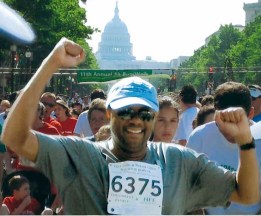
mark-moore-brain-injury-survivor-dc-marathon

Mark Moore – Brain Injury Survivor – 5K Race

Starting therapy looks daunting. It is daunting, and it’s even frightening! Everything in me resented that I had to be there and that I had to learn all over again things I’d known all my life. If you’re facing therapy and recovery now, all I can tell you is to do what you’re told to do. Make the effort. Try harder than you’ve ever tried in your life, and lean on the people who love you. Open your heart and mind to all that can still be possible for you. That’s what surrender requires. That’s what trusting God is all about. You’ll be in recovery for a long time (maybe the rest of your life), but you’ll be in good hands in the process.

15. Has your injury affected your home life and relationships and, if so, how?

One day (May 12, 2007), I had a stroke, which was followed by another one. I was fine one minute and fighting for my life the next. In the process of recovering from those strokes, I discovered something I had not fully realized before. God had a plan for my life. He had a purpose for me, and I was not on the path He preferred. In one day, my life changed, and my purpose changed with it. To be honest, when I discovered God wanted something more from me, I was relieved. Clearly, there was more I could do, and it didn’t always revolve around the work I had carved out for myself. I was relieved to know that I could step back from the life I designed and be far more comfortable in the one He designed.

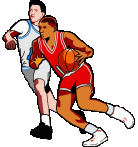
basketball-clipart17My friends were amazed when I did not show any interest in simply going back to work. They thought it was strange that I did not want to play basketball, a game I had loved playing all my life. What I did want to do was to please God. What energized my spirit and resonated with my soul was to do the things God wanted – to fulfill His purposes in me.

What a difference a day makes! What joy it is to my heart that God was with me through the strokes and is with me now to guide me into being the Mark Moore He always knew I could be. What a joy it is to live more intentionally and more fully awake to the places He would have me go.

16. Has your social life been altered or changed and, if so, how?

Not really

17. Who is your main caregiver? Do you understand what it takes to be a caregiver?

I don’t have or need a caregiver.

18. What are your plans? What do you expect/hope to be doing ten years from now?

When God had my attention as I lay in a hospital bed, He asked me a new question. Whose job is it to help others? Whose job is it to make a difference? Whose job is it to spread the gospel? The answer was the same in every case. It was MY job! God had blessed my work and made it possible for me to bless others. He took me out of the race in which I’d driven laps for twenty years and said, “I have something new for you. I want you to slow down and hear what I have to say.” I stopped then and listened.

God didn’t “give me a stroke.” He used the stroke to give me a new purpose. He used the situation to help me hear His voice more clearly and to understand the job He had in mind. Whose job is it … to do good, to help others, to lend a hand? It’s mine, and it’s yours! Let’s use whatever resources we have been blessed with to help those around us. It will fulfill our life-purpose like nothing else can do.

19. Are you able to provide a helpful hint that may have taken you a long time to learn, but which you wished you had known earlier? If so, please state what it is to potentially help other survivors with your specific kind of brain injury.

It was interesting to me after my stroke experience to discover that I did not want to be “naked” in front of my family – in front of the people who knew me the best. Like Adam and Eve, I wanted to hide so they would not discover my fear and sense my weakness.

As I looked back at my initial reactions to my strokes, I realized we can’t hide from the people who know us well and love us any more than we can hide from God.

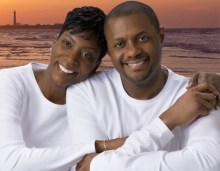
mark-brenda-moore

Mark & Brenda Moore

My wife did not want me to hide from her. She was ready to help me – ready to stand beside me and offer me her strength. My friends were like that too. Caregivers and hospital personnel were set to help me, but I had to be willing to be “naked.” I had to be willing to let them see my weaknesses and my vulnerability. I was not the person I had been; I needed their strength.

Another thing that was extremely helpful during my stroke recovery was that I began to regularly put on my headphones to listen to gospel music. The effort to re-establish my fine-motor skills was sometimes grueling, and I wasn’t always sure I could do it. Gospel music comforted me and helped me get through the ordeal. It reminded me over and over again of what Jesus did to give me life, to lift me up, and to restore my soul. It also reminded me that there was nothing I was going through that Jesus did not experience. He paid the price so that I could be restored eternally, spiritually, and physically to this day.

20. What advice would you offer to other brain-injury survivors? Do you have any other comments that you would like to add?

One thing I tell everybody is that you can’t recover from a stroke or any debilitating illness without the help of your family, your friends, and your faith. It can take days, weeks, or months to see any real change in the things you are able to do physically. That means that mentally and emotionally you have to lean on the things that boost your morale and make a difference in your attitude. When it comes to the kind of help your family, friends, and faith can give in your recovery, it all depends on YOU!

I say it depends on you because you are the only one who can let others in to help make a difference. Your spouse can come to your aid every day and cheer you on and encourage you, but it won’t do any good unless you’re willing to receive it. I can admit that there were times when I didn’t really let my wife, Brenda, in. I was scared, and I didn’t want her to know it. I didn’t want to have to tell her that I didn’t think I could do what it took to recover. She had known me as a guy who was a go-getter – someone who rose to the occasion to get things done. After the stroke, though, I didn’t always believe that I had that same courage.

Friends stood beside me as well and helped me get the message that a lot of people cared and were rooting for me. They wanted me to get better and to become the old Mark again.


(Disclaimer: The views or opinions in this post are solely that of the interviewee.)

If you would like to be a part of the SPEAK OUT! project, please go to TBI SPEAK OUT! Survivors Interview Questionnaire for a copy of the questions and the release form.

(Clip Art compliments of Bing.)

As I say after each post: Please leave a comment by clicking the blue words “Leave a Commentanim0014-1_e0-1 below this post.

Feel free to follow my blog. Click on “Follow” on the upper right sidebar.

If you like my blog, share it with your friends. It’s easy! Click the “Share” buttons below.

If you don’t like my blog, “Share” it with your enemies. I don’t care!

Feel free to “Like” my post.

SPEAK OUT! . . . . . . . . . . . . . . Itty-Bitty GIANT Steps

SPEAK OUT! Itty-Bitty GIANT Steps

presented by

Donna O’Donnell Figurski

Itty-Bitty GIant Steps for BlogSPEAK OUT! Itty-Bitty Giant Steps will provide a venue for brain-injury survivors and caregivers to shout out their accomplishments of the week.

If you have an Itty-Bitty Giant Step and you would like to share it, just send an email to me at neelyf@aol.com.

If you are on Facebook, you can simply send a Private Message to me. It need only be a sentence or two. I’ll gather the accomplishments and post them with your name on my blog approximately once a week. (If you do not want your last name to be posted, please tell me in your email or Private Message.)

I hope we have millions of Itty-Bitty Giant Steps.


Here is this week’s Itty-Bitty GIANT Step

johnson-richard-la5-seqbctqtwxpuelqm7w3zpspra73-btysv2tzfrmhjlfsj8cadfvj1wnfejetg2tstj4rfqdvol9omi_160cym__3h82mwgki2qevhzyz8zlyhqad7iswyoqj_li8nobqrokqqzvt95fkknyw4ond7a0fskhymnexzhzebcwpbattvzu5li

Ric Johnson – Brain Injury Survivor

Richard Johnson (survivor) … With two new grandsons, my wife and I decided we needed a baby crib in our house. So, we went to a store, bought one, drove it home, and then had to put it together. It should have been easy, but not so much after a traumatic brain injury.crib

First, it was hard to focus in the store – too much noise and too many lights. Then, having short-term memory issues and only two hands, I took four hours to put it together.

YOU did it!

Congratulations to contributor!

(Clip Art compliments of Bing.)

(Photos compliments of contributors.)

As I say after each post:anim0014-1_e0-1

Please leave a comment by clicking the blue words “Leave a Comment” below this post.

Feel free to follow my blog. Click on “Follow” on the upper right sidebar.

If you like my blog, share it intact with your friends. It’s easy! Click the “Share” buttons below.

If you don’t like my blog, “Share” it intact with your enemies. I don’t care!

Feel free to “Like” my post.

Caregivers SPEAK OUT! . . . . . Lori Strauss Heckman

Caregivers  SPEAK OUT!  Lori Strauss Heckman

(caregiver for her son, Bartholomew Wayne Nathaniel),

presented by

Donna O’Donnell Figurski

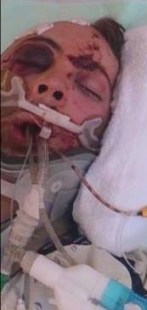
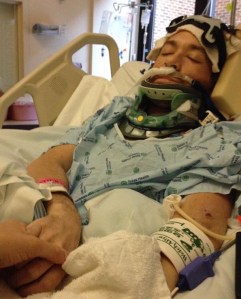
lori-strauss-heckman-caregiver-012017Three years ago, our lives were turned upside down when my then 21-year-old son had his accident. It has been a long road with many hurdles to overcome, but I am so proud of him. He is my hero and my greatest blessing. And, proof to never give up. We were told that he would probably not make it that night. We were also informed that, if he did, he would not have any quality of life. But, he proved everyone wrong! Many prayers were prayed and many tears were shed, and my son is still with us – and doing very well. The first and second photos are of my son after the accident; the third is him wearing a helmet in recovery; and the fourth photo is of him with his car. (Yes, my son is driving, and his seizures are under control.)

Meet Bartholomew Wayne Nathaniel

bartholomew-wayne-nathaniel-survivor-hospitalbartholomew-wayne-nathaniel-survivor-012017

16143907_1195056253863255_689473837_n

bartholmew-wayne-nathaniel-survivor-car

(Disclaimer: The views or opinions in this post are solely that of the interviewee.)

If you would like to be a part of the SPEAK OUT! project, please go to TBI SPEAK OUT! Caregiver Interview Questionnaire for a copy of the questions and the release form.

(Clip Art compliments of Bing.)

As I say after each post: Please leave a comment by clicking the blue words “Leave a Commentanim0014-1_e0-1 below this post.

Feel free to follow my blog. Click on “Follow” on the upper right sidebar.

If you like my blog, share it with your friends. It’s easy! Click the “Share” buttons below.

If you don’t like my blog, “Share” it with your enemies. I don’t care!

Feel free to “Like” my post.

SPEAK OUT! . . . . . . . . . . Itty-Bitty GIANT Steps

SPEAK OUT! Itty-Bitty GIANT Steps

presented by

Donna O’Donnell Figurski

Itty-Bitty GIant Steps for BlogSPEAK OUT! Itty-Bitty Giant Steps will provide a venue for brain-injury survivors and caregivers to shout out their accomplishments of the week.

If you have an Itty-Bitty Giant Step and you would like to share it, just send an email to me at neelyf@aol.com.

If you are on Facebook, you can simply send a Private Message to me. It need only be a sentence or two. I’ll gather the accomplishments and post them with your name on my blog approximately once a week. (If you do not want your last name to be posted, please tell me in your email or Private Message.)

I hope we have millions of Itty-Bitty Giant Steps.


Here is this week’s Itty-Bitty GIANT Step

david-june-14

David Figurski, PhD – Brain Injury Survivor

David Figurski (survivor) … Because my speech has been affected by partly paralyzed vocal chords and tongue, I was worried that my comments at my father’s funeral Mass would not be understood. On top of that, I was beginning to lose my voice from speaking with so many people the day before at the funeral parlor. But, with Donna’s support as she balanced me, I walked to the podium, and I gave my comments. For ten minutes, I gave them – careful to speak slowly and enunciate every sound.

david-at-church-podium

David Figurski at Podium

Several people came up to me afterward and said that they had no problem understanding me. It’s something I had wanted to do to honor my 95-year-old father. I was happy and proud that I did.

hank-figurski

Hank Figurski 1921 – 2017


YOU did it!

Congratulations to contributors!

(Clip Art compliments of Bing.)

(Photos compliments of contributors.)

As I say after each post:anim0014-1_e0-1

Please leave a comment by clicking the blue words “Leave a Comment” below this post.

Feel free to follow my blog. Click on “Follow” on the upper right sidebar.

If you like my blog, share it intact with your friends. It’s easy! Click the “Share” buttons below.

If you don’t like my blog, “Share” it intact with your enemies. I don’t care!

Feel free to “Like” my post.

TBI Tales . . . . . . . . . . . . . . . . Twelve Years, But Who’s Counting?

Twelve Years, But Who’s Counting?

by

Donna O’Donnell Figurski

1242232191169820850212_white,_green_rounded_rectangle.svg.med.pngTwelve years! Twelve years ago today, I came as close as a breath to losing my husband and best friend, David. While exercising (a thing he did every day to stay in shape), David did thirteen chin-ups, one more than he had done every other day. That was the proverbial “straw that broke the camel’s back,” or in David’s case, the “chin-up that caused his subarachnoid hemorrhage.” That day, as I rode with him in the ambulance to the hospital, I never realized what lay ahead for us. I never dreamed that this blip would be life-altering. I thought we’d be home by the end of the day, carrying on with life as usual. I was wrong!

david-jareds-wedding-060513

David H. Figurski, Ph.D. – Brain Injury Survivor

David remained in the hospital in the Neuro-Intensive Care Unit (NICU) and the step-down unit at Columbia Presbyterian Hospital (now New York Presbyterian Hospital) for three weeks. While he was there, he was treated to two more brain surgeries – one for an aneurysm and the other for an arterial venous malformation (AVM). He then became a guest at a local rehab hospital for another two months, until insurance wrongly said he was fine to go home.th-1

I am grateful that David is still with me. He wasn’t expected to be. Each surgeon gave me little hope that he would survive any of his surgeries. I’m glad that David proved them all wrong. I’m glad that we have had twelve more years together, and I hope to spend many more with this man whom I have loved since I was sixteen years old.

animated-book

Hopefully, in the sometime future, you will be able to read David’s whole story in my book-in-manuscript, titled “Prisoners Without Bars: A Caregiver’s Tale.”

As I say after each post: Please leave a comment by clicking the blue words “Leave a Commentanim0014-1_e0-1 below this post.

Feel free to follow my blog. Click on “Follow” on the upper right sidebar.

If you like my blog, share intact it with your friends. It’s easy! Click the “Share” buttons below.

If you don’t like my blog, “Share” it intact with your enemies. I don’t care!

Feel free to “Like” my post

TBI Tales . . . . . . . . . . . . . . Smiling is Contagious . . . . . . Smile, Harry, Smile!

Smiling is Contagious – Smile, Harry, Smile!

by

Donna O’Donnell Figurski

harry-jordan-in-gym

Harry Jordan – Brain Injury Survivor – in Gym

Recently I published Harry Jordan‘s “Itty-Bitty GIANT Step” and a great photo of a smiling Harry on my blog. Afterwards, we exchanged messages by Private Message on Facebook. I told him that I loved his smile. However, he told me that he rarely smiles and that his mother would be shocked to see this smiling photo of him.

Well, that was enough incentive for me to challenge Harry. I told him I would publish his smiling photos on my blog if he would send me five more. He did – including one of him AND his mom.

smile


harry-jordan-and-mom-122716

Harry Jordan – Brain Injury Survivor & his Mom


You can read our chat below.

Donna: I just love your smile.

Harry: I really don’t smile. My mom will be shocked.

Donna: Why will she be shocked?

Harry: ‘Cause I don’t smile.

Donna: Well, you SHOULD every minute. You smile with your eyes.

Harry: I don’t look at my pics – always mean – no real reason to smile.

Donna: Well, look at this pic, and maybe you can see a reason to smile.

Harry: I will try.

Donna: It made me smile, and it’s contagious. See how many people you can affect. Start with your mom.

Harry: If it can help ANYONE, I will smile.

harry-jordan-smiling

Harry Jordan – Brain Injury Survivor – Smile, Harry, Smile

Donna: Well, it helped ME!!!!! Pick your mom up and hug her and give her a BIG smile. Then let me know what she said.

Harry: And for that I will smile.

Donna: See … it’s working! Send me five NEW photos of you smiling, and I will publish them. Challenge is on.

Harry: Ha! Ha! Ha! Dang, now THAT is a challenge.

Did you know that smiling really is contagious? How many times have you walked down the street or through a store and someone, a stranger, smiled at you. What did you do? Chances are you smiled right back. It’s almost an automatic reaction. Did you know that smiling is healthy for you? It is! It releases neurotransmitters, like endorphins, serotonin, and dopamine. These hormones are produced in the brain and can help to relieve stress and lower blood pressure. Whoever thought that a smile could be your best medicine? Well, it’s certainly worth a try.

harry-jordan-and-friend

Harry Jordan – Brain Injury Survivor & Friend

So, as we so often hear, “Turn that frown upside down!” and see how much better you feel. Harry did! Just look at all the photos of his wonderful smile. He makes me smile, and I hope he does you, too.

harry-jordan-original-smile

Harry Jordan – Brain Injury Survivor

Harry Jordan - Brain Injury Survivor

Harry Jordan – Brain Injury Survivor

Harry Jordan - Brain Injury Survivor & Cousins

Harry Jordan – Brain Injury Survivor & Cousins

(Disclaimer: The views or opinions in this post are solely that of the author.)

If you have a story to share and would like to be a part of the SPEAK OUT! project, please submit your TBI Tale to me at neelyf@aol.com. I will publish as many stories as I can.

As I say after each post:

Please leave a comment by clicking the blue words “Leave a Comment” below this post.anim0014-1_e0-1

Please follow my blog. Click on “Follow” on the top right sidebar. (It’s nice to know there are readers out there.)

If you like my blog, share it with your friends. It’s easy! Click the “Share” buttons below.

If you don’t like my blog, “Share” it with your enemies. I don’t care!

Feel free to “Like” my post.

(Clip Art compliments of Bing.)

SPEAK OUT! . . . . . . . . . . . . . Faces of Brain Injury . . . . . . . . . Matthew Vickers (survivor)

SPEAK OUT! Faces of Brain Injury – Matthew Vickers (survivor)

presented

by

Donna O’Donnell Figurski

Brain Injury is NOT Discriminating!

bigstock-cartoon-face-vector-people-25671746-e1348136261718It can happen to anyone, anytime, . . . and anywhere.

The Brain Trauma Foundation states that there are 5.3 million people in the United States living with some form of brain injury.

On “Faces of Brain Injury,” you will meet survivors living with brain injury. I hope that their stories will help you to understand the serious implications and complications of brain injury.

The stories on SPEAK OUT! Faces of Brain Injury are published with the permission of the survivor or designated caregiver.

If you would like your story to be published, please send a short account and two photos to me at neelyf@aol.com. I’d love to publish your story and raise awareness for Brain Injury.

matthew-vickers-3

Matthew Vickers – Brain Injury Survivor

Matthew Vickers (survivor)

I was diagnosed with a severe diffuse axonal traumatic brain injury two years ago as the result of a motor-vehicle accident. The car flipped four times, and I was ejected from the vehicle. The result was that I was in a coma for a month, and it was thought that I would remain in a vegetative state. I awoke, and, when I was able, I began rehab, which I matthew-vickers-2continue to this day. I have completed speech and vision therapies, and I am continuing physical and occupational therapies. Cognitively, I am 100% there, but physically, not so much. Although I am not wheelchair-bound, I have lost the ability to walk from the accident. Through physical therapy, I have progressed to using a cane and a walker. I can walk with minimal assistance a good seventy feet.

matthew-vickers-1

Matthew Vickers – Brain Injury Survivor

Going to therapy has been relearning life skills. With determination, I excel. It was thought that if I regained consciousness, I would be a vegetable. I’ve been told I’d never walk again. But, walk I do. Never accept defeat. Never quit.

Thank you Matthew Vickers for sharing your story.

(Clip Art compliments of Bing.)

(Photos compliments of contributor.)

As I say after each post: Please leave a comment by clicking the blue words “Leave a Commentanim0014-1_e0-1 below this post.

Feel free to follow my blog. Click on “Follow” on the upper right sidebar.

If you like my blog, share it intact with your friends. It’s easy! Click the “Share” buttons below.

If you don’t like my blog, “Share” it intact with your enemies. I don’t care!

Feel free to “Like” my post.

SPEAK OUT! . . . . . . . . . . . . . Guest Blogger: Ed Steeves

Making a Choice

by

Ed Steeves

presented by

Donna O’Donnell Figurski

Boy Blogger thI had a month to get ready. Yet mentally, it seemed a short time to prepare, but I would have gone immediately if it were possible. It had been such a long time coming, honestly. I was sitting around being idle for way too long. To be completely honest, this was one of the bravest things I chose to do, so I had to be strong. It was like getting the courage up to jump into the deep end, while uncertain about how cold or how deep the water is.
dive-in-poolFor the very first time in well over five years, I felt that the choice was completely up to me. I wondered if I should just consider playing it safe – dip a toe in and try to slowly get into the water, all the time staying at the edge of the pool. Or, if I should take the chance – go for the adrenaline rush.

I was tired of chickening out – of playing a fool. For the first time in a very long time (well, to be really truthful, possibly for the first time in my life), I made a choice for me, with only myself to thank or blame. I could have cut the tension with a knife.

suitcaseSo, off on my trip I went, with no end in sight, with no final destination set, but I knew I would figure it all out. I wanted to begin to live my life without all of the restrictions. Did I feel I was ready for that?

Ed Steeves - Brain Injury Survivor and World Traveler

Ed Steeves – Brain Injury Survivor and World Traveler

Without any doubt!

I headed off on an amazing adventure – to see who I could become and to travel the world. I followed the path that I dreamed of: the Philippines, Hong Kong, Bangkok, Australia, New Zealand, and more. I was ready to see the future into which I had been hurled. I found myself, did some soul-searching, and tested my limits.


Thank you, Ed Steeves.

Disclaimer:
Any views and opinions of the Guest Blogger are purely his/her own.

(Clip Art compliments of Bing.)

(Photos compliments of Ed Steeves.)

As I say after each post: Please leave a comment by clicking the blue words “Leave a Commentanim0014-1_e0-1 below this post.

Feel free to follow my blog. Click on “Follow” on the upper right sidebar.

If you like my blog, share it (intact) with your friends. It’s easy! Click the “Share” buttons below.

If you don’t like my blog, “Share” it (intact) with your enemies. I don’t care!

Feel free to “Like” my post.

Survivors SPEAK OUT! Kenneth Powell

Survivors SPEAK OUT!    Kenneth Powell

presented by

Donna O’Donnell Figurski


Kenneth Powell - Brain Injury Survivor

Kenneth Powell – Brain Injury Survivor

1. What is your name? (last name optional)

Kenneth Powell

2. Where do you live? (city and/or state and/or country) Email (optional)

Saint Louis, Missouri, USA

3. On what date did you have your brain injury? At what age?

2010     I was 42 years of age.

4. How did your brain injury occur?

I’ve had three hemorrhagic strokes on the lower left side of my brain.

5. When did you (or someone) first realize you had a problem?

I fell out of bed after trying to stand up. My (then) girlfriend found me.

6. What kind of emergency treatment, if any, did you have?

The first stroke occurred on April 30, 2010. I knew my name, where I was, and what I was told had happened. Immediately after sleeping that night, the second stroke occurred. I was put into a coma for the next 30 days.

7. Were you in a coma? If so, how long?

Yes. 30 days

8. Did you do rehab? What kind of rehab (i.e., inpatient or outpatient and occupational and/or physical and/or speech and/or other)?

I had occupational, physical, and speech therapies as an inpatient and an outpatient.

9. How long were you in rehab?

One month

10. What problems or disabilities, if any, resulted from your brain injury
(e.g., balance, perception, personality, etc.)?

Aphasia, right-side paralysis, complete amnesia

Kenneth Powell - Brain Injury Survivor

Kenneth Powell – Brain Injury Survivor

11. How has your life changed? Is it better? Is it worse?

My life is challenging.

12. What do you miss the most from your pre-brain-injury life?

I miss running and normal kidney function.

13. What do you enjoy most in your post-brain-injury life?

I enjoy sharing my experience with others and proving mind over matter.

14. What do you like least about your brain injury?

I dislike people’s perceptions of “the disabled.”

15. Has anything helped you to accept your brain injury?

My faith has helped me accept my brain injury.

16. Has your injury affected your home life and relationships and, if so, how?

The perceptions about “disabled” or “handicapped” individuals have been a hindrance. Romantic relationships are nearly nonexistent.

17. Has your social life been altered or changed and, if so, how?

Perceptions about the disabled greatly affect my life.

18. Who is your main caregiver? Do you understand what it takes to be a caregiver?

I am my own main caregiver. I am helped occasionally by my sister.

Kenneth Powell - Brain Injury Survivor

Kenneth Powell – Brain Injury Survivor

19. What are your plans? What do you expect/hope to be doing ten years from now?

I hope to be back to work.

20. Are you able to provide a helpful hint that may have taken you a long time to learn, but which you wished you had known earlier? If so, please state what it is to potentially help other survivors with your specific kind of brain injury.

Ask as many questions as possible. Know and interact with as many survivors as you can (via websites, support-groups, etc.).

What advice would you offer to other brain-injury survivors? Do you have any other comments that you would like to add?

Personal and spiritual FAITH is essential to the day-to-day survival of this injury.


(Disclaimer: The views or opinions in this post are solely that of the interviewee.)

If you would like to be a part of the SPEAK OUT! project, please go to TBI SPEAK OUT! Caregiver Interview Questionnaire for a copy of the questions and the release form.

(Clip Art compliments of Bing.)

As I say after each post: Please leave a comment by clicking the blue words “Leave a Commentanim0014-1_e0-1 below this post.

Feel free to follow my blog. Click on “Follow” on the upper right sidebar.

If you like my blog, share it with your friends. It’s easy! Click the “Share” buttons below.

If you don’t like my blog, “Share” it with your enemies. I don’t care!

Feel free to “Like” my post.


diemodi jewelry

uniquely hand-crafted jewelry by donna

Welcome to Harmony Kent Online

The home of all things books

Pete Springer

Passionate Teacher and Future Children's Author

HOPE TBI

Helping Other People Excel - To Be Independent

For the Love of Books, Old and New

Katie Fischer, Writer and Reader of Stories

Charlie Bown

Children's Author

Jessica Hinrichs

“We write to taste life twice, in the moment and in retrospect.” ― Anais Nin

VIVIAN KIRKFIELD - Writer for Children

Picture Books Help Kids Soar

Mindy’s Writing Wonderland

For authors, parents, teachers & everyone who loves children’s books.

Kaitlyn Leann Sanchez

Literary Agent

Surviving Traumatic Brain Injury

TBI - Survivors, Caregivers, Family, and Friends

The Care Factor

Loving someone with a Traumatic Brain Injury

Brain Injury Support Group of Duluth-Extension

Brain Injury Information and SUPPORT

Brain Aneurysm Global Insight

Brain Aneurysm, cerebral hemorrhaging, hemorrhage stroke