TBI – Survivors, Caregivers, Family, and Friends

Posts tagged ‘blogtalkradio.com/braininjuryradio’

TBI Tales . . . . . . . . . . . . . . . . . . This Song Could Be a Caregiver’s Anthem

This Song Could Be a Caregiver’s Anthem

by

Donna O’Donnell Figurski

David & Donna Aunt Irene's Funeral 060718


I happened to hear this old hit song (“Lean on Me”) a couple of days ago. After listening to the lyrics, I realized it reflects what we caregivers do. We just want to help.

a0379e35efb379c624212808302a9194

We don’t look this bad.

As the song implies, we give much-needed help. “Lean on Me” could be our anthem. Give it a listen.

PS. I just had to dance with this man to that song and we each did a bit of “leaning on.”


(Disclaimer: The views or opinions in this post are solely that of the author.)

If you have a story to share and would like to be a part of the SPEAK OUT! project, please submit your TBI Tale to me at neelyf@aol.com. I will publish as many stories as I can.

As I say after each post:

Please leave a comment by clicking the blue words “Leave a Comment” below this post.anim0014-1_e0-1

Please follow my blog. Click on “Follow” on the top right sidebar. (It’s nice to know there are readers out there.)

If you like my blog, share it with your friends. It’s easy! Click the “Share” buttons below.

If you don’t like my blog, “Share” it with your enemies. I don’t care!

Feel free to “Like” my post.

(Clip Art compliments of Bing.)


Caregivers SPEAK OUT! . . . Theresa Friedle . . . . . . . (caregiver for her husband, Scott)

Caregivers SPEAK OUT!

Theresa Friedle (caregiver for her husband, Scott)

presented by

Donna O’Donnell Figurski
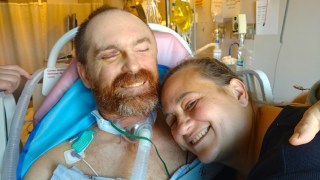
 

Theresa Friedle & Husband Scott IMG_20161112_102405896.jpg


1. What is your name? (last name optional)

Theresa Friedle

2. Where do you live? (city and/or state and/or country) Email? (optional)

Tomahawk, Wisconsin, USA     theresaj4man@gmail.com

3. What is the brain-injury survivor’s relationship to you?

The survivor is my husband, Scott. At the time of the accident, Scott and I were engaged. We were married on June 3, 2017.

How old was the survivor when he/she had the brain injury?

The accident happened two days before Scott’s 47th birthday.

What caused your survivor’s brain injury?

We were both working as truck drivers. Scott was picking up a load of plywood, which needed to be tarped. Something happened when he was on top of the load spreading out the tarp, and he fell anywhere from thirteen to nineteen feet (depending on if he was standing upright). He landed on his head on a concrete floor.

4. On what date did you begin care for your brain-injury survivor?

Scott’s injury happened on October 27, 2016. It took me ten and a half hours to get to him. I’ve been at his side ever since then.

Were you the main caregiver?

At first, the doctors and nurses were Scott’s caregivers. When he was discharged from rehab on December 22, I became his main caregiver.

Are you now?

Yes

How old were you when you began care?

I was 46 years old.

5. Were you caring for anyone else at that time (e.g., children, parents, etc.)?

At home, I had a young adult daughter, who was expecting her first child, as well as my younger two children (older teenagers).

6. Were you employed at the time of your survivor’s brain injury?

Yes. I was working for the same company as my (now) husband. I had a permit for a commercial driver’s license.truck4

If so, were you able to continue working?

No. However, I was told about a program through my state called “Family Care.” I now get paid to take care of my husband.

7. Did you have any help? If so, what kind and for how long?

I learned a great deal from the doctors, nurses, and therapists who worked with Scott. I asked a LOT of questions. However, once Scott came home, other than my family pitching in with the chores – no. It’s my job.

8. When did your support of the survivor begin (e.g., immediately – in the hospital; when the survivor returned home; etc.)?

Immediately – while Scott was in the neuro intensive care unit.

Scott’s family lives quite a ways away, so, to facilitate keeping them informed of his progress, I started a Facebook page about him. It turned out to be a wonderful support system.

9. Was your survivor in a coma?

Yes. Scott was in a medically induced coma. He had a craniotomy (to allow his brain room to swell), he was intubated, and he had two ports (one for meds and the other for nutrition).

If so, what did you do during that time?

I stayed by Scott’s side – talked to him and sang to him. I prayed. I kept his family informed, etc.

10. Did your survivor have rehab? If so, what kind of rehab (i.e., inpatient and/or outpatient and occupational, physical, speech, and/or other)? Theresa Friedle & Husband Scott IMG_20170705_220110

Yes. Scott was transported to an inpatient rehab facility closer to home. They provided him with occupational, speech, and physical therapies.

How long was the rehab?

We were there for twenty-two days. Scott continues to see speech and physical therapists twice a week.

Where were you when your survivor was getting therapy?

I stayed with Scott in the rehab center.

11. What problems or disabilities of your brain-injury survivor required your care, if any?

When Scott was first home, he needed help with almost everything! He was still in a wheelchair, and he needed assistance toileting, dressing, bathing, and more. He now walks with a cane, needs occasional help toileting, can dress himself, can help cook meals, does simple crafts, etc. He can’t drive, so I also transport him to and from wherever he needs to go.

12. How has your life changed since you became a caregiver?

Our lives have changed dramatically. Everything we do revolves around Scott’s needs, doctor appointments, and outpatient physical and speech therapy appointments. We can no longer attend church services, and we cannot go anywhere where there will be loud, noisy crowds.

Is it better?

In some aspects, yes! I get to be home with my children, and I get to see my grandson more.ITheresa Friedle & Husband Scott & Grandkids MG_20170714_083217

Is it worse?

Yes. Scott is limited as to the things we can do, and we cannot drive a semi right now – if ever.

13. What do you miss the most from pre-brain-injury life?

I miss going to church and driving a semi. The semi meant super-long days and hard work strapping and tarping loads. Driving it was often scary with how some people drive around us. But, it was something I’ve wanted to do since I was a teenager!

13. What do you enjoy most in post-brain-injury life?

I love that I’m able to be home with my family! I love that I get to take care of Scott, who remains a super-loving wonderful man!

14. What do you like least about brain injury?

Scott’s constantly in pain.

15. Has anything helped you to accept your survivor’s brain injury?

AliveWhat has helped me most is being super-grateful that Scott’s ALIVE! I feel that, even if Scott stays how he is now, we still have a great deal to be thankful for.

16. Has your survivor’s injury affected your home life and relationships and, if so, how?

Of course it has! Every aspect of our life has changed. We had to move our bedroom to the dining room because Scott cannot climb up and down the fifteen stairs to the upper level. Our laundry room is currently being remodeled so that Scott will have a shower. Now, I have to give him sponge baths in the kitchen. My children are happier because we’re home most of the time now. Through the Facebook page I created, I was able to develop a relationship with Scott’s family. They are so warm, loving, and welcoming.

17. Has your social life been altered or changed and, if so, how?

We seldom eat at restaurants anymore. The busyness of them overwhelms Scott. We can’t go to church for the same reason. Social events are out. Friends can only stay for an hour or so, otherwise Scott’s exhausted. At this point, most of my social life is through Facebook. Honestly, we’re NOT dwelling on that!

18. What are your plans? What do you expect/hope to be doing ten years from now?

We’ve discussed a few options, but none that is viable at this point. Until we know how permanent various parts of Scott’s injuries are, we really cannot plan much of anything. We make tentative plans for a week or two at a time, knowing that we can only do them IF Scott is having a good day that day.

19. What advice would you offer other caregivers of brain-injury survivors?

Caregiver Tips -clipart-blackboard-helpful-tips-detailed-illustration-heplful-text-43676517This is a SUPER-hard job, as our emotions are involved!

Be gentle with yourself and super-patient with the PERSON you are caring for.

Join support-groups, even if you can’t physically attend a group. (I have found several through Facebook by entering “TBI support groups.” TBI=traumatic brain injury.)

Make sure you get the rest you need.

The hardest for me? ASK for help when you need it!

Celebrate each step forward. Little steps are STILL STEPS!

It’s going to be a very long road. Educate yourself about TBI.

Get involved with the therapists – you will get a better sense of what your loved one can and can’t do. (This helped me tremendously with selecting activities for Scott. I wanted to give him something that he CAN do – so he has a sense of ACCOMPLISHMENT. I praise his efforts, regardless of his success. I don’t live with Scott’s pain – but I can see how HARD various tasks are for him to do. When Scott is frustrated that he can’t do something that he used to do easily – Scott’s usually upset about household chores, etc. – I remind him that there is a HUGE difference between CAN’T and WON’T!)

Take notes when you go to various doctors. I have found that their records are often INCORRECT.

Life is very, very different than what we had envisioned, but “different” does NOT need to equate with “bad.”

Attitude is EVERYTHING!

It’s OK to cry.

It’s OK if all the chores aren’t completed every day. Your best IS good enough. Know that your best fluctuates every day – sometimes several times a day. One day you will be able to get everything that you want to do done! Woohoo! Another day, your best is simply getting out of bed!

YOU ARE NOT ALONE! 

20. Do you have any other comments that you would like to add?

Sometimes reading the answers to these questions sparks more questions. I would be happy to explain further.


(Clip Art compliments of Bing.)

As I say after each post: Please leave a comment by clicking the blue words “Leave a Commentanim0014-1_e0-1 below this post.

Feel free to follow my blog. Click on “Follow” on the upper right sidebar.

If you like my blog, share it (intact) with your friends. It’s easy! Click the “Share” buttons below.

If you don’t like my blog, “Share” it (intact) with your enemies. I don’t care!

Feel free to “Like” my post.

New NEWS: My Radio Interview about My Upcoming Book

New NEWS: My Radio Interview about My Upcoming Book

presented by

Donna O’Donnell Figurski

Jamie Crane-Mauzy 053118

Jamie Crane-Mauzy


On May 27, 2018, Jamie Crane-Mauzy, a host on the Brain Injury Radio Network, interviewed me about my upcoming book (Prisoners without Bars: A Caregiver’s Tale), which will be available to the public on November 1, 2018, but that can be pre-ordered now. The 80-minute show has been archived and can be listened to at any time.

Donna O’Donnell Figurski

Prisoners

Prisoners without Bars: A Caregiver’s Tale


(Clip Art compliments of Bing.)

As I say after each post: Please leave a comment by clicking the blue words “Leave a Commentanim0014-1_e0-1 below this post.

Feel free to follow my blog. Click on “Follow” on the upper right sidebar.

If you like my blog, share it (intact) with your friends. It’s easy! Click the “Share” buttons below.

If you don’t like my blog, “Share” it (intact) with your enemies. I don’t care!

Feel free to “Like” my post.

Past Blast . . . . . . . . . . . . . . . . Brain Injury Resources . . . . . . . . The Crash Reel – Kevin Pearce

Brain Injury Resources………The Crash Reel – Kevin Pearce

(originally published March 30, 2014)

th-8


The Crash Reel” is a gripping 4+ star movie about Kevin Pearce, a champion snowboarder who was expected to win a gold medal in the 2010 Winter Olympics.

Kevin Pearce - after TBI

Then his dream was interrupted by a Traumatic Brain Injury (TBI.)

There is amazing footage of Kevin before and after his crash.  The incredible love and concern of his family is readily apparent.  Kevin’s dream is different now, and he has found a useful and fulfilling life.

The movie/documentary will give you an inside look at one young man’s battle with TBI. I highly recommend the movie.

(Clip Art compliments of Bing.)

As I say after each post:

Feel free to leave a comment by clicking the blue words “Leave a Comment” below this post.

Please follow my blog. Click on “Follow Me Via eMail” on the right sidebar of your screen.anim0014-1_e0-1

If you like my blog, click the “Like” button under this post.

If you REALLY like my blog, share it with your friends. It’s easy! Click the “Share” buttons below.

If you don’t like my blog, “Share” it with your enemies. That works for me too!


Survivors SPEAK OUT! . . . . . . . Carole Starr

Survivors SPEAK OUT! Carole Starr

presented

by

Donna O’Donnell Figurski


Carole Starr Survivor Speaker

Carole Starr – Brain Injury Survivor – Author of “To Root and to Rise”

1. What is your name? (last name optional)

Carole Starr

2. Where do you live? (city and/or state and/or country) Email (optional)

Maine, USA

3. On what date did you have your brain injury? At what age?

I had my brain injury on July 6, 1999. I was 32 years old.

4. How did your brain injury occur?

I was in a car accident. My vehicle was broadsided on the driver’s side by someone going about 50 mph.

5. When did you (or someone) first realize you had a problem?

My brain injury was diagnosed about six weeks after my accident. It was the physical therapist I saw for the whiplash who realized that I also had a brain injury. It became apparent to me when I tried to return to my regular life and struggled with tasks that used to be easy.

6. What kind of emergency treatment, if any, did you have?

After my accident, I was transported by ambulance to the emergency room. They diagnosed me with severe whiplash and other soft tissue injury. The signs of the brain injury were there, but they were missed.

7. Were you in a coma? If so, how long?

I was not in a coma.

8. Did you do rehab? What kind of rehab (i.e., inpatient or outpatient and occupational and/or physical and/or speech and/or other)? How long were you in rehab?

I didn’t receive any brain injury rehab until nearly a year after my injury. That was the worst year of my life, as I tried and failed numerous times to return to my old life. A physiatrist referred me to outpatient brain injury rehab. I’ve had physical, occupational, speech, and recreation therapies and counseling. I’ve also found help from alternative therapies, including cranial osteopathy, neuro-optometry, and homeopathy. I received rehab therapies on and off for several years. I still see several medical professionals, and I continue to make slow progress, even after more than eighteen years.

9. What problems or disabilities, if any, resulted from your brain injury
(e.g., balance, perception, personality, etc.)?

tired-womanI am plagued by extreme mental fatigue, sound and light sensitivities, balance issues, memory loss, visual midline shift, and difficulties with decision-making and problem-solving.

10, How has your life changed? Is it better? Is it worse?

My life changed dramatically after my brain injury. I had to give up my teaching career and my classical music hobby. I struggled to manage everyday-life tasks. I felt dependent on family and friends. For many years, I grieved the loss of my old life. I hated the new me. It was a long process to work through that grief and start to build a new life. I try really hard not to judge whether my life is better or worse. It’s just different. That helps me with the acceptance process.

11. What do you miss the most from your pre-brain-injury life?

I miss performing as a musician. I miss being able to go a whole day without needing to rest. I miss being able to trust my brain to do what I want it to.

12. What do you enjoy most in your post-brain-injury life?

Brain injury gave me the passion for a cause that was missing in my old life. This has become my life’s work. I like being able to use my experience to help other brain injury survivors. I do that through my book (To Root & To Rise: Accepting Brain Injury), my keynotes at brain injury conferences, and the volunteer group I lead (Brain Injury Voices).

Carole Starr & Book To Root and to Rise

Carole Starr – Brain Injury Survivor

13. What do you like least about your brain injury?

I dislike having to rest every day and missing out on activities I’d like to do. I never know when too much sound, light, motion, talking, or thinking is going to overwhelm my brain and require hours or days of rest to recover from.

14. Has anything helped you to accept your brain injury?

For a long time, I didn’t think I could ever accept my brain injury. It was a long process. Some things that helped me were support-groups, reading books by other survivors, counseling, journaling, crafts, learning to laugh at myself, finding silver linings, and focusing on what I’m thankful for.

15. Has your injury affected your home life and relationships and, if so, how?

For a long time, I felt like I was a burden – the one who always needed help. I had to learn to accept help from my family and friends and not resist their advice. I can now manage taking care of my home, but everything requires strategies. 67-Help_me

16. Has your social life been altered or changed and, if so, how?

My life is much smaller. My daily activities are short and quiet. If I want to do something bigger, I know that the price will be days on the couch recovering my mental energy.

17. Who is your main caregiver? Do you understand what it takes to be a caregiver?

I’ve been able to live on my own. Family, friends, and medical professionals have helped me learn strategies to take care of myself.

18. What are your plans? What do you expect/hope to be doing ten years from now?

kids-hand-writing-clip-art-hand_with_pencil_5CI plan to continue writing and speaking about brain injury. I want to use my experience to make a difference. I’ve spoken at brain injury conferences and events in six states so far. I’d like to speak in all fifty! I’d also like to help other survivors create education/advocacy groups like Brain Injury Voices in other states.

19. Are you able to provide a helpful hint that may have taken you a long time to learn, but which you wished you had known earlier? If so, please state what it is to potentially help other survivors with your specific kind of brain injury.

Find an activity that the new you can enjoy and do successfully. Start small, find success and build on it. Over time, small successes can grow into large achievements and lead you in directions you never imagined.

20. What advice would you offer to other brain-injury survivors? Do you have any other comments that you would like to add?

Find ways to connect with other survivors – either through an in-person support-group or online. Interacting with others who “get it” is invaluable.


Know that progress doesn’t stop after the first year or two after brain injury. Our brains are always healing. We may never be able to return to our old lives, but we can continue to grow into this new one.

Please feel free to contact me, either through StarrSpeakerAuthor.com or BrainInjuryVoices.org.

Brain Injury Voices Logo

If you would like to be a part of the SPEAK OUT! project, please go to TBI SPEAK OUT! Survivors Interview Questionnaire for a copy of the questions and the release form.

(Clip Art compliments of Bing.)

As I say after each post: Please leave a comment by clicking the blue words “Leave a Commentanim0014-1_e0-1 below this post.

Feel free to follow my blog. Click on “Follow” on the upper right sidebar.

If you like my blog, share it with your friends. It’s easy! Click the “Share” buttons below.

If you don’t like my blog, “Share” it with your enemies. I don’t care!

Feel free to “Like” my post.

New NEWS: Preorder Prisoners without Bars: A Caregiver’s Tale

Prisoners without Bars: A Caregiver’s Tale

Did you know you can preorder your copy of my book, Prisoners without Bars: A Caregiver’s Tale?

You can! It’s easy.

You can order it in e-book form or paperback copy on Amazon.com or Barnes & Noble.com.


Just click the book cover or the title below.

Prisoners without Bars: A Caregiver’s Tale

Can’t wait for you to join our journey.


(Clip Art compliments of Bing.)

As I say after each post: Please leave a comment by clicking the blue words “Leave a Commentanim0014-1_e0-1 below this post.

Feel free to follow my blog. Click on “Follow” on the upper right sidebar.

If you like my blog, share it (intact) with your friends. It’s easy! Click the “Share” buttons below.

If you don’t like my blog, “Share” it (intact) with your enemies. I don’t care!

Feel free to “Like” my post.
New NEWS: Countdown to Prisoners without Bars: A Caregiver’s Tale

Can’t wait for the release of my book, Prisoners without Bars: A Caregiver’s Tale


04.29.18

184 days to the release of Prisoners without Bars: A Caregiver’s Tale

4,440 hours to the release of Prisoners without Bars: A Caregiver’s Tale

266,400 minutes to the release of Prisoners without Bars: A Caregiver’s Tale

15,984,000 seconds to the release of Prisoners without Bars: A Caregiver’s Tale

But–WHO’S Counting?

Me! Me! Me! I am!

Check out my new website:  donnafigurski.com


SURVIVORS SPEAK OUT! Michelle Bartlett

Survivors SPEAK OUT!  Michelle Bartlett

presented

by

Donna O’Donnell Figurski


Michelle Bartlett 2

Michelle Bartlett – Survivor of Brain Injury

1. What is your name? (last name optional)

Michelle Bartlett

2. Where do you live? (city and/or state and/or country) Email (optional)

St. Stephen, New Brunswick, Canada

3. On what date did you have your brain injury? At what age?

I had my brain injury in March of 2004 at age 36.

4. How did your brain injury occur?

Two days after open heart surgery, I had a severe anoxic brain injury.

5. When did you (or someone) first realize you had a problem?

It was known immediately, as I was still in hospital.

6. What kind of emergency treatment, if any, did you have?

I have been told the doctors did CPR and other life-support methods for hours.

7. Were you in a coma? If so, how long?

Yes. I was in a coma for ten to twelve days.

8. Did you do rehab? What kind of rehab (i.e., inpatient or outpatient and occupational and/or physical and/or speech and/or other)? How long were you in rehab?

I did inpatient rehab for three weeks and outpatient rehab for over a year. I had speech, occupational, and physical therapies.

9. What problems or disabilities, if any, resulted from your brain injury
(e.g., balance, perception, personality, etc.)?

I have problems with balance, executive functions, and memory. I deal with fatigue and personality change.

10. How has your life changed? Is it better? Is it worse?

My life now isn’t what I planned it would be. It is what it should be.

11. What do you miss the most from your pre-brain-injury life?

Working

12. What do you enjoy most in your post-brain-injury life?

I enjoy helping others.

13. What do you like least about your brain injury?sleeping_on_job_5

The fatigue

14. Has anything helped you to accept your brain injury?

It helped to remember how accepting my grandfather was during times of stress.

15. Has your injury affected your home life and relationships and, if so, how?

Yes. It is difficult for me to express myself, and it is difficult for people to understand.

16. Has your social life been altered or changed and, if so, how?

Yes. Before my brain injury, I would never have had the confidence to do any public speaking. Now I have spoken at two national brain injury conferences. I also have numerous newspaper articles and radio interviews in Canada.

17. Who is your main caregiver? Do you understand what it takes to be a caregiver?

I’m pretty much independent now.

18. What are your plans?

I will continue to cherish my second chance.

What do you expect/hope to be doing ten years from now?

I intend to continue my advocating/support and education work in Canada, focusing on the east coast.canadian-maple-leaf-clip-art-42678

19. Are you able to provide a helpful hint that may have taken you a long time to learn, but which you wished you had known earlier? If so, please state what it is to potentially help other survivors with your specific kind of brain injury.

Patience can be your best and worst enemy.

Michelle Bartlett Survivor 040318

Michelle Bartlett – Brain Injury Survivor

20. What advice would you offer to other brain-injury survivors? Do you have any other comments that you would like to add?

Life is hard, no doubt about it, BUT always remember you are NOT alone. There is always someone else hiding in the shadows or around a corner who has a brain injury you may not know about.


If you would like to be a part of the SPEAK OUT! project, please go to TBI SPEAK OUT! Survivors Interview Questionnaire for a copy of the questions and the release form.

(Clip Art compliments of Bing.)

As I say after each post: Please leave a comment by clicking the blue words “Leave a Commentanim0014-1_e0-1 below this post.

Feel free to follow my blog. Click on “Follow” on the upper right sidebar.

If you like my blog, share it with your friends. It’s easy! Click the “Share” buttons below.

If you don’t like my blog, “Share” it with your enemies. I don’t care!

Feel free to “Like” my post.

Survivors SPEAK OUT! Christine Durant

Survivors SPEAK OUT!  Christine Durant

presented

by

Donna O’Donnell Figurski


28722393_1570405716328305_1310268133_n1. What is your name? (last name optional)

Christine Durant

2. Where do you live? (city and/or state and/or country) Email (optional)

Connecticut, USA

3. On what date did you have your brain injury? At what age?

I was 21.

4. How did your brain injury occur?

Medical neglect

5. When did you (or someone) first realize you had a problem?

I did when I was 13.

28829269_1570406372994906_1587925987_n

Christine Durant – Brain Injury Survivor

6. What kind of emergency treatment, if any, did you have?

Brain surgery

7. Were you in a coma? If so, how long?

No coma

8. Did you do rehab?

Yes

What kind of rehab (i.e., inpatient or outpatient and occupational and/or physical and/or speech and/or other)? How long were you in rehab?

I went to inpatient rehab for a week or so.

28740893_1570406139661596_1150992867_n

Christine Durant – Brain Injury Survivor

9. What problems or disabilities, if any, resulted from your brain injury
(e.g., balance, perception, personality, etc.)?

I have balance and visual memory issues and some difficulty with visual identification. I had a LARGE personality change that included explosive issues and lack of impulse control. I also had double vision.

10. How has your life changed? Is it better? Is it worse?

The medical neglect caused excruciating neurological pain, but it stopped with my first brain surgery. I was a diagnostic educator. My issues made me better at what I dith-2d because I finished my undergraduate work like this and did all four of my graduate degrees with strategies I developed for myself. I believe I am better off.

11. What do you miss the most from your pre-brain-injury life?

Energy

12. What do you enjoy most in your post-brain-injury life?

My ability to see things differently than most folks

13. What do you like least about your brain injury?

Lack of energy and visual memory issues

14. Has anything helped you to accept your brain injury?

28741255_1570405966328280_1345947392_n

Christine Durant – Brain Injury Survivor and partner.

Meeting my wife and having a 25-year relationship … all post TBI

15. Has your injury affected your home life and relationships and, if so, how?

I am more sensitive to other people’s moods now. I can become what they are feeling.

16. Has your social life been altered or changed and, if so, how?

Everyone who was my friend at that point is not a friend now. However, I chose better after my recent brain surgery because they all helped us through it.

17. Who is your main caregiver? Do you understand what it takes to be a caregiver?

I don’t really have a caregiver. I have a “care-partner.” We had an accident together twenty years ago. Someone was late for lunch and went over the yellow line – into us head-on. We help each other as life necessitates.

18. What are your plans? What do you expect/hope to be doing ten years from now?

I would like to travel on the money from the accident while we still can. In ten years, I will be retirement age!Travel

19. Are you able to provide a helpful hint that may have taken you a long time to learn, but which you wished you had known earlier? If so, please state what it is to potentially help other survivors with your specific kind of brain injury.

Know that you will adjust to your new personality. Find life-giving, happy people to get you there. I went home to my mother at 21. She was always an angry woman. I didn’t realize what a toll that was taking on me until I met my sweet, wonderful, happy wife.

28829065_1570406592994884_447684030_n-1

Christine Durant – Brain Injury Survivor & partner

20. What advice would you offer to other brain-injury survivors? Do you have any other comments that you would like to add?

Give it time. Don’t be hard on yourself. Find a passion that you are able to do within the confines of your new body. My wife has a broken foot from the accident that can’t be fixed. She used to paint theatrical scenery for Broadway. She can’t do that from a wheelchair. So, she discovered she has a passion for pottery.


If you would like to be a part of the SPEAK OUT! project, please go to TBI SPEAK OUT! Survivors Interview Questionnaire for a copy of the questions and the release form.

(Clip Art compliments of Bing.)

As I say after each post: Please leave a comment by clicking the blue words “Leave a Commentanim0014-1_e0-1 below this post.

Feel free to follow my blog. Click on “Follow” on the upper right sidebar.

If you like my blog, share it with your friends. It’s easy! Click the “Share” buttons below.

If you don’t like my blog, “Share” it with your enemies. I don’t care!

Feel free to “Like” my post.

Caregivers SPEAK OUT! . . . Heather Sivori Floyd . . . Caregiver for her son, TJ


Caregivers SPEAK OUT!

Heather Sivori Floyd (caregiver for her son, TJ)

presented by

Donna O’Donnell Figurski


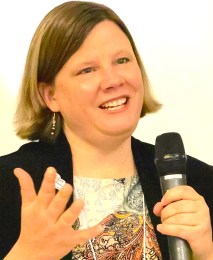
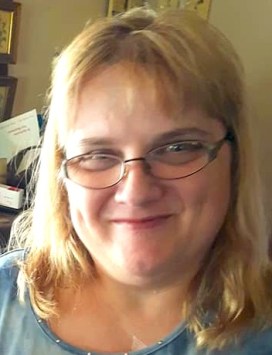
Heather Sivori Floyd – caregiver mom to her son, TJ

1. What is your name? (last name optional)

Heather Sivori Floyd

2. Where do you live? (city and/or state and/or country) Email? (optional)

Oldham County, Kentucky, USA

3. What is the brain-injury survivor’s relationship to you?

He (TJ) is my son.

How old was the survivor when he/she had the brain injury?

TJ was 7 years old.

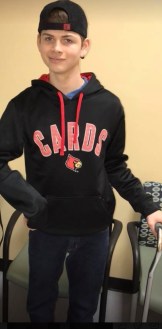
11 TJ Floyd

TJ – Brain Injury Survivor – bicycle accident

What caused your survivor’s brain injury?

TJ was riding his bicycle when he wrecked into the back of his brother. He flipped over the handle bars and hit his head on the concrete. He went to “sleep” and never woke up until days after his emergency open brain surgery.

4. On what date did you begin care for your brain-injury survivor?

April 21, 2010

Were you the main caregiver?

Yes

Are you now?

Yes

How old were you when you began care?

Age stinks. I’d rather not discuss it. LOL!

TJ and Mom Heather Sivori Floyd

TJ – Brain Injury Survivor & his Mom, Heather Sivori Floyd

5. Were you caring for anyone else at that time (e.g., children, parents, etc.)?

Yes – my three other children. I was also pregnant at the time.

6. Were you employed at the time of your survivor’s brain injury?

Yes

If so, were you able to continue working?

Yes – part time from home.

7. Did you have any help? Mother-in-Law

My mother-in-law moved in to help with my other children so I could care full-time for TJ with his therapy and doctors.

If so, what kind and for how long?

Well, she is still here.

8. When did your support of the survivor begin (e.g., immediately – in the hospital; when the survivor returned home; etc.)?

Immediately

9. Was your survivor in a coma?

I’m not sure of the medical term, but he was unresponsive until several days after his brain surgery.

If so, what did you do during that time?

I slept beside TJ in a chair. I was three months pregnant and heartbroken at the fear of the unknown. What was it they called it? . . . Ah yes, “the new normal.” I was trying to figure out what that meant. You don’t actually “get it” until years later.

14 TJ & Mom Heather Sivori Floyd copy

TJ – Brain Injury Survivor & Mom, Heather Sivori Floyd

10. Did your survivor have rehab?

Yes

If so, what kind of rehab (i.e., inpatient and/or outpatient and occupational, physical, speech, and/or other)?

Physical, occupational, and speech therapies; also, hippotherapy (the use of horseback riding to improve balance, coordination, and strength)

How long was the rehab?

TJ still goes to therapy.

Where were you when your survivor was getting therapy?

With TJ

11. What problems or disabilities of your brain-injury survivor required your care, if any?

brain-injury-imageEverything. TJ’s brain bleed damaged the whole left side of his brain and parts of the right. He was left with severe impairments, specifically in speech, language, memory, and cognitive function. He has safety issues. Because of attention, safety, and balance issues, he has trouble walking without hands-on help constantly. He also has memory problems, speech problems, vision problems, physical issues from having hemiparesis (weakness on one side), and a lot more.

12. How has your life changed since you became a caregiver?

Things that mattered to me prior his accident are non-issues to me now. I often times feel I can talk with doctors and therapists better than I can with most people my age. It can be lonely, difficult, and frustrating at times to find common connectors in my personal relationships with friends and family. Some weeks are packed full of appointments. I’m drinking so much coffee I think my system will crash. Just this past week, I knocked out four appointments in one day. The most I’ve done in one day has been seven.

Is it better?

I would say yes – my life is better. Even though this is the most challenging task of my life, my son is innocent, happy, and laughs a lot. I believe having the privilege to care for my child, who is special needs, has been the most rewarding love one can experience. The impact special-needs children make are life-long. You learn so much through them in how they view the world.

Is it worse?

No parent ever wants this for his or her child. That being said, my life is better because of the profound true joy my son has brought me. The worst part, I would say, is having struggles that are hard to overcome. Watching him struggle is hard. I do whatever I can to help him when this happens. Also, the stress of future planning is scary and overwhelming.

18 TJ & Mom Heather Sivori Floyd copy

Heather Sivori Floyd & her son, TJ

13. What do you miss the most from pre-brain-injury life?

Our conversations. Most of the time, our conversations now are basic – food, eat, play a game, etc. I miss those conversations with my child that went beyond basic needs.

14. What do you enjoy most in post-brain-injury life?

Oh gosh, a child like TJ changes you in a profound way. The love you have in your heart for your child and others like him or her is something that is hard to put into words. I want to protect all of them forever. The world is full of evil people who would take advantage. I also enjoy trying to help others – to make it easier for the family who comes after us. There will always be another family. I’ve also learned to let the little things slide because, at the end of the day, they are just that – little.

15. What do you like least about brain injury?

Everything. It’s unrelenting and nasty. It takes a lot and rarely gives anything back.

16. Has anything helped you to accept your survivor’s brain injury?

Yes – TJ is happy. It is hard to justify my being sad or my crying all the time when he is happy. He lives in the now – not for tomorrow or the day before.

17. Has your survivor’s injury affected your home life and relationships and, if so, how?

1-divided-path-tracie-kiernanYes – especially my personal friendships and my relationships with family. I think we are on different paths in life now. While they talk of work and social events, I am constantly thinking What can we do to make it better for TJ and others going through this? My closest friends are now the caregivers and survivors I’ve met locally. We work together locally to make a positive change for the brain-injury community. I also work with an amazing team of ladies who help me run two support-groups for survivors and caregivers. I started my first one seven years ago. I was scared after TJ’s brain injury, and I needed to know I was not alone. I needed hope. The groups grew to over 30,000, and the rest is history. The friendship we have is unbreakable. Shout-out to my amazing admins and friends: Melissa, Shauna, Margie, Mary, Michael, Eddie, and Alex. Love you all! We’ve met many who have inspired us in this journey.

18. Has your social life been altered or changed and, if so, how?

Um, what social life?! Seriously, I have no social life. It’s too hard to connect with others.

19. What are your plans?

My #1 plan is finding the best long-term situation for TJ that will ensure the best care he can have when we can no longer do so. Personally, I also plan to continue making a difference locally. We have several projects we are working on, and I have some more ideas to help. I ALWAYS have an idea. I’m always thinking big. Nothing brings me greater joy than helping others. It is important for families to know they aren’t alone and that people care enough to try and make it better. I try to do my part because of my son and the many we have met.

What do you expect/hope to be doing ten years from now?

I hope to still be laughing and loving the small joys in life with TJ. Hopefully, we will have made a big impact locally and beyond for the brain-injury community.

20. What advice would you offer other caregivers of brain-injury survivors? Never Give Up

Never give up. Let the small things go. Love deeply, and give your all. If you don’t, one day you will wish you had. Be the voice for your loved one. Never let “no” be an obstacle; there is always a way. If the door closes, kick it open. Most importantly, hang on when the days are hard and you feel you cannot go on. You can, and your survivor needs you to. Connect with other caregivers so you don’t feel like you walk this path alone – because you don’t. There are many who walk it with you daily

Do you have any other comments that you would like to add?

I think I’ve said what’s important for caregivers to know.


(Clip Art compliments of Bing.)

(Photos compliments of contributor.)

As I say after each post: Please leave a comment by clicking the blue words “Leave a Commentanim0014-1_e0-1 below this post.

Feel free to follow my blog. Click on “Follow” on the upper right sidebar.

If you like my blog, share it intact with your friends. It’s easy! Click the “Share” buttons below.

If you don’t like my blog, “Share” it intact with your enemies. I don’t care!

Feel free to “Like” my post.

diemodi jewelry

uniquely hand-crafted jewelry by donna

Welcome to Harmony Kent Online

The home of all things books

Pete Springer

Passionate Teacher and Future Children's Author

HOPE TBI

Helping Other People Excel - To Be Independent

For the Love of Books, Old and New

Katie Fischer, Writer and Reader of Stories

Charlie Bown

Children's Author

Jessica Hinrichs

“We write to taste life twice, in the moment and in retrospect.” ― Anais Nin

VIVIAN KIRKFIELD - Writer for Children

Picture Books Help Kids Soar

Mindy’s Writing Wonderland

For authors, parents, teachers & everyone who loves children’s books.

Kaitlyn Leann Sanchez

Literary Agent

Surviving Traumatic Brain Injury

TBI - Survivors, Caregivers, Family, and Friends

The Care Factor

Loving someone with a Traumatic Brain Injury

Brain Injury Support Group of Duluth-Extension

Brain Injury Information and SUPPORT

Brain Aneurysm Global Insight

Brain Aneurysm, cerebral hemorrhaging, hemorrhage stroke