Caregivers SPEAK OUT! . . . . Malissa Mallett (caregiver for her son)
Caregivers SPEAK OUT!
Malissa Mallett (caregiver for her son)
presented by
Donna O’Donnell Figurski
“Malissa Mallett will be my guest tomorrow (Sunday, February 17) on my radio show (Another Fork in the Road) on the Brain Injury Radio Network. She has been caregiver for her son, who had an anoxic brain injury, since 1997, when he was an infant. Malissa is Program Director for the Brain Injury Alliance of Arizona (BIAAZ). We will discuss caring for her son and the effect of her expertise (opioid use on the brain.) My show broadcasts live at 5:30 PT (blogtalkradio.com/braininjuryradio), or it can be heard as a podcast anytime (https://survivingtraumaticbraininjury.com/category/on-the-air-show-menu/).”
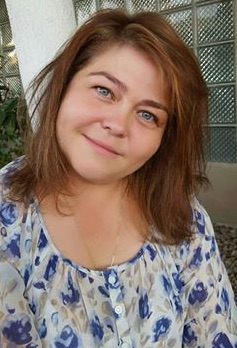
1. What is your name? (last name optional)
Malissa Mallett
2. Where do you live? (city and/or state and/or country) Email? (optional)
Laveen, Arizona, USA Program@biaaz.org
3. What is the brain-injury survivor’s relationship to you? How old was the survivor when he/she had the brain injury? What caused your survivor’s brain injury?
The survivor is my son. He was 2 months old. His brain injury was caused by aspiration, causing him to stop breathing (anoxic brain injury).
4. On what date did you begin care for your brain-injury survivor? Were you the main caregiver? Are you now? How old were you when you began care?
My care began in April 1997. I was 22 years old. I was my son’s main caregiver then, but I’m not now.

Babies get brain injury too
5. Were you caring for anyone else at that time (e.g., children, parents, etc.)?
No
6. Were you employed at the time of your survivor’s brain injury? If so, were you able to continue working?
I had just returned to work after giving birth. I was not able to continue working, since my son required 24-hour supervision for his heart and lung monitor.
7. Did you have any help? If so, what kind and for how long?
Occasionally. My family, who were trained in CPR, would care for my son to give me a break or a night out.
 8. When did your support of the survivor begin (e.g., immediately – in the hospital; when the survivor returned home; etc.)?
In the hospital
9. Was your survivor in a coma? If so, what did you do during that time?
No
10. Did your survivor have rehab? If so, what kind of rehab (i.e., inpatient and/or outpatient and occupational, physical, speech, and/or other)? How long was the rehab? Where were you when your survivor was getting therapy?
No
11. What problems or disabilities of your brain-injury survivor required your care, if any?
This is difficult to answer given my son’s age at the time of his brain injury.
12. How has your life changed since you became a caregiver? Is it better? Is it worse?
My life was challenging all throughout my son’s life.
13. What do you miss the most from pre-brain-injury life?
I will never know what could have been.
14. What do you enjoy most in post-brain-injury life?
Does not apply
15. What do you like least about brain injury?

Learn about brain injury
The lack of understanding in the community
16. Has anything helped you to accept your survivor’s brain injury?
Yes. Education.
17. Has your survivor’s injury affected your home life and relationships and, if so, how?
Yes, it has. We can discuss this on your radio show. It’s too much to explain here.
18. Has your social life been altered or changed and, if so, how?
Not anymore
19. What are your plans? What do you expect/hope to be doing ten years from now?
I would love for my son to be successful and independent.
20. What advice would you offer other caregivers of brain-injury survivors? Do you have any other comments that you would like to add?
 Take care of yourself.
Be surrounded by supportive people.
Educate yourself.
(Clip Art compliments of Bing.)
As I say after each post: Please leave a comment by clicking the blue words “Leave a Comment” below this post.
Feel free to follow my blog. Click on “Follow” on the upper right sidebar.
If you like my blog, share it (intact) with your friends. It’s easy! Click the “Share” buttons below.
If you don’t like my blog, “Share” it (intact) with your enemies. I don’t care!
Feel free to “Like” my post.


 Don’t give up!


 was already at my porch and smiling, with my coffee mug in her hand!
 1. What is your name? (last name optional)

 18. What are your plans? What do you expect/hope to be doing ten years from now?
 1. What is your name? (last name optional)


 19. What are your plans? What do you expect/hope to be doing ten years from now?
 The Centers for Disease Control has reported that traumatic brain injury (TBI) accounts for more than 2.5 million visits to emergency rooms (ERs) in the US every year. Many people with a concussion do not even go to the ER because they have no symptoms and don’t believe that the ER can diagnose a brain injury if it’s not serious enough to be detected by a number of indirect tests. A CT (“cat”; computerized tomography) scan is usually ordered if a brain injury is suspected, but only 10% of CT scans detect a brain injury in people with a mild head injury.
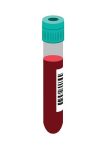 A quick, sensitive, and accurate blood test will soon be available for ERs
  to know if the brain has been injured. Some people will be negative. They will not need a CT scan and can go home with no worries. Others who are asymptomatic may actually discover that they’re positive for a brain injury. The ER doctor can then take appropriate action.
 My permission was needed to operate on my husband’s brain. How could I give it? How could I allow Dr. Hulda to work on my husband’s beautiful, smart brain? …


 I have a social worker and a nurse team help me. I also have a nurse who comes over twice a week to plan my medicine box and write down my appointments. I just did a neuropsychological test, and they are saying I need a guardian.
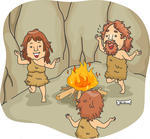 considered impolite to peer into someone else’s hearth. That’s the way it felt in the waiting room too …


 Raising Awareness of Traumatic Brain Injury - one view at a time. Thanks for visiting my blog
 Surviving Traumatic Brain Injury
Recent Comments