TBI – Survivors, Caregivers, Family, and Friends

Posts tagged ‘Another Fork in the Road’

TBI Tales . . . . . . . . . . . . Overcoming Obstacles while Getting On with Life

Overcoming Obstacles while Getting On with Life
by
Chelsea Rolph

presented by


Donna O’Donnell Figurski
(author – Prisoners without Bars: A Caregiver’s Tale)


chelsea rolph

Chelsea Rolph – Survivor of Brain Injury

This has been one heck of a decade! When I think back to how it all began, I would have never seen myself where I am now.

I began this decade healing from a concussion and graduating high school. I chose to do a “Victory Lap” so I could have the time to figure out what I wanted to do with my future.

As the school year began in September 2010, I returned back to varsity sports to continue to do what I loved … play.

Unfortunately, as most people know, it did not end well. I was knocked out during a basketball game in the last 4 seconds, leaving me with the concussion of all concussions.

I remember sitting in accounting, music, and business classes and crying to myself because it hurt too much to read the text. I also remember going home and breaking down because I no longer had the sports to turn to as a stress relief. I was frustrated with the amount of exhaustion I was feeling at the end of the day.

I was sent to a concussion rehab clinic for a few months, and this was the first time I felt like I finally had some answers. At the beginning of this decade, my parents would take me to the hospital every week to get tests done on both my heart and my brain. These tests concluded with doctors suggesting that my “new normal” was going to be a long transition with no end in sight.

Although all of my friends were applying to colleges and universities, I was told that I should not consider post-secondary education at that time. Despite this, I still applied to colleges and universities to keep my options open.

After being accepted to all of my options, I decided to go to McMaster University (MAC), so I had family support close by if I were really struggling. After accepting MAC, I met with a counselor to discuss what the rehab clinic had said I should have for accommodations.

After the guidance counselor at MAC agreed to all of the accommodations that were recommended for me, she suggested that I should take two classes a semester and take ten years to complete my undergrad.

Fast-forward to the end of the decade – most people know that not only did I choose to take a full course load, but I also chose to try to accomplish it without the accommodations recommended. The counselors did not believe I would be successful even with the accommodations and tried to talk me out of it. Not only did I take a full course load, but I was also working close to full-time hours at the same time.

Get-a-Bachelors-Degree-Online-Step-15Four years later, in May of 2015, I graduated with a Bachelor of Arts degree. In August 2015, I was hired in my first full-time job! After three months, I received a promotion, and then, ten months after that, I was promoted again to the position I am currently in. Over the last 4.5 years, I have had the amazing opportunity to work with so many amazing students and colleagues who have helped shape me into the person I am today. Unfortunately, I have chosen to leave my current position to pursue other opportunities.

As this decade ends, a new and exciting chapter begins! Today I find myself writing this from the comforts of my home as I begin my journey as an entrepreneur. My business partner and I are so excited to have the opportunity to quit our full-time jobs to focus on running our own business.

Along with reminiscing about my professional career over the past ten years, I also think about the personal experiences. Many have been positive, but I also had my share of sorrows. I have lost so many amazing people in my life, including both of my grandmas, my uncle, and a friend. I have lost a pet and nearly lost two more. I struggled with immigration. And, my mom was diagnosed with breast cancer.

I am very happy to say that I have also had the opportunity to see my mom defeat cancer and ring that victory bell. I am also happy that Rod and I no longer need to worry about immigration or travelling out of the country together for events. I also have a long list of amazing other things that have happened over the past decade: graduating, falling in love, buying a car, travelling to many cities and countries (for example, Las Vegas, New York City, Ecuador, the east coast of Canada, mainland Europe, and the UK), attending a conference in the United Nations headquarters, fundraising around $150,000 for both OIPlocal and global organizations, making so many amazing new friends, experiencing weddings, getting over my fear of babies, having nieces and nephews, getting a kitten, and going back to school to study French as a second language.

Here’s to hoping that the next decade will bring less of the sadness and more of the happiness and excitement that I have been lucky enough/privileged to experience.

Cheers to 2020!

Clip Art compliments of Bing.)

(Photos compliments of contributor.)

As I say after each post:

Please leave a comment by clicking the blue words “Leave a Comment” below this post.

Feel free to follow my blog. Click on “Follow” on the upper right sidebar.anim0014-1_e0-1

If you like my blog, share it intact with your friends. It’s easy! Click the “Share” buttons below.


On the Air: . . . . . . . . . . . . . . . Guest: Dr. David Figurski

On the Air: Guest: Dr. David Figurski

presented by

Donna O’Donnell Figurski

David Figurski

David H. Figurski, Ph.D & Survivor of Brain Injury


Dr. David Figurski, retired professor of microbiology, talks about his brain injury and COVID-19

I don’t often publicize my radio show on the Brain Injury Radio Network, but one of our brain injury survivors is knowledgeable about the COVID-19 pandemic, which I’m sure is on your mind.  Like me, you probably have lots of questions.

My guest on the April 19th show was my husband, Dr. David Figurski.  David has been living with several physical disabilities since January 2005, when he had a brain hemorrhage, but, fortunately, after three brain surgeries in two weeks, he was unaffected cognitively.  For 35 years, including eight years after his traumatic brain injury, David was a professor in the Department of Microbiology & Immunology at Columbia University, where he also had a research lab.  David has done research on bacteria and viruses for 45 years.  Unsurprisingly, he has been very interested in the new human coronavirus and the global pandemic it has caused.news-clipart-news-anchor-4

My 80-minute show was live on April 19th, but it was recorded and can now be listened to at any time as a podcast.  My interview of David has two parts.  From 9:30 to 49:50, David and I talk about life with his brain injury.  From 49:50 to the end, David and I discuss the COVID-19 pandemic.

To Listen Go To:

SPEAK OUT! On the Air with . . . Brain Injury Radio Show Menu “Another Fork in the Road”

blogtalkradio.com/braininjuryradio/2020/04/20/another-fork-in-the-road-bi-survivorcolumbia-prof-dr-david-figurski-covid19


(Clip Art compliments of Bing.)

(Photos compliments of guests.)

As I say after each post: Please leave a comment by clicking the blue words “Leave a Commentanim0014-1_e0-1 below this post.

Feel free to follow my blog. Click on “Follow” on the upper right sidebar.

If you like my blog, share it intact with your friends. It’s easy! Click the “Share” buttons below.

If you don’t like my blog, “Share” it intact with your enemies. I don’t care!

Feel free to “Like” my post.

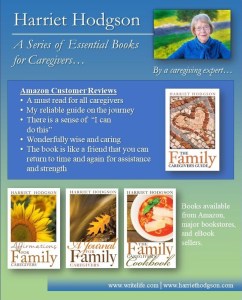
Caregivers SPEAK OUT! Harriet Hodgson – Caregiver and Author

Caregivers SPEAK OUT! Harriet Hodgson (caregiver for husband)

presented by

Donna O’Donnell Figurski

(Author of Prisoners without Bars: A Caregiver’s Tale)


Harriet Hodgson – Caregiver for her husband, John – Author of many books.

1. What is your name? (last name optional)

Harriet Hodgson

2. Where do you live? (city and/or state and/or country) Email? (optional)

Rochester, Minnesota, USA      harriethodgson@charter.net

3. What is the brain-injury survivor’s relationship to you? How old was the survivor when he/she had the brain injury? What caused your survivor’s brain injury?

I cared for my mother, who had been a brilliant woman before her Vascular Dementia. At the time, nobody knew mini-strokes continued to spread.

4. When did you begin care for your brain-injury survivor? Were you the main caregiver? Are you now? How old were you when you began care?

I started caring for my mother after she was found wandering in a department store. Interestingly, my mother called from Florida to tell me this story. “The clerk told me cars are parked outside the store.” In my fifties, I moved my mother from Melbourne, Florida, to Rochester, Minnesota, to care for her.

5. Were you caring for anyone else at that time (e.g., children, parents, etc.)?

I wasn’t caring for anyone else at the time.

6. Were you employed at the time of your survivor’s brain injury? If so, were you able to continue working?

Yes. I was a freelance writer. Continuing to write was difficult. My mother lived with us for a month, while her apartment in an assisted living community was being readied for her. If I sat down at the computer, she stood behind me and literally breathed down my neck.

7. Did you have any help? If so, what kind and for how long?

I moved my mother into an assisted living community. Also developed a weekly schedule of care: shopping day, medical/dental day, errand day, out to lunch day, etc.

8. When did your support of the survivor begin (e.g., immediately – in the hospital; when the survivor returned home; etc.)?

On a frigid night, when the temperature was 35-below and the wind chill was 50-below, my mother called and said she was going back to Long Island to be with friends. All of the people she mentioned were deceased. I called her physician, and he wrote orders sending her to nursing care, a locked ward.

9. Was your survivor in a coma? If so, what did you do during that time?

No coma. Profound confusion.

10. Did your survivor have rehab? If so, what kind of rehab (i.e., inpatient and/or outpatient and occupational, physical, speech, and/or other)? How long was the rehab? Where were you when your survivor was getting therapy?

No rehab. There was no way to fix my mother’s mind.

11. What problems or disabilities of your brain-injury survivor required your care, if any?

Complained to management. Social services came and evaluated her. Mom couldn’t answer any of the questions on the Mini Mental Status Exam. Worse, she said, “My daughter put me in here.”

12. How has your life changed since you became a caregiver? Is it better? Is it worse?

Years later (maybe ten), caregiving took over my life. I’ve cared for three generations of family members: my mother, my orphaned twin grandchildren, and now my husband, who has a spinal cord injury. This prompted me to write a series of books for family caregivers.

13. What do you miss the most from pre-brain-injury life?

I miss the freedom of my old life and being able to do what I want. Am also physically and emotionally tired.

14. What do you enjoy most in post-brain-injury life?

Being even closer to my husband. We are devoted to each other.

15. What do you like least about brain injury?

I hate the unpredictability of brain injury. For example, my mother would call my phone number repeatedly and hang up repeatedly because she didn’t recognize my voice.

16. Has anything helped you to accept your survivor’s brain injury?

Learning about Vascular Dementia and writing have helped.

17. Has your survivor’s injury affected your home life and relationships and, if so, how?

Eventually my mother’s brain shut down. She couldn’t read, couldn’t speak (grunts), didn’t recognize me, and thought I had come to harm her. This was heartbreaking.

Harriet Hodgson – Caregiver and Author; Dr. John Hodgson

18. Has your social life been altered or changed and, if so, how?

I don’t really have a social life.

19. What are your plans? What do you expect/hope to be doing ten years from now?

My plans are to care for my husband until one of us dies. Both of us are 84 years old.

20. What advice would you offer other caregivers of brain-injury survivors? Do you have any other comments that you would like to add? 

Be kind to yourself, and be on the lookout for Compassion Fatigue.


If you would like to learn more about Harriet, please visit her website;

Harriet Hodgson

As I say after each post: Please leave a comment by clicking the blue words “Leave a Commentanim0014-1_e0-1 below this post.

Feel free to follow my blog. Click on “Follow” on the upper right sidebar.

If you like my blog, share it (intact) with your friends. It’s easy! Click the “Share” buttons below.

If you don’t like my blog, “Share” it (intact) with your enemies. I don’t care!

Feel free to “Like” my post.


New NEWS: Dr. David Figurski Speaks Out About Coronavirus

Dr. David Figurski Speaks Out About Coronavirus

presented by

Donna O’Donnell Figurski


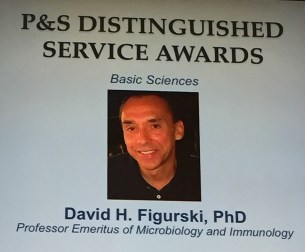
David Columbia Award May 2017

Professor David Figurski        Columbia University College of Physicians &Surgeons


“In graduate school, I worked with a virus that infects bacterial cells (bacteriophage T1). One T1 virus particle takes about 10-12 minutes to break open the E. coli cell and release over 100 new virus particles. Each new particle can infect a cell and produce over a hundred new virus particles. So, 10-12 minutes later, there are 10,000 viruses. I could do some experiments in the morning and have the results that afternoon.

0.40555600_1467108645_microbes

Random Petri Plate

To make stocks of the virus, we would infect a late culture of bacteria. A couple of hours later, all the bacterial cells were broken open, leaving only virus.

1800x1200_coronavirus_1

Coronavirus


Animal viruses, like coronavirus, probably take hours to reproduce, but each infected cell produces at least a thousand new virus particles.

Consequently, I have a healthy respect for viruses.”

David H. Figurski, Ph.D – Molecularbiologist

Columbia University Professor Emeritus


(Clip Art compliments of Bing.)

(Photos compliments of contributor.)

As I say after each post:

Please leave a comment by clicking the blue words “Leave a Comment” below this post.

anim0014-1_e0-1

Feel free to follow my blog. Click on “Follow” on the upper right sidebar.

If you like my blog, share it intact with your friends. It’s easy! Click the “Share” buttons below.

Survivors SPEAK OUT! . . . Thomas Hopkins, Jr (Tommy)

Survivors SPEAK OUT! . . . Thomas Hopkins, Jr (Tommy)

presented

by Donna O’Donnell Figurski

Tommy Hopkins, Jr Survivor of Brain Injury


1. What is your name? (last name optional)

Thomas Hopkins, Jr.

2. Where do you live? (city and/or state and/or country) Email (optional)

Mountain Home, Idaho, USA (originally from Wisconsin)

3. On what date did you have your brain injury? At what age?

I was 19 years old.

4. How did your brain injury occur?

I have had several head traumas that led to my brain injuries. I’ll discuss the main ones. I have two injuries from February 2003. The first was due to a JDAM bomb (Joint Direct Attack Munition – a guidance kit that converts unguided bombs into all-weather precision-guided munitions). The second was from an explosion in a unit I was working with. In 2006, on my 4th tour, I had gotten a hammer to the head. I do not recall this incident at all. My fourth injury was in May 2007. I was still on my 4th tour. Our camp got morning RPG/mortar hits. The shop I was working in had one hit close by that shook the shop. The 40-lb. equipment I was working on fell over and hit me in the back of the head.

5. When did you (or someone) first realize you had a problem?

I started noticing issues after my first injury back in 2003 – daily headaches, ringing in my ears, light sensitivity, plus I would invert numbers.

6. What kind of emergency treatment, if any, did you have?

Due to the units I was in, I did not get treatment. I’ll rephrase that – due to the units I was part of, unless you lost a limb, your sight, etc. or your life was in danger, you were not allowed to seek medical treatment.

7. Were you in a coma? If so, how long?

No coma

8. Did you do rehab? What kind of rehab (i.e., inpatient or outpatient and occupational and/or physical and/or speech and/or other)? How long were you in rehab?

I started seeking help once I got out of the army. I started at the VA (medical care at hospitals of the Veterans Administration). It was not the best outcome.

9. What problems or disabilities, if any, resulted from your brain injury
(e.g., balance, perception, personality, etc.)?

I have convergence insufficiency (a condition in which your eyes are unable to work together when looking at nearby objects, creating double or blurred vision),

photophobia, daily headaches that turn into migraines, and constant tinnitus. One doctor said I have damage to the autonomic and limbic systems in my brain. Other doctors have said that I don’t even have a brain injury! (LOL) I have no concept of time; I experience jerks (involuntary muscle movements); I search for words; my speech is slurred; my brain often won’t let me get my words out; and I have a poor memory. I do not feel 60+% of my body, and my lower limbs do not work a lot of the time. “Partial Para” is what they call it. At times, I need to be in a wheelchair.

10. How has your life changed? Is it better? Is it worse?

Worse

11. What do you miss the most from your pre-brain-injury life?

I miss my memory. It used to be photographic.

12. What do you enjoy most in your post-brain-injury life?

Retirement (LOL) … Driving my wife nuts (LOL) … Um, working my brain in different ways to work on problems and situations that come up in my hobbies

13. What do you like least about your brain injury?

I’m not Johnny-on-the-spot anymore. I miss my memory. My body is going to shit.

14. Has anything helped you to accept your brain injury?

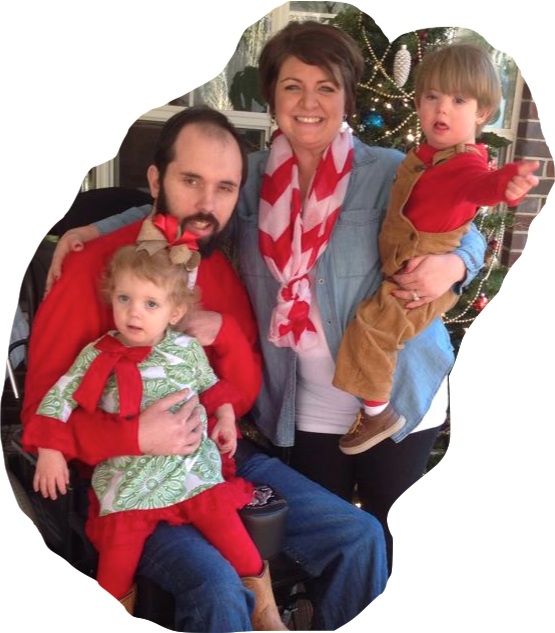
MY WIFE. Even though most of my injury is “invisible,” she showed me that I also have physical scars that I and others can see.

15. Has your injury affected your home life and relationships and, if so, how?

Yup. That’s a very long answer.

16. Has your social life been altered or changed and, if so, how?

Yup. We lost a lot of friends and family because I was not the same Tommy I was before I was brain-injured in the war.

17. Who is your main caregiver? Do you understand what it takes to be a caregiver?

Tommy Hopkins, Jr. Brain Injury Survivor
Caregiver – Kristina Hopkins

MY WIFE! I have a rough idea of some of what she does for me, but I have no clue of what all she does.

18. What are your plans? What do you expect/hope to be doing ten years from now?

My “plan” is to maintain what I have and live each day as if it is my last.

19. Are you able to provide a helpful hint that may have taken you a long time to learn, but which you wished you had known earlier? If so, please state what it is to potentially help other survivors with your specific kind of brain injury.

Yes. You have to adapt to your new self. That old person is gone. I had to realize I will never be as I once was, BUT I am still able to do most things with adaptation.

20. What advice would you offer to other brain-injury survivors? Do you have any other comments that you would like to add?

My advice: Good days come and go. Work with the day you have because you don’t know what tomorrow will bring.

(Clip Art compliments of Bing.)

(Photos compliments of contributor.)

As I say after each post:

Please leave a comment by clicking the blue words “Leave a Comment” below this post.

anim0014-1_e0-1

Feel free to follow my blog. Click on “Follow” on the upper right sidebar.

If you like my blog, share it intact with your friends. It’s easy! Click the “Share” buttons below.

Past Blast – TBI TALES . . . . . . What’s Really Important

What’s Really Important

(previously published on February 14, 2015)

 by

 Kayla Bradberry Knight

(presented by Donna O’Donnell Figurski)


Kayla Bradberry KnightLast year on February 13, my husband, Wyatt, took me out for a Valentine’s Day dinner. He and the kids gave me cards that morning. I was on cloud nine. Who would have thought that five days later my husband would be fighting for his life and our families would be turned upside down?valentine-s-day-clip-art

God has taught me many lessons this year. Most of all, I’ve learned that earthly possessions mean nothing. Sure, they make one happy for a while. But no gift, flower bouquet, or box of chocolates could take the place of what I have today. My husband is still here! Oh, how happy it makes me to be able to say that!

He may not realize that it’s even Valentine’s Day. Nor will he walk through the door with a gift, BUT I still get to hug him. The kids and I still get to tell him how much we love him. That, my friends, is irreplaceable. Don’t just sign that sweet card or have those beautiful flowers delivered. Show that person how much he or she means…not just today, but every day!Love Every Day


(Disclaimer: The views or opinions in this post are solely that of the author.)

If you have a story to share and would like to be a part of the SPEAK OUT! project, please submit your TBI Tale to me at donnaodonnellfigurski@gmail.com. I will publish as many stories as I can.


As I say after each post:

Please leave a comment by clicking the blue words “Leave a Comment” below this post.anim0014-1_e0-1

Please follow my blog. Click on “Follow” on the top right sidebar. (It’s nice to know there are readers out there.)

If you like my blog, share it with your friends. It’s easy! Click the “Share” buttons below.

If you don’t like my blog, “Share” it with your enemies. I don’t care!

Feel free to “Like” my post.

(Clip Art compliments of Bing.)

Brain Injury Resources “I Give Up” Composed and Played by Elijah Bossenbroek

Brain Injury Resources …

“I Give Up”

Composed and Played by Elijah Bossenbroek

presented by

Donna O’Donnell Figurski

This is an amazing piece of piano music composed and played with breathtaking emotion by the young and upcoming (some say “genius”) pianist Elijah Bossenbroek. It’s Pianoa very moving piece, about which commenters have written “sad,” “uplifting,” and “inspiring.”  I can only assume that Bossenbroek has “triumphed” over an extremely sad part of his own life.

It is an appropriate piece for survivors of brain injury, who usually experience these emotions at one time or another. Listening to this piece gave me chills.

Never Give Up


Never Give Up!
Scream!
Yell!
Breathe. Breathe. Breathe.
Move on…

(Clip Art compliments of Bing.)

As I say after each post:

Feel free to leave a comment by clicking the blue words “Leave a Comment” below this post.

Please follow my blog. Click on “Follow Me Via eMail” on the right sidebar of your screen.anim0014-1_e0-1

If you like my blog, click the “Like” button under this post.

If you REALLY like my blog, share it with your friends. It’s easy! Click the “Share” buttons below.

If you don’t like my blog, “Share” it with your enemies. That works for me too!

Past Blast – “Guest Blogger … Ken Collins – 38 Tips for Living with a Brain Injury”

Past Blast  (originally published December 29, 2014)

SPEAK OUT! Guest Blogger: Ken Collins

(Host on the Brain Injury Radio Network)

offers

38 Tips for Living With a Brain Injury


Boy Blogger thOn December 31st, I will have lived with a traumatic brain injury for 38 years. I have used several strategies for co-existing with and minimizing the effects of my TBI. I know now that the brain-injury recovery process is ongoing and that there are four major areas to work on during recovery: (1) Getting Organized, (2) Being Responsible, (3) Following Through, and (4) Moving On. I learned a lot over the years, and I want to share my experiences. I have listed 38 tips (one for each year) that could be helpful to you.


1. Regain trust in yourself and in others.

2. Try not to be critical of mistakes you make. In the early years of your recovery, there will be too many of them to count. Learn from these mistakes and move on.

3. Find purpose and meaning in your life again. This will make it easier to get out of bed in the morning. Having a sense of purpose and meaning will give you something to live for and will help you feel worthwhile, help motivate you, and improve your recovery process. You will start feeling better about yourself.

4. Keep stress and anxiety to a minimum every day. Reducing stress and anxiety will Stress free zoneincrease your self-esteem and make life easier. Stress and anxiety trigger the fight-or-flight response in the mid-brain. You don’t have any control over this response because it is part of the Emotional Nervous System. When the fight-or-flight response is activated, it increases confusion and makes it harder to process information.

5. Regain your self-confidence and self-respect.

6.Be proactive.

7. Stay focused, calm, and relaxed as much as possible. This will make it easier to think, and you become less dependent on others to remind you. Becoming more responsible for yourself will build good habits on your part and will improve your self-esteem and self-confidence in the long run.

8. Get a large calendar. Put it up on your wall and use it. Make sure it’s in a location where you will always see it. An iPad (or clone), a smart phone, or a note pad with a calendar and alarm does the same thing. A calendar will also relieve stress and anxiety by helping you stay on task and not forget.

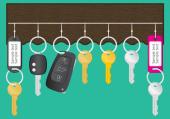
Key rack9. Get a key-holder and put it by your door to put your keys on when you come home. Do this every night so you won’t have to look for your keys in the morning. Starting your day off on the right foot will make your day easier and help to relieve stress and anxiety.

10. Make a “To Do” list to help you stay organized. iPads, iPhones or other smart phones, and note pads work wonders with this. The list will help you and make you feel good about yourself.

11. Making a list before you go shopping will save you money by cutting down on impulse-buying. It will also help you become more responsible and less dependent on others. Being less dependent on others improves your self-esteem.

12. Get lots of rest, and slow down. Many times we try to do too many things at once, and nothing gets done. Sleeping on an issue or concern can be the best way to help you figure it out. Getting enough rest will give you valuable energy to think better and solve difficult situations. Sufficient rest will also relieve stress and anxiety.

13. Set up a routine and stick to it. A routine will make it easier for you to follow through with what you have planned for the day. By doing the same thing every day, you will start building trust in your capabilities again.

14. Eat healthy foods, and get lots of exercise. Doing these things will help you get the blood with its oxygen circulating to your brain.Healthy Foods

15. Get a dog and take it for walks. In my case, I have nine dogs, and they take me for a walk every morning and night! They also give me the unconditional love and companionship I need to feel good about myself and be happy.

16. Find ways to relax that aren’t counterproductive to your well-being. Abusing alcohol and drugs to “relax” is counterproductive. Long walks, yoga, and Tai Chi are much better for you and will make processing and problem-solving much easier. Stress and anxiety will be reduced.

17. Be patient.

18. Pay attention and become an active listener. Actively “hearing” what people have to say is more important than passively “listening” to what they say. Watch their body language. When I get distracted, sometimes it is harder to understand what a person is saying. Stay relaxed and focus. Take deep breaths – nothing works better than getting oxygen-filled blood to your brain.

19. Be around positive people and people who care about you. Nothing is more depressing than listening to someone who’s always complaining about his or her life or about what is going wrong in the world. Become active. Don’t just sit around hoping things will get better. Quit talking about a problem, and do something about it instead.

20. Don’t take criticism personally. When people don’t understand things, they criticize them. Constructive criticism can make you a better person in the long run.

21. Keep an open mind. Remember that your family and friends want to help, but sometimes they don’t know how. Many people don’t understand what you are going through, so don’t hold them responsible for this.Breathe

22. Stay calm; stay relaxed; take deep breaths; and move on!

23. Be careful of those you hang out with because they will set the stage for how you act. Friends who judge others and criticize you aren’t “friends.”

24. Grudges will only hold you back. They will be like anchors and keep you from being able to move on.

25. Lighten up on yourself, your family, and friends who want to help you.

26. Worry less and smile more.

27. Be content with what you have. Others have it much worse than you.

28. Find ways to stay active and be less isolated. Get out of your head and into the outside world.

Never Give Up29. Don’t give up – embrace adversity. Have adversity give you the resolve it will take to get better and improve your life. This will be up to you and no one else. People will be there to help you, but all of the work will be up to you. Use it or lose it!

30. Take ownership of your recovery. Remove the word “can’t” from your vocabulary.

31. Life is hard for most people. Life after a brain injury will definitely be hard, but not impossible. It will get easier over time – be patient! Make the best of every day and move on.

32. Thinking too much about a problem or issue can cause depression. This will trigger the fight-or-flight response, and you will be like a dog chasing its tail.

33. Be good to yourself.

34. Don’t take life too seriously.

Ken Collins for Blog

35. Don’t let the little things get you down. When you think about them too long, they seem bigger than they really are.

36. Don’t beat yourself up over things you can’t control. This will only increase your stress and anxiety and trigger the fight-or-flight response.

37. Be happy with yourself and don’t try to live up to others’ expectations.

38. Most importantly – don’t set unrealistic expectations for yourself. Be strong. Find hope – because with hope, anything is possible!

Stop by the Brain Injury Radio Network to hear Ken. His show airs every 1st Thursday of each month from 5:00p to 6:30p Pacific Time.

Thank you, Ken Collins.

Disclaimer:
Any views and opinions of the Guest Blogger are purely his/her own.

(Clip Art compliments of Bing.)

(Photos compliments of contributor.)

As I say after each post:

Please leave a comment by clicking the blue words “Leave a Comment” below this post.

anim0014-1_e0-1

Feel free to follow my blog. Click on “Follow” on the upper right sidebar.

If you like my blog, share it intact with your friends. It’s easy! Click the “Share” buttons below.


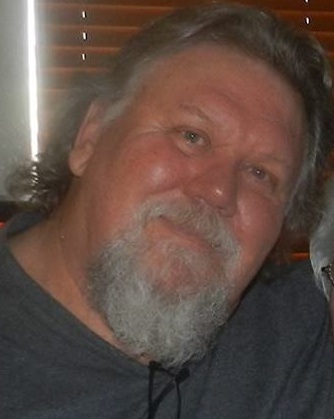
Survivors SPEAK OUT! . . . John Bradshaw

Survivors SPEAK OUT! . . . John Bradshaw

presented

by Donna O’Donnell Figurski


1. What is your name? (last name optional)

John Bradshaw

2. Where do you live? (city and/or state and/or country) Email (optional)

Apple Valley, California, USA

3. On what date did you have your brain injury? At what age?

July 4, 2012     Age 56

4. How did your brain injury occur?

Car accident

5. When did you (or someone) first realize you had a problem?

The impact was immediately known to be serious. I was in a coma at the scene of the accident.

6. What kind of emergency treatment, if any, did you have?

I was air-lifted from the scene of the accident. My condition was assessed. I had CT (computerized tomography) and MRI (magnetic resonance imaging) scans, and I was put on a respirator.

7. Were you in a coma?

Yes

If so, how long?

Deep coma: 1 week; sleep coma: 3 weeks

8. Did you do rehab?

Yes

What kind of rehab (i.e., inpatient or outpatient and occupational and/or physical and/or speech and/or other)?

I had my therapies – occupational, physical, and speech – both as an inpatient and as an outpatient.

How long were you in rehab?

My therapies basically lasted 1+ years. I still do physical therapy every year to help with balance and strengthening.

9. What problems or disabilities, if any, resulted from your brain injury
(e.g., balance, perception, personality, etc.)?

I have problems with balance and perception. I have a personality disorder, a mood disorder, memory-loss, and nervousness, to name a few issues.

10. How has your life changed?

There is no normal. Every day is different.

Is it better?

No

Is it worse?

Yes

11. What do you miss the most from your pre-brain-injury life?

In general, I miss knowing where I am, my quick train-of-thought, and my memory.

12. What do you enjoy most in your post-brain-injury life?

I enjoy the people I have connected with through support groups and rehab.

13. What do you like least about your brain injury?

I dislike not knowing things in general and not understanding why I am like this.

14. Has anything helped you to accept your brain injury?
Yes. Jesus sent me back to let everyone know he and his father are alive. They love us, so it doesn’t matter what church you go to. They want to see us come home.

15. Has your injury affected your home life and relationships and, if so, how?

Yes

16. Has your social life been altered or changed and, if so, how?

Yes. I find it very difficult to interact with others now.

17. Who is your main caregiver?

My wife

Do you understand what it takes to be a caregiver?

No

18. What are your plans? What do you expect/hope to be doing ten years from now?

I have no plans for the future. I take it one day at a time.

19. Are you able to provide a helpful hint that may have taken you a long time to learn, but which you wished you had known earlier? If so, please state what it is to potentially help other survivors with your specific kind of brain injury.

(No answer)

20. What advice would you offer to other brain-injury survivors? Do you have any other comments that you would like to add?
Life will never be the same. Take it one day at a time, and believe it does get better with time. My wife’s favorite reminder motto is: “I am not what has happened to me … I am what I choose to become.”


(Photos compliments of contributor.)

As I say after each post:

Please leave a comment by clicking the blue words “Leave a Comment” below this post.

anim0014-1_e0-1

Feel free to follow my blog. Click on “Follow” on the upper right sidebar.

If you like my blog, share it intact with your friends. It’s easy! Click the “Share” buttons below.


Past Blast: Survivors SPEAK OUT! George Visger (former NFL player)

SPEAK OUT! George Visger (former player for the San Francisco 49ers)

Survivors SPEAK OUT! George Visger

(former NFL San Francisco 49ers player)

(originally published July 7, 2014)

presented by

Donna O’Donnell Figurski


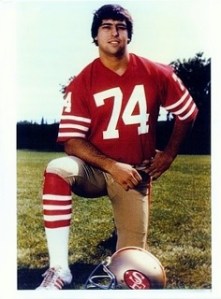
#74 NFL San Francisco 49er, George Visger @ 1981

1. What is your name? (last name optional)

George Visger

2. Where do you live? (city and/or state and/or country) Email (optional)

Cypress, California, USA     visgergeorge@gmail.com

3. When did you have your TBI? At what age?

I was first injured – had surgery – at age 22 during the 1981 Super Bowl season with the San Francisco 49ers.

4. How did your TBI occur?

I had a number of concussions throughout my 12 years of playing organized football. My first serious concussion occurred at age 13, during my third year of Pop Warner. I was hospitalized on that one. My final, and most severe, concussion occurred in 1980 against the Dallas Cowboys. I suffered a major TBI in the first quarter, yet I never missed a play by the use of over 20 smelling salts during the game (or so I was told later in the week when my memory returned). I also never missed a practice. Several months later, early in the ‘81 season, I developed hydrocephalus (water on the brain) and underwent emergency VP (ventriculoperitoneal) shunt brain surgery at Stanford. I have since survived nine emergency VP shunt brain surgeries, including five in a nine-month period in ‘86-‘87 while completing my Biology degree. I have also had several gran mal seizures, and I have been on anti-seizure meds for over 30 years.

5. When did you (or someone) first realize you had a problem?

I realized I had a problem during the ‘81 season. I developed major headaches and projectile vomiting. I saw balls of light in front of each eye each night. The team doctors diagnosed me with high blood pressure and prescribed diuretics for over two weeks, until I suffered focal point paralysis of my right arm. The team doc diagnosed me in the locker room with a brain hemorrhage. I drove myself to the hospital, where I underwent emergency VP shunt brain surgery.

6. What kind of emergency treatment, if any, did you have (e.g., surgery,

tracheotomy, G-peg)?

I have had nine emergency VP shunt brain surgeries since then. They drilled a hole in my skull and installed a permanent drain tube, which runs to a pressure valve in the back of my head. They plumbed that to drain into my abdomen. I am also on Lamictil for seizures.

7. Were you in a coma? If so, how long?

Nine months after my first shunt surgery, the shunt failed while I was fishing in Mexico with my brother. It took him a day to get me home, and I was in a coma from the pressure on my brain. I had two more brain surgeries ten hours apart and was given last rites. I was 23 at the time.

8. Did you do rehab? What kind of rehab (i.e., In-patient or Out-patient and Occupational, Physical, Speech, Other)?

I was never offered rehab. In fact, I was forced to sue the 49ers for Work Compensation just to get my second and third brain surgeries paid for. Until now, it was brain surgery, out the door, and “See you next shunt failure.” I did use Vocational Rehabilitation Services when I returned to school in ‘86 to complete my Biology degree. But, I was on my own to rehab after each of the five brain surgeries that I had while finishing my degree. I discovered B.R.A.I.N. (Brain Rehabilitation And Injury Network) founded by Sue Rueb in Cypress, CA, last year while speaking at a TBI conference. I literally moved there last August to get daily treatments – first treatments I have ever had. I do neurocognitive therapy and Yoga therapy, and I counsel other TBI survivors, which helps me as well.

How long were you in rehab?

I’ve been rehabbing since August 2013.

9. What problems or disabilities, if any, resulted from your TBI (e.g., balance, perception, personality, etc.)?

I have gran mal seizures, MAJOR short-term memory issues, poor judgment, anger-management issues, loss of direction, poor concentration, problems getting my words out or thinking of the right word, numbness in extremities, constant headaches, vision problems when my shunt goes out, diminished hearing, personality changes, problems handling finances, and brain seizures from alcohol, to name a few.

10. How has your life changed? Is it better? Is it worse?

I completed a Biology degree in 1990 at age 32 after eight brain surgeries, and I followed my second dream to be a wildlife biologist. I have never let my injury define me, and I thank God for it. I wouldn’t be where I am now had I not been injured. But recently, things have begun to spiral out of control. I lost my environmental consulting business (Visger & Associates, Inc.) in 2009, and I lost our house in 2011. My wife of nearly 19 years, and the mother of my children, and I are going through a divorce. It’s been too much for her.

Visger, George  2008-06-15 21.03.51

11. What do you miss the most from your pre-TBI life?

I miss my family. I miss being The Giant – the guy who “could do anything,” as my wife used to say. I miss being able to remember things. I literally do not remember numerous out-of-state bow-hunts, months of my life, kids’ activities, etc.

12. What do you enjoy most in your post-TBI life?

I enjoy being able to use my injuries to help others. I feel it is my God given mission in life now.

13. What do you like least about your TBI?

Loss of my marriage

14. Has anything helped you to accept your TBI?

I’ve been helped by my belief that God has a plan for me and that “something good comes out of everything.”

15. Has your injury affected your home life and relationships and, if so, how?

It has destroyed my marriage, and I lost my ability to provide for my family.

16. Has your social life been altered or changed and, if so, how?

Social activities were impacted, as I liked to drink back in the day. Now the only impact is that I will forget to attend a social outing. I have never been embarrassed about my injuries. I’m just as goofy now as I was before my injury.

17. Who is your main caregiver?

I was single until my late 30’s, and I have been my main caregiver ever since. My mom stepped in for a few days during surgeries, and my older brother, whom I worked with, kept an eye on me. My wife has done what she could over the years, but she has never been through a surgery with me.

Do you understand what it takes to be a caregiver?

I understand better than most what it takes to be a caregiver. I also understand what caregivers go through. I call it the “Ripple Effect.” My family members and caregivers have taken a worse beating from my TBI than I have. It is much harder on our loved ones than it is on ourselves.

18. What are your future plans? What do you expect/hope to be doing ten years from now?

I founded The Visger Group – Traumatic Brain Injury Consulting in 2010, and I have spoken all over the country. I coordinate directly with the NFL on rule changes to reduce TBIs in football at all levels. I have spoken at congressional hearings, conduct motivational talks at schools and businesses, and currently am working with our veterans suffering from TBI. I am also suffering from frontal lobe dementia, and I hope to kick a few butts and rattle a few cages while I can, in hopes of changing the way the medical field treats TBI survivors and families. In ten years, I expect to be working with government agencies, our military, academics, and sports leagues. I plan to be leading and speaking at TBI-recovery groups.

19. Are you able to provide a helpful hint that may have taken you a long time to learn, but which you wished you had known earlier? If so, please state what it is to potentially help other TBI survivors with your specific kind of TBI.

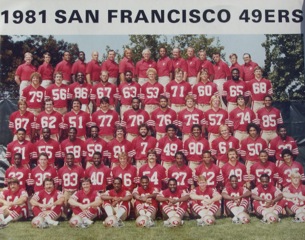
George Visger #74  4th row from bottom, 2nd from right  @ 1981

George Visger #74
4th row from bottom, 2nd from right
@ 1981

In football, there is a saying: “Short, Choppy Steps.” If you over-stride, it’s easy for someone to knock you on your butt. You want to keep your butt down, your head up, and take short, powerful 12-inch strides. Forget about breaking long touchdown runs. Get the little things done each day, and you will reach your goals. If a football team only got four yards each play – no more, no less – they would never lose a game. Think about it. They would get a first down every three plays, and they would score every time they had the ball. Life is no different. You need long-term goals for sure: score a touchdown, win the game, win the Super Bowl. But, you will NEVER get there if you don’t get your four yards a carry. We sell wrist bands on our website (www.thevisgergroup) that say “Short, Choppy Steps” and another one we give to coaches and players that says “Use your head, DON’T use your head.” Focus on small daily victories, and you’ll win the game.

20. What advice would you offer to other TBI survivors? Do you have any other comments that you would like to add?

Keep in mind everyone has a cross to bear. Carry your cross; don’t let it carry you. All of us TBI survivors have a lot to give to everyone. Turn your negative into a positive and touch people’s lives. Focus on your positives. Work hard, and put it in God’s hands. It will all work out.

That’s all anyone can do.

You can learn more about George Visger on his blog and these YouTube videos.

George Visger Blog – Life Before and After Football

George Visger talks about his life in these videos:

The Damage Done — George Visger’s Concussions

Battle Scars: Stagg High Alum, Former 49er Fights on Despite Brain Injuries

George Visger addresses specific topics in these very short videos:

Visger-275x300

Do Helmets Give Football Players a False Sense of Safety?

Would This Retired NFL Player Do It Again?

Thank you, George, for taking part in this interview. I hope that your experience will offer some hope, comfort, and inspiration to my readers.

(Disclaimer: The views or opinions in this post are solely that of the interviewee.)

(Photo compliments of George.)

If you would like to be a part of this project, please go to TBI Survivor Interview Questionnaire for a copy of the questions and the release form.


(Clip Art compliments of Bing.)

(Photos compliments of contributor.)

As I say after each post:

Please leave a comment by clicking the blue words “Leave a Comment” below this post.

anim0014-1_e0-1

Feel free to follow my blog. Click on “Follow” on the upper right sidebar.

If you like my blog, share it intact with your friends. It’s easy! Click the “Share” buttons below.


diemodi jewelry

uniquely hand-crafted jewelry by donna

Welcome to Harmony Kent Online

The home of all things books

Pete Springer

Passionate Teacher and Future Children's Author

HOPE TBI

Helping Other People Excel - To Be Independent

For the Love of Books, Old and New

Katie Fischer, Writer and Reader of Stories

Charlie Bown

Children's Author

Jessica Hinrichs

“We write to taste life twice, in the moment and in retrospect.” ― Anais Nin

VIVIAN KIRKFIELD - Writer for Children

Picture Books Help Kids Soar

Mindy’s Writing Wonderland

For authors, parents, teachers & everyone who loves children’s books.

Kaitlyn Leann Sanchez

Literary Agent

Surviving Traumatic Brain Injury

TBI - Survivors, Caregivers, Family, and Friends

The Care Factor

Loving someone with a Traumatic Brain Injury

Brain Injury Support Group of Duluth-Extension

Brain Injury Information and SUPPORT

Brain Aneurysm Global Insight

Brain Aneurysm, cerebral hemorrhaging, hemorrhage stroke