TBI – Survivors, Caregivers, Family, and Friends

Posts tagged ‘Another Fork in the Road’

Past Blast . . . . . . . . . . . . . . . . Brain Injury Resources . . . . . . . . The Crash Reel – Kevin Pearce

Brain Injury Resources………The Crash Reel – Kevin Pearce

(originally published March 30, 2014)

th-8


The Crash Reel” is a gripping 4+ star movie about Kevin Pearce, a champion snowboarder who was expected to win a gold medal in the 2010 Winter Olympics.

Kevin Pearce - after TBI

Then his dream was interrupted by a Traumatic Brain Injury (TBI.)

There is amazing footage of Kevin before and after his crash.  The incredible love and concern of his family is readily apparent.  Kevin’s dream is different now, and he has found a useful and fulfilling life.

The movie/documentary will give you an inside look at one young man’s battle with TBI. I highly recommend the movie.

(Clip Art compliments of Bing.)

As I say after each post:

Feel free to leave a comment by clicking the blue words “Leave a Comment” below this post.

Please follow my blog. Click on “Follow Me Via eMail” on the right sidebar of your screen.anim0014-1_e0-1

If you like my blog, click the “Like” button under this post.

If you REALLY like my blog, share it with your friends. It’s easy! Click the “Share” buttons below.

If you don’t like my blog, “Share” it with your enemies. That works for me too!


Past Blast . . . . . . . . . . . . . Survivors SPEAK OUT! . . Lauren

SPEAK OUT! – Lauren

by

Donna O’Donnell Figurski

(originally published April 13, 2014)


Lauren - about 4 days post TBI surgery

1. What is your name? (last name optional)

Lauren

2. Where do you live? (city and/or state and/or country) Email address? (optional)

Belfast, Northern Ireland

3. When did you have your TBI? At what age?

September 2012. I was 35

4. How did your TBI occur?

Playing roller derby

5. When did you (or someone) first realize you had a problem?

It was very sudden, I felt something wasn’t right in my head, then my vision went and I collapsed.

6. What kind of emergency treatment, if any, did you have? (e.g., surgery, tracheotomy, G-peg)

Ambulance to Accident and Emergency.
A CT scan, then a craniotomy

7. Were you in a coma? If so, how long?

4 days. It was medically induced because I kept wanting to wake up!

8. Did you do rehab? What kind of rehab (i.e., In-patient and/or Out-patient; Occupational, Physical, Speech, and/or Other)? How long were you in rehab?

No rehab to speak of, Out-patient appointments with Neuro every few months. I’m now discharged.

9. What problems or disabilities, if any, resulted from your TBI? (e.g., balance, perception, personality, etc.)

Initially I had palsy of the left eye. Most of my problems have been psychological. I also had fatigue for a long time. (It’s still here but not as strong.)

10. How has your life changed? Is it better? Is it worse?

How do you put this into words? My life has changed in many ways, I was very independent. Now I rely on my partner a lot, mainly due to anxiety and depression.

There are things that are better – the ability to let small things slide is easy. I have an appreciation of life. I know what I DONT want anymore. My BS detector is much improved.

The bad – feeling scared for no reason. Crying a lot

11. What do you miss the most from your pre-TBI life?

My independence

12. What do you enjoy most in your post-TBI life?

The slower pace; the ability to filter stressful people

13. What do you like least about your TBI?

Anxiety anxiety anxiety

14. Has anything helped you to accept your TBI?

Time, patience, writing, lots of reading and meeting other survivors

15. Has your injury affected your home life and relationships and, if so, how?

It has made us a lot closer. It’s not an easy ride. It can get rough, but we’ve learnt to communicate in a much more meaningful and honest way.

16. Has your social life been altered or changed and, if so, how?

Yes, I’ve become more isolated. My social circle reduced a lot post-injury. That hurt at first, but I’ve accepted it now. More contact with others would be nice though.

17. Who is your main caregiver? Do you understand what it takes to be a caregiver?

My partner, he’s great. He’s put up with so much. I have an idea of what he’s been through, but I’ll never truly understand how it feels. It is difficult and tiring.

18. What are your future plans? What do you expect/hope to be doing 10 years from now?

I hope to study again. I want to complete a Psychology or counselling course so I can help others. I want to be out in the world again, and most of all I hope to have my joy back.

19. What advice would you offer to other TBI survivors?

It’s hard but it will pass
What you feel is normal
Be kind to yourself, and you will also need plenty of patience!

20. Do you have any other comments that you would like to add?

Good luck to all TBI/ABI survivors. Remember you are never alone.

Lauren celebrating her birthday about 16 months post-TBI


Thank you, Lauren, for taking part in this interview. I hope that your experience will offer some hope, comfort, and inspiration to my readers.


If you would like to be a part of this project, please go to TBI Survivor Interview Questionnaire for a copy of the questions and the release form.

(Photos compliments of Lauren.)


(Clip Art compliments of Bing.)

As I say after each post: Please leave a comment by clicking the blue words “Leave a Commentanim0014-1_e0-1 below this post.

Feel free to follow my blog. Click on “Follow” on the upper right sidebar.

If you like my blog, share it intact with your friends. It’s easy! Click the “Share” buttons below.

If you don’t like my blog, “Share” it intact with your enemies. I don’t care!

Feel free to “Like” my post.

New NEWS: Preorder Prisoners without Bars: A Caregiver’s Tale

Prisoners without Bars: A Caregiver’s Tale

Did you know you can preorder your copy of my book, Prisoners without Bars: A Caregiver’s Tale?

You can! It’s easy.

You can order it in e-book form or paperback copy on Amazon.com or Barnes & Noble.com.


Just click the book cover or the title below.

Prisoners without Bars: A Caregiver’s Tale

Can’t wait for you to join our journey.


(Clip Art compliments of Bing.)

As I say after each post: Please leave a comment by clicking the blue words “Leave a Commentanim0014-1_e0-1 below this post.

Feel free to follow my blog. Click on “Follow” on the upper right sidebar.

If you like my blog, share it (intact) with your friends. It’s easy! Click the “Share” buttons below.

If you don’t like my blog, “Share” it (intact) with your enemies. I don’t care!

Feel free to “Like” my post.

New NEWS: Countdown to Prisoners without Bars: A Caregiver’s Tale

Can’t wait for the release of my book, Prisoners without Bars: A Caregiver’s Tale


04.29.18

184 days to the release of Prisoners without Bars: A Caregiver’s Tale

4,440 hours to the release of Prisoners without Bars: A Caregiver’s Tale

266,400 minutes to the release of Prisoners without Bars: A Caregiver’s Tale

15,984,000 seconds to the release of Prisoners without Bars: A Caregiver’s Tale

But–WHO’S Counting?

Me! Me! Me! I am!

Check out my new website:  donnafigurski.com


SURVIVORS SPEAK OUT! Michelle Bartlett

Survivors SPEAK OUT!  Michelle Bartlett

presented

by

Donna O’Donnell Figurski


Michelle Bartlett 2

Michelle Bartlett – Survivor of Brain Injury

1. What is your name? (last name optional)

Michelle Bartlett

2. Where do you live? (city and/or state and/or country) Email (optional)

St. Stephen, New Brunswick, Canada

3. On what date did you have your brain injury? At what age?

I had my brain injury in March of 2004 at age 36.

4. How did your brain injury occur?

Two days after open heart surgery, I had a severe anoxic brain injury.

5. When did you (or someone) first realize you had a problem?

It was known immediately, as I was still in hospital.

6. What kind of emergency treatment, if any, did you have?

I have been told the doctors did CPR and other life-support methods for hours.

7. Were you in a coma? If so, how long?

Yes. I was in a coma for ten to twelve days.

8. Did you do rehab? What kind of rehab (i.e., inpatient or outpatient and occupational and/or physical and/or speech and/or other)? How long were you in rehab?

I did inpatient rehab for three weeks and outpatient rehab for over a year. I had speech, occupational, and physical therapies.

9. What problems or disabilities, if any, resulted from your brain injury
(e.g., balance, perception, personality, etc.)?

I have problems with balance, executive functions, and memory. I deal with fatigue and personality change.

10. How has your life changed? Is it better? Is it worse?

My life now isn’t what I planned it would be. It is what it should be.

11. What do you miss the most from your pre-brain-injury life?

Working

12. What do you enjoy most in your post-brain-injury life?

I enjoy helping others.

13. What do you like least about your brain injury?sleeping_on_job_5

The fatigue

14. Has anything helped you to accept your brain injury?

It helped to remember how accepting my grandfather was during times of stress.

15. Has your injury affected your home life and relationships and, if so, how?

Yes. It is difficult for me to express myself, and it is difficult for people to understand.

16. Has your social life been altered or changed and, if so, how?

Yes. Before my brain injury, I would never have had the confidence to do any public speaking. Now I have spoken at two national brain injury conferences. I also have numerous newspaper articles and radio interviews in Canada.

17. Who is your main caregiver? Do you understand what it takes to be a caregiver?

I’m pretty much independent now.

18. What are your plans?

I will continue to cherish my second chance.

What do you expect/hope to be doing ten years from now?

I intend to continue my advocating/support and education work in Canada, focusing on the east coast.canadian-maple-leaf-clip-art-42678

19. Are you able to provide a helpful hint that may have taken you a long time to learn, but which you wished you had known earlier? If so, please state what it is to potentially help other survivors with your specific kind of brain injury.

Patience can be your best and worst enemy.

Michelle Bartlett Survivor 040318

Michelle Bartlett – Brain Injury Survivor

20. What advice would you offer to other brain-injury survivors? Do you have any other comments that you would like to add?

Life is hard, no doubt about it, BUT always remember you are NOT alone. There is always someone else hiding in the shadows or around a corner who has a brain injury you may not know about.


If you would like to be a part of the SPEAK OUT! project, please go to TBI SPEAK OUT! Survivors Interview Questionnaire for a copy of the questions and the release form.

(Clip Art compliments of Bing.)

As I say after each post: Please leave a comment by clicking the blue words “Leave a Commentanim0014-1_e0-1 below this post.

Feel free to follow my blog. Click on “Follow” on the upper right sidebar.

If you like my blog, share it with your friends. It’s easy! Click the “Share” buttons below.

If you don’t like my blog, “Share” it with your enemies. I don’t care!

Feel free to “Like” my post.

Survivors SPEAK OUT! Christine Durant

Survivors SPEAK OUT!  Christine Durant

presented

by

Donna O’Donnell Figurski


28722393_1570405716328305_1310268133_n1. What is your name? (last name optional)

Christine Durant

2. Where do you live? (city and/or state and/or country) Email (optional)

Connecticut, USA

3. On what date did you have your brain injury? At what age?

I was 21.

4. How did your brain injury occur?

Medical neglect

5. When did you (or someone) first realize you had a problem?

I did when I was 13.

28829269_1570406372994906_1587925987_n

Christine Durant – Brain Injury Survivor

6. What kind of emergency treatment, if any, did you have?

Brain surgery

7. Were you in a coma? If so, how long?

No coma

8. Did you do rehab?

Yes

What kind of rehab (i.e., inpatient or outpatient and occupational and/or physical and/or speech and/or other)? How long were you in rehab?

I went to inpatient rehab for a week or so.

28740893_1570406139661596_1150992867_n

Christine Durant – Brain Injury Survivor

9. What problems or disabilities, if any, resulted from your brain injury
(e.g., balance, perception, personality, etc.)?

I have balance and visual memory issues and some difficulty with visual identification. I had a LARGE personality change that included explosive issues and lack of impulse control. I also had double vision.

10. How has your life changed? Is it better? Is it worse?

The medical neglect caused excruciating neurological pain, but it stopped with my first brain surgery. I was a diagnostic educator. My issues made me better at what I dith-2d because I finished my undergraduate work like this and did all four of my graduate degrees with strategies I developed for myself. I believe I am better off.

11. What do you miss the most from your pre-brain-injury life?

Energy

12. What do you enjoy most in your post-brain-injury life?

My ability to see things differently than most folks

13. What do you like least about your brain injury?

Lack of energy and visual memory issues

14. Has anything helped you to accept your brain injury?

28741255_1570405966328280_1345947392_n

Christine Durant – Brain Injury Survivor and partner.

Meeting my wife and having a 25-year relationship … all post TBI

15. Has your injury affected your home life and relationships and, if so, how?

I am more sensitive to other people’s moods now. I can become what they are feeling.

16. Has your social life been altered or changed and, if so, how?

Everyone who was my friend at that point is not a friend now. However, I chose better after my recent brain surgery because they all helped us through it.

17. Who is your main caregiver? Do you understand what it takes to be a caregiver?

I don’t really have a caregiver. I have a “care-partner.” We had an accident together twenty years ago. Someone was late for lunch and went over the yellow line – into us head-on. We help each other as life necessitates.

18. What are your plans? What do you expect/hope to be doing ten years from now?

I would like to travel on the money from the accident while we still can. In ten years, I will be retirement age!Travel

19. Are you able to provide a helpful hint that may have taken you a long time to learn, but which you wished you had known earlier? If so, please state what it is to potentially help other survivors with your specific kind of brain injury.

Know that you will adjust to your new personality. Find life-giving, happy people to get you there. I went home to my mother at 21. She was always an angry woman. I didn’t realize what a toll that was taking on me until I met my sweet, wonderful, happy wife.

28829065_1570406592994884_447684030_n-1

Christine Durant – Brain Injury Survivor & partner

20. What advice would you offer to other brain-injury survivors? Do you have any other comments that you would like to add?

Give it time. Don’t be hard on yourself. Find a passion that you are able to do within the confines of your new body. My wife has a broken foot from the accident that can’t be fixed. She used to paint theatrical scenery for Broadway. She can’t do that from a wheelchair. So, she discovered she has a passion for pottery.


If you would like to be a part of the SPEAK OUT! project, please go to TBI SPEAK OUT! Survivors Interview Questionnaire for a copy of the questions and the release form.

(Clip Art compliments of Bing.)

As I say after each post: Please leave a comment by clicking the blue words “Leave a Commentanim0014-1_e0-1 below this post.

Feel free to follow my blog. Click on “Follow” on the upper right sidebar.

If you like my blog, share it with your friends. It’s easy! Click the “Share” buttons below.

If you don’t like my blog, “Share” it with your enemies. I don’t care!

Feel free to “Like” my post.

Caregivers SPEAK OUT! . . . Heather Sivori Floyd . . . Caregiver for her son, TJ


Caregivers SPEAK OUT!

Heather Sivori Floyd (caregiver for her son, TJ)

presented by

Donna O’Donnell Figurski


Heather Sivori Floyd – caregiver mom to her son, TJ

1. What is your name? (last name optional)

Heather Sivori Floyd

2. Where do you live? (city and/or state and/or country) Email? (optional)

Oldham County, Kentucky, USA

3. What is the brain-injury survivor’s relationship to you?

He (TJ) is my son.

How old was the survivor when he/she had the brain injury?

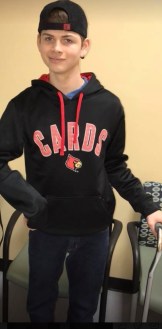
TJ was 7 years old.
11 TJ Floyd

TJ – Brain Injury Survivor – bicycle accident

What caused your survivor’s brain injury?

TJ was riding his bicycle when he wrecked into the back of his brother. He flipped over the handle bars and hit his head on the concrete. He went to “sleep” and never woke up until days after his emergency open brain surgery.

4. On what date did you begin care for your brain-injury survivor?

April 21, 2010

Were you the main caregiver?

Yes

Are you now?

Yes

How old were you when you began care?

Age stinks. I’d rather not discuss it. LOL!

TJ and Mom Heather Sivori Floyd

TJ – Brain Injury Survivor & his Mom, Heather Sivori Floyd

5. Were you caring for anyone else at that time (e.g., children, parents, etc.)?

Yes – my three other children. I was also pregnant at the time.

6. Were you employed at the time of your survivor’s brain injury?

Yes

If so, were you able to continue working?

Yes – part time from home.

7. Did you have any help? Mother-in-Law

My mother-in-law moved in to help with my other children so I could care full-time for TJ with his therapy and doctors.

If so, what kind and for how long?

Well, she is still here.

8. When did your support of the survivor begin (e.g., immediately – in the hospital; when the survivor returned home; etc.)?

Immediately

9. Was your survivor in a coma?

I’m not sure of the medical term, but he was unresponsive until several days after his brain surgery.

If so, what did you do during that time?

I slept beside TJ in a chair. I was three months pregnant and heartbroken at the fear of the unknown. What was it they called it? . . . Ah yes, “the new normal.” I was trying to figure out what that meant. You don’t actually “get it” until years later.

14 TJ & Mom Heather Sivori Floyd copy

TJ – Brain Injury Survivor & Mom, Heather Sivori Floyd

10. Did your survivor have rehab?

Yes

If so, what kind of rehab (i.e., inpatient and/or outpatient and occupational, physical, speech, and/or other)?

Physical, occupational, and speech therapies; also, hippotherapy (the use of horseback riding to improve balance, coordination, and strength)

How long was the rehab?

TJ still goes to therapy.

Where were you when your survivor was getting therapy?

With TJ

11. What problems or disabilities of your brain-injury survivor required your care, if any?
brain-injury-imageEverything. TJ’s brain bleed damaged the whole left side of his brain and parts of the right. He was left with severe impairments, specifically in speech, language, memory, and cognitive function. He has safety issues. Because of attention, safety, and balance issues, he has trouble walking without hands-on help constantly. He also has memory problems, speech problems, vision problems, physical issues from having hemiparesis (weakness on one side), and a lot more.

12. How has your life changed since you became a caregiver?

Things that mattered to me prior his accident are non-issues to me now. I often times feel I can talk with doctors and therapists better than I can with most people my age. It can be lonely, difficult, and frustrating at times to find common connectors in my personal relationships with friends and family. Some weeks are packed full of appointments. I’m drinking so much coffee I think my system will crash. Just this past week, I knocked out four appointments in one day. The most I’ve done in one day has been seven.

Is it better?

I would say yes – my life is better. Even though this is the most challenging task of my life, my son is innocent, happy, and laughs a lot. I believe having the privilege to care for my child, who is special needs, has been the most rewarding love one can experience. The impact special-needs children make are life-long. You learn so much through them in how they view the world.

Is it worse?

No parent ever wants this for his or her child. That being said, my life is better because of the profound true joy my son has brought me. The worst part, I would say, is having struggles that are hard to overcome. Watching him struggle is hard. I do whatever I can to help him when this happens. Also, the stress of future planning is scary and overwhelming.
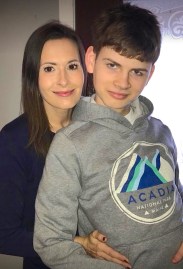
18 TJ & Mom Heather Sivori Floyd copy

Heather Sivori Floyd & her son, TJ

13. What do you miss the most from pre-brain-injury life?

Our conversations. Most of the time, our conversations now are basic – food, eat, play a game, etc. I miss those conversations with my child that went beyond basic needs.

14. What do you enjoy most in post-brain-injury life?

Oh gosh, a child like TJ changes you in a profound way. The love you have in your heart for your child and others like him or her is something that is hard to put into words. I want to protect all of them forever. The world is full of evil people who would take advantage. I also enjoy trying to help others – to make it easier for the family who comes after us. There will always be another family. I’ve also learned to let the little things slide because, at the end of the day, they are just that – little.

15. What do you like least about brain injury?

Everything. It’s unrelenting and nasty. It takes a lot and rarely gives anything back.

16. Has anything helped you to accept your survivor’s brain injury?

Yes – TJ is happy. It is hard to justify my being sad or my crying all the time when he is happy. He lives in the now – not for tomorrow or the day before.

17. Has your survivor’s injury affected your home life and relationships and, if so, how?

1-divided-path-tracie-kiernanYes – especially my personal friendships and my relationships with family. I think we are on different paths in life now. While they talk of work and social events, I am constantly thinking What can we do to make it better for TJ and others going through this? My closest friends are now the caregivers and survivors I’ve met locally. We work together locally to make a positive change for the brain-injury community. I also work with an amazing team of ladies who help me run two support-groups for survivors and caregivers. I started my first one seven years ago. I was scared after TJ’s brain injury, and I needed to know I was not alone. I needed hope. The groups grew to over 30,000, and the rest is history. The friendship we have is unbreakable. Shout-out to my amazing admins and friends: Melissa, Shauna, Margie, Mary, Michael, Eddie, and Alex. Love you all! We’ve met many who have inspired us in this journey.

18. Has your social life been altered or changed and, if so, how?

Um, what social life?! Seriously, I have no social life. It’s too hard to connect with others.

19. What are your plans?

My #1 plan is finding the best long-term situation for TJ that will ensure the best care he can have when we can no longer do so. Personally, I also plan to continue making a difference locally. We have several projects we are working on, and I have some more ideas to help. I ALWAYS have an idea. I’m always thinking big. Nothing brings me greater joy than helping others. It is important for families to know they aren’t alone and that people care enough to try and make it better. I try to do my part because of my son and the many we have met.

What do you expect/hope to be doing ten years from now?

I hope to still be laughing and loving the small joys in life with TJ. Hopefully, we will have made a big impact locally and beyond for the brain-injury community.

20. What advice would you offer other caregivers of brain-injury survivors? Never Give Up

Never give up. Let the small things go. Love deeply, and give your all. If you don’t, one day you will wish you had. Be the voice for your loved one. Never let “no” be an obstacle; there is always a way. If the door closes, kick it open. Most importantly, hang on when the days are hard and you feel you cannot go on. You can, and your survivor needs you to. Connect with other caregivers so you don’t feel like you walk this path alone – because you don’t. There are many who walk it with you daily

Do you have any other comments that you would like to add?

I think I’ve said what’s important for caregivers to know.


(Clip Art compliments of Bing.)

(Photos compliments of contributor.)

As I say after each post: Please leave a comment by clicking the blue words “Leave a Commentanim0014-1_e0-1 below this post.

Feel free to follow my blog. Click on “Follow” on the upper right sidebar.

If you like my blog, share it intact with your friends. It’s easy! Click the “Share” buttons below.

If you don’t like my blog, “Share” it intact with your enemies. I don’t care!

Feel free to “Like” my post.

Caregivers SPEAK OUT! . . . Pattie Welek Hall . . . . . . . . (caregiver for her son)

Caregivers SPEAK OUT!

Pattie Welek Hall  (caregiver for her son)

presented by

Donna O’Donnell Figurski


Pattie Welek-Hall 3

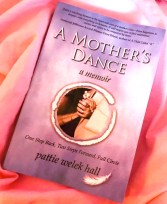
Pattie Welek Hall (caregiver for son) Author of “A Mother’s Dance”


1. What is your name? (last name optional)

Pattie Welek Hall

2. Where do you live? (city and/or state and/or country) Email? (optional)

Summerville, South Carolina, USA     pattie@pattiewelekhall.com

3. What is the brain-injury survivor’s relationship to you?

He’s my son.

How old was the survivor when he/she had the brain injury?

19 years old

What caused your survivor’s brain injury?

Motorcycle accident

4. On what date did you begin care for your brain-injury survivor? 

MotorcycleOctober 6, 2002

Were you the main caregiver?

Yes

Are you now?

We live in different states now, but I’d have to say that emotionally I am his main caregiver.

How old were you when you began care?

56

5. Were you caring for anyone else at that time (e.g., children, parents, etc.)?

I was in the process of finalizing a divorce and also raising my other two children, Annie (freshman in college) and Bo (junior in college).

6. Were you employed at the time of your survivor’s brain injury?

th

Yes – at Barnes & Noble in Charlotte, North Carolina

If so, were you able to continue working?

No. Mid-October, I was scheduled to step into new position – Community Relations Manager at Barnes & Noble in Huntersville, North Carolina. The manager held my position until I was able to return.

7. Did you have any help?

Yes

If so, what kind and for how long?

When Casey returned home, he went to outpatient care in Charlotte, North Carolina. At that time, his dad’s insurance paid for a driver to take and pick him up from rehab so I could return to work. Casey remained in rehab until April 2003.

8. When did your support of the survivor begin (e.g., immediately – in the hospital; when the survivor returned home; etc.)?

For the first eleven days after my son’s accident, I slept on the floor in the ICU (Intensive Care Unit) at the Medical University of South Carolina, and then I moved to Marriott Courtyard for the remaining days of his six-week stay.

A Mother's Dance

“A Mother’s Dance’ by Pattie Welek Hall

9Was your survivor in a coma?

Yes. Twice.

If so, what did you do during that time?

I prayed out loud to him; I talked to him; I relayed how his day unfolded (Guess who visited; I recounted what they said) . . . and I told him stories.

10. Did your survivor have rehab?

Yes

If so, what kind of rehab (i.e., inpatient and/or outpatient and occupational, physical, speech, and/or other)?

Outpatient—speech, occupational, and physical

How long was the rehab? kc8oAg59i

Five months

Where were you when your survivor was getting therapy?

At work

11. What problems or disabilities of your brain-injury survivor required your care, if any?

12. How has your life changed since you became a caregiver? Is it better? Is it worse?

13. What do you miss the most from pre-brain-injury life?

I miss my boy’s easy-going nature.

14. What do you enjoy most in post-brain-injury life?

Pattie Welek Hall

Pattie Welek Hall (caregiver of son) Author of “A Mother’s Dance”

That my son is alive

15. What do you like least about brain injury?

That my son has frontal lobe damage which affects those he loves

16. Has anything helped you to accept your survivor’s brain injury?

17. Has your survivor’s injury affected your home life and relationships and, if so, how?

Relationships are up and down – mostly due to frontal lobe damage.

18. Has your social life been altered or changed and, if so, how?

19. What are your plans? What do you expect/hope to be doing ten years from now?

I hope that my son’s life is filled with love, laughter, and peace.

20. What advice would you offer other caregivers of brain-injury survivors? Do you have any other comments that you would like to add?


(Clip Art compliments of Bing.)

(Photos compliments of contributor.)

As I say after each post: Please leave a comment by clicking the blue words “Leave a Commentanim0014-1_e0-1 below this post.

Feel free to follow my blog. Click on “Follow” on the upper right sidebar.

If you like my blog, share it intact with your friends. It’s easy! Click the “Share” buttons below.

If you don’t like my blog, “Share” it intact with your enemies. I don’t care!

Feel free to “Like” my post.

SPEAK OUT! . . . . . . . . . . . . . Faces of Brain Injury . . . . . . Darlene Watson Mabry (caregiver for her son, Gage)

SPEAK OUT! Faces of Brain Injury

Darlene Watson Mabry (caregiver for her son, Gage)

presented by

Donna O’Donnell Figurski

Brain Injury is NOT Discriminating!

bigstock-cartoon-face-vector-people-25671746-e1348136261718It can happen to anyone, anytime, . . . and anywhere.

The Brain Trauma Foundation states that there are 5.3 million people in the United States living with some form of brain injury.

On “Faces of Brain Injury,” you will meet survivors living with brain injury. I hope that their stories will help you to understand the serious implications and complications of brain injury.

The stories on SPEAK OUT! Faces of Brain Injury are published with the permission of the survivor or designated caregiver.

If you would like your story to be published, please send a short account and two photos to me at neelyf@aol.com. I’d love to publish your story and raise awareness for Brain Injury.

Darlene Watson Mabry (caregiver for her son, Gage)

Mabry, Darlene Watson Caregiver

Mabry, Darlene Watson – Caregiver


My son, who is now 22, suffered his TBI (traumatic brain injury) two years ago in a work-related accident. That’s when the nightmare began, and our lives were forever changed.

This altered state of reality is so overwhelming at times that I just have to sit down and cry. There are good days, but it seems like for every good one, there are three bad ones – for every advancement, there comes a setback. The everyday struggle to maintain wears you down. It’s like going the wrong way on a one-way street.

Right Way Wrong Way
The company that my son was working for when the accident happened is still fighting this, and Worker’s Compensation in Missouri is unscrupulous! For the last year-and-a-half, they have refused to pay for treatment and prescriptions or provide temporary-disability pay. Resources are limited in this situation until this claim is settled, so, financially, we are bankrupt. Not only are they making my son’s already-burdensome recovery more difficult, but they are actually hindering it. I have cried, thrown fits, prayed, been depressed, and had anxiety attacks that I thought were heart attacks, and that was just today.

Darlene Watson Mabry & Son, Gage

Darlene Watson Mabry – Caregiver for son, Gage – Brain Injury Survivor

Crayon

So, I have erased this, and tomorrow we will begin again. (I’m thinking of using a crayon, so I can color outside the lines – LOL.)

At the end of the day, I’m grateful – my son is alive and highly functional, unlike some who have suffered this type of injury. God has blessed us with another day, and for that I’m thankful.


(Clip Art compliments of Bing.)

(Photos compliments of contributor.)

As I say after each post: Please leave a comment by clicking the blue words “Leave a Commentanim0014-1_e0-1 below this post.

Feel free to follow my blog. Click on “Follow” on the upper right sidebar.

If you like my blog, share it intact with your friends. It’s easy! Click the “Share” buttons below.

If you don’t like my blog, “Share” it intact with your enemies. I don’t care!

Feel free to “Like” my post.

 

Survivors SPEAK OUT! Geo Gosling

Survivors SPEAK OUT!  Geo Gosling

presented

by

Donna O’Donnell Figurski


Geo Gosing 1

Geo Gosling – Brain Injury Survivor

1. What is your name? (last name optional)

Geo Gosling

2. Where do you live? (city and/or state and/or country) Email (optional)

St. Helena, California, USA     goose3@wildblue.net

3. On what date did you have your brain injury? At what age?

In 1995 at the age of 25

4. How did your brain injury occur?

I was riding my bicycle 40-45 mph down a steep hill. (That’s pretty fast on a bicycle.) It was dusk, and I didn’t have a bike-light. A car going in the opposite direction was at the bottom of the hill, didn’t see me, and turned left onto a street. I hit her. In auto accidents, this would be referred to as a “T-bone.” So, while on my bicycle, I “T-boned” a car at about 40 mph.bike

5. When did you (or someone) first realize you had a problem?

Pretty soon thereafter

6. What kind of emergency treatment, if any, did you have?

I was transported by ambulance to Queen of the Valley Hospital in Napa. (It should be noted that my crash occurred only a few hundred feet from the St. Helena Hospital and Health Center, but the ambulance was routed to Napa – about 25 min. south of where I was – because “The Queen” is much better prepared for head trauma.) I had a tracheotomy, and my right shoulder was pretty smashed. I fractured two neck vertebrae, so I had a broken neck. Some ribs were broken also. That all pales in comparison to the TBI (traumatic brain injury), however.

7. Were you in a coma? If so, how long?

I was technically never in a coma, but I was unconscious for either six or eight days – I don’t remember which. (Funny story – I think: I was technically never in a coma because I would respond to outside stimuli. The doctor demonstrated this by talking loud at me or yelling or saying bad things or something, and I would just lie there in bed give him the finger. I just lay there and flipped him off. I later found out the doctors thought this to be rather amusing.)

Geo Gosling 1

Geo Gosling – Brain Injury Survivor

8. Did you do rehab? What kind of rehab (i.e., inpatient or outpatient and occupational and/or physical and/or speech and/or other)?

I had both inpatient and outpatient therapy. Both in- and outpatient therapy consisted of occupational therapy, physical therapy, speech therapy, and “thought” therapy. (I had to see a psychologist because I was rather … ah … depressed. I called it “thought therapy.”) I was in rehab for years. In fact, I still go to massage therapy because my muscles don’t seem to relax too well anymore. Speech therapy helped, but not much because, as a result of my TBI, I have dysarthria, which is basically paralyzed facial muscles. As a result, I have trouble speaking clearly, and I sound a wee-bit tipsy most of the time.

How long were you in rehab?

Years. I still go to massage therapy twice a month.

9. What problems or disabilities, if any, resulted from your brain injury
(e.g., balance, perception, personality, etc.)?

Let’s see … where to begin? I’m in constant pain. The part of my brain that is responsible for, or connected to, the gums on the left side of my mouth is injured or damaged or whatever. Anyhow, my brain thinks my gums on the left side of my mouth are telling it that they hurt because something is wrong. Well, something is wrong, but not with my gums. It’s my brain that is confused. My brain “thinks” my gums hurt. So, I just think my gums hurt, but they don’t. (Don’t think about that too long, or you will need to see a shrink.) I don’t like people anymore. I’m pissed off all the time. I haven’t had a date in 20+ years. That could also be why I’m pissed off and don’t like people. I can go from being “happy as a clam” to extremely furious in about ten nanoseconds. (I was never like that before.) My balance is terrible – I fall over very easily. (I couldn’t run to save my life – assuming I wanted to save it. I can’t even walk fast.) I have arthritis in my neck – hurts like hell. My lower back hurts often.

10. How has your life changed? Is it better? Is it worse?

Is this a trick question?

11. What do you miss the most from your pre-brain-injury life?

I miss a career I enjoyed, laughing, hope, feeling good, living, friends.

12. What do you enjoy most in your post-brain-injury life?

Is this another trick question?

13. What do you like least about your brain injury?

Let’s see … where to begin? I dislike my speech. I hate the constant pain. I’m unhappy with having no friends, no job, little money, and no hope. That about covers it.

dT76zBKac14. Has anything helped you to accept your brain injury?

Passage of time, but nothing really helped. I just realized shit happens, and you have to deal with it.

15. Has your injury affected your home life and relationships and, if so, how?

I live alone and always will. I can’t really deal with people anymore. I don’t trust anyone, the reason being that my psychologist lied to me. As a result, I ended up in the mental ward of St. Helena Hospital and Health Center for two nights and three days. I also had a therapist call the police after I had done what SHE SAID I SHOULD DO!

16. Has your social life been altered or changed and, if so, how?

I used to have somewhat of a social life, but now, the only person I do anything with is my mom. That’s a tad depressing.

17. Who is your main caregiver? Do you understand what it takes to be a caregiver?

I don’t really have one now.

18. What are your plans? What do you expect/hope to be doing ten years from now?

I have no future plans. I will probably be doing the exact same thing ten years from now – nothing.

Geo Gosling 3

Geo Gosling – Brain Injury Survivor

19. Are you able to provide a helpful hint that may have taken you a long time to learn, but which you wished you had known earlier? If so, please state what it is to potentially help other survivors with your specific kind of brain injury.

Just deal with it the best you can.

20. What advice would you offer to other brain-injury survivors? Do you have any other comments that you would like to add?

Do as much stuff for yourself as you can. Doing “everyday living” stuff is the best therapy. If you can walk, walk as much as you can.

Check out these books by Geo Gosling.

 TBI Hell by Geo Gosling 4      TBI Purgatory by Geo Gosling 5


If you would like to be a part of the SPEAK OUT! project, please go to TBI SPEAK OUT! Survivors Interview Questionnaire for a copy of the questions and the release form.

(Clip Art compliments of Bing.)

As I say after each post: Please leave a comment by clicking the blue words “Leave a Commentanim0014-1_e0-1 below this post.

Feel free to follow my blog. Click on “Follow” on the upper right sidebar.

If you like my blog, share it with your friends. It’s easy! Click the “Share” buttons below.

If you don’t like my blog, “Share” it with your enemies. I don’t care!

Feel free to “Like” my post.

diemodi jewelry

uniquely hand-crafted jewelry by donna

Welcome to Harmony Kent Online

The home of all things books

Pete Springer

Passionate Teacher and Future Children's Author

HOPE TBI

Helping Other People Excel - To Be Independent

For the Love of Books, Old and New

Katie Fischer, Writer and Reader of Stories

Charlie Bown

Children's Author

Jessica Hinrichs

“We write to taste life twice, in the moment and in retrospect.” ― Anais Nin

VIVIAN KIRKFIELD - Writer for Children

Picture Books Help Kids Soar

Mindy’s Writing Wonderland

For authors, parents, teachers & everyone who loves children’s books.

Kaitlyn Leann Sanchez

Literary Agent

Surviving Traumatic Brain Injury

TBI - Survivors, Caregivers, Family, and Friends

The Care Factor

Loving someone with a Traumatic Brain Injury

Brain Injury Support Group of Duluth-Extension

Brain Injury Information and SUPPORT

Brain Aneurysm Global Insight

Brain Aneurysm, cerebral hemorrhaging, hemorrhage stroke