TBI – Survivors, Caregivers, Family, and Friends

On The Air: Brain Injury Radio “Another Fork in the Road”

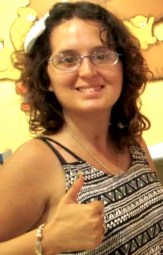
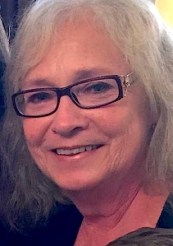
Panel: Behavioral & Emotional Problems After Brain Injury with

Lisa Dryer and GeorgeAnna Bell

presented

by

Donna O’Donnell Figurski

images-1One of the most difficult aftereffects of brain injury is losing oneself. Depending on the injury and which part of the brain is impacted determines the type of emotional and behavioral change in one’s personality. A person who was agreeable, complacent, reasonable, and calm before the injury may change drastically to one who is violent, depressive, or struggles with anger management. These effects are not easy for others to understand – BUT, have you thought about how difficult it must be for the survivor?

Dryer, Lisa Survivor

Lisa Dryer – Survivor & BIRN Host


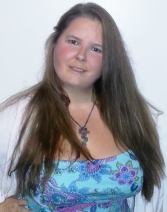
My panel, M.S. (Multiple Sclerosis) survivor, Lisa Dryer, and brain injury survivor, GeorgeAnna Bell, will join me to discuss this sensitive topic.

03 Bell, GeorgeAnna, Bell copy

GeorgeAnna Bell – Survivor

See you “On the Air!”

On The Air: Brain Injury Radio “Another Fork in the Road” Panel: Behavioral & Emotional Problems After Brain Injury

(Clip Art compliments of Bing.)

As I say after each post: Please leave a comment by clicking the blue words “Leave a Commentanim0014-1_e0-1 below this post.

Feel free to follow my blog. Click on “Follow” on the upper right sidebar.

If you like my blog, share it intact with your friends. It’s easy! Click the “Share” buttons below.

If you don’t like my blog, “Share” it intact with your enemies. I don’t care!

Feel free to “Like” my post.

SPEAK OUT! Faces of Brain Injury –

Amber Baxley (caregiver for her two-year-old daughter, Evonia)

presented

by

Donna O’Donnell Figurski

 Brain Injury is NOT Discriminating!

bigstock-cartoon-face-vector-people-25671746-e1348136261718It can happen to anyone, anytime, . . . and anywhere.

The Brain Trauma Foundation states that there are 5.3 million people in the United States living with some form of brain injury.

On “Faces of Brain Injury,” you will meet survivors living with brain injury. I hope that their stories will help you to understand the serious implications and complications of brain injury.

The stories on SPEAK OUT! Faces of Brain Injury are published with the permission of the survivor or designated caregiver.

If you would like your story to be published, please send a short account and two photos to me at neelyf@aol.com. I’d love to publish your story and raise awareness for Brain Injury.


Evonia

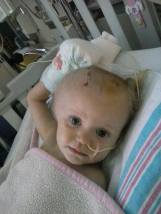
Evonia – Brain Injury Survivor

(Note: Today, May 19th, 2016 marks Evonia’s first anniversary of her brain injury. She has a long road ahead, but she has a very loving and supportive mother who will help her through)

Baxley, Amber 2 Caregiver of Evonia

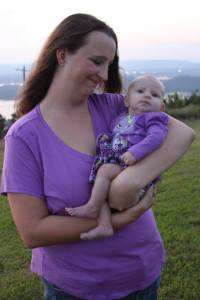
Amber Baxley – Mother of Evonia – Survivor

I’m feeling emotional. Today is the one-year anniversary of my daughter’s brain injury. (My daughter, Evonia, will be three next month.) Evonia’s life was forever changed a year ago today. At 3:00 pm on May 19th, 2015, my now two-year-old daughter was shaken and got her traumatic brain injury (TBI). There is not a day that goes by that I don’t wish I could go back to that day and stop it from happening. I made a huge mistake that day. I chose to leave my daughter and her big brother with a man I thought I could trust – a man I thought loved his family, especially his children, more than anything in the world. Man, was I wrong! I wish I had taken my children with me. That day, not only did my daughter’s life forever change, but also I learned that you cannot always trust those who are supposed to be the ones you can trust.

Baxley, Amber 2 Caregiver of Evonia 3

Evonia – Brain Injury Survivor

Evonia spent three weeks in a coma fighting for her life because of him. She spent three months in the Pediatric Intensive Care Unit trying to recover some. My daughter had bleeding of the brain caused by her having been shaken. The blood tried to clot and caused a stroke. As of now, my little girl has had a total of five brain surgeries. She’s also had surgery to place a feeding tube into her stomach and another to remove it. Evonia will likely need to have other surgeries as she gets older. Before everything happened, Evonia was a bright, bubbly little girl – full of life. Because she was always exploring, she was always getting into things. Evonia was perfectly healthy. Now she has to fight to regain every milestone she had already surpassed.

Baxley, Amber Caregiver of Evonia 1

Evonia – Brain Injury Survivor

I so wish I could go back and do that day over again. She would have never had to go through this. If I could, I would do it in a heart beat.


(Clip Art compliments of Bing.)

(Photos compliments of contributor.)

As I say after each post: Please leave a comment by clicking the blue words “Leave a Commentanim0014-1_e0-1 below this post.

Feel free to follow my blog. Click on “Follow” on the upper right sidebar.

If you like my blog, share it intact with your friends. It’s easy! Click the “Share” buttons below.

If you don’t like my blog, “Share” it intact with your enemies. I don’t care!

Feel free to “Like” my post.

SPEAK OUT! Itty-Bitty GIANT Steps

presented by

Donna O’Donnell Figurski

Itty-Bitty GIant Steps for BlogSPEAK OUT! Itty-Bitty Giant Steps will provide a venue for brain-injury survivors and caregivers to shout out their accomplishments of the week.

If you have an Itty-Bitty Giant Step and you would like to share it, just send an email to me at neelyf@aol.com.

If you are on Facebook, you can simply send a Private Message to me. It need only be a sentence or two. I’ll gather the accomplishments and post them with your name on my blog approximately once a week. (If you do not want your last name to be posted, please tell me in your email or Private Message.)

I hope we have millions of Itty-Bitty Giant Steps.


Here is this week’s Itty-Bitty GIANT Steps

#2 Shaw, Jenny Niday Survivor 050116

Jenny Niday Shaw – Survivor

Jenny Niday Shaw (survivor)…I am happy after three years this April. SmilesI finally smiled again – I mean a real smile. It is the simple things, folks … the simple things.


Viera, Meg Survivor 051716

Meg Viera – Survivor


Meg Viera (survivor)…I just got my grades back from my last college semester. I’m usually on the Dean’s List, but I took a harder class this time. Dean's List


My mom said I probably wouldn’t get on the Dean’s List this semester. But, I got an A in the harder class (!) and a B+ in my other one. Here I come, Dean’s List – TBI and all!

YOU did it!

Congratulations to contributors!

As I say after each post:anim0014-1_e0-1

Please leave a comment by clicking the blue words “Leave a Comment” below this post.

Feel free to follow my blog. Click on “Follow” on the upper right sidebar.

If you like my blog, share it intact with your friends. It’s easy! Click the “Share” buttons below.

If you don’t like my blog, “Share” it intact with your enemies. I don’t care!

Feel free to “Like” my post.


(Clip Art compliments of Bing.)

(Photo compliments of contributor.)

SPEAK OUT! Faces of Brain Injury Beth Kidd Koziol

presented

by

Donna O’Donnell Figurski


Beth Kidd Koziol

Beth Kidd Koziol – Survivor

My brain injury happened in 2005 from being a passenger on the back of a motorcycle. I had a traumatic brain injury (TBI)/closed-head brain bleed, a fractured clavicle, five fractured ribs, a lung contusion, many fractures in my left hand, including a fractured scaphoid bone. (I was told that, if the blood supply could not get to it, I would lose the use of my hand. Thank God, it healed!) I also had a badly fractured pelvis and several torn ligaments in my left shoulder. I was airlifted to a trauma unit, where I stayed for three days. I was then transferred to a rehab hospital for about two months. There I got extensive occupational, physical, and speech therapies. I had a neuropsychologist, a neurologist, an orthopedic specialist, and a pain-control specialist. After I left the rehab hospital (in a wheelchair), I visited three times a week for an additional three to six months. I had to learn how to eat, swallow, talk, and walk. I had taste and smell issues with food, plus I couldn’t swallow normal foods. I got dizzy when I moved my head. It was determined that I had shattered microscopic bones in my left ear (the side of all my injuries). After about three weeks of physical therapy, I had a treatment that corrected that problem and reset those little microscopic bones.

I left the rehab hospital in a wheelchair. It took me another three to four months before I could walk with a walker and then with a cane. Now I use nothing. After six to nine months of continued outpatient sessions of physical therapy and occupational therapy, I was called “Wonder Woman” and “Miracle Child” because no one knew how determined I was in my recovery. I was my own caregiver because I was 3,000 miles away from family. Rather than alarm them, I did not tell them of my accident until I was well enough to travel back to the East Coast and tell them in person, so they could see that I was OK on the outside. My family still doesn’t understand the damage and changes on the inside that I endure daily. I have short-term memory problems, I can no longer multitask, and I have to talk in detail as if I were writing a book or describing a picture. I’m told I talk too much; that hurts. If I am doing anything, including talking, and I am interrupted, I cannot remember what it was that I was going to say or do. This is commonly the new normal for many brain injury survivors.

Beth Kidd Koziol 2 survivor 051616

Beth Kidd Koziol – Survivor

The best thing I can suggest is to find materials – books to read to get informed or educated and websites that help you understand what a TBI-person goes through. It helps the survivor when you understand and are patient with him or her. After ten years for me, I still find areas in which I am still healing.
My motto is “Never Give Up!” [smile emoticon]


As I say after each post:

Feel free to leave a comment by clicking the blue words “Leave a Comment” below this post.

Please follow my blog. Click on “Follow Me Via eMail” on the right sidebar of your screen.anim0014-1_e0-1

If you like my blog, click the “Like” button under this post.

If you REALLY like my blog, share it with your friends. It’s easy! Click the “Share” buttons below.

If you don’t like my blog, “Share” it with your enemies. That works for me too!


One Day at a Time

by

Tanya Dallas

presented

by

Donna O’Donnell Figurski

Girl Blogger cartoon_picture_of_girl_writingI am new to this diagnosis of brain injury. For the last few years, I have had several unexplained symptoms – my life was spinning out of control. No one was listening to me. No one was asking the right questions. A few weeks ago, my father took me to the Emergency Room. He was desperately seeking help because I had no control of my emotions. I was placed in a locked-down psychiatric unit.

Dallas, Tanya Survivor 2 050716

Tanya Dallas – Brain Injury Survivor

A very nice doctor asked me if I’ve ever had a head injury. I began to tell my story. At 11 years old, I had a bike accident. I had no helmet, and I was unconscious for two minutes. At 12 years old, I took a softball to the face. I was unconscious for a few seconds. At 18 years old, I was in a car accident. I was unconscious for an unknown amount of time. Once I was struck in the head with a rock. I was also hit in the head with a ten-pound dumbbell (working with juveniles means risks). I experienced five years of domestic violence. I have no idea which of these things caused my brain to work differently.

Dallas, Tanya Survivor 1 050716

Tanya Dallas – Brain Injury Survivor

It’s hard for me to process. I was always so independent, and now I am unable to even hold a job. I learned what “flooding” was yesterday. I cried as I watched the video. For the first time in years, I felt understood. I felt like I wasn’t completely losing my mind.

It’s hard because my family still doesn’t understand. And they can’t see the injury, so they don’t think it’s there. I’m just taking one day at a time at this moment.


Thank you, Tanya Dallas.

Disclaimer:
Any views and opinions of the Guest Blogger are purely his/her own.

(Clip Art compliments of Bing.)

(Photos compliments of Tanya Dallas)

As I say after each post: Please leave a comment by clicking the blue words “Leave a Commentanim0014-1_e0-1 below this post.

Feel free to follow my blog. Click on “Follow” on the upper right sidebar.

If you like my blog, share it (intact) with your friends. It’s easy! Click the “Share” buttons below.

If you don’t like my blog, “Share” it (intact) with your enemies. I don’t care!

Feel free to “Like” my post.

“Jump on the Bumper” to Raise Awareness of Brain Injury

presented

by

Donna O’Donnell Figurski

Kidd Koziol, Beth Survivor 2

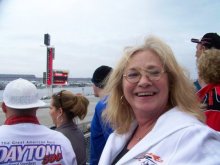
Beth Kidd Koziol – Brain Injury Survivor – NASCAR enthusiast

If you have a NEED for Speed, then “Jump on the Bumper” with our own Beth Kidd Koziol. Beth’s name and photo will be on the bumper of driver Joey Gase’s racecar as he races around the Charlotte Motor Speedway (in North Carolina) in search of a win in the Xfinity Race on Memorial Day weekend.

Joey Gase

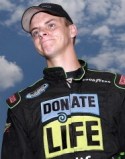
Joey Gase – NASCAR Driver


Joey lost his mother to a brain aneurysm when he was eighteen. Joey donated his mother’s organs, and today 66 people are alive because of them. Joey’s goal is to raise awareness for “Donate Life” and traumatic brain injury groups of North Carolina.

Beth, a NASCAR enthusiast, invites other brain injury survivors to take the ride of their life with her on the bumper of Joey’s car and help her fulfill her dream of raising awareness for brain injury.

Joey Gase and Car

Joey Gase – NASCAR Driver

All I can add is “Beth, hang on tight!”

Please click the link below for details.

“Jump on the Bumper” with Beth Kidd Koziol


As I say after each post:

Feel free to leave a comment by clicking the blue words “Leave a Comment” below this post.

Please follow my blog. Click on “Follow Me Via eMail” on the right sidebar of your screen.anim0014-1_e0-1

If you like my blog, click the “Like” button under this post.

If you REALLY like my blog, share it with your friends. It’s easy! Click the “Share” buttons below.

If you don’t like my blog, “Share” it with your enemies. That works for me too!

Survivors SPEAK OUT! Heather Love Leffel

presented

by

Donna O’Donnell Figurski

Leffel, Heather Love MS survivor

Heather Love Leffel – Multiple (M.S.) Survivor

1. What is your name? (last name optional)

Heather Love Leffel

2. Where do you live? (city and/or state and/or country) Email (optional)

Toledo, Ohio, USA     heatherleffel419@gmail.com

3. On what date did you have your brain injury? At what age?

I have multiple sclerosis (MS), which essentially is brain damage. I had my first symptom at 19 years old.

4. How did your brain injury occur?

Well, my mother and twin sister also have MS. I do believe MS has a genetic aspect to it, but as of now, they don’t know the cause of MS.

5. When did you (or someone) first realize you had a problem?

I first noticed my MS in 1999. I was at my son’s T-ball game. I looked into the sky, and suddenly my left eye saw white flashes, and a black lace went over my vision. This was my mother’s first symptom too. I knew in my heart I had MS.

6. What kind of emergency treatment, if any, did you have?

None. I went directly into denial without passing GO (LOL) (a Monopoly reference). I didn’t want to know I had MS, so I ignored every symptom I had. I was in complete denial.

7. Were you in a coma? If so, how long?

No, I was not.

8. Did you do rehab? What kind of rehab (i.e., inpatient or outpatient and occupational and/or physical and/or speech and/or other)? How long were you in rehab?

I have done a brief treatment of physical therapy for my balance and walking, but I stopped going. I shouldn’t have, but I did.

9. What problems or disabilities, if any, resulted from your brain injury
(e.g., balance, perception, personality, etc.)?

Oh my symptoms list is a mile long! I can name some major ones. I have issues with balance and memory. I have nerve pain that results in a burning limbs sensation. I also have excruciating headaches, blurred vision, vertigo, the “MS hug” (a tightening around the waist), spasticity, speech issues occasionally, and more.

10. How has your life changed? Is it better? Is it worse?multiple_sclerosis_believe_dream_hope_sticker-r9050a576f9804d99a628b40913eb66e5_v9waf_8byvr_512

In some ways, my life is better, and, in many ways, it’s worse. I have met some of the most amazing and wonderful people through this disease. I’ve also learned to slow down and appreciate life, but MS has taken so much from me. I lost my job, my fiancé, friends, financial stability, and the energy needed to be the mother I always was.

11. What do you miss the most from your pre-brain-injury life?

I miss working and having the money to fully provide for my children all the things I needed and wanted to.

gg6402838012. What do you enjoy most in your post-brain-injury life?

I most enjoy spending any time I can with my sons and also being an MS advocate.

13. What do you like least about your brain injury?

I least like what my having MS has done to my family, and I dislike the fear I have daily that I’ve passed the monster to my children.

14. Has anything helped you to accept your brain injury?

Honestly, acceptance happened fast for me – maybe because I knew in my heart for so many years that I had it, but was denying it. (I showed my first symptoms in 1999, but I didn’t break down and see a doctor until 2012.)

15. Has your injury affected your home life and relationships and, if so, how?

Yes. I lost my fiancé. The first year after my diagnosis was challenging. I had to stop working just three months after my diagnosis. That crushed me. I was going through depression. I was also having issues with trusting my fiancé, since he lived in another state due to the military. Long story short – my trust issues were justified. He cheated on me, got the girl pregnant, and secretly married her while with me (one year after my diagnosis and after seven and a half years together).

16. Has your social life been altered or changed and, if so, how?

Oh my, yes! I have no social life. The only social life I have is Facebook really. I’ve definitely isolated myself.

17. Who is your main caregiver? Do you understand what it takes to be a caregiver?

I am my own caregiver at the moment. My 18-year-old son helps me a lot, but I wouldn’t call him my caregiver. I absolutely understand what it takes to be a caregiver. It’s a hard and selfless thing for someone to do. Caregivers deserve the utmost respect.

18. What are your plans? What do you expect/hope to be doing ten years from now?

I hope to be married to a good man – someone who can look past my MS and see me for me. I hope to have a grandbaby. I hope my son is happily married and has an enjoyable life. I hope my youngest is enjoying college and living life to the fullest. Most of all, I hope and pray that neither of my children has multiple sclerosis.

19. Are you able to provide a helpful hint that may have taken you a long time to learn, but which you wished you had known earlier? If so, please state what it is to potentially help other survivors with your specific kind of brain injury.

The most helpful thing I can say to you if you have MS is to allow yourself to grieve for the “old” you when you need to. Let it all out, and then pick up the pieces and move forward. You must allow yourself to grieve for who you once were and to grieve when things change because with this disease you are ever-changing. Allow yourself to feel it, and then accept it and continue to be the MS warrior that you are!

58df9ecb6c5b1b58ba8911d21946404420. What advice would you offer to other brain-injury survivors? Do you have any other comments that you would like to add?

My advice to others like me is to speak out. We need to understand that we didn’t choose MS; it chose us! MS is nothing to hide or to be ashamed of; neither is your MS story. To create awareness about this disease, we must speak about it. We must all raise our voices and be heard. One person can make change – it only takes one. Be the difference you want to see!


(Disclaimer: The views or opinions in this post are solely that of the interviewee.)

If you would like to be a part of the SPEAK OUT! project, please go to TBI Survivor Interview Questionnaire for a copy of the questions and the release form.

(Clip Art compliments of Bing.)

(Photos compliments of contributor.)


As I say after each post:

Feel free to leave a comment by clicking the blue words “Leave a Comment” below this post.

Please follow my blog. Click on “Follow Me Via eMail” on the right sidebar of your screen.anim0014-1_e0-1

If you like my blog, click the “Like” button under this post.

If you REALLY like my blog, share it intact with your friends. It’s easy! Click the “Share” buttons below.

If you don’t like my blog, “Share” it intact with your enemies. That works for me too!

SPEAK OUT! Faces of Brain Injury Charles Ross  (survivor)

presented by

Donna O’Donnell Figurski

 Brain Injury is NOT Discriminating!

bigstock-cartoon-face-vector-people-25671746-e1348136261718It can happen to anyone, anytime, . . . and anywhere.

The Brain Trauma Foundation states that there are 5.3 million people in the United States living with some form of brain injury.

On “Faces of Brain Injury,” you will meet survivors living with brain injury. I hope that their stories will help you to understand the serious implications and complications of brain injury.

The stories on SPEAK OUT! Faces of Brain Injury are published with the permission of the survivor or designated caregiver.

If you would like your story to be published, please send a short account and two photos to me at neelyf@aol.com. I’d love to publish your story and raise awareness for Brain Injury.


Charles Ross (survivor)

Ross Jr., Charles Survivor 112415 copy

Charles Ross Jr. – Brain Injury Survivor

It has been just over thirty years since I had my traumatic brain injury (TBI) in November 1985. I remember nothing of the accident at all. What I say of the accident is what I learned after the fact. I had the paddles put on me before I got on the helicopter to fly to the larger hospital in St. Louis. The doctors even told my parents they were removing me from Intensive Care to make room for someone who might live. I was in a coma for fifty days. I spent over ten months in the hospital. I was in a wheelchair for one and a half years. And, I had seven summers of surgery to make it to where I can now walk with a cane.

I have severe memory problems. My short-term memory was, and still is, bad. I had been having what I called “spells,” during which I would get a feeling like a chill in my spine. My parents noticed the staring while I was in the hospital. The doctors took me off seizure medicine because they did not believe I was having seizures. I know those spells increased in frequency after that. I could go days with no spells, but other days, I could have hundreds. They usually seemed to last a few seconds, but Mom thought they sometimes lasted longer.

As the spells increased, the feelings I had changed too. I began to notice a feeling like I needed to have a bowel movement, but I never did that, I remember. I would get extremely hot, and sometimes the sweat would just pour out of me for a few seconds. Mainly at night, I would wake with a spell and have a horrible taste in my mouth. After I got my license back, I sometimes had these spells while I was driving. I could have them in class or while I was watching TV or walking or sleeping – it did not matter. I never noticed anything that triggered them. Four years after the accident, in my sleep on New Year’s Eve night 1989, I had a tonic-clonic (grand mal) seizure. It was determined that the “spells” were petit mal seizures. Treatments finally began for traumatically incurred epilepsy, which the doctor finally said I had.

OLYMPUS DIGITAL CAMERA

After I started on medication, the spells decreased dramatically. I would still have one, and my neurologist would increase my dose. That helped for some time, but the spells never stopped completely. Even though I had severe memory and physical problems along with the seizures, I managed to get two Associate Degrees over nine years. However, because of my memory problems, I failed to get my Bachelor’s Degree. I started working with my last degree, but the stress was too powerful to maintain the job. I had many jobs though, mainly contract jobs without benefits.

I began to have blank spells. Maybe I had them before, but I never remembered them or realized it. Why I knew I had them was because I was driving again and I would have an accident in which I hit someone in the back end. I would come out of any blank spell immediately, but I never remembered what had happened, other than that I hit someone. I figured that they hit the brakes quickly in rush-hour traffic and I could not stop.

Over the years, I would have an accident every year or two. Finally, I realized that, before each accident, I had that strange feeling also. So, then I knew what the real cause of the accidents was. After fifteen years of work, I lost my job. I moved in with my parents again. The new neurologist started me on a second medication, and that helped. It did not stop the spells though.

Ross, Charles Survivor

Charles Ross Jr. – Brain Injury Survivor

I moved again and got another neurologist. She put me on two more medicines. One was the same brand, just a different strength. That medicine with such a heavy dosage made me have mood swings sometimes. Altogether, it was over twenty-two years after treatment began and twenty-seven years after the accident before the right mixture was found and I felt in control again. I moved back in with my parents again in late 2014. I helped my parents the best I could with my three hospital stays and two operations. I drove my dad for cancer treatments before his death in September 2015. I am with my mom now. We help each other during the grieving process.

I hope my story serves as a source of strength, encouragement, and determination for others with TBIs to never give up. I was never supposed to live! If I did, they said I would be no more than a being in a chair, unable to do anything for myself.

Never Give UpI am writing my story, I drive, I went to college, I got two Associate degrees, and I worked for fifteen years. There is so much more, but anyone who reads this story should know that anything is possible. You may not accomplish as much as I did, or you may accomplish more. Just know that you should never give up on yourself. Feel proud of your body. If they had been in your shoes, they could never have done what you did, and that is to survive! Be proud!


(Clip Art compliments of Bing.)

(Photos compliments of contributor.)

As I say after each post: Please leave a comment by clicking the blue words “Leave a Commentanim0014-1_e0-1 below this post.

Feel free to follow my blog. Click on “Follow” on the upper right sidebar.

If you like my blog, share it intact with your friends. It’s easy! Click the “Share” buttons below.

If you don’t like my blog, “Share” it intact with your enemies. I don’t care!

Feel free to “Like” my post.


SPEAK OUT! Itty-Bitty GIANT Steps

presented by

Donna O’Donnell Figurski

Itty-Bitty GIant Steps for BlogSPEAK OUT! Itty-Bitty Giant Steps will provide a venue for brain-injury survivors and caregivers to shout out their accomplishments of the week.

If you have an Itty-Bitty Giant Step and you would like to share it, just send an email to me at neelyf@aol.com.

If you are on Facebook, you can simply send a Private Message to me. It need only be a sentence or two. I’ll gather the accomplishments and post them with your name on my blog approximately once a week. (If you do not want your last name to be posted, please tell me in your email or Private Message.)

I hope we have millions of Itty-Bitty Giant Steps.


Here is this week’s Itty-Bitty GIANT Steps

Julie Attwell (survivor)…I’m in Oz (Australia). AustraliaI recently got out of hospital. I was in because of epilepsy from my acquired brain injury (ABI). My discharge was HUGE for me! I was finally put on the list for rehab for fine motor skills, speech,Hospital Bed walking, reading, and writing. I am able to start being me again. I’m super excited! My injury happened in February of 2015, and I have had no help. Now I am finally getting some. YAY!


David June 14 copy

David Figurski Brain Injury Survivor


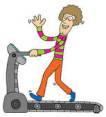
David Figurski (survivor)…I’m ecstatic that I finally walked 1.5 miles on the treadmill! I did it at 2.5 mph.

treadmill-clipart-k10354422.jpg

YOU did it!

Congratulations to contributors!


As I say after each post:anim0014-1_e0-1

Please leave a comment by clicking the blue words “Leave a Comment” below this post.

Feel free to follow my blog. Click on “Follow” on the upper right sidebar.

If you like my blog, share it intact with your friends. It’s easy! Click the “Share” buttons below.

If you don’t like my blog, “Share” it intact with your enemies. I don’t care!

Feel free to “Like” my post.


(Clip Art compliments of Bing.)

(Photo compliments of contributor.)

Survivors SPEAK OUT! Evan Powers

presented

by

Donna O’Donnell Figurski


Powers, Evan Joseph Motorcycle

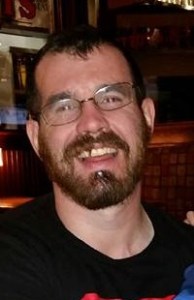
Evan Powers – Brain Injury Survivor

1. What is your name? (last name optional)

Evan Powers

2. Where do you live? (city and/or state and/or country) Email (optional)

Fort Mill, South Carolina, USA

3. On what date did you have your brain injury? At what age?

My brain injury happened on August 30th, 2014. I was 31.

4. How did your brain injury occur?

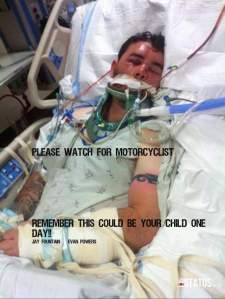
I was riding my Harley V-Rod Muscle with friends, and I was hit by an SUV. The driver, in a rush to buy smokes, turned illegally left and hit me. I died, was revived, fell into a coma, and “received” a traumatic brain injury (TBI) (diffuse axonal injury and brain stem damage). I had to relearn how to do everything! I’m doing very well, however – “What doesn’t kill you makes you stronger,” and I’ve proven to be a tough SOB. (LOL!)

5. When did you (or someone) first realize you had a problem?

At the scene of the accident

6. What kind of emergency treatment, if any, did you have?

A lot (LOL) – a craniotomy, arm surgery (compound fracture of my left arm), and intensive therapy (cognitive, vocational, physical, vocational, mental health, etc.). And I continued therapy (once a week and checkups).
Powers, Evan Joseph hospital

Evan Powers – Brain Injury Survivor

7. Were you in a coma? If so, how long?

Yes. I was in a coma a month.

8. Did you do rehab? What kind of rehab (i.e., inpatient or outpatient and occupational and/or physical and/or speech and/or other)? How long were you in rehab?

Yes. I did intensive inpatient therapy at Craig Hospital in Colorado (an incredible place!). Afterward, I continued with intensive rehab. Now I’m going only once a week.

9. What problems or disabilities, if any, resulted from your brain injury
(e.g., balance, perception, personality, etc.)?

I have balance issues, left-side weakness, and memory loss. I am prone to impulsivity and mood fluctuations.

10. How has your life changed? Is it better? Is it worse?

My life has changed in many ways – both negatively and, more importantly, positively! I suffer with balance issues, left-side weakness, memory issues, impulsivity, and emotional control issues. While those deficits suck (LOL), I’ve changed in so many ways for the better. I’m more positive. (I struggled with depression terribly before the accident.) I do not take life for granted, I am funnier and more fun-loving, and I am more passionate. Further, I’ve gained an understanding into the hell of having a TBI, and I have been moved to work with those who experience likewise – encouraging, sharing, and helping other survivors!

11. What do you miss the most from your pre-brain-injury life?

I miss some things – my job, my friends (lost a lot after the accident), having a sense of purpose, working, and – crazy as it may seem, considering what happened – riding my motorcycle (LOL). … But all in time!

12. What do you enjoy most in your post-brain-injury life?

I like how positive and passionate for life I am now. J

13. What do you like least about your brain injury?

I dislike not working and my left arm being weaker.

14. Has anything helped you to accept your brain injury?

Yes. I have been helped by friends, doctors, experience, time, and especially my mom!

15, Has your injury affected your home life and relationships and, if so, how?

Yes, very much so! I’m now divorced. (My ex and I had a rocky relationship before the accident.) Because of my problem with impulse control, I rush into relationships and “move too fast.”

16. Has your social life been altered or changed and, if so, how?

Yes. I lost a lot of friends after my accident. There were several reasons: my crazy behavior, being afraid of interacting with me, or just being “lousy friends” (LOL) – (for the best, I see now).

17. Who is your main caregiver? Do you understand what it takes to be a caregiver?

My mom is my main caregiver. She helps me out tremendously. I couldn’t have done what I did without her and my brother, Chris. Their love and support is much needed and is greatly appreciated!

18. What are your plans? What do you expect/hope to be doing ten years from now?

My future plans include going to school to get a degree in a field in which I can work with TBI survivors. I want to continue to heal, and I plan to start working part-time. I intend to better myself and help others, which has me excited!
Powers, Evan Joseph

Evan Powers – Brain Injury Survivor

19. Are you able to provide a helpful hint that may have taken you a long time to learn, but which you wished you had known earlier? If so, please state what it is to potentially help other survivors with your specific kind of brain injury.

Recovery from a TBI is brutal, but it gets better. Sometimes you run; other times, you crawl. Keep pushing and fighting – it’s worth it!

20. What advice would you offer to other brain-injury survivors? Do you have any other comments that you would like to add?

Be patient with yourself. Do the best you can – that’s all you can do. Keep fighting. I know that it’s hard, but it is worth the struggle! Also, reach out – get involved with other survivors. We understand each other more then others without injuries can. We’re family – rely on, encourage, and strengthen one another!


(Disclaimer: The views or opinions in this post are solely that of the interviewee.)

If you would like to be a part of the SPEAK OUT! project, please go to TBI Survivor Interview Questionnaire for a copy of the questions and the release form.

(Clip Art compliments of Bing.)

(Photos compliments of contributor.)


As I say after each post:

Feel free to leave a comment by clicking the blue words “Leave a Comment” below this post.

Please follow my blog. Click on “Follow Me Via eMail” on the right sidebar of your screen.anim0014-1_e0-1

If you like my blog, click the “Like” button under this post.

If you REALLY like my blog, share it intact with your friends. It’s easy! Click the “Share” buttons below.

If you don’t like my blog, “Share” it intact with your enemies. That works for me too!

 

diemodi jewelry

uniquely hand-crafted jewelry by donna

Welcome to Harmony Kent Online

The home of all things books

Pete Springer

Passionate Teacher and Future Children's Author

HOPE TBI

Helping Other People Excel - To Be Independent

For the Love of Books, Old and New

Katie Fischer, Writer and Reader of Stories

Charlie Bown

Children's Author

Jessica Hinrichs

“We write to taste life twice, in the moment and in retrospect.” ― Anais Nin

VIVIAN KIRKFIELD - Writer for Children

Picture Books Help Kids Soar

Mindy’s Writing Wonderland

For authors, parents, teachers & everyone who loves children’s books.

Kaitlyn Leann Sanchez

Literary Agent

Surviving Traumatic Brain Injury

TBI - Survivors, Caregivers, Family, and Friends

The Care Factor

Loving someone with a Traumatic Brain Injury

Brain Injury Support Group of Duluth-Extension

Brain Injury Information and SUPPORT

Brain Aneurysm Global Insight

Brain Aneurysm, cerebral hemorrhaging, hemorrhage stroke