HOW TO FIND A SUPPORT GROUP
How to Find a Support Group
presented by
Donna O’Donnell Figurski

Have you ever needed a support group? Needed the help of others to assist you with the problems that life throws at you? Have you been open to asking for and accepting the help offered? Or are you like me––struggling to stand alone––and thinking you can go it alone?
Be SMART! Check out the possibilities below.
Your healthcare provider may be able to offer assistance. doctor, nurse, social worker, chaplain or psychologist
Google It! Search the Internet. Online support groups are available on social media sites like Facebook.
Local centers like libraries, churches, or synagogues may be able to direct you to an appropriate support group.

Check your local listings. Search your local telephone book (Does anyone even have a phone book anymore?) or check your local newspaper for support resources.
Ask family, friends, or anyone who knows someone with a brain injury for support group suggestions.

Contact Organizations.
Contact a state or national organization affiliated with brain injury.
Contact the Brain Injury Association of America to find support groups in your state. http://www.biausa.org/
Check out the Mayo Clinic for resources.
http://www.mayoclinic.org/healthy-lifestyle/stress-management/in-depth/support-groups/art-200655
Get Your Copy Now
Read It! Review It! Click Links!

AUDIOBOOK Read/Listen to it Now!
Stay Safe and Healthy!
Clip Art compliments of Bing.)
(Photos compliments of contributor.)
As I say after each post:
Please leave a comment by clicking the blue words “Leave a Comment” below this post.
Feel free to follow my blog. Click on “Follow” on the upper right sidebar.
If you like my blog, share it intact with your friends. It’s easy! Click the “Share” buttons below.




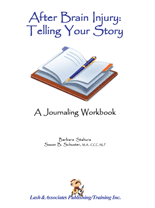 This workbook by Barbara Stahura and Susan B. Schuster guides survivors of brain injury and blast injury through the powerful healing experience of telling their own stories with simple journaling techniques.






 The movie also explains, in its animated form, how both long-term and short-term memories are stored, retrieved, and sometimes lost forever.

 The regular season of the NFL (National Football League) begins this week. Although American football can be exciting, we in the brain-injury community are very aware of the havoc that both concussive and sub-concussive head impacts play not only on the brain health of the pros, but also on the brain health of college and high school players (
 head and lead to “memory loss, confusion, impaired judgement, impulse control problems, aggression, depression and progressive dementia.” Some players have retired early (
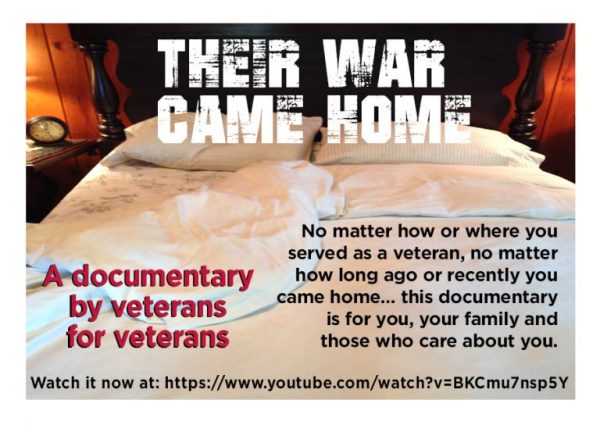
 The documentary ends on a hopeful note. The veterans who gave the interviews are learning to cope with their PTSD, often with great difficulty. There are volunteer organizations that help, and the film ends by showing several hotlines to call.


 Raising Awareness of Traumatic Brain Injury - one view at a time. Thanks for visiting my blog
 Surviving Traumatic Brain Injury
Recent Comments