Survivors SPEAK OUT! Natalie Collins
Survivors SPEAK OUT! Natalie Collins
presented
by
Donna O’Donnell Figurski

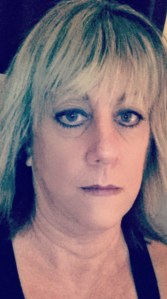
Natalie Collins – Brain Injury Survivor
1. What is your name? (last name optional)
Natalie Collins
2. Where do you live? (city and/or state and/or country) Email (optional)
Shreveport, Louisiana, USA
3. On what date did you have your brain injury? At what age?
I was 34.
4. How did your brain injury occur?
In a car accident
5. When did you (or someone) first realize you had a problem?
Immediately after the accident
6. What kind of emergency treatment, if any, did you have?
None
7. Were you in a coma? If so, how long?
I wasn’t in one.
8. Did you do rehab? What kind of rehab (i.e., inpatient or outpatient and occupational and/or physical and/or speech and/or other)? How long were you in rehab?
I had outpatient physical therapy for six months.
9. What problems or disabilities, if any, resulted from your brain injury (e.g., balance, perception, personality, etc.)?
I have problems with balance, perception, and personality, and I suffer from mood changes.
10. How has your life changed? Is it better? Is it worse?
My outlook on life is better, but I still grieve the “old” me. The worst is knowing I will be forever changed.
11. What do you miss the most from your pre-brain-injury life?
I miss being able to read a book.
12. What do you enjoy most in your post-brain-injury life?
I enjoy people more and “stopping to smell the roses,” as that old cliché goes.
13. What do you like least about your brain injury?
I dislike needing constant assistance because of my memory.
14. Has anything helped you to accept your brain injury?
I found it helpful to take Sticky Notes everywhere.
15. Has your injury affected your home life and relationships and, if so, how?
Yes. My current husband didn’t understand how big of a job it is to take care of me. As a result, I hide a lot of my disability. I also have to stay in the kitchen while cooking.
16. Has your social life been altered or changed and, if so, how?
Absolutely. I really don’t have a social life now. Before the accident, I had all sorts of people to hang out with.
17. Who is your main caregiver? Do you understand what it takes to be a caregiver?
My mom has been a great help teaching me how to do stuff and not doing it all for me.
18. What are your plans? What do you expect/hope to be doing ten years from now?
I honestly don’t know what I’ll be doing in the future. It depends on if this head injury allows me to continue my education in counseling.

Natalie Collins – Brain Injury Survivor
19. Are you able to provide a helpful hint that may have taken you a long time to learn, but which you wished you had known earlier? If so, please state what it is to potentially help other survivors with your specific kind of brain injury.
My advice is to take notes everywhere, especially doctors’ offices. (I had a friend who made me make a daily list, so I would remember even to take a bath. If you’re like me, you won’t remember why the stove is dinging.) Keep a set routine. Stay in the kitchen when cooking.
20. What advice would you offer to other brain-injury survivors? Do you have any other comments that you would like to add?
All I can say is “Notes everywhere.” Sticky Notes are fairly cheap in comparison to forgetting really important stuff.
If you would like to be a part of the SPEAK OUT! project, please go to TBI Survivor Interview Questionnaire for a copy of the questions and the release form.
(Clip Art compliments of Bing.)
(Photos compliments of contributor.)
As I say after each post:
Feel free to leave a comment by clicking the blue words “Leave a Comment” below this post.
Please follow my blog. Click on “Follow Me Via eMail” on the right sidebar of your screen.
If you like my blog, click the “Like” button under this post.
If you REALLY like my blog, share it intact with your friends. It’s easy! Click the “Share” buttons below.
If you don’t like my blog, “Share” it intact with your enemies. That works for me too!
 No matter how great it sounds, we can’t go back. No matter how much we may want to, that bridge has burned. The past has passed for a reason. We need to accept that it is over. We can only take the lessons we’ve learned.

 It can happen to anyone, anytime, . . . and anywhere.
 SPEAK OUT! Itty-Bitty Giant Steps will provide a venue for brain-injury survivors and caregivers to shout out their accomplishments of the week.
 GeorgeAnna Bell (survivor) …
  I was looking forward to a walk-in shower, so I could place my walker into the shower and use it as a chair, but my room had a tub. I was extremely cautious, but I did it! I am so happy!
 Cat Brubaker (survivor) …
 Sallie Stewart (survivor) …
  And several snacks in between. I can chew – on BOTH sides of my jaw. It’s a giant win in life for me! I feel strong. It’s been a true challenge to try to find the majority of my nutrition in a blender. It was so nice to really be able to chow-down food. These braces come off soon. And for that, I am happy. But I’m not nearly as grateful for that as I am for being able to chew pain-free. My heart is full! A strong full!
 The regular season of the NFL (National Football League) begins this week. Although American football can be exciting, we in the brain-injury community are very aware of the havoc that both concussive and sub-concussive head impacts play not only on the brain health of the pros, but also on the brain health of college and high school players (
 head and lead to “memory loss, confusion, impaired judgement, impulse control problems, aggression, depression and progressive dementia.” Some players have retired early (

 My husband is still in physical therapy, and he recently started occupational therapy again. (He had “graduated” from occupational therapy about a year ago, but his neurologist requested that he do it again.)


 Raising Awareness of Traumatic Brain Injury - one view at a time. Thanks for visiting my blog
 Surviving Traumatic Brain Injury
Recent Comments