Another Fork in the Road Behavioral and Emotional Changes After Brain Injury
 “Another Fork in the Road”
This category is an extension of my radio show, “Another Fork in the Road,” which airs at 5:30 pm (Pacific Time) on the 1st and 3rd Sundays of each month on the Brain Injury Radio Network. (See the “On The Air Show Menu” category for a list – with links – of all my shows, which are archived and thus always available.)
On the 1st Sunday of each month, I host a panel of brain injury survivors, caregivers, and/or professionals in the field. On these shows, my panelists and I examine topics pertaining to brain injury.
On the 3rd Sunday of each month, I host guests – brain-injury survivors, caregivers, or professionals in the field.
Since I spend countless hours in preparation for each show, I decided to share the knowledge that I gather with my readers.
Behavioral and Emotional Changes After Brain Injury
by
Donna O’Donnell Figurski
 As many of us know, all brain injuries are different. When an injury has happened to any part of the brain, there is going to be a change. The part of the brain that was damaged will determine the kind of symptoms that will be experienced. Because the brain is a complex organ in which different areas communicate, some damage may cause unexpected behaviors or emotional changes.
There are several sections of the brain, and each is responsible for many different aspects of daily life. Here I will discuss some of the behavioral and emotional changes that can result from damage to the cerebellum and to the cerebrum, which consists of the temporal lobe, the occipital lobe, the parietal lobe, and the frontal lobe, a major part of which is the prefrontal cortex.
The cerebellum, which is at the base of the skull, controls coordination, balance, equilibrium, and motor-skill memory. Some of the problems that result from damage to this area are compromised balance or the inability to walk, problems with fine-motor skills, and slurring of speech.
Damage to the temporal lobe can cause problems with hearing, memory, and motor-skill memory. Injury in the temporal lobe may also result in aggressive behavior.
The occipital lobe has to do with vision and vision-related activities. Reading and writing will be affected by damage to this area of the brain. Vision impairment can occur, which includes blurry, tilted, and double vision.
The parietal lobe is responsible for touch perception and the interpretation of visual information. Problems that may occur with damage to this lobe include difficulty in naming objects, difficulty with reading and/or writing, and spatial perception problems that can affect coordination.
Emotional responses and expressive language are housed in the frontal lobe. Emotions and the skills for problem-solving are dealt with there. The frontal lobe helps folks make sense of the world around them. It’s needed to understand others and be empathetic to them. Essentially, the frontal lobe is the emotional and social control area. It also determines and steers personality.
The prefrontal cortex of the frontal lobe controls analytical thinking, thought analysis, and behavior regulation. Executive functions are controlled here too. The prefrontal cortex is the gateway for making good decisions. When this area is injured, the thinking process is affected in such a way that inappropriate behavior is often the result.
I asked the following three questions of brain-injury survivors on the brain-injury support-group sites on Facebook to which I belong:
How have your emotions or your behaviors changed after your brain injury?
How do you cope with the change?
How do family members and/or friends cope with the change in your personality?
Several site members answered. The answers below are typical of the comments I received. (I used first names to protect the privacy of the contributors.)
Sherrie (survivor)
 It’s been a long time since my brain injury. My emotions can be extreme or opposite to what they should be. Change is hard, and I don’t like change. Friends left, and family has never accepted my brain injury.
I have been known to laugh when someone gets hurt, like mashing a finger, and my emotions can be so overwhelming that I cry no matter the feeling. Happy, sad, proud, mad, love. It doesn’t matter.
Toby (survivor)
Toby told me that it’s hard to cope with his migraines with brain injury because a lot of meds don’t work very well.
He has been put on many meds for depression and anxiety disorder.
 He also says his memory is damaged, and he can’t remember a lot of things.
Toby’s family has a hard time with him and his brain injury because it changes many things in their lives too. A lot of people don’t know what to say, so they hold back, or they do not talk with Toby anymore.
Toby tries to cope by getting his head in a better place, but when the anxiety kicks in hard, he has no idea what to do. He tries to get some things set up in advance, so he can take the  right meds before another migraine comes on. (He usually experiences over twenty migraines a month.)
When I asked Toby how his family and friends cope with him and his brain injury, he said, “They stay away from me. If I make a mistake on the computer or the Internet, they will call my wife and give her a heads-up on my condition. I don’t really have any friends after what happened to me.”
Jason (survivor)
 In a nutshell, Jason said, “Lack of love.”
I thought an article by Janet Cromer in “Psychology Today” was very informative, especially for caregivers, who often struggle with emotional and/or behavioral changes in the survivor. The article can be found online (see below).
Janet Cromer, who is a Registered Nurse, has written the “Dark Side of Personality Change.” She tells of how her husband’s personality changed after his brain injury. Before his brain injury, Janet recalls her husband (Alan) as being kind and loving with a keen sense of curiosity and humor.  After his injury, Alan experienced intense anger and confusion. His bizarre behavior and sudden change from calm to fiery led Janet to believe her post-injury husband had two personalities. She likened Alan’s behavior to that of Dr. Jekyll and Mr. Hyde, which she found very frightening. (I’m sure Janet is not alone in her fears. I have heard comments such as these in my brain-injury support-groups too many times to count.)
As I mentioned above, injuries to the frontal lobe, especially to the prefrontal cortex, often result in emotional and behavioral changes in survivors. Survivors of any brain injury may find themselves in states of agitation and in unstable emotional chaos. These states can cause outbursts of unintended verbal aggression and raging attacks on family or friends, which can be very hurtful. Though family and friends may try to understand and to be empathetic and helpful, dealing with an unexpected outburst can be an overwhelming task because it is so hard to comprehend.
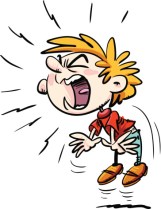
Violent outbursts and aggression by the survivor can result in the lack of trust and possibly fear of personal injury by the caregiver, family, or friends. But I think it’s the lack of trust – knowing that the survivor can become volatile at any time – that is the scariest and most hurtful. That loss of the sense of security is likely to be the most devastating.
How can caregivers, family, and friends help? I guess understanding would be at the top of the list. I know that’s not easy, especially if one feels that he or she has been unjustly attacked. Even knowing that the survivor is not responsible, would not act this way pre-brain injury, and will probably feel really bad after the incident, it will still be difficult to accept the aberrant behavior. It’s human nature.
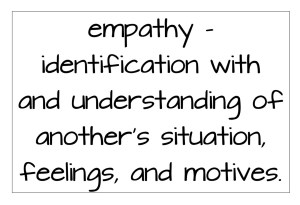 The caregiver, family, and friends need to understand that the survivor’s outburst may occur because of his or her frustration with the reality of the new life – lacking the ability to do the things he or she once did easily and/or experiencing loss of independence and/or the realization of a futile situation. Also, an outburst might be triggered by uncontrolled pain, depression, or any number of ailments. So, showing compassion or empathy, providing comfort, support, and encouragement will go a long way to helping your survivor.
What can one do when faced with irrational behavior by the survivor? It often helps to leave the area when an outburst begins. Don’t try to reason with the survivor – your efforts will probably not be fruitful. Remember, the survivor’s brain is injured, and he or she can’t help the aberrant behavior. It might help to talk about the behavior in a calm manner after the incident has subsided, or … maybe let it go.
Try to determine if there is a specific trigger for the outburst. If one is identified, try to avoid those situations that provide it. At the very least, knowing the trigger can help the caregiver, family member, or friend understand a little more. As time goes by, the caregiver and the survivor may each recognize the triggers and be able to eliminate them or lessen their impact.
Identify the survivor’s actions immediately prior to an outburst. Does the survivor show signs of agitation, tense his or her muscles, or become distracted? If so, take note and maybe remove the survivor from the area. Large groups of people (as in malls, family gatherings, or parties) can often cause agitation in a survivor, which in turn may cause an outburst.
Any overwhelming situation can bring about an outburst. Having to be ready to leave the house at a certain time can cause stress. So allow more time. Don’t rush.
Give plenty of notice for planned events. Make sure there are no surprises. If a survivor knows in advance that there is a family gathering to go to on Friday night, then he or she can plan for it. Surprises and unexpected events often cause anxiety and confusion, which can easily bring on an outburst. So plan ahead.
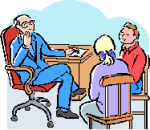 Get counseling. Counseling for both the survivor and the caregiver (or family member) can be helpful. Visiting a neuropsychologist or a behavioral therapist can help (see below). They are able to teach compensatory tactics to avoid or lessen the effects of an angry outburst. The survivor may employ deep breathing, alter thoughts to a more pleasant topic, leave the area to regroup in a quiet place, let friends know the trigger points, and ask for help. Periodic reminders can help those who struggle with memory. These are all simple and effective ways to compensate.
There are a lot of little tricks that can be incorporated into the lives of survivors and their caregivers, family, or friends that can make life easier for all.
Helpful Links
What Does a Neuropsychologist Do, Exactly?
Who Are the Rehab Specialists?
What Are the Functions of the Prefrontal Cortex?
After Brain Injury: The Dark Side of Personality Change Part I by Janet M. Cromer RN, LMHC
Click here to listen to my show
(Clip Art compliments of Bing.)
As I say after each post: Please leave a comment by clicking the blue words “Leave a Comment” below this post.
Feel free to follow my blog. Click on “Follow” on the upper right sidebar.
If you like my blog, share intact it with your friends. It’s easy! Click the “Share” buttons below.
If you don’t like my blog, “Share” it intact with your enemies. I don’t care!
Feel free to “Like” my post
 I was diagnosed as being moody at nine years old. I still have that diagnosis to this very day: “mood disorder due to brain injury.” I also have anxiety and panic attacks. I still have today most of the same problems I had back then, just in an expanded manner.
 I know my parents wondered why I acted out, and they took me to multiple specialists during my youth. I was diagnosed with optic nerve damage, but no other problems resulting from my head injury were identified. Each doctor gave my parents the same answer: “There is no logical explanation as to why she is doing this now when she did not do it before the head injury.

 During my teenage years and into my 20s and even 30s, I had depression on and off. It got better after I had a hysterectomy. When my behaviors started to level out a lot, I was able to control myself better and move past other issues by actually learning not to do this or that.



 One of the most difficult aftereffects of brain injury is losing oneself. Depending on the injury and which part of the brain is impacted determines the type of emotional and behavioral change in one’s personality. A person who was agreeable, complacent, reasonable, and calm before the injury may change drastically to one who is violent, depressive, or struggles with anger management. These effects are not easy for others to understand – BUT, have you thought about how difficult it must be for the survivor?

 It can happen to anyone, anytime, . . . and anywhere.

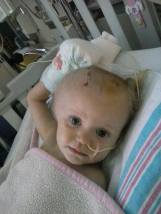

 SPEAK OUT! Itty-Bitty Giant Steps will provide a venue for brain-injury survivors and caregivers to shout out their accomplishments of the week.
 I finally smiled again – I mean a real smile. It is the simple things, folks … the simple things.




 I am new to this diagnosis of brain injury. For the last few years, I have had several unexplained symptoms – my life was spinning out of control. No one was listening to me. No one was asking the right questions. A few weeks ago, my father took me to the Emergency Room. He was desperately seeking help because I had no control of my emotions. I was placed in a locked-down psychiatric unit.






 12. What do you enjoy most in your post-brain-injury life?
 20. What advice would you offer to other brain-injury survivors? Do you have any other comments that you would like to add?


 Raising Awareness of Traumatic Brain Injury - one view at a time. Thanks for visiting my blog
 Surviving Traumatic Brain Injury
Recent Comments