TBI – Survivors, Caregivers, Family, and Friends

Posts tagged ‘TBI’

Survivors SPEAK OUT! – GeorgeAnna Bell

  SPEAK OUT! – GeorgeAnna Bell

by

Donna O’Donnell Figurski

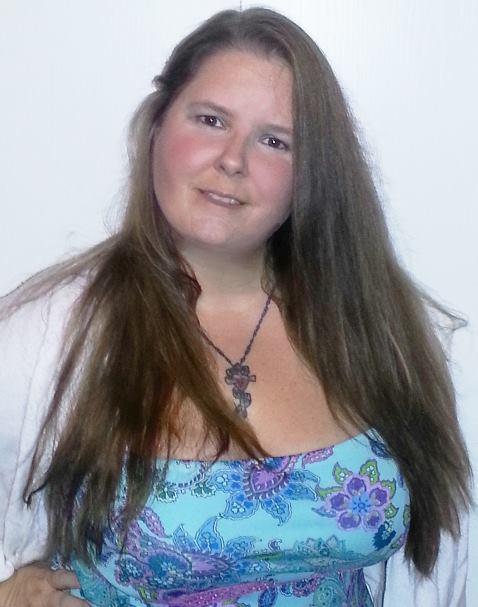
10570970_836853459658124_752128615_n1. What is your name? (last name optional)

GeorgeAnna

2. Where do you live? (city and/or state and/or country) Email (optional)

San Tan Valley, Arizona, USA

3. When did you have your TBI? At what age?

My first was at the age of 6 years old. I have had multiple concussions as a child. I had yet another head injury in 2001 and another concussion from another car accident on June 25, 2014. I am now 40 years old.

4. How did your TBI occur?

My first brain injury was from a bicycle accident – I lost control of my bike. I flipped over the handlebars and landed on the right side of my head, cracking my skull. The concussions were from falls; sports; an ATV (all terrain vehicle); motor vehicle accidents; rapes; abuse; falls; and being young, foolish, and idiotic.

5. When did you (or someone) first realize you had a problem?

My parents realized I was a different child the day they brought me home from the hospital.

6. What kind of emergency treatment, if any, did you have?

I’ve been treated by the ICU (intensive care unit). I’ve had eye/vision therapy and cognitive behavior therapy. I attended specialized schools – junior high school and senior high school – that were for children with mental, emotional, physical, and developmental disabilities.

7. Were you in a coma? If so, how long?

Yes     72 hours

8. Did you do rehab? What kind of rehab (i.e., inpatient or outpatient and occupational and/or physical and/or speech and/or other)? How long were you in rehab?

I did not go to a rehab center. I got everything from schools, specialized doctors, etc.

9. What problems or disabilities, if any, resulted from your TBI
(e.g., balance, perception, personality, etc.)?

I have a balance problem, dizziness, seizures, short- and long-term memory loss, mental illness (anxiety, depression, mood disorder, personality disorder), cognitive issues, social issues and social anxiety, headaches and migraines, numbness and tingling in my extremities, ringing in my ears (the ear, nose, and throat specialist calls it tinnitus), insomnia, vision and hearing issues (optic and audio nerve damage), and blurred vision (on and off). I am easily confused and distracted. (For example, I cannot multitask. I have to do one thing at a time. Otherwise, I get flustered and stressed out.) I am sensitive to lights, sounds, or distractions. I developed fibromyalgia, tremors, and speech issues, all of which the doctor thinks are the result of my head injury. I also have arthritis (rheumatoid arthritis and osteoarthritis). I have a developmental disability (due to the age at which I sustained my first head injury) and learning disabilities. I attended a special educational school from 7th grade until my senior year because I could not stay mainstream in a public school.

10. How has your life changed? Is it better? Is it worse?

I honestly do not know because I was so young when my first head injury occurred. However, over the years, I have sustained multiple head injuries. (For example, because of a short-term coma and concussions, I have increased mental, emotional, and physical issues.)

11. What do you miss the most from your pre-TBI life?

I wouldn’t remember what it was like before because I was only 6 years old when I sustained my first head injury.

12. What do you enjoy most in your post-TBI life?

I am grateful for my Significant Other – the ONLY person I personally know who is supportive of me and tries to be understanding.

13. What do you like least about your TBI?

I dislike how people treat me. People act as if I am some kind of idiot because I am slower than others, and then they look at me as if I have serious issues. I hate being judged. I want people to treat me as I would treat them. I don’t want them to judge me and look at me and say, “Well, you look fine.”

14. Has anything helped you to accept your TBI?

People’s ignorant behaviors and idiosyncrasies

15. Has your injury affected your home life and relationships and, if so, how?

My parents did not want to deal with my issues. They did not allow me to speak of my issues to anyone because it embarrassed them that they had a child with a disability. They still do not like my talking about my disabilities and TBI. However, I tell them I am a full-grown adult now, and I say to them, “If you do not like it, do not listen.”

16. Has your social life been altered or changed and, if so, how?

I have issues keeping friends. People tend to easily get annoyed with me. I tend to get frustrated easily, too. As for relationship with guys, I was always told I am a very taxing person – annoying, weird, and psychotic. I have had nicknames given to me by guys over the years: pain-in-my-ass, crack baby, wacko, weirdo, dumbass, stupid, idiot, retarded, sensitive bitch, nagging bitch, crazy, worthless.

17. Who is your main caregiver? Do you understand what it takes to be a caregiver?

My main caregiver is my boyfriend. No, I do not understand what it takes to be a caregiver.

18. What are your future plans? What do you expect/hope to be doing ten years from now?

I would love to open a 501c3 animal shelter and help unwanted animals – mainly dogs. I would like to extend the knowledge I currently have on animal studies and have better knowledge and understanding of the animal behavior.

19. Are you able to provide a helpful hint that may have taken you a long time to learn, but which you wished you had known earlier? If so, please state what it is to potentially help other TBI survivors with your specific kind of TBI.

Do not stop trying. Eventually it will work out.

20. What advice would you offer to other TBI survivors? Do you have any other comments that you would like to add?

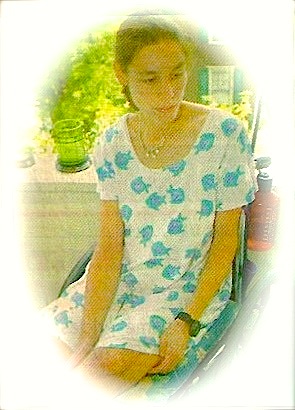
I encourage you to just try your best and keep trying. Do not give up. Once you give up, you lose everything, and it is not easy to get everything back again – even if you are able to get things back again.10695279_836854542991349_1216029697_n
 

Thank you, GeorgeAnna, for taking part in this interview. I hope that your experience will offer some hope, comfort, and inspiration to my readers.

(Disclaimer: The views or opinions in this post are solely that of the interviewee.)

If you would like to be a part of the SPEAK OUT! project, please go to TBI Survivor Interview Questionnaire for a copy of the questions and the release form.

(Photos compliments of GeorgeAnna.)
On the Air: Brain Injury Radio Interview with Melissa Cronin

On the Air – Brain Injury Radio

Interview with Melissa Cronin, author of “Invisible Bruise”

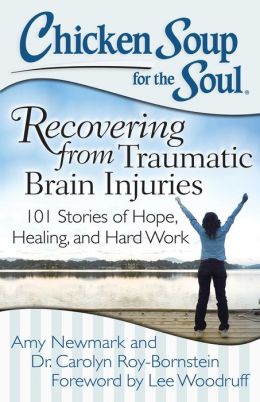
in “Chicken Soup for the Soul: Recovering From Traumatic Brain Injuries”

Melissa CroninMelissa shares her life both before and after her TBI. She said she was an energetic child who loved to run and play. In college she became a serious student as she pursued her career as a pediatric and a neonatal nurse, a career she loved. But, Melissa’s nursing career ended on that fateful day when a car went rogue careening through 2 1/2 blocks of the Santa Monica, California Farmer’s Market leaving Melissa with not only broken bones and a ruptured spleen, but also with a Traumatic Brain Injury.Melissa playing fiddle

Melissa has picked up the pieces and has found new loves. Her Irish fiddle; her husband, John; and her new career as a writer are just some of her newly adopted loves (NOT in that order).

If you missed Melissa’s interview, don’t fret. You can always listen to the archived show. I’ve included the link below.9781611592399_p0_v3_s260x420

Please SHARE!

I hope you’ll tune in to my show, “Another Fork in the Road,” which airs the 1st and 3rd Sunday evenings of every month. The show starts at 5:00p Pacific Time and runs for 90 minutes. On the fifth Sunday in a month, Julie Kintz, Host of “Quantum Leap,” and I team up to cohost a show called “Another Quantum Leap in the Road.”

See you “On the Air!”

Interview with Melissa Cronin, Author of “Invisible Bruise”

Click here for a list of all “Another Fork in the Road” shows on the Brain Injury Radio Network.

Survivors SPEAK OUT! Judy F.

SPEAK OUT! – Judy F.

by

Donna O’Donnell Figurski

Judy

Judy F.

 1. What is your name? (last name optional)

Judy F.

2. Where do you live? (city and/or state and/or country) Email (optional)

Welland, Ontario, Canada

3. When did you have your TBI? At what age?

I was born with hydrocephalus, and I have had several TBIs in my life.

4. How did your TBI occur?

In 2013, I had a problem from a mini-stroke and/or low blood flow during one.

5. When did you (or someone) first realize you had a problem?

We realized there was a problem about a month after the stroke occurred.

6. What kind of emergency treatment, if any, did you have?

I had surgery due to high intercranial pressure on May 15, 2013.

7. Were you in a coma? If so, how long?

No

8. Did you do rehab? What kind of rehab (i.e., inpatient or outpatient and occupational and/or physical and/or speech and/or other)? How long were you in rehab?

I receive medical support from a team of experts on an outpatient basis (neurologist, family doctor, occupational therapist, massage therapist, osteopath, pharmacist, social worker, and psychologist). I am still doing what is known as “work hardening”  (an individualized treatment program designed to maximize a person’s ability to return to work).

9. What problems or disabilities, if any, resulted from your TBI
(e.g., balance, perception, personality, etc.)?

I am unable to work at this time due to balance, short-term memory, and processing issues.  I also have mental fatigue (i.e., I need a daily afternoon nap).

10. How has your life changed? Is it better? Is it worse?

Better – slower day   Worse – my TBI-caused problems

11. What do you miss the most from your pre-TBI life?

I miss working.

12. What do you enjoy most in your post-TBI life?

I can now relax, and I don’t feel like I’m rushing through my day.

13. What do you like least about your TBI?

Besides not working, I also dislike the headaches.

14. Has anything helped you to accept your TBI?

It took time to process how my life and the people around me have changed since my TBI.

15. Has your injury affected your home life and relationships and, if so, how?

My relationships on the whole have gotten better.  Everyone is patient with me and very encouraging.  They help me celebrate any achievements and progress.

16. Has your social life been altered or changed and, if so, how?

My social life has taken a bit of a hit, as it’s hard to commit to a date and time. Every day is different, and I don’t know how I’ll feel.  It’s hard to explain this to people who haven’t been through it.

17. Who is your main caregiver? Do you understand what it takes to be a caregiver?

My main caregiver is my husband.  He helps me be the best I can be and is my cheering section.

18. What are your future plans? What do you expect/hope to be doing ten years from now?

I hope to improve, to be the best I can in our “new normal,” and to be a contributing member of my community in whatever capacity I am able to.

19. Are you able to provide a helpful hint that may have taken you a long time to learn, but which you wished you had known earlier? If so, please state what it is to potentially help other TBI survivors with your specific kind of TBI.

I have learned to make daily reminder-notes. This helps me prioritize important things to do on a daily basis.

20. What advice would you offer to other TBI survivors? Do you have any other comments that you would like to add?

Judy Awards

Judy receives a volunteer appreciation award from the Spina Bifida & Hydrocephalus Association of Ontario.

Assemble a good support team to help you on your journey.  Post-TBI survivors belong in the “car pool lane of life.”


Thank you, Judy, for taking part in this interview. I hope that your experience will offer some hope, comfort, and inspiration to my readers.

(Disclaimer: The views or opinions in this post are solely that of the interviewee.)

If you would like to be a part of the SPEAK OUT! project, please go to TBI Survivor Interview Questionnaire for a copy of the questions and the release form.

(Clip Art compliments of Bing.)

Catherine Brubaker’s . . . . . . . . Photo Journal – (Part 1) Washington to Florida

Triking Across America – diagonally –

Photo Journal Part 1

Washington to Florida


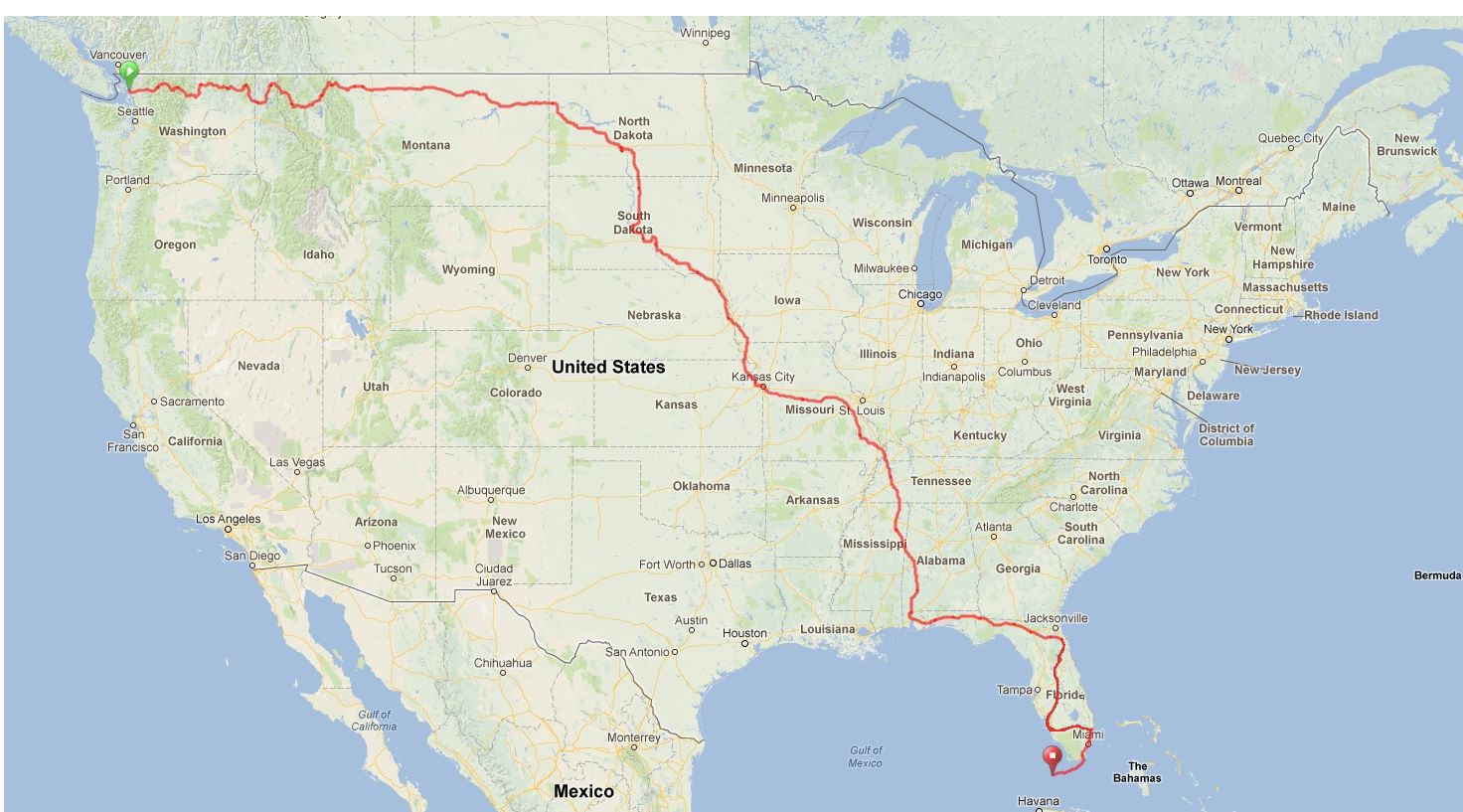
On June 29, 2014, Catherine (Cat) Brubaker and Dan Zimmerman set off from Anacortes, Washington on their recumbent trikes to trike across America – diagonally. Their destination – Key West, Florida – a trip of 5,200 miles.

I can’t even wrap my head around driving 5,200 miles in a car, let alone covering that distance under pedal-power. (I made up that word.)

Here's what 5,200 miles looks like.

Here’s what 5,200 miles looks like.


01 Cat on Trike 10350428_10204753083335148_667202674095765199_n

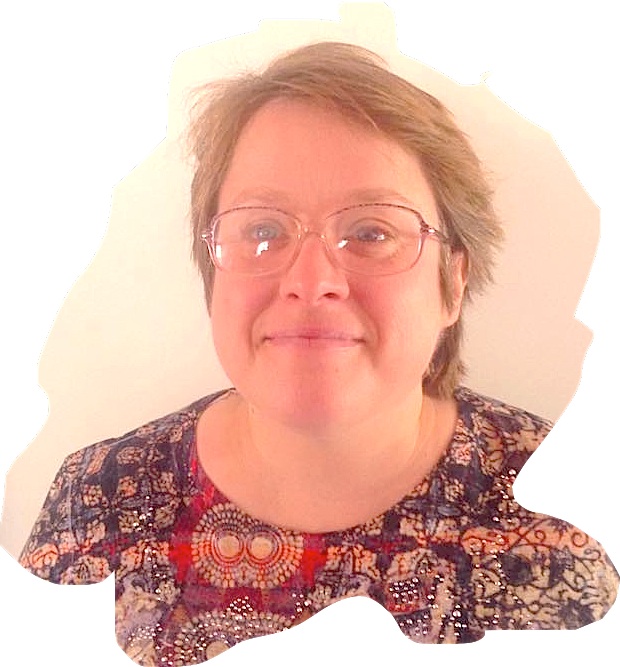
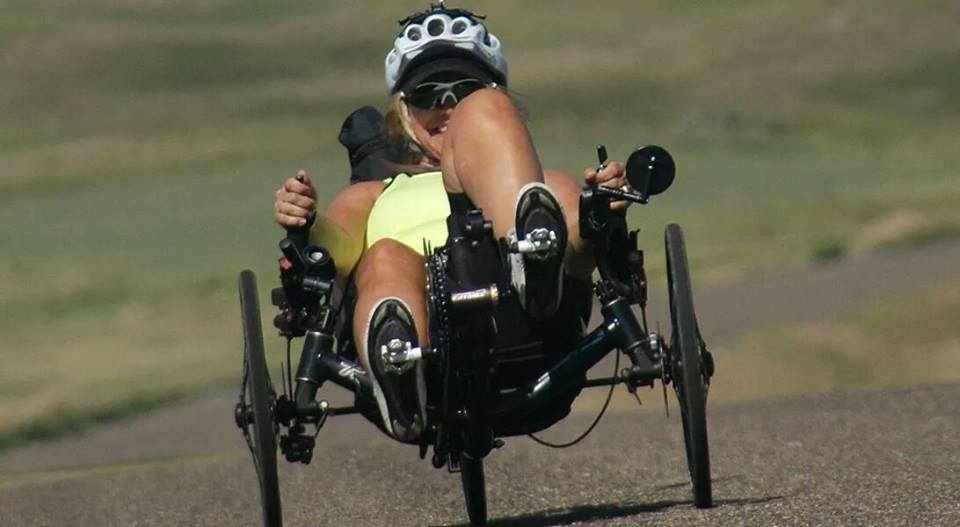
Cat, who survived two brain injuries triked to raise awareness for Traumatic Brain Injury (TBI) on “Cat’s Ride for Life.”

02 Dan on Trike 1069184_441000132665517_2000066735_n

Dan, a stroke survivor, pedaled for awareness for stroke prevention with “Spokes Fighting Strokes.”

This is the van loaded down with equipment that will be traveling with Cat and Dan

This is the van loaded down with equipment, supplies, and food that will be traveling with Cat and Dan.


Oops! A blowout before the trip even begins.

Oops! A blowout before the trip even begins

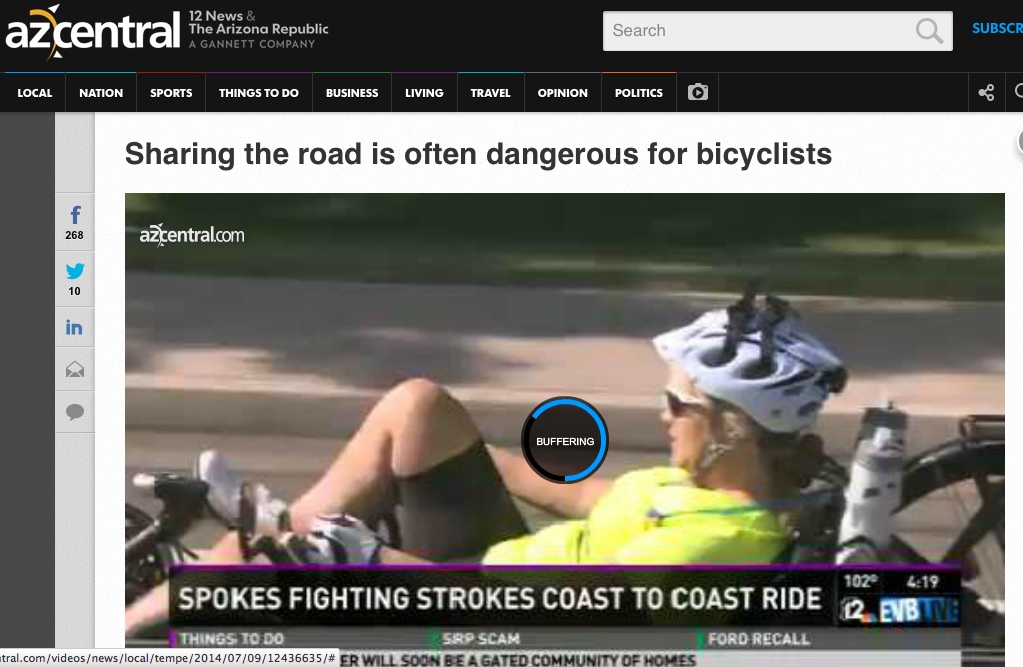
Cat is interviewed by  AZCentral - 12 News - The Arizona Republic

Cat is interviewed by AZCentral – 12 News – The Arizona Republic

Cat and Dan ride under "Spokes Fighting Strokes."

Cat and Dan ride under “Spokes Fighting Strokes.”


Cat and Dan ride about 50 miles per day and their average speed is about 13mph. They’ve seen a wolf, wild turkeys, and even “giant” crickets in Washington. Here are some of the beautiful sites Cat has encountered along the way. (More to come.)

 10420010_10204564402018233_4022721289719272020_n

Check out the Ascent and Elevation on this Garmin.

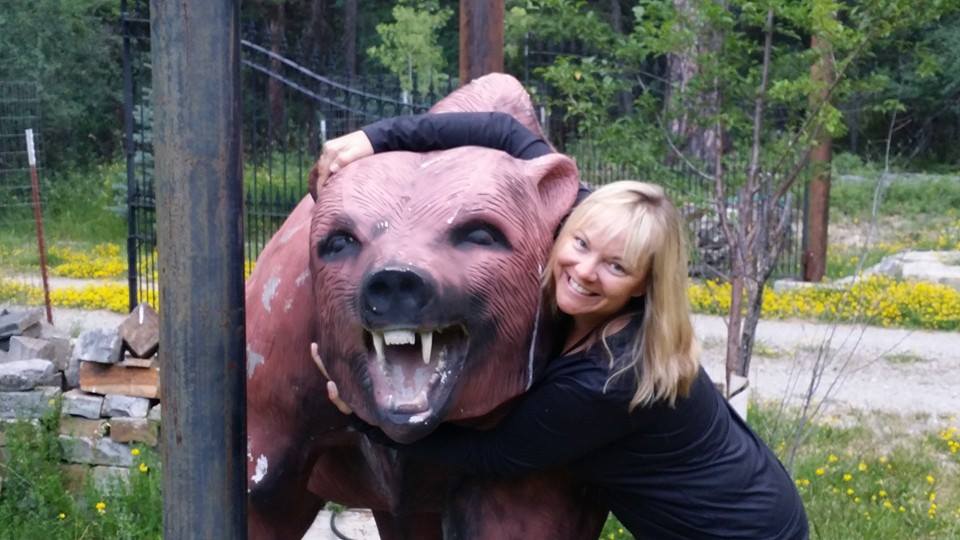
Cat and Bear sharing a little love.

Cat and Bear sharing a little love.

Washington sites

Washington sites

 M10338763_10204580536701590_2716290322768561350_n

Lake McDonald in National Glacier Park

Purple wild flowers along the highway

Purple wild flowers along the highway

Hmm, wondering if this will be Cat's new wheels for another Trip Across America.

Hmm, wondering if this will be Cat’s new wheels for another Trip Across America.

Pure bliss

Pure bliss

SPEAK OUT! . . . . . . . . . . . . . . . . . . Guest Blogger: Lee Staniland . . . . What I Can Remember

SPEAK OUT! Guest Blogger: Lee Staniland

What I Can Remember

Girl Blogger cartoon_picture_of_girl_writingIt was June 11, 1978, in Somis, California, so I’ve been told. Because, you see, I have no memory of what happened that day.

I know that I had just gotten back from Arizona, where I became the godparent to my young nephew. I had brought my mother back with me, and for Mother’s Day, I had taken her to Solvang for the day. I also remember taking her to the Burbank Airport for her to go home. I remember all that very clearly, but the actual day of the accident, I remember nothing.

I have been told things so many times that they now have become my memories. I was told that I had been outside washing windows when my husband left to go somewhere. I was probably upset about something or someone because that is the only time I would wash windows.

I put my dogs up in their kennel like I always did when I rode my horse. My husband came home and could not find me anywhere, until he looked out in the pasture, which was in the front of our house. He noticed my horse with her bareback blanket on and a hackamore hanging from her neck.

Our pasture has walnut trees in it, and he found me unconscious under one of the trees. He told everybody that he had always told me not to ride when I was alone.

He gathered me up and took me to Camarillo’s Emergency Room. They sent me to Ventura’s Community Hospital, where I stayed in a coma for six weeks.

I have been told stories of things that happened there, like the time they left me in front of an open window one day. I caught pneumonia as a result. Another time, they kept giving me Dilantin to control seizures, and I was allergic to it. Because of that, I was scratching myself so badly that they tied my hands to the bed so that I could not reach any part of my body.

I guess they must have done most things right, though, because I’m here today to tell you about it.

I came out of the coma six weeks later, and I was sent up to Santa Barbara Rehab, where I spent another 2 or 3 months.

That was where I got my first memory that stuck. I was in a room all by myself, and I could hear people out in the hall. I had no idea where I was or why I was there.

I have memories of little fragments of that time – like being with my family, my sister’s wheeling me around their hotel pool, another sister’s taking me for a car ride around Santa Barbara, and lunch at Micky D’s (MacDonald’s). Funny the things that you remember.

My husband took me out of the hospital to spend the day in Solvang for our first anniversary. That was a super memory. I got to be out of the hospital for a WHOLE day. Wow!

Other memories:

Trying to walk down the hall with a walker, and not doing so well.

The day my brother hid the belt that the nurses had tied around me so that I didn’t fall out of the wheelchair every time I thought that I could stand up on my own.

A great young gal who was supposed to be with me while I cooked a meal that I had chosen.  [There was no way that I could do that yet, so she and her boyfriend cooked and ate a steak dinner (or whatever it was that I had picked out to try to cook). It was so much fun just watching them enjoy it. It still puts a smile on my face whenever I think of it.]

Then there is the memory of crying and pleading with my family to take me home.  They all felt so bad and wanted to do it, but they knew I wasn’t ready, so they would leave and I would just fade out. That is the good thing about not having a good memory. You forget most things that upset you. I remember things a lot better today, but there are times, especially when I am tired, that the old memory just doesn’t work the way it used too.

Well, I finally got to go home. I was so happy.

My parents had moved down from Sacramento to help take care of me. I had to relearn to walk, talk, dress, and feed myself. My old self was a very headstrong person, but I just let everyone help me with life. It’s amazing how your mind protects you from yourself.

After awhile, it was time for my parents to leave. I love them so much, but my parents were smothering me, and I wanted MY house back.

I know my mom was so afraid to leave me to handle things on my own, but it was the best thing for me.

I want to tell all you caregivers a secret. I know that it is a lot easier if you just do everything for us, but please don’t. I believe that is how I got to be as good as I am. After my parents left, I had to do everything myself – from taking care of a big house to caring for cows, chickens, dogs, and cats and helping to run a carpet-supply warehouse. I sold my horse because I could not ride her then. Oh yeah, I just remembered that my rooster would chase me whenever I would go out to collect eggs. They always go after the weakest thing, and that was me.

I forgot to mention that we were also still in the process of finishing the house we were building and living in. Talk about crazy!

I am so thankful that the part of my brain that reasons things out was not damaged completely. Don’t get me wrong. I know that there are times when I get a little crazy about things. Maybe other people who do not have a brain injury would handle the situation a lot differently, but I do the best that I can.

I am now remarried to a man who does pretty well for someone who was not with me from the beginning. I think he has learned a lot from me. I have learned a lot from him.

When someone says to me, “Oh your head injury must not have been very serious,” I would like to shake him or her. I had to work very hard to get where I am. I had Someone looking over me, and He decided that my time was not up yet and that I have something that I’m still supposed to do. I believe my purpose in life is to be with my fellow brain injured and to give them and their families hope.

I am very satisfied with my life right now, and maybe that is because I have been given back most of my old self. And then Staniland, Lee-1maybe it is because I have some of the best people around me. So here is a big Thank You to all those wonderful people who have stuck by me through thick and thin.

I love you!


Thank you, Lee Staniland.

Disclaimer:
Any views and opinions of the Guest Blogger are purely his/her own.

(Clip Art compliments of Bing.)

SPEAK OUT! . . . . . . . . . . . . . . . Itty-Bitty GIANT Steps

SPEAK OUT! Itty-Bitty GIANT Steps

Itty-Bitty GIant Steps for Blog


SPEAK OUT! Itty-Bitty Giant Steps will provide a venue for brain-injury survivors and caregivers to shout out their accomplishments of the week.

If you have an Itty-Bitty Giant Step and you would like to share it, just send an email to me at donnaodonnellfigurski@gmail.com.

If you are on Facebook, you can simply send a Private Message to me. It need only be a sentence or two. I’ll gather the accomplishments and post them with your name on my blog approximately once a week. (If you do not want your last name to be posted, please tell me in your email or Private Message.)

I hope we have millions of Itty-Bitty Giant Steps.


Here are this week’s Itty-Bitty Giant Steps.

Jessica…Made it to about ten houses Trick or Treating with my kiddos before it became too much for me. BUT I am CELEBRATING because I only went to a few last year, and I don’t even really remember it! I post this for those mourning the loss of the “old you.” It gets better. No, I’m not able to do what I used to do, but I have learned/am learning to appreciate the little victories in life, and I am counting my blessings. I have a great husband, who took over for me, and I got 30 minutes of “alone time” before my kids returned. (Isn’t that what most moms want – “alone time”? LOL.)

Bernadette McSorley Futch…After having a hemorrhagic stroke at 11, I got a job when I was 16. Basically I lived my life as though nothing happened. Now that I have had three additional surgeries to control seizures, I decided I have to slow down and focus on keeping my terminally ill husband comfortable. When he does pass, I would like to call the Board and tell them why I let my Massage Therapist license lapse. I plan to try to get back to doing massage. Being able to laugh at yourself helps, and there is always Faith.

YOU did it!

Congratulations to all contributors!

(Clip Art compliments of Bing.)

On the Air – Brain Injury Radio Interview with Dr. David Figurski Prisoner without Bars: Conquering Traumatic Brain Injury

On the Air – Brain Injury Radio

Interview with Dr. David Figurski

Prisoner without Bars: Conquering Traumatic Brain Injury

images-1

You’ve heard David’s story from my point of view. Yesterday David shared his perspective of living with traumatic brain injury. He spoke about how his life has greatly changed for better…and for worse.

david-running-in-hall-

David Figurski 3wks before Traumatic Brain Injury

We learned about David’s life as a child and his educational career, which he began as a Kindergarten dropout. He told of the years that led up to our marriage and also about his life as a Professor of Microbiology at Columbia University, both before and after his TBI. We found out how he is coping with this new life thrust upon him…and upon us. The show ends with me brushing tears from my cheeks as David talks about the heroic acts of caregivers and my role in his recovery.

12 D&D I Donna O'Donnell Figurski  & David Figurski Dancing 13 copy

David & Donna Figurski Starlight Dance Studio 8yrs after Traumatic Brain Injury

If you missed the show, don’t fret. You can always listen to the archived show. I’ve included the link below.

Please SHARE!

I hope you’ll tune in to my show, “Another Fork in the Road,” which airs the 1st and 3rd Sunday evenings of every month. The show starts at 5:00p Pacific Time and runs for 90 minutes. On the fifth Sunday in a month, Julie Kintz, Host of “Quantum Leap,” and I team up to cohost a show called “Another Quantum Leap in the Road.”


See you “On the Air!”

“Another Fork in the Road” . . . Brain Injury Radio Network . . . . . Dr. David Figurski – Prisoner Without Bars

YOU ARE INVITED!

putthis_on_calendar_clip_art

You’ve heard my story about David’s Traumatic Brain Injury and how we have come to be in this place that we are now. It’s David’s turn to step up to the mic to talk about his perspective of living with a TBI, as I interview him about the past 9+ years. He promises that I may even learn something. I wonder if it’s about the black mark on the wall.


Come One! Come ALL!

(NOTE: New Day, Sunday – Same Time)

What:        Interview with Dr. David Figurski – Prisoner Without Bars. (Segment 4 of “Prisoner Without Bars: Conquering Traumatic Brain Injury”)

Why:         Hear David’s perspective of living with Traumatic Brain Injury

Where:     Brain Injury Radio Network

When:       Sunday, November 2, 2014

Time:         5:00p PDT (6:00p MDT, 7:00p CDT, and 8:00p EDT) 90 minute show

How:         Click: Brain Injury Radio Network.

Call In:    424-243-9540

Call In:     855-473-3711 toll free in USA

Call In:    202-559-7907 free outside US

or SKYPE

If you miss the show, but would like to still hear the interview, you can access the archive on On Demand listening. The archived show will be available after the show both on the Brain Injury Radio Network site and on my blog in “On the Air.”

(Clip Art compliments of Bing.)

SPEAK OUT! . . . . . . . . . . . . . . . Itty-Bitty GIANT Steps

SPEAK OUT! Itty-Bitty GIANT Steps

Itty-Bitty GIant Steps for Blog

SPEAK OUT! Itty-Bitty Giant Steps will provide a venue for brain-injury survivors and caregivers to shout out their accomplishments of the week.

If you have an Itty-Bitty Giant Step and you would like to share it, just send an email to me at donnaodonnellfigurski@gmail.com.

If you are on Facebook, you can simply send a Private Message to me. It need only be a sentence or two. I’ll gather the accomplishments and post them with your name on my blog approximately once a week. (If you do not want your last name to be posted, please tell me in your email or Private Message.)

I hope we have millions of Itty-Bitty Giant Steps.


Here are this week’s Itty-Bitty Giant Steps.

10728597_703464463078195_2052174794_n-1

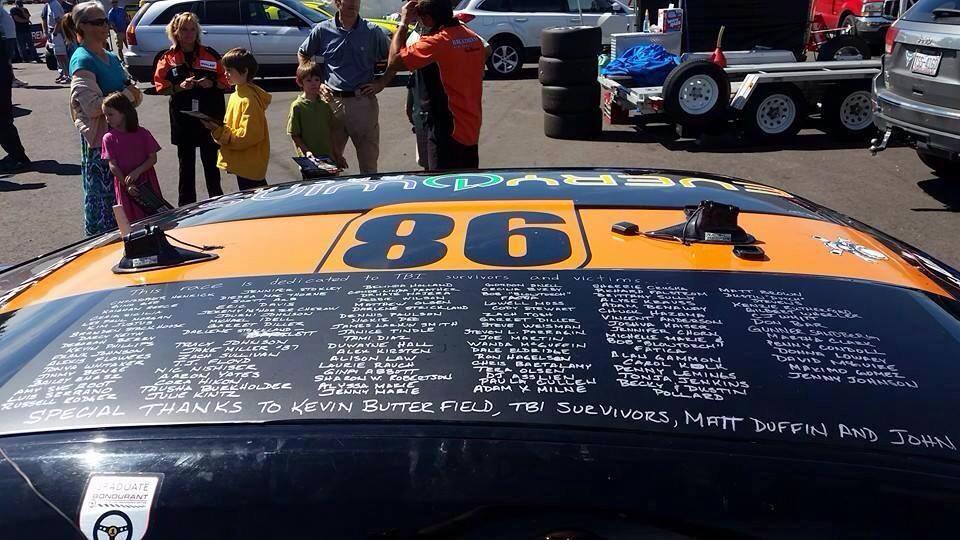
The #98 Camaro was driven by Ernie Francis, Jr. He won the TA3 race and the TA3 championship.

DuWayne HallMatt Duffin of the Brain Injury Radio Network submitted my name for painting onto a Trans-Am race car with about 100 other names of TBI survivors. My name is front and center above Kevin Butterfield. It is in the third row from the left, 8th name from the bottom.


Joshua Edward Daniel…I got my TBI while putting chains on a customer’s car. A Jeep going 45 mph hit me, breaking my neck and giving me a TBI. The doctor said I would never walk or talk again, but I’m proving him wrong. I love my recovery.

Gena Marie…I am in a place where I can finally feel safe and cared about for the first time in my life.

YOU did it!

Congratulations to all contributors!

(Clip Art compliments of Bing.)

(Photo compliments of DuWayne Hall.)

Caregivers SPEAK OUT! . . . . . Gill Evans

SPEAK OUT! – Gill Evans

by

Donna O’Donnell Figurski


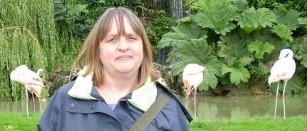
Evans, Gill Caregiver with Flamingoes

Gill Evans – Caregiver for her Husband

1. What is your name? (last name optional)

Gill Evans

2. Where do you live? (city and/or state and/or country)     Email? (optional)

Birmingham, England     gce46@hotmail.co.uk

3. What is the TBI survivor’s relationship to you? How old was the survivor when he/she had the TBI? What caused your survivor’s TBI?

The TBI survivor is my husband. He had his TBI in 1984 at age 23. The TBI was originally due to a motorcycle accident, but he has been reinjured three times since then, the last being 11 years ago. He has had one work-related injury and two motorcycle-related head injuries.

4. On what date did you begin care for your TBI survivor? Were you the main caregiver? Are you now? How old were you when you began care?

I was 22 and in full-time work. He was living with his mom. We decided to split up due to his being violent, but we continued seeing each other as friends. We got back together when I was 40 and he was 41. We married 2 years later. I have looked after him since because the last injury left him unable to work.

5. Were you caring for anyone else at that time (e.g., children, parents, etc.)?

When we got back together, I had two teenage boys.

6. Were you employed at the time of your survivor’s TBI? If so, were you able to continue working?

I work full-time, but I have 13-hour shifts, so I’m home 4 days each week. I no longer work night shifts, as he struggles with the change that causes.

7. Did you have any help? If so, what kind and for how long?

No

8. When did your support of the survivor begin (e.g., immediately – in hospital, when the survivor returned home, etc.)?

My husband finally accepted help three weeks ago. When he had his TBI 30 years ago, there was nothing in place for him. He got speech therapy, and that was it.

9. Was your survivor in a coma? If so, what did you do at that time?

No

10. Did your survivor have rehab? If so, what kind of rehab (i.e., inpatient and/or outpatient and occupational, physical, speech, and/or other)? How long was the rehab? Where were you when this was happening?

He got speech therapy at home.

11. What problems or disabilities of your TBI survivor required your care, if any?

He required constant prompting of his memory and calming down due to temper. He had a broken leg, so he was wheelchair-bound for a couple of weeks until he was able to have crutches.

12. How has your life changed since you became a caregiver? Is it better? Is it worse?

I’m not really sure that I can answer this. My response probably wouldn’t make sense, as it would be “better than what, and worse than what?”

13. What do you miss the most from pre-TBI life?

I miss my independence – not having to worry about my husband when I’m out or not having to walk on eggshells because he’s in a bad mood. But, as much as I miss my independence, I regret that over the last couple of years he has stopped going out unless he has to. So, I go everywhere on my own. Sometimes I wish I didn’t have to.

Evans, Gill Caregiver IMG_1130

Gill Evans

14. What do you enjoy most in post-TBI life?

On reflection, not a lot

15. What do you like least about TBI?

I dislike that my husband’s last injury took him away from me and that he is like a stranger sometimes. He can forget who I am, and he will talk to me like I’m his ex-wife.

16. Has anything helped you to accept your survivor’s TBI?

I’m helped by the fact that I have loved my husband since I was 17 years old. (So, I have known him with the TBI most of my life.)

17. Has your survivor’s injury affected your home life and relationships and, if so, how?

When we married, I had two teenage sons living at home, and this became really difficult. There were lots of arguments. After two years of our fighting, my sons decided it was better if they moved out. I have spent the last eight years trying to rebuild my relationship with them, and thankfully we are much closer. Also they, to an extent, get on with my husband.

18. Has your social life been altered or changed and, if so, how?

Not really. My husband doesn’t go out much, and I go out with my sons or with colleagues from work. The one rule I have when I am out is that, unless it’s an emergency, he is only allowed to phone me once and the rest has to be text messages. Also he is not to bombard me with texts if I don’t reply.

19. What are your plans? What do you expect/hope to be doing ten years from now?

I’m hoping to be retired (or at least to be coming up to retirement) and spending some quality time with my family.

20. What advice would you offer other TBI survivor caregivers? Do you have any other comments that you would like to add? 

Evans, Gill Caregiver IMG_1129

Gill Evans – Caregiver for her Husband

Have boundaries, boundaries, and boundaries – to protect your own sanity. Remember to keep time for yourself. Don’t tolerate violence. It’s okay for you to get mad occasionally, but walk away. You won’t win a fight (verbal) with him or her. Grow a thick skin – he or she doesn’t always mean what is said. If you take everything personally, you won’t survive. Remember most of all, regardless of the effects of the TBI, your partner is still in there, so don’t give up hope of ever seeing him or her again – even if it’s only for a fraction of a second that he or she shines through. That’s why at the end of the day you are still there.


Thank you, Gill, for taking part in this interview. I hope that your experience will offer some hope, comfort, and inspiration to my readers.

If you would like to be a part of this project, please go to TBI Caregiver Interview Questionnaire for a copy of the questions and the release form.

(Photo compliments of Gill.)

Disclaimer: The views or opinions in this post are solely that of the interviewee.

diemodi jewelry

uniquely hand-crafted jewelry by donna

Welcome to Harmony Kent Online

The home of all things books

Pete Springer

Passionate Teacher and Future Children's Author

HOPE TBI

Helping Other People Excel - To Be Independent

For the Love of Books, Old and New

Katie Fischer, Writer and Reader of Stories

Charlie Bown

Children's Author

Jessica Hinrichs

“We write to taste life twice, in the moment and in retrospect.” ― Anais Nin

VIVIAN KIRKFIELD - Writer for Children

Picture Books Help Kids Soar

Mindy’s Writing Wonderland

For authors, parents, teachers & everyone who loves children’s books.

Kaitlyn Leann Sanchez

Literary Agent

Surviving Traumatic Brain Injury

TBI - Survivors, Caregivers, Family, and Friends

The Care Factor

Loving someone with a Traumatic Brain Injury

Brain Injury Support Group of Duluth-Extension

Brain Injury Information and SUPPORT

Brain Aneurysm Global Insight

Brain Aneurysm, cerebral hemorrhaging, hemorrhage stroke