Survivors SPEAK OUT! Christine Durant
Survivors SPEAK OUT! Christine Durant
presented
by
Donna O’Donnell Figurski
 1. What is your name? (last name optional)
Christine Durant
2. Where do you live? (city and/or state and/or country) Email (optional)
Connecticut, USA
3. On what date did you have your brain injury? At what age?
I was 21.
4. How did your brain injury occur?
Medical neglect
5. When did you (or someone) first realize you had a problem?
I did when I was 13.

Christine Durant – Brain Injury Survivor
6. What kind of emergency treatment, if any, did you have?
Brain surgery
7. Were you in a coma? If so, how long?
No coma
8. Did you do rehab?
Yes
What kind of rehab (i.e., inpatient or outpatient and occupational and/or physical and/or speech and/or other)? How long were you in rehab?
I went to inpatient rehab for a week or so.
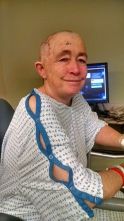
Christine Durant – Brain Injury Survivor
9. What problems or disabilities, if any, resulted from your brain injury (e.g., balance, perception, personality, etc.)?
I have balance and visual memory issues and some difficulty with visual identification. I had a LARGE personality change that included explosive issues and lack of impulse control. I also had double vision.
10. How has your life changed? Is it better? Is it worse?
The medical neglect caused excruciating neurological pain, but it stopped with my first brain surgery. I was a diagnostic educator. My issues made me better at what I di d because I finished my undergraduate work like this and did all four of my graduate degrees with strategies I developed for myself. I believe I am better off.
11. What do you miss the most from your pre-brain-injury life?
Energy
12. What do you enjoy most in your post-brain-injury life?
My ability to see things differently than most folks
13. What do you like least about your brain injury?
Lack of energy and visual memory issues
14. Has anything helped you to accept your brain injury?

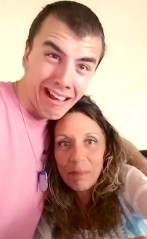
Christine Durant – Brain Injury Survivor and partner.
Meeting my wife and having a 25-year relationship … all post TBI
15. Has your injury affected your home life and relationships and, if so, how?
I am more sensitive to other people’s moods now. I can become what they are feeling.
16. Has your social life been altered or changed and, if so, how?
Everyone who was my friend at that point is not a friend now. However, I chose better after my recent brain surgery because they all helped us through it.
17. Who is your main caregiver? Do you understand what it takes to be a caregiver?
I don’t really have a caregiver. I have a “care-partner.” We had an accident together twenty years ago. Someone was late for lunch and went over the yellow line – into us head-on. We help each other as life necessitates.
18. What are your plans? What do you expect/hope to be doing ten years from now?
I would like to travel on the money from the accident while we still can. In ten years, I will be retirement age!
19. Are you able to provide a helpful hint that may have taken you a long time to learn, but which you wished you had known earlier? If so, please state what it is to potentially help other survivors with your specific kind of brain injury.
Know that you will adjust to your new personality. Find life-giving, happy people to get you there. I went home to my mother at 21. She was always an angry woman. I didn’t realize what a toll that was taking on me until I met my sweet, wonderful, happy wife.

Christine Durant – Brain Injury Survivor & partner
20. What advice would you offer to other brain-injury survivors? Do you have any other comments that you would like to add?
Give it time. Don’t be hard on yourself. Find a passion that you are able to do within the confines of your new body. My wife has a broken foot from the accident that can’t be fixed. She used to paint theatrical scenery for Broadway. She can’t do that from a wheelchair. So, she discovered she has a passion for pottery.
If you would like to be a part of the SPEAK OUT! project, please go to TBI SPEAK OUT! Survivors Interview Questionnaire for a copy of the questions and the release form.
(Clip Art compliments of Bing.)
As I say after each post: Please leave a comment by clicking the blue words “Leave a Comment” below this post.
Feel free to follow my blog. Click on “Follow” on the upper right sidebar.
If you like my blog, share it with your friends. It’s easy! Click the “Share” buttons below.
If you don’t like my blog, “Share” it with your enemies. I don’t care!
Feel free to “Like” my post.
 It can happen to anyone, anytime, . . . and anywhere.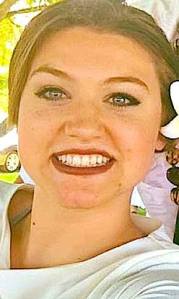

 I started really trying at physical therapy. Instead of hating myself for my memory, my anxiety, my insomnia, and my depression, I learned to laugh at it. I stopped hating people because they didn’t understand, and I realized they were lucky they didn’t. I went to college, and I failed. So, I tried again, and I failed. I tried again, and I found joy and love in working hard in school. I passed a whole year. I proved every doctor, friend, and family-member wrong – they said I was too damaged. But, I did it!
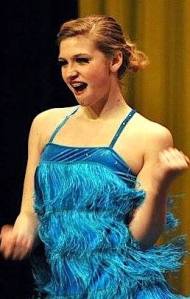

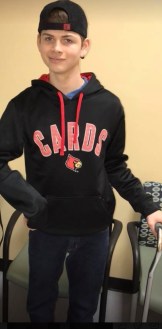


 Everything. TJ’s brain bleed damaged the whole left side of his brain and parts of the right. He was left with severe impairments, specifically in speech, language, memory, and cognitive function. He has safety issues. Because of attention, safety, and balance issues, he has trouble walking without hands-on help constantly. He also has memory problems, speech problems, vision problems, physical issues from having hemiparesis (weakness on one side), and a lot more.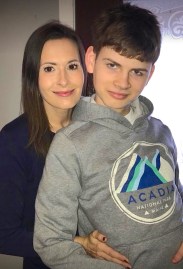
 Yes – especially my personal friendships and my relationships with family. I think we are on different paths in life now. While they talk of work and social events, I am constantly thinking What can we do to make it better for TJ and others going through this? My closest friends are now the caregivers and survivors I’ve met locally. We work together locally to make a positive change for the brain-injury community. I also work with an amazing team of ladies who help me run two support-groups for survivors and caregivers. I started my first one seven years ago. I was scared after TJ’s brain injury, and I needed to know I was not alone. I needed hope. The groups grew to over 30,000, and the rest is history. The friendship we have is unbreakable. Shout-out to my amazing admins and friends: Melissa, Shauna, Margie, Mary, Michael, Eddie, and Alex. Love you all! We’ve met many who have inspired us in this journey.

 October 6, 2002






 14. Has anything helped you to accept your brain injury?






 It’s okay to lose hope sometimes. We will never be the same as before. You’ll get used to the “new you,” and you’ll be a tough, beautiful, brave individual who knows what it’s like to feel hopeless. And, that is what makes it all worth it – because you can give hope to others.
 Tell other survivors that it’s okay to be the “new you” and to not necessarily meet the status quo or the goals they were striving for before their brain injury. Tell them to just make a new game-plan and to be exceedingly thankful for the little things they previously took for granted.

 Apparently, the neurosurgeon hadn’t put things back together in an appropriate manner. So, I needed another brain surgery. It would have been hard to do if I were working full time. My wife and my friends saw me through it.

 Costas said “The reality is that this game destroys people’s brains.” Concern is growing. Some players have retired early. Participation in youth tackle football leagues is declining, as parents struggle with the rapidly emerging and compelling evidence. Costas also said “… if I had an athletically gifted 12- or 13-year-old son, I would not let him play football.” Costas’ comments were supported
  by those of ESPN’s Tony Kornheiser, who said that football is going the way of boxing. (


 Raising Awareness of Traumatic Brain Injury - one view at a time. Thanks for visiting my blog
 Surviving Traumatic Brain Injury
Recent Comments