Read All About It! . . . . . . . Prisoners without Bars: A Caregiver’s Tale
Read All About It!
Prisoners without Bars: A Caregiver’s Tale
presented by
Donna O’Donnell Figurski – author

Donna & David with ARC of Prisoners without Bars: A Caregiver’s Tale
My memoir, Prisoners without Bars: A Caregiver’s Tale, is not only a story of David’s and my struggles after his traumatic brain injury, but it is also a love story. Though my memoir addresses a dire topic, it is peppered with comedic situations. They say laughter is the best medicine, and again, they are right.
Prisoners without Bars is a heart-wrenching memoir that will make you laugh, cry, and G-A-S-P. I promise!



It’s not a beach read, but it reads like one. It’s fast! It’s easy! It’s fascineasy. I mean fascinating.
What Readers are Saying!

Jackie said – “
Anonymous Amazon Customer said – “”
jlgwriter said – “I found the story powerful and compelling.”
Todd & Kim said – “This is such an inspirational story of survival! The book is a very easy read and informative as well as inspiring!!”
Judy said – “Donna O’Donnell Figurski tells her story of grace, love, frustration, anger, disappointment, strength, joy, and above all hope.”
Marge said – “I read it in one fell swoop… I guess the word that would describe your book, your life, and who you are is SUPERCALIFRAGILISTICEXPIALIDOCIOIUS.”
Anonymous said – “This book pulled me in immediately and didn’t let me go until the end! ”
Helen said – “Could not put this book down. Written for easy reading. It was like having a conversation with a friend.” “I finished it in one day with some teary moments along with some chuckles. A must read!!”
Get Your Copy Now
Read It! Review It!
Click Links under Book

PAPERBACK! Read it Now! e-BOOK! Read it Now!
Stay Safe and Healthy!
Clip Art compliments of Bing.)
(Photos compliments of contributor.)
As I say after each post:
Please leave a comment by clicking the blue words “Leave a Comment” below this post.
Feel free to follow my blog. Click on “Follow” on the upper right sidebar.
If you like my blog, share it intact with your friends. It’s easy! Click the “Share” buttons below.
 Cytokines are molecules released by some cells that cause an action by other cells. When certain immune system cells sense a problem (like a virus-infected cell), they release cytokines to get other immune cells to multiply, to make attack molecules, or to come and help eliminate the cause of the problem. Normally, the immune system works well, but sometimes the immune system overreacts and causes severe problems or even death. “Cytokine storm” refers to an overreaction by the immune system. A steroid (for example,
 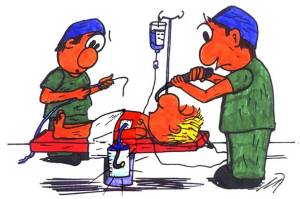 dexamethasone, which the President was given) is effective because it will dampen the immune response, a potentially beneficial effect when the immune system is overreacting. But, dexamethasone is considered harmful if the drug is not needed. (For example, dexamethasone is not given in Week 1 <the viral phase> because a normally functioning immune system is needed to reduce the amount of virus in the body.)
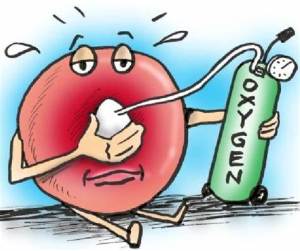
 dexamethasone should only be given to patients with moderately severe or serious COVID-19 disease. The White House acknowledged that the President received oxygen before he was taken to Walter Reed. Supplemental oxygen is consistent with the President’s being given dexamethasone. Dr. Griffin said that oxygen, if needed, is usually given in Week 2, further indicating that the President’s infection may have started several days before Friday. October 2nd.
 Doctors have found that COVID-19 has a third phase – a “clotting phase,” which starts at the end of Week 2 and extends at least through Week 3. COVID-19 infection can trigger clots, which can sometimes (albeit rarely) lead to strokes. Aspirin is routinely given at the end of Week 2 because it helps prevent clotting. Some patients had already been discharged from the hospital (having had two negative COVID-19 tests over two consecutive days and having agreed to self-quarantine for 14 days as a precaution) when a problem-clot occurred.


 New York City is still very bad, but strict social-distancing guidelines have produced a significant drop in new cases.




 Raising Awareness of Traumatic Brain Injury - one view at a time. Thanks for visiting my blog
 Surviving Traumatic Brain Injury
Recent Comments