TBI – Survivors, Caregivers, Family, and Friends

Posts tagged ‘“Prisoner Without Bars: A Caregiver’s Story”’

SPEAK OUT! . . . . . . . . . . . . . . . . . Faces of Brain Injury – Linda Wells

SPEAK OUT! Faces of Brain Injury – Linda Wells

presented by

Donna O’Donnell Figurski

 Brain Injury is NOT Discriminating!

bigstock-cartoon-face-vector-people-25671746-e1348136261718

It can happen to anyone, anytime, . . . and anywhere.

The Brain Trauma Foundation states that there are 5.3 million people in the United States living with some form of brain injury.

On “Faces of Brain Injury,” you will meet survivors living with brain injury. I hope that their stories will help you to understand the serious implications and complications of brain injury.

The stories on SPEAK OUT! Faces of Brain Injury are published with the permission of the survivor or designated caregiver.

If you would like your story to be published, please send a short account and two photos to me at neelyf@aol.com. I’d love to publish your story and raise awareness for Brain Injury.

Linda Wells (survivor)

2 565047_3919814115943_1697366413_nI am a brain-injury survivor of twenty-three years. I went through five years of intense speech and physical therapies. I could not walk or talk. Now I am a speaker for the Brain Injury Center of Ventura County, California. Our group started in a living room with me, my dear late husband, Rex, and six other people. I am very proud that last year there was an attendance of 300+ people. I work very hard to educate the community about traumatic brain injury. This year at our event, I will be receiving the Honoree Award for a Survivor. I often say, “One foot in front of the other.” I try very hard to do just that – to say, “I can, I will, I did.” I enjoy family, my friends, and my dog; and I have three great caregivers.

Also, I am now a watercolor artist.

4 Linda Wells 10960117_10203992863724065_7194897410358730162_o

10301184_10202793038249178_5470330639061493067_n5 Linda Wells6 Linda Wells 1604838_10201545679825997_791510895_n

(Artwork compliments of contributor. They are copyrighted and may only be used with express permission of Linda Wells. )

Clip Art compliments of Bing.)

As I say after each post: Please leave a comment by clicking the blue words “Leave a Commentanim0014-1_e0-1 below this post.

Feel free to follow my blog. Click on “Follow” on the upper right sidebar.

If you like my blog, share it with your friends. It’s easy! Click the “Share” buttons below.

If you don’t like my blog, “Share” it with your enemies. I don’t care!

Feel free to “Like” my post

SPEAK OUT! . . . . . . . . . . . . . . . . . . Faces of Brain Injury Chelsea Rolph

SPEAK OUT! Faces of Brain Injury

Chelsea Rolph

presented by

Donna O’Donnell Figurski

 Brain Injury is NOT Discriminating!

bigstock-cartoon-face-vector-people-25671746-e1348136261718

It can happen to anyone, anytime, . . . and anywhere.

The Brain Trauma Foundation states that there are 5.3 million people in the United States living with some form of brain injury.

On “Faces of Brain Injury,” you will meet survivors living with brain injury. I hope that their stories will help you to understand the serious implications and complications of brain injury.

The stories on SPEAK OUT! Faces of Brain Injury are published with the permission of the survivor or designated caregiver.

If you would like your story to be published, please send a short account and two photos to me at neelyf@aol.com. I’d love to publish your story and raise awareness for Brain Injury.

Chelsea Rolph (survivor)

Chelsea Rolph 3 Survivor 061415Four summers ago, I did not know what I was going to do after leaving high school. I had suffered multiple concussions, and I spent my summer in concussion rehab. I was sent for a test or results at least once a week. I had a neuropsychological exam. It was a full, exhausting day of random tests. The results of this exam really gave me some answers. Essentially the doctors were telling me that I have a lot of problem areas. If I decided to go to school, I would need:
– a note-taker
– a private room for exams
– extra time for exams
– take-home, open-book exams, if possible
– formulas for any possible math classes
– extended time for assignments
– to be given assignments right away
– exam reviews from the profs
– the use of a computer

I had a lot of problems, and I needed a lot of help. The doctor told me that, because I was trying to choose between college and university, I should choose college. I was told that college is more hands-on, but it was suggested that I take time off and not even consider going to school. I decided that I would go to McMaster University and see if I can get the accommodations. When I sat down with one of the guidance counselors, I was told that they have had people with my problems before. The counselor suggested that I take one, maybe two, classes a semester. Basically I left that meeting feeling discouraged. I didn’t think I would be going to school at all.Chelsea Rolph 1 Survivor 061415

As the school year approached and I had to make a final decision on school, I decided that I was going to go to school. I decided that I wanted to prove everybody wrong.

Four years later, I GRADUATED! I did it without the help of any doctors and without any accommodations from Mac. It wasn’t easy, but I walked across that stage and became an official “Graduate of 2015.”

Chelsea Rolph 2 Survivor 061415I would like to thank everybody that made it possible, and I want to thank everybody I have met along the way to make these past four years some of the most memorable. Among the Vanier Cup win in first year, Homecoming, meeting the love of my life, beer pong Tuesday, and even a flash mob, I have made some unforgettable memories.

Disclaimer: Any views and opinions of the Contributor are purely his/her own.

(Clip Art compliments of Bing.)

(Photos compliments of contributor.)

As I say after each post: Please leave a comment by clicking the blue words “Leave a Commentanim0014-1_e0-1 below this post.

Feel free to follow my blog. Click on “Follow” on the upper right sidebar.

If you like my blog, share it with your friends. It’s easy! Click the “Share” buttons below.

If you don’t like my blog, “Share” it with your enemies. I don’t care!

Feel free to “Like” my post

SPEAK OUT! . . . . . . . . . . . . . . . . . Faces of Brain Injury Erin Lea Beville & Evelyn Pumarejo-Justiniano

SPEAK OUT! Faces of Brain Injury

Erin Lea Beville & Evelyn Pumarejo-Justiniano

presented by

Donna O’Donnell Figurski

 Brain Injury is NOT Discriminating!

bigstock-cartoon-face-vector-people-25671746-e1348136261718

It can happen to anyone, anytime, . . . and anywhere.

The Brain Trauma Foundation states that there are 5.3 million people in the United States living with some form of brain injury.

On “Faces of Brain Injury,” you will meet survivors living with brain injury. I hope that their stories will help you to understand the serious implications and complications of brain injury.

The stories on SPEAK OUT! Faces of Brain Injury are published with the permission of the survivor or designated caregiver.

If you would like your story to be published, please send a short account and two photos to me at neelyf@aol.com. I’d love to publish your story and raise awareness for Brain Injury.

A special shout out to two special nurses.nurse_0515-0911-1420-0746_SMU

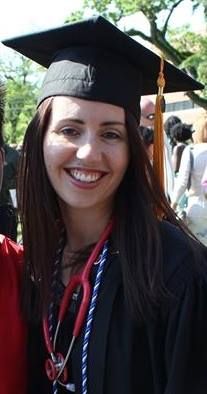
Breville, Erin LeaErin Lea Beville (survivor)

I’m a sixteen-year survivor. I got my bachelor’s degree in nursing from Florida State University in May (2014) and my RN license last October. Having a traumatic brain injury (TBI), I needed a bit of rest following the hell that is nursing school. I was fried!

I recently started a job as an Integrated Health Wellness Coach and Peer Support Specialist at Community Mental Health. It’s perfect because they want me to share my story and pay me for it. My brain injury is finally an asset rather than a liability. So, hooray for patience, Breville, Erin Lea & nieceperseverance, and determination! I’ve done it – not in spite of my TBI, but because of it. Together, we can be the difference, for each other and for others. Go out there and inspire people. Be the person only you can be – yourself. Then own it. You rock!

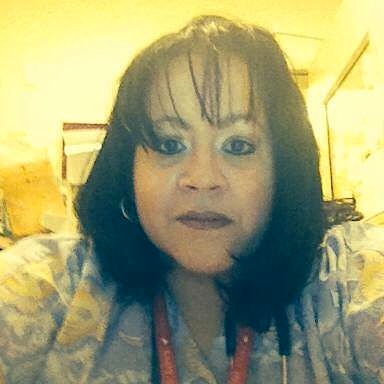
Evelyn Pumarejo-Justiniano 2 Survivor 082315Evelyn Pumarejo-Justiniano (survivor)

I suffered a traumatic brain injury (TBI) almost twenty years ago. I had to learn how to walk and talk and to relearn the basic things we take for granted in life. Yet, I feel I am blessed. I overcame all the obstacles and unforeseen Evelyn Pumarejo-Justiniano Survivor2 082431jpgcircumstances put in my life. I returned to school after my injury and had a GPA of 3.79 in nursing school. Today I am a nurse – going on a year now. I am planning to go for the degree of Bachelor of Science in Nursing. And, I thank God for my good husband, who has been by my side the past 29 years.

Disclaimer: Any views and opinions of the Contributor are purely his/her own.

(Clip Art compliments of Bing.)

(Photos compliments of contributor.)

As I say after each post: Please leave a comment by clicking the blue words “Leave a Commentanim0014-1_e0-1 below this post.

Feel free to follow my blog. Click on “Follow” on the upper right sidebar.

If you like my blog, share it with your friends. It’s easy! Click the “Share” buttons below.

If you don’t like my blog, “Share” it with your enemies. I don’t care!

Feel free to “Like” my post

On The Air: Brain Injury Radio “Another Fork in the Road” with Former NFL San Fran 49er, George Visger and Caregiver, Kendra Hammond Brittain

On The Air: Brain Injury Radio “Another Fork in the Road”

with

Former NFL San Fran 49er, George Visger

and 

Caregiver, Kendra Hammond Brittain

presented

by

Donna O’Donnell Figurski

Visger-275x300Former NFL San Fran 49er, George Visger talked about the dangers of football and brain injury. He also discussed hyperbaric oxygen therapy (HBOT) and Cranial-Sacral therapy, which he believes have helped him.

Kendra Brittain 2 Survivor 042315Kendra Hammond Brittain joined for the last half of the show to tell of her son’s football injury, which caused his TBI.

If you missed this show on “Another Fork in the Road” on August 16th, 2015, don’t fret. You can listen to the archived show here. Click the link below.

See you “On the Air!”

On The Air: Brain Injury Radio “Another Fork in the Road” with Former NFL San Fran 49er, George Visger and Caregiver, Kendra Hammond Brittain

Click here for a list of all “Another Fork in the Road” shows on the Brain Injury Radio Network.

Caregivers SPEAK OUT! Sherri Ward

Caregivers  SPEAK OUT!  Sherri Ward

presented by

Donna O’Donnell Figurski

Ward, Sheri Diehl Caregiver 0803151. What is your name? (last name optional)

Sherri Ward

2. Where do you live? (city and/or state and/or country) Email? (optional)

Williamstown, New Jersey, USA     sherri_ward313@yahoo.com

3. What is the brain-injury survivor’s relationship to you?

The survivor is my husband.

How old was the survivor when he/she had the brain injury?

He was 39.

What caused your survivor’s brain injury?

My husband’s traumatic brain injury (TBI) was caused by a motorcycle accident.

4. On what date did you begin care for your brain-injury survivor?

My care began on July 11, 2009.

Were you the main caregiver?

Yes

Are you now?

Yes

How old were you when you began care?

I was 36.

5. Were you caring for anyone else at that time (e.g., children, parents, etc.)?

Yes. I also had the responsibility of caring for our three kids.

6. Were you employed at the time of your survivor’s brain injury? If so, were you able to continue working?

I was employed full-time, but I had to quit my job of ten years to stay home and care for my husband.

7. Did you have any help? If so, what kind and for how long?

No

8. When did your support of the survivor begin (e.g., immediately – in the hospital; when the survivor returned home; etc.)?

My responsibility for my husband began immediately – it started the day of the accident. Even though my husband was in a coma in the hospital, I was the one making all the decisions in regard to his care.

9. Was your survivor in a coma? If so, what did you do during that time?Ward, Sherri Diehl Husband with BI 080315

Yes, he was. I prayed and prayed, made decisions in regard to my husband’s care, and tried my best to keep things going at home.

10. Did your survivor have rehab? If so, what kind of rehab (i.e., inpatient and/or outpatient and occupational, physical, speech, and/or other)? How long was the rehab? Where were you when your survivor was getting therapy?

Yes. My husband’s rehab was outpatient, as per my decision. I know my husband, and, if he were to have gone into an inpatient facility, it would have been the worst thing for him. This is why I decided to quit my job and stay home with him. He had speech, physical, occupational, and psychological therapies. This occurred four days a week, four hours a day, for about a year. (His psychological therapy is still going on.) I was the sole person by his side at this point; none of my husband’s family offered to help ever. I drove him to and from his appointments every day.

11. What problems or disabilities of your brain-injury survivor required your care, if any?

There are days when my husband is able to care for himself completely. But, the days in which he does require help far out number those good days. He gets disoriented and confused because he has periods of complete memory loss. Some days, he is unable to get out of bed, to dress himself, to provide himself with any type of sustenance, such as food or drinks, or to take medicines.

12. How has your life changed since you became a caregiver? Is it better? Is it worse?

Every aspect of my life has changed since my husband’s accident. To say my life is better or worse is hard I think – it’s just different. Life is full of ups and downs and twists and turns in the road. In order to keep one’s sanity, a person needs to be able to roll with it and try to make the best of each situation. The facts, however, are that most, if not all, of my friends have removed themselves from my life. It could be from a lack of understanding of the situation and my husband’s disabilities or perhaps it is from the fact that they just don’t want to be bothered because it’s too much for them to deal with. Not sure really.

13. What do you miss the most from pre-brain-injury life?

I miss my husband, the companionship, and the parenting partner I had. My husband is a completely different person now in every way. His outbursts and anger are always directed towards me. This is something that he never did before.

14. What do you enjoy most in post-brain-injury life?

NOTHING!

15. What do you like least about brain injury?

I dislike the unknown. Not knowing how the future will play out is one of the hardest things right now.

16. Has anything helped you to accept your survivor’s brain injury?

Thinking about it now, I actually don’t know if I’ve ever really fully accepted my husband’s brain injury. I mean, I know my husband has a TBI, and I know his limitations and disabilities, but accepting it in my mind makes it so final. To think in terms of what the future holds for us scares the crap out of me. I see a therapist, and it does help, but I do have a hard time accepting this new life.

17. Has your survivor’s injury affected your home life and relationships and, if so, how?

Yes. We are in the process of losing our home due to lack of income. The relationship between my daughter and me is pretty much nonexistent now, as she sees my husband as the victim, so to speak, during his outbursts and me as the awful wife, since I don’t engage him in these incidents. As a result, she only hears what comes out of his mouth, which are all the name-calling and paranoid delusions that my husband feels are real.

18. Has your social life been altered or changed and, if so, how?

Haha! What social life?

19. What are your plans? What do you expect/hope to be doing ten years from now?

I really don’t know where I will be in ten years. My husband’s health is steadily deteriorating, so I don’t know how I would plan anything. We are just living each day as it comes right now.

20. What advice would you offer other caregivers of brain-injury survivors? Do you have any other comments that you would like to add? 

Take time for yourself, and stand your ground when it comes to caring for yourself! This is something I did not do, and now it’s kind of late for me. You are not only a caregiver to your survivor, but also a caregiver to yourself. Honestly, you should come first because, unless you take care of yourself, you can’t expect to take care of someone else.

I just want to add that this is not a life we chose to live. Rather, it’s a life that was dealt to us for whatever reason. Caring for and dealing with someone with a severe brain injury is not something I would wish on my worst enemy. The impact it has on everyone involved is tremendous. Our lives have changed forever. The loving, caring man that once was will never be again. I think that’s the hardest part for me. My husband died the day of that accident – the man I fell in love with and married. The man I have now is a stranger to me in so many ways. As I said above, this is probably the hardest part for me.

You can learn more about Sherri Ward at “Faces of Brain Injury.

Ward, Sheri Diehl CAregiver 080315 2(Disclaimer: The views or opinions in this post are solely that of the interviewee.)

If you would like to be a part of the SPEAK OUT! project, please go to TBI Survivor Interview Questionnaire for a copy of the questions and the release form.

(Photos compliments of Sherri Ward.)

As I say after each post: Please leave a comment by clicking the blue words “Leave a Commentanim0014-1_e0-1 below this post.

Feel free to follow my blog. Click on “Follow” on the upper right sidebar.

If you like my blog, share it with your friends. It’s easy! Click the “Share” buttons below.

If you don’t like my blog, “Share” it with your enemies. I don’t care!

Feel free to “Like” my post.


SPEAK OUT! NewsBit . . . . . . . . . . . . Simple Blood Test For Traumatic Brain Injury

Simple Blood Test For Traumatic Brain Injury

presented by

Donna O’Donnell Figurski

Newsboy thA simple and convenient test for the existence and severity of a traumatic brain injury (TBI) is badly needed. Currently the only test for a TBI appropriate for use in the Emergency Room is the CT (computerized tomography, often referred to as “CAT”) scan. However, a CT scan can only determine if there is bleeding in the brain. If there isn’t a hemorrhage, the patient is likely to be sent home. Also, a CT scan cannot determine the existence of a concussion. Concussions (even those that do not cause loss of consciousness) are brain injuries that can be harmless and heal, or they can be fatal or cause major life-altering problems. Until now, there has been no way to measure brain damage.

Exciting new results show that the amount of a blood protein (BDNF, brain-derived neurotrophic factor) correlates with the existence of a TBI, when measured within 24 hours of the trauma. Patients with a blood-tube-cartoonTBI had less than one-third the amount of BDNF in their blood than did non-TBI patients. The researchers also found that patients with a TBI who had very low levels of BDNF recovered poorly. This is an exciting beginning because it will be routine to tell if there is brain damage in a person who may have been in an event that could lead to a concussion. A person who has experienced any trauma (like a motor vehicle accident, a sports-related injury, or domestic violence) can now be assessed for brain injury. Appropriate therapies can be considered immediately, instead of waiting for symptoms to appear.

Of interest to current TBI survivors is the possibility that continued BDNF measurements may correlate with the speed of recovery. This correlation needs to be tested – is a BDNF measurement taken months later still meaningful? Also, researchers urgently need to learn the molecular mechanism behind the lowering of BDNF with TBI. Do things that raise the BDNF level allow a patient to recover faster from a TBI? (Interestingly, omega-3 fatty acids and exercise raise BDNF levels.) (Full story)

(Clip Art compliments of Bing.)

As I say after each post:

Please leave a comment by clicking the blue words “Leave a Comment” below this post.anim0014-1_e0-1

Feel free to follow my blog. Click on “Follow” on the upper right sidebar.

If you like my blog, share it with your friends. It’s easy! Click the “Share” buttons below.

If you don’t like my blog, “Share” it with your enemies. I don’t care!

Feel free to “Like” my post.

SPEAK OUT! Faces of Brain Injury Shane Coco & Gary Rankin

SPEAK OUT! Faces of Brain Injury  Shane Coco & Gary Rankin

presented by

Donna O’Donnell Figurski

 Brain Injury is NOT Discriminating!

bigstock-cartoon-face-vector-people-25671746-e1348136261718

It can happen to anyone, anytime, . . . and anywhere.

The Brain Trauma Foundation states that there are 5.3 million people in the United States living with some form of brain injury.

On “Faces of Brain Injury,” you will meet survivors living with brain injury. I hope that their stories will help you to understand the serious implications and complications of brain injury.

The stories on SPEAK OUT! Faces of Brain Injury are published with the permission of the survivor or designated caregiver.

If you would like your story to be published, please send a short account and two photos to me at neelyf@aol.com. I’d love to publish your story and raise awareness for Brain Injury.

Coco, Shane Survivor 080415Shane Coco (survivor)
It is a good day to be alive – a good day to be grateful. I think that somewhere, deep inside, my gratitude helps keep me alive. I’ve suffered and felt like dying. I looked at my situation and saw I have no friends. My gratitude may have kept me alive. I can drive; I have a job; I have a family who loves me; I have a dog; and I have fellow associates who told me today they love working with me. I can walk, talk, and drive!

I remember when I couldn’t talk right and when I couldn’t walk. I thought that if I could walk, everything else would be a breeze. Well, it wasn’t. I had other obstacles. Then driving was my next huge thing. I thought that, when I learned how to drive, all the ladies and friends would come to me. I would have it made, man. Well, I can drive, but I’m kind of still working on the “ladies and friends” thing. Then I needed a job. I’ve got a job now. How grateful was I then – and still am!
It certainly is a good day to be grateful. It’s a good day to be alive. This injury may have happened to me for me to see all that I have – not to moan and groan about what I wish I had.Shane Coco 2

A while ago, I took yoga, but I quit because I did something embarrassing during the session. (Use your imagination, and you probably got it right.) The instructor always used to say to the group, “Simply be.” This really helped me relax. But nowadays, I may be thinking differently. I want to move forward. I don’t want to stop or move backwards. Progress. I want to become. I want to transform. I like to say, “Simply become.” Get stronger. Get wiser. Don’t waste time. I don’t have to be perfect. I just can’t stay in the same spot for too long. I’ve got to keep on moving. It works for me. “Simply become.”

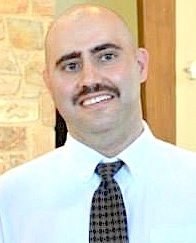
Gary Rankin (survivor)

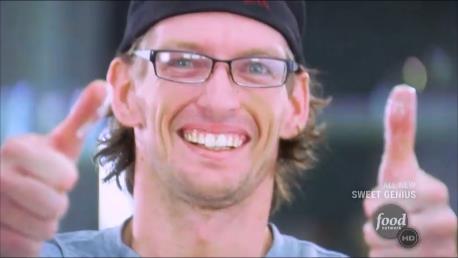
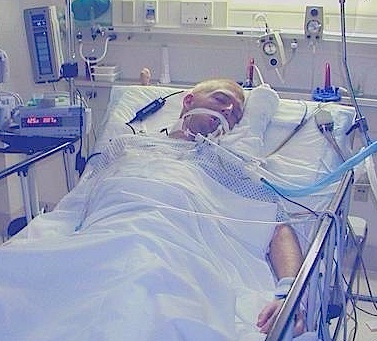
10276317_10152345727842604_1934167730_nOn October 27, 2001, I took my friend’s motorcycle for a joyride. It was as if I were there speeding away, and then it was as if my eyes were closed all the way. So to speak, I never came back that day. I arose like a phoenix on the eighteenth day. Later I was told that I had been in a coma. I fractured my lower vertebrae and had a closed-head injury that led to a traumatic brain injury. I had to relearn to walk and to use the left side of my body. (I tied my right arm to my body to force me to use my left.) My autonomic system is broken and two years of memory of anything from before the accident has been deleted. I don’t remember 9/11 happening. I’m just going to say that it’s weird not remembering a major event in our history. I feel like an alien.Rankin, Gary Survivor 080415

Western medicine wrote me off. My walking again was not on the table. I kept telling the doctors they were wrong. My mom read me Emeral’s New New Orleans cookbook while I was in a coma. My dad looked down at me and said, “You beat this, and I’ll help you become anything you want.” OK, game on.

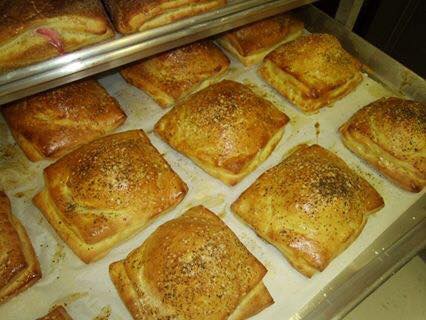
Rankin, Gary Survivor 11328938_10153306807537604_1330621617_n Rankin, Gary Survivor 11263812_10153306807512604_40752643_nI was enrolled into culinary school before I walked out of the hospital. I earned three culinary degrees from the Florida Culinary Institute. I have been traveling around the country as a chef, pastry-chef, and baker for the past nine years. I had my debut appearance on the Food Network. I crushed everything Western medicine put in front of me. I did it without their drugs and their help, and I did it on my time-line. I left the hospital eighteen days after I woke up. I have not seen a doctor since I left the hospital in 2001.

Disclaimer: Any views and opinions of the Contributor are purely his/her own.

(Clip Art compliments of Bing.)

(Photos compliments of contributor.)

As I say after each post: Please leave a comment by clicking the blue words “Leave a Commentanim0014-1_e0-1 below this post.

Feel free to follow my blog. Click on “Follow” on the upper right sidebar.

If you like my blog, share it with your friends. It’s easy! Click the “Share” buttons below.

If you don’t like my blog, “Share” it with your enemies. I don’t care!

Feel free to “Like” my post.

TBI Tales . . . . . . . . . . . . . . “Surprise” by Miki Mashburn-Bailey

“Surprise!”

by

Miki Mashburn-Bailey

presented by

Donna O’Donnell Figurski

072715 Mashburn-Bailey Miki CaregiverA couple of years after my husband’s accident, I bought flowers for myself and gave them to him to “surprise” me with. I told him that I was going to walk out of the room and come back in and that he needed to say, “Surprise!” and hand them to me.

My husband thought I was weird. Pre TBI, I really couldn’t have cared less about the flowers, but my husband lost his knack for surprising me every once in a while with kisses and hugs, knick-knacks and treats, or flowers. I needed him to see that it was important to me.

I went out of the room and came back in. My husband yelled so loud that it scared my son in the other room. He was very sarcastic, and he gave me the flowers without a smile. But, I smiled and told him, “Thank you!” I said that I loved the flowers.8iAEyGerT

I placed the flowers on the table. Every time I knew that my husband would notice, I would deliberately stop, smell them, and smile. He would always say, “You really like those flowers.” I would correct him and say, “I just like that they’re from you.” My husband became convinced that he bought those flowers for me.

Thus began my husband’s new “routine.” He has done things like this ever since. He likes the idea that he can make me smile. He used to all the time before his TBI, but he doesn’t have it in him post TBI. The thought that my husband can do it had to be placed back into his mind.

(Disclaimer: The views or opinions in this post are solely that of the author.)

If you have a story to share and would like to be a part of the SPEAK OUT! project, please submit your TBI Tale to me at neelyf@aol.com. I will publish as many stories as I can.

As I say after each post:

Please leave a comment by clicking the blue words “Leave a Comment” below this post.anim0014-1_e0-1

Please follow my blog. Click on “Follow” on the top right sidebar. (It’s nice to know there are readers out there.)

If you like my blog, share it with your friends. It’s easy! Click the “Share” buttons below.

If you don’t like my blog, “Share” it with your enemies. I don’t care!

Feel free to “Like” my post.

(Clip Art compliments of Bing.)

SPEAK OUT! . . . . . . . . . . . . . . . . . Itty-Bitty GIANT Steps

SPEAK OUT! Itty-Bitty GIANT Steps

presented by

Donna O’Donnell Figurski

Itty-Bitty GIant Steps for BlogSPEAK OUT! Itty-Bitty Giant Steps will provide a venue for brain-injury survivors and caregivers to shout out their accomplishments of the week.

If you have an Itty-Bitty Giant Step and you would like to share it, just send an email to me at neelyf@aol.com.

If you are on Facebook, you can simply send a Private Message to me. It need only be a sentence or two. I’ll gather the accomplishments and post them with your name on my blog approximately once a week. (If you do not want your last name to be posted, please tell me in your email or Private Message.)

I hope we have millions of Itty-Bitty Giant Steps.

Here are this week’s Itty-Bitty GIANT Steps

Gina Morin (caregiver for her ex-husband)

11698961_10200691336041375_5502012322701595071_oMy ex-husband’s accident was August 8, 2014. I am celebrating his first time to go out to eat at a restaurant. My prayer was answered that he could put the silverware to his mouth. Even picking up his food with his fork was amazing! He has come so far. 11141217_10200691335281356_1974107260734323069_nThe goal now is for us to get comfortable when transferring him from car to wheelchair and vice versa, so that his time in the nursing home is limited. It’s a taste of freedom for him. At some point, I want to bring him to my house for a weekend visit. But, he is two hours away, and he gets carsick. I’m going to talk to the doctor about that. For now, it has to be short rides in the car.

YOU did it!

Congratulations to all contributors!

(Clip Art compliments of Bing.)

(Photos compliments of contributor.)

As I say after each post:anim0014-1_e0-1

Please leave a comment by clicking the blue words “Leave a Comment” below this post.

Feel free to follow my blog. Click on “Follow” on the upper right sidebar.

If you like my blog, share it with your friends. It’s easy! Click the “Share” buttons below.

If you don’t like my blog, “Share” it with your enemies. I don’t care!

Feel free to “Like” my post.

Survivors SPEAK OUT! Hayley Nichols

Survivors  SPEAK OUT!  Hayley Nichols

presented by

Donna O’Donnell Figurski

Hayley Nichols Survivor 0727151. What is your name? (last name optional)

Hayley Nichols

2. Where do you live? (city and/or state and/or country) Email (optional)

I live in Valparaiso, Indiana, USA. My accident occurred in Lafayette, Indiana.

3. On what date did you have your brain injury? At what age?

I had a traumatic brain injury (TBI) on November 16, 2014. I am 23 years old.

4. How did your brain injury occur?

Some background: I went home to Lafayette, Indiana, for my brother’s birthday dinner with my family on November 16. My brother does motocross as a hobby, and I had never been on a dirt bike before. So, that day I went for my first ride. We made it down the road, and then we wrecked. An eyewitness of our accident said that we were not speeding at all, but the bike started to teeter back and forth. My brother was able to dodge a mailbox. The bike then hit a drainpipe head in a ditch. The eyewitness said that the force propelled my brother and me ten to fifteen feet into the air. We were so high that we were in the tree branches before we landed on the ground.

5. When did you (or someone) first realize you had a problem?

As a result of our possible head traumas, my brother and I were rushed to two different hospitals. My mom told me that it was horrible to have us separated but that one hospital wouldn’t be able to handle us if we both needed emergency surgery for head trauma.

6. What kind of emergency treatment, if any, did you have?

I did not have any emergency surgery the day of the accident. I did have surgery to repair my nose. I hit my face so hard that my nose was completely flattened.

7. Were you in a coma? If so, how long?

I was not in a coma, but my mom told me I could only respond by moaning whenever a doctor or nurse performed a sternum rub. My mom told me that, after a few days went by, I was able to wiggle my toes and fingers. I was in the Intensive Care Unit for almost a week.

8. Did you do rehab? What kind of rehab (i.e., inpatient or outpatient and occupational and/or physical and/or speech and/or other)? How long were you in rehab?

I did rehab as an inpatient for about four weeks. I had occupational, physical, and speech therapies Monday through Friday. Once released from rehab, I had to continue therapy as an outpatient.

9. What problems or disabilities, if any, resulted from your brain injury
(e.g., balance, perception, personality, etc.)?

When we had our accident, I landed on the left side of my body, so my left knee is always painful. I am able to walk on my own, and I am even driving. But, I only drive down the road – I haven’t been on the interstate yet. When I was first released from rehab, I had trouble with depth perception. I still have trouble with balance. One of the biggest problems that have resulted from my TBI would be dealing with personality changes. (I become upset easily. I could be crying my eyes out over something someone said to me, then five minutes later, be completely happy.)

10. How has your life changed? Is it better? Is it worse?

My life has changed tremendously. A good thing that has resulted from the accident is that my family is much closer. The worst thing that has happened to me is that my entire memory of my life has been erased. I am now able to remember things if someone triggers the memory by a song or by giving pieces of the event. It is honestly scary not to recognize people whom I have known my whole life and who have known me. It is frustrating not to recognize people from school. I hate not remembering things that have occurred in my own life. The only way for me to learn about my life is through pictures. Sometimes, I feel like a stranger in my own life.

11. What do you miss the most from your pre-brain-injury life?

I miss being able to run outside. I love to do activities outside – like playing kickball with my family or walking my dog. I also used to be a cheerleader and a ballroom dancer. I don’t see myself being able to do those things anytime soon.

12. What do you enjoy most in your post-brain-injury life?

I appreciate life. I do not allow little things to bother me or make me upset. I pay attention to the tone I use when I say things and to the words I choose. I have had people in a joking manner say, “Your accident was months ago. Isn’t that memory-excuse getting old?” They say it in a joking way, and, in the context of the situation, it was not a direct attack. But, it was hurtful. My TBI is a silent disorder, just like PTSD (post-traumatic stress disorder), Alzheimer’s, depression, and so many others. I never want to offend anyone, so I have learned to be compassionate of anyone with any disorder.

13. What do you like least about your brain injury?

Memory loss is the worst outcome of my TBI. Some days, I look through pictures and feel like I’m looking at a stranger – and the girl in the picture is me. It’s an odd feeling to have everyone around you know more about you than you do.

14. Has anything helped you to accept your brain injury?

Honestly, what works for me is to have a positive attitude and to be able to rise above the negative things people say. I am also helped by reading blogs online to learn how other TBI survivors live everyday life. My family has been my motivation to keep going.

15. Has your injury affected your home life and relationships and, if so, how?

I live with my boyfriend, Travis, now that my family has allowed me to return to Valparaiso. He is my primary caregiver. He does everything for me. He is my whole world. He drives me to my doctors’ appointments, to therapy, and to school, and he even helps me with my homework. I would not be able to go back to school or even try to get back to a normal life without him. My mother and I are very close, and my accident brought us even closer. She helps me calm down when I get upset and frustrated. She is a great listener, even when I call to tell her the same story for the third time in the same day. My mother is a hospice nurse. Her background and experience working with patients who need her to do everything have helped her to help me. My mother has a positive attitude, even when I say I can’t do something. She says, “Not yet, but you can do….” She will then list all the things that I have learned to do again.

16. Has your social life been altered or changed and, if so, how?Screenshot_2015-04-29-22-30-34-1-1

My friends are wonderful. But, I would love for them not to be so protective of me nor to change plans because they think that I can’t do something. I want to try and be normal like them. If I can’t do it, I just think, “I know they mean well. I think they need more time to get used to it all.”

17. Who is your main caregiver? Do you understand what it takes to be a caregiver?

My main caregiver is my boyfriend. I live with him, so he helps me get to school and to doctors’ appointments. Travis is my everything. He has made possible going back to living my old life. My mom is also my caregiver. She helps me with all of my doctors’ appointments and life-decisions. She and Travis work as a team to help me.

18. What are your plans? What do you expect/hope to be doing ten years from now?

My future plans began with graduating in May from Purdue North Central with a bachelor’s degree in Biology. Ten years from now, I plan to attend veterinary school.

19. Are you able to provide a helpful hint that may have taken you a long time to learn, but which you wished you had known earlier? If so, please state what it is to potentially help other survivors with your specific kind of brain injury.

Don’t become overwhelmed with your current state. Don’t be afraid of the future. No doctor has all the answers, so don’t become discouraged if he or she can’t understand your TBI. No TBI is the same. Have faith.

20. What advice would you offer to other brain-injury survivors? Do you have any other comments that you would like to add?

Talk to those around you. Education about TBI to those who don’t understand will help spread the knowledge. Also, not being afraid to explain your TBI will help those around you understand and help you.

(Disclaimer: The views or opinions in this post are solely that of the interviewee.)

If you would like to be a part of the SPEAK OUT! project, please go to TBI Survivor Interview Questionnaire for a copy of the questions and the release form.

(Photos compliments of Hayley Nichols.)

As I say after each post: Please leave a comment by clicking the blue words “Leave a Commentanim0014-1_e0-1 below this post.

Feel free to follow my blog. Click on “Follow” on the upper right sidebar.

If you like my blog, share it with your friends. It’s easy! Click the “Share” buttons below.

If you don’t like my blog, “Share” it with your enemies. I don’t care!

Feel free to “Like” my post.


diemodi jewelry

uniquely hand-crafted jewelry by donna

Welcome to Harmony Kent Online

The home of all things books

Pete Springer

Passionate Teacher and Future Children's Author

HOPE TBI

Helping Other People Excel - To Be Independent

For the Love of Books, Old and New

Katie Fischer, Writer and Reader of Stories

Charlie Bown

Children's Author

Jessica Hinrichs

“We write to taste life twice, in the moment and in retrospect.” ― Anais Nin

VIVIAN KIRKFIELD - Writer for Children

Picture Books Help Kids Soar

Mindy’s Writing Wonderland

For authors, parents, teachers & everyone who loves children’s books.

Kaitlyn Leann Sanchez

Literary Agent

Surviving Traumatic Brain Injury

TBI - Survivors, Caregivers, Family, and Friends

The Care Factor

Loving someone with a Traumatic Brain Injury

Brain Injury Support Group of Duluth-Extension

Brain Injury Information and SUPPORT

Brain Aneurysm Global Insight

Brain Aneurysm, cerebral hemorrhaging, hemorrhage stroke