TBI – Survivors, Caregivers, Family, and Friends

Posts tagged ‘motor vehicle accident’

Survivors SPEAK OUT! . . . . . . Bart Goldstein

Survivors SPEAK OUT! Bart Goldstein

presented

by

Donna O’Donnell Figurski

Bart Goldstein 2

Bart Goldstein – Survivor

1. What is your name? (last name optional)

Bart Goldstein

2. Where do you live? (city and/or state and/or country) Email (optional)

Delmar, New York, USA

3. On what date did you have your brain injury? At what age?

My brain injury happened on December 29, 2001. I was almost 17.

4. How did your brain injury occur?

I was riding with friends in an auto, and we had an accident. I was in the back seat. We were just teenagers clowning around. There were no drugs or alcohol.

5. When did you (or someone) first realize you had a problem?

I was in a coma after the accident.

6. What kind of emergency treatment, if any, did you have?

I was airlifted to emergency surgery. Later I was given a trache and a G-peg (feeding tube inserted directly into the stomach by percutaneous endoscopic gastrostomy).

7. Were you in a coma? If so, how long?

Yes. I was in a coma for a month.

8. Did you do rehab? What kind of rehab (i.e., inpatient or outpatient and occupational and/or physical and/or speech and/or other)? How long were you in rehab?

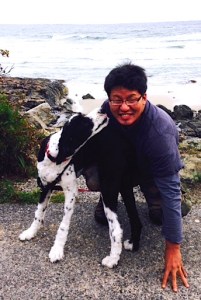
Bart Goldstein & Dog

Bart Goldstein – Survivor

I had speech therapy, physical therapy, and occupational therapy as an inpatient for three months at Helen Hayes Hospital. Then I had five more months of therapy as an outpatient at the hospital.

9. What problems or disabilities, if any, resulted from your brain injury
(e.g., balance, perception, personality, etc.)?

I have problems with walking, my speaking sensibly, control of anger, partial blindness, and memory.

10. How has your life changed? Is it better? Is it worse?

I am much more of a planner now than I was prior to accident. An article, “The Journey Back,” from Brain Injury Awareness Month a couple of years ago answers this question and most of the others: http://spotlightnews.com/uncategorized/2014/03/20/journey-back/

11. What do you miss the most from your pre-brain-injury life?

See the Spotlight article (address given in the answer to the question 10).

12. What do you enjoy most in your post-brain-injury life?

See the Spotlight article (address given in the answer to the question 10).

13. What do you like least about your brain injury?

See the Spotlight article (address given in the answer to the question 10).

14. Has anything helped you to accept your brain injury?

I’ve been helped by my Christian faith, my parents, and my sense of humor.

15. Has your injury affected your home life and relationships and, if so, how?

See the Spotlight article (address given in the answer to the question 10).

16. Has your social life been altered or changed and, if so, how?

See the Spotlight article (address given in the answer to the question 10).

17. Who is your main caregiver? Do you understand what it takes to be a caregiver?

My folks are my main caregivers. Caregiving takes a lot of love and more.

Bart & Joel Goldstein

Bart Goldstein – Survivor with Father, Joel Goldstein (author of “No Stone Unturned”)

18. What are your plans? What do you expect/hope to be doing ten years from now?

I hope to continue to heal and to find a good woman and settle down.

19. Are you able to provide a helpful hint that may have taken you a long time to learn, but which you wished you had known earlier? If so, please state what it is to potentially help other survivors with your specific kind of brain injury.

Learn patience. It’s a long haul.

20. What advice would you offer to other brain-injury survivors? Do you have any other comments that you would like to add?

Keep your faith and your sense of humor. Try alternative therapies.


(Disclaimer: The views or opinions in this post are solely that of the interviewee.)

If you would like to be a part of the SPEAK OUT! project, please go to TBI Survivor Interview Questionnaire for a copy of the questions and the release form.

(Clip Art compliments of Bing.)

(Photos compliments of contributor.)


As I say after each post:

Feel free to leave a comment by clicking the blue words “Leave a Comment” below this post.

Please follow my blog. Click on “Follow Me Via eMail” on the right sidebar of your screen.anim0014-1_e0-1

If you like my blog, click the “Like” button under this post.

If you REALLY like my blog, share it intact with your friends. It’s easy! Click the “Share” buttons below.

If you don’t like my blog, “Share” it intact with your enemies. That works for me too!

Survivors SPEAK OUT! . . . . . . Ina M. Dutkiewicz

Survivors SPEAK OUT! Ina M. Dutkiewicz

presented

by

Donna O’Donnell Figurski


Dutkiewicz, Ina M. Survivor 041316

Ina M. Dutkiewicz – Survivor


1. What is your name? (last name optional)

Ina M. Dutkiewicz, pronounced “Ena”

2. Where do you live? (city and/or state and/or country) Email (optional)

Milford, Michigan, USA     inadutkiewicz@gmail.com

3. On what date did you have your brain injury? At what age?

I had my brain injury on February 3, 2010. I was 43 years old.

4. How did your brain injury occur?

While driving to work, I slid through a stop sign because of black ice. I was hit by a pickup truck.

5. When did you (or someone) first realize you had a problem?

I was immediately put into a coma.

6. What kind of emergency treatment, if any, did you have?

I was in the Neuro-Intensive Care Unit for three weeks. A feeding tube was in my belly, and an incision was made in my forehead (to relieve the pressure on my brain from bleeding, I think).

7. Were you in a coma? If so, how long?

Yes. I was in a coma for a total of four and a half weeks. My coma was not medically induced.

8. Did you do rehab? What kind of rehab (i.e., inpatient or outpatient and occupational and/or physical and/or speech and/or other)?

I started inpatient rehab for six weeks at a head injury place where I had to live (Origami in Mason, Michigan). Then I was able to transition to outpatient rehab. I still have to return daily for therapies and doctor appointments. I have done physical therapy, occupational, speech, and language therapies, driving therapy, and vocational therapy

How long were you in rehab?

I did rehab for a total of five years. I still do counseling every other week.

9. What problems or disabilities, if any, resulted from your brain injury
(e.g., balance, perception, personality, etc.)?

I have gait issues, memory problems, and word-finding difficulty. My personality changed. (I’m more docile – easy going – now.) My pelvis was broken on both sides from my seat belt, which means I have daily pelvis/hip pain. I have also had a headache every day since my car accident. Some days, they’re only pressure; others, pounding.

10. How has your life changed? Is it better? Is it worse?

My life has changed 100%. My husband divorced me a year after my car accident, so now I live with my mom. I do not work. I am on disability, which is barely enough to live on.

11. What do you miss the most from your pre-brain-injury life?Dutkiewicz, Ina M.car

I miss my friends.

12. What do you enjoy most in your post-brain-injury life?

I like that I am more laid back and not as serious.

13. What do you like least about your brain injury?

I dislike that I feel lost some days. I’m not working, and I don’t have anything worthy to put my hand to. My kids are now grown and living on their own. They have their own families. Also, my ex-husband has moved on to a girlfriend. It’s like I was left behind. 😦

14. Has anything helped you to accept your brain injury?

My Christian faith has been a HUGE help to me.

15. Has your injury affected your home life and relationships and, if so, how?

I have no friends from my past (pre-TBI) life. It is sad.

16. Has your social life been altered or changed and, if so, how?

My life has totally changed. I now spend my days with my mom – going to things she enjoys at the Senior Center. I am not really with people my age. While I enjoy the time with her, I long for age-appropriate friends.

17. Who is your main caregiver? Do you understand what it takes to be a caregiver?

My mom is my main caregiver. Yes, I realize how my TBI has changed her life. I know that she has had to give up things to support me.

18. What are your plans? What do you expect/hope to be doing ten years from now?

I really would like to get a part-time job in the future. My experience is with office work. I was an Executive Assistant before my car accident, helping with payroll and AP/AR (accounts payable/accounts receivable) on top of taking care of all correspondence that left the car dealership I worked at.

Dutkiewicz, Ina M. Survivor 2 041316

Ina M. Dutkiewicz – Survivor

I19. Are you able to provide a helpful hint that may have taken you a long time to learn, but which you wished you had known earlier? If so, please state what it is to potentially help other survivors with your specific kind of brain injury.

My helpful hint is that it is okay to be different. In a lot of cases, brain injury truly is an invisible disability. In outward appearance, we look “normal” (whatever that is). That means that we can easily blend in, but oftentimes it is hard to keep up. We need to find our own group of people to hang out with who understand where we are coming from and what we deal with on a daily basis. A support-group is a good place to start.

20. What advice would you offer to other brain-injury survivors? Do you have any other comments that you would like to add?

Don’t give up on yourself. Others can turn away and leave you, but your strength comes from you – no one can ever take that away from you. AND, you can rely on yourself to struggle through your low days and celebrate your victories!


(Disclaimer: The views or opinions in this post are solely that of the interviewee.)

If you would like to be a part of the SPEAK OUT! project, please go to TBI Survivor Interview Questionnaire for a copy of the questions and the release form.

(Clip Art compliments of Bing.)

(Photos compliments of contributor.)


As I say after each post:

Feel free to leave a comment by clicking the blue words “Leave a Comment” below this post.

Please follow my blog. Click on “Follow Me Via eMail” on the right sidebar of your screen.anim0014-1_e0-1

If you like my blog, click the “Like” button under this post.

If you REALLY like my blog, share it intact with your friends. It’s easy! Click the “Share” buttons below.

If you don’t like my blog, “Share” it intact with your enemies. That works for me too!

Survivors SPEAK OUT! Jen Swartz

Survivors SPEAK OUT! Jen Swartz

presented

by

Donna O’Donnell Figurski


jen swartz Survivor1. What is your name? (last name optional)

Jen Swartz

2. Where do you live? (city and/or state and/or country) Email (optional)

Castleton, New York, USA     Passionate4Christ29@yahoo.com

3. On what date did you have your brain injury? At what age?

My brain injury happened on June 8, 2000. I was 18.

4. How did your brain injury occur?

I was in a car accident. I was following a close friend to her boyfriend’s house. My car was T-boned by another car going 55-60 mph. My small car, a 1987 Toyota Corolla, was thrown across the street. Jen (the person I was following) said that my body was hanging out the door. She thought I was dead because there was blood coming out of my mouth. (To top it off, I also have congenital scoliosis and had to have a major operation when I was nine years old – a bone fusion in my neck to prevent the curve from progressing further. I had to wear a halo to restrict neck movement so the bone fusion could heal.)

5. When did you (or someone) first realize you had a problem?

I think it was probably when I was in a coma that people realized that I would have some cognitive problems.

6. What kind of emergency treatment, if any, did you have?

I required a tracheotomy and a food tube. Also, my head was shaved for a reason. At the beginning, my brain was swelling, but, praise the Lord, the swelling went down. So, it was not necessary to take a piece of my skull off to allow room for the swelling.

7. Were you in a coma? If so, how long?

Yes. I was in a coma for six weeks.

8. Did you do rehab? What kind of rehab (i.e., inpatient or outpatient and occupational and/or physical and/or speech and/or other)?

Yes. I did inpatient rehabilitation at Sunnyview Rehabilitation Hospital. This included speech, occupational, physical, and recreational therapies.

How long were you in rehab?Jen Swartz Survivor

I was in rehabilitation for seven months.

9. What problems or disabilities, if any, resulted from your brain injury
(e.g., balance, perception, personality, etc.)?

I have memory issues for certain! I have problems with concentration, focusing, emotions, and balance.

10. How has your life changed? Is it better? Is it worse?

My life is MUCH better! I don’t remember eighteen years of my life, but from what I am told, I was very unhappy. Now I have God. He is my purpose! I am also blessed to say that I am engaged to an incredible man, who has an acquired brain injury (ABI). It is so great! We have known each other for three years, and we see eye-to-eye on practically everything.

11. What do you miss the most from your pre-brain-injury life?

Absolutely nothing!

12. What do you enjoy most in your post-brain-injury life?

I like that I don’t take anything for granted and that I am content with the way things are. God blessed me with a second chance at living, so I am trying to make the most out of everything in life.

13. What do you like least about your brain injury?

I dislike the anxiety issues, the memory problems (which seem to happen quite frequently), and the migraines.

14. Has anything helped you to accept your brain injury?

Yes! I was helped by Living Resources, where I participated in a group for people with traumatic brain injuries (TBIs). I was also helped by the Cognitive Group, which consisted of survivors working on different goals/strategies for different areas of life. The belief is that each individual can improve his or her life after a TBI. The group is run by neuropsychologists and counselors.

15. Has your injury affected your home life and relationships and, if so, how?

Yes. My mother and sister are very distant mentally from me, since they don’t seem to have the desire to want to accept the change that this injury made. I feel it may be caused by a little pride with them, considering the fact that I believe that I was quite an intelligent woman before my injury. Before my accident, I was accepted into Ithaca College, since I wanted to delve into the medical field in some way. My mother and sister do not work well with the cognitive change in me that the injury has caused, such as my not desiring to be with large groups of people or my forgetting things.

16. Has your social life been altered or changed and, if so, how?

I believe my life has changed immensely. I used to have many, many friends and loved to be in large groups of people. Now, however, I don’t enjoy being in large crowds or in large groups of people. I get overwhelmed. I enjoy spending much more alone-time now, as well. I have even been taught how to crochet. I love doing crochet, especially when the winter months roll in.

17. Who is your main caregiver? Do you understand what it takes to be a caregiver?

I haven’t needed a caregiver, but I understand what it takes to be a caregiver, since I have had staff work with me on and off throughout the years.

Jen Swartz 218. What are your plans? What do you expect/hope to be doing ten years from now?

My future plans consist of buying a home with my fiancé through the Section 8 program. My fiancé will be my husband on May 27, 2017. I plan to continue working with Living Resources in the years to come, and my fiancé does as well.

19. Are you able to provide a helpful hint that may have taken you a long time to learn, but which you wished you had known earlier? If so, please state what it is to potentially help other survivors with your specific kind of brain injury.

My helpful hint is to be patient. Remember: Slow and steady wins the race! Slow progress is key to amazing growth. Also, be open-minded to hearing from staff-members assisting to help you. If you listen to any suggestions, which may guide you to improve, you are being very wise in opening up your mind for possible progress.

20. What advice would you offer to other brain-injury survivors? Do you have any other comments that you would like to add?

Keep at it! Don’t give up! Also, you will grow if you listen to what “staff” suggest you do in order to improve! You can and will do it!
(Disclaimer: The views or opinions in this post are solely that of the interviewee.)

If you would like to be a part of the SPEAK OUT! project, please go to TBI Survivor Interview Questionnaire for a copy of the questions and the release form.

(Clip Art compliments of Bing.)

(Photos compliments of contributor.)


As I say after each post:

Feel free to leave a comment by clicking the blue words “Leave a Comment” below this post.

Please follow my blog. Click on “Follow Me Via eMail” on the right sidebar of your screen.anim0014-1_e0-1

If you like my blog, click the “Like” button under this post.

If you REALLY like my blog, share it intact with your friends. It’s easy! Click the “Share” buttons below.

If you don’t like my blog, “Share” it intact with your enemies. That works for me too!

Survivors SPEAK OUT! Ryan Stoltz

Survivors SPEAK OUT! Ryan Stoltz

presented

by

Donna O’Donnell Figurski


Stoltz, Ryan Survivor

Ryan Stoltz – Brain Injury Survivor

1. What is your name? (last name optional)

Ryan Stoltz

2. Where do you live? (city and/or state and/or country) Email (optional)

Eureka, California, USA     Ryan.Stoltz2014@gmail.com

3. On what date did you have your brain injury? At what age?

My traumatic brain injury (TBI) happened on July 13, 1997. I was 17 years old.

4. How did your brain injury occur?

My TBI was caused by a car accident.

5. When did you (or someone) first realize you had a problem?

About six months

6. What kind of emergency treatment, if any, did you have?

I was intubated at the scene. I was then given a trach (tracheostomy tube), a G-Tube (gastrostomy tube), and IVs.

7. Were you in a coma? If so, how long?

I was in a coma for 23 days.

8. Did you do rehab? What kind of rehab (i.e., inpatient or outpatient and occupational and/or physical and/or speech and/or other)? How long were you in rehab?

I had occupational, speech, and physical therapies. The physical therapy was to relearn how to walk. I was in acute physical rehab for nine months.

9. What problems or disabilities, if any, resulted from your brain injury
(e.g., balance, perception, personality, etc.)?

I have problems with balance, memory, speech, and perception.

10. How has your life changed? Is it better? Is it worse?

My life is dramatically much worse. I have no independence.

11. What do you miss the most from your pre-brain-injury life?

I miss being able to go out and about on my own – without assistance from anyone. I also miss having my own family.

12. What do you enjoy most in your post-brain-injury life?

I don’t enjoy anything because every day is a struggle.

13. What do you like least about your brain injury?

I dislike not being able to accomplish the dreams and goals I had for myself.

14. Has anything helped you to accept your brain injury?

I was helped by my support system at home (my family) and by my support systems at my job and my day program.

15. Has your injury affected your home life and relationships and, if so, how?

My relationships at home were not affected because my parents have been a great support for me.

16. Has your social life been altered or changed and, if so, how?

Stoltz, Ryan 2 Survivor

Ryan Stoltz – Brain Injury Survivor

My social life was affected greatly because I can’t go anyplace or do anything on my own. All my friends have grown and were able to move on with their lives. I feel like I was left behind.

17. Who is your main caregiver? Do you understand what it takes to be a caregiver?

My parents have been my main caregivers. Yes, I do understand what it takes. They help me with all my needs and wants in my home life. I also have a respite worker who takes me out into the community to do the fun things I like to do.

18. What are your plans? What do you expect/hope to be doing ten years from now?

I want to be a mentor to others by telling them my life-story from before my accident to my accident and then telling them how the accident has affected my life.

19. Are you able to provide a helpful hint that may have taken you a long time to learn, but which you wished you had known earlier? If so, please state what it is to potentially help other survivors with your specific kind of brain injury.

I would like survivors to be more willing to hear both sides of the story.

20. What advice would you offer to other brain-injury survivors? Do you have any other comments that you would like to add?

Don’t get angry at your situation. Take life day by day.

If you’d like to learn more about Ryan, please check out his blog.

Didn’t Give Up: Your Life Can Change in a Minute


(Disclaimer: The views or opinions in this post are solely that of the interviewee.)

If you would like to be a part of the SPEAK OUT! project, please go to TBI Survivor Interview Questionnaire for a copy of the questions and the release form.

(Clip Art compliments of Bing.)

(Photos compliments of contributor.)


As I say after each post:

Feel free to leave a comment by clicking the blue words “Leave a Comment” below this post.

Please follow my blog. Click on “Follow Me Via eMail” on the right sidebar of your screen.anim0014-1_e0-1

If you like my blog, click the “Like” button under this post.

If you REALLY like my blog, share it intact with your friends. It’s easy! Click the “Share” buttons below.

If you don’t like my blog, “Share” it intact with your enemies. That works for me too!


blog: http://didntgiveup.wordpress.com

Survivors SPEAK OUT! Jeremy Dorr


Survivors SPEAK OUT! Jeremy Dorr

presented

by

Donna O’Donnell Figurski


042315 Dorr, Jeremy

Jeremy Dorr – Brain Injury Survivor

1. What is your name? (last name optional)

Jeremy Dorr

2. Where do you live? (city and/or state and/or country) Email (optional)

Lynchburg, Virginia, USA

3. On what date did you have your brain injury? At what age?

September 15, 2013. I was 25.

4. How did your brain injury occur?

Car accident

5. When did you (or someone) first realize you had a problem?

My brain injury was first noticed by the doctors at the hospital.

6. What kind of emergency treatment, if any, did you have?

I had a tracheotomy.

7. Were you in a coma? If so, how long?

I was in a medically induced coma for one and a half weeks.

8. Did you do rehab? What kind of rehab (i.e., inpatient or outpatient and occupational and/or physical and/or speech and/or other)? How long were you in rehab?

I did outpatient rehab at the Sheppard Center for six weeks.

9. What problems or disabilities, if any, resulted from your brain injury
(e.g., balance, perception, personality, etc.)?

I have a problem with control of my emotions. Others say that I am slower than before.

10. How has your life changed? Is it better? Is it worse?

I worked at UPS, and I drove a Bobcat. I lost both jobs as result of the traumatic brain injury (TBI).

11. What do you miss the most from your pre-brain-injury life?

I miss the friends and working. (My “hobby” was working.)

12. What do you enjoy most in your post-brain-injury life?

Helping others.

13. What do you like least about your brain injury?

I dislike the loss of my prior life. I also dislike the effects that my TBI has had on my daughter.

14. Has anything helped you to accept your brain injury?

I learned to look for the positive in all situations and to stay positive.

15. Has your injury affected your home life and relationships and, if so, how?

Dorr, Jeremy

Jeremy Dorr – Brain Injury Survivor

Yes. I pay attention to my family more. My brain injury has brought me closer to them.

16. Has your social life been altered or changed and, if so, how?

Yes. I rarely hear from the friends I had before – if I hear from them at all.

17. Who is your main caregiver? Do you understand what it takes to be a caregiver?

I am my own caregiver. Yes, I do understand what it takes to be a caregiver.

18. What are your plans? What do you expect/hope to be doing ten years from now?

My plan is to help TBI survivors after they come home and are getting their lives back together. I want them to know that they are not alone.

19. Are you able to provide a helpful hint that may have taken you a long time to learn, but which you wished you had known earlier? If so, please state what it is to potentially help other survivors with your specific kind of brain injury.

Be positive, no matter what. Positive brings more positive. Remember, you’re still here, so you can help make the change also. Believe in yourself.

20. What advice would you offer to other brain-injury survivors? Do you have any other comments that you would like to add?

The outlook on life has changed, but with change, great things can come. Let go of the hatred of what happened and embrace the “new” you. You are awesome! Don’t respond to negativity. Believe in yourself.

(Disclaimer: The views or opinions in this post are solely that of the interviewee.)

If you would like to be a part of the SPEAK OUT! project, please go to TBI Survivor Interview Questionnaire for a copy of the questions and the release form.

(Clip Art compliments of Bing.)

(Photos compliments of contributor.)


As I say after each post:

Feel free to leave a comment by clicking the blue words “Leave a Comment” below this post.

Please follow my blog. Click on “Follow Me Via eMail” on the right sidebar of your screen.anim0014-1_e0-1

If you like my blog, click the “Like” button under this post.

If you REALLY like my blog, share it intact with your friends. It’s easy! Click the “Share” buttons below.

If you don’t like my blog, “Share” it intact with your enemies. That works for me too!

So, Whaddya Think? . . . My Opinion: Sports Benefits Outweigh the Risks

So, Whaddya Think?

My Opinion: Sports Benefits Outweigh the Risks

by

 Charles Ross

presented

by

Donna O’Donnell Figurski

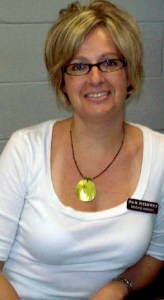
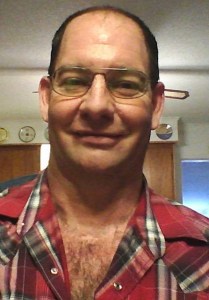
So Whaddya Think Brain th-4I was eighteen when I had my traumatic brain injury (TBI) in a car accident in 1985. I was brought back to life once. I was in a coma for fifty days. I was in a wheelchair for one and a half years. I have memory problems. My body drew up into a fetal position. It took seven years of painful surgery and therapy and close to thirty procedures to straighten my legs, feet, arms, and hands. Thirty years later, my claw-shaped right hand looks like it has rheumatoid arthritis, but I use it. I write with that hand and walk with a cane in it. Three years after my accident, I went back to college. It took three years of difficult work to get my first Associate Degree and two years for a second in Mechanical Drafting, AutoCAD. I worked fifteen difficult years doing AutoCAD. Not one day since my accident has been easy for me. I am proud of what I accomplished, and I hope my story will be an inspiration to others.

Ross Jr., Charles Survivor 112415 copy

Charles Ross Jr. TBI Survivor

I know personally how tragic it is if a person gets hurt or killed accidentally, but that’s life. I don’t want to seem like life does not matter to me – because it does. (My life now is precious to me. I cherish each moment I have with family or friends. Hundreds, maybe thousands, of people, whom I never would have met otherwise, have blessed my life.) I am not heartless; I am very compassionate. I cry when I hear a tragic story of any kind. I know what life is. I know what death is. And I know what pain and suffering are.

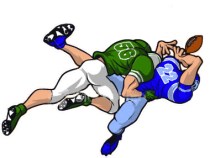
I played three years of high-school football. Many guys were much bigger than I was, and I was fortunate not to get hurt. It was my third year of driving when I had my accident. Throughout my recovery, I looked back at the grueling football practices, and they football-player-tackling-cartoon-football-playersinspired me to go forward. What a sport does is teach sportsmanship, pride, respect, and loyalty, and it inspires one to do better.

Should I never ride in a car or even drive again because somebody has gotten hurt in a car accident? A baseball player may get hit in the head by a pitch, but now players have helmets to protect them. (There isn’t protective headwear in basketball, volleyball, tennis, or soccer, but maybe there should be.) Thousands of people end up in Emergency football_-_helmet_5Rooms or even in morgues because they fall while walking and hit their head. Should every man, woman, and child wear a helmet simply to walk? It seems just as foolish to end all athletics.


So, Whaddya Think?

Let’s get a dialogue going. Post your comments in the Comment Section. Directions are below.

So . . . what do you think? Is there something you are passionate about in this Brain Injury (BI) world? Do you want to be heard? Your opinion matters! You can SPEAK OUT! on “So Whaddya Think?”

Simply send me your opinion, and I will format it for publication. Posts may be short, but please send no more than 500 words. Send to Neelyf@aol.com

I hope to HEAR from you soon.

As I say after each post:

Feel free to leave a comment by clicking the blue words “Leave a Comment” below this post.

Please follow my blog. Click on “Follow Me Via eMail” on the right sidebar of your screen.anim0014-1_e0-1

If you like my blog, click the “Like” button under this post.

If you REALLY like my blog, share it intact with your friends. It’s easy! Click the “Share” buttons below.

If you don’t like my blog, “Share” it intact with your enemies. That works for me too!

(Clip Art compliments of Bing.)

(Photos compliments of contributor)

On The Air: . . . . . . . . . . . . . . Brain Injury Radio . . . . . . . . “Another Fork in the Road” with Ann Boriskie, Director of Brain Injury Peer Visitor Assn.

On The Air: Brain Injury Radio “Another Fork in the Road” 

with

Guest: Ann Boriskie, Director of Brain Injury Peer Visitor Assn.

presented

by

Donna O’Donnell Figurski

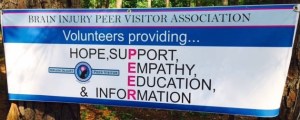
Boriskie, Ann Training in Florida Survivor 011116Ann Boriskie, a TBI survivor of more than 17-years says, “Get involved. Volunteer.” “By helping others with a brain injury, you truly help yourself in so many ways.” Ann is the Brain Injury Peer Visitor Association Director and her motto is “YOU CAN!”Peer Visitation BannerBoriskie, Ann Survivor 011116

 If you missed this show with Ann Boriskie on “Another Fork in the Road” on January 17th, 2016 don’t fret. You can listen to the archived show here. Click the link below.

See you “On the Air!”

On The Air: Brain Injury Radio “Another Fork in the Road” with Ann Boriskie, Director of Brain Injury Peer Visitor Assn.

(Clip Art compliments of Bing.)
As I say after each post: Please leave a comment by clicking the blue words “Leave a Comment” below this post.
Feel free to follow my blog. Click on “Follow” on the upper right sidebar.
 If you like my blog, share it intact with your friends. It’s easy! Click the “Share” buttons below.
 If you don’t like my blog, “Share” it intact with your enemies. I don’t care!
 Feel free to “Like” my post.


Survivors SPEAK OUT! Ann Boriskie

Survivors SPEAK OUT! Ann Boriskie

presented

by

Donna O’Donnell Figurski


Boriskie, Ann Survivor 011116

Ann Boriskie – Survivor: Brain Injury Peer Visitor Association Director


1. What is your name? (last name optional)

Ann Boriskie

2. Where do you live? (city and/or state and/or country) Email (optional)

Alpharetta, Georgia, USA (a suburb of Atlanta, Georgia) aboriskie@braininjurypeervisitor.org

3. On what date did you have your brain injury? At what age?

November 12, 1998, at age 48

4. How did your brain injury occur?

My brain injury occurred in a car wreck less than five miles from home. I was headed to a regular dental checkup.

A woman was talking on her phone while driving, and she obviously missed her turn. She stopped suddenly, but I was able to stop my car and not hit her at all. She just sat there at the bottom of a hill on the two-lane road. She did not move. A young student (16 years old) came down the hill. He said he was messing with his radio and just did not see us. He hit my car going 50 mph and pushed my car into the woman’s car.

5. When did you (or someone) first realize you had a problem?

About 48 hours after my wreck, I started having concussion symptoms. I experienced dizziness and mental “fogginess.” I could not walk. There was bruising under my eyes. The toes on my right foot went numb. My left eye was out of focus.

6. What kind of emergency treatment, if any, did you have?

None. I walked away from the wreck thinking I was just fine. After 48 hours, I went to a 24-hour clinic, but they just sent me home. They told me I had no real problems and I would be fine. I also went to an eye doctor right away, but again, I was told there that nothing was wrong physically with my eye. Several months after my wreck, one neurologist told me that I had “post-concussion syndrome” and to go home – that I would be just fine. No one else mentioned my having a brain injury for one year. Then a dental TMJ specialist told me that I had a brain injury. That was what was causing my mental symptoms. (TMJ = temporomandibular joint)Peer Visitation Banner
7. Were you in a coma? If so, how long?

No

8. Did you do rehab? What kind of rehab (i.e., inpatient or outpatient and occupational and/or physical and/or speech and/or other)? How long were you in rehab?

My brain injury went undiagnosed for over a year. The physical therapy that I received was in relation to each of my physical injuries (see #9), especially to help after the surgeries that I had to have to repair the parts of my body that were injured.

9. What problems or disabilities, if any, resulted from your brain injury
(e.g., balance, perception, personality, etc.)?

a. My brain injury caused depression, anxiety, and anger (more so in the first several years). I had lots of memory issues. (I could not remember friends or faces. I got lost. I could not write. Then once I could write, I couldn’t write in cursive – I still can’t.) Some memory issues remain today. I permanently lost many of my past memories. (I can’t remember family events or experiences or places where we had lived. I lost memory of cities and our time there.) I lost a lot of my math skills (I was an A+ math student, and I was in advanced math classes), but I have regained many of these math skills.

b. My neck was injured. (The C4, C5, C6, and C7 vertebrae were knocked out of line.) I had to have neck surgery (for fusion and a metal plate holding these four levels together). My neck is in CONSTANT PAIN.

c. I had an injury to the L5 and S1 levels of my spine. (The last two vertebrae are not attached now to my spinal cord). Surgery was recommended, but my neck did not fuse properly, so I decided not to have back surgery. I am in CONSTANT PAIN in my lower back. The pain often radiates to my hips and legs.

d. I popped a tendon from its bone in my right elbow. (I braced my body on the steering wheel in the wreck.) It required surgery. The doctor said it was one of the worst tears he had ever seen.

e. Permanent nerve damage was created in various body areas.

f. The left part of my jaw was knocked out of line. It literally took years of appliance therapy to get the bone back into its correct place.

g. A valve was torn on the left side of my heart. This caused irregular heartbeats for a while. It repaired itself.

h. My left side remains weaker than my right side.

i. Numbness remains in my hands (which makes it harder to use my hands). I also have numbness in my feet, down my arms, and down my legs.

j. Sometimes my left eye will not focus or work well with my right eye.

k. I have a shorter attention span.

l. All of these physical injuries caused me to have fibromyalgia and constant body pains.

Boriskie, Ann Podium

Ann Boriskie – Survivor

10. How has your life changed? Is it better? Is it worse?

In the long run, I have to say my life is truly better. All three of our children are in the medical field. (My husband and I have raised one daughter, now a neonatologist who takes care of premature babies and helps the moms; raised a son, now a doctor of internal medicine who works as a hospitalist; and raised another daughter, now a Registered Nurse in a mental-illness hospital unit.)

My priorities changed in my life. I went from being a “work-oholic” and a person who was very competitive to a person who lives to help other people, including my family and friends.

I slowed down my life’s pace. I had to learn that I could no longer work at a full-time outside-the-home job. (For years, I could not work at all.) I also had to learn to take care of myself – due to all of the physical and mental problems that the wreck created.

I was at home, and thus I was “there” more for my children and husband. I was able to give them more help and more attention.

11. What do you miss the most from your pre-brain-injury life?

I miss my higher energy level. I miss many of my memories. I miss all of the physical sports and activities that I can no longer do (water skiing, snow skiing, kayaking, swimming, playing golf, etc.).

12. What do you enjoy most in your post-brain-injury life?Peer Visitor Banner

I enjoy running the Brain Injury Peer Visitor Association and being able to help thousands of brain-injury and stroke survivors throughout the United States and the world. I’ve done this each year since 2006.

13. What do you like least about your brain injury?

I dislike being in constant pain (which also affects my brain). I also dislike having to push myself more and having to work much harder to accomplish my goals and to do my work than I did prior to my wreck.

14. Has anything helped you to accept your brain injury?

  1. Helping other people helps me also.
  2. Sharing my experiences with others and listening to each brain-injury survivor’s problems (This helps me to better understand my own brain injury.)
  3. Attending support-groups (and being very open to sharing my own problems, experiences, successes, and methodologies)
  4. In the past, gaining the help of neuropsychologists
  5. Going to medical doctors who treat brain injury (e.g., a psychiatrist)

15. Has your injury affected your home life and relationships and, if so, how?

Yes. I am much more dedicated to my husband and three children. I treasure our relationships. I also treasure my friendships more. You really better understand that life is way too short and can change in a second.

16. Has your social life been altered or changed and, if so, how?

Yes. I no longer like to be in big crowds or in a noisy environment. Going to a party is now a struggle and sometimes a chore. I just avoid noisy places and huge crowds. This requirement definitely limits the activities in which I can participate.

17. Who is your main caregiver? Do you understand what it takes to be a caregiver?

My wonderful husband is my main caregiver. I am blessed that he “stuck it out” with me and helped me go through all of my physical and mental recoveries. He is also one of my biggest supporters – even financially supporting my association and approving of all of the volunteer hours that I dedicate to the Brain Injury Peer Visitor Association.
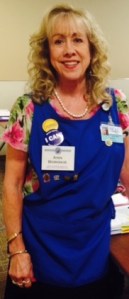
Boriskie, Ann Training in Florida Survivor 011116

Annn Boriskie – Survivor

18. What are your plans? What do you expect/hope to be doing ten years from now?

I plan to continue running the Brain Injury Peer Visitor Association as long as I possibly can. My dream is to continue to grow the association throughout the United States and even internationally.

I also plan to continue to enjoy and spend time with my immediate family and their families.

19. Are you able to provide a helpful hint that may have taken you a long time to learn, but which you wished you had known earlier? If so, please state what it is to potentially help other survivors with your specific kind of brain injury.

Accept your limitations, but continue to “push yourself” to improve. Realize that, even though you are different from the pre-TBI you, you are still a valuable person in the world. Let your “old self” go. Realize that person won’t be back. Embrace the “new you,” and learn to love yourself for who you now are. Remember that YOU CAN. Don’t defeat yourself by focusing on all of the things you can no longer do.
2011 Community Service Awards from WXIA 11

20. What advice would you offer to other brain-injury survivors? Do you have any other comments that you would like to add?

Help others. Get involved. Volunteer. By helping others with a brain injury, you truly help yourself in so many ways. You will help yourself get better, and you will gain confidence.


You can hear Ann Boriskie on my radio show, “Another Fork in the Road” at 5:30pm PT (6:30MT, 7:30CT, 8:30ET) on Sunday, January 17th on the Brain Injury Radio Network (BIRN)

Click here on Sunday 5:30pm Pacific Time. Another Fork in the Road: Ann Boriskie – Director of Brain Injury Peer Visitor 

You can call in to listen to the show or talk to the host by dialing this number. 424-243-9540

(Disclaimer: The views or opinions in this post are solely that of the interviewee.)

If you would like to be a part of the SPEAK OUT! project, please go to TBI Survivor Interview Questionnaire for a copy of the questions and the release form.

(Clip Art compliments of Bing.)

(Photos compliments of contributor.)

As I say after each post: Please leave a comment by clicking the blue words “Leave a Commentanim0014-1_e0-1 below this post.

Feel free to follow my blog. Click on “Follow” on the upper right sidebar.

If you like my blog, share it intact with your friends. It’s easy! Click the “Share” buttons below.

If you don’t like my blog, “Share” it intact with your enemies. I don’t care!

Feel free to “Like” my post.


Survivors SPEAK OUT! Jenn Von Hatten

Survivors SPEAK OUT! Jenn Von Hatten

presented

by

Donna O’Donnell Figurski


Von Hatten, Jenn Survivor & Hanna 121315

Jenn Von Hatten – survivor and daughter, Hanna

1. What is your name? (last name optional)

Jenn Von Hatten

2. Where do you live? (city and/or state and/or country) Email (optional)

Trenton, Nova Scotia, Canada     jlvonhatten@gmail.com

3. On what date did you have your brain injury? At what age?

My brain injury happened on Valentine’s Day 2011. I was 35 years old.

4. How did your brain injury occur?

My brain injury resulted from a motor vehicle accident caused by freezing rain.

5. When did you (or someone) first realize you had a problem?

The paramedics found me clinically dead at the scene. The doctors wanted to airlift me to the Queen Elizabeth II (QEII) Health Sciences Centre in Halifax, which is the biggest hospital in Nova Scotia. But the freezing rain affected the rotors on the helicopter, so I had to be taken by road ambulance.

6. What kind of emergency treatment, if any, did you have?

The pressure in my brain needed to be monitored to see if I needed surgery. I also lacerated my liver. Fortunately, I did not need surgery for either. I also fractured a rib and three vertebrae.

7. Were you in a coma? If so, how long?

I was in a coma for seven weeks. First, I was in a coma from the accident. Then I was in a medically induced coma because of my fractured rib and vertebrae. I managed to develop pneumonia, and I had a tracheotomy.

8. Did you do rehab? What kind of rehab (i.e., inpatient or outpatient and occupational and/or physical and/or speech and/or other)? How long were you in rehab?

I was transferred to the Rehab Centre in Halifax around Easter 2011, and I was discharged in July 2011. Besides being a patient at the Rehab Centre, I’ve had to go to physiotherapy and occupational therapy. My spastic muscles affected my speech, so I also went to speech therapy.

9. What problems or disabilities, if any, resulted from your brain injury
(e.g., balance, perception, personality, etc.)?

Von Hatten, Jenn survivor Son Liam 121315

Jenn Von Hatten – survivor and son, Liam

My balance has been severely affected. I used to be in a wheelchair, due to fractured vertebrae. I’ve since “graduated” to a walker, a quad cane, and a mini-quad cane. I’m a Fall Risk, and I get the Disability Pension.

10. How has your life changed? Is it better? Is it worse?

I have joint custody of my seven-year-old daughter, Hanna. I am no longer able to work as a nurse. My life has definitely changed, but I can’t say if it is better or worse. All I can say with certainty is that my life is DIFFERENT.

11. What do you miss the most from your pre-brain-injury life?

I miss being able to work as a nurse the most. As much as I would like to a work as a nurse, I know I would NOT be safe – mentally, in terms of remembering if I gave a client medication or treatments, or physically.

12. What do you enjoy most in your post-brain-injury life?

I enjoy my time with Hanna. It is her time, as I don’t work anymore. I now have a cat, Spunkster, which I got from the local SPCA. When Hanna’s not with me, I hang out with Spunkster.

13. What do you like least about your brain injury?

I had graduated as a nurse only seven months before my traumatic brain injury (TBI). I had wanted to be a nurse for over fifteen years. At least I can say I turned that dream into reality! I sometimes miss being able to drive. My rehabilitation doctor says I still cannot drive, as my reflexes are not up to snuff. However, I can say that my driver’s license has NOT been revoked!

14. Has anything helped you to accept your brain injury?

Becoming a nurse was my dream. I finally realized that, just because I am no longer able to work as a nurse, I STILL AM A NURSE! Being a nurse is STILL a part of me.

15. Has your injury affected your home life and relationships and, if so, how?

My youngest daughter’s father threw me out, as he said he was not happy. I remind myself that not many relationships survive a TBI.

16. Has your social life been altered or changed and, if so, how?

I don’t really have a social life, except maybe for going grocery shopping. I go by cab, so I interact with the cab divers, who are husband and wife. They own the cab company, and they are now good friends of mine. I prefer to interact with people in small groups.

17. Who is your main caregiver? Do you understand what it takes to be a caregiver?

Von Hatten, Jenn survivor daughters Emma and Hanna 121315

Jenn Von Hatten – survivor and daughters Emma and Hanna

I am my own caregiver now. Yes, I do understand what it takes to be a caregiver, as I used to be one. When I was in school to become a nurse, I worked as a CCA (Certified Care Assistant). A CCA can also be called PCA (Personal Care Assistant) or PCW (Personal Care Worker).

18. What are your plans? What do you expect/hope to be doing ten years from now?

My plan is to be helping others who are TBI survivors or caregivers. I can provide info and support.

19. Are you able to provide a helpful hint that may have taken you a long time to learn, but which you wished you had known earlier? If so, please state what it is to potentially help other survivors with your specific kind of brain injury.

Understand that a person does not need to be working (and therefore getting paid) to be fulfilling whatever he or she was meant to be. Find other ways – perhaps volunteering.

20. What advice would you offer to other brain-injury survivors? Do you have any other comments that you would like to add?

Figure out what you like doing and makes you happy. If you can’t remember, that’s OK – find out. (It’s what I wish I knew back in the beginning when I was first dealing with this.) Find out what you like and makes you happy RIGHT NOW! Everybody, brain injury or not, is constantly evolving.


(Disclaimer: The views or opinions in this post are solely that of the interviewee.)

If you would like to be a part of the SPEAK OUT! project, please go to TBI Survivor Interview Questionnaire for a copy of the questions and the release form.

(Clip Art compliments of Bing.)

(Photos compliments of contributor.)

As I say after each post: Please leave a comment by clicking the blue words “Leave a Commentanim0014-1_e0-1 below this post.

Feel free to follow my blog. Click on “Follow” on the upper right sidebar.

If you like my blog, share it intact with your friends. It’s easy! Click the “Share” buttons below.

If you don’t like my blog, “Share” it intact with your enemies. I don’t care!

Feel free to “Like” my post.
 

SPEAK OUT! Guest Blogger Karen Dickerson . . . . . . . . . . . . . . I Love the Person I’ve Become

I Love the Person I’ve Become

by

Karen Dickerson

presented

by

Donna O’Donnell Figurski

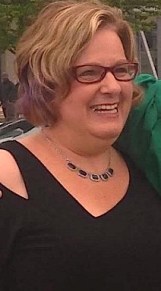
Girl Blogger cartoon_picture_of_girl_writingI had a somber moment yesterday as I, for the first time, heard my 9-1-1 call and saw photos of the scene of my accident. I didn’t know that on March 2nd, 2014, my life would be changed forever.

As all my friends are aware, I have a traumatic brain injury (TBI), a brain injury that will affect my life forever. I’ll never be the same person I once was. I still struggle daily with cognitive deficits and problems with memory, lights, sounds, fatigue, and headaches. I wrestle with irritability. Also, the left side of my body is weak. I spent the last year angry for what has happened to me. The struggles were so huge that I didn’t know how I’d ever survive daily life as a woman and single mother.

Next week, I have the opportunity to face the driver who caused this injury to my body and my life. I get the chance to tell that person everything I’ve gone through to get to where I am today. In writing my statement, I found it hard to look back and relive the hell I’ve been through and am still going through today.

Dickerson, Karen Survivor 2 120315

Karen Dickerson – TBI Survivor

However, in many ways, the accident also brought some positivity – the growth that I’ve had as a person, the strength it has given me, my faith to be stronger, and the opportunities to share my story with so many. Through the use of social media alone, I have shared my triumphs and failures all over the country.

I am trying to bring a voice to the small community in which I live, where there isn’t much help or support for this invisible injury. My brain injury has helped me to choose wisely whom I bring into my life and to let go of negative people, including those in my immediate family who did not understand or did not desire to educate themselves to help me.

Dickerson, Karen Survivor 120315 1

Karen Dickerson – TBI Survivor

I’ve asked why this had to happen to me. I thought that life was already difficult enough. It was hard to get on my feet after a tough childhood and an abusive marriage. Today, I know why. I am thankful for what I have – as little as it may be. I am especially grateful for all who I’ve worked for and fought for – my children and the loved ones close to my heart.

My accident could have been worse. My children might not have had a mother to take care of them; I would never have made new friendships and grown stronger relationships with the ones I had; and I would never have met my Okie.

I’m blessed to be here today. TBI or not, I love the person I’ve become because I’ve fought to become her.


Thank you, Karen Dickerson.

Disclaimer:
Any views and opinions of the Guest Blogger are purely his/her own.

(Clip Art compliments of Bing.)

(Photos compliments of Karen Dickerson)

As I say after each post: Please leave a comment by clicking the blue words “Leave a Commentanim0014-1_e0-1 below this post.

Feel free to follow my blog. Click on “Follow” on the upper right sidebar.

If you like my blog, share it (intact) with your friends. It’s easy! Click the “Share” buttons below.

If you don’t like my blog, “Share” it (intact) with your enemies. I don’t care!

Feel free to “Like” my post.

diemodi jewelry

uniquely hand-crafted jewelry by donna

Welcome to Harmony Kent Online

The home of all things books

Pete Springer

Passionate Teacher and Future Children's Author

HOPE TBI

Helping Other People Excel - To Be Independent

For the Love of Books, Old and New

Katie Fischer, Writer and Reader of Stories

Charlie Bown

Children's Author

Jessica Hinrichs

“We write to taste life twice, in the moment and in retrospect.” ― Anais Nin

VIVIAN KIRKFIELD - Writer for Children

Picture Books Help Kids Soar

Mindy’s Writing Wonderland

For authors, parents, teachers & everyone who loves children’s books.

Kaitlyn Leann Sanchez

Literary Agent

Surviving Traumatic Brain Injury

TBI - Survivors, Caregivers, Family, and Friends

The Care Factor

Loving someone with a Traumatic Brain Injury

Brain Injury Support Group of Duluth-Extension

Brain Injury Information and SUPPORT

Brain Aneurysm Global Insight

Brain Aneurysm, cerebral hemorrhaging, hemorrhage stroke