TBI – Survivors, Caregivers, Family, and Friends

Posts tagged ‘https://survivingtraumaticbraininjury.com/’

Caregivers SPEAK OUT! . . . Sheria Westhoff-Eubanks

Caregivers  SPEAK OUT!  Sheria Westhoff-Eubanks

(caregiver for son, Jason Westhoff)

presented by

Donna O’Donnell Figurski


Sheria Westhoff Eubanks – Caregiver for son, Jason Westhoff

1. What is your name? (last name optional)

Sheria Westhoff-Eubanks

2. Where do you live? (city and/or state and/or country) Email? (optional)

Hendersonville, Tennessee, USA

3. What is the brain-injury survivor’s relationship to you? How old was the survivor when he/she had the brain injury? What caused your survivor’s brain injury?

The brain-injury survivor is my oldest son, Jason. He was 30 years old. He was attacked from behind.

4. On what date did you begin care for your brain-injury survivor? Were you the main caregiver? Are you now? How old were you when you began care?

On Sunday, March 11, 2012, I began to care for my son in a new way. Yes, with my husband and my ex-husband. Now we are his support. I was 51years old when my son was injured.

5. Were you caring for anyone else at that time (e.g., children, parents, etc.)?

No, we were not. Jason’s youngest sibling was in his first year of college.

6. Were you employed at the time of your survivor’s brain injury? If so, were you able to continue working?
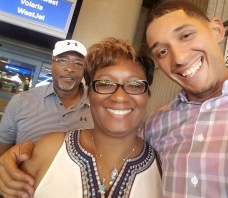
Sheria Westhoff Eubanks – Caregiver for son, Jason Westhoff with Darryl Eubanks

My husband and I were both employed at the time. We both took a leave-of-absence and temporarily relocated to Illinois.

7. Did you have any help? If so, what kind and for how long?

We were so incredibly blessed with help and support from family, friends, church members, strangers, and the wonderful doctors and staff of St. Francis Hospital. There was housing for the families of patients and transportation to and from the hospital. I think we used it for almost three months. When it was time for my son’s discharge from rehab, a good friend of my son provided us with a home to stay in – rent free. We resided there for five months. Friends and family donated money, food, gift cards, and groceries. Some spent nights with Jason, so that my husband and I could both sleep. Youth Build provided my son with money for clothing. He had lost so much weight.

8. When did your support of the survivor begin (e.g., immediately – in the hospital; when the survivor returned home; etc.)?

Jason Westhoff – Survivor of Brain Injury

Our support of Jason started immediately. He’s our child. We needed to be with him, and he needed us with him. He lived in Illinois, and my husband and I live in Tennessee.

9. Was your survivor in a coma? If so, what did you do during that time?

Jason was not in a coma when we arrived in Illinois, but in a few hours, he was. (A coma was induced for medical reasons.) While Jason was in the coma, we talked to him, touched him, loved on him, and played music. My husband read the Bible to him, and we prayed, cried, and believed God would heal him.

10. Did your survivor have rehab? If so, what kind of rehab (i.e., inpatient and/or outpatient and occupational, physical, speech, and/or other)? How long was the rehab? Where were you when your survivor was getting therapy?

Yes, Jason had inpatient and outpatient therapies. He had speech, physical, and occupational therapies. I think he had four weeks of inpatient therapies and about twelve weeks of outpatient therapies. We remained with him every step of the way – mainly my husband or I and his youngest sister.

11. What problems or disabilities of your brain-injury survivor required your care, if any?

Jason needed our care for everything but feeding himself and bathing. However, my husband had to be near the bathroom due to Jason’s issues with mobility and stability.
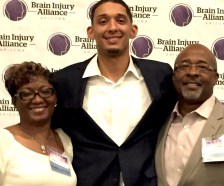
Jason Westhoff – Brain Injury Survivor with Parents, Sheria & Darryl Eubanks

12. How has your life changed since you became a caregiver? Is it better? Is it worse?

Since I’ve been a caregiver, I treasure life more. I’ve experienced a lot of anxiety. I’ve had to learn my new Jason. I really can’t characterize life as “better” or “worse.” It’s just our new normal.

13. What do you miss the most from pre-brain-injury life?

It’s not what I miss for me. It’s what I miss for my son. I miss his stamina – both physically and mentally.

14. What do you enjoy most in post-brain-injury life?

I enjoy Jason’s heart for people, his heart to help.

15. What do you like least about brain injury?

I don’t like the constant restarts.

16. Has anything helped you to accept your survivor’s brain injury?

Yes. The Fathers and Sisters at St. Francis helped me remain focused on one moment at a time. This is what it is!

17. Has your survivor’s injury affected your home life and relationships and, if so, how?

Yes, it has. We talk to Jason a lot more. We’ve had good times and bad times. I believe that our family is stronger post injury. I don’t take tomorrow for granted.

18. Has your social life been altered or changed and, if so, how?

Initially my social life was altered, but not now.

19. What are your plans? What do you expect/hope to be doing ten years from now?

Ten years from now, I will be retired and hiking in Arizona.

20. What advice would you offer other caregivers of brain-injury survivors? Do you have any other comments that you would like to add?

I would strongly advise other caregivers of brain-injury survivors to get connected with a support-group. You must take care of yourself to be able to support and care for your loved one. Take people up on their offers of help.


(Disclaimer: The views or opinions in this post are solely that of the interviewee.)

If you would like to be a part of the SPEAK OUT! project, please go to TBI SPEAK OUT! Caregiver Interview Questionnaire for a copy of the questions and the release form.

(Clip Art compliments of Bing.)

As I say after each post: Please leave a comment by clicking the blue words “Leave a Commentanim0014-1_e0-1 below this post.

Feel free to follow my blog. Click on “Follow” on the upper right sidebar.

If you like my blog, share it with your friends. It’s easy! Click the “Share” buttons below.

If you don’t like my blog, “Share” it with your enemies. I don’t care!

Feel free to “Like” my post.

Survivors SPEAK OUT! . . . Barb George

Survivors SPEAK OUT!   Barb George

presented 

by

Donna O’Donnell Figurski

1 Barb George 1

Barb George – Brain Injury Survivor

1. What is your name? (last name optional)Barb George

2. Where do you live? (city and/or state and/or country) Email (optional)

Hoquiam, Washington, USA

3. On what date did you have your brain injury? At what age?

2004, and again in 2005     Age 45

4. How did your brain injury occur?

I was head-butted by my daughter’s horse. The second accident – we think I fainted. I was again in the hospital.

5. When did you (or someone) first realize you had a problem?

We don’t know how long I was “out,” as I was alone at the fence line. But, my husband realized there was a real problem when I did not recall all the work we had done on the property (fences built, pond in, etc.). He put me to bed, but I remained out of it, so he called an ambulance.

6. What kind of emergency treatment, if any, did you have?

I had no surgery, but I was in the hospital for four days.

7. Were you in a coma? If so, how long?Image result for Cartoon Horse Head Clip Art

No

8. Did you do rehab?

I had nearly no professional rehab. We lived in a very rural location, and I was unable to get to things. (My husband was working out of country for much of the first three years.) So, I was on my own.

I did create some of my own rehab. With reading, I got help from computer-friends, who were willing to put things into LARGE, ALL CAP type. My farm chores helped with many balance and stability issues.

What kind of rehab (i.e., inpatient or outpatient and occupational and/or physical and/or speech and/or other)? I did have a small time of physical therapy. That helped with balance.

9. What problems or disabilities, if any, resulted from your brain injury
(e.g., balance, perception, personality, etc.)?

a.) My vision was reduced from perfect to nearly nothing. I could not read anything with lower case letters or anything with under a 16-20 pt font.

b.) My stability and balance were horrible. I used shovels to maintain my balance in the fields, and I used the walls and furniture in the house.Woma Head Pain

c.) Head-pain was tremendous.

d.) I experienced various moods.

10. How has your life changed? Is it better? Is it worse?

I had just launched my company in a new location, but I had to close my business. My relationships suffered. It was rough.

11. What do you miss the most from your pre-brain-injury life?

Stamina. I live an “every other day” sort of life. I do not sleep well, so that is difficult.

12. What do you enjoy most in your post-brain-injury life?

I have had four more grandkids since my accident. (I had 2.) I have gained two sons-in law. I am grateful to be alive.

13. What do you like least about your brain injury?

I miss not having the ability to plan for anything. Life is a crap-shoot. I never know what will be possible.

14. Has anything helped you to accept your brain injury?

Organization. Honesty with self and others. Creating a support-group around myself. (I facilitate the only support-group on the Washington coastline from Canada to Oregon.) Learning!

15. Has your injury affected your home life and relationships and, if so, how?

My brain injury has strained many family dynamics. It is hard. My husband is not very available emotionally – that is just the way he is. One child sees me as a “whiner.” The other sees me as open and honest. Two kids have been pretty distant.

16. Has your social life been altered or changed and, if so, how?

I was never a party person, but I did like to go out in the evening hours. Now I cannot. Well, rarely. I cannot cope with loud restaurants or movies.

2 Gray's Harbor Barb George

17. Who is your main caregiver?

I am very self-reliant. My husband would say he is my caregiver since he is the only other person here. He does the paperwork (for which I am grateful). Other than that, I am on my own.

Do you understand what it takes to be a caregiver?

Yes. I would give anything to share more of the responsibilities.

18. What are your plans? What do you expect/hope to be doing ten years from now?

I would love to develop my skills enough to peer-mentor and advocate at a higher level. I would love to have an actual paying job at some point. I would like to continue to be self-sufficient as much as possible and to do some traveling. I plan to continue to be an involved grandmother and friend.

19. Are you able to provide a helpful hint that may have taken you a long time to learn, but which you wished you had known earlier? If so, please state what it is to potentially help other survivors with your specific kind of brain injury.

The truth – that I really didn’t need to jump back in to life so quickly.

3 Barb George 3

Barb George – Brain Injury Survivor

I wish they would have sat my husband down and explained to him that this was a BIG deal. He didn’t get it.

The word “aphasia” was huge for me! No one could explain to me why my words were so garbled. When I learned that word, it was like “Well, it has a name, so it must be a thing.”

Communicating with other survivors helped me. I had a couple of HEROES in my corner. They gave me bits of wisdom and friendship that carry me through today – twelve years later. I am grateful to them.

20. What advice would you offer to other brain-injury survivors? Do you have any other comments that you would like to add?

Give yourself TIME. I see people every single day making comments such as “I am six months out. When will I be 100%?” or “When will my spouse be normal again – it has been four months?” Obviously, their doctors have neglected to tell them that TIME is a gift. That makes me angry. Yes, everyone is different, but no one, after an intense hit, is perfect in a couple of months (IMHO). By pushing (or being pushed by others), there are higher chances that other injuries will occur, and healing goes back to zero or further!

Find unique ways to simplify your life. And change it up. We gave up our mountain-dream-home-in-the-country for a smaller space in a small town. But, it is close to everything. I have less than half the home to care for. If I am unable to drive, I can catch a bus. I can walk to many things. People thought we were crazy – but being rural is a lot of work. Life was never perfect before the accident. It isn’t perfect now. But, life is worthwhile.


If you would like to be a part of the SPEAK OUT! project, please go to TBI SPEAK OUT! Survivors Interview Questionnaire for a copy of the questions and the release form.

(Clip Art compliments of Bing.)

As I say after each post: Please leave a comment by clicking the blue words “Leave a Commentanim0014-1_e0-1 below this post.

Feel free to follow my blog. Click on “Follow” on the upper right sidebar.

If you like my blog, share it with your friends. It’s easy! Click the “Share” buttons below.

If you don’t like my blog, “Share” it with your enemies. I don’t care!

Feel free to “Like” my post.


Survivors SPEAK OUT! Paul McMahon

Survivors SPEAK OUT! Paul McMahon

presented 

by

Donna O’Donnell Figurski


Paul McMahon 1 082817

Paul McMahon – Brain Injury Survivor from Down Under

1. What is your name? (last name optional)

Paul McMahon

2. Where do you live? (city and/or state and/or country) Email (optional)

Sydney, Australia

3. On what date did you have your brain injury? At what age?

I was 28 years old.

4. How did your brain injury occur?

At my birthday party, I fell 3 1/2 floors – off a building onto concrete.

5. When did you (or someone) first realize you had a problem?

The moment it occurred

6. What kind of emergency treatment, if any, did you have?

I had surgeries for my physical condition. I have had no assistance with brain injury.

7. Were you in a coma? If so, how long?

Yes. Three days, I believe

8. Did you do rehab? What kind of rehab (i.e., inpatient or outpatient and occupational and/or physical and/or speech and/or other)? How long were you in rehab?

Yes. I was in rehabilitation during my first three months at hospital and then a required three months following my exit. It was six months in total, but I now realise that it should have gone for longer. Part of that was my own fault – by passing the neurological test at the minimum six-month recovery point (Australia). I should have waited longer – to realise the challenges I could face. I needed more time to think of how my second stage of recovery would take place.

9. What problems or disabilities, if any, resulted from your brain injury
(e.g., balance, perception, personality, etc.)?

Paul McMahon 2 082817

Paul McMahon- Brain Injury Survivor from Down Under

I have problems with short-term memory and especially with attention to detail. Attention to detail in quick moments was a great challenge. I work in communications/policy, and so this is certainly a working issue that can’t be avoided. Also, my aura was different, and I could not connect with people as I once did. This emotional issue lasted about three years.

10. How has your life changed? Is it better? Is it worse?

It’s different. I have learnt so much. I have fewer friends, but I knew my intelligence was not taken by the accident. I started a Master’s degree and wrote my book. I am editing now.

11. What do you miss the most from your pre-brain-injury life?

I miss people’s lack of judgement about me. People assume they are helping by telling you what is wrong with you. That is 100%, and it is an instigator for suicide, as you feel no one understands, but tells you how to react. The loss of their lack of judgement is my deepest pain from the brain injury.

12. What do you enjoy most in your post-brain-injury life?

I have learned to be more compassionate. I have a deeper understanding of mental health and realise that I couldn’t understand depression or other illnesses in the same way previously.

13. What do you like least about your brain injury?

I dislike the way people handle my judgement – when you assume you are right, but others judge a situation with no thought of your opinion. It hurts and is damaging psychologically and, at times, in your economic life at work.

14. Has anything helped you to accept your brain injury?

Man Writing BookYes – writing. My book was my therapy. It is safe to say that, if I sell zero books and have zero readers, I will still be happy, as I believe writing helped me heal faster.

15. Has your injury affected your home life and relationships and, if so, how?

Yes. Many friends just ignore me or keep away to feel self-security. I guess the upcoming book tells the rest of the story.

16. Has your social life been altered or changed and, if so, how?

Yes! I felt very anti-social. While I would attempt a little, I needed people to be more open and accepting of my changes. I felt this was a lonely journey, so I took that avenue – different from my old caring self.

17. Who is your main caregiver? Do you understand what it takes to be a caregiver?

I don’t have one.

18. What are your plans? What do you expect/hope to be doing ten years from now?

I will finish the book, earn a Master’s Degree, and be as different as I always am. I’ll be economically safe and live the full experiences of this world.

19. Are you able to provide a helpful hint that may have taken you a long time to learn, but which you wished you had known earlier? If so, please state what it is to potentially help other survivors with your specific kind of brain injury.

From the beginning, I felt my brain injury was temporary, so all I can say is to KEEP GOING and DON’T GIVE UP! I learnt that when the accident occurred. I would also say to FOLLOW YOUR PASSIONS. Don’t do only what a therapist tells you – you know you better than any external you-decider.

20. What advice would you offer to other brain-injury survivors? Do you have any other comments that you would like to add?

Paul McMahon & Camel 082817

Paul McMahon – Brain Injury Survivor and Camel

Remember that your passion to follow your dreams may have been limited due to the accident. That does not mean STOP! It means you continue to train your brain in what you love and hold dear. Listen to you!


You can learn more about Paul McMahon on his Facebook site (https://www.facebook.com/paulmcmahonauthor/).


If you would like to be a part of the SPEAK OUT! project, please go to TBI SPEAK OUT! Survivors Interview Questionnaire for a copy of the questions and the release form.

(Clip Art compliments of Bing.)

As I say after each post: Please leave a comment by clicking the blue words “Leave a Commentanim0014-1_e0-1 below this post.

Feel free to follow my blog. Click on “Follow” on the upper right sidebar.

If you like my blog, share it with your friends. It’s easy! Click the “Share” buttons below.

If you don’t like my blog, “Share” it with your enemies. I don’t care!

Feel free to “Like” my post.

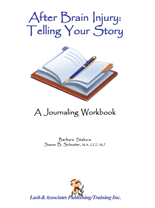
Brain Injury Resources . . . . . “After Brain Injury: Telling Your Story, A Journaling Workbook”

After Brain Injury: Telling Your Story, A Journaling Workbook

by

Barbara Stahura, C.J.F. and Susan B. Schuster, M.A., CCC-SLP

presented by
Donna O’Donnell Figurski

After Brain Injury Telling Your StoryThis workbook by Barbara Stahura and Susan B. Schuster guides survivors of brain injury and blast injury through the powerful healing experience of telling their own stories with simple journaling techniques.

By writing short journal entries, survivors explore the challenges, losses, changes, emotions, adjustments, stresses, and milestones as they rebuild their lives.

Journaling after brain injury helps written and verbal communication skills and provides cognitive retraining for following instruction. It helps promote self awareness as well as recognition of strengths and difficulties after brain injury.

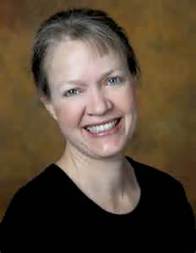
Susan B. Schuster

Susan B. Schuster, M.A., CCC-SLP Author of “After Brain Injury: Telling Your Story – A Journaling Workbook”

It is a tool for planning for the future and discussions with family members. Journaling can be done individually, in a group or with assistance from caregivers or family.

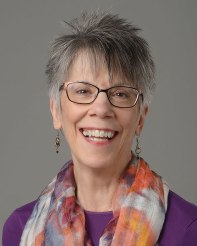
Barbara Stahura, C.J.F. Author of “After Brain Injury: Telling Your Story – A Journaling Workbook”


To locate additional books pertaining to brain injury, please check out Lash & Associates Publishing/Training Inc.


(Clip Art compliments of Bing.)

As I say after each post:

Feel free to leave a comment by clicking the blue words “Leave a Comment” below this post.

Please follow my blog. Click on “Follow Me Via eMail” on the right sidebar of your screen.anim0014-1_e0-1

If you like my blog, click the “Like” button under this post.

If you REALLY like my blog, share it with your friends. It’s easy! Click the “Share” buttons below.

If you don’t like my blog, “Share” it with your enemies. That works for me too!

SPEAK OUT! . . . . . . . . . . . . . Itty-Bitty Giant Steps

SPEAK OUT! Itty-Bitty Giant Steps

presented by

Donna O’Donnell Figurski


Itty-Bitty GIant Steps for BlogSPEAK OUT! Itty-Bitty Giant Steps will provide a venue for brain-injury survivors and caregivers to shout out their accomplishments of the week.

If you have an Itty-Bitty Giant Step and you would like to share it, just send an email to me at neelyf@aol.com.

If you are on Facebook, you can simply send a Private Message to me. It need only be a sentence or two. I’ll gather the accomplishments and post them with your name on my blog approximately once a week. (If you do not want your last name to be posted, please tell me in your email or Private Message.)

I hope we have millions of Itty-Bitty Giant Steps.

Donna O'Donnell Figurski

Donna O’Donnell Figurski – author, caregiver, teacher, actor


Donna O’Donnell Figurski (caregiver) … I’m excited that BrainLine, a major brain-injury organization, accepted my article! It was the first time I published with them. The article, titled “Life Goes On: Finding a Purpose After Brain Injury,” was published on their site Monday.350x350_The_Best_Traumatic_Brain_Injury_Blogs_of_2016_BrainLine


Jennifer Lynn (survivor) … I am legally blind in my right eye due to a relapse post-TBI (traumatic brain injury). Nevertheless, I successfully drove to and from a concert about twenty-five miles away. Originally, a friend was going to drive us, but she found she couldn’t go. I really wanted to see Mandisa for her “Overcomer” song. Mandisa

(It could be the theme song for survivors.) I was able to convince my mom to come with me. race-car-driver-clipart-driving-clip-art1Originally, she was going to drive us back when it became dark. However, when we left the venue, I said I could drive – and I did! All the huzzahs!


YOU did it!

Congratulations to contributors!

(Clip Art compliments of Bing.)

(Photos compliments of contributors.)

As I say after each post:anim0014-1_e0-1

Please leave a comment by clicking the blue words “Leave a Comment” below this post.

Feel free to follow my blog. Click on “Follow” on the upper right sidebar.

If you like my blog, share it intact with your friends. It’s easy! Click the “Share” buttons below.

If you don’t like my blog, “Share” it intact with your enemies. I don’t care!

Feel free to “Like” my post.

SPEAK OUT! . . . . . . . . . . . . . . . Faces of Brain Injury . . . . . . . . Shelley Taylor and her daughter, Taylor Trammell (survivors)

SPEAK OUT! Faces of Brain Injury

Shelley Taylor and her daughter, Taylor Trammell (survivors)

presented by

Donna O’Donnell Figurski

Brain Injury is NOT Discriminating!

bigstock-cartoon-face-vector-people-25671746-e1348136261718It can happen to anyone, anytime, . . . and anywhere.

The Brain Trauma Foundation states that there are 5.3 million people in the United States living with some form of brain injury.

On “Faces of Brain Injury,” you will meet survivors living with brain injury. I hope that their stories will help you to understand the serious implications and complications of brain injury.

The stories on SPEAK OUT! Faces of Brain Injury are published with the permission of the survivor or designated caregiver.

If you would like your story to be published, please send a short account and two photos to me at neelyf@aol.com. I’d love to publish your story and raise awareness for Brain Injury.

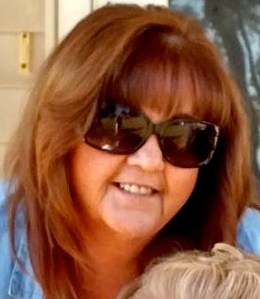
Shelley Taylor and her daughter, Taylor Trammell (survivors)

Taylor, Shelley survivorValentine’s Day 2010 would turn into a complete game-changer – a day we will never forget. It’s a day I’ve documented so, if the day comes when my memory is gone, I can always reflect back on God’s goodness and mercy. Following is my account of the night we were poisoned. God provided the most beautiful second chance.

We were experiencing a “Texas Winter” and had received about six inches of snow. We had been without power for three days. On day 3, we ran a generator in the driveway, near our garage. The garage door and windows were open. The Fire Chief later told us that, since it was so cold and there was no wind, the carbon monoxide gas probably just settled. Instead of blowing away, it just crept back into the house via the eaves.

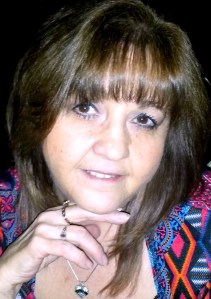
Trammell, Taylor Survivor 050617

Taylor Trammell – Brain Injury Survivor

Taylor (my daughter; 13 at the time) and I had gone to bed. She told us that someone had called her name and she was trying to get up to see who it was. She got up, fell face-first into the wall, collapsed and crawled out of her bedroom, shimmied up the wall, and collapsed again. The thud of Taylor falling on the concrete floor is what woke me up. Charlie (her dad and my ex-husband) heard this as well from the living room. We went to the hallway and found Taylor passed out and lying on her face. We couldn’t get her to respond! Charlie sent me for the flashlight that was by my bed. On my way, I felt like I was not right either. I got the flashlight and ran back to the hall so I could get to Charlie to let him know I wasn’t OK. I knew that if I collapsed in the bedroom, he wouldn’t know to come for me.

Everything was spinning out of control, and I was experiencing the worst feelings I had ever had! When I turned the corner to the hallway, I collapsed face-first (without using my hands or arms to brace myself). I fell onto the metal flashlight and severely cut my forehead. I told Charlie I felt blood running down my face. He looked at me with the flashlight and said he had to get me to the hospital! My head began to pulse blood. Taylor, I, and the walls were covered in blood. Meanwhile, Taylor was in and out of consciousness. I was having convulsions and banging my face into the concrete floor. Charlie then called 9-1-1.

First to respond were the police. Charlie told them we had no power, so they used their flashlights. They immediately saw my blood and the bloody handprints in our hallway, and Charlie had my blood on him as well. Immediately they accused Charlie of a crime. Shortly thereafter, the fire department arrived, and luckily Charlie knew one of the firefighters who quickly came to Charlie’s defense. Charlie told the Fire Chief of the generator, and immediately the Chief went to the truck to get the carbon monoxide detector. Even at the entrance to our driveway, the readings on the detector began to rise quickly. The readings went higher as he got closer to the house. Upon reaching the door, he called for his crew to exit the house and got Charlie, Taylor, and our dogs out as well. Paramedics were left inside with me to get me stable enough for transport to the hospital. Eventually I left by ambulance, and Charlie and Taylor left in Charlie’s truck.ambulance6

At Mansfield Methodist Hospital, Taylor’s and my blood gases were checked. They were found to be “through the roof.” We were then transported to Dallas Methodist to use their hyperbaric chamber. First, my head injury was closed up with fifteen stitches, and I had to have a CT (computerized tomography) scan to make sure I was transportable. Off we went in the ambulance. Upon arriving at Dallas Methodist, a doctor explained the procedures for going into the hyperbaric chamber. (I was trying to comprehend all of this while the carbon monoxide was still doing damage to my brain!) We found out that the family that had just been in the chamber before us had all died, except the father – not comforting!

When we came home, my sister Kimberley moved in for approximately a month. Physically, my head was healing, but, mentally, I was left with a traumatic brain injury. I literally started over with kindergarten flashcards (I would look at an apple and say “library”), and my friends and family completed most of my sentences. My neurologist was a great comfort to me as I struggled with memory and cognitive skills.

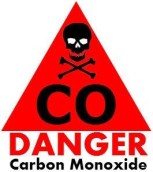
My neurologist also told me that people don’t survive what we went through. He said they really don’t know how to treat me. He said carbon monoxide goes into your brain and destroys whatever it attaches to, and we have no control over what functions are affected.CO-Danger

Taylor and I struggle daily, but some recovery continues every day for both of us. Taylor is young, and healing has come differently for her. Memory and migraines are big battles she continues to face.

I’ve come a long way, but I continue to deal with balance, breathing, vision, and memory. It seems I have fallen more times than I’ve stood. By far, my greatest challenge is breathing. Every day, at some point I struggle to breathe. Coughing has become my norm.

Memory LossMy memory is horrible at times, and I’ve lost so many precious memories. Taylor and I have a routine when it comes to trying to remember things. We just look at each other and ask, “Did we have fun?” The one who remembers says to the other, “Yes, we had fun!” That’s all that matters.

What a Valentine’s Day! Taylor saved us by miraculously waking. We endured my bloody head injury which required fifteen stitches, a concussion, a CT scan, blood gas analyses, ambulance rides, and approximately three-hour “dives” in a hyperbaric chamber. (And, we’re both very claustrophobic!) Nothing says “I love you” like a brain injury.

To be alive is amazing, in whatever capacity! God is good – no, great!


Thank you, Shelley Taylor and Taylor Trammell, for sharing your story.

Surviving Brain Injury - Stories of Strength & InspirationNOTE 1:

Taylor Trammell and her mother, Shelley Taylor, are contributing authors in “Surviving Brain Injury: Stories of Strength & Inspiration,” edited by Amy Zellmer. Shelley and Taylor’s story is titled, “Our Story of Poisoning — and of Grace.” It can be found in Chapter 75 on page 299.

NOTE 2:

My story, “Nightmare in the Disability Lane,” can be found in Chapter 29 on page 114 of the same book, “Surviving Brain Injury: Stories of Strength & Inspiration,” edited by Amy Zellmer.

(Clip Art compliments of Bing.)

(Photos compliments of contributor.)

As I say after each post: Please leave a comment by clicking the blue words “Leave a Commentanim0014-1_e0-1 below this post.

Feel free to follow my blog. Click on “Follow” on the upper right sidebar.

If you like my blog, share it intact with your friends. It’s easy! Click the “Share” buttons below.

If you don’t like my blog, “Share” it intact with your enemies. I don’t care!

Feel free to “Like” my post.

Survivors SPEAK OUT! Barbara Asby

Survivors SPEAK OUT!  Barbara Asby

presented by

Donna O’Donnell Figurski

Barbara Wilson Asby

Barbara Wilson Asby – TBI Survivor


1. What is your name? (last name optional)

Barbara Asby

2. Where do you live? (city and/or state and/or country) Email (optional)

Norfolk, Virginia, USA

3. On what date did you have your brain injury? At what age?

My brain injury happened over seven years ago. I was 41 years old.

4. How did your brain injury occur?

Pesticide Toxic Exposure

5. When did you (or someone) first realize you had a problem?

Some symptoms occurred during the first couple of days during the exposure. Symptoms gradually got worse after the following two weeks and beyond.

6. What kind of emergency treatment, if any, did you have?

hospital5I went to the Emergency Room after a week, because of shortness of breath and cognitive issues. They found an enlarged lymph node in my lung. This finding was followed up by other specialists. I had MRIs (magnetic resonance imaging), an EEG (electroencephalogram), a SPECT (single-photon emission computed tomography) scan (a test that uses a radioactive substance and a special camera to determine how an organ is functioning), and other tests, to name a few.

6. Were you in a coma? If so, how long?

No

7. Did you do rehab? What kind of rehab (i.e., inpatient or outpatient and occupational and/or physical and/or speech and/or other)?

Yes. I had occupational, speech, and vestibular therapies.

How long were you in rehab?

My therapy has been on and off from 2010 to the present.

8. What problems or disabilities, if any, resulted from your brain injury
(e.g., balance, perception, personality, etc.)?

I have problems with balance, perception, cognitive abilities, memory, organizational skills, and word retrieval. I am plagued with fatigue, headaches, and partial seizures.tired-woman

9. How has your life changed? Is it better? Is it worse?

I am now disabled and unable to work in my former job as an IRS (Internal Revenue Service) agent.  (This injury happened on the job.) My life is better because I realize how important life really is. It’s worse because I realize what I took for granted.

10. What do you miss the most from your pre-brain-injury life?

I miss the ability to work and have a career. I really miss not having a better memory, more energy, and the organizational and multitasking skills that I once had.

11. What do you enjoy most in your post-brain-injury life?

I am aware of the beauty that life has to offer. I see the good in life and in people.

12. What do you like least about your brain injury?

I dislike the fact that others aren’t willing to educate themselves about TBI (traumatic brain injury) or try to understand what others go through. People lose interest over time – they do not want to hear about your problems or your pain anymore. I think this is the greatest suffering from my TBI.education-clipart-9c4y5zycE-1

13. Has anything helped you to accept your brain injury?

It’s been over seven years, and I am still trying to accept my brain injury. It still changes – it’s hard to accept when it does not stay stable. Therefore, I can’t accept something when each day is different.

14. Has your injury affected your home life and relationships and, if so, how?

Yes. It has ended my marriage.

15. Has your social life been altered or changed and, if so, how?

Yes. Due to the balance and sensory issues, my social life has been greatly affected.

16. Who is your main caregiver? Do you understand what it takes to be a caregiver?

I am my caregiver.

17. What are your plans? What do you expect/hope to be doing ten years from now?

My future plan is to write a memoir. I also want to volunteer to help others who have a brain injury.

18. Are you able to provide a helpful hint that may have taken you a long time HistoryMissionusewhereveriStock_000017322294Smallto learn, but which you wished you had known earlier? If so, please state what it is to potentially help other survivors with your specific kind of brain injury.

My advice is to look for support-groups and to try to reach out to others. Also, educate yourself with brain injury material.

20. What advice would you offer to other brain-injury survivors? Do you have any other comments that you would like to add?

Just reach out to other survivors – we are a big family. We understand – when others do not. TBI survivors – like other survivors – are strong. God kept you on this earth for a reason. Keep your chin up. Look to others for strength, and give others strength when it’s needed. BIG HUGS.

If you would like to be a part of the SPEAK OUT! project, please go to TBI SPEAK OUT! Survivors Interview Questionnaire for a copy of the questions and the release form.

(Clip Art compliments of Bing.)

As I say after each post: Please leave a comment by clicking the blue words “Leave a Commentanim0014-1_e0-1 below this post.

Feel free to follow my blog. Click on “Follow” on the upper right sidebar.

If you like my blog, share it with your friends. It’s easy! Click the “Share” buttons below.

If you don’t like my blog, “Share” it with your enemies. I don’t care!

Feel free to “Like” my post.
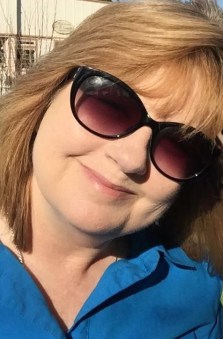
Survivors SPEAK OUT! Bonnie Weikel

Survivors SPEAK OUT!  Bonnie Weikel

presented by

Donna O’Donnell Figurski

Bonnie Weikel – Brain Injury Survivor

1. What is your name? (last name optional)

Bonnie Weikel

2. Where do you live? (city and/or state and/or country) Email (optional)

New Bethlehem, Pennsylvania, USA

3. On what date did you have your brain injury? At what age?

I was 47. My brain hemorrhage was in 2004.

4. How did your brain injury occur?

I had a subarachnoid hemorrhage (blood leaking into the space between two of the membranes that surround the brain; mine was from a ruptured brain aneurysm). I always like saying the correct medical terminology because I can actually remember how to spell it. For the majority of the time, I refer to it as “My head blowing up.” I also had a stroke during my craniotomy.

5. When did you (or someone) first realize you had a problem?

I was aware of my problems after I woke up from surgery. (The doctor wasn’t able to guarantee what kind of shape I would be in if I survived the surgery.)

6. What kind of emergency treatment, if any, did you have?

First, the hospital ruled out a stroke, and, because I complained of “the headache from hell,” they did a CT (computerized tomography) scan and found the bleed on my brain. They packed me up and transported me to Allegheny General Hospital in Pittsburgh, where I had my brain surgery done.

operating-theatre-illustration-surgeon-patient-hospital-41734906.jpg7. Were you in a coma? If so, how long?

No, thank God. I recognized everyone when I came out of surgery. I just couldn’t remember who was there to visit from one minute to the next. My daughter took pictures of me with everyone who came to see me.

8. Did you do rehab? What kind of rehab (i.e., inpatient or outpatient and occupational and/or physical and/or speech and/or other)? How long were you in rehab?

I was in inpatient therapy for a month and then in outpatient therapy for about five weeks. I had to learn to do everything all over again – starting with feeding and dressing myself.

9. What problems or disabilities, if any, resulted from your brain injury
(e.g., balance, perception, personality, etc.)?

I have short-term memory loss and issues with balance, vision, and hearing. I have worked very hard over the past ten years to get to where I am today, and I did it all by myself.

10. How has your life changed? Is it better? Is it worse?

My life has changed dramatically. It is better. I love the “new” me much better than the old version. I also found out who my true friends are.

11. What do you miss the most from your pre-brain-injury life?

I did lose one thing I used to love to do. I used to sew for hours. I had my own sewing business. I made anything from window treatments to wedding gowns, and I was good at it. I lost all desire to sew; it is no longer something I love to do. It is more of a chore.

12. What do you enjoy most in your post-brain-injury life?

I like that I am back in school. I am taking college courses online. It is the biggest challenge I have taken on since the TBI (traumatic brain injury).

13. What do you like least about your brain injury?

I have an invisible disability, and some people think I am faking it and living off the system.

14. Has anything helped you to accept your brain injury?

Yes. Changing my attitude about people and life in general has helped. One day, I decided I could sit and cry for the rest of my life about all that I have lost, or I could be happy with my new life and live it.

15. Has your injury affected your home life and relationships and, if so, how?

My home life has been affected, but in a positive way.

I take pride in myself and in my accomplishments. Relationship-wise, it’s been a curse.

I haven’t been able to find people who can deal with my issues because they just do not understand. I am thankful they don’t understand how life is for a TBI survivor because, if they did, it would mean they also suffered a TBI. (The only way anyone can truly understand what life is like for a survivor is to live it themselves.)

16. Has your social life been altered or changed and, if so, how?

Yes. My social life has changed a lot. During the first year, I found out who my real friends are. Now I have a small circle of friends who I know I can trust. I go out dancing once a week with friends. I do this because I still can.

17. Who is your main caregiver? Do you understand what it takes to be a caregiver?

After living with my daughter for about a year, I am now on my own. I do everything myself – I am even back to driving. I will say this much: I thank God for my GPS! Ha, Ha! Yes, I understand what it is to be a caregiver, and it takes a special kind of patience for a caregiver of someone with a TBI.

18. What are your plans? What do you expect/hope to be doing ten years from now?

I am working on a Communications degree and changing to Community Service and Social Work. My goal is to work with other survivors as a life-coach/advocate. I am getting better grades now than I ever did in high school. I can only handle two classes a semester, so it will take twice as long as normal to get my degree. But, I will see it through to the end.

19. Are you able to provide a helpful hint that may have taken you a long time to learn, but which you wished you had known earlier? If so, please state what it is to potentially help other survivors with your specific kind of brain injury.

It didn’t take me as long as it does for some others, but learning to love your new self and accept your new life is, I believe, the secret to moving on. Love and acceptance of yourself is the base you can grow from.

20. What advice would you offer to other brain-injury survivors? Do you have any other comments that you would like to add?

I highly recommend that brain-injury survivors seek out other survivors. It was such an awesome feeling the first time I spoke to someone who “Gets it.” It was like someone turned my light back on. I felt free and almost normal again. I was no longer alone. I have a motto I live by. It was written from one of the first survivors I met – in a Yahoo health and wellness chatroom. I think he went by “Rhino.” Anyway, here it is. “Mourn what you lost. Use what you have. Anyone can quit.” My strongest advice to other survivors is “NEVER GIVE UP!”


If you would like to be a part of the SPEAK OUT! project, please go to TBI SPEAK OUT! Survivors Interview Questionnaire for a copy of the questions and the release form.

(Clip Art compliments of Bing.)

As I say after each post: Please leave a comment by clicking the blue words “Leave a Commentanim0014-1_e0-1 below this post.

Feel free to follow my blog. Click on “Follow” on the upper right sidebar.

If you like my blog, share it with your friends. It’s easy! Click the “Share” buttons below.

If you don’t like my blog, “Share” it with your enemies. I don’t care!

Feel free to “Like” my post.


Survivors SPEAK OUT! Jordan Emerson

Survivors SPEAK OUT!  Jordan Emerson

presented by

Donna O’Donnell Figurski

jordan-emerson-2

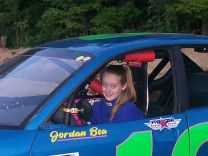
Jordan Emerson – Brain Injury Survivor – Race Car Driver

1. What is your name? (last name optional)

Jordan Emerson

2. Where do you live? (city and/or state and/or country) Email (optional)

Windham, Maine, USA

3. On what date did you have your brain injury? At what age?

I had my brain injury at 13 years young.

4. How did your brain injury occur?dan Emerson

Jordan Emerson - Brain Injury Survivor - Race Car Driver

Jordan Emerson – Brain Injury Survivor – Race Car Driver

I was driving a fully-safety-equipped racecar.

5. When did you (or someone) first realize you had a problem?

When I was unconscious

6. What kind of emergency treatment, if any, did you have?

I was given a trach. I had emergency procedures for a cracked left hip, brain stem, seizures, a crushed left arm, paralyzed vocal chords, and paralyzed stomach.

7. Were you in a coma? If so, how long?

Jordan Emerson - Brain Injury Survivor

Jordan Emerson – Brain Injury Survivor

Yes. Almost 3 months

8. Did you do rehab? What kind of rehab (i.e., inpatient or outpatient and occupational and/or physical and/or speech and/or other)?

I have occupational and physical therapies as an outpatient. I was also helped by a speech-language pathologist.

How long were you in rehab?

I’m still attending OT and PT as an outpatient.

9. What problems or disabilities, if any, resulted from your brain injury
(e.g., balance, perception, personality, etc.)?

I still have awful trouble going to the bathroom. Being in crowded areas makes me tired. (It’s “overstimulation,” but instead of overstimulation, it feels like a “draining of my energy.”)

10. How has your life changed? Is it better? Is it worse?

My life is neither better nor worse. It’s just different.

11. What do you miss the most from your pre-brain-injury life?

I miss being able to run around outside with my dogs.

th-112. What do you enjoy most in your post-brain-injury life?

I like that everybody seems to offer to help more often.

13. What do you like least about your brain injury?

I dislike that I’ll be thinking so hard about something, and then, *poof* it’s gone.

14. Has anything helped you to accept your brain injury?

Talking with other survivors has helped.

15. Has your injury affected your home life and relationships and, if so, how?

Before I developed a filter, I said things to friends, and over time, those friends disappeared.

16. Has your social life been altered or changed and, if so, how?

Yes. I have lost friends.friends

17. Who is your main caregiver? Do you understand what it takes to be a caregiver?

My mom is my main caregiver. I’m thankful for her every day.

18. What are your plans? What do you expect/hope to be doing ten years from now?

I plan to be driving, living in my own apartment, married, etc.

19. Are you able to provide a helpful hint that may have taken you a long time to learn, but which you wished you had known earlier? If so, please state what it is to potentially help other survivors with your specific kind of brain injury.

Hard work really does pay off.

20. What advice would you offer to other brain-injury survivors? Do you have any other comments that you would like to add?

Jordan Emerson and Mom & Dad

Jordan Emerson – Brain Injury Survivor and Mom & Dad

I owe a lot of my journey to my loving parents – I couldn’t have done this without them. I ♡ them!
Please feel free to reach out to me (#Believe). I enjoy helping whenever I am able. Believe!


(Disclaimer: The views or opinions in this post are solely that of the interviewee.)

If you would like to be a part of the SPEAK OUT! project, please go to TBI SPEAK OUT! Survivors Interview Questionnaire for a copy of the questions and the release form.

(Clip Art compliments of Bing.)

As I say after each post: Please leave a comment by clicking the blue words “Leave a Commentanim0014-1_e0-1 below this post.

Feel free to follow my blog. Click on “Follow” on the upper right sidebar.

If you like my blog, share it with your friends. It’s easy! Click the “Share” buttons below.

If you don’t like my blog, “Share” it with your enemies. I don’t care!

Feel free to “Like” my post.
TBI Tales . . . . . . . . . . . . . . . . Twelve Years, But Who’s Counting?

Twelve Years, But Who’s Counting?

by

Donna O’Donnell Figurski

1242232191169820850212_white,_green_rounded_rectangle.svg.med.pngTwelve years! Twelve years ago today, I came as close as a breath to losing my husband and best friend, David. While exercising (a thing he did every day to stay in shape), David did thirteen chin-ups, one more than he had done every other day. That was the proverbial “straw that broke the camel’s back,” or in David’s case, the “chin-up that caused his subarachnoid hemorrhage.” That day, as I rode with him in the ambulance to the hospital, I never realized what lay ahead for us. I never dreamed that this blip would be life-altering. I thought we’d be home by the end of the day, carrying on with life as usual. I was wrong!

david-jareds-wedding-060513

David H. Figurski, Ph.D. – Brain Injury Survivor

David remained in the hospital in the Neuro-Intensive Care Unit (NICU) and the step-down unit at Columbia Presbyterian Hospital (now New York Presbyterian Hospital) for three weeks. While he was there, he was treated to two more brain surgeries – one for an aneurysm and the other for an arterial venous malformation (AVM). He then became a guest at a local rehab hospital for another two months, until insurance wrongly said he was fine to go home.th-1

I am grateful that David is still with me. He wasn’t expected to be. Each surgeon gave me little hope that he would survive any of his surgeries. I’m glad that David proved them all wrong. I’m glad that we have had twelve more years together, and I hope to spend many more with this man whom I have loved since I was sixteen years old.

animated-book

Hopefully, in the sometime future, you will be able to read David’s whole story in my book-in-manuscript, titled “Prisoners Without Bars: A Caregiver’s Tale.”

As I say after each post: Please leave a comment by clicking the blue words “Leave a Commentanim0014-1_e0-1 below this post.

Feel free to follow my blog. Click on “Follow” on the upper right sidebar.

If you like my blog, share intact it with your friends. It’s easy! Click the “Share” buttons below.

If you don’t like my blog, “Share” it intact with your enemies. I don’t care!

Feel free to “Like” my post

diemodi jewelry

uniquely hand-crafted jewelry by donna

Welcome to Harmony Kent Online

The home of all things books

Pete Springer

Passionate Teacher and Future Children's Author

HOPE TBI

Helping Other People Excel - To Be Independent

For the Love of Books, Old and New

Katie Fischer, Writer and Reader of Stories

Charlie Bown

Children's Author

Jessica Hinrichs

“We write to taste life twice, in the moment and in retrospect.” ― Anais Nin

VIVIAN KIRKFIELD - Writer for Children

Picture Books Help Kids Soar

Mindy’s Writing Wonderland

For authors, parents, teachers & everyone who loves children’s books.

Kaitlyn Leann Sanchez

Literary Agent

Surviving Traumatic Brain Injury

TBI - Survivors, Caregivers, Family, and Friends

The Care Factor

Loving someone with a Traumatic Brain Injury

Brain Injury Support Group of Duluth-Extension

Brain Injury Information and SUPPORT

Brain Aneurysm Global Insight

Brain Aneurysm, cerebral hemorrhaging, hemorrhage stroke