SPEAK OUT! NewsBit . . . . . . . Brain Research in Mice May Lead to the Treatment of PTSD and Depression in Humans
Brain Research in Mice May Lead to the Treatment of PTSD and Depression in Humans
presented by
Donna O’Donnell Figurski
A young Boston University professor, Steve Ramirez, a neuroscientist, has identified cells of a mouse brain that enhance the positive or negative  feelings of a memory.
Stimulating cells that enhance positive feelings can suppress or deaden the trauma associated with a bad memory. In contrast, stimulating cells that enhance negative feelings makes a bad memory feel worse.
The hippocampus in both the mouse brain and the human brain is the region of the brain responsible for storing memories, including all the details and emotions associated with them. Each memory activates a unique combination of cells of the hippocampus. Some of the cells affect emotion and behavior.
 Ramirez and his collaborators (including first author Briana Chen of Columbia University) used genetically engineered mice whose neurons glow when they’re activated. Those cells can later be artificially activated with laser light. The team found that a negative memory (like getting a mild electric shock to the feet) activates cells at the bottom of the hippocampus. A positive memory (like being in the presence of a female mouse) activates cells at the top of the hippocampus.
They then were able to stimulate those same cells with a laser. When the bottom cells of the hippocampus were activated, the mouse behaved (freezing and/or avoidance behavior) as if it were recalling the negative memory of the shock. Stimulation of the cells in the top region of the hippocampus reduced the avoidance response.
This is basic research, but it is a significant first step in the eventual development of treatments for PTSD (post-traumatic stress disorder), anxiety, and depression. (Full story)
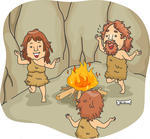
(Clip Art compliments of Bing.)
As I say after each post: Please leave a comment by clicking the blue words “Leave a Comment” below this post.
Feel free to follow my blog. Click on “Follow” on the upper right sidebar.
If you like my blog, share it (intact) with your friends. It’s easy! Click the “Share” buttons below.
If you don’t like my blog, “Share” it (intact) with your enemies. I don’t care!
Feel free to “Like” my post.


 know. I have Severe Anxiety Disorder and huge panic attacks. Strangers are a HUGE trigger; letting them into my home is even bigger! I handled it all – no anxiety; no nothing!
 … I always screened the messages, so I stopped before I closed the door and listened. My skin prickled as I heard a familiar voice. Dr. Bradofsky from Radburn was leaving a message. He said not to worry—everything was okay, which, of course, meant I would worry and that everything was not okay. Doctors rarely call with good news. I dashed up the stairs, snatched the phone from the cradle, and identified myself.
 didn’t appear to be serious, he expected a large goose egg on David’s right temple. He said he would observe him. He also had arranged for an ambulance to transport David to an imaging facility the following day for a CT scan to rule out additional trauma. I “calmly” accepted his news, told him I was on my way, and hung up.
 and prayed that the expressway would be rid its usual overwhelming commuter traffic that morning. I underwent a minor breakdown. By the time I reached the hospital, I was composed and ready to handle the situation …

 considered impolite to peer into someone else’s hearth. That’s the way it felt in the waiting room too …
 for the ride back to his room, he licked his lips and said, “Mmm, that was good!” He still had traces of the barium
  stuck to his lips. Meghan, Dave, and I burst into laughter. Meghan said she had never heard anyone describe the barium-laced foods as tasty. David laughed too. I guess when you haven’t eaten real food for a while, anything tasted good …


 Raising Awareness of Traumatic Brain Injury - one view at a time. Thanks for visiting my blog
 Surviving Traumatic Brain Injury
Recent Comments