TBI – Survivors, Caregivers, Family, and Friends

Posts tagged ‘Brain Injury’

On The Air: . . . . . . . . . . . . . “Another Fork in the Road:” . . . . Panel: Behavioral & Emotional Problems After Brain Injury

On The Air: Brain Injury Radio “Another Fork in the Road”

Panel: Behavioral & Emotional Problems After Brain Injury with

Lisa Dryer and GeorgeAnna Bell

presented

by

Donna O’Donnell Figurski

images-1One of the most difficult aftereffects of brain injury is losing oneself. Depending on the injury and which part of the brain is impacted determines the type of emotional and behavioral change in one’s personality. A person who was agreeable, complacent, reasonable, and calm before the injury may change drastically to one who is violent, depressive, or struggles with anger management. These effects are not easy for others to understand – BUT, have you thought about how difficult it must be for the survivor?

Dryer, Lisa Survivor

Lisa Dryer – Survivor & BIRN Host


My panel, M.S. (Multiple Sclerosis) survivor, Lisa Dryer, and brain injury survivor, GeorgeAnna Bell, will join me to discuss this sensitive topic.

03 Bell, GeorgeAnna, Bell copy

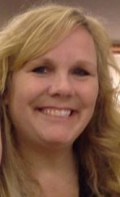
GeorgeAnna Bell – Survivor

See you “On the Air!”

On The Air: Brain Injury Radio “Another Fork in the Road” Panel: Behavioral & Emotional Problems After Brain Injury

(Clip Art compliments of Bing.)

As I say after each post: Please leave a comment by clicking the blue words “Leave a Commentanim0014-1_e0-1 below this post.

Feel free to follow my blog. Click on “Follow” on the upper right sidebar.

If you like my blog, share it intact with your friends. It’s easy! Click the “Share” buttons below.

If you don’t like my blog, “Share” it intact with your enemies. I don’t care!

Feel free to “Like” my post.

Survivors SPEAK OUT! . . . . . . Heather Love Leffel

Survivors SPEAK OUT! Heather Love Leffel

presented

by

Donna O’Donnell Figurski

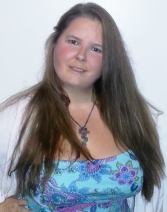
Leffel, Heather Love MS survivor

Heather Love Leffel – Multiple (M.S.) Survivor

1. What is your name? (last name optional)

Heather Love Leffel

2. Where do you live? (city and/or state and/or country) Email (optional)

Toledo, Ohio, USA     heatherleffel419@gmail.com

3. On what date did you have your brain injury? At what age?

I have multiple sclerosis (MS), which essentially is brain damage. I had my first symptom at 19 years old.

4. How did your brain injury occur?

Well, my mother and twin sister also have MS. I do believe MS has a genetic aspect to it, but as of now, they don’t know the cause of MS.

5. When did you (or someone) first realize you had a problem?

I first noticed my MS in 1999. I was at my son’s T-ball game. I looked into the sky, and suddenly my left eye saw white flashes, and a black lace went over my vision. This was my mother’s first symptom too. I knew in my heart I had MS.

6. What kind of emergency treatment, if any, did you have?

None. I went directly into denial without passing GO (LOL) (a Monopoly reference). I didn’t want to know I had MS, so I ignored every symptom I had. I was in complete denial.

7. Were you in a coma? If so, how long?

No, I was not.

8. Did you do rehab? What kind of rehab (i.e., inpatient or outpatient and occupational and/or physical and/or speech and/or other)? How long were you in rehab?

I have done a brief treatment of physical therapy for my balance and walking, but I stopped going. I shouldn’t have, but I did.

9. What problems or disabilities, if any, resulted from your brain injury
(e.g., balance, perception, personality, etc.)?

Oh my symptoms list is a mile long! I can name some major ones. I have issues with balance and memory. I have nerve pain that results in a burning limbs sensation. I also have excruciating headaches, blurred vision, vertigo, the “MS hug” (a tightening around the waist), spasticity, speech issues occasionally, and more.

10. How has your life changed? Is it better? Is it worse?multiple_sclerosis_believe_dream_hope_sticker-r9050a576f9804d99a628b40913eb66e5_v9waf_8byvr_512

In some ways, my life is better, and, in many ways, it’s worse. I have met some of the most amazing and wonderful people through this disease. I’ve also learned to slow down and appreciate life, but MS has taken so much from me. I lost my job, my fiancé, friends, financial stability, and the energy needed to be the mother I always was.

11. What do you miss the most from your pre-brain-injury life?

I miss working and having the money to fully provide for my children all the things I needed and wanted to.

gg6402838012. What do you enjoy most in your post-brain-injury life?

I most enjoy spending any time I can with my sons and also being an MS advocate.

13. What do you like least about your brain injury?

I least like what my having MS has done to my family, and I dislike the fear I have daily that I’ve passed the monster to my children.

14. Has anything helped you to accept your brain injury?

Honestly, acceptance happened fast for me – maybe because I knew in my heart for so many years that I had it, but was denying it. (I showed my first symptoms in 1999, but I didn’t break down and see a doctor until 2012.)

15. Has your injury affected your home life and relationships and, if so, how?

Yes. I lost my fiancé. The first year after my diagnosis was challenging. I had to stop working just three months after my diagnosis. That crushed me. I was going through depression. I was also having issues with trusting my fiancé, since he lived in another state due to the military. Long story short – my trust issues were justified. He cheated on me, got the girl pregnant, and secretly married her while with me (one year after my diagnosis and after seven and a half years together).

16. Has your social life been altered or changed and, if so, how?

Oh my, yes! I have no social life. The only social life I have is Facebook really. I’ve definitely isolated myself.

17. Who is your main caregiver? Do you understand what it takes to be a caregiver?

I am my own caregiver at the moment. My 18-year-old son helps me a lot, but I wouldn’t call him my caregiver. I absolutely understand what it takes to be a caregiver. It’s a hard and selfless thing for someone to do. Caregivers deserve the utmost respect.

18. What are your plans? What do you expect/hope to be doing ten years from now?

I hope to be married to a good man – someone who can look past my MS and see me for me. I hope to have a grandbaby. I hope my son is happily married and has an enjoyable life. I hope my youngest is enjoying college and living life to the fullest. Most of all, I hope and pray that neither of my children has multiple sclerosis.

19. Are you able to provide a helpful hint that may have taken you a long time to learn, but which you wished you had known earlier? If so, please state what it is to potentially help other survivors with your specific kind of brain injury.

The most helpful thing I can say to you if you have MS is to allow yourself to grieve for the “old” you when you need to. Let it all out, and then pick up the pieces and move forward. You must allow yourself to grieve for who you once were and to grieve when things change because with this disease you are ever-changing. Allow yourself to feel it, and then accept it and continue to be the MS warrior that you are!

58df9ecb6c5b1b58ba8911d21946404420. What advice would you offer to other brain-injury survivors? Do you have any other comments that you would like to add?

My advice to others like me is to speak out. We need to understand that we didn’t choose MS; it chose us! MS is nothing to hide or to be ashamed of; neither is your MS story. To create awareness about this disease, we must speak about it. We must all raise our voices and be heard. One person can make change – it only takes one. Be the difference you want to see!


(Disclaimer: The views or opinions in this post are solely that of the interviewee.)

If you would like to be a part of the SPEAK OUT! project, please go to TBI Survivor Interview Questionnaire for a copy of the questions and the release form.

(Clip Art compliments of Bing.)

(Photos compliments of contributor.)


As I say after each post:

Feel free to leave a comment by clicking the blue words “Leave a Comment” below this post.

Please follow my blog. Click on “Follow Me Via eMail” on the right sidebar of your screen.anim0014-1_e0-1

If you like my blog, click the “Like” button under this post.

If you REALLY like my blog, share it intact with your friends. It’s easy! Click the “Share” buttons below.

If you don’t like my blog, “Share” it intact with your enemies. That works for me too!

SPEAK OUT! . . . . . . . . . . . . . . . . Faces of Brain Injury Charles Ross

SPEAK OUT! Faces of Brain Injury Charles Ross  (survivor)

presented by

Donna O’Donnell Figurski

 Brain Injury is NOT Discriminating!

bigstock-cartoon-face-vector-people-25671746-e1348136261718It can happen to anyone, anytime, . . . and anywhere.

The Brain Trauma Foundation states that there are 5.3 million people in the United States living with some form of brain injury.

On “Faces of Brain Injury,” you will meet survivors living with brain injury. I hope that their stories will help you to understand the serious implications and complications of brain injury.

The stories on SPEAK OUT! Faces of Brain Injury are published with the permission of the survivor or designated caregiver.

If you would like your story to be published, please send a short account and two photos to me at neelyf@aol.com. I’d love to publish your story and raise awareness for Brain Injury.


Charles Ross (survivor)

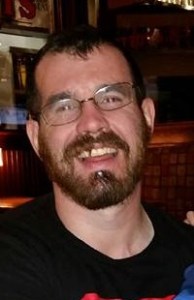
Ross Jr., Charles Survivor 112415 copy

Charles Ross Jr. – Brain Injury Survivor

It has been just over thirty years since I had my traumatic brain injury (TBI) in November 1985. I remember nothing of the accident at all. What I say of the accident is what I learned after the fact. I had the paddles put on me before I got on the helicopter to fly to the larger hospital in St. Louis. The doctors even told my parents they were removing me from Intensive Care to make room for someone who might live. I was in a coma for fifty days. I spent over ten months in the hospital. I was in a wheelchair for one and a half years. And, I had seven summers of surgery to make it to where I can now walk with a cane.

I have severe memory problems. My short-term memory was, and still is, bad. I had been having what I called “spells,” during which I would get a feeling like a chill in my spine. My parents noticed the staring while I was in the hospital. The doctors took me off seizure medicine because they did not believe I was having seizures. I know those spells increased in frequency after that. I could go days with no spells, but other days, I could have hundreds. They usually seemed to last a few seconds, but Mom thought they sometimes lasted longer.

As the spells increased, the feelings I had changed too. I began to notice a feeling like I needed to have a bowel movement, but I never did that, I remember. I would get extremely hot, and sometimes the sweat would just pour out of me for a few seconds. Mainly at night, I would wake with a spell and have a horrible taste in my mouth. After I got my license back, I sometimes had these spells while I was driving. I could have them in class or while I was watching TV or walking or sleeping – it did not matter. I never noticed anything that triggered them. Four years after the accident, in my sleep on New Year’s Eve night 1989, I had a tonic-clonic (grand mal) seizure. It was determined that the “spells” were petit mal seizures. Treatments finally began for traumatically incurred epilepsy, which the doctor finally said I had.

OLYMPUS DIGITAL CAMERA

After I started on medication, the spells decreased dramatically. I would still have one, and my neurologist would increase my dose. That helped for some time, but the spells never stopped completely. Even though I had severe memory and physical problems along with the seizures, I managed to get two Associate Degrees over nine years. However, because of my memory problems, I failed to get my Bachelor’s Degree. I started working with my last degree, but the stress was too powerful to maintain the job. I had many jobs though, mainly contract jobs without benefits.

I began to have blank spells. Maybe I had them before, but I never remembered them or realized it. Why I knew I had them was because I was driving again and I would have an accident in which I hit someone in the back end. I would come out of any blank spell immediately, but I never remembered what had happened, other than that I hit someone. I figured that they hit the brakes quickly in rush-hour traffic and I could not stop.

Over the years, I would have an accident every year or two. Finally, I realized that, before each accident, I had that strange feeling also. So, then I knew what the real cause of the accidents was. After fifteen years of work, I lost my job. I moved in with my parents again. The new neurologist started me on a second medication, and that helped. It did not stop the spells though.

Ross, Charles Survivor

Charles Ross Jr. – Brain Injury Survivor

I moved again and got another neurologist. She put me on two more medicines. One was the same brand, just a different strength. That medicine with such a heavy dosage made me have mood swings sometimes. Altogether, it was over twenty-two years after treatment began and twenty-seven years after the accident before the right mixture was found and I felt in control again. I moved back in with my parents again in late 2014. I helped my parents the best I could with my three hospital stays and two operations. I drove my dad for cancer treatments before his death in September 2015. I am with my mom now. We help each other during the grieving process.

I hope my story serves as a source of strength, encouragement, and determination for others with TBIs to never give up. I was never supposed to live! If I did, they said I would be no more than a being in a chair, unable to do anything for myself.

Never Give UpI am writing my story, I drive, I went to college, I got two Associate degrees, and I worked for fifteen years. There is so much more, but anyone who reads this story should know that anything is possible. You may not accomplish as much as I did, or you may accomplish more. Just know that you should never give up on yourself. Feel proud of your body. If they had been in your shoes, they could never have done what you did, and that is to survive! Be proud!


(Clip Art compliments of Bing.)

(Photos compliments of contributor.)

As I say after each post: Please leave a comment by clicking the blue words “Leave a Commentanim0014-1_e0-1 below this post.

Feel free to follow my blog. Click on “Follow” on the upper right sidebar.

If you like my blog, share it intact with your friends. It’s easy! Click the “Share” buttons below.

If you don’t like my blog, “Share” it intact with your enemies. I don’t care!

Feel free to “Like” my post.


Survivors SPEAK OUT! Evan Powers

Survivors SPEAK OUT! Evan Powers

presented

by

Donna O’Donnell Figurski


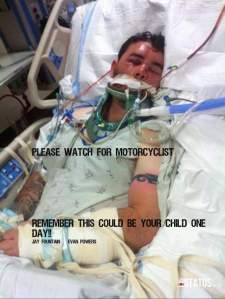
Powers, Evan Joseph Motorcycle

Evan Powers – Brain Injury Survivor

1. What is your name? (last name optional)

Evan Powers

2. Where do you live? (city and/or state and/or country) Email (optional)

Fort Mill, South Carolina, USA

3. On what date did you have your brain injury? At what age?

My brain injury happened on August 30th, 2014. I was 31.

4. How did your brain injury occur?

I was riding my Harley V-Rod Muscle with friends, and I was hit by an SUV. The driver, in a rush to buy smokes, turned illegally left and hit me. I died, was revived, fell into a coma, and “received” a traumatic brain injury (TBI) (diffuse axonal injury and brain stem damage). I had to relearn how to do everything! I’m doing very well, however – “What doesn’t kill you makes you stronger,” and I’ve proven to be a tough SOB. (LOL!)

5. When did you (or someone) first realize you had a problem?

At the scene of the accident

6. What kind of emergency treatment, if any, did you have?

A lot (LOL) – a craniotomy, arm surgery (compound fracture of my left arm), and intensive therapy (cognitive, vocational, physical, vocational, mental health, etc.). And I continued therapy (once a week and checkups).

Powers, Evan Joseph hospital

Evan Powers – Brain Injury Survivor

7. Were you in a coma? If so, how long?

Yes. I was in a coma a month.

8. Did you do rehab? What kind of rehab (i.e., inpatient or outpatient and occupational and/or physical and/or speech and/or other)? How long were you in rehab?

Yes. I did intensive inpatient therapy at Craig Hospital in Colorado (an incredible place!). Afterward, I continued with intensive rehab. Now I’m going only once a week.

9. What problems or disabilities, if any, resulted from your brain injury
(e.g., balance, perception, personality, etc.)?

I have balance issues, left-side weakness, and memory loss. I am prone to impulsivity and mood fluctuations.

10. How has your life changed? Is it better? Is it worse?

My life has changed in many ways – both negatively and, more importantly, positively! I suffer with balance issues, left-side weakness, memory issues, impulsivity, and emotional control issues. While those deficits suck (LOL), I’ve changed in so many ways for the better. I’m more positive. (I struggled with depression terribly before the accident.) I do not take life for granted, I am funnier and more fun-loving, and I am more passionate. Further, I’ve gained an understanding into the hell of having a TBI, and I have been moved to work with those who experience likewise – encouraging, sharing, and helping other survivors!

11. What do you miss the most from your pre-brain-injury life?

I miss some things – my job, my friends (lost a lot after the accident), having a sense of purpose, working, and – crazy as it may seem, considering what happened – riding my motorcycle (LOL). … But all in time!

12. What do you enjoy most in your post-brain-injury life?

I like how positive and passionate for life I am now. J

13. What do you like least about your brain injury?

I dislike not working and my left arm being weaker.

14. Has anything helped you to accept your brain injury?

Yes. I have been helped by friends, doctors, experience, time, and especially my mom!

15, Has your injury affected your home life and relationships and, if so, how?

Yes, very much so! I’m now divorced. (My ex and I had a rocky relationship before the accident.) Because of my problem with impulse control, I rush into relationships and “move too fast.”

16. Has your social life been altered or changed and, if so, how?

Yes. I lost a lot of friends after my accident. There were several reasons: my crazy behavior, being afraid of interacting with me, or just being “lousy friends” (LOL) – (for the best, I see now).

17. Who is your main caregiver? Do you understand what it takes to be a caregiver?

My mom is my main caregiver. She helps me out tremendously. I couldn’t have done what I did without her and my brother, Chris. Their love and support is much needed and is greatly appreciated!

18. What are your plans? What do you expect/hope to be doing ten years from now?

My future plans include going to school to get a degree in a field in which I can work with TBI survivors. I want to continue to heal, and I plan to start working part-time. I intend to better myself and help others, which has me excited!

Powers, Evan Joseph

Evan Powers – Brain Injury Survivor

19. Are you able to provide a helpful hint that may have taken you a long time to learn, but which you wished you had known earlier? If so, please state what it is to potentially help other survivors with your specific kind of brain injury.

Recovery from a TBI is brutal, but it gets better. Sometimes you run; other times, you crawl. Keep pushing and fighting – it’s worth it!

20. What advice would you offer to other brain-injury survivors? Do you have any other comments that you would like to add?

Be patient with yourself. Do the best you can – that’s all you can do. Keep fighting. I know that it’s hard, but it is worth the struggle! Also, reach out – get involved with other survivors. We understand each other more then others without injuries can. We’re family – rely on, encourage, and strengthen one another!


(Disclaimer: The views or opinions in this post are solely that of the interviewee.)

If you would like to be a part of the SPEAK OUT! project, please go to TBI Survivor Interview Questionnaire for a copy of the questions and the release form.

(Clip Art compliments of Bing.)

(Photos compliments of contributor.)


As I say after each post:

Feel free to leave a comment by clicking the blue words “Leave a Comment” below this post.

Please follow my blog. Click on “Follow Me Via eMail” on the right sidebar of your screen.anim0014-1_e0-1

If you like my blog, click the “Like” button under this post.

If you REALLY like my blog, share it intact with your friends. It’s easy! Click the “Share” buttons below.

If you don’t like my blog, “Share” it intact with your enemies. That works for me too!


On The Air: . . . . . . . . . . . . . “Another Fork in the Road:” . . . . Julie Kintz on Clubhouses for the Brain-Injured

On The Air: Brain Injury Radio “Another Fork in the Road”

with

Julie Kintz, Brain Injury Survivor &

Working Group Director of the Brain Injury Education & Research Clubhouse in Indiana

presented

by

Donna O’Donnell Figurski

images-1Many folks who have had a brain injury are left with many residual effects. Therapies such as physical, occupational, and speech are

Julie Kintz Survivor Panel 070515

Julie Kintz – Brain Injury Survivor

offered in hospitals and rehab centers. Neuropsych is also offered, but the services for each of these therapies is limited. So what do folks do who still have needs? On this show, Julie Kintz, brain-injury survivor, focused on the needs of the brain-injured.

Julie spoke about the “Clubhouse” model, which provides a safe haven for those who live with mental illness after brain injury.

Julie is now working on developing her own “clubhouse, ” which will cater to folks who live with any sort of brain injury.

Zachary Stilwell, a member of the Carriage House Clubhouse in Fort Wayne, Indiana, stopped by to share his exuberant thoughts about his experiences with the clubhouse, too.

See you “On the Air!”

On The Air: “Another Fork in the Road:” Julie Kintz on Clubhouses for the Brain-Injured

(Clip Art compliments of Bing.)

As I say after each post: Please leave a comment by clicking the blue words “Leave a Commentanim0014-1_e0-1 below this post.

Feel free to follow my blog. Click on “Follow” on the upper right sidebar.

If you like my blog, share it intact with your friends. It’s easy! Click the “Share” buttons below.

If you don’t like my blog, “Share” it intact with your enemies. I don’t care!

Feel free to “Like” my post.

Survivors SPEAK OUT! . . . . . . . Raquel (Rocky) Gloden

Survivors SPEAK OUT! Raquel (Rocky) Gloden

presented

by

Donna O’Donnell Figurski


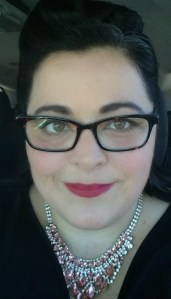
Gloden, Raquel (Rocky Survivor1. What is your name? (last name optional)

My name is Raquel Gloden. I go by Rocky.

2. Where do you live? (city and/or state and/or country) Email (optional)

I live in Arizona, east of Phoenix; my email is brainyliferocky@gmail.com.

3. On what date did you have your brain injury? At what age?

I had my last TBI (traumatic brain injury) in October 2013; I had concussions prior to this last one – it just happened to be the worst. I was 35 years old when it happened.

4. How did your brain injury occur?

I was enjoying an outing with my family. I stopped to take a picture of my children, and when I stepped back to get a better view, I slipped on some sort of substance on the marble floor. I bounced the back of my head on the floor a couple of times – and that was it.

5. When did you (or someone) first realize you had a problem?

I went by ambulance right away and had it checked. I was told that it was a concussion and to take some ibuprofen and that I should start feeling better. I followed the doctor’s recommendation, but it got worse instead of better. I ended up back in the hospital a week later for other issues associated with it. They advised me to go get it checked out further.

6. What kind of emergency treatment, if any, did you have?

Other than a CT (or “CAT”; computerized tomography) scan, I did not have any other emergency treatment.

7. Were you in a coma? If so, how long?

No. I am very fortunate not to have been in a coma.

8. Did you do rehab? What kind of rehab (i.e., inpatient or outpatient and occupational and/or physical and/or speech and/or other)?

I did outpatient vestibular and occupational rehab.

How long were you in rehab?

I did this for a couple of months.

9. What problems or disabilities, if any, resulted from your brain injury
(e.g., balance, perception, personality, etc.)?

Oh wow! This is a loaded question. I have balance problems. I have vision issues. (I see double now.) I was diagnosed with symptomatic ADD (attention deficit disorder). I now suffer from depression. My personality has definitely changed – some good, some not so good. I try to maintain a positive outlook towards everything, but it is often a challenge. Before my medication was regulated (and before it was determined that I needed medication), it was much more difficult to function (from what I can recall). Oh yes, I have memory problems now too.

10. How has your life changed? Is it better? Is it worse?

My life has changed. Is it better or worse? … I don’t know. I am no longer employed at the career I had for fifteen and a half years – that is scary. But, I get to be home with my children for now. I think it is all in the way I look at it. There are many things I will not be able to do anymore that I would have liked to. But, not many people are afforded the perspective and opportunity that I have either.

11. What do you miss the most from your pre-brain-injury life?

I miss the old me. I was very outgoing, loved to be around people, and was almost always happy. I could multitask better than many. I could solve problems and issues within seconds.

12. What do you enjoy most in your post-brain-injury life?

I was able to find out who my friends really are. I am able to help create the person I want to become. Most of all, I get to be with my children.

13. What do you like least about your brain injury?

I dislike the headaches, double vision, depression, ADD, and the lack of understanding. Those issues that are personal – I can find a way to deal with them. The lack of understanding is the worst. It feels as though I am not listened to sometimes and, even if I am, I feel like people just don’t understand.friendsfamily

14. Has anything helped you to accept your brain injury?

I have a great support-team that includes my family and dear friends. I go to counseling weekly, and my counselor is very counselorsupportive. I have been learning about being more mindful, which has also helped immensely. Recently, I have found that the TBI community is very supportive as well. Many times I think that I have not truly accepted my TBI, but I am getting there.

15. Has your injury affected your home life and relationships and, if so, how?

Yes, very much so. There are some relationships that do not exist anymore. This was mostly due to my ending the relationship. I had a new perspective after my TBI, and I do not feel I have time for people who will bring me down or whom I feel uncomfortable around. This was not usually the other person’s fault, but I am not the same as I was. I need my TBI to be accepted, or I do not need them in my life. My home life changed for sure. My children saw the incident, and I deal with that trauma every time we walk by a wet spot on the ground. My husband is a wonderful man and very supportive. I was the breadwinner though, and this has had to change. He is such a great man – he has not complained one bit. He supports me in all I do. I am fortunate to have my mom around me too, and she is a huge support; my dad was very supportive before he passed away in 2014. They all have encouraged me to continue creating myself.

16. Has your social life been altered or changed and, if so, how?

As I stated before, I am not as outgoing. If I can, I often avoid situations in which there will be loud noises or too many people. This means that I don’t go to as many parties or social gatherings, and when I do, I do not stay like I used to. I don’t think I have as many friends as I thought I did.

17. Who is your main caregiver? Do you understand what it takes to be a caregiver?

My main caregiver is my husband. He is at home with me. My mom helps a lot too, especially with the kids when my husband is at work. I believe a caregiver helps when times are tough, and he or she encourages positive thoughts and actions. To me, a caregiver assists when needed, but is not enabling. A caregiver encourages independence.Gloden, Raquel (Rocky) 2 Survivor
18. What are your plans? What do you expect/hope to be doing ten years from now?

My future plans … I would like to speak about TBI and help people to better understand. There are subjects that people do not talk about at all, and I would like to bring light to them and to help people understand that they are not alone. I would also like for others to understand the hardships that follow TBI survivors – even when other people cannot see them.

19. Are you able to provide a helpful hint that may have taken you a long time to learn, but which you wished you had known earlier? If so, please state what it is to potentially help other survivors with your specific kind of brain injury.

I wish that I would have known when I was younger how concussions would have impacted me long term. I remember pushing it when I previously had concussions. They were not treated the same as now either, and I wish I knew then what I know now. Take care of your brain – it is the only one you will ever have.

20. What advice would you offer to other brain-injury survivors? Do you have any other comments that you would like to add?

My advice is to stay strong, but still allow yourself to cry. It is hard, but as long as the hard times decrease and the positive times increase, you are on the right track. Also, you are not alone. I know people may see you and think that there is nothing wrong, and they may even think it is all made-up, but the people who know you – the people who truly matter – know. And you know. And that is all that matters.


(Disclaimer: The views or opinions in this post are solely that of the interviewee.)

If you would like to be a part of the SPEAK OUT! project, please go to TBI Survivor Interview Questionnaire for a copy of the questions and the release form.

(Clip Art compliments of Bing.)

(Photos compliments of contributor.)


As I say after each post:

Feel free to leave a comment by clicking the blue words “Leave a Comment” below this post.

Please follow my blog. Click on “Follow Me Via eMail” on the right sidebar of your screen.anim0014-1_e0-1

If you like my blog, click the “Like” button under this post.

If you REALLY like my blog, share it intact with your friends. It’s easy! Click the “Share” buttons below.

If you don’t like my blog, “Share” it intact with your enemies. That works for me too!

 

SPEAK OUT! . . . . . . . . . . . . . . . Faces of Brain Injury . . . . . . . . . . James Thomas (survivor)

SPEAK OUT! Faces of Brain Injury James Thomas  (survivor)

presented by

Donna O’Donnell Figurski

 Brain Injury is NOT Discriminating!

bigstock-cartoon-face-vector-people-25671746-e1348136261718It can happen to anyone, anytime, . . . and anywhere.

The Brain Trauma Foundation states that there are 5.3 million people in the United States living with some form of brain injury.

On “Faces of Brain Injury,” you will meet survivors living with brain injury. I hope that their stories will help you to understand the serious implications and complications of brain injury.

The stories on SPEAK OUT! Faces of Brain Injury are published with the permission of the survivor or designated caregiver.

If you would like your story to be published, please send a short account and two photos to me at neelyf@aol.com. I’d love to publish your story and raise awareness for Brain Injury.

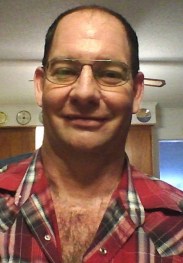
Thomas, James survivor 111115James Thomas  (survivor)…I’m a traumatic-brain-injury (TBI) success story. I had three brain surgeries to remove three blood clots in my head. After the third surgery, I fell into a coma for three days. When I woke up, I lost the ability to walk and talk, and I wasn’t able to take care of myself. I had to learn every life-skill again, including how to write. I had to wear a diaper for seven months.

I was in the hospital for a month. When I was released, I went to one of best rehab centers in the state of New Jersey. There I had occupational, physical, and speech therapies twice a week. I was able to go home after three months, and my ex-girlfriend nursed me back to good health. I improved 150% in two years. I work now as a teacher assistant with Special Needs students.


(Clip Art compliments of Bing.)

(Photos compliments of contributor.)

As I say after each post: Please leave a comment by clicking the blue words “Leave a Commentanim0014-1_e0-1 below this post.

Feel free to follow my blog. Click on “Follow” on the upper right sidebar.

If you like my blog, share it intact with your friends. It’s easy! Click the “Share” buttons below.

If you don’t like my blog, “Share” it intact with your enemies. I don’t care!

Feel free to “Like” my post.

SPEAK OUT! NewsBit: . . . . . . Wanting A “Sound Mind,” 30-Year-Old Football Player Retires

Wanting A “Sound Mind,” 30-Year-Old Football Player Retires

presented

by

Donna O’Donnell Figurski


husain_abdullah

Husain Abdullah – NFL Player

For seven years, Husain Abdullah played football in the National Football League (NFL), the premier professional football league in the United States. For four years, Abdullah, a safety, played with the Minnesota Vikings, and, for three years, he played with the Kansas City Chiefs. He graciously thanked both teams for allowing him to play. In the 2015 season, he had the fifth concussion of his career. While he was recovering, he thought about his many life-goals. Husain realized that he would need a “sound mind” to achieve his goals.

The research showing a link between the head trauma of football and the neurodegenerative disease CTE (chronic traumatic encephalopathy) is thought-provoking, and it has several players concerned. Even the NFL has admitted that there is a link between playing football and CTE, although the league later tried to downplay its comment. (CTE, originally known as “dementia pugilistica,” had only been seen in the brains of some boxers.

Dr. Bennet Omalu -

Dr. Bennet Omalu –

Dr. Bennet Omalu was the first to find the disease elsewhere – in a football player. Dr. Omalu renamed the disease “CTE.” Dr. Omalu’s discovery is the subject of the December 2015 movie Concussion, starring Will Smith. The real-life story is told in the PBS Frontline documentary, League of Denial: The NFL’s Concussion Crisis – available free online.)

Abdullah’s retirement follows other early retirements, most notably that of San Francisco 49er star rookie linebacker, Chris Borland, who cited the high risk of brain disease as his reason for retiring after playing only one year. Another rookie, Green Bay Packer wide receiver Adrian Coxson, retired after getting a severe concussion in practice and being told that the next hit might seriously affect his brain function or kill him.

Abdullah Husain - NFL Player

Abdullah Husain – NFL Player

It remains to be seen if Husain Abdullah’s retirement will be the last early retirement in the NFL due to football’s risk to the brain. (Full story)


(Clip Art compliments of Bing.)

As I say after each post: Please leave a comment by clicking the blue words “Leave a Commentanim0014-1_e0-1 below this post.

Feel free to follow my blog. Click on “Follow” on the upper right sidebar.

If you like my blog, share it (intact) with your friends. It’s easy! Click the “Share” buttons below.

If you don’t like my blog, “Share” it (intact) with your enemies. I don’t care!

Feel free to “Like” my post.


So, Whaddya Think? . . . . . . . . . We Must All Be Advocates for Brain Injury Awareness

So, Whaddya Think?

We Must All Be Advocates for Brain Injury Awareness

by

Beth Kidd Koziol

presented

by

Donna O’Donnell Figurski


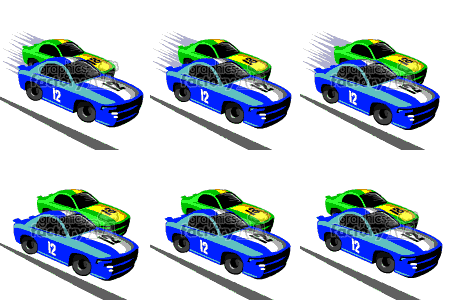
so-whaddya-think-brain-th-4Having been a diehard NASCAR (National Association for Stock Car Auto Racing) fan for 50+ years, I’ve seen fatal injuries, career-ending brain injuries, and loss of job, spouse, or self – just part of the damage a traumatic brain injury (TBI) can cause. Once NASCAR realized the need, it made major changes to the requirements of all safety gear used on the driver and to the inside and the outside of the car. Great strides have been made with “soft”

Hans Device

Hans Device for Racing

walls, the HANS (head and neck support) device, a five-point harness system, crush panels in the sides of the car, and so much more. Bobby Allison’s racing career was ended years ago due to a brain injury – before so many changes were made. It wasn’t until the sport lost Dale Earnhardt, Sr. in a horrific Daytona crash that NASCAR really took safety to a higher level. They are still working on safety.

Kidd Koziol, Beth Survivor 2

Beth Kidd Koziol – Brain Injury Survivor

The brain injury community also has a major need. I wish there were more people in schools talking to young children to make them more aware of TBI. (Most children now learn about TBI if they have it themselves.) We want the public to be exposed more to and to be more aware of TBI. The public needs to know how to best try to prevent TBI. The knowledge could also lessen the damage if something happens – a fall, an accident, or whatever might happen.

Racing Cars 1288639-nascar-002_06172006

Awareness is vital. I’m sure that, like me, many survivors have had much trouble getting family and friends to understand what TBI has done to the person. I’m so tired of hearing, “You look fine. You talk OK. It’s just an excuse.” (I’ve heard those very words so many times that I decided to withdraw contact with those who hurt me.) I want to socialize, to have fun, and to be who I am now (ten years later). Recently, a neurologist told me that, due to my brain injury, I’m very high risk for early dementia. This was the first time I’ve ever been told this! So, what are we doing about the problem?

We must all be advocates for brain injury awareness in whatever ways we can to try and make a difference.

Kidd Koziol, Beth Survivor 3

Beth Kidd Koziol – Brain Injury Survivor

So, Whaddya Think?

Let’s get a dialogue going. Post your comments in the Comment Section. Directions are below.

So . . . what do you think? Is there something you are passionate about in this Brain Injury (BI) world? Do you want to be heard? Your opinion matters! You can SPEAK OUT! on “So Whaddya Think?”

Simply send me your opinion, and I will format it for publication. Posts may be short, but please send no more than 500 words. Send to Neelyf@aol.com

I hope to HEAR from you soon.

As I say after each post:

Feel free to leave a comment by clicking the blue words “Leave a Comment” below this post.

Please follow my blog. Click on “Follow Me Via eMail” on the right sidebar of your screen.anim0014-1_e0-1

If you like my blog, click the “Like” button under this post.

If you REALLY like my blog, share it intact with your friends. It’s easy! Click the “Share” buttons below.

If you don’t like my blog, “Share” it intact with your enemies. That works for me too!

(Clip Art compliments of Bing.)

(Photos compliments of contributor)

Brain Injury Resources . . . . . HAPPY BIRTHDAY!!!! Surviving Traumatic Brain Injury

Happy Birthday to Surviving Traumatic Brain Injury

presented

by

Donna O’Donnell Figurski

happy-birthday.jpg

Happy Birthday to Surviving Traumatic Brain Injury Blog. We are two-years-old.

There are more than 400 articles published on Surviving Traumatic Brain Injury Blog, Happy-2nd-Birthdaywhich hopefully is helping brain injury survivors, their caregivers, families, and friends.

If you want to learn more “About Me and my Blog, click the link. Each category is described in a nutshell.

Surviving Traumatic Brain Injury Blog sends a million hugs to its participants, followers, and random readers. Everyone is invited to subscribe or drop in Million HUgs 184495anytime. Just click the “Follow Me” button in the right sidebar under the “Follow Me Via Email” category.


Contact me if:
You want to share an Itty-Bitty GIANT Step.
You want to share an Survivors SPEAK OUT! interview.
You want to share a Caregivers SPEAK OUT! interview.
You want to share a Faces of Brain Injury.

You want to share an “So, Whaddya Think?” opinion.
You want to write a Guest Blog article.
You want to share an ETC. ETC. etc. etc.

Please SHARE!

Survivingtraumaticbraininjury.com


As I say after each post:anim0014-1_e0-1

Please leave a comment by clicking the blue words “Leave a Comment” below this post.

Feel free to follow my blog. Click on “Follow” on the upper right sidebar.

If you like my blog, share it intact with your friends. It’s easy! Click the “Share” buttons below.

If you don’t like my blog, “Share” it intact with your enemies. I don’t care!

Feel free to “Like” my post.


(Clip Art compliments of Bing.)

(Photo compliments of contributor.)

diemodi jewelry

uniquely hand-crafted jewelry by donna

Welcome to Harmony Kent Online

The home of all things books

Pete Springer

Passionate Teacher and Future Children's Author

HOPE TBI

Helping Other People Excel - To Be Independent

For the Love of Books, Old and New

Katie Fischer, Writer and Reader of Stories

Charlie Bown

Children's Author

Jessica Hinrichs

“We write to taste life twice, in the moment and in retrospect.” ― Anais Nin

VIVIAN KIRKFIELD - Writer for Children

Picture Books Help Kids Soar

Mindy’s Writing Wonderland

For authors, parents, teachers & everyone who loves children’s books.

Kaitlyn Leann Sanchez

Literary Agent

Surviving Traumatic Brain Injury

TBI - Survivors, Caregivers, Family, and Friends

The Care Factor

Loving someone with a Traumatic Brain Injury

Brain Injury Support Group of Duluth-Extension

Brain Injury Information and SUPPORT

Brain Aneurysm Global Insight

Brain Aneurysm, cerebral hemorrhaging, hemorrhage stroke