TBI – Survivors, Caregivers, Family, and Friends

Posts tagged ‘blogtalkradio.com’

Caregivers SPEAK OUT! . . . Heather Sivori Floyd . . . Caregiver for her son, TJ


Caregivers SPEAK OUT!

Heather Sivori Floyd (caregiver for her son, TJ)

presented by

Donna O’Donnell Figurski


Heather Sivori Floyd – caregiver mom to her son, TJ

1. What is your name? (last name optional)

Heather Sivori Floyd

2. Where do you live? (city and/or state and/or country) Email? (optional)

Oldham County, Kentucky, USA

3. What is the brain-injury survivor’s relationship to you?

He (TJ) is my son.

How old was the survivor when he/she had the brain injury?

TJ was 7 years old.
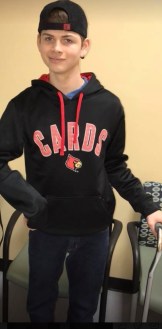
11 TJ Floyd

TJ – Brain Injury Survivor – bicycle accident

What caused your survivor’s brain injury?

TJ was riding his bicycle when he wrecked into the back of his brother. He flipped over the handle bars and hit his head on the concrete. He went to “sleep” and never woke up until days after his emergency open brain surgery.

4. On what date did you begin care for your brain-injury survivor?

April 21, 2010

Were you the main caregiver?

Yes

Are you now?

Yes

How old were you when you began care?

Age stinks. I’d rather not discuss it. LOL!

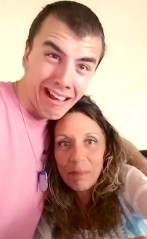
TJ and Mom Heather Sivori Floyd

TJ – Brain Injury Survivor & his Mom, Heather Sivori Floyd

5. Were you caring for anyone else at that time (e.g., children, parents, etc.)?

Yes – my three other children. I was also pregnant at the time.

6. Were you employed at the time of your survivor’s brain injury?

Yes

If so, were you able to continue working?

Yes – part time from home.

7. Did you have any help? Mother-in-Law

My mother-in-law moved in to help with my other children so I could care full-time for TJ with his therapy and doctors.

If so, what kind and for how long?

Well, she is still here.

8. When did your support of the survivor begin (e.g., immediately – in the hospital; when the survivor returned home; etc.)?

Immediately

9. Was your survivor in a coma?

I’m not sure of the medical term, but he was unresponsive until several days after his brain surgery.

If so, what did you do during that time?

I slept beside TJ in a chair. I was three months pregnant and heartbroken at the fear of the unknown. What was it they called it? . . . Ah yes, “the new normal.” I was trying to figure out what that meant. You don’t actually “get it” until years later.

14 TJ & Mom Heather Sivori Floyd copy

TJ – Brain Injury Survivor & Mom, Heather Sivori Floyd

10. Did your survivor have rehab?

Yes

If so, what kind of rehab (i.e., inpatient and/or outpatient and occupational, physical, speech, and/or other)?

Physical, occupational, and speech therapies; also, hippotherapy (the use of horseback riding to improve balance, coordination, and strength)

How long was the rehab?

TJ still goes to therapy.

Where were you when your survivor was getting therapy?

With TJ

11. What problems or disabilities of your brain-injury survivor required your care, if any?
brain-injury-imageEverything. TJ’s brain bleed damaged the whole left side of his brain and parts of the right. He was left with severe impairments, specifically in speech, language, memory, and cognitive function. He has safety issues. Because of attention, safety, and balance issues, he has trouble walking without hands-on help constantly. He also has memory problems, speech problems, vision problems, physical issues from having hemiparesis (weakness on one side), and a lot more.

12. How has your life changed since you became a caregiver?

Things that mattered to me prior his accident are non-issues to me now. I often times feel I can talk with doctors and therapists better than I can with most people my age. It can be lonely, difficult, and frustrating at times to find common connectors in my personal relationships with friends and family. Some weeks are packed full of appointments. I’m drinking so much coffee I think my system will crash. Just this past week, I knocked out four appointments in one day. The most I’ve done in one day has been seven.

Is it better?

I would say yes – my life is better. Even though this is the most challenging task of my life, my son is innocent, happy, and laughs a lot. I believe having the privilege to care for my child, who is special needs, has been the most rewarding love one can experience. The impact special-needs children make are life-long. You learn so much through them in how they view the world.

Is it worse?

No parent ever wants this for his or her child. That being said, my life is better because of the profound true joy my son has brought me. The worst part, I would say, is having struggles that are hard to overcome. Watching him struggle is hard. I do whatever I can to help him when this happens. Also, the stress of future planning is scary and overwhelming.
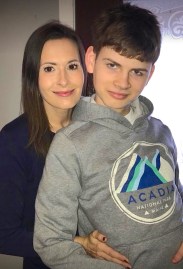
18 TJ & Mom Heather Sivori Floyd copy

Heather Sivori Floyd & her son, TJ

13. What do you miss the most from pre-brain-injury life?

Our conversations. Most of the time, our conversations now are basic – food, eat, play a game, etc. I miss those conversations with my child that went beyond basic needs.

14. What do you enjoy most in post-brain-injury life?

Oh gosh, a child like TJ changes you in a profound way. The love you have in your heart for your child and others like him or her is something that is hard to put into words. I want to protect all of them forever. The world is full of evil people who would take advantage. I also enjoy trying to help others – to make it easier for the family who comes after us. There will always be another family. I’ve also learned to let the little things slide because, at the end of the day, they are just that – little.

15. What do you like least about brain injury?

Everything. It’s unrelenting and nasty. It takes a lot and rarely gives anything back.

16. Has anything helped you to accept your survivor’s brain injury?

Yes – TJ is happy. It is hard to justify my being sad or my crying all the time when he is happy. He lives in the now – not for tomorrow or the day before.

17. Has your survivor’s injury affected your home life and relationships and, if so, how?

1-divided-path-tracie-kiernanYes – especially my personal friendships and my relationships with family. I think we are on different paths in life now. While they talk of work and social events, I am constantly thinking What can we do to make it better for TJ and others going through this? My closest friends are now the caregivers and survivors I’ve met locally. We work together locally to make a positive change for the brain-injury community. I also work with an amazing team of ladies who help me run two support-groups for survivors and caregivers. I started my first one seven years ago. I was scared after TJ’s brain injury, and I needed to know I was not alone. I needed hope. The groups grew to over 30,000, and the rest is history. The friendship we have is unbreakable. Shout-out to my amazing admins and friends: Melissa, Shauna, Margie, Mary, Michael, Eddie, and Alex. Love you all! We’ve met many who have inspired us in this journey.

18. Has your social life been altered or changed and, if so, how?

Um, what social life?! Seriously, I have no social life. It’s too hard to connect with others.

19. What are your plans?

My #1 plan is finding the best long-term situation for TJ that will ensure the best care he can have when we can no longer do so. Personally, I also plan to continue making a difference locally. We have several projects we are working on, and I have some more ideas to help. I ALWAYS have an idea. I’m always thinking big. Nothing brings me greater joy than helping others. It is important for families to know they aren’t alone and that people care enough to try and make it better. I try to do my part because of my son and the many we have met.

What do you expect/hope to be doing ten years from now?

I hope to still be laughing and loving the small joys in life with TJ. Hopefully, we will have made a big impact locally and beyond for the brain-injury community.

20. What advice would you offer other caregivers of brain-injury survivors? Never Give Up

Never give up. Let the small things go. Love deeply, and give your all. If you don’t, one day you will wish you had. Be the voice for your loved one. Never let “no” be an obstacle; there is always a way. If the door closes, kick it open. Most importantly, hang on when the days are hard and you feel you cannot go on. You can, and your survivor needs you to. Connect with other caregivers so you don’t feel like you walk this path alone – because you don’t. There are many who walk it with you daily

Do you have any other comments that you would like to add?

I think I’ve said what’s important for caregivers to know.


(Clip Art compliments of Bing.)

(Photos compliments of contributor.)

As I say after each post: Please leave a comment by clicking the blue words “Leave a Commentanim0014-1_e0-1 below this post.

Feel free to follow my blog. Click on “Follow” on the upper right sidebar.

If you like my blog, share it intact with your friends. It’s easy! Click the “Share” buttons below.

If you don’t like my blog, “Share” it intact with your enemies. I don’t care!

Feel free to “Like” my post.

Caregivers SPEAK OUT! . . . Pattie Welek Hall . . . . . . . . (caregiver for her son)

Caregivers SPEAK OUT!

Pattie Welek Hall  (caregiver for her son)

presented by

Donna O’Donnell Figurski


Pattie Welek-Hall 3

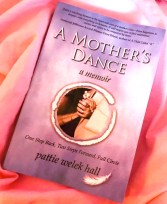
Pattie Welek Hall (caregiver for son) Author of “A Mother’s Dance”


1. What is your name? (last name optional)

Pattie Welek Hall

2. Where do you live? (city and/or state and/or country) Email? (optional)

Summerville, South Carolina, USA     pattie@pattiewelekhall.com

3. What is the brain-injury survivor’s relationship to you?

He’s my son.

How old was the survivor when he/she had the brain injury?

19 years old

What caused your survivor’s brain injury?

Motorcycle accident

4. On what date did you begin care for your brain-injury survivor? 

MotorcycleOctober 6, 2002

Were you the main caregiver?

Yes

Are you now?

We live in different states now, but I’d have to say that emotionally I am his main caregiver.

How old were you when you began care?

56

5. Were you caring for anyone else at that time (e.g., children, parents, etc.)?

I was in the process of finalizing a divorce and also raising my other two children, Annie (freshman in college) and Bo (junior in college).

6. Were you employed at the time of your survivor’s brain injury?

th

Yes – at Barnes & Noble in Charlotte, North Carolina

If so, were you able to continue working?

No. Mid-October, I was scheduled to step into new position – Community Relations Manager at Barnes & Noble in Huntersville, North Carolina. The manager held my position until I was able to return.

7. Did you have any help?

Yes

If so, what kind and for how long?

When Casey returned home, he went to outpatient care in Charlotte, North Carolina. At that time, his dad’s insurance paid for a driver to take and pick him up from rehab so I could return to work. Casey remained in rehab until April 2003.

8. When did your support of the survivor begin (e.g., immediately – in the hospital; when the survivor returned home; etc.)?

For the first eleven days after my son’s accident, I slept on the floor in the ICU (Intensive Care Unit) at the Medical University of South Carolina, and then I moved to Marriott Courtyard for the remaining days of his six-week stay.

A Mother's Dance

“A Mother’s Dance’ by Pattie Welek Hall

9Was your survivor in a coma?

Yes. Twice.

If so, what did you do during that time?

I prayed out loud to him; I talked to him; I relayed how his day unfolded (Guess who visited; I recounted what they said) . . . and I told him stories.

10. Did your survivor have rehab?

Yes

If so, what kind of rehab (i.e., inpatient and/or outpatient and occupational, physical, speech, and/or other)?

Outpatient—speech, occupational, and physical

How long was the rehab? kc8oAg59i

Five months

Where were you when your survivor was getting therapy?

At work

11. What problems or disabilities of your brain-injury survivor required your care, if any?

12. How has your life changed since you became a caregiver? Is it better? Is it worse?

13. What do you miss the most from pre-brain-injury life?

I miss my boy’s easy-going nature.

14. What do you enjoy most in post-brain-injury life?

Pattie Welek Hall

Pattie Welek Hall (caregiver of son) Author of “A Mother’s Dance”

That my son is alive

15. What do you like least about brain injury?

That my son has frontal lobe damage which affects those he loves

16. Has anything helped you to accept your survivor’s brain injury?

17. Has your survivor’s injury affected your home life and relationships and, if so, how?

Relationships are up and down – mostly due to frontal lobe damage.

18. Has your social life been altered or changed and, if so, how?

19. What are your plans? What do you expect/hope to be doing ten years from now?

I hope that my son’s life is filled with love, laughter, and peace.

20. What advice would you offer other caregivers of brain-injury survivors? Do you have any other comments that you would like to add?


(Clip Art compliments of Bing.)

(Photos compliments of contributor.)

As I say after each post: Please leave a comment by clicking the blue words “Leave a Commentanim0014-1_e0-1 below this post.

Feel free to follow my blog. Click on “Follow” on the upper right sidebar.

If you like my blog, share it intact with your friends. It’s easy! Click the “Share” buttons below.

If you don’t like my blog, “Share” it intact with your enemies. I don’t care!

Feel free to “Like” my post.

SPEAK OUT! . . . . . . . . . . . . . Faces of Brain Injury . . . . . . Darlene Watson Mabry (caregiver for her son, Gage)

SPEAK OUT! Faces of Brain Injury

Darlene Watson Mabry (caregiver for her son, Gage)

presented by

Donna O’Donnell Figurski

Brain Injury is NOT Discriminating!

bigstock-cartoon-face-vector-people-25671746-e1348136261718It can happen to anyone, anytime, . . . and anywhere.
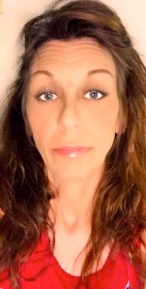

The Brain Trauma Foundation states that there are 5.3 million people in the United States living with some form of brain injury.

On “Faces of Brain Injury,” you will meet survivors living with brain injury. I hope that their stories will help you to understand the serious implications and complications of brain injury.

The stories on SPEAK OUT! Faces of Brain Injury are published with the permission of the survivor or designated caregiver.

If you would like your story to be published, please send a short account and two photos to me at neelyf@aol.com. I’d love to publish your story and raise awareness for Brain Injury.

Darlene Watson Mabry (caregiver for her son, Gage)

Mabry, Darlene Watson Caregiver

Mabry, Darlene Watson – Caregiver


My son, who is now 22, suffered his TBI (traumatic brain injury) two years ago in a work-related accident. That’s when the nightmare began, and our lives were forever changed.

This altered state of reality is so overwhelming at times that I just have to sit down and cry. There are good days, but it seems like for every good one, there are three bad ones – for every advancement, there comes a setback. The everyday struggle to maintain wears you down. It’s like going the wrong way on a one-way street.

Right Way Wrong Way
The company that my son was working for when the accident happened is still fighting this, and Worker’s Compensation in Missouri is unscrupulous! For the last year-and-a-half, they have refused to pay for treatment and prescriptions or provide temporary-disability pay. Resources are limited in this situation until this claim is settled, so, financially, we are bankrupt. Not only are they making my son’s already-burdensome recovery more difficult, but they are actually hindering it. I have cried, thrown fits, prayed, been depressed, and had anxiety attacks that I thought were heart attacks, and that was just today.

Darlene Watson Mabry & Son, Gage

Darlene Watson Mabry – Caregiver for son, Gage – Brain Injury Survivor

Crayon

So, I have erased this, and tomorrow we will begin again. (I’m thinking of using a crayon, so I can color outside the lines – LOL.)

At the end of the day, I’m grateful – my son is alive and highly functional, unlike some who have suffered this type of injury. God has blessed us with another day, and for that I’m thankful.


(Clip Art compliments of Bing.)

(Photos compliments of contributor.)

As I say after each post: Please leave a comment by clicking the blue words “Leave a Commentanim0014-1_e0-1 below this post.

Feel free to follow my blog. Click on “Follow” on the upper right sidebar.

If you like my blog, share it intact with your friends. It’s easy! Click the “Share” buttons below.

If you don’t like my blog, “Share” it intact with your enemies. I don’t care!

Feel free to “Like” my post.


Survivors SPEAK OUT! . . . Jason Westhoff

Survivors SPEAK OUT!   Jason Westhoff

presented

by

Donna O’Donnell Figurski


Jason Westhoff IMG_9574

Jason Westhoff – Brain Injury Survivor

1. What is your name? (last name optional)

Jason Westhoff

2. Where do you live? (city and/or state and/or country) Email (optional)

Phoenix, Arizona, USA     jrwesthoff1@gmail.com

3. On what date did you have your brain injury? At what age?

March 11, 2012     Age 29

4. How did your brain injury occur?

I was assaulted after leaving a club in Peoria, Illinois.

5. When did you (or someone) first realize you had a problem?

I realized I had a problem around eight months after the assault. I was in the Emergency Room and honestly realized I had lost all control. I had no clue how to go about regaining that control and made many wrong attempts over the next five years.

6. What kind of emergency treatment, if any, did you have?

Hospital thI was knocked unconscious from the assault, and I was transported by ambulance to the hospital. The medical staff noticed the swelling, and, as a result, I was taken into emergency surgery. I had a craniotomy to relieve the swelling.

7. Were you in a coma? If so, how long?

After the emergency surgery, I was placed in an induced coma for approximately three weeks. I had another two surgeries during this time.

8. Did you do rehab? What kind of rehab (i.e., inpatient or outpatient and occupational and/or physical and/or speech and/or other)? How long were you in rehab?

I had approximately three weeks of inpatient rehab before I was discharged. Afterwards, I continued physical, occupational, and speech therapies on a twice-weekly basis for approximately three months before I returned to school. At this time, I knew something was different, but I did not understand the battles I was fighting.

9. What problems or disabilities, if any, resulted from your brain injury
(e.g., balance, perception, personality, etc.)?

After my TBI (traumatic brain injury), I was a completely different person. It took me years to realize the extent of my injury. My balance and normal body functions were the easiest to check and the most obvious. The major changes, which I am still trying to adjust to daily, are my personality and perception during normal life-events. My injury has placed strains on every previous relationship I had and the new ones I have developed. I honestly feel like two completely different people. I still have the same general personality, but my ability to adjust to unplanned change is the ability most affected. I have a problem with the skill of adjusting in the moment.

10. How has your life changed? Is it better? Is it worse?Better Worse

My life has been extreme on both sides. It seems as if everything is extremely better or extremely worse on a rotating cycle. I am thankful on the whole because of the strength I have found to deal will all issues that have occurred. I am still working every day on my recovery, but I know, through this fire, I will become a better human being.

11. What do you miss the most from your pre-brain-injury life?

I miss my intellect and communication skills. It always feels as if I’m grasping for, but never quite reaching my projected goal.

12. What do you enjoy most in your post-brain-injury life?

I enjoy the communities I never knew about and the social interaction within the “brain-injury-support community”. There is a bond, which I have never quite been able to explain to others, of just knowing how something feels.

13. What do you like least about your brain injury?

Medicine side-effects!Medicine bottle 7Ta6Ezr8c

14. Has anything helped you to accept your brain injury?

Time. It has been extremely difficult to adjust and accept my brain injury.

15. Has your injury affected your home life and relationships and, if so, how?

Yes. It has been hard to be a successful father without the resources desired. Relationships in general have been a struggle because I don’t completely understand myself at all times. There is a constant unbalance in my life since the injury.

16. Has your social life been altered or changed and, if so, how?

Yes. I had struggles – extreme struggles – in my social life, primarily involving drugs and alcohol. Alcohol was a bigger problem than the drugs. I often get so stressed and/or anxious I want to drown my thoughts away. It is very easy just to give up at times.

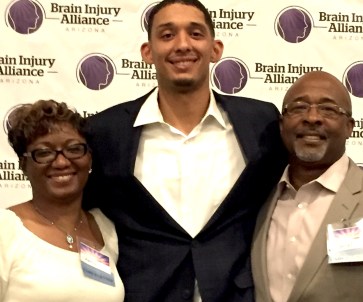
Jason Westhoff Sheria & Darryl Eubanks

Jason Westhoff – Brain Injury Survivor with Parents, Sheria & Darryl Eubanks

17. Who is your main caregiver? Do you understand what it takes to be a caregiver?

My parents have been my main caregivers, my mother in particular for emotional support, which is where it has been needed most. It took me 2-3 years to start to comprehend the stress involved in being a caregiver, until I really tried to manage Jayla (my daughter) by myself for an extended period of time.

18. What are your plans? What do you expect/hope to be doing ten years from now?

My plans as of this moment are just trying to get my medications set and lowering my mental-fatigue issues. My focus is primarily on understanding my new mind and body so I then have the ability to make the proper adjustments. I love it here in Arizona! By the time I do my radio interview with Donna, I will have been in Arizona for fourteen months. I am currently looking forward to doing more work in the brain-injury community.

19. Are you able to provide a helpful hint that may have taken you a long time to learn, but which you wished you had known earlier? If so, please state what it is to potentially help other survivors with your specific kind of brain injury.

Listen! Listen! Listen! I am one of the worst listeners. I have proved this point time and time again. I would suggest to swallow your pride and let people help you.Ear_clip_art-1

20. What advice would you offer to other brain-injury survivors? Do you have any other comments that you would like to add?

My best advice to give to any survivor is to never stop growing. Don’t become content with your situation. We can always improve!


If you would like to be a part of the SPEAK OUT! project, please go to TBI SPEAK OUT! Survivors Interview Questionnaire for a copy of the questions and the release form.

(Clip Art compliments of Bing.)

As I say after each post: Please leave a comment by clicking the blue words “Leave a Commentanim0014-1_e0-1 below this post.

Feel free to follow my blog. Click on “Follow” on the upper right sidebar.

If you like my blog, share it with your friends. It’s easy! Click the “Share” buttons below.

If you don’t like my blog, “Share” it with your enemies. I don’t care!

Feel free to “Like” my post.


SPEAK OUT! . . . . . . . . . . . . . Guest Blogger: Erin Lieben

Inspiring Other Survivors

by

Erin Lieben

presented by

Donna O’Donnell Figurski


Girl Blogger cartoon_picture_of_girl_writingIt’s okay to lose hope sometimes. We will never be the same as before. You’ll get used to the “new you,” and you’ll be a tough, beautiful, brave individual who knows what it’s like to feel hopeless. And, that is what makes it all worth it – because you can give hope to others.

bigstock_hope_2576413Tell other survivors that it’s okay to be the “new you” and to not necessarily meet the status quo or the goals they were striving for before their brain injury. Tell them to just make a new game-plan and to be exceedingly thankful for the little things they previously took for granted.
23804465_1469432809758930_2026712132_n

Erin Lieben – Brain Injury Survivor

When I present my story to others, my goal is for them to feel inspired. I don’t want pity, and I don’t want to bring others down. I’ve been given a gift, and I’ve worked like hell to be able to pass that on to others. There is always hope.

Cherish each passing moment as if it’s your last – because you know that it very well could be. It might sound crazy, but, when I’m at my lowest, that’s the time when I can lift others up. And, it lifts my spirit as well! My heart is with you all.


Thank you, Erin Lieben.


Disclaimer:
Any views and opinions of the Guest Blogger are purely his/her own.

(Clip Art compliments of Bing.)

(Photos compliments of Erin Lieben.)

As I say after each post: Please leave a comment by clicking the blue words “Leave a Commentanim0014-1_e0-1 below this post.

Feel free to follow my blog. Click on “Follow” on the upper right sidebar.

If you like my blog, share it (intact) with your friends. It’s easy! Click the “Share” buttons below.

If you don’t like my blog, “Share” it (intact) with your enemies. I don’t care!

Feel free to “Like” my post.

Survivors SPEAK OUT! . . . Barb George

Survivors SPEAK OUT!   Barb George

presented 

by

Donna O’Donnell Figurski

1 Barb George 1

Barb George – Brain Injury Survivor

1. What is your name? (last name optional)Barb George

2. Where do you live? (city and/or state and/or country) Email (optional)

Hoquiam, Washington, USA

3. On what date did you have your brain injury? At what age?

2004, and again in 2005     Age 45

4. How did your brain injury occur?

I was head-butted by my daughter’s horse. The second accident – we think I fainted. I was again in the hospital.

5. When did you (or someone) first realize you had a problem?

We don’t know how long I was “out,” as I was alone at the fence line. But, my husband realized there was a real problem when I did not recall all the work we had done on the property (fences built, pond in, etc.). He put me to bed, but I remained out of it, so he called an ambulance.

6. What kind of emergency treatment, if any, did you have?

I had no surgery, but I was in the hospital for four days.

7. Were you in a coma? If so, how long?Image result for Cartoon Horse Head Clip Art

No

8. Did you do rehab?

I had nearly no professional rehab. We lived in a very rural location, and I was unable to get to things. (My husband was working out of country for much of the first three years.) So, I was on my own.

I did create some of my own rehab. With reading, I got help from computer-friends, who were willing to put things into LARGE, ALL CAP type. My farm chores helped with many balance and stability issues.

What kind of rehab (i.e., inpatient or outpatient and occupational and/or physical and/or speech and/or other)? I did have a small time of physical therapy. That helped with balance.

9. What problems or disabilities, if any, resulted from your brain injury
(e.g., balance, perception, personality, etc.)?

a.) My vision was reduced from perfect to nearly nothing. I could not read anything with lower case letters or anything with under a 16-20 pt font.

b.) My stability and balance were horrible. I used shovels to maintain my balance in the fields, and I used the walls and furniture in the house.Woma Head Pain

c.) Head-pain was tremendous.

d.) I experienced various moods.

10. How has your life changed? Is it better? Is it worse?

I had just launched my company in a new location, but I had to close my business. My relationships suffered. It was rough.

11. What do you miss the most from your pre-brain-injury life?

Stamina. I live an “every other day” sort of life. I do not sleep well, so that is difficult.

12. What do you enjoy most in your post-brain-injury life?

I have had four more grandkids since my accident. (I had 2.) I have gained two sons-in law. I am grateful to be alive.

13. What do you like least about your brain injury?

I miss not having the ability to plan for anything. Life is a crap-shoot. I never know what will be possible.

14. Has anything helped you to accept your brain injury?

Organization. Honesty with self and others. Creating a support-group around myself. (I facilitate the only support-group on the Washington coastline from Canada to Oregon.) Learning!

15. Has your injury affected your home life and relationships and, if so, how?

My brain injury has strained many family dynamics. It is hard. My husband is not very available emotionally – that is just the way he is. One child sees me as a “whiner.” The other sees me as open and honest. Two kids have been pretty distant.

16. Has your social life been altered or changed and, if so, how?

I was never a party person, but I did like to go out in the evening hours. Now I cannot. Well, rarely. I cannot cope with loud restaurants or movies.

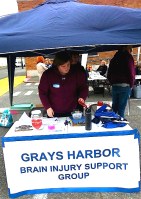
2 Gray's Harbor Barb George

17. Who is your main caregiver?

I am very self-reliant. My husband would say he is my caregiver since he is the only other person here. He does the paperwork (for which I am grateful). Other than that, I am on my own.

Do you understand what it takes to be a caregiver?

Yes. I would give anything to share more of the responsibilities.

18. What are your plans? What do you expect/hope to be doing ten years from now?

I would love to develop my skills enough to peer-mentor and advocate at a higher level. I would love to have an actual paying job at some point. I would like to continue to be self-sufficient as much as possible and to do some traveling. I plan to continue to be an involved grandmother and friend.

19. Are you able to provide a helpful hint that may have taken you a long time to learn, but which you wished you had known earlier? If so, please state what it is to potentially help other survivors with your specific kind of brain injury.

The truth – that I really didn’t need to jump back in to life so quickly.

3 Barb George 3

Barb George – Brain Injury Survivor

I wish they would have sat my husband down and explained to him that this was a BIG deal. He didn’t get it.

The word “aphasia” was huge for me! No one could explain to me why my words were so garbled. When I learned that word, it was like “Well, it has a name, so it must be a thing.”

Communicating with other survivors helped me. I had a couple of HEROES in my corner. They gave me bits of wisdom and friendship that carry me through today – twelve years later. I am grateful to them.

20. What advice would you offer to other brain-injury survivors? Do you have any other comments that you would like to add?

Give yourself TIME. I see people every single day making comments such as “I am six months out. When will I be 100%?” or “When will my spouse be normal again – it has been four months?” Obviously, their doctors have neglected to tell them that TIME is a gift. That makes me angry. Yes, everyone is different, but no one, after an intense hit, is perfect in a couple of months (IMHO). By pushing (or being pushed by others), there are higher chances that other injuries will occur, and healing goes back to zero or further!

Find unique ways to simplify your life. And change it up. We gave up our mountain-dream-home-in-the-country for a smaller space in a small town. But, it is close to everything. I have less than half the home to care for. If I am unable to drive, I can catch a bus. I can walk to many things. People thought we were crazy – but being rural is a lot of work. Life was never perfect before the accident. It isn’t perfect now. But, life is worthwhile.


If you would like to be a part of the SPEAK OUT! project, please go to TBI SPEAK OUT! Survivors Interview Questionnaire for a copy of the questions and the release form.

(Clip Art compliments of Bing.)

As I say after each post: Please leave a comment by clicking the blue words “Leave a Commentanim0014-1_e0-1 below this post.

Feel free to follow my blog. Click on “Follow” on the upper right sidebar.

If you like my blog, share it with your friends. It’s easy! Click the “Share” buttons below.

If you don’t like my blog, “Share” it with your enemies. I don’t care!

Feel free to “Like” my post.


SPEAK OUT! NewsBit . . . . . . High School Football Game Forfeited After Nine Head Injuries

High School Football Game Forfeited After Nine Head Injuries

presented

by

Donna O’Donnell Figurski


football-teamA high school football team from Moncton, New Brunswick, Canada, forfeited its game after nine players left the game with possible head injuries. The coach took the precaution of having all players checked at the hospital. Before going to hospital, four players had already displayed symptoms of having a serious concussion (nausea, vomiting), and they still showed symptoms two days later when the article was written.

Illegal hits were not the problem, but the violence of football became even more obvious when the forfeiting team was clearly outmatched by its opponent.  The score was 35-0 about halfway through the game.

football13It is now known that players of US and Canadian football have a high risk of developing a brain injury, and the problem is particularly serious for youth, with their still-developing brains.  Concussions are the most obvious brain injury, but the multiple subconcussive hits common in US and Canadian football can also lead to brain damage, which may not become apparent for several years.  A highly-cited research paper in the Journal of the American Medical Association showed that the degenerative brain disease CTE (chronic traumatic encephalopathy) was found in a low but significant fraction (21%) of players who only played football through high school. CTE was more commonly found (>90%) in the autopsied brains of players who played professionally or only through college. Even with a possible bias in the brains studied, the findings are alarming. As a result of the new knowledge, some players are retiring early (1,2), and parents are becoming concerned. (1. Full story and 2. my radio interview of Cyndy Feasel, Mary Seau, and Debra Pyka, all of whom lost a loved one to football)

onair

(Clip Art compliments of Bing.)

As I say after each post: Please leave a comment by clicking the blue words “Leave a Commentanim0014-1_e0-1 below this post.

Feel free to follow my blog. Click on “Follow” on the upper right sidebar.

If you like my blog, share it (intact) with your friends. It’s easy! Click the “Share” buttons below.

If you don’t like my blog, “Share” it (intact) with your enemies. I don’t care!

Feel free to “Like” my post.

Survivors SPEAK OUT! Paul McMahon

Survivors SPEAK OUT! Paul McMahon

presented 

by

Donna O’Donnell Figurski


Paul McMahon 1 082817

Paul McMahon – Brain Injury Survivor from Down Under

1. What is your name? (last name optional)

Paul McMahon

2. Where do you live? (city and/or state and/or country) Email (optional)

Sydney, Australia

3. On what date did you have your brain injury? At what age?

I was 28 years old.

4. How did your brain injury occur?

At my birthday party, I fell 3 1/2 floors – off a building onto concrete.

5. When did you (or someone) first realize you had a problem?

The moment it occurred

6. What kind of emergency treatment, if any, did you have?

I had surgeries for my physical condition. I have had no assistance with brain injury.

7. Were you in a coma? If so, how long?

Yes. Three days, I believe

8. Did you do rehab? What kind of rehab (i.e., inpatient or outpatient and occupational and/or physical and/or speech and/or other)? How long were you in rehab?

Yes. I was in rehabilitation during my first three months at hospital and then a required three months following my exit. It was six months in total, but I now realise that it should have gone for longer. Part of that was my own fault – by passing the neurological test at the minimum six-month recovery point (Australia). I should have waited longer – to realise the challenges I could face. I needed more time to think of how my second stage of recovery would take place.

9. What problems or disabilities, if any, resulted from your brain injury
(e.g., balance, perception, personality, etc.)?

Paul McMahon 2 082817

Paul McMahon- Brain Injury Survivor from Down Under

I have problems with short-term memory and especially with attention to detail. Attention to detail in quick moments was a great challenge. I work in communications/policy, and so this is certainly a working issue that can’t be avoided. Also, my aura was different, and I could not connect with people as I once did. This emotional issue lasted about three years.

10. How has your life changed? Is it better? Is it worse?

It’s different. I have learnt so much. I have fewer friends, but I knew my intelligence was not taken by the accident. I started a Master’s degree and wrote my book. I am editing now.

11. What do you miss the most from your pre-brain-injury life?

I miss people’s lack of judgement about me. People assume they are helping by telling you what is wrong with you. That is 100%, and it is an instigator for suicide, as you feel no one understands, but tells you how to react. The loss of their lack of judgement is my deepest pain from the brain injury.

12. What do you enjoy most in your post-brain-injury life?

I have learned to be more compassionate. I have a deeper understanding of mental health and realise that I couldn’t understand depression or other illnesses in the same way previously.

13. What do you like least about your brain injury?

I dislike the way people handle my judgement – when you assume you are right, but others judge a situation with no thought of your opinion. It hurts and is damaging psychologically and, at times, in your economic life at work.

14. Has anything helped you to accept your brain injury?

Man Writing BookYes – writing. My book was my therapy. It is safe to say that, if I sell zero books and have zero readers, I will still be happy, as I believe writing helped me heal faster.


15. Has your injury affected your home life and relationships and, if so, how?

Yes. Many friends just ignore me or keep away to feel self-security. I guess the upcoming book tells the rest of the story.

16. Has your social life been altered or changed and, if so, how?

Yes! I felt very anti-social. While I would attempt a little, I needed people to be more open and accepting of my changes. I felt this was a lonely journey, so I took that avenue – different from my old caring self.

17. Who is your main caregiver? Do you understand what it takes to be a caregiver?

I don’t have one.

18. What are your plans? What do you expect/hope to be doing ten years from now?

I will finish the book, earn a Master’s Degree, and be as different as I always am. I’ll be economically safe and live the full experiences of this world.

19. Are you able to provide a helpful hint that may have taken you a long time to learn, but which you wished you had known earlier? If so, please state what it is to potentially help other survivors with your specific kind of brain injury.

From the beginning, I felt my brain injury was temporary, so all I can say is to KEEP GOING and DON’T GIVE UP! I learnt that when the accident occurred. I would also say to FOLLOW YOUR PASSIONS. Don’t do only what a therapist tells you – you know you better than any external you-decider.

20. What advice would you offer to other brain-injury survivors? Do you have any other comments that you would like to add?

Paul McMahon & Camel 082817

Paul McMahon – Brain Injury Survivor and Camel

Remember that your passion to follow your dreams may have been limited due to the accident. That does not mean STOP! It means you continue to train your brain in what you love and hold dear. Listen to you!


You can learn more about Paul McMahon on his Facebook site (https://www.facebook.com/paulmcmahonauthor/).


If you would like to be a part of the SPEAK OUT! project, please go to TBI SPEAK OUT! Survivors Interview Questionnaire for a copy of the questions and the release form.

(Clip Art compliments of Bing.)

As I say after each post: Please leave a comment by clicking the blue words “Leave a Commentanim0014-1_e0-1 below this post.

Feel free to follow my blog. Click on “Follow” on the upper right sidebar.

If you like my blog, share it with your friends. It’s easy! Click the “Share” buttons below.

If you don’t like my blog, “Share” it with your enemies. I don’t care!

Feel free to “Like” my post.

SPEAK OUT! . . . . . . . . . . . . . Guest Blogger: Ric Johnson

Meditation After a Brain Injury

by

Ric Johnson

presented

by

Donna O’Donnell Figurski


Boy Blogger thI didn’t meditate before my injury, and I don’t remember what caused me to start meditation. Whatever it was, I’m glad meditation and I became friends.

Many people tend to think that meditation is a “religious” practice. Meditation is actually a broad variety of practices, and the most commonly heard practice is called “mindfulness.” Do I have to get into a yoga pose? Do I have to start saying “Om”? No, I don’t. Nobody needs to.

For me, meditation is actually the practice of focusing on the moment. After my traumatic brain injury, staying focused was (and still is) the hardest part of daily life. Meditation helps me to continue moving forward. I don’t need to clear my mind or empty my thoughts when starting a session – that seems to happen by itself. The longer meditation becomes part of your life, the easier it becomes.

I try to meditate twice a day, especially during a “hard” day. Most of the time, though, I meditate only once – other things seem to get in the way. I try to carve out 30 minutes for each session, but 15-20 minutes is pretty much the normal length I’m able to use. Not sure if 30 minutes would give me better results. Results are really based on the ability to continue to meditate.

I use the breathing-meditation method. We all breathe, so no equipment is necessary. I can do it anywhere and anytime. I only need 15-30 minutes. After waking up, the first thing I do is look at my calendar to see what the day brings. After eating breakfast, I set the kitchen alarm for 30 minutes, sit down and relax in a comfy chair, close my eyes, and listen to my breathing. My breath is the object of my attention. I begin to feel and hear my breath flowing in and out of my body. I use my normal breathing pace. Breathe in – breathe out; breathe in – breathe out; and on and on until the alarm sounds. Like everybody else in the world, I can get distracted by anything. Or, my mind just wanders off (by itself). When that happens, my breathing can bring me back to meditation. Yes, I have start all over again. But that only takes a few seconds, and I’ll be back in the groove.
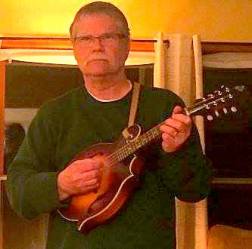
My second meditation of the day is between lunch and dinner. I actually do the same routine as before, but most times there’s no alarm involved, so I just do it as long as time permits. Those two sessions really help break the day into manageable pieces. I have even meditated in my doctor’s office while waiting to be called for my appointment. I have found that playing music or a white-noise CD just distracts me, so I need to be in a quiet room.

What does meditation give me? I think awareness is the gift meditation gives me. Awareness of the present moment and awareness of my body and mind. When I began meditation, I thought I had to count my breaths to succeed, but that’s not true. Meditation really takes being aware and focusing on your breathing – focusing on feeling the air going in and out of my nose, feeling my lungs expand and contract. My mind opens up to let those feelings become positive thoughts and to block negative thoughts.

If you would like to see if meditation is your cup of tea, find a good place and a good time to give meditation a chance. There are also many websites to get more information – just Google “breathing meditation.” It is not a miracle drug – it’s a place for your mind to open and relax. Meditation hasn’t cured my brain injury, but it does make most days good days.


Ric Johnson
13+ years TBI survivor
Facilitator for the Courage Kenny Brain Injury Support Group
Member of the Speaker Bureau for the Mn. Brain Injury Alliance


Thank you, Ric Johnson


Disclaimer:
Any views and opinions of the Guest Blogger are purely his/her own.

(Clip Art compliments of Bing.)

(Photos compliments of Ric Johnson.)

As I say after each post: Please leave a comment by clicking the blue words “Leave a Commentanim0014-1_e0-1 below this post.

Feel free to follow my blog. Click on “Follow” on the upper right sidebar.

If you like my blog, share it (intact) with your friends. It’s easy! Click the “Share” buttons below.

If you don’t like my blog, “Share” it (intact) with your enemies. I don’t care!

Feel free to “Like” my post.


SPEAK OUT! NewsBit . . . . . . NFL Rookie Retires

NFL Rookie Retires
(This news underscores the previous NewsBit.)

presented

by

Donna O’Donnell Figurski


johnson_combine Clemson Safety Jadar Johnson was undrafted in the 2017 draft. As a Free Agent, though, he was signed by the New York Giants of the NFL (National Football League). Many thought he was a diamond-in-the-rough. DiamondJadar himself was excited and said he would do “whatever” it takes to become part of the team that the Giants field on Sundays. But, before he played a single regular-season game, he abruptly retired. His agent’s statement said “… and he values his health. …” Some say that Jadar retired because he became aware of the research on NFL brains recently published in the CTEJournal of the American Medical Association. That article showed that 99% of autopsied NFL brains (110/111) had the devastating and contact-sport-specific brain disease CTE (chronic traumatic encephalopathy).


(Clip Art compliments of Bing.)

As I say after each post: Please leave a comment by clicking the blue words “Leave a Commentanim0014-1_e0-1 below this post.

Feel free to follow my blog. Click on “Follow” on the upper right sidebar.

If you like my blog, share it (intact) with your friends. It’s easy! Click the “Share” buttons below.

If you don’t like my blog, “Share” it (intact) with your enemies. I don’t care!

Feel free to “Like” my post.

diemodi jewelry

uniquely hand-crafted jewelry by donna

Welcome to Harmony Kent Online

The home of all things books

Pete Springer

Passionate Teacher and Future Children's Author

HOPE TBI

Helping Other People Excel - To Be Independent

For the Love of Books, Old and New

Katie Fischer, Writer and Reader of Stories

Charlie Bown

Children's Author

Jessica Hinrichs

“We write to taste life twice, in the moment and in retrospect.” ― Anais Nin

VIVIAN KIRKFIELD - Writer for Children

Picture Books Help Kids Soar

Mindy’s Writing Wonderland

For authors, parents, teachers & everyone who loves children’s books.

Kaitlyn Leann Sanchez

Literary Agent

Surviving Traumatic Brain Injury

TBI - Survivors, Caregivers, Family, and Friends

The Care Factor

Loving someone with a Traumatic Brain Injury

Brain Injury Support Group of Duluth-Extension

Brain Injury Information and SUPPORT

Brain Aneurysm Global Insight

Brain Aneurysm, cerebral hemorrhaging, hemorrhage stroke