Survivors SPEAK OUT! Mark Moore
presented by
Donna O’Donnell Figurski

Mark Moore – Bran Injury Survivor & Author
1. What is your name? (last name optional)
Mark Moore
2. Where do you live? (city and/or state and/or country) Email (optional)
McLean, Virginia, USA mark@mbmoorefoundation.org
3. On what date did you have your brain injury? At what age?
2007 At age 46
4. How did your brain injury occur?
I had two strokes.
5. When did you (or someone) first realize you had a problem?
I was coaching my son’s baseball practice, and I began to lose my balance.
6. What kind of emergency treatment, if any, did you have?
I had a craniectomy (brain surgery in which a piece of the skull is removed, but, unlike a craniotomy, is not returned to its original location) to relieve the pressure on my brain.
7. Were you in a coma? If so, how long?
Yes. I was in a coma for four weeks.
8. Did you do rehab? What kind of rehab (i.e., inpatient or outpatient and occupational and/or physical and/or speech and/or other)? How long were you in rehab?
Yes. I had physical therapy, occupational therapy, and speech therapy as an inpatient for two weeks and then as an outpatient for two months.
8. What problems or disabilities, if any, resulted from your brain injury
(e.g., balance, perception, personality, etc.)?
Initially I had significant diminished use of my left side and loss of peripheral vision in my left eye. I couldn’t walk or speak.
10. How has your life changed? Is it better? Is it worse?
Having a stroke was the worst day AND the best day of my life. It was the worst day because it was scary and it was one of the first times I realized that I had no control over the outcome. It was scary for my wife and my family. When I found out that I had basically been “asleep” for nearly six weeks, I was scared all over again. I had to face the fact that I might not walk, talk, or think like Mark Moore ever again. In fact, I had to recognize that the “old” me might actually be gone. At that moment, it felt like the worst thing I could imagine.

Mark & Brenda Moore with President & Mrs. Obama
As I struggled with those concerns though, I remembered my mother’s words – words I had forgotten, words she had spoken to me during her own health crisis. She said, “Mark, God will never give you more than you are able to handle.” Those words impacted me and turned me around. I was slowly able to stop thinking just of myself. I started thinking about God and what He could do and would do with my life now. He could pick up the pieces of this broken version of me and heal me – create in me the person he meant for me to be. That thought began to work in me, and though I knew it wouldn’t be easy, I also knew that, with God’s help, I could let go of the old Mark and become a new man.
11. What do you miss the most from your pre-brain-injury life?
Riding rollercoasters
12. What do you enjoy most in your post-brain-injury life?
I enjoy my relationship to God.
13. What do you like least about your brain injury?
I dislike the constant scanning to drive
14. Has anything helped you to accept your brain injury?
Having a stroke meant I had to learn to surrender. I had to face the fact that my abilities as a “fix-it guy” were not going to come to the rescue. I had to do something that was hard for me to do. I had to be willing to give up my illusions of who Mark Moore was and hold on for dear life to who God is. That’s surrender! That’s where everything you thought you knew comes to a halt and God finally has enough of your attention to help you become what He planned all along.
When I first looked at what was going to be required of me in the recovery process, I did not want to do it. I thought it would simply be easier if God just shut me down, packed me up, and sent me back to His house. But, He didn’t do that! He kept me in the hospital for several weeks and then sent me back to my house. He showed me that recovery meant I had to totally trust Him and my wife, Brenda, and the therapists, who would bring me back to good health.
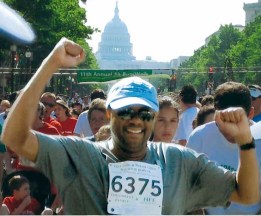
Mark Moore – Brain Injury Survivor – 5K Race
Starting therapy looks daunting. It is daunting, and it’s even frightening! Everything in me resented that I had to be there and that I had to learn all over again things I’d known all my life. If you’re facing therapy and recovery now, all I can tell you is to do what you’re told to do. Make the effort. Try harder than you’ve ever tried in your life, and lean on the people who love you. Open your heart and mind to all that can still be possible for you. That’s what surrender requires. That’s what trusting God is all about. You’ll be in recovery for a long time (maybe the rest of your life), but you’ll be in good hands in the process.
15. Has your injury affected your home life and relationships and, if so, how?
One day (May 12, 2007), I had a stroke, which was followed by another one. I was fine one minute and fighting for my life the next. In the process of recovering from those strokes, I discovered something I had not fully realized before. God had a plan for my life. He had a purpose for me, and I was not on the path He preferred. In one day, my life changed, and my purpose changed with it. To be honest, when I discovered God wanted something more from me, I was relieved. Clearly, there was more I could do, and it didn’t always revolve around the work I had carved out for myself. I was relieved to know that I could step back from the life I designed and be far more comfortable in the one He designed.
 My friends were amazed when I did not show any interest in simply going back to work. They thought it was strange that I did not want to play basketball, a game I had loved playing all my life. What I did want to do was to please God. What energized my spirit and resonated with my soul was to do the things God wanted – to fulfill His purposes in me.
What a difference a day makes! What joy it is to my heart that God was with me through the strokes and is with me now to guide me into being the Mark Moore He always knew I could be. What a joy it is to live more intentionally and more fully awake to the places He would have me go.
16. Has your social life been altered or changed and, if so, how?
Not really
17. Who is your main caregiver? Do you understand what it takes to be a caregiver?
I don’t have or need a caregiver.
18. What are your plans? What do you expect/hope to be doing ten years from now?
When God had my attention as I lay in a hospital bed, He asked me a new question. Whose job is it to help others? Whose job is it to make a difference? Whose job is it to spread the gospel? The answer was the same in every case. It was MY job! God had blessed my work and made it possible for me to bless others. He took me out of the race in which I’d driven laps for twenty years and said, “I have something new for you. I want you to slow down and hear what I have to say.” I stopped then and listened.
God didn’t “give me a stroke.” He used the stroke to give me a new purpose. He used the situation to help me hear His voice more clearly and to understand the job He had in mind. Whose job is it … to do good, to help others, to lend a hand? It’s mine, and it’s yours! Let’s use whatever resources we have been blessed with to help those around us. It will fulfill our life-purpose like nothing else can do.
19. Are you able to provide a helpful hint that may have taken you a long time to learn, but which you wished you had known earlier? If so, please state what it is to potentially help other survivors with your specific kind of brain injury.
It was interesting to me after my stroke experience to discover that I did not want to be “naked” in front of my family – in front of the people who knew me the best. Like Adam and Eve, I wanted to hide so they would not discover my fear and sense my weakness.
As I looked back at my initial reactions to my strokes, I realized we can’t hide from the people who know us well and love us any more than we can hide from God.
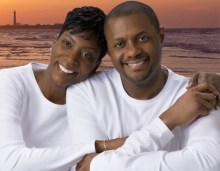
Mark & Brenda Moore
My wife did not want me to hide from her. She was ready to help me – ready to stand beside me and offer me her strength. My friends were like that too. Caregivers and hospital personnel were set to help me, but I had to be willing to be “naked.” I had to be willing to let them see my weaknesses and my vulnerability. I was not the person I had been; I needed their strength.
Another thing that was extremely helpful during my stroke recovery was that I began to regularly put on my headphones to listen to gospel music. The effort to re-establish my fine-motor skills was sometimes grueling, and I wasn’t always sure I could do it. Gospel music comforted me and helped me get through the ordeal. It reminded me over and over again of what Jesus did to give me life, to lift me up, and to restore my soul. It also reminded me that there was nothing I was going through that Jesus did not experience. He paid the price so that I could be restored eternally, spiritually, and physically to this day.
20. What advice would you offer to other brain-injury survivors? Do you have any other comments that you would like to add?
One thing I tell everybody is that you can’t recover from a stroke or any debilitating illness without the help of your family, your friends, and your faith. It can take days, weeks, or months to see any real change in the things you are able to do physically. That means that mentally and emotionally you have to lean on the things that boost your morale and make a difference in your attitude. When it comes to the kind of help your family, friends, and faith can give in your recovery, it all depends on YOU!
I say it depends on you because you are the only one who can let others in to help make a difference. Your spouse can come to your aid every day and cheer you on and encourage you, but it won’t do any good unless you’re willing to receive it. I can admit that there were times when I didn’t really let my wife, Brenda, in. I was scared, and I didn’t want her to know it. I didn’t want to have to tell her that I didn’t think I could do what it took to recover. She had known me as a guy who was a go-getter – someone who rose to the occasion to get things done. After the stroke, though, I didn’t always believe that I had that same courage.
Friends stood beside me as well and helped me get the message that a lot of people cared and were rooting for me. They wanted me to get better and to become the old Mark again.
(Disclaimer: The views or opinions in this post are solely that of the interviewee.)
If you would like to be a part of the SPEAK OUT! project, please go to TBI SPEAK OUT! Survivors Interview Questionnaire for a copy of the questions and the release form.
(Clip Art compliments of Bing.)
As I say after each post: Please leave a comment by clicking the blue words “Leave a Comment” below this post.
Feel free to follow my blog. Click on “Follow” on the upper right sidebar.
If you like my blog, share it with your friends. It’s easy! Click the “Share” buttons below.
If you don’t like my blog, “Share” it with your enemies. I don’t care!
Feel free to “Like” my post.

 Most of you never had the chance to mourn the loss of the loved one you knew because you were too busy helping this “new” person fit in where your dreams for your loved one left off. Although we don’t always show it, your kindness, love, support, and acceptance are noticed and appreciated. Thank you for never giving up on us. You help us know we can continue. We may not have the words to use when we need them, but you will see it in our eyes, by a touch of the hand, or when we smile.
 below this post.
 SPEAK OUT! Itty-Bitty Giant Steps will provide a venue for brain-injury survivors and caregivers to shout out their accomplishments of the week.

 the entire house, etc. Yesterday, I began painting a bedroom, and I plan to finish this morning. I went to a TBI (traumatic brain injury) workshop – an art-therapy group. I also went to a “celebrate-recovery” group – I’ve been trying to help a friend.
 I have difficulty staying focused on these accomplishments and others, since I woke out of a coma eight months ago. I’m glad that I can do these things.

 12. What do you enjoy most in your post-brain-injury life?


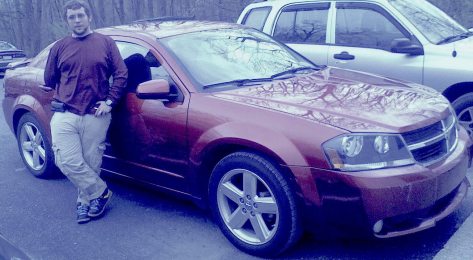
 Three years ago, our lives were turned upside down when my then 21-year-old son had his accident. It has been a long road with many hurdles to overcome, but I am so proud of him. He is my hero and my greatest blessing. And, proof to never give up. We were told that he would probably not make it that night. We were also informed that, if he did, he would not have any quality of life. But, he proved everyone wrong! Many prayers were prayed and many tears were shed, and my son is still with us – and doing very well. The first and second photos are of my son after the accident; the third is him wearing a helmet in recovery; and the fourth photo is of him with his car. (Yes, my son is driving, and his seizures are under control.)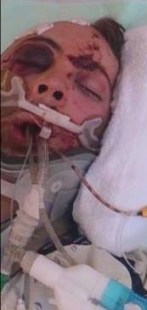




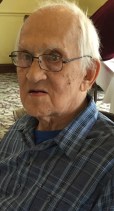
 Twelve years! Twelve years ago today, I came as close as a breath to losing my husband and best friend, David. While exercising (a thing he did every day to stay in shape), David did thirteen chin-ups, one more than he had done every other day. That was the proverbial “straw that broke the camel’s back,” or in David’s case, the “chin-up that caused his subarachnoid hemorrhage.” That day, as I rode with him in the ambulance to the hospital, I never realized what lay ahead for us. I never dreamed that this blip would be life-altering. I thought we’d be home by the end of the day, carrying on with life as usual. I was wrong!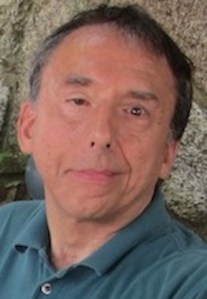



 a problem, there is probably a group for folks to join. Groups for supporting brain-injury survivors and their caregivers, family members, and friends are cropping up everywhere. This is relatively new, since little was known about the seriousness of brain injury until rather recently. When the troops began to come home from the Iraq war with serious brain injuries, people started to notice. Then when the deaths and illnesses of so many former NFL players came to light – starting with Dr. Omalu’s finding of chronic traumatic encephalopathy (CTE) in the brain of Pittsburgh Steeler Mike Webster during an autopsy in 2002 – more people took notice.
 There are virtual groups for caregivers. (One is just for spouses or partners of survivors.) There are groups for both survivors and caregivers together. There are groups for traumatic brain injury survivors; for acquired brain injury survivors; or for survivors with ataxia, multiple sclerosis, or stroke. Some of the benefits of support-groups are that folks are more apt to understand what you are going through. Because they share similar issues, they are able to offer emotional support, suggest advice, or provide tips that worked for them. There is a veritable smorgasbord of ideas out there in cyberworld. If you are looking for an online group to hold your hand, hear you vent, or answer your questions, I promise you will find it.
 If you are not yet convinced that support-groups can be helpful for you, here are a few more reasons. They empower you. They put you in the driver’s seat to take control of what is happening in your life by helping you to find answers. You immediately become a member of a like-minded group of people who accept you, understand you, and is not judgmental. So, if you feel a support-group would be beneficial to you, by all means find one. They can be wonderful!
 the Brain Injury Association of America (BIAUSA.org) and locate your local chapter for your state to find a support-group near you. But, if you prefer the comfort of your home (as I do) and you have nimble fingers, open up your computer and find a Facebook group. There are more than thirty to join. I know … because I am a member of at least thirty. I only wish that I had known about the social media support-groups when David had his brain injury over eleven years ago. With a support-group, you are never alone.


 Raising Awareness of Traumatic Brain Injury - one view at a time. Thanks for visiting my blog
 Surviving Traumatic Brain Injury
Recent Comments