TBI – Survivors, Caregivers, Family, and Friends

SPEAK OUT! Itty-Bitty Giant Steps

presented by

Donna O’Donnell Figurski

Itty-Bitty GIant Steps for BlogSPEAK OUT! Itty-Bitty Giant Steps will provide a venue for brain-injury survivors and caregivers to shout out their accomplishments of the week.

If you have an Itty-Bitty Giant Step and you would like to share it, just send an email to me at neelyf@aol.com.

If you are on Facebook, you can simply send a Private Message to me. It need only be a sentence or two. I’ll gather the accomplishments and post them with your name on my blog approximately once a week. (If you do not want your last name to be posted, please tell me in your email or Private Message.)

I hope we have millions of Itty-Bitty Giant Steps.

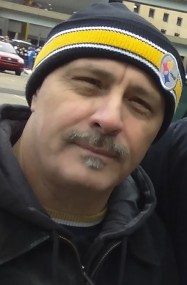
Donna-David-1 copy

David Figurski – Brain Injury Survivor & Donna O’Donnell Figurski

Trash

Donna O’Donnell Figurski (caregiver)I came home from Drama Club ready to take the garbage out.  I was shocked to find that it had already been taken out.  David had done it!  First time since his TBI (traumatic brain injury) twelve years ago! YAY! Can you see my happy dance?Happy Dance

David Grant

David A. Grant – Brain Injury Survivor

David Grant (survivor) It was around two years ago this month that my ability to read returned. Last night, I again fell asleep with a book in my hands. Sure,Mann Reading in Bed my pace is a bit slower, but I’m doing it. Just passed the 300-page mark in an awesome book. (Thanks again, Nick!) I marvel at the fact that I can actually remember a long and complicated plot line, something I was incapable of for years after my accident. How can I not be profoundly grateful?

Note: David is the editor for the e-zine, “TBI Hope & Inspiration.” He is also the author of several books about brain injury. “Metamorphosis, Surviving Brain Injury” and “Slices of Life after Brain Injury

Metamorphosis

Metamorphosis, Surviving Brain Injury

Slices of Life

Slices of Life after Brain Injury

YOU did it!

Congratulations to contributors!

(Clip Art compliments of Bing.)

(Photos compliments of contributors.)

As I say after each post:anim0014-1_e0-1

Please leave a comment by clicking the blue words “Leave a Comment” below this post.

Feel free to follow my blog. Click on “Follow” on the upper right sidebar.

If you like my blog, share it intact with your friends. It’s easy! Click the “Share” buttons below.

If you don’t like my blog, “Share” it intact with your enemies. I don’t care!

Feel free to “Like” my post.

SPEAK OUT! Faces of Brain Injury – Blaine Stanziana (survivor)

presented

by

Donna O’Donnell Figurski

Brain Injury is NOT Discriminating!

bigstock-cartoon-face-vector-people-25671746-e1348136261718It can happen to anyone, anytime, . . . and anywhere.

The Brain Trauma Foundation states that there are 5.3 million people in the United States living with some form of brain injury.

On “Faces of Brain Injury,” you will meet survivors living with brain injury. I hope that their stories will help you to understand the serious implications and complications of brain injury.

The stories on SPEAK OUT! Faces of Brain Injury are published with the permission of the survivor or designated caregiver.

If you would like your story to be published, please send a short account and two photos to me at neelyf@aol.com. I’d love to publish your story and raise awareness for Brain Injury.

Blaine Stanziana (survivor)

Blaine Stanziana – Brain Injury Survivor

My story begins after a brain injury in 1979 at age 21. I developed epilepsy that went undiagnosed for eleven years. I had over 60,000 complex partial seizures; then I had a grand mal seizure. Falling six feet to a cement floor in 1988, I had a subdural hematoma that caused my second brain injury.

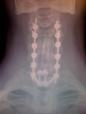
Here is my neck, which was done in 2007.

13557847_10209433750178851_6480153340725477890_n   13532957_10209433749178826_7429747293014904664_n13559143_10209433746178751_4503340091034294199_o

That’s three inches of bone from my left leg in the center of the sixteen screws. There is hip bone (two inches) in there as well. I was on the table for fourteen hours. I spent five years sleeping in a chair and a year begging for death. I could not talk for over a year because they split my vocal cords. But, I am alive, married for 35 years, and doing great!

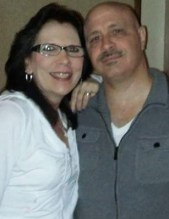
Blaine Stanziana & Wife

Brain Injury Survivor, Blaine Stanziana and his wife

I coined these two sayings over 35 years ago:

“A head injury comes with a life sentence, and the only treatment for a brain injury is … HOPE.” “You cannot be defeated by what happens TO you – only by what happens WITHIN you.”

“It’s All in Your Head” by survivor, Blaine Stanziana

Blaine is the author of “It’s All in Your Head.”

Thank you, Blaine Stanziana, for sharing your story.

(Clip Art compliments of Bing.)

(Photos compliments of contributor.)

As I say after each post: Please leave a comment by clicking the blue words “Leave a Commentanim0014-1_e0-1 below this post.

Feel free to follow my blog. Click on “Follow” on the upper right sidebar.

If you like my blog, share it intact with your friends. It’s easy! Click the “Share” buttons below.

If you don’t like my blog, “Share” it intact with your enemies. I don’t care!

Feel free to “Like” my post.

NOTE:     Although this link was active at the time of this posting, it no longer exists. Apparently, Disney has pulled the content due to copyright. I apologize for any inconvenience or disappointment. The updated link will take you to trailers.

Brain Injury Resources – Movie Link – “Inside Out”

presented by

Donna O’Donnell Figurski

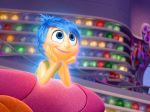
Inside-Out-2015-Animated-Cartoon-Movie-HD-Wallpaper

Recently I published a short review of the Disney movie, “Inside Out.” The movie examines the inner-workings of the brain, and in particular the core memories of a youngster named, Riley.

Core memories are the essence of what makes up an individual.

thThe movie also explains, in its animated form, how both long-term and short-term memories are stored, retrieved, and sometimes lost forever.

635890961371189508-XXX-XXX-INSIDE-OUT-RGB-D230-8FPUB.PUB16.127-78518218

Although I watched the movie (twice) on Netflix, I’ve located it on the web for your easy access. I hope you will take the time to watch it. It’s fun … and informative!

Enjoy “Inside Out.”

(Clip Art compliments of Bing.)

As I say after each post:

Feel free to leave a comment by clicking the blue words “Leave a Comment” below this post.

Please follow my blog. Click on “Follow Me Via eMail” on the right sidebar of your screen.anim0014-1_e0-1

If you like my blog, click the “Like” button under this post.

If you REALLY like my blog, share it with your friends. It’s easy! Click the “Share” buttons below.

If you don’t like my blog, “Share” it with your enemies. That works for me too!

Brain Injury Resources – Movie Recommendation – Inside Out

presented by

Donna O’Donnell Figurski

“Do you ever look at someone and wonder What is going on inside their head?”

“Inside Out” movie about the workings of the brain by Disney

That’s how the movie Inside Out begins. I really like it. I’ve now seen it twice. The beginning made immediate sense the second time that I watched the movie.

This Academy Award-winning, animated film by Walt Disney’s Pixar Animation Studios is definitely for adults. Young children will likely be entertained by the hysterically funny characters, but adults will find it both enormously entertaining and immensely informative.

The movie follows the emotional development of Riley from infancy to young, prepubescent girl. Each emotion is hilariously depicted as a character (Joy, Sadness, Disgust, Fear, and Anger), whose appearance and demeanor depicts the emotion represented.

The emotions control Riley’s behavior from a control panel in the brain. Riley is a happy young child, and Joy is pleased. But, things get more complicated as Riley gets older. Riley’s parents move, and Riley has a crisis that challenges her emotions. The resolution requires the emotions to cooperate.

In no way is the movie anatomically correct, but in contrast the psychological concepts are accurate. The introduction of a concept makes understanding it intuitive and effortless. Among other topics, you will painlessly learn about the making, storage, and dumping of memories, about the importance of emotion and memory in one’s behavior, that core memories are crucial to personality, and that joy and sadness are both important emotions. The movie deals with sleeping, dreaming, the difficulty in differentiating between fact and opinion, the subconscious, abstract thought, imaginary friends, imagination, train-of-thought (depicted as a real train), etc. In fact, my brother-in-law, who teaches introductory psychology to college students, is considering making watching this movie a requirement for the course.

I highly recommend it. (Trailer)

SPEAK OUT! Faces of Brain Injury Shauna Farmer (survivor)

presented

by

Donna O’Donnell Figurski


Brain Injury is NOT Discriminating!

bigstock-cartoon-face-vector-people-25671746-e1348136261718It can happen to anyone, anytime, . . . and anywhere.

The Brain Trauma Foundation states that there are 5.3 million people in the United States living with some form of brain injury.

On “Faces of Brain Injury,” you will meet survivors living with brain injury. I hope that their stories will help you to understand the serious implications and complications of brain injury.

The stories on SPEAK OUT! Faces of Brain Injury are published with the permission of the survivor or designated caregiver.

If you would like your story to be published, please send a short account and two photos to me at neelyf@aol.com. I’d love to publish your story and raise awareness for Brain Injury.

Shauna Farmer (survivor)

Shauna Farmer 2 Survivor 032417I rolled a 4-wheeler. My head hit a tree (we think), and I was not wearing a helmet. I kept rolling, ensuing broken bones – ribs, clavicle, and three vertebrae in my back. The TBI (traumatic brain injury) I sustained is that of “shaken-baby syndrome,” aka “diffuse axonal injury” (damage to neuron connections over a widespread area). The prognosis was that I wouldn’t walk, talk, or even wake up. But, I walked out of the rehab hospital five weeks later. Unassisted, thank you very much! I am hoping to be able to drive soon. th

This journey of TBI is a long and arduous one. It’s a little bit easier if you have people who know firsthand what you are dealing with. So, keep on swimming, Gladiators! You got this.


Thank you Shauna Farmer for sharing your story.

(Clip Art compliments of Bing.)

(Photos compliments of contributor.)

As I say after each post: Please leave a comment by clicking the blue words “Leave a Commentanim0014-1_e0-1 below this post.

Feel free to follow my blog. Click on “Follow” on the upper right sidebar.

If you like my blog, share it intact with your friends. It’s easy! Click the “Share” buttons below.

If you don’t like my blog, “Share” it intact with your enemies. I don’t care!

Feel free to “Like” my post.

Survivors SPEAK OUT!  Bonnie Weikel

presented by

Donna O’Donnell Figurski
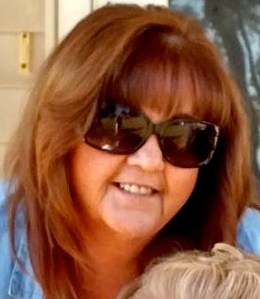
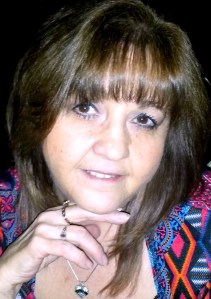
Bonnie Weikel – Brain Injury Survivor

1. What is your name? (last name optional)

Bonnie Weikel

2. Where do you live? (city and/or state and/or country) Email (optional)

New Bethlehem, Pennsylvania, USA

3. On what date did you have your brain injury? At what age?

I was 47. My brain hemorrhage was in 2004.

4. How did your brain injury occur?

I had a subarachnoid hemorrhage (blood leaking into the space between two of the membranes that surround the brain; mine was from a ruptured brain aneurysm). I always like saying the correct medical terminology because I can actually remember how to spell it. For the majority of the time, I refer to it as “My head blowing up.” I also had a stroke during my craniotomy.

5. When did you (or someone) first realize you had a problem?

I was aware of my problems after I woke up from surgery. (The doctor wasn’t able to guarantee what kind of shape I would be in if I survived the surgery.)

6. What kind of emergency treatment, if any, did you have?

First, the hospital ruled out a stroke, and, because I complained of “the headache from hell,” they did a CT (computerized tomography) scan and found the bleed on my brain. They packed me up and transported me to Allegheny General Hospital in Pittsburgh, where I had my brain surgery done.

operating-theatre-illustration-surgeon-patient-hospital-41734906.jpg7. Were you in a coma? If so, how long?

No, thank God. I recognized everyone when I came out of surgery. I just couldn’t remember who was there to visit from one minute to the next. My daughter took pictures of me with everyone who came to see me.

8. Did you do rehab? What kind of rehab (i.e., inpatient or outpatient and occupational and/or physical and/or speech and/or other)? How long were you in rehab?

I was in inpatient therapy for a month and then in outpatient therapy for about five weeks. I had to learn to do everything all over again – starting with feeding and dressing myself.

9. What problems or disabilities, if any, resulted from your brain injury
(e.g., balance, perception, personality, etc.)?

I have short-term memory loss and issues with balance, vision, and hearing. I have worked very hard over the past ten years to get to where I am today, and I did it all by myself.

10. How has your life changed? Is it better? Is it worse?

My life has changed dramatically. It is better. I love the “new” me much better than the old version. I also found out who my true friends are.

11. What do you miss the most from your pre-brain-injury life?

I did lose one thing I used to love to do. I used to sew for hours. I had my own sewing business. I made anything from window treatments to wedding gowns, and I was good at it. I lost all desire to sew; it is no longer something I love to do. It is more of a chore.

12. What do you enjoy most in your post-brain-injury life?

I like that I am back in school. I am taking college courses online. It is the biggest challenge I have taken on since the TBI (traumatic brain injury).

13. What do you like least about your brain injury?

I have an invisible disability, and some people think I am faking it and living off the system.

14. Has anything helped you to accept your brain injury?

Yes. Changing my attitude about people and life in general has helped. One day, I decided I could sit and cry for the rest of my life about all that I have lost, or I could be happy with my new life and live it.

15. Has your injury affected your home life and relationships and, if so, how?

My home life has been affected, but in a positive way.

I take pride in myself and in my accomplishments. Relationship-wise, it’s been a curse.

I haven’t been able to find people who can deal with my issues because they just do not understand. I am thankful they don’t understand how life is for a TBI survivor because, if they did, it would mean they also suffered a TBI. (The only way anyone can truly understand what life is like for a survivor is to live it themselves.)

16. Has your social life been altered or changed and, if so, how?

Yes. My social life has changed a lot. During the first year, I found out who my real friends are. Now I have a small circle of friends who I know I can trust. I go out dancing once a week with friends. I do this because I still can.

17. Who is your main caregiver? Do you understand what it takes to be a caregiver?

After living with my daughter for about a year, I am now on my own. I do everything myself – I am even back to driving. I will say this much: I thank God for my GPS! Ha, Ha! Yes, I understand what it is to be a caregiver, and it takes a special kind of patience for a caregiver of someone with a TBI.

18. What are your plans? What do you expect/hope to be doing ten years from now?

I am working on a Communications degree and changing to Community Service and Social Work. My goal is to work with other survivors as a life-coach/advocate. I am getting better grades now than I ever did in high school. I can only handle two classes a semester, so it will take twice as long as normal to get my degree. But, I will see it through to the end.

19. Are you able to provide a helpful hint that may have taken you a long time to learn, but which you wished you had known earlier? If so, please state what it is to potentially help other survivors with your specific kind of brain injury.
It didn’t take me as long as it does for some others, but learning to love your new self and accept your new life is, I believe, the secret to moving on. Love and acceptance of yourself is the base you can grow from.

20. What advice would you offer to other brain-injury survivors? Do you have any other comments that you would like to add?

I highly recommend that brain-injury survivors seek out other survivors. It was such an awesome feeling the first time I spoke to someone who “Gets it.” It was like someone turned my light back on. I felt free and almost normal again. I was no longer alone. I have a motto I live by. It was written from one of the first survivors I met – in a Yahoo health and wellness chatroom. I think he went by “Rhino.” Anyway, here it is. “Mourn what you lost. Use what you have. Anyone can quit.” My strongest advice to other survivors is “NEVER GIVE UP!”


If you would like to be a part of the SPEAK OUT! project, please go to TBI SPEAK OUT! Survivors Interview Questionnaire for a copy of the questions and the release form.

(Clip Art compliments of Bing.)

As I say after each post: Please leave a comment by clicking the blue words “Leave a Commentanim0014-1_e0-1 below this post.

Feel free to follow my blog. Click on “Follow” on the upper right sidebar.

If you like my blog, share it with your friends. It’s easy! Click the “Share” buttons below.

If you don’t like my blog, “Share” it with your enemies. I don’t care!

Feel free to “Like” my post.


Inspiration

by

Bonni Villarreal (caregiver)

presented by

Donna O’Donnell Figurski

Bonni Villarreal – Caregiver

March 21, 2012, is a day that changed my life forever. It started off like any average day. I got up and went to work. Mike was asleep when I left. I called him around 8:30 that morning to let him know I wouldn’t be at my desk, in case he tried to call me. He sounded fine. Then, just by chance, I happened to be at my desk at 10 am when my phone rang. It was Mike … telling me he was having a stroke.

By the time I got to the house, the ambulance was there. Mike was awake and reaching for me. I didn’t think it was too serious because Mike was alert and talking. But, by the time we got to the hospital, that had changed. The doctor informed me that Mike had a huge blood clot near his cerebellum, and he had to be life-flighted to another hospital because he was too critical to stay at the one he was at.


I had to sign papers for life-saving brain surgery. Mike was in a coma for ten days. We didn’t know if he would wake up, and, if he did, what condition he would be in. When he “woke up,” Mike wasn’t anything like the man I married. He stayed in the hospital for another month, and then he was transferred to a nursing home.

Those days were some of the darkest in my life. They treated Mike as if he were a hopeless case. I wonder what would’ve happened to him if I hadn’t been around.

Mike Villarreal – TBI Survivor

He was tube-fed, couldn’t speak (he wrote instead), and couldn’t walk. He was totally helpless. Plus, he was battling infection after infection. I didn’t think things would ever return to normal.

Fast forward to January 2017 – almost five years post stroke. Mike passed his barium swallow test, and he is having his G-tube removed! He is walking almost unassisted! He is talking! I told Mike, “You are an inspiration. You give hope to people who have lost it, you have renewed hope for people who are about to give up, and you keep hope alive for people who are just starting this long journey.”

Mike wants everyone to know – DON’T EVER, EVER, EVER GIVE UP. No matter if it’s been five, ten, or fifteen years. Keep hope alive! Mike did, and look how far he has come!

As I say after each post: Please leave a comment by clicking the blue words “Leave a Commentanim0014-1_e0-1 below this post.

Feel free to follow my blog. Click on “Follow” on the upper right sidebar.

If you like my blog, share intact it with your friends. It’s easy! Click the “Share” buttons below.

If you don’t like my blog, “Share” it intact with your enemies. I don’t care!

Feel free to “Like” my post

SPEAK OUT! Faces of Brain Injury – Ina M. Dutkiewicz (survivor)

presented

by

Donna O’Donnell Figurski

Brain Injury is NOT Discriminating!

bigstock-cartoon-face-vector-people-25671746-e1348136261718It can happen to anyone, anytime, . . . and anywhere.

The Brain Trauma Foundation states that there are 5.3 million people in the United States living with some form of brain injury.

On “Faces of Brain Injury,” you will meet survivors living with brain injury. I hope that their stories will help you to understand the serious implications and complications of brain injury.

The stories on SPEAK OUT! Faces of Brain Injury are published with the permission of the survivor or designated caregiver.

If you would like your story to be published, please send a short account and two photos to me at neelyf@aol.com. I’d love to publish your story and raise awareness for Brain Injury.

Ina M. Dutkiewicz (survivor)

Dutkiewicz, Ina M. Survivor 2 041316

Ina M. Dutkiewicz- Brain Injury Survivor

I had a near-fatal car accident on my way to work on February 3, 2010. I was immediately put into a coma from the violent crash, and I stayed in that coma for over four weeks. My pelvis was broken on both sides from my seat belt. When I woke up, I was classified as “not weight bearing” (wheelchair-bound). I slowly moved to a walker, and then to a cane. Now I can navigate without the cane if the weather is nice and not snowy or icy. I had to learn to walk again (I still have gait problems), as well as relearn to swallow and eat. (They started me out with ice cream! 🙂 ) I also had to do disability driving lessons before I could drive again.

It has been a long, scary road these past seven years. I was not willing to give up on myself, and I gave my all and then some to my recovery. I am hoping to someday return to work part-time.

Thank you Ina M. Dutkiewicz for sharing your story.

(Clip Art compliments of Bing.)

(Photos compliments of contributor.)

As I say after each post: Please leave a comment by clicking the blue words “Leave a Commentanim0014-1_e0-1 below this post.

Feel free to follow my blog. Click on “Follow” on the upper right sidebar.

If you like my blog, share it intact with your friends. It’s easy! Click the “Share” buttons below.

If you don’t like my blog, “Share” it intact with your enemies. I don’t care!

Feel free to “Like” my post.

Survivors SPEAK OUT!  Amy Zellmer

presented by

Donna O’Donnell Figurski

12092720_887813074587576_567905417_n

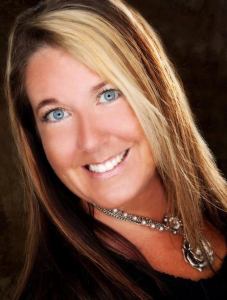
Amy Zellmer – Brain Injury Survivor

1. What is your name? (last name optional)

Amy Zellmer

2. Where do you live? (city and/or state and/or country) Email (optional)

Saint Paul, Minnesota, USA

3. On what date did you have your brain injury? At what age?

February 3, 2014 – just shy of my 40th birthday

4. How did your brain injury occur?

I slipped on a patch of ice while walking down an inclined driveway.

5. When did you (or someone) first realize you had a problem?

I knew right away I wasn’t OK. I had an excruciating pain in my head where I landed, and my vision was distorted.

6. What kind of emergency treatment, if any, did you have?

My physical injuries were addressed, but the doctor felt that I had a concussion and that I would be better in 4-6 weeks.

7. Were you in a coma? If so, how long?

3-zellmer-amy-1

Amy Zellmer – Brain Injury Survivor

I wasn’t in a coma, but I may have blacked out for a minute or two.

8. Did you do rehab? What kind of rehab (i.e., inpatient or outpatient and occupational and/or physical and/or speech and/or other)? How long were you in rehab?

I didn’t find a functional neurologist until two years after my fall. He was able to help me with my dizziness and balance issues, which I had complained about to every single one of my doctors. Even the general neurologist didn’t do anything for me. I had only had craniosacral therapy up to this point.

9. What problems or disabilities, if any, resulted from your brain injury
(e.g., balance, perception, personality, etc.)?

My injury caused issues with dizziness, balance, gait, fatigue, overstimulation, brain fog, memory, and aphasia. My fall also caused a dislocated sternum, severe whiplash, and torn muscles.

10. How has your life changed? Is it better? Is it worse?

My life is definitely different, and I have not yet returned to 100%. However, I now have more energy than I did right after my brain injury, and my memory is increasing.

11. What do you miss the most from your pre-brain-injury life?

I miss having the energy to do all the things I want to do and to be able to work 40 hours a week. I also used to have an “internal GPS.” Now I get lost easily.

5-zellmer-amy-yoga-on-beach

Amy Zellmer – Brain Injury Survivor

12. What do you enjoy most in your post-brain-injury life?

I enjoy the friendships I have made and the opportunities I have had to be an advocate and raise awareness about this often-invisible injury.

13. What do you like least about your brain injury?

I dislike not having enough energy to get through an entire day, and I lament the loss of my organizational skills and memory.

4-zellmer-amy-computer-copy

Amy Zellmer – Brain Injury Survivor

14. Has anything helped you to accept your brain injury?

Writing has been a huge part of my self-therapy.

15. Has your injury affected your home life and relationships and, if so, how?

No answer

16. Has your social life been altered or changed and, if so, how?

I no longer enjoy crowds and noisy restaurants. It’s hard for me to listen to a conversation with more than just one or two people.

17. Who is your main caregiver? Do you understand what it takes to be a caregiver?

I am my own caregiver.

18. What are your plans? What do you expect/hope to be doing ten years from now?

I will continue advocating for TBI (traumatic brain injury) awareness. This often-invisible injury is misunderstood by SO many – including healthcare professionals.

19. Are you able to provide a helpful hint that may have taken you a long time to learn, but which you wished you had known earlier? If so, please state what it is to potentially help other survivors with your specific kind of brain injury.

7-zellmer-amy-with-brain

Amy Zellmer – Brain Injury Survivor

I wish I had found a functional neurologist earlier on in my recovery. It took me over two years to get the treatment I needed for my visual problems, dizziness, and balance issues. Also, I wish I had taken someone with me to my early neurology appointments to help advocate for me (plus to be able to remember what the docs said).

20. What advice would you offer to other brain-injury survivors? Do you have any other comments that you would like to add?

Our attitude determines our recovery. A positive attitude is a MUST. Even when we have dark days and it seems like we will never get better, we MUST remember that there is always hope. It’s a long road, but the new friendships made with other TBI survivors is worth it!

NOTE 1:

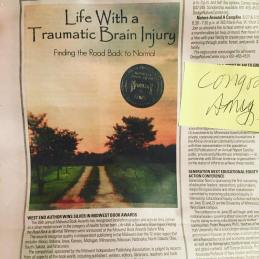
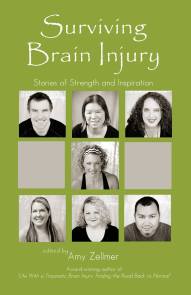
Amy Zellmer is the author of “Life With a Traumatic Brain Injury: Finding the Road Back to Normal.” She also compiled more than 100 stories for “Surviving Brain Injury; Stories of Strength and Inspiration.”

2-life-with-a-traumatic-brain-injury

“Life With a Traumatic Brain Injury: Finding the Road Back to Normal” by Amy Zellmer

1-surviving-brain-injury-stories-of-strength-and-inspiration

“Surviving Brain Injury: Stories of Strength and Inspiration” compiled by Amy Zellmer

NOTE 2:

My story, “Nightmare in the Disability Lane,” can be found in Chapter 29 on page 114.

If you would like to be a part of the SPEAK OUT! project, please go to TBI SPEAK OUT! Survivors Interview Questionnaire for a copy of the questions and the release form.

(Clip Art compliments of Bing.)

As I say after each post: Please leave a comment by clicking the blue words “Leave a Commentanim0014-1_e0-1 below this post.

Feel free to follow my blog. Click on “Follow” on the upper right sidebar.

If you like my blog, share it with your friends. It’s easy! Click the “Share” buttons below.

If you don’t like my blog, “Share” it with your enemies. I don’t care!

Feel free to “Like” my post.


SPEAK OUT! Itty-Bitty Giant Steps

presented by

Donna O’Donnell Figurski

Itty-Bitty GIant Steps for BlogSPEAK OUT! Itty-Bitty Giant Steps will provide a venue for brain-injury survivors and caregivers to shout out their accomplishments of the week.

If you have an Itty-Bitty Giant Step and you would like to share it, just send an email to me at neelyf@aol.com.

If you are on Facebook, you can simply send a Private Message to me. It need only be a sentence or two. I’ll gather the accomplishments and post them with your name on my blog approximately once a week. (If you do not want your last name to be posted, please tell me in your email or Private Message.)

I hope we have millions of Itty-Bitty Giant Steps.

16358690_1201798153189065_1370881325_n

David Smith – Brain Injury Survivor

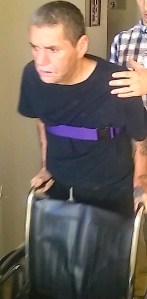
David Smith (survivor) … Today’s Itty-Bitty Giant Step is going to be to just get out of bed and to stay up.

bed


bonni-villarreal-1

Bonni Villarreal – Caregiver for Husband

Bonni Villarreal (caregiver) … My husband had a stroke in 2012, so he has an acquired brain injury (ABI). It has been a long, hard road as is most of what you post about. But, I do have wonderful news to report. After almost five years of having a G-Tube (gastrostomy a332i0_185tube), Mike is now able to drink fluids! (He’s been eating for a long time, but we didn’t think he would ever get back the ability to swallow liquids.) So, DON’T EVER GIVE UP! It’s almost five years later, and Mike is proving doctors wrong every day. He is going for a swallow test, so the tube can come out for good … best present ever!

YOU did it!

Congratulations to contributors!

(Clip Art compliments of Bing.)

(Photos compliments of contributors.)

As I say after each post:anim0014-1_e0-1

Please leave a comment by clicking the blue words “Leave a Comment” below this post.

Feel free to follow my blog. Click on “Follow” on the upper right sidebar.

If you like my blog, share it intact with your friends. It’s easy! Click the “Share” buttons below.

If you don’t like my blog, “Share” it intact with your enemies. I don’t care!

Feel free to “Like” my post.

diemodi jewelry

uniquely hand-crafted jewelry by donna

Welcome to Harmony Kent Online

The home of all things books

Pete Springer

Passionate Teacher and Future Children's Author

HOPE TBI

Helping Other People Excel - To Be Independent

For the Love of Books, Old and New

Katie Fischer, Writer and Reader of Stories

Charlie Bown

Children's Author

Jessica Hinrichs

“We write to taste life twice, in the moment and in retrospect.” ― Anais Nin

VIVIAN KIRKFIELD - Writer for Children

Picture Books Help Kids Soar

Mindy’s Writing Wonderland

For authors, parents, teachers & everyone who loves children’s books.

Kaitlyn Leann Sanchez

Literary Agent

Surviving Traumatic Brain Injury

TBI - Survivors, Caregivers, Family, and Friends

The Care Factor

Loving someone with a Traumatic Brain Injury

Brain Injury Support Group of Duluth-Extension

Brain Injury Information and SUPPORT

Brain Aneurysm Global Insight

Brain Aneurysm, cerebral hemorrhaging, hemorrhage stroke