TBI – Survivors, Caregivers, Family, and Friends

Archive for the ‘Brain Injury Resources’ Category

Brain Injury Resources . . . . . “Jump on the Bumper” to Raise Awareness of Brain Injury

“Jump on the Bumper” to Raise Awareness of Brain Injury

presented

by

Donna O’Donnell Figurski

Kidd Koziol, Beth Survivor 2

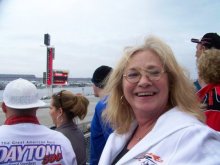
Beth Kidd Koziol – Brain Injury Survivor – NASCAR enthusiast

If you have a NEED for Speed, then “Jump on the Bumper” with our own Beth Kidd Koziol. Beth’s name and photo will be on the bumper of driver Joey Gase’s racecar as he races around the Charlotte Motor Speedway (in North Carolina) in search of a win in the Xfinity Race on Memorial Day weekend.

Joey Gase

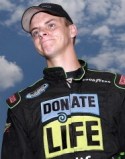
Joey Gase – NASCAR Driver


Joey lost his mother to a brain aneurysm when he was eighteen. Joey donated his mother’s organs, and today 66 people are alive because of them. Joey’s goal is to raise awareness for “Donate Life” and traumatic brain injury groups of North Carolina.

Beth, a NASCAR enthusiast, invites other brain injury survivors to take the ride of their life with her on the bumper of Joey’s car and help her fulfill her dream of raising awareness for brain injury.

Joey Gase and Car

Joey Gase – NASCAR Driver

All I can add is “Beth, hang on tight!”

Please click the link below for details.

“Jump on the Bumper” with Beth Kidd Koziol


As I say after each post:

Feel free to leave a comment by clicking the blue words “Leave a Comment” below this post.

Please follow my blog. Click on “Follow Me Via eMail” on the right sidebar of your screen.anim0014-1_e0-1

If you like my blog, click the “Like” button under this post.

If you REALLY like my blog, share it with your friends. It’s easy! Click the “Share” buttons below.

If you don’t like my blog, “Share” it with your enemies. That works for me too!

Brain Injury Resources . . . . . Tracy Chapman’s Song “New Beginning” Could Be an Anthem for Survivors

Tracy Chapman’s Song “New Beginning” Could Be an Anthem for Survivors

presented

by

Donna O’Donnell Figurski


Brain th-2The major challenge of brain-injury survivors is to eventually accept the “new” persons they have become. From the SPEAK OUT

Tracy Chapman

Tracy Chapman – Singer/Songwriter

Survivor Interviews on this blog, it is common to find that survivors achieve their highest quality-of-life when they finally accept their brain injury and all the limitations that have resulted. They essentially make new lives for themselves. The song “New Beginning” by Tracy Chapman was obviously written about the world, but the words could apply to survivors. (Audio, Lyrics)


As I say after each post:

Feel free to leave a comment by clicking the blue words “Leave a Comment” below this post.

Please follow my blog. Click on “Follow Me Via eMail” on the right sidebar of your screen.anim0014-1_e0-1

If you like my blog, click the “Like” button under this post.

If you REALLY like my blog, share it with your friends. It’s easy! Click the “Share” buttons below.

If you don’t like my blog, “Share” it with your enemies. That works for me too!

Brain Injury Resources . . . . . HAPPY BIRTHDAY!!!! Surviving Traumatic Brain Injury

Happy Birthday to Surviving Traumatic Brain Injury

presented

by

Donna O’Donnell Figurski

happy-birthday.jpg

Happy Birthday to Surviving Traumatic Brain Injury Blog. We are two-years-old.

There are more than 400 articles published on Surviving Traumatic Brain Injury Blog, Happy-2nd-Birthdaywhich hopefully is helping brain injury survivors, their caregivers, families, and friends.

If you want to learn more “About Me and my Blog, click the link. Each category is described in a nutshell.

Surviving Traumatic Brain Injury Blog sends a million hugs to its participants, followers, and random readers. Everyone is invited to subscribe or drop in Million HUgs 184495anytime. Just click the “Follow Me” button in the right sidebar under the “Follow Me Via Email” category.


Contact me if:
You want to share an Itty-Bitty GIANT Step.
You want to share an Survivors SPEAK OUT! interview.
You want to share a Caregivers SPEAK OUT! interview.
You want to share a Faces of Brain Injury.

You want to share an “So, Whaddya Think?” opinion.
You want to write a Guest Blog article.
You want to share an ETC. ETC. etc. etc.

Please SHARE!

Survivingtraumaticbraininjury.com


As I say after each post:anim0014-1_e0-1

Please leave a comment by clicking the blue words “Leave a Comment” below this post.

Feel free to follow my blog. Click on “Follow” on the upper right sidebar.

If you like my blog, share it intact with your friends. It’s easy! Click the “Share” buttons below.

If you don’t like my blog, “Share” it intact with your enemies. I don’t care!

Feel free to “Like” my post.


(Clip Art compliments of Bing.)

(Photo compliments of contributor.)

Brain Injury Resources: . . . Movies & Documentaries About Sports and Brain Injury

Brain Injury Resources: Movies & Documentaries

About Sports and Brain Injury

presented

by

Donna O’Donnell Figurski


The following are in alphabetical order.

Brain th-2


Concussion

Concussion

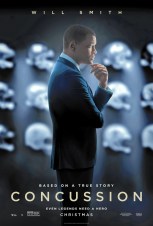
ConcussionThis drama is based on the discovery of CTE (chronic traumatic encephalopathy) in the brains of deceased former NFL (National Football League) players by forensic neuropathologist Dr. Bennet Omalu. CTE is a serious disease of the brain, found mostly in football players. It is caused by concussions and repeated sub-concussive hits. CTE has been found to cause several neurological problems, including early memory loss, impulsive behavior, and dementia. The movie details Dr. Omalu’s life, especially after his discovery, and the walls that he had to tear down to make this discovery known.

The movie, currently in theaters, stars Will Smith as Dr. Bennet Omalu.

Movie details and trailer are at http://www.sonypictures.com/movies/concussion/.


Gridiron Gladiators

Gridiron Gladiators

Gridiron Gladiators This movie documents the history of football since the late 1800s. It depicts how football has evolved through the years and shows the extreme violence of the game. This documentary shows that, though football is one of America’s favorite sports, it is in dire need of reformation to reduce greatly or cease the possibility of getting a brain injury.

A stream of this documentary can be rented for $7 at http://gridirongladiatorsmovie.com/. Click “Stream Movie” to see the trailer.
 

Head Games

Head Games

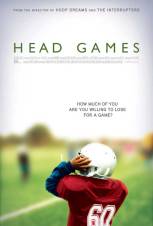
Head Games This documentary is not just about American football, but about any sport that can readily cause brain injury, including soccer and hockey. George Visger, a former NFL (National Football League) player for the San Francisco 49ers, states in the documentary, “It’s been known for a long time that banging your head over and over and over again can be a bad thing.” This documentary also addresses the risks of children playing sports that can cause brain injury.

See it free online at http://www.hulu.com/watch/446640.
 

League of Denial

League of Denial

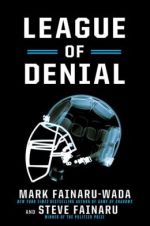
League of Denial: The NFL’s Concussion CrisisThis Frontline documentary shows the role of the NFL (National Football League) in the serious problem of getting concussions on the playing field. It unveils the stories of several NFL players who were diagnosed posthumously with CTE (chronic traumatic encephalopathy), a disease of the brain discovered by forensic neuropathologist Dr. Bennet Omalu. The story of Dr. Omalu and his discovery of CTE in American football players is the basis for the movie “Concussion.”

See it free online at http://www.pbs.org/wgbh/frontline/film/league-of-denial/.

Read about it on my blog at

https://survivingtraumaticbraininjury.com/2016/01/06/so-whaddya-think-football-puts-childrens-brains-at-risk/.
 

The Crash Reel

The Crash Reel

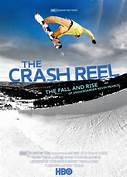
The Crash Reel” This documentary is a gripping 4+ star movie about Kevin Pearce, a champion snowboarder who was expected to win a gold medal in the 2010 Winter Olympics. While training on the half-pipe, Kevin missed his mark and severely slammed his head. His dream of an Olympic gold medal disappeared as he was faced with a traumatic brain injury (TBI). You will see breathtaking footage of Kevin snowboarding before his TBI.

See it free online at https://vid.me/x2HU/the-crash-reel. See the trailer at https://www.youtube.com/watch?v=2KkFZ-QC53Q.


The United States of Football

The United States of Football

The United States of Football This documentary is yet another look at the dangers of concussions in American football. It features 40-year-old Kyle Turley, former player for the New Orleans Saints, the St. Louis Rams, and the Kansas City Chiefs, as he talks about his fears and concerns about his own possible impending memory loss and dementia. It features other former NFL (National Football League) players who are in the throes of brain damage and shows how their lives have collapsed after repeated concussions. It delves into the harm that football can cause youngsters, whose brains are still developing.

A stream of this documentary can be rented for $3.99 at http://theusof.com/store.

The trailer can be seen at https://www.youtube.com/watch?v=Z8JMSMvWsBE.

Read about it on my blog at https://survivingtraumaticbraininjury.com/2015/10/19/4643/.


As I say after each post:

Feel free to leave a comment by clicking the blue words “Leave a Comment” below this post.

Please follow my blog. Click on “Follow Me Via eMail” on the right sidebar of your screen.anim0014-1_e0-1

If you like my blog, click the “Like” button under this post.

If you REALLY like my blog, share it intact with your friends. It’s easy! Click the “Share” buttons below.

If you don’t like my blog, “Share” it intact with your enemies. That works for me too!

(Clip Art compliments of Bing.)
 

Brain Injury Resources . . . . . . Will Smith’s Movie, Concussion, Based on True Story

Will Smith’s Movie, Concussion, Based on True Story 

presented

by

Donna O’Donnell Figurski

Brain th-2Concussion is scheduled to be in theaters in late December, but it is already making headlines (review and trailer). The National Football League (NFL) knows that its Achilles heel is the high risk of brain injury to its players, not only from documented concussions, which are likely to be far fewer in number than actual concussions, but also from the repeated sub-concussive hits, which many neurologists believe contribute to brain injury. Former players are concerned (video of the song Final Drive by former NFL star Kyle Turley), and current players are becoming concerned. Recently a promising rookie linebacker with the San Francisco 49ers quit after one season over the fear of brain injury.

concussion-movie-nfl-20150903

Concussion

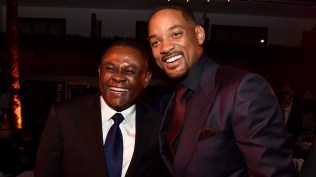
Concussion is based on the true story of the discovery of the brain disease known as chronic traumatic encephalopathy (CTE) by Dr. Bennet Omalu, a Nigerian pathologist who did the autopsy of Hall-of-Fame Pittsburgh Steelers center, Mike Webster. Dr. Omalu first saw CTE during his study of Webster’s brain. Webster was homeless, depressed, and suffering from dementia when he died at age 50. Dr. Omalu’s story, which is the basis of Concussion, is given in the PBS Frontline documentary League of Denial: The NFL’s Concussion Crisis. I urge everyone to watch the documentary before seeing Concussion. The 2-hour PBS documentary is available online at no cost. In Concussion, Will Smith plays Dr. Omalu.

Omalu & Smith

Dr. Bennet Omalu & Will Smith

This movie may change what you think about American football and the NFL. Knowing that brain disease is a major problem for the future of the game, the NFL tried to discredit Dr. Omalu and his provocative work. The NFL had previously established a questionable committee of doctors to study mild traumatic brain injuries (MTBIs), otherwise known as concussions. The NFL committee published papers claiming that MTBIs, even multiple MTBIs, were not a problem for players. (The conclusions are contradicted by current data. Also, some scientists question the validity of the published studies.)

NFL LogoDr. Omalu thought that the NFL would be very interested in his data. Instead, the NFL’s MTBI committee immediately attacked Dr. Omalu and his findings. At one point, the committee tried to get Dr. Omalu to retract the paper. Going against the multibillion dollar NFL has a steep price. Dr. Omalu has stated that he wishes he had never discovered CTE.

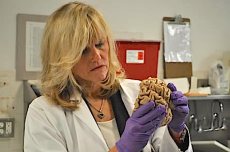
To date, CTE has been found in 88 of 92 autopsied NFL brains (1, 2). The currently accepted way that CTE is identified is by studying the brain postmortem. The major criticism of the postmortem analyses that were done is that the brains came from former players who already showed signs of brain disease. In other words, the claim is that the sample is biased. Dr. Ann McKee, a neuropathologist at Boston University’s CTE Center, studied most of the brains. She argues that the results would be extraordinary even in a biased sample.

AnnMcKeeMD1111

Dr. Ann McKee – neurolpathologist at Boston University

With a recent advance in technology, it seems that the bias criticism can soon be put to rest. Dr. Omalu is an author on a recent publication, in which neuroscientists from the University of California at Los Angeles (UCLA) and from the University of Chicago showed that CTE can be accurately diagnosed in a living person by a special PET (positron emission tomography) scan. If such scans were taken of all the current players, we would know if CTE is rare among players, as the NFL would like players and fans to believe, or if it’s relatively common, as Dr. Ann McKee believes.

Until that happens, we are left to decide about the risk of brain disease in players of American football on the basis of what we know. Concussion tells the little-known story of Dr. Omalu and the discovery of CTE. With this movie, we will be more informed and better able to evaluate the risk.

Omalu

Dr. Bennet Omalu – pathologist

As I say after each post:

Feel free to leave a comment by clicking the blue words “Leave a Comment” below this post.

Please follow my blog. Click on “Follow Me Via eMail” on the right sidebar of your screen.anim0014-1_e0-1

If you like my blog, click the “Like” button under this post.

If you REALLY like my blog, share it with your friends. It’s easy! Click the “Share” buttons below.

If you don’t like my blog, “Share” it with your enemies. That works for me too!


Brain Injury Resources . . . . . . Fatigue and The Spoon Theory

Fatigue and The Spoon Theory

Brain th-2Every brain injury is different. Yet, the survivor interviews on this blog have shown that fatigue is a common effect of a brain injury. Once the survivor was energetic – able to do many things. Now the survivor is often tired or worried about getting tired.

Have you ever tried to explain chronic fatigue to someone healthy? Usually he or she doesn’t get it. Christine Miserandino, who has Lupus – a chronic disease, invented The Spoon Theory to show her healthy friend why she is so concerned with the energy cost of doing anything. Christine’s Spoon Theory 309_1_is a simple way to show the difference between being healthy and energetic and being worried about fatigue by having a chronic condition – like Lupus or a brain injury. In The Spoon Theory, Christine writes, “I explained that some days were worse than others; some days I have more spoons then most. But I can never make it go away, and I can’t forget about it. I always have to think about it.”

Christine’s Spoon Theory can be found HERE.

(Clip Art compliments of Bing.)


Brain Injury Resources . . . . . . Amazing Potential of Stem Cells to Repair the Brain

Amazing Potential of Stem Cells to Repair the Brain

Brain th-2My NewsBits are often about advances in stem cell research (1, 2, 3, 4). There is good reason – the recent advances in our understanding of stem cells make them a key component in efforts to heal the brain. This video shows the potential of stem cell-based therapy.

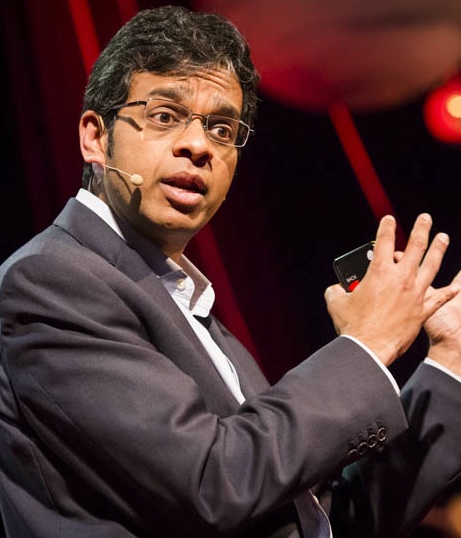
Siddharthan Chandran

Dr. Siddharthan Chandran on TED Talk

For years, medical students have been taught incorrectly that the brain cannot repair itself. Recent exciting research on stem cells has definitely put that “dogma” to rest. In fact, the rapid pace of discoveries about the brain indicates that the future may be closer than you think. The brain actually does repair itself, just not enough. The repair the brain does do uses a natural reservoir of stem cells (pluripotent cells that have the potential to become any cell). Recent research has shown that we will be able add more stem cells to boost the natural repair of the brain and restore lost functions, even functions usually considered to be lost forever. In the video, Dr. Siddharthan Chandran hypothesizes that the added stem cells help repair the brain, not by acting themselves to do the repairs, but by activating more of the brain’s own stem cells.


As I say after each post:

Feel free to leave a comment by clicking the blue words “Leave a Comment” below this post.

Please follow my blog. Click on “Follow Me Via eMail” on the right sidebar of your screen.anim0014-1_e0-1

If you like my blog, click the “Like” button under this post.

If you REALLY like my blog, share it with your friends. It’s easy! Click the “Share” buttons below.

If you don’t like my blog, “Share” it with your enemies. That works for me too!


(Clip Art compliments of Bing.)
Brain Injury Resources “You Disappear”

“You Disappear” by Christian Jungersen

(Insight Into the World of Brain Damage)

reviewed by

Donna O’Donnell Figurski

"You_Disappear"_Jungersen-205x300

You Disappear by Christian Jungersen

As anyone who has had a brain injury and his or her caregiver know, life is forever altered. It will never be the same. Christian Jungersen takes his readers on the twisted journey of Frederick, a headmaster at a prestigious school; Mia, his wife and a reputable schoolteacher; and their teenage son, Niklas. Unlike many brain injuries that occur by an impact, an accident, or a hemorrhage, Frederick’s brain “injury” evolved over time, changing his personality bit by bit. Mia slowly noticed inexplicable changes in her husband. Talking too loud and eating too much were just two of the little signs that were manifested as Frederick’s brain changed. While on a vacation in Majorca, Frederick drove unusually erratically and dangerously. His driving caused their rental car to scrape a stone cliff. When Frederick, in a crazed state, jumped from the car, fell down a hillside, and woke in the local hospital, he was forced to seek help, and the mystery of his strange behavior is unveiled.

Once Frederick is diagnosed with a slow-growing brain tumor, his aberrant behavior becomes more understandable, but not excusable. As is the case for many brain-injured persons, Frederick’s behavior hampered his decision–making process. Frederick illegally took large sums of money from his school, causing the school to become bankrupt and Frederick to lose the respect and friendship of many people, including his chairman and close friend, Laust. Eventually Frederick, while seeking help, loses his job and faces a possible prison sentence.

Mia fondly remembers the years before the change in Frederick. She remembers the love they shared. She does what she can to help him, but his deviant and erratic behavior makes living with him difficult. Finally, Mia seeks help and companionship with a local brain-injury support group, where she meets Bernard, who not only becomes Frederick’s attorney, but also a “special” friend to Mia.

As Christian Jungersen so aptly states, “As any family member of someone with brain damage knows, the hard part isn’t the initial shock. The hard part comes when the adrenalin recedes and you have to set out down the endless gray corridor of disheartening days, days that look like they’ll last the rest of your life.”

As the caregiver for my husband, who has a traumatic brain injury, I understand Jungersen’s words completely. The adrenalin gets you through the early surgeries and the beginning days in the hospital. It may even carry you through the weeks in the rehabilitation facility. But the adrenalin-rush ends, and “real life” sets in when the caregiver brings the survivor home. That’s when the realization occurs that life will never be the same as it was. The survivor will never be the same as before, and neither will the caregiver. Brain damage has a way of changing the normal. That’s when the survivor and caregiver realize that the journey through the brain-damage maze has just started. They eventually realize that it has no end. Once brain damage comes to stay, it can tear families apart. But, it can also make families stronger, as they pull together to overcome the trials of brain injury.

In “You Disappear,” Jungersen portrays how one family finds their world breaking up. Will they find enough glue to repair it?


Jungersen 2

Christian Jungersen

As I say after each post:

Feel free to leave a comment by clicking the blue words “Leave a Comment” below this post.

Please follow my blog. Click on “Follow Me Via eMail” on the right sidebar of your screen.anim0014-1_e0-1

If you like my blog, click the “Like” button under this post.

If you REALLY like my blog, share it with your friends. It’s easy! Click the “Share” buttons below.

If you don’t like my blog, “Share” it with your enemies. That works for me too!


(Clip Art compliments of Bing.)

Brain Injury Resources . . . . . . Couples and Traumatic Brain Injury

Couples and Traumatic Brain Injury

Brain th-2Not only does the survivor deal with the effects of a TBI, but the caregiver does too. Much of the concern is directed to the survivor. But the trauma has totally changed the life of the caregiver also. The good news is that the love, partner, and “best friend” of the caregiver survived, but the survivor may look different, sound different, and/or act differently. The survivor may not be the same person that the caregiver knew and loved. In fact, the previous relationship may not seem to exist at all with the current version of the survivor. Often the caregiver works tirelessly out of love or in hopes that some part of their close relationship will return.

TBIs can be hard on relationships. Most relationships struggle, and some do not survive. A few psychologists now specialize in relationships affected by TBI. Here is a video of one couple, who, with the help of two psychologists, managed to withstand the storm of a TBI. Dr. Jeffrey Kreutzer and Dr. Emilie Godwin point out that neither the survivor (Hugh) nor the caregiver (Rosemary) is the same person that he and she were before the TBI. Drs. Kreutzer and Godwin emphasize the importance of acceptance of the “new normal,” not only by the survivor, but also by the caregiver. They both must accept that life will not return to the way it was pre-TBI. Dr. Kreutzer advised Rosemary and Hugh to “…grieve for your old life and build a new one.”

(Clip Art compliments of Bing.)

Comments are welcome.

Brain Injury Resources . . . . . . Music May Optimize the Brain

Music May Optimize the Brain

I found this interesting, short (4 min 45 sec) video on the blog “Beyond Injury,” which is authored by Scott, who was diagnosed with brain cancer. I thought the video should be reposted here for you. It shows how listening to music Brain th-2or – better yet – playing it stimulates several parts of the brain simultaneously, unlike other activities. The video says that musicians’ brains have developed a higher level of functioning, including – but not limited to – problem solving, perceiving emotional cues, expanding fine-motor skills, and enhancing memory. Maybe the stimulation from music will enhance recovery from TBI. But, be aware that there is no hard evidence showing a link between music and recovery from TBI. Neuroscientists do know, however, that music benefits a healthy brain. It is reasonable to expect that an activity that enhances many brain functions should at least be beneficial to TBI survivors with deficits in any of those functions.

(Clip Art compliments of Bing.)

Comments are welcome.

diemodi jewelry

uniquely hand-crafted jewelry by donna

Welcome to Harmony Kent Online

The home of all things books

Pete Springer

Passionate Teacher and Future Children's Author

HOPE TBI

Helping Other People Excel - To Be Independent

For the Love of Books, Old and New

Katie Fischer, Writer and Reader of Stories

Charlie Bown

Children's Author

Jessica Hinrichs

“We write to taste life twice, in the moment and in retrospect.” ― Anais Nin

VIVIAN KIRKFIELD - Writer for Children

Picture Books Help Kids Soar

Mindy’s Writing Wonderland

For authors, parents, teachers & everyone who loves children’s books.

Kaitlyn Leann Sanchez

Literary Agent

Surviving Traumatic Brain Injury

TBI - Survivors, Caregivers, Family, and Friends

The Care Factor

Loving someone with a Traumatic Brain Injury

Brain Injury Support Group of Duluth-Extension

Brain Injury Information and SUPPORT

Brain Aneurysm Global Insight

Brain Aneurysm, cerebral hemorrhaging, hemorrhage stroke