TBI – Survivors, Caregivers, Family, and Friends

Posts tagged ‘Traumatic Brain Injury’

TBI Tales . . . . . . . . . . . . . . . . . Interview with Ann Boriskie – Teach Believe Inspire Award recipient

Interview with Ann Boriskie – Teach Believe Inspire Award recipient

by

Stephen Smith

(presented by Donna O’Donnell Figurski)

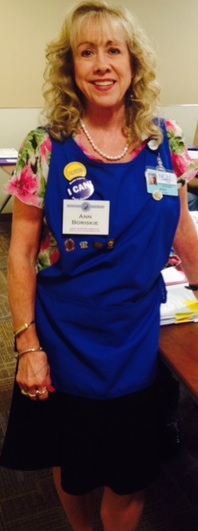
Ann Boriskie 1 Survivor 062915A traumatic brain injury survivor, wife and mother of three, Ann Boriskie has redefined each of these roles as she progressed physically and spiritually since her car accident. Along the way she also founded the Brain Injury Peer Visitor Association, which offers hope, support and education to brain injury survivors and their families.

Ann’s commitment to helping brain injury survivors has garnered her the Christopher & Dana Reeve Foundation Quality of Life Grant in 2013 and again this year in 2015. The Brain Injury Law Center is honored to recognize such a champion for traumatic brain injury survivors.

Ann, Teach Believe Inspire Award recipient, recently took the time to answer some questions from the Brain Injury Law Center.

Q: It wasn’t until a year after your auto accident that you found out you had sustained a traumatic brain injury. Had you suspected that your brain had been injured, or was it a shock to hear that was the case?

A: I had no idea that I had a brain injury. Not one doctor had said anything at all about my brain. I was told by one neurologist that I had “post-concussive syndrome.” That doctor acted like it would go away — go home and lead your life. He really never explained that my brain may be affected.

I truly thought that the wreck made me crazy. That’s why I had changed and could no longer do so many things that I could do previously.

Q: As you recovered from your accident, did you have physical and mental goals that motivated you through your rehabilitation?

A: I really did not think of my life after the car wreck in terms of goals, since I didn’t realize I had a problem. I knew I had multiple parts of my body that were injured and that hurt — and that I had to go see numerous doctors. I knew all of the “things” I could no longer do — but did not understand that these were linked to an injury to my brain.

I was a mother of three children (youngest fifth grade; oldest in the eleventh grade). I really had no choice but to try to continue my “normal” life. I was happily married. So my goals were to continue taking care of my husband and three children — cooking, cleaning, doing errands, grocery shopping, etc. (Of course, I had to modify how I now accomplished all of this.)

Physical: I have worked out since my early twenties. Thus I continued to do my weight lifting and treadmill walking as I had previously. I didn’t really know what I should or should not be doing. My current doctors tell me that had I not continued all of my workouts, I might be in a wheelchair today. I pushed through my pain and continued to keep my body’s core strong, even though my neck and back were both injured.

Q: How did counseling help your healing process? What kinds of people helped you?Ann Boriskie Survivor 4 Award 0629151394302_10202076860104199_1450531656_n

A: Doctors truly gave me my life back — both physically and mentally.

My psychiatrist (a doctor of physical medicine and rehabilitation) was the one to determine physically what problems that I had and how they all were interrelated (since I had 10 parts of my body injured in my car wreck). She tailored my medicine to help me live as normal of a life as possible.

I found several neuropsychiatrists who helped me better understand the different facets of brain injury, and helped teach me “compensatory strategies” to live my life somewhat normal.

The neuropsychiatrist and counselors explained that so many of my symptoms and changed behaviors were absolutely common with an injury to the brain.

It was so much better for me to realize that I had a brain injury — instead of labeling myself “crazy.”

I joined support groups where I could converse with others in my situation, again helping me understand that my symptoms were just like theirs — and normal for an injury to the brain.

Q: How did the accident change how you identify yourself as a person and as a mother and wife?

A: Previously I was extremely driven in my work and competitive. The job often came before my family. The person I was, was defined a lot by my work.

After my car wreck I couldn’t work — I tried numerous times. Thus I had to figure out who this “new me” was. I struggled with this for years. It took me wholly accepting the “new me” and my realization that I was still a very valuable person in life to become the helping person that I am today.

As a mother and wife, I became much more accessible to my family and their own problems and needs. I put them first. They taught me my value with each of them.

The master plan for my life was to give up a big chunk of who I was as a person to raise two doctors (a neonatologist and an internal medicine hospitalist) and one RN nurse. Because of my own struggles, my 3 children are devoting their own lives to help others.

What advice do you have for TBI survivors who become depressed about their new life?

  • “Push the envelope” — remember I CAN — don’t ever let others tell you all you can’t or should not do.
  • Identify all of the things that you now have and can do — do not focus on what you can’t do.
  • Help others. By helping others you will help yourself, and see yourself having self worth.
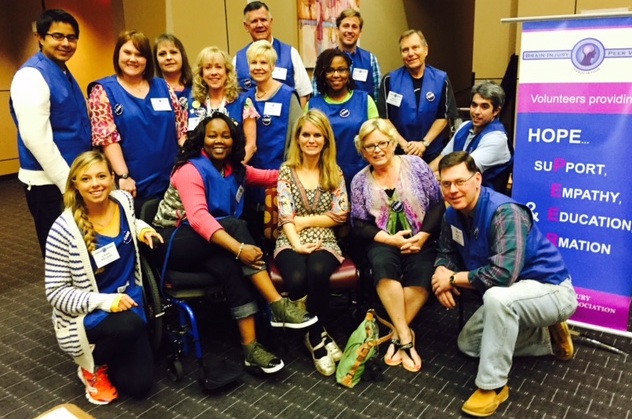
Ann Boriskie Group Survivor 062915Q: You founded the Brain Injury Peer Visitor Association. How did you realize the importance of visiting people who have suffered TBI?

A: My association does not just help TBI survivors. They also help all non-traumatic brain injury survivors (such as stroke, aneurysm, tumors, abscesses, bleeds, AVM, cancer, etc.). It’s so important for the world to understand that all of these causes make up a brain injury — and all are not TBIs.

I initially heard about the American Stroke Association’s Peer Visitor Program, which has been in existence for over 40 years. They only serve stroke patients in the inpatient rehab units of hospitals.

I thought that if the American Stroke Association was successfully helping stroke patients that I could help traumatic brain injury survivors as well as ALL of the non-traumatic brain injuries which exist, not just stroke.

I loved the idea of helping other people like myself. I had no one there to help me — I had no information on what a brain injury even means — I felt so very alone, isolated.

I also saw the need to talk to the patient and/or family from the very beginning of the brain injury event — to give them information immediately to help them understand.

Thus my program begins in the ICU unit and step-down units, the inpatient rehab units, then the day or outpatient program of the hospital. A person’s journey through their brain injury changes the questions they have and the type of information that they need.

Q: It’s easy to see that a person who has suffered a TBI needs help, therapy and education. How important is it to talk to the families and caregivers of the survivor?

A: Extremely important: “Knowledge is Power.” The more a survivor understands about their own brain injury, the easier time they will have of accepting the injury. When the family reads about and understands why their loved one has changed and why they are different, why they are exhibiting a large range of behaviors — then the family can better help and deal with their loved one.

With acceptance that they did indeed injure their brain, which changed their brain and changed the person they were, a survivor along with the family can move forward and actually work toward improvement.Ann Boriskie Survivor 2 062915

Without this knowledge, the survivor often hates himself/herself. The survivor will become suicidal, more emotional, reclusive, and not wanting to get better. The family without an understanding and acceptance often shuns their own loved one, often leaving them or deserting them emotionally or physically.

That is why my Brain Injury Peer Visitor Association’s program hands out a variety of packets of information full of book lists, website lists, resources, CDC information, newspaper and magazine articles, survivor and caregiver stories, etc.

Q: If someone wants to volunteer with the Brain Injury Peer Visitor Association, do they need to have first-hand experience with TBI?

A: To be a Brain Injury Peer Visitor they have to be a survivor of a stroke or some form of brain injury, or the caregiver of a brain injured survivor. (Otherwise a person cannot relate in a personal way — as a person “who has been there and done that.”)

thQ: What did it mean to the Brain Injury Peer Visitor Association to receive the Quality of Life grant from the Christopher & Dana Reeve Foundation both in 2013 and again this year?

A: It is a huge honor to receive the Quality of Life grants. I so respect all that Christopher Reeve and his wife Dana did to help others during their life-time. They represented the true selfless love and help that I so respect and hope to emulate.

Reading Christopher Reeve’s two books inspired me to get better and to actually do something with my life. I thought that if a man in a wheelchair who can do so little could help so many other disabled individuals, then I could get better and help brain injured survivors.

Reeve became the face of those that are disabled. He taught that a disability can be the beginning of your life — not the end.

The grants also assured the printing of the information then the continuation of providing a Packet of Information to every brain injured and often paralyzed survivor and their caregiver who are Peer Visited by the Brain Injury Peer Visitor Association.

Q: What goals do you have for the Brain Injury Peer Visitor Association going forward?

A:

  • To continue to serve all of the hospitals and their various units and all of the rehabilitation facilities where we currently have our Brain Injury Peer Visitor Program.
  • To continue to grow the program by establishing our program at more new hospitals and facilities.
  • To train more new volunteer survivors and/or caregivers in order to serve more individuals.
  • To help educate as many brain injury survivors and their families and loved ones.
  • To educate the public across the United States and throughout the world about all forms of brain injury through our website at braininjurypeervisitor.org.
  • To create a true understanding of what the word “brain injury” means — to make it a household word that is understood and accepted.
  • To help create a tolerance and loving understanding for a person with a brain injury.
  • To help develop a least one Brain Injury Peer Visitor Program in every state.

This interview by Stephen Smith was posted in Teach Believe Inspire Award on June 2, 2015. Stephen founded the Brain Injury Law Center to help brain injured victims, survivors and their families.
Ann Boriskie Survivor 3 062915To learn more about Ann Boriskie and her work with brain injury, please visit the following sites.

Video of Ann Boriskie and the Brain Injury Peer Visitor Association

Ann Boriskie’s blog – The Brain Fairy

The Brain Injury Peer Visitor Association

The Brain Injury Law Association

(Disclaimer: The views or opinions in this post are solely that of the author.)

If you have a story to share and would like to be a part of the SPEAK OUT! project, please submit your TBI Tale to me at neelyf@aol.com. I will publish as many stories as I can.

As I say after each post:

Please leave a comment by clicking the blue words “Leave a Comment” below this post.anim0014-1_e0-1

Please follow my blog. Click on “Follow” on the top right sidebar. (It’s nice to know there are readers out there.)

If you like my blog, share it with your friends. It’s easy! Click the “Share” buttons below.

If you don’t like my blog, “Share” it with your enemies. I don’t care!

Feel free to “Like” my post.

(Clip Art compliments of Bing.)

Survivors SPEAK OUT! Michael Lee Savage

Survivors  SPEAK OUT!  Michael Lee Savage

presented by

Donna O’Donnell Figurski

Michael Lee Savage Survivor 0623141. What is your name? (last name optional)

Michael Lee Savage

2. Where do you live? (city and/or state and/or country) Email (optional)

Spokane, Washington, USA

3. On what date did you have your brain injury? At what age?

I was 43.

4. How did your brain injury occur?

It started with double vision on February 26, 2003. I went to Urgent Care, and they immediately took me for an MRI (magnetic resonance imaging) scan, which showed a bleed in my brainstem called a cavernous hemangioma (a type of blood vessel malformation, where a collection of dilated blood vessels form a tumor). They sent me home to watch it. It bled three short weeks later. They wanted to operate, as the bleed had presented itself outwardly. My neurologist said I could wait. It didn’t bleed again until January 25, 2009, almost six years later. I was sent to Seattle, Washington, to have the surgery.

5. When did you (or someone) first realize you had a problem?

The morning I went to Urgent Care.

6. What kind of emergency treatment, if any, did you have?

I had a CT (computed tomography) scan and an MRI scan.

7. Were you in a coma? If so, how long?

No

8. Did you do rehab? What kind of rehab (i.e., inpatient or outpatient and occupational and/or physical and/or speech and/or other)?

I was in the ICU (intensive care unit) for twenty-one days and in an acute care center for another four weeks. I then had inpatient rehab for three weeks.

How long were you in rehab?

Three weeks

9. What problems or disabilities, if any, resulted from your brain injury
(e.g., balance, perception, personality, etc.)?

I couldn’t walk, talk, see, or swallow for over four months. Nystagmus (rapid involuntary movements of the eyes) and secondary dystonia (a disorder characterized by involuntary muscle contractions) came on while I was in rehab.

10. How has your life changed? Is it better? Is it worse?

My brain injury took away all of my independence, like driving and walking unassisted. I have a feeding tube. My speech is slurred. The right side of my face droops, and my entire left side below the neck is numb.

11. What do you miss the most from your pre-brain-injury life?

Both independence and friendship have run away.

12. What do you enjoy most in your post-brain-injury life?

I have regained my joy of cycling.Michael Lee Savage Survivor 062315

13. What do you like least about your brain injury?

I dislike not being able to see or to walk without loosing my balance. Lockjaw prohibits me from eating my favorite foods. Also, my voice is gone.

14. Has anything helped you to accept your brain injury?

Physical therapists and riding my bike with my “guide-bride,” Patty, have helped me. They constantly stay on me to improve my quality of life, and they challenge me when I want to quit.

15. Has your injury affected your home life and relationships and, if so, how?

Yes. I am not able to contribute to daily rituals. Most of my relationships have suffered, including my romantic relationship with my wife.

16. Has your social life been altered or changed and, if so, how?

Yes. It is hard to eat with others. Most of my friends can’t deal with my appearance and my stressed voice.

17. Who is your main caregiver? Do you understand what it takes to be a caregiver?

My wife is my main caregiver. Yes, I do understand how difficult it is, and it is very hard, considering our age and how much I still can’t do without her.

18. What are your plans? What do you expect/hope to be doing ten years from now?

I hope to enjoy life more than I am now. I hope to be living life as normally as I can.

19. Are you able to provide a helpful hint that may have taken you a long time to learn, but which you wished you had known earlier? If so, please state what it is to potentially help other survivors with your specific kind of brain injury.

Keep fighting to move – do the exercises, no matter how silly they may seem. They all have a purpose, and there are some that I wish I would have done and stuck with.

20. What advice would you offer to other brain-injury survivors? Do you have any other comments that you would like to add?

Never quit moving. Never give up hope. I immediately got a trike so I could feel human again. And now, six years later, I’m walking around town with a cane. I’m walking on flat surfaces without any cane. Fight for your independence. It’ll be the biggest battle you’ve ever faced, but eventually you’ll inspire others. They will say, “If you can do it, I can too.”

Thank you, Lee, for taking part in this interview. I hope that your experience will offer some hope, comfort, and inspiration to my readers.

(Disclaimer: The views or opinions in this post are solely that of the interviewee.)

If you would like to be a part of the SPEAK OUT! project, please go to TBI Survivor Interview Questionnaire for a copy of the questions and the release form.

(Photos compliments of Michael Lee Savage.)

As I say after each post: Please leave a comment by clicking the blue words “Leave a Commentanim0014-1_e0-1 below this post.

Feel free to follow my blog. Click on “Follow” on the upper right sidebar.

If you like my blog, share it with your friends. It’s easy! Click the “Share” buttons below.

If you don’t like my blog, “Share” it with your enemies. I don’t care!

Feel free to “Like” my post.

“Another Fork in the Road” . . . Brain Injury Radio Network . . . Interview: Daniel Mollino

YOU ARE INVITED!

Daniel Mollino – TBI Survivor & Cross-Country Cyclist

Meet Daniel Mollino

putthis_on_calendar_clip_art

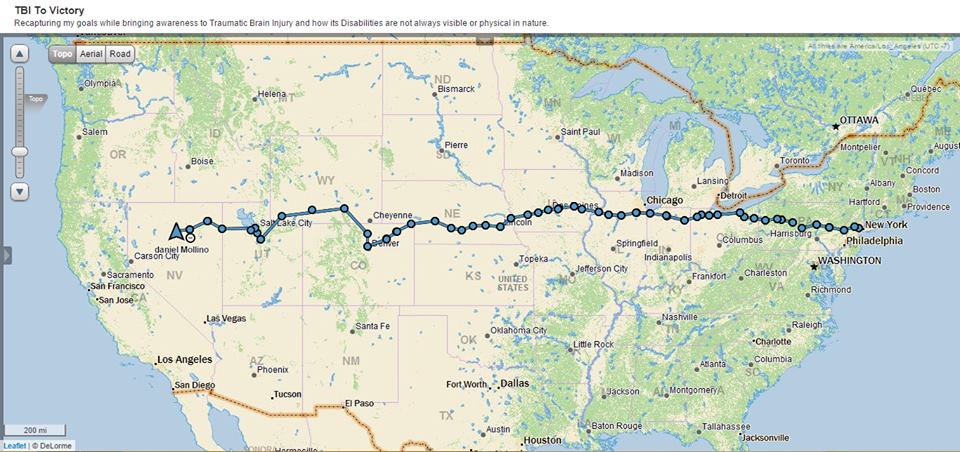
When Daniel fell from the top of a telephone pole while running cable for a New Jersey cable company, his life changed forever. His fall resulted in a TBI (Traumatic Brain Injury). Daniel now deals with fatigue, memory loss, balance issues, and daily pain, but he won’t let these health problems get in his way of his living life to its fullest.

Daniel plans to make a difference in this TBI world for all survivors. At the end of March 2015, Daniel set out to cycle solo across the USA from New Jersey to California to raise awareness of Brain Injury.

Come One! Come ALL! 

What:        Interview with Daniel Mollino – TBI Survivor & Cross-Country Cyclist

Daniel Mollino - TBI Survivor & Cyclist

Daniel Mollino – TBI Survivor & Cyclist

Why:        Daniel will share his story of Brain Injury and how he plans to make a difference in the Brain Injury world.

Where:     Brain Injury Radio Network

When:       Sunday, June  21st, 2015

Time:         5:30p PT (6:30p MT, 7:30p CT, and 8:30p ET) 90 minute show

How:         Click: Brain Injury Radio Network

Call In:    424-243-9540

Call In:     855-473-3711 toll free in USA

Call In:    202-559-7907 free outside USA

or SKYPE

11427224_10153095515624215_7323889775533761154_nIf you miss the show, but would like to still hear the interview, you can access the archive on On Demand listening. The archived show will be available after the show both on the Brain Injury Radio Network site and on my blog in “On the Air.”

(Clip Art compliments of Bing.)

(Photo compliments of Daniel Mollino.)

SPEAK OUT! Faces of Brain Injury William Jarvis

 SPEAK OUT! Faces of Brain Injury – William Jarvis

presented by

Donna O’Donnell Figurski

 Brain Injury is NOT Discriminating!


faces

I acquired a severe TBI (traumatic brain injury) from a car collision in 2000. It put me into a coma. I was in hospitals one and a half years. As with most survivors, there were challenges when I went home. I continued to have problems walking and with cognitiveJarvis, William 2 Survivor 050215 functions. It has been a long road, but life is good. I speak about how to improve after a TBI, I write inspirational books, and I engage with life as much as possible. I must pace myself because, after fifteen years, fatigue is still an issue. The good news is that, if a survivor never gives up setting goals for improvement, there is hope. I recently moved to Myrtle Beach, South Carolina, USA, and enjoy helping other survivors through a TBI support-group, doing community activities, and giving presentations on “Improvement Through Motivation.” My web site is http://billjarvis.org/.Jarvis, William Survivor 1 050215

Disclaimer: Any views and opinions of the Contributor are purely his/her own.

(Clip Art compliments of Bing.)

(Photos compliments of contributor.)

As I say after each post: Please leave a comment by clicking the blue words “Leave a Commentanim0014-1_e0-1 below this post.

Feel free to follow my blog. Click on “Follow” on the upper right sidebar.

If you like my blog, share it with your friends. It’s easy! Click the “Share” buttons below.

If you don’t like my blog, “Share” it with your enemies. I don’t care!

Feel free to “Like” my post.

SPEAK OUT! Faces of Brain Injury Alicia Theroux Williams

SPEAK OUT! Faces of Brain Injury – Alicia Theroux Williams  (caregiver)

presented by

Donna O’Donnell Figurski

 Brain Injury is NOT Discriminating!


bigstock-cartoon-face-vector-people-25671746-e1348136261718I want to introduce myself with a short story about my experience with traumatic brain injury (TBI). Last Christmas was the first Christmas in six years that my husband and I spent together. (He is a firefighter/paramedic. Therefore, he is on duty most holidays.) It was the best Christmas yet. I felt complete and whole. I never imagined that in just a couple of weeks my husband would be in a coma and sadly would not remember this glorious holiday. Williams, Eric Survivor 2 061215On the morning of January 6th, my husband was out running, and he was struck from behind by a cyclist. My husband’s first responders were his friends, since we live in the city that he works in. Williams, Alica Theroux Caregiver 061215They (I believe) were the reason that my husband survived. My husband spent fourteen days in a coma, seven days on the medical-surgical floor, and twenty-six days in an acute rehab facility. In a little more than three moWilliams, Eric Survivor 061215nths, he had three surgeries on his brain, plus many moreWilliams, Alicia Theroux Caregiver for & Husband Eric 061215 procedures for other issues. Even though we have just started on this journey, I am thankful to have a support-group to vent to and to get tips from. I feel like I am not in this alone.

Disclaimer: Any views and opinions of the Contributor are purely his/her own.

(Clip Art compliments of Bing.)

(Photos compliments of contributor.)

As I say after each post: Please leave a comment by clicking the blue words “Leave a Commentanim0014-1_e0-1 below this post.

Feel free to follow my blog. Click on “Follow” on the upper right sidebar.

If you like my blog, share it with your friends. It’s easy! Click the “Share” buttons below.

If you don’t like my blog, “Share” it with your enemies. I don’t care!

Feel free to “Like” my post.

Caregivers SPEAK OUT! . . . . . Lisabeth Mackall

Caregivers SPEAK OUT! – Lisabeth Mackall

presented

by

Donna O’Donnell Figurski

Lisabeth Mackall Caregiver 06112151. What is your name? (last name optional)

Lisabeth Mackall

2. Where do you live? (city and/or state and/or country) Email? (optional)

Cottage Grove, Minnesota, USA  info@lisabethmackall.com

3. What is the brain-injury survivor’s relationship to you? How old was the survivor when he/she had the brain injury? What caused your survivor’s brain injury?

My husband, Frank, was 39 when he had his car crash and suffered his TBI. He was a police officer responding to a call for assistance for another officer, and he lost control of his car on black ice and crashed.

4. On what date did you begin care for your brain-injury survivor? Were you the main caregiver? Are you now? How old were you when you began care?

Frank’s accident was on January 2, 2012. I brought him home on March 27, 84 days after he went to the hospital. He required Lisabeth Mackall Caregiver 06121524-hour supervision due to his cognition and safety needs. They suggested to take him to a rehab center, but I decided that it was time for him to come home.

5. Were you caring for anyone else at that time (e.g., children, parents, etc.)?

At that time, we had three children – ages 6, 9, and 15. We now have a fourth child – my husband’s half-brother’s child whom we took custody of one and a half years ago.

6. Were you employed at the time of your survivor’s brain injury? If so, were you able to continue working?

I was employed full-time. I was working as Rehab Director for nine buildings here in Minnesota. I worked the shift opposite to Frank’s, so we had very little time together. When he was allowed to come home from the hospital, I quit my job. I attempted to go back about a year after he was injured and had to quit. I just recently (November) went back to work full-time, but we had to hire a nanny for the morning to help get the kids to school after I leave for work.

7. Did you have any help? If so, what kind and for how long?

I had no help with Frank, although my mom did move in with us immediately after the crash and stayed for four months. We did not allow caregivers into the house since Frank was a police officer – we had family and friend support.

8. When did your support of the survivor begin (e.g., immediately – in the hospital; when the survivor returned home; etc.)?

Our support started the minute Frank was injured and continued for about two years. If we needed help now, we could call on law enforcement, but it is not in my nature to ask for help.

9. Was your survivor in a coma? If so, what did you do during that time?

Frank was in a true coma (minimally responsive) for about two weeks. He started to respond with a thumbs-up sign and by fighting against his restraint. He continued to improve from there. I spent that time talking with Frank, and talking with the cops and visitors as well. We were usually swamped with visitors, so I did not get a lot of time without people there. But, when I did speak with Frank, I told him over and over what had happened and that he was safe.

10. Did your survivor have rehab? If so, what kind of rehab (i.e., inpatient and/or outpatient and occupational, physical, speech, and/or other)? How long was the rehab? Where were you when your survivor was getting therapy?

Frank was in the hospital for 84 days. Once he left the medical unit and went to rehab, he was in for the full time until he was discharged. He then started outpatient rehab three times a week. That continued for a month. Frank had all three disciplines, although he was eventually weaned off occupational therapy. He continued to have physical therapy and speech therapy on and off for a long time. Right now, Frank can still go back to speech therapy if he wants, but he is taking a break. I would attend some of his sessions, but I tried to stay out of the speech therapy sessions. (They were too hard for me to watch, since I am a speech therapist, and I knew Frank thought the sessions were irritating.)

Lisabeth and Frank

Lisabeth and Frank

11. What problems or disabilities of your brain-injury survivor required your care, if any?

Frank has a hard time learning new things about technology. He has a problem with short-term memory. He also has a very short fuse, so kids arguing or chaos in the house is very difficult for him. We do finances together. Otherwise, he manages his own schedule about 75% of the time. I manage most of the other aspects of the house and the kids, with help from Frank if I leave lists and tasks.

12. How has your life changed since you became a caregiver? Is it better? Is it worse?

Life is different. I have to work very hard to be a wife and not a caregiver. Caregiving is easier and not sad. When I step into the wife role on some days, it is heartbreaking to know what we have lost.

13. What do you miss the most from pre-brain-injury life?

I miss having a highly intelligent partner in life who would debate with me and who is solid in his understanding of the world around him.

14. What do you enjoy most in post-brain-injury life?

Frank and I have more time together. Our family is more important now that we know how precious life is and how fast it can change.

15. What do you like least about brain injury?

I dislike Frank’s irritability and his lack of trust in the decisions that are made.

16. Has anything helped you to accept your survivor’s brain injury?

Being a speech therapist has given me a huge advantage with this recovery, although sometimes I wish I didn’t know so much.

17. Has your survivor’s injury affected your home life and relationships and, if so, how?

Frank’s brain injury has changed many things. In fact, we are moving. Our wood floors bother him when the dog walks across it. Frank also needs to have more space for himself, so we are trying to find a bigger house for all of us.

18. Has your social life been altered or changed and, if so, how?Lisabeth Mackall Book 061215

We have very little social life at this point. Most of our friends from before the accident have drifted away. The people we are closest with are those we met after the crash. We have busy kid schedules, and with Frank’s fatigue, it is often just easier to hang out at home.

19. What are your plans? What do you expect/hope to be doing ten years from now?

We have a child with behavior struggles. That doesn’t mix well with a TBI. Puberty and life-changes are going to be challenging. My goal is to hold our family together by thinking ahead, finding the right space for all of us, and consciously talking about the problems that we have together as a family.

20. What advice would you offer other caregivers of brain-injury survivors? Do you have any other comments that you would like to add?

We are all in the same ocean, but in separate sinking ships. We can help one another stay afloat if we ask for help. I truly feel that trying to navigate this world without help is too hard. Even knowing what I know about brain injuries as a professional, I was in no way prepared to deal with things that I live through each day. No one is. We all just have to find a way to make the best decisions we can for ourselves and for our loved ones. That doesn’t mean that we all stay together as a family – sometimes families break apart. That is the devastating part of this journey. A brain injury can destroy a family. Sometimes there is no choice but to separate a survivor from the family due to the injury. Being a therapist, my goal is to help people navigate the world as best as they can and to hopefully keep the family together.

Learn more about Lisabeth Mackall:

On the Air: Brain Injury Radio “Another Fork in the Road” with Lisabeth Mackall, Caregiver, Therapist, Author

Lisabeth Mackall Website

27 Miles: The Tank’s Journey Home

Disclaimer: Any views and opinions of the Contributor are purely his/her own.

(Clip Art compliments of Bing.)
(Photos compliments of contributor.)

As I say after each post: Please leave a comment by clicking the blue words “Leave a Commentanim0014-1_e0-1 below this post.

Feel free to follow my blog. Click on “Follow” on the upper right sidebar.

If you like my blog, share it with your friends. It’s easy! Click the “Share” buttons below.

If you don’t like my blog, “Share” it with your enemies. I don’t care!

Feel free to “Like” my post

SPEAK OUT! NewsBit . . . . . . . . . . . . Comedian Tracy Morgan: Exclusive Interview One Year After Accident

Comedian Tracy Morgan: Exclusive Interview One Year After Accident

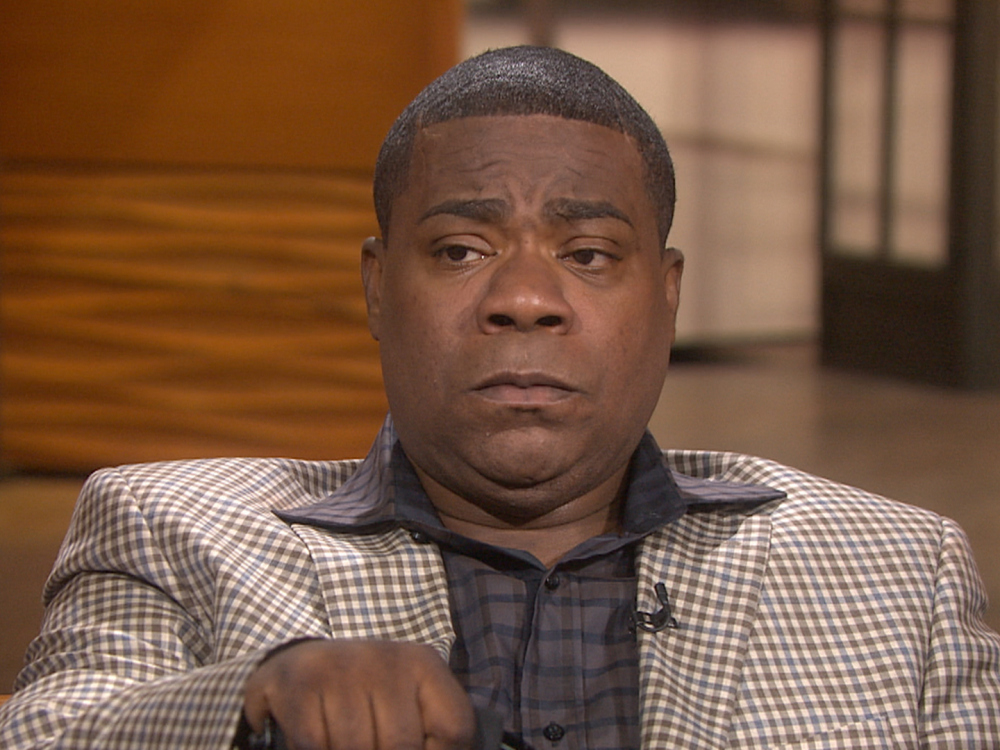
tracy-morgan-crashJune 7th was the one-year anniversary of the horrific motor vehicle accident that gave comedian Tracy Morgan broken bones and a serious brain injury and also claimed the life of Morgan’s close friend, James “Jimmy Mac” McNair. Matt Lauer Shot_3-10863spoke with Morgan in a two-part exclusive interview on the Today show and on the set of Saturday Night Live (part 1 with video, part 2 with video).

Morgan, who at times was tearful, said, “I love comedy, and I wonder how I’m going to be funny again.”

(Clip Art compliments of Bing.)
As I say after each post:

Please leave a comment by clicking the blue words “Leave a Comment” below this post.anim0014-1_e0-1

Feel free to follow my blog. Click on “Follow” on the upper right sidebar.

If you like my blog, share it with your friends. It’s easy! Click the “Share” buttons below.

If you don’t like my blog, “Share” it with your enemies. I don’t care!

Feel free to “Like” my post.

Survivors SPEAK OUT! Lisa Dryer

Survivors  SPEAK OUT!  Lisa Dryer

presented by

Donna O’Donnell Figurski

11 Lisa Dryer Survivor 1 060115 281536_2048711670666_4659924_n1. What is your name? (last name optional)

Lisa Robin Dryer

2. Where do you live? (city and/or state and/or country) Email (optional)

Scottsdale, Arizona, USA     lisadryer@cox.net

3. On what date did you have your brain injury? At what age?

At birth

4. How did your brain injury occur?

I was born twelve weeks too early. The NICU (neonatal intensive care unit) nurse who was in charge of me was also taking care of another baby, whom she deemed sicker. Our emergency calls often had false alarms. In this case, the nurse only had to tap me on the foot so that I would start breathing again. But, I went into cardiac arrest, and I lost oxygen to my brain. It was this incident that caused my TBI (traumatic brain injury). As a child, I never knew it as such, but instead as a “learning disability.” When I was seven, we found out that I was having a seizure a minute, which also most assuredly inhibited my learning. I’ve always had motor-skill and spatial relationship issues as well. In college, I realized something else was wrong. In 2004, it grew worse. I was searching for a diagnosis, but I was degraded and shoulder-shrugged for years.05 Lisa Dryer Survivor 5 060115 1238881_10200476055050272_1657456156_n

5. When did you (or someone) first realize you had a problem?

Last year, a friend, Hanna, dragged me to a hospital. At the time, we were both living on the East Coast. We were nannying between acting jobs and reveling in the history of the Potomac River. It was just a fun spa weekend for two best friends. But, half of my body failed to function. I was stubborn and tried to walk it out. I had a complete distrust of doctors at this point, but Hanna dragged me to the Emergency Room. They thought I might be having a stroke. My symptoms on the CAT scan (computerized axial tomography; also called a “CT” scan for “computerized tomography”) showed an abnormal brain. When they told me that, I laughed and said, “I know that already! Tell me something I don’t know.” So, they sent me to Washington, D.C., for an MRI (magnetic resonance imaging), and faster than you can say “MS,” it was said!

6. What kind of emergency treatment, if any, did you have?

I don’t believe I had any treatments, but they certainly did some interesting testing on me!

7. Were you in a coma? If so, how long?

No. However, I have since been concussed several times.

19 Lisa Dryer Survivor 7 060115 10154056_10202572349343208_1951490992_n8. Did you do rehab? What kind of rehab (i.e., inpatient or outpatient and occupational and/or physical and/or speech and/or other)?

I have done inpatient rehab now twice, and I am currently doing outpatient rehab for the second time. I like to take pictures at rehab, so you can see some of my rehab and hospital journeys on my Facebook and Instagram accounts. I do physical, occupational, and speech therapies, and I’m supposed to be doing shoulder therapies.

How long were you in rehab?

Each visit was a month long, and I’ve had about three.

9. What problems or disabilities, if any, resulted from your brain injury
(e.g., balance, perception, personality, etc.)?

I have several issues: balance, sight, auditory, emotional, tactile, and sensory. I also have a problem with perception.

10. How has your life changed? Is it better? Is it worse?

This is a very hard question for me. I am the kind of person who likes to roll with the punches that life brings me. Right now, I think this must be where I am supposed to be and what I am supposed to be doing. I have met so many wonderful people who are really grateful that I am in their lives – being just the way that I am and wholly accepting me. That is a really beautiful thing. I really love that I can write about positivity in the face of adversity, that I have such a great response, and that I see that so many other beautiful communities are forming.

11. What do you miss the most from your pre-brain-injury life?

I miss my dog, and I miss my trailer. I miss acting.

12. What do you enjoy most in your post-brain-injury life?

I have to say I really like my friends – both online and those who have come out to meet me. I have a special place in my heart for them. I met my current boyfriend online. We started talking more in one of my groups. He asked if he could send me flowers. He then sent me cards. Then he flew from Cleveland, Ohio, to Arizona to take me on a date! I think the rest will be romance history in the TBI community!

13. What do you like least about your brain injury?08 Lisa Dryer Survivor 8 060115 10527549_10205510907245319_3908859801295010883_n

My back spasticity

14. Has anything helped you to accept your brain injury?

Learning to put a smile on and taking some deep belly-breaths have helped me.

15. Has your injury affected your home life and relationships and, if so, how?

Living with my mother again at 33 has been interesting. We have a very strong bond, but we are almost too close. We clash more than a bit. But, we have a lot of laughter and smiles too.

16. Has your social life been altered or changed and, if so, how?

I really don’t have a social life anymore.

17. Who is your main caregiver? Do you understand what it takes to be a caregiver?

My mother is my main caregiver. Until last year, I was sometimes a primary caregiver as a live-in nanny for children with disabilities. It was a job I loved. I also worked as a teacher at the Head Start program for the Los Angeles Unified School District and for needy children in other school districts.

1150365_10201334798525285_296956465_n18. What are your plans? What do you expect/hope to be doing ten years from now?

As John Lennon said, I’d like to be happy.

19. Are you able to provide a helpful hint that may have taken you a long time to learn, but which you wished you had known earlier? If so, please state what it is to potentially help other survivors with your specific kind of brain injury.

I have three recommendations:

  1. Try to continually be finding the beautiful around you.
  2. Find your center, and try to stay calm.
  3. If things seem off, they usually are. Talk to someone.

20. What advice would you offer to other brain-injury survivors? Do you have any other comments that you would like to add?

No matter what you think, know that you are a powerful, beautiful person and that you can bring so much joy to this world. I have seen so many people in pain who just needed a smile, a word of kindness, or a hand-squeeze. No one in life is that different – we all need love. People also need education. Don’t be afraid to raise your voice and tell your story. And, remember that you are beautiful.

Thank you, Lisa, for taking part in this interview. I hope that your experience will offer some hope, comfort, and inspiration to my readers.

(Disclaimer: The views or opinions in this post are solely that of the interviewee.)

If you would like to be a part of the SPEAK OUT! project, please go to TBI Survivor Interview Questionnaire for a copy of the questions and the release form.

(Photos compliments of Lisa.)

As I say after each post: Please leave a comment by clicking the blue words “Leave a Commentanim0014-1_e0-1 below this post.

Feel free to follow my blog. Click on “Follow” on the upper right sidebar.

If you like my blog, share it with your friends. It’s easy! Click the “Share” buttons below.

If you don’t like my blog, “Share” it with your enemies. I don’t care! Feel free to “Like” my post.

“Another Fork in the Road” . . . Brain Injury Radio Network . . . Interview: Lisa Dryer

YOU ARE INVITED!

Lisa Dryer Survivor of Brain Injury, MS – Multiple Sclerosis, Lupus, Epilepsy, and Sjögren’s syndrome

Meet Lisa Dryer

putthis_on_calendar_clip_artIt took Lisa Dryer nearly three decades to put a label on what she knew was wrong all her life. As a child, Lisa, endured learning difficulties and experienced many seizures. She didn’t realize then that they were probably caused by the cardiac arrest and the lack of oxygen to her brain as a premature infant in the Neonatal Care Unit.

When recently Lisa had a computerized tomography (CT) scan that showed an abnormal brain, she laughed and said, “I know that already! Tell me something I don’t know!”

Lisa approaches her life with these thoughts. “Find the beautiful around you and stay calm.”

Come One! Come ALL! 

What:        Interview with Lisa Dryer, BI Survivor

Why:        Lisa will share her story of living with Brain Injury, MS – Multiple Sclerosis, Lupus, Epilepsy, and Sjögren’s syndrome and how she keeps a happy face.

Where:     Brain Injury Radio Network11 Lisa Dryer Survivor 1 060115 281536_2048711670666_4659924_n

When:       Sunday, June  7th, 2015

Time:         5:30p PT (6:30p MT, 7:30p CT, and 8:30p ET) 90 minute show

How:         Click: Brain Injury Radio Network

Call In:    424-243-9540

Call In:     855-473-3711 toll free in USA

Call In:    202-559-7907 free outside USA

or SKYPE

If you miss the show, but would like to still hear the interview, you can access the archive on On Demand listening. The archived show will be available after the show both on the Brain Injury Radio Network site and on my blog in “On the Air.”

(Clip Art compliments of Bing.)

(Photo compliments of Lisa Dryer.)

SPEAK OUT! Faces of Brain Injury Tony Giglio

SPEAK OUT! Faces of Brain Injury – Tony Giglio

presented by

Donna O’Donnell Figurski

 Brain Injury is NOT Discriminating!


bigstock-cartoon-face-vector-people-25671746-e1348136261718I suffered my traumatic brain injury (TBI) in a near-fatal car accident back in 2004. I live in the eastern Pennsylvania region. I have come a long way throughout the course of my recovery. (I’ve always been in healthy-athletic shape; I played sports up until my second year of college in Florida; I had a few serious relationships in the past; I graduated high school, Prep school, and college on time; I picked up driving fast again, etc.) Giglio, Tony

I still find myself facing the following challenges: balancing money in the best way every so often and seeking romance relationships with women. I’m a truly caring gentleman, and I live independently – in my own apartment. In the coming years, I’m looking to get married, while living a great life. I have recovered well, but I have also made mistakes in the past where I lost certain friends. But, the fact is that I learn and always move forward in a positive direction. I’m always happy and carefree. I learn better from my mistakes, even with my having a brain injury, than do non-brain-injured people.

Giglio, Tony 2Disclaimer: Any views and opinions of the Contributor are purely his/her own.

(Clip Art compliments of Bing.)

(Photos compliments of contributor.)

As I say after each post: Please leave a comment by clicking the blue words “Leave a Commentanim0014-1_e0-1 below this post.

Feel free to follow my blog. Click on “Follow” on the upper right sidebar.

If you like my blog, share it with your friends. It’s easy! Click the “Share” buttons below.

If you don’t like my blog, “Share” it with your enemies. I don’t care!

Feel free to “Like” my post

diemodi jewelry

uniquely hand-crafted jewelry by donna

Welcome to Harmony Kent Online

The home of all things books

Pete Springer

Passionate Teacher and Future Children's Author

HOPE TBI

Helping Other People Excel - To Be Independent

For the Love of Books, Old and New

Katie Fischer, Writer and Reader of Stories

Charlie Bown

Children's Author

Jessica Hinrichs

“We write to taste life twice, in the moment and in retrospect.” ― Anais Nin

VIVIAN KIRKFIELD - Writer for Children

Picture Books Help Kids Soar

Mindy’s Writing Wonderland

For authors, parents, teachers & everyone who loves children’s books.

Kaitlyn Leann Sanchez

Literary Agent

Surviving Traumatic Brain Injury

TBI - Survivors, Caregivers, Family, and Friends

The Care Factor

Loving someone with a Traumatic Brain Injury

Brain Injury Support Group of Duluth-Extension

Brain Injury Information and SUPPORT

Brain Aneurysm Global Insight

Brain Aneurysm, cerebral hemorrhaging, hemorrhage stroke