TBI – Survivors, Caregivers, Family, and Friends

Posts tagged ‘Traumatic Brain Injury’

Survivors SPEAK OUT! . . . . . David Figurski . . . . . . . . . . . . . . . 20-Year Post-Injury Anniversary

On April 8, 2014, Donna published my Survivor SPEAK OUT! interview to begin her series of interviews about the experiences and thoughts of survivors and caregivers. Since then, Donna has published over 130 written interviews in which people answer Donna’s twenty survivor- or caregiver-specific questions to let the readers know their stories, tell of their lives, and give first-hand, and often hard-earned, advice for other survivors and caregivers.

In my original interview, I kept my answers short so others wouldn’t be intimidated. I didn’t need to. Other interviewees were not reluctant at all to discuss at length many of the aspects of their brain injuries. In this interview on the 20th anniversary of my TBI (traumatic brain injury), I hope to give you a more detailed look at my past and present life.

1. What is your name? (last name optional)

David Figurski

2. Where do you live? (city and/or state and/or country) Email (optional)
Surprise, Arizona, USA                  dhfdmf@aol.com

3. On what date did you have your brain injury? At what age?

January 13, 2005          At age 57

4. How did your brain injury occur?

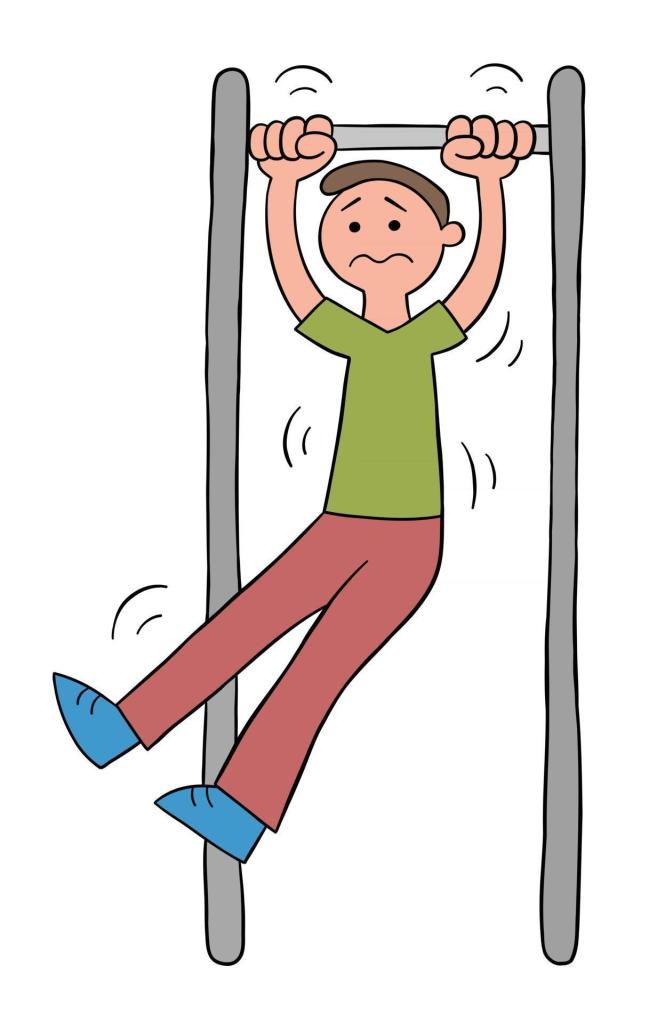
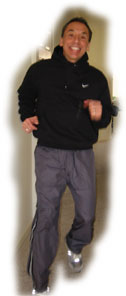
Each morning before showering, I would do Tai Chi warmup exercises and calisthenics. One day, my brain hemorrhaged on my 13th chin-up. 

5. When did you (or someone) first realize you had a problem?
I felt something happen in my head, but I didn’t have any pain, so I wasn’t concerned. I stopped exercising because I was seeing double. When my double-vision didn’t clear after a minute or so, I walked down the hall to where my wife (Donna) was getting ready for her job of teaching first-graders. I was exceptionally lucky that day – luck that gave me twenty years more (so far) of life. Normally, I got up at 4:00 am and left for my lab at Columbia University in New York City by 5:30 am. But I was planning to work at home that day to prepare a talk, so I got up later and overlapped Donna’s morning schedule. It turned out to be crucial because Donna saved my life. By the time I got to her, I was in crisis. She immediately saw that my right eye was filled with blood. Not long after, I felt something else happening in my head, and I began experiencing extreme pain. Donna dialed 9-1-1 to get emergency help. I became unintelligible because I was slurring my words. When the paramedics put an oxygen mask on me, the pain subsided, but I slipped into a coma, which lasted nearly three weeks.

6. What kind of emergency treatment, if any, did you have?

The paramedics took me to the Emergency Room of a nearby hospital where Donna made her first life-or-death decision – that I have immediate surgery instead of a CAT (computerized tomography) scan to see if the pressure from the brain-bleed had decreased. It’s clear now that the time that would been taken to do a CAT scan would have decreased my chance of survival by several hundred-fold.

But Donna’s nightmare was only beginning. Over the next two weeks, she had to give permission for two more surgeries on my brain. My chance of survival continued to be low.

After the first surgery, I was carefully transferred by ambulance to Columbia-Presbyterian Hospital in New York City. There, the neurosurgeon discovered an aneurysm that had to be removed. That was the second surgery. I survived … but the neurosurgeon had more bad news for Donna. She had to give permission for another dangerous surgery – to remove an AVM (arteriovenous malformation), a tangle of arteries and veins that can be a “time-bomb.” Miraculously, I survived that surgery too.

(The neurosurgeon at the local hospital for the first surgery was highly skilled, but he gets an F-grade for his manner. His first words after introducing himself to Donna were that I “would make a great organ-donor”!)

7. Were you in a coma? If so, how long?

Yes. I was in a coma for nearly three weeks.

8. Did you do rehab? What kind of rehab (i.e., inpatient or outpatient and occupational and/or physical and/or speech and/or other)? How long were you in rehab?

Yes. A couple of weeks after my surgeries at Columbia-Presbyterian, I was transferred to Radburn Rehabilitation Hospital, which specializes in helping patients with brain injuries. There I had inpatient therapies (physical, occupational, and speech) three days a week for three hours per day. I was discharged from Radburn after about two months, but I continued with outpatient therapies – first at Radburn for three months, and then for two of months at Dominican Hospital in Santa Cruz, California, where our son lives, and then back at Radburn for about a year. 

A year after my brain-hemorrhage, I went back to my lab at Columbia University as a volunteer to direct my research group. After I stopped going to Radburn for outpatient therapies (about eighteen months after my brain-hemorrhage), I returned to Columbia University as full-time faculty member. I had a standing appointment for two hours each week with a physical therapist, who worked with me in my office until I retired at the end of August 2013.

9. What problems or disabilities, if any, resulted from your brain injury
(e.g., balance, perception, personality, etc.)?

Fortunately, my hemorrhage was at the back of the brain, so no cognitive, memory, or major personality changes resulted from my TBI. I gave lectures, wrote and was awarded a multi-year research grant from the National Institutes of Health, mentored Ph.D. students and postdoctoral scientists, and wrote and published scientific papers. In short, I had my scientific life back – which was really important to me.

But because my cerebellum and brain-stem were primarily affected, I do have several physical disabilities.

I have double-vision from a defective nerve-muscle connection in my right eye. The right side of my face droops from being paralyzed. (The loss of my ability to smile caused me to lose an important part of my self.) My swallow has been affected. It is difficult to eat some foods, and I am always in danger of aspirating. Because the right side of my tongue is paralyzed, it’s difficult to make some sounds and pronounce certain words. (For that reason, I talk less and use fewer words. I have to be careful not to sound curt or rude.) I talk more slowly, and my voice has changed because my vocal cords were affected. (My slower speech allows me to substitute a word mid-sentence to one I can more easily pronounce.) My right arm is ataxic. I can use my left arm and hand for most things, but they are not as good as they once were. (For example, it’s difficult to use my left arm to raise a glass to my mouth, and it’s impossible to do so without shaking.) My right leg is weaker than it was, and my right ankle does not automatically flex the way it should. (I have to consciously focus on my ankle for it to bend properly.) At night, I get up to go to the bathroom about every 90 minutes because I have frequent urinary urges. (Thankfully, this is not a problem during the day.) The cerebellum, which is located at the back of the brain and controls balance, was severely damaged by my hemorrhage. Consequently, my balance is really poor. Donna and I hold each other whenever I walk outside or in a strange environment, like a restaurant. In the house, where the floors are even, I can walk short distances. I use a rollator (4-wheeled walker) for longer walks in the house and an electric scooter for airports and long distances outside.

I feel extremely fortunate that all my disabilities are physical. Of course, my life is now very limited, but I can still read, write, and communicate by using my computer – with my left hand.

10. How has your life changed? Is it better? Is it worse?

Early on, I stopped thinking about what I could no longer do. Instead, I emphasized what I could still do. I then became totally comfortable with my life, and, as a result, my life now is better than it was in many ways. Of course, I would say it’s worse if I continued to grieve what I lost, but I consider that part of my life as gone, like my youth. So I don’t think about what I lost, except to be thankful that I had the chances to do what I did.

11. What do you miss the most from your pre-brain-injury life?
I do miss a couple of things from my pre-TBI life. I miss leaving the house on my own. I miss just doing what I wanted to do without having to carefully plan. I miss Donna’s and my dinner conversations. (Because my damaged cerebellum caused a loss of coordination between my tongue and my teeth, I have to pay close attention to chewing. So Donna and I don’t speak when I’m eating.) I was racing cars, so I desperately miss driving. While I have a device that scans a page and reads it to me, I miss having normal vision and reading books.

12. What do you enjoy most in your post-brain-injury life?

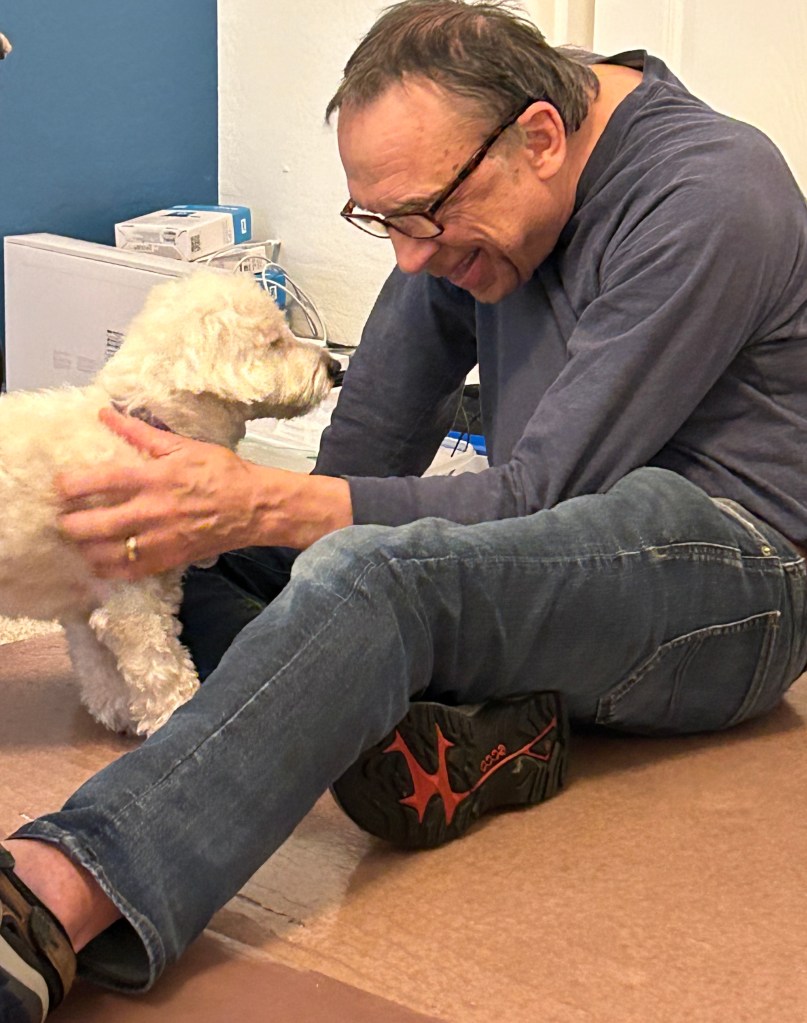
It’s hard to imagine, but my TBI caused me to improve in some areas. Things are much slower (because of my disabilities), so I can’t do as much as I once did. Because I’m slower, I’ve learned to be more efficient and more organized with the time I am able to work. Because I spend nearly all of my time at home, I have more time to be a part of Donna’s life. I have also bonded more closely with and have enjoyed more our dog, a Maltese-Poodle. Koda is a 2-year-old male rescue.
13. What do you like least about your brain injury?

I intensely dislike my loss of balance. It’s an issue that’s a burden not only for me, but also for Donna, who helps me walk whenever we go anywhere.

14. Has anything helped you to accept your brain injury?

I’ve been greatly helped by the positivity of most doctors; the nurses; the therapists; the staff; the Columbia faculty, students, and postdoctoral scientists; and many of the people I’ve come in contact with. But, by far, the greatest help has come from my wife, Donna – the most positive person I know. She cheers every gain – no matter how small. She constantly looks out for me, for example, choosing the easiest path in a restaurant, finding and researching an electric scooter, and bringing home several samples of items so I can choose.

15. Has your injury affected your home life and relationships and, if so, how?

My home life has indeed been affected. I no longer do repairs, so Donna does them. I can’t lift heavy objects, so Donna does what she can and gets help if she needs to. Donna and I do collaborate on some projects. We once had to assemble a piece of furniture. The assembly was complicated, so I laid everything out and understood the directions. I would tell Donna what tool to use and what to do. She was great – she did everything perfectly! Now we have a useful and beautiful cabinet. I used to do everything financial. Now Donna does. She pays the bills, gets everything ready for the tax preparer, and successfully negotiated the deal for our car. I am home a lot more, so we have more time to talk. Among our many conversations are talks about what she and I are feeling in our new life that resulted from my brain injury.

16. Has your social life been altered or changed and, if so, how?

Donna and I weren’t overly social. We continue to socialize in small groups of family and close friends. In the past, our focus was on our two children – and on each other at our weekly “date nights.” Now, we not only focus on our children, but also on their spouses and our grandchildren. Nothing much changed after my TBI, except that I’m always at home and we don’t go out to eat as much anymore.

17. Who is your main caregiver? Do you understand what it takes to be a caregiver?
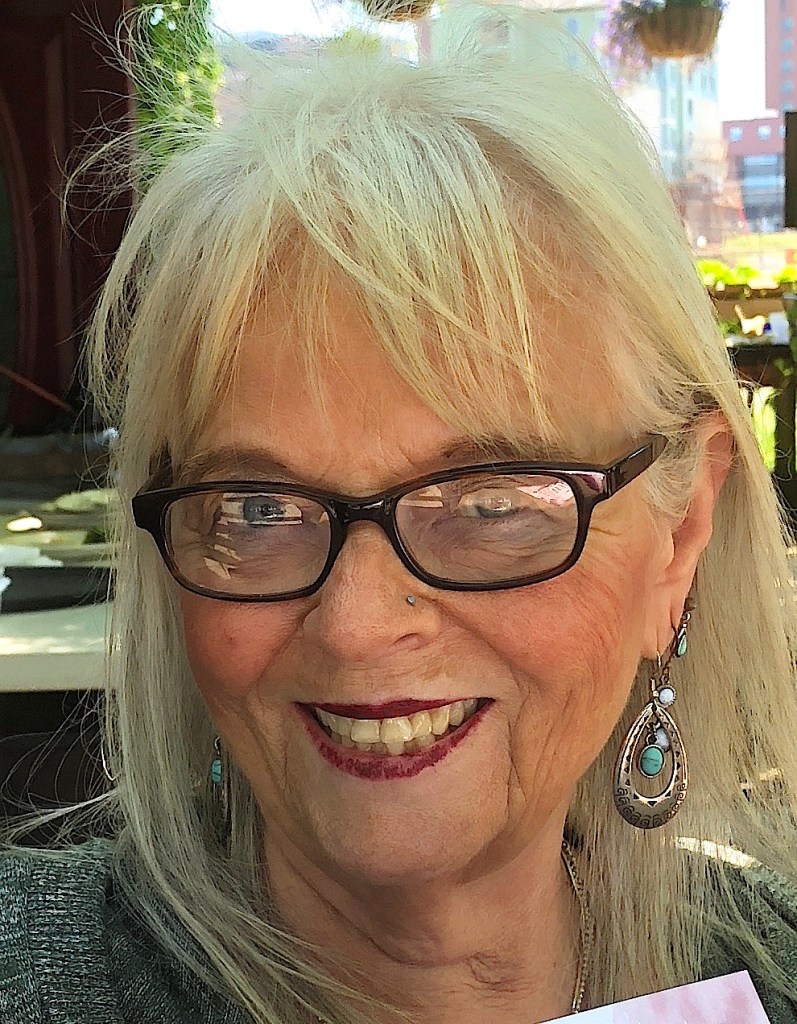
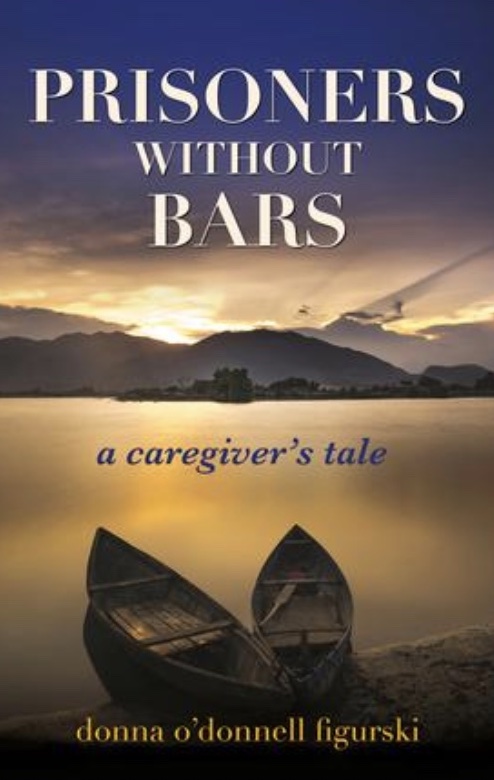
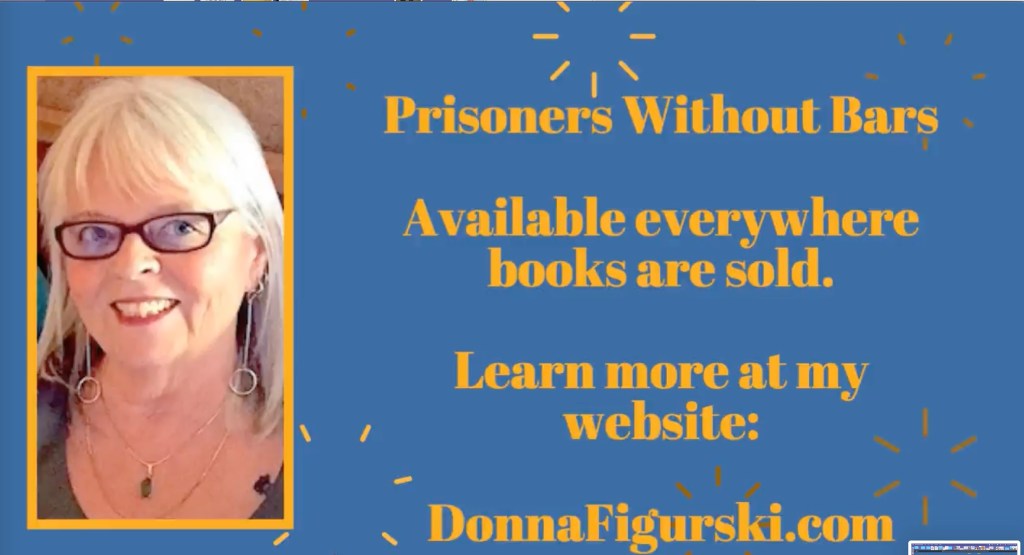
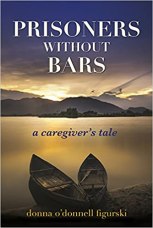
My wife, Donna, has always been my main caregiver. She was with me from the very beginning of my brain injury. Her first acts of caregiving for me were to call 9-1-1 before I slipped into a coma and to advocate for me in the hospitals. Survivors need to realize how heroic their caregivers usually are, how devoted caregivers are to caring for their survivors, how caregivers’ lives have also been severely disrupted – in these cases by brain injury, and how caregivers are often frightened by their survivors’ brain injuries and shocked by the changes to their survivors’ lives. Donna is always using her experiences and knowledge to help other caregivers with what is often an overwhelming responsibility. Donna has published an award-winning memoir (Prisoners Without Bars: A Caregiver’s Tale), which began as daily updates for family and friends around the country. In her updates, she discussed my progress or lack of progress for the day. Later, Donna wrote down what happened in a series of essays to have a record for me. About a year after my hospitalization, she began to read her essays to me. I was shocked by her horrific experience and convinced her to write a book. She did, and a publisher (WriteLife) was interested in her caregiver’s perspective on brain injury. (You can listen to the book trailer below.)
18. What are your plans? What do you expect/hope to be doing ten years from now

In ten years, I expect to continue to focus on the lives of family and friends, continue to learn about and explain science to the public, continue to discuss brain injury with other survivors and with caregivers, continue to help the public understand brain injury, and continue to make Donna’s life as easy as possible.

19. Are you able to provide a helpful hint that may have taken you a long time to learn, but which you wished you had known earlier? If so, please state what it is to potentially help other survivors with your specific kind of brain injury.

Years after my TBI, I gained a perspective that helped me. It’s typical to blame your disability when it takes far longer to accomplish something than you think it should or when you can’t do something you think you should. What helps me is to realize the body is doing the best it can. This minor change of attitude has ended much of my frustration of feeling inadequate. So go easy on yourself.

20. What advice would you offer to other brain-injury survivors? Do you have any other comments that you would like to add?

I can’t emphasize enough the importance of surrounding yourself with positive people. Such people have had a crucial and beneficial effect on my self-esteem. For example, Donna has not only been my caregiver, but she is also my cheerleader. I had an excellent neurologist for years, but then we moved across the country. I found a new neurologist, but Donna and I didn’t feel any positivity from him, so we never returned. Likewise, if a doctor or therapist tells you you can’t do something, and it’s only his or her opinion and is not based experience or data, you may want to find someone else. It’s important for you too to have a positive attitude. At the very least, consider that you survived! Your positive attitude will affect others, especially your caregiver, who is often overwhelmed and who will not be further burdened by your feeling sorry for yourself.

 ********************************************************************************************************
Columbia University United States of America

51r7mht63el._sx332_bo1204203200_-1

             Read It!                Listen to It!              Review It!

Click Links under Book

 PAPERBACK!   Read it Now!    

e-BOOK!   Read it Now!  

AUDIO BOOK Listen to it Now!

                                                               Stay Safe and Healthy!

Clip Art compliments of Bing.)

(Photos compliments of contributor.)

As I say after each post:

Please leave a comment by clicking the blue words “Leave a Comment” below this post.

Feel free to follow my blog. Click on “Follow” on the upper right sidebar.

If you like my blog, share it intact with your friends. It’s easy! Click the “Share” buttons below
SURVIVORS SPEAK OUT! Sandee Rodriguez


Survivors SPEAK OUT! Sandee Rodriguez

presented by

Donna O’Donnell Figurski


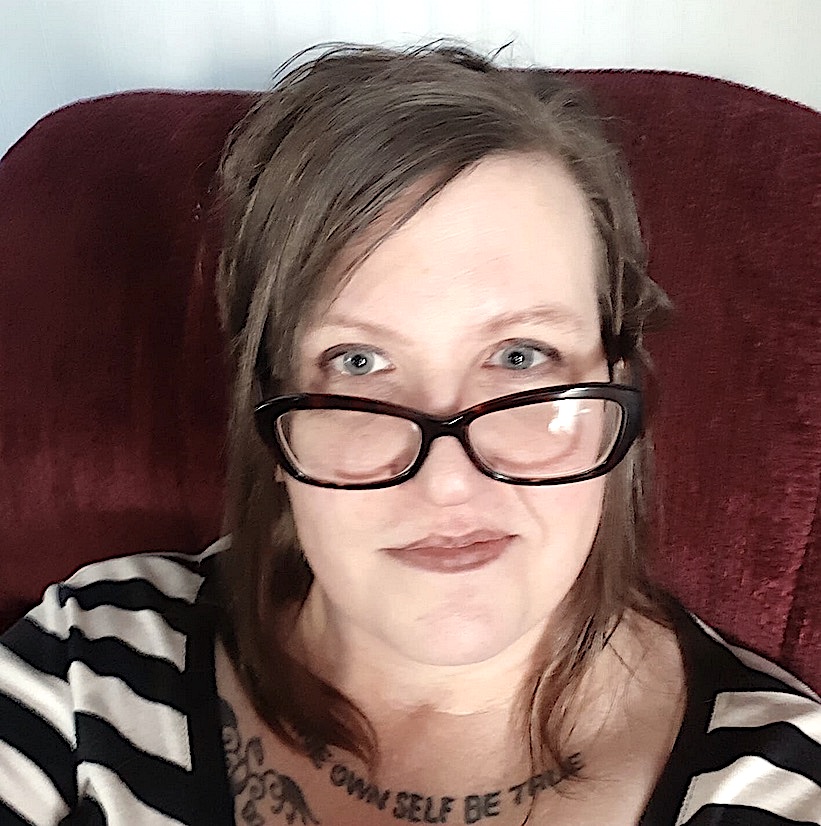
Sandee Rodriguez Survivor 072624

1. What is your name? (last name optional)

Sandee Rodriguez

  1. Where do you live? (city and/or state and/or country) Email (optional)

Ypsilanti, Michigan, USA

  1. On what date did you have your brain injury? At what age?

January 4, 1995     I was 24.

  1. How did your brain injury occur?car accident R-2

Nasty car accident

  1. When did you (or someone) first realize you had a problem?

Immediately. I was unconscious and paralyzed.

  1. What kind of emergency treatment, if any, did you have?

I was airlifted to the hospital of the University of Michigan.

  1. Were you in a coma? If so, how long?

Yes. Two weeks.

  1. Did you do rehab? What kind of rehab (i.e., inpatient or outpatient and occupational and/or physical and/or speech and/or other)? How long were you in rehab?

I was in outpatient rehab for seven hours a day at Med Rehab in Ann Arbor, Michigan. I had physical, occupational, speech, talk, and recreational therapies. I also had retrograde amnesia. (At 24, I woke up with my past erased.)

Erased Memory

  1. What problems or disabilities, if any, resulted from your brain injury
(e.g., balance, perception, personality, etc.)?

I had problems with all of the examples listed.

  1. How has your life changed? Is it better? Is it worse?

This question has no easy or short answer.

  1. What do you miss the most from your pre-brain-injury life?

My pre-injury life is still a blank mostly.

  1. What do you enjoy most in your post-brain-injury life?

I appreciate the experiences I may not have had if my TBI (traumatic brain injury) had never happened. It’s different every day.

  1. What do you like least about your brain injury?

Having it. It stopped the life I was creating at a time people become fully realized adults. 

  1. Has anything helped you to accept your brain injury?

I have been helped by my family and by the tenacity I have.

  1. Has your injury affected your home life and relationships and, if so, how?

Other people have had issues with my brain injury. Those people are no longer in my life.

  1. Has your social life been altered or changed and, if so, how?

I have no active social life.

  1. Who is your main caregiver? Do you understand what it takes to be a caregiver?

I am my own caregiver. My husband helps with what I ask. My mom and stepdad and my aunt were my caregivers in the beginning.

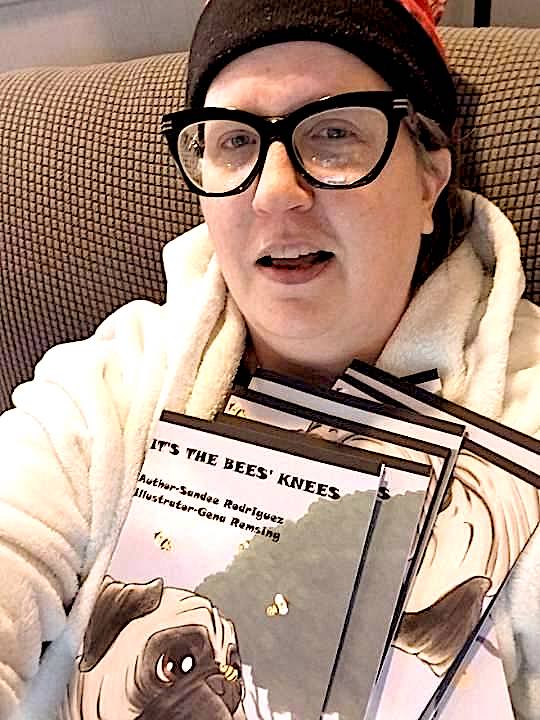
  1. What are your plans? What do you expect/hope to be doing ten years from now?Sandee Rodriguez & Book_n

The musical I wrote about my life with a TBI will be on Broadway by then.

  1. Are you able to provide a helpful hint that may have taken you a long time to learn, but which you wished you had known earlier? If so, please state what it is to potentially help other survivors with your specific kind of brain injury.

(I don’t understand this question due to some aphasia I have now.)

  1. What advice would you offer to other brain-injury survivors? Do you have any other comments that you would like to add?

Carpe diem (seize the day) and be easy on yourself. Meet one challenge at a time.

Get Your Copy Now

Read It!               Review It!

Click Links under Book

PAPERBACK!        Read it Now!                             

e-BOOK!      Read it Now!

Clip Art compliments of Bing.)

(Photos compliments of contributor.)

As I say after each post:

Please leave a comment by clicking the blue words “Leave a Comment” below this post.

Feel free to follow my blog. Click on “Follow” on the upper right sidebar.

If you like my blog, share it intact with your friends. It’s easy! Click the “Share” buttons below.


Survivors SPEAK OUT! Rob Baugh

1. What is your name? (last name optional)

Rob Baugh

2. Where do you live? (city and/or state and/or country) Email (optional)

Home: Clarksville, Indiana, USA     Email: Rob.Baugh@outlook.com  

3. On what date did you have your brain injury? At what age?

Date: July 21, 2020     Age: 45

4. How did your brain injury occur?

I knocked myself out opening a screen door. I suffered a 3-inch laceration to my skull, which required five stitches.

5. When did you (or someone) first realize you had a problem?

Immediately. The after-effects began right away, and we knew I needed medical treatment.

6. What kind of emergency treatment, if any, did you have?

I went to the Emergency Room of the hospital. They put five staples into my head and did a CAT scan (CT or CAT = computed tomography) and X-rays.

7. Were you in a coma? If so, how long?

No

8. Did you do rehab? What kind of rehab (i.e., inpatient or outpatient and occupational and/or physical and/or speech and/or other)? How long were you in rehab?

I did speech and cognitive (outpatient) therapies.

9. What problems or disabilities, if any, resulted from your brain injury
(e.g., balance, perception, personality, etc.)?

I have personality changes. (I don’t pick up on sarcasm very well.) I have had a headache since the day I hit my head, and it never goes away. I also have anxiety, depression, memory issues, and stress.

10. How has your life changed? Is it better? Is it worse?

In some ways, my life is better, but it’s also worse. I have become more of a home-body. I don’t like loud noises and crowds. So being at home is my safe place. I still mourn my old self. But I have also made so many friends since my brain injury that it is kind of a blessing in that fact.

11. What do you miss the most from your pre-brain-injury life?

I used to sing and play piano at church, but I can’t do that anymore because of the stress of being in front of people.

12. What do you enjoy most in your post-brain-injury life?

I enjoy doing the brain-injury podcast that I started to help spread awareness and give a platform to other survivors to use to tell their stories.

13. What do you like least about your brain injury?

I dislike my constant pain and my memory issues. 

14. Has anything helped you to accept your brain injury?

I think being in a brain-injury support group and learning that I am not alone in this journey have helped me the most.

15. Has your injury affected your home life and relationships and, if so, how?

My brain injury has caused more stress on my wife. She misses the old me, and she does have to carry much more of the load than she should have to. She doesn’t complain about having to do more, but I know it has to be very stressful for her.

16. Has your social life been altered or changed and, if so, how?

Yes, it has. I don’t do a lot of things outside my home. I don’t visit people like I want to or get to do things that involve big crowds.

17. Who is your main caregiver? Do you understand what it takes to be a caregiver?

My wife and I do understand what it takes. I call all caregivers “unsung heroes.”

18. What are your plans? What do you expect/hope to be doing ten years from now?

I hope in ten years that I will have grown my platform so big that everyone who hears my name will think “brain injury” and will know what a brain injury is. I am a big advocate for survivors, and I want to educate as many people as I can.

19. Are you able to provide a helpful hint that may have taken you a long time to learn, but which you wished you had known earlier? If so, please state what it is to potentially help other survivors with your specific kind of brain injury.

What I wish I would have done from day one is to get myself into a support group. My having a support group has helped me so much. It took me almost three years to join one. I felt like I was too weak to be joining a support group, but being part of a support group is totally necessary for survivors – and caregivers as well.

20. What advice would you offer to other brain-injury survivors? Do you have any other comments that you would like to add?

Surround yourself with positive people. Understand that the people you felt like you could count on when life gets tough will more than likely disappoint you. Don’t give into that or feel bad for relationships lost. You cannot heal if you are swimming in a toxic negative environment. 

 *****

Get Your Copy Now!

51r7mht63el._sx332_bo1204203200_-1

             Read It!                Listen to It!              Review It!

Click Links under Book

 PAPERBACK!   Read it Now!    

e-BOOK!   Read it Now!  

AUDIO BOOK Listen to it Now!

                                                               Stay Safe and Healthy!

Clip Art compliments of Bing.)

(Photos compliments of contributor.)

As I say after each post:

Please leave a comment by clicking the blue words “Leave a Comment” below this post.

Feel free to follow my blog. Click on “Follow” on the upper right sidebar.

If you like my blog, share it intact with your friends. It’s easy! Click the “Share” buttons below
Survivors SPEAK OUT! Mike Gephart


Survivors SPEAK OUT! Mike Gephart

presented by

Donna O’Donnell Figurski

Mike Gephart


1. What is your name? (last name optional)

Mike Gephart

2. Where do you live? (city and/or state and/or country)

Oshkosh, Wisconsin, USA

-Email (optional)

geppyonbass@gmail.com

3. On what date did you have your brain injury? At what age?

My brain injury happened on March 12, 2014. I was 40 years old.

4. How did your brain injury occur?

I was heading home from work on a 2-lane 55-mph county highway. As I approached an intersection, there was a man waiting in the oncoming lane with his left blinker on. He was struck from behind at 61 mph by an inattentive driver. The man waiting to turn was killed instantly. So less than a second later, I had a 54-mph head-on collision with a dead man (he was pronounced dead at the scene of the accident). car acciddent R

5. When did you (or someone) first realize you had a problem?

Another person instantly realized I had a major problem.

6. What kind of emergency treatment, if any, did you have?

Twice, on the way to the ER (Emergency Room of a hospital, the EMS (Emergency Medical Service) paramedics got my heart beating. By the time my (now “ex”) wife got there to identify my body, I’d been put on machines. I was in a medically induced coma for nine days, and I was incognizant for 14 more days. After those 23 days, I heard the words “traumatic brain injury,” which described my biggest problem. 

7. Were you in a coma? If so, how long?

Yes. I was in a medically induced coma. Of the nine days that I was comatose, two were spent trying to get me out of the coma.

8. Did you do rehab? What kind of rehab (i.e., inpatient or outpatient and occupational and/or physical and/or speech and/or other)? How long were you in rehab?Cognitive Rehab 8-85260_ms-health-cognitive-rehabilitation-cognitive-behavioral-therapy-cartoon

I was in rehab at the hospital for a week after regaining cognizance. Then I went home and was given physical, speech, and occupational therapies by a home service. Once I could walk with crutches, I had outpatient therapy for another four months.

9. What problems or disabilities, if any, resulted from your brain injury
(e.g., balance, perception, personality, etc.)?

I had problems with balance and executive functions. My disability today is basically all about my executive functioning. I had third-party disability insurance through an employer. Because my injuries happened on my way home from work, they got a lawyer to get me on SSDI ASAP (Social Security Disability Insurance; as soon as possible). Because of my executive functioning, “ASAP” meant five years. 

10. How has your life changed? Is it better? Is it worse?

I choose not to dwell on all the “bad” things that happened because of my accident. In my 1st or 2nd night of cognizance, crying in my bed alone at 3 am, I had a panic attack about everything that had occurred – and was going to happen. It was at this moment that I heard an internal voice say to me: Mike, bad things happened and will continue to happen far more than anything good.

*Energy you waste fearing Bad is energy you steal from loving Good. (I call that advice “Themandment.” And every one of the 10 commandments that Moses only had to climb a mountain lie safely under the umbrella of Themandment.)

So how has my life changed? I was blessed with clarity and the ability to reinvent my identity in and my understanding of this plane of existence.

11. What do you miss the most from your pre-brain-injury life?

Daughters RI miss being in a family unit with my daughters.

12. What do you enjoy most in your post-brain-injury life?

I’m blessed to know from experience what will happen with my soul when my body dies again.

13. What do you like least about your brain injury?

I don’t like having to acknowledge my brain injury when it reminds me of why I can’t and shouldn’t try being what I was. 

14. Has anything helped you to accept your brain injury?

Themandment helps me several times daily. 

15. Has your injury affected your home life and relationships and, if so, how?

The relationship with my ex-wife after the accident can’t even be called a relationship.

I came back a new man, and relationships, with what I call “1st Reality Sufferers,” are difficult because of my 2nd perspective. 

16. Has your social life been altered or changed and, if so, how?

My social life has changed. I used to be a local rock star with a day job who went where he wanted and felt comfortable. Now, I don’t feel comfortable in many places, I have fewer friends, and I gig far less. 

17. Who is your main caregiver? Do you understand what it takes to be a caregiver?

My mother has power of attorney for me, and she is my emergency contact.  Early on, my in-laws watched over me while my (now “ex”) wife went back to work. 

18. What are your plans? What do you expect/hope to be doing ten years from now?

I don’t plan further than a month yet. My world changed in less than a second. So living in the moment is paramount. Live in the Moment OIP

19. Are you able to provide a helpful hint that may have taken you a long time to learn, but which you wished you had known earlier? If so, please state what it is to potentially help other survivors with your specific kind of brain injury.

Themandment: Energy wasted fearing bad is energy stolen from loving good. 

That one passage is a notion I wish I could have had in my 20s. Before my accident, I could spend a day worrying about things that might happen. It hurts to think back to all of the things I didn’t take the time to love and feel blessed to have.

One piece of advice a TBI mentor gave me. 

He said: “You didn’t unlearn anything in your accident. 

But you need to reinvent a new way to do everything! … with 40 years of experience.” 

20. What advice would you offer to other brain-injury survivors? Do you have any other comments that you would like to add?

I suggest three things: 

  1. Themandment
  2. Reinvent new neuro-pathways.

Relearning how the old ones worked is pointless. 

  1. Unconscious bodily functions! 

Focus on things like making it to the toilet on time. 

The reason newborns and the elderly wear diapers is because of brand new or deteriorating neuropathways. 

Don’t wait for your primary doctor to tell you about it.

 *****

Get Your Copy Now!

51r7mht63el._sx332_bo1204203200_-1


             Read It!                Listen to It!              Review It!

Click Links under Book

 PAPERBACK!   Read it Now!    

e-BOOK!   Read it Now!  

AUDIO BOOK Listen to it Now!

                                                               Stay Safe and Healthy!

Clip Art compliments of Bing.)

(Photos compliments of contributor.)

As I say after each post:

Please leave a comment by clicking the blue words “Leave a Comment” below this post.

Feel free to follow my blog. Click on “Follow” on the upper right sidebar.

If you like my blog, share it intact with your friends. It’s easy! Click the “Share” buttons below.

Book anim0014-1_e0-1


Read All About It! . . . . . . . Prisoners without Bars: A Caregiver’s Tale

Read All About It!

Prisoners without Bars: A Caregiver’s Tale

presented by 

Donna O’Donnell Figurski – author

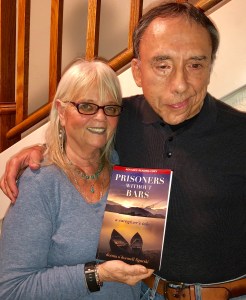
Donna & David with ARC of Prisoners without Bars: A Caregiver’s Tale

My memoir, Prisoners without Bars: A Caregiver’s Tale, is not only a story of David’s and my struggles after his traumatic brain injury, but it is also a love story. Though my memoir addresses a dire topic, it is peppered with comedic situations. They say laughter is the best medicine, and again, they are right.

Prisoners without Bars is a heart-wrenching memoir that will make you laugh, cry, and G-A-S-P. I promise!

Boy Laughing

Girl Crying girl-crying-clipart-34

Girl Gasping 2

It’s not a beach read, but it reads like one. It’s fast! It’s easy! It’s fascineasy. I mean fascinating.

What Readers are Saying!

Jackie said – “A beautiful and touching story.”

Anonymous Amazon Customer said – “I loved this book. almost couldn’t put it down.

jlgwriter said – “I found the story powerful and compelling.

Todd & Kim said – “This is such an inspirational story of survival! The book is a very easy read and informative as well as inspiring!!”

Judy said – “Donna O’Donnell Figurski tells her story of grace, love, frustration, anger, disappointment, strength, joy, and above all hope.”

Marge said – “I read it in one fell swoop… I guess the word that would describe your book, your life, and who you are is SUPERCALIFRAGILISTICEXPIALIDOCIOIUS.”

Anonymous said – “This book pulled me in immediately and didn’t let me go until the end! ”

Helen said – “Could not put this book down. Written for easy reading. It was like having a conversation with a friend.” “I finished it in one day with some teary moments along with some chuckles. A must read!!”

Get Your Copy Now

Read It!               Review It!

Click Links under Book

51R7Mht63EL._SX332_BO1,204,203,200_

PAPERBACK!        Read it Now!                              e-BOOK!      Read it Now!

Stay Safe and Healthy!

Clip Art compliments of Bing.)

(Photos compliments of contributor.)

As I say after each post:

Please leave a comment by clicking the blue words “Leave a Comment” below this post.

Feel free to follow my blog. Click on “Follow” on the upper right sidebar.anim0014-1_e0-1

If you like my blog, share it intact with your friends. It’s easy! Click the “Share” buttons below.

Survivors SPEAK OUT! Simon Limbrick

Survivors SPEAK OUT! Simon Limbrick

by

Donna O’Donnell Figurski


Simon Limbrick 2

1. What is your name? (last name optional)
My name is Simon C. Limbrick.

2. Where do you live? (city and/or state and/or country) Email (optional)
I live in Gloucester, UK.

3. On what date did you have your brain injury? At what age?
My brain injury happened in 1980. I was 15 at the time.

4. How did your brain injury occur?
My brain injury occurred when I was crossing a duel carriageway on my bicycle – something I did safely on hundreds of occasions. R

5. When did you (or someone) first realize you had a problem?
When I emerged from my coma (See my answer below.)

6. What kind of emergency treatment, if any, did you have?
My CT (computerized tomography) scan revealed a massive left temporal hematoma (The left temporal lobe is associated with understanding language, forming speech, and remembering verbal information); an aneurysm deep in the basal ganglia, which may have affected my coordination; and that I’d broken my neck in three places. The hematoma was operated on straight away at my local hospital, Gloucester Royal. They weren’t equipped to deal with the aneurysm, so, as soon as the first operation was completed, I was put into an ambulance and red-lighted 35 miles to Frenchay Hospital in Bristol. When I emerged from a two-week coma, I found I was paralyzed from the neck down. I also had a tracheotomy tube in my throat.

7. Were you in a coma? If so, how long?
Yes – two weeks

8. Did you do rehab? What kind of rehab (i.e., inpatient or outpatient and occupational and/or physical and/or speech and/or other)? How long were you in rehab?
During my five-month stint at Gloucester Royal, I underwent the full raft of therapies: physio, speech, and occupational.

9. What problems or disabilities, if any, resulted from your brain injury
(e.g., balance, perception, personality, etc.)?
I had to relearn how to use my limbs, how to talk, how to dress myself, and how to walk. Although my right side had “come on line” first, walking was something I found very hard to do. Compounded by balance issues, I had a dropped right foot – a trip hazard in itself. I had leg braces made, but these meant I had to learn to walk with a slightly wider gait, as the inner rods and spurs would meet and cause me to stumble.

It was evident early on that I had fixed and dilated pupils. The right eye recovered some time after, but the left eye remained fixed. As the left eyelid gradually opened, double vision was apparent. This caused me to miss the bowl of the toilet a few times until I re-adjusted! My balance was shocking. Even when given a wheelchair later on, I told my hands to release, but the left was slow to react. As a result, I often got my fingers caught in the spokes. I compensated by learning to push with my right arm and steer and pull with my right leg.

My short-term memory and concentration were atrocious. My personality, mainly shy and introverted, now flourished in the attention I was getting from all quarters. My inhibitions quickly diminished in hospital. My personality grew with this new “gift” of disinhibition. Unfortunately, it was a double-edged sword, as I found I often did not engage my brain before putting my mouth into gear. I caused untold damage to myself and much angst to others countless times because of my lack of social inhibitions. There was nobody else to blame for this.

Simon Limbrick 110. How has your life changed? Is it better? Is it worse?
One never fully recovers from this sort of trauma. We learn to cope with it, or not, in our own ways. Me? I have learned the value of laughter – of being able to laugh at myself. How can we justify laughing at others if we cannot laugh at ourselves? In essence, having others laugh with us instead of at us changes our whole outlook on life. It enables us to put things into perspective.

11. What do you miss the most from your pre-brain-injury life?
I missed my youth and fitness, definitely. I miss my dexterity.

12. What do you enjoy most in your post-brain-injury life?
I enjoy my gratitude … my ability to put things into perspective … laughter … love … and the empathy to communicate with others.

13. What do you like least about your brain injury?
I dislike that, because of my brain injury, I’ve hurt people and I’ve made mistakes.

14. Has anything helped you to accept your brain injury?
Even though I cannot remember the incident, accepting my brain injury was key, but it was an accident.

Of all the cars I could have come into contact with that day, the car I collided with turned out to be driven by my dad’s best mate! Both he and two or three other witnesses attested that I caused the collision by pulling out when I did. I was then able to see things in perspective. I realised that the incident was an accident. I finally stopped blaming myself for the hurt I was causing others.

15. Has your injury affected your home life and relationships and, if so, how?
Of course my life and relationships were affected! My personality changed, which my family and friends … and I … found hard to cope with. Two friends – my closest – stuck by me, no matter what – even when their school exams were on. After I left the sheltered environment of the hospital, the severity of my situation dawned on me. Although I had made and continued to make great strides physically, the fact that I could not control my emotions and aspects of my behaviour continued to cause anger, intense frustration, and distress both in myself and in others. This situation went largely unvented and inevitably led to feelings of hopelessness and depression, which in turn led to thoughts of suicide. I’m ashamed to say that I even got uncomfortably close to seriously considering it a few times.

16. Has your social life been altered or changed and, if so, how?
My pre-accident social life was mainly confined to school, friends, and family. The gift/ curse of disinhibition has its pluses and minuses, as I’ve already mentioned. Learning how best to deploy it takes years, and, even after four decades, I can still get it wrong. However, I am a much more confident and outgoing person compared to my younger self. (Perhaps I would have been anyway. I guess I will never know.) Simon Limbrick & Wife 3

17. Who is your main caregiver? Do you understand what it takes to be a caregiver?
I am fully independent and have been living on my own for the past 27 years – though I do need help whenever I am faced with filling out a form.

18. What are your plans? What do you expect/hope to be doing ten years from now?
It may seem somewhat pessimistic, but I tend not to make plans. I have a will, of course, and my kids are looked after, but aside from that, I live day to day – not planning too far ahead.

19. Are you able to provide a helpful hint that may have taken you a long time to learn, but which you wished you had known earlier? If so, please state what it is to potentially help other survivors with your specific kind of brain injury.
Never accept a prognosis. If you do that, you’ve lost 50% of the battle straight away.

To illustrate this point, I can remember my mother telling me I had not been expected to survive the first operation – or the second. “If he does,” the doctors told her, “he will be in a wheelchair for the rest of his life and needing 24-hour care.” I promised her she would have me back just like I was before.

Also, my consultant told me that I had 3rd-nerve damage in my left eye. The result is that I have a lazy left eye. I was told that I would never be able to move it and that I would be blind in that eye eventually. I reminded him that I was not supposed to pull out of my coma and that I should not be making the gains I was achieving. Within the first year, I had achieved slight lateral movement in my left eye. Over the years, it became more pronounced. It took a further 37 years to induce a good measure of vertical movement. My left eye is not yet synced with the right, but maybe it will be over time.

The road to recovery is never complete from this sort of trauma and is fraught with many pitfalls. The trick is to never give up. Win as many of the small battles as you can so you tip the advantage in your favour.

20. What advice would you offer to other brain-injury survivors? Do you have any other comments that you would like to add?
a. NEVER ACCEPT A PROGNOSIS. If you do that, you’ve immediately surrendered 50% of your chances of recovery.
b. DO NOT RELY ON ALCOHOL OR DRUGS TO GET YOU THROUGH. You are stronger than you believe you are. Excepting prescribed medications, mood-altering drugs just anchor you to dependence. You will never discover how strong you really are until you face reality and deal with it in the flesh.
c. DON’T BE AFRAID TO CRY. Realising pent up emotions enables you to carry on.
d. BE COMPASSIONATE IN ALL AREAS OF LIFE. You wouldn’t wish on anybody what you’ve been through.
Life Isn't Fair Re. ACCEPT THAT LIFE ISN’T FAIR. We need emotions to help us learn. Grow towards the light. Don’t become a weed and strangle those next to you. Treat others as you would want to be treated.
f. LEARN TO FORGIVE YOURSELF – AND OTHERS.
g. REALISE THAT YOU ARE NOT PERFECT.
h. REALISE THAT RESPECT, REAL RESPECT, IS BORN NOT OUT OF FEAR, BUT OUT OF COMPASSION. Compassion is a strength, not a weakness.

Get Your Copy Now!

51r7mht63el._sx332_bo1204203200_-1

             Read It!                Listen to It!              Review It!

Click Links under Book

 PAPERBACK!   Read it Now!    

e-BOOK!   Read it Now!  

AUDIO BOOK Listen to it Now!

                                                               Stay Safe and Healthy!

Clip Art compliments of Bing.)

(Photos compliments of contributor.)

As I say after each post:

Please leave a comment by clicking the blue words “Leave a Comment” below this post.

Feel free to follow my blog. Click on “Follow” on the upper right sidebar.

If you like my blog, share it intact with your friends. It’s easy! Click the “Share” buttons below.

Book anim0014-1_e0-1

SO, WHADDYA THINK? . . . . About Faulty Filters After Brain Injury

SO, WHADDYA THINK? . . . . About Faulty Filters After Brain Injury

by

Donna O’Donnell Figurski

so-whaddya-think-brain-th-4

After a brain injury, many survivors may experience an extreme behavioral, emotional, or personality change. This can be a real problem with keeping friendships. For example, a person who was once the life of the party and can no longer party for any number of reasons—overstimulation, for one—is not that fun to be around. Lack of filters can be another problem.

We all use filters to control what comes from our brains and out of our mouths, and we don’t always say exactly what is on our minds for fear of offending someone. However, some survivors have diminished control over their filters and blurt out whatever they are thinking, possibly offending their friends, who then keep their distance. So essentially, the survivor is pushing away friends without really meaning to.

Sometimes anger and resentment, and perhaps perseveration about the injury—nonstop talk about the injury, can alienate friends because the friends just don’t get it. Because brain injury has damaged parts of their brains, brain-injured survivors are usually not the same person they were before their injury. After all, they’ve looked death in the face and pushed it aside.

Whaddya You Think?

Get Your Copy Now

Read It!               Review It!

Click Links under Book

51R7Mht63EL._SX332_BO1,204,203,200_

PAPERBACK!        Read it Now!                             

e-BOOK!      Read it Now!

Audio Book! Read it Now!

Stay Safe and Healthy!

Clip Art compliments of Bing.)

(Photos compliments of contributor.)

As I say after each post:

Please leave a comment by clicking the blue words “Leave a Comment” below this post.

Feel free to follow my blog. Click on “Follow” on the upper right sidebar.anim0014-1_e0-1

If you like my blog, share it intact with your friends. It’s easy! Click the “Share” buttons below.

SO, WHADDYA THINK? . . . . ABOUT INVISIBLE BRAIN INJURY

So, Whaddya Think? About Invisible Brain Injury

by

Donna O’Donnell Figurski

so-whaddya-think-brain-th-4


Invisible Brain Injury comes with a whole set of problems. Because the survivor looks “normal,” their friends, family, and strangers often think they are faking their problems––neuro fatigue, memory loss, lack of organization, and other cognitive deficits.

My husband, David’s, brain injury is obviously visible, so he doesn’t run into issues where people doubt his injury. But for those survivors whose injury is “all in their brain” and not easily seen or realized by the general public or family and friends, major problems may arise. Folks too often believe that a brain injury should be healed in weeks or months, just like a broken bone. But the fact is that brain injury takes a lifetime of recovery.

Whaddya You Think?

Get Your Copy Now

Read It!               Review It!

Click Links under Book

51R7Mht63EL._SX332_BO1,204,203,200_


PAPERBACK!        Read it Now!                             

e-BOOK!      Read it Now!

Audio Book! Read it Now!

Stay Safe and Healthy!

Clip Art compliments of Bing.)

(Photos compliments of contributor.)

As I say after each post:

Please leave a comment by clicking the blue words “Leave a Comment” below this post.

Feel free to follow my blog. Click on “Follow” on the upper right sidebar.anim0014-1_e0-1

If you like my blog, share it intact with your friends. It’s easy! Click the “Share” buttons below.

Survivors SPEAK OUT! Ariel Johnson

Survivors SPEAK OUT! Ariel Johnson

by

Donna O’Donnell Figurski

Ariel johnson

1. What is your name? (last name optional)

Ariel Johnson

2. Where do you live? (city and/or state and/or country)

Long Island, New York, USA

-Email (optional)

ArielAnn.Johnson@gmail.com

3. On what date did you have your brain injury? At what age?

My brain injury occurred on December 13th, 2007. I was 17 years old.

4. How did your brain injury occur?

My brain injury is from a car accident. While rounding a bend, I entered the oncoming lane, collided with a van, and hit a tree.     Car Accident R

5. When did you (or someone) first realize you had a problem?

I realized I had a serious problem the minute I woke up from the coma I had been in for a month and a half.

6. What kind of emergency treatment, if any, did you have?

I had a craniectomy (surgery to remove a portion of the skull), brain surgery, then eventually cranioplasty (surgery to repair the skull).

7. Were you in a coma? If so, how long?

Yes – for a month and a half

8. Did you do rehab? What kind of rehab (i.e., inpatient or outpatient and occupational and/or physical and/or speech and/or other)? How long were you in rehab?

I was hospitalized for about three months. I received outpatient physical rehab for about five months after I was hospitalized. I was at Mount Sinai Outpatient Rehab’s Phase Two program, which taught me emotional regulation and how to be aware of myself.

9. What problems or disabilities, if any, resulted from your brain injury (e.g., balance, perception, personality, etc.)?

I have issues with sensations on my right side because I have nerve damage there (hemiparesis). My personality changed completely – I didn’t care as much about certain people in my life who were not helping me. My perception of life got better as I became more in touch with my family and who I was as a person. I had emotional issues in the beginning of my recovery, but I feel like I have healed a lot of me. I can now give back and help others.

10. How has your life changed? Is it better? Is it worse?    Blessing in Disguise

The accident was a blessing in disguise; I am so grateful that it happened. I would not know where I would be if it did not happen. I learned structure and life experience.

11. What do you miss the most from your pre-brain-injury life?

I miss the friends I once had. For a long while (and I mean almost 13 years), I was letting go of my friends. We were all at a point of our lives when we were moving on to college, and they did not understand my brain injury. I expected a lot of them, and I feel it wasn’t fair on my end. Plus, I found comfort in knowing that my sisters (including one childhood-friend whom I consider to be a sister) were my true friends all along and would never leave me.

12. What do you enjoy most in your post-brain-injury life?

I value learning to be so self-aware, learning to be structured, and understanding that I have been to hell and back. No one can bring me down.

13. What do you like least about your brain injury?

Sometimes, my head feels weird when I’m trying to sleep at night. I also don’t like the fact that I have to part my hair a certain way to hide my scar.

14. Has anything helped you to accept your brain injury?

Yes. I found help in exercise, experience, eating the right foods, word games, and just going through the motions of my recovery – both the negative and the positive parts.   Exercise R

15. Has your injury affected your home life and relationships and, if so, how?

My parents had been divorced for about seven years, but, after my accident, they actually got back together again. But I lost all my friends. I couldn’t keep friendships because I didn’t have any respect, love, or care for my own self. Plus, I had to relearn how to be human again.

16. Has your social life been altered or changed and, if so, how?

Heck yea! For a while, I could not drink or drive; that limited me tremendously. Also, I could not keep relationships.

17. Who is your main caregiver? Do you understand what it takes to be a caregiver?

I am my own caregiver, but for a while, my needs were taken care of by my parents. I did have a woman take me to doctor appointments – she was lovely.

Positive Attitude R18. What are your plans? What do you expect/hope to be doing ten years from now?

In ten years, I am going to be motivating people every day through public speaking and collaborating with others on books, podcasts, and seminars. I am going to own at least five apartment complexes, each of which will make around $1 million yearly. I am going to be married and have at least two children. I am going to be happy, confident, and loving every moment of my life!

19. Are you able to provide a helpful hint that may have taken you a long time to learn, but which you wished you had known earlier? If so, please state what it is to potentially help other survivors with your specific kind of brain injury.

Time heals all wounds, but you need to go through the pain to heal. You also need to experience and practice – to push yourself even when you think it is not possible. Convince yourself that fear is just a word.

20. What advice would you offer to other brain-injury survivors? Do you have any other comments that you would like to add?      OIP

Enjoy every moment of your life. Perfect each baby-step, so that it turns into a habit and a better life.

Get Your Copy Now!

prisoners-cover

             Read It!                Listen to It!              Review It!

Click Links under Book

 PAPERBACK!   Read it Now!    

e-BOOK!   Read it Now!  

AUDIO BOOK Listen to it Now!

                                                               Stay Safe and Healthy!

Clip Art compliments of Bing.)

(Photos compliments of contributor.)

As I say after each post:

Please leave a comment by clicking the blue words “Leave a Comment” below this post.

Feel free to follow my blog. Click on “Follow” on the upper right sidebar.

If you like my blog, share it intact with your friends. It’s easy! Click the “Share” buttons below.

anim0014-1_e0-1

HOW TO FIND A SUPPORT GROUP

How to Find a Support Group

presented by

Donna O’Donnell Figurski

Have you ever needed a support group? Needed the help of others to assist you with the problems that life throws at you? Have you been open to asking for and accepting the help offered? Or are you like me––struggling to stand alone––and thinking you can go it alone?

Be SMART! Check out the possibilities below.

Your healthcare provider may be able to offer assistance. doctor, nurse, social worker, chaplain or psychologist

Google It! Search the Internet. Online support groups are available on social media sites like Facebook.

Local centers like libraries, churches, or synagogues may be able to direct you to an appropriate support group.

Check your local listings. Search your local telephone book (Does anyone even have a phone book anymore?) or check your local newspaper for support resources.

Ask family, friends, or anyone who knows someone with a brain injury for support group suggestions. 

Contact Organizations.

Contact a state or national organization affiliated with brain injury.

 Contact the Brain Injury Association of America to find support groups in your state. http://www.biausa.org/

Check out the Mayo Clinic for resources.

http://www.mayoclinic.org/healthy-lifestyle/stress-management/in-depth/support-groups/art-200655

                           Get Your Copy Now

                               Read It!               Review It!              Click Links!

51R7Mht63EL._SX332_BO1,204,203,200_

PAPERBACK!        Read it Now!

e-BOOK!      Read it Now!

AUDIOBOOK      Read/Listen to it Now!

Stay Safe and Healthy!

Clip Art compliments of Bing.)

(Photos compliments of contributor.)

As I say after each post:

Please leave a comment by clicking the blue words “Leave a Comment” below this post.

Feel free to follow my blog. Click on “Follow” on the upper right sidebar.anim0014-1_e0-1

If you like my blog, share it intact with your friends. It’s easy! Click the “Share” buttons below.

diemodi jewelry

uniquely hand-crafted jewelry by donna

Welcome to Harmony Kent Online

The home of all things books

Pete Springer

Passionate Teacher and Future Children's Author

HOPE TBI

Helping Other People Excel - To Be Independent

For the Love of Books, Old and New

Katie Fischer, Writer and Reader of Stories

Charlie Bown

Children's Author

Jessica Hinrichs

“We write to taste life twice, in the moment and in retrospect.” ― Anais Nin

VIVIAN KIRKFIELD - Writer for Children

Picture Books Help Kids Soar

Mindy’s Writing Wonderland

For authors, parents, teachers & everyone who loves children’s books.

Kaitlyn Leann Sanchez

Literary Agent

Surviving Traumatic Brain Injury

TBI - Survivors, Caregivers, Family, and Friends

The Care Factor

Loving someone with a Traumatic Brain Injury

Brain Injury Support Group of Duluth-Extension

Brain Injury Information and SUPPORT

Brain Aneurysm Global Insight

Brain Aneurysm, cerebral hemorrhaging, hemorrhage stroke