TBI – Survivors, Caregivers, Family, and Friends

Posts tagged ‘TBI Survivor Interview’

“Another Fork in the Road” . . . Brain Injury Radio Network . . . . . Dr. David Figurski – Prisoner Without Bars

YOU ARE INVITED!

putthis_on_calendar_clip_art

You’ve heard my story about David’s Traumatic Brain Injury and how we have come to be in this place that we are now. It’s David’s turn to step up to the mic to talk about his perspective of living with a TBI, as I interview him about the past 9+ years. He promises that I may even learn something. I wonder if it’s about the black mark on the wall.


Come One! Come ALL!

(NOTE: New Day, Sunday – Same Time)

What:        Interview with Dr. David Figurski – Prisoner Without Bars. (Segment 4 of “Prisoner Without Bars: Conquering Traumatic Brain Injury”)

Why:         Hear David’s perspective of living with Traumatic Brain Injury

Where:     Brain Injury Radio Network

When:       Sunday, November 2, 2014

Time:         5:00p PDT (6:00p MDT, 7:00p CDT, and 8:00p EDT) 90 minute show

How:         Click: Brain Injury Radio Network.

Call In:    424-243-9540

Call In:     855-473-3711 toll free in USA

Call In:    202-559-7907 free outside US

or SKYPE

If you miss the show, but would like to still hear the interview, you can access the archive on On Demand listening. The archived show will be available after the show both on the Brain Injury Radio Network site and on my blog in “On the Air.”

(Clip Art compliments of Bing.)

Caregivers SPEAK OUT! . . . . . Gill Evans

SPEAK OUT! – Gill Evans

by

Donna O’Donnell Figurski


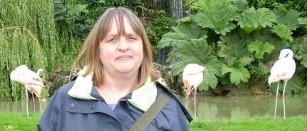
Evans, Gill Caregiver with Flamingoes

Gill Evans – Caregiver for her Husband

1. What is your name? (last name optional)

Gill Evans

2. Where do you live? (city and/or state and/or country)     Email? (optional)

Birmingham, England     gce46@hotmail.co.uk

3. What is the TBI survivor’s relationship to you? How old was the survivor when he/she had the TBI? What caused your survivor’s TBI?

The TBI survivor is my husband. He had his TBI in 1984 at age 23. The TBI was originally due to a motorcycle accident, but he has been reinjured three times since then, the last being 11 years ago. He has had one work-related injury and two motorcycle-related head injuries.

4. On what date did you begin care for your TBI survivor? Were you the main caregiver? Are you now? How old were you when you began care?

I was 22 and in full-time work. He was living with his mom. We decided to split up due to his being violent, but we continued seeing each other as friends. We got back together when I was 40 and he was 41. We married 2 years later. I have looked after him since because the last injury left him unable to work.

5. Were you caring for anyone else at that time (e.g., children, parents, etc.)?

When we got back together, I had two teenage boys.

6. Were you employed at the time of your survivor’s TBI? If so, were you able to continue working?

I work full-time, but I have 13-hour shifts, so I’m home 4 days each week. I no longer work night shifts, as he struggles with the change that causes.

7. Did you have any help? If so, what kind and for how long?

No

8. When did your support of the survivor begin (e.g., immediately – in hospital, when the survivor returned home, etc.)?

My husband finally accepted help three weeks ago. When he had his TBI 30 years ago, there was nothing in place for him. He got speech therapy, and that was it.

9. Was your survivor in a coma? If so, what did you do at that time?

No

10. Did your survivor have rehab? If so, what kind of rehab (i.e., inpatient and/or outpatient and occupational, physical, speech, and/or other)? How long was the rehab? Where were you when this was happening?

He got speech therapy at home.

11. What problems or disabilities of your TBI survivor required your care, if any?

He required constant prompting of his memory and calming down due to temper. He had a broken leg, so he was wheelchair-bound for a couple of weeks until he was able to have crutches.

12. How has your life changed since you became a caregiver? Is it better? Is it worse?

I’m not really sure that I can answer this. My response probably wouldn’t make sense, as it would be “better than what, and worse than what?”

13. What do you miss the most from pre-TBI life?

I miss my independence – not having to worry about my husband when I’m out or not having to walk on eggshells because he’s in a bad mood. But, as much as I miss my independence, I regret that over the last couple of years he has stopped going out unless he has to. So, I go everywhere on my own. Sometimes I wish I didn’t have to.

Evans, Gill Caregiver IMG_1130

Gill Evans

14. What do you enjoy most in post-TBI life?

On reflection, not a lot

15. What do you like least about TBI?

I dislike that my husband’s last injury took him away from me and that he is like a stranger sometimes. He can forget who I am, and he will talk to me like I’m his ex-wife.

16. Has anything helped you to accept your survivor’s TBI?

I’m helped by the fact that I have loved my husband since I was 17 years old. (So, I have known him with the TBI most of my life.)

17. Has your survivor’s injury affected your home life and relationships and, if so, how?

When we married, I had two teenage sons living at home, and this became really difficult. There were lots of arguments. After two years of our fighting, my sons decided it was better if they moved out. I have spent the last eight years trying to rebuild my relationship with them, and thankfully we are much closer. Also they, to an extent, get on with my husband.

18. Has your social life been altered or changed and, if so, how?

Not really. My husband doesn’t go out much, and I go out with my sons or with colleagues from work. The one rule I have when I am out is that, unless it’s an emergency, he is only allowed to phone me once and the rest has to be text messages. Also he is not to bombard me with texts if I don’t reply.

19. What are your plans? What do you expect/hope to be doing ten years from now?

I’m hoping to be retired (or at least to be coming up to retirement) and spending some quality time with my family.

20. What advice would you offer other TBI survivor caregivers? Do you have any other comments that you would like to add? 

Evans, Gill Caregiver IMG_1129

Gill Evans – Caregiver for her Husband

Have boundaries, boundaries, and boundaries – to protect your own sanity. Remember to keep time for yourself. Don’t tolerate violence. It’s okay for you to get mad occasionally, but walk away. You won’t win a fight (verbal) with him or her. Grow a thick skin – he or she doesn’t always mean what is said. If you take everything personally, you won’t survive. Remember most of all, regardless of the effects of the TBI, your partner is still in there, so don’t give up hope of ever seeing him or her again – even if it’s only for a fraction of a second that he or she shines through. That’s why at the end of the day you are still there.


Thank you, Gill, for taking part in this interview. I hope that your experience will offer some hope, comfort, and inspiration to my readers.

If you would like to be a part of this project, please go to TBI Caregiver Interview Questionnaire for a copy of the questions and the release form.

(Photo compliments of Gill.)

Disclaimer: The views or opinions in this post are solely that of the interviewee.

Survivors SPEAK OUT! Jayson Phillips

SPEAK OUT! – Jayson Phillips

by

Donna O’Donnell Figurski


Phillips, Jayson Survivor 082414

Jayson Phillips

1. What is your name? (last name optional)

Jayson Phillips

2. Where do you live? (city and/or state and/or country) Email (optional)

Houston, Texas, USA

3. When did you have your TBI? At what age?

2009   I was 17.

4. How did your TBI occur?

My head was run over by a car.

5. When did you (or someone) first realize you had a problem?

Immediately

6. What kind of emergency treatment, if any, did you have?

A bone flap was removed, and I had brain surgery.

7. Were you in a coma? If so, how long?

Yes. About a month

8. Did you do rehab? What kind of rehab (i.e., inpatient or outpatient and occupational and/or physical and/or speech and/or other)?

Yes. I had physical, occupational, and speech therapies.

How long were you in rehab?

I was in and out of therapy, but altogether I had therapy over a year.

Phillips, Jayson Survivor Hospital 082414

Jayson Phillips – Miraclekid – lucky to be alive

9. What problems or disabilities, if any, resulted from your TBI
(e.g., balance, perception, personality, etc.)?

Left-side weakness, irritation, depression, left neglect

10. How has your life changed? Is it better? Is it worse?

I have a new perspective on life, and I don’t take anything for granted anymore.

11. What do you miss the most from your pre-TBI life?

Skateboarding

12. What do you enjoy most in your post-TBI life?

My new attitude and the support of friends

13. What do you like least about your TBI?

My physical limitations

14. Has anything helped you to accept your TBI?

I’ve been helped by personal-development videos, music, poetry, and writing.

15. Has your injury affected your home life and relationships and, if so, how?

Yes. It has strengthened my relationship with my mom and dad.

16. Has your social life been altered or changed and, if so, how?

No

17. Who is your main caregiver? Do you understand what it takes to be a caregiver?

My mother and grandmother are my main caregivers. Yes, I understand what they do.

18. What are your future plans? What do you expect/hope to be doing ten years from now?

I hope to have a large business. I also hope to contribute my time towards helping TBI survivors and people in general better their lives. In ten years, I expect to be retired, to be living on my own, and to be going to different places to speak about TBI awareness.

19. Are you able to provide a helpful hint that may have taken you a long time to learn, but which you wished you had known earlier? If so, please state what it is to potentially help other TBI survivors with your specific kind of TBI.

No matter what challenges or adversities you may come across, keep a useful and positive attitude. Always find the positives in any situation.

Jayson Phillips

Jayson Phillips

20. What advice would you offer to other TBI survivors? Do you have any other comments that you would like to add?

Attitude is everything. It can be the difference between a healthy, speedy recovery and a stressful, slow recovery.


Thank you, Jayson, for taking part in this interview. I hope that your experience will offer some hope, comfort, and inspiration to my readers.

(Disclaimer: The views or opinions in this post are solely that of the interviewee.)

(Photos compliments of Jayson.)

If you would like to be a part of the SPEAK OUT! project, please go to TBI Survivor Interview Questionnaire for a copy of the questions and the release form.

On the Air – Brain Injury Radio Interview – Catherine Brubaker Triking Across America

On the Air – Brain Injury Radio

Interview with Catherine (Cat) Brubaker

Triking Across America – diagonally


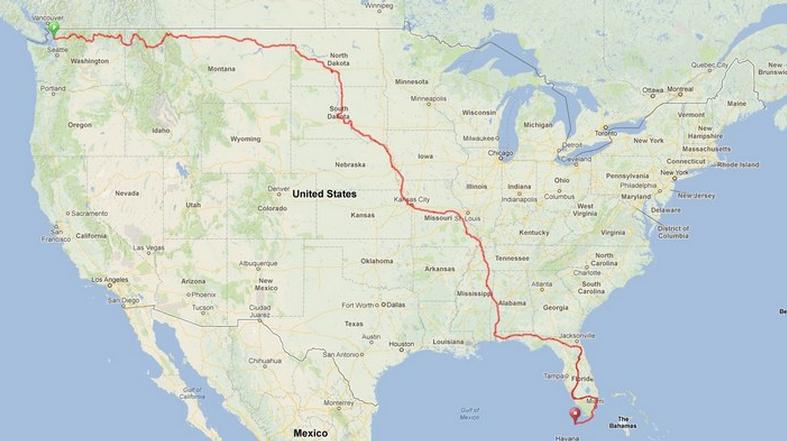
images-1In my interview of Catherine (“Cat”) Brubaker, Cat tells the story of her life before her brain injury, her two TBIs, and her recent 5200-mile trip across the US (diagonally) on a recumbent trike.

Cat came from a humble and religious family. As a child, she loved sports and the outdoors. Her parents sacrificed so that she could go to college, where she earned a B.S. degree in Psychology. That education has been immensely valuable to Cat, especially now that she has a brain injury. It was “probably the best education I have ever received from any institution.” Cat then went on to earn a Master’s Degree in 2007, with a perfect 4.0 average (all As). Her father passed away two years earlier, and Cat knew he would’ve been proud.

From Anacortes, Washington to Key West, Florida (5,200 miles)

In her mid-30s, Cat had made a great life for herself. She had a good job with lots of responsibility; she had a long-term relationship; and she was enjoying the independence of her life. Then she acquired her first TBI from an assault. She had to learn everything again. Cat had many deficits from her brain injury, including problems with balance. She suffered from Post-Concussive Syndrome and Post Traumatic Stress Disorder (PTSD). When Cat left the hospital a year later, she became involved in a head-on collision and received another TBI. For a second time, she had to relearn everything from scratch. Her long-term relationship ended, and she desperately missed her independence and freedom.  When her mother died unexpectedly, Cat hit bottom.

Meet Cat’s Grizzly Bear

Then Cat discovered the recumbent trike and regained some of her independence. She later met Dan Zimmerman, a stroke survivor, while he was riding his recumbent trike. They stopped and talked, and he told her of his plan to ride across the country. Cat decided immediately that she wanted to do it too. After much preparation, the trip is happening. Cat has been greatly moved by the outpouring of love and generosity. She wishes that everyone could experience so much love at least once. Cat discusses some details of her trip so far, including one time in Montana when she was alone and encountered a grizzly bear. Cat’s discussion will mesmerize you.

Ride, Cat, RIDE!


If you missed the show, don’t fret. You can always listen to the archived show. I’ve included the link below.

Please SHARE!

I hope you’ll tune in to my show, “Another Fork in the Road,” which airs the 1st and 3rd Sunday evenings of every month. The show starts at 5:00p Pacific Time and runs for 90 minutes. On the 2nd and 4th Sundays at 5:00p Pacific Time, Julie Kintz hosts “Quantum Leap.” When there is a fifth Sunday in a month, Julie and I will team up to cohost a show called “Another Quantum Leap in the Road.”

See you “On the Air!”


(Clip Art compliments of Bing.)

Survivors SPEAK OUT! Richard Johnson

SPEAK OUT! – Richard Johnson

by

Donna O’Donnell Figurski


RJohnson-Portrait1. What is your name? (last name optional)

Richard Johnson

2. Where do you live? (city and/or state and/or country) Email (optional)

Minneapolis, Minnesota, USA

3. When did you have your TBI? At what age?

My TBI happened October 2003. I was 53 years old.

 4. How did your TBI occur?

While cleaning the gutters on my house, I took a step from the roof onto the ladder. The ladder slipped, and down I went – hitting my head on the cement slab in my driveway.

5. When did you (or someone) first realize you had a problem?

 My daughter – 13 years old – saw me fall and ran over. When she saw that I was unconscious and bleeding, she called 9-1-1.

6. What kind of emergency treatment, if any, did you have?

I was admitted into Hennepin County Medical Center (Minneapolis) in the Brain Injury ICU. I was placed into a medically induced coma. I had a craniotomy and a tracheotomy. A feeding tube was put in, and a cast was put on my left arm, as I broke my wrist in the fall.

7. Were you in a coma? If so, how long?

Yes, a medically induced coma for 3½ weeks.

8. Did you do rehab? What kind of rehab (i.e., Inpatient or Outpatient and Occupational, Physical, Speech, Other)?


After being weaned from my coma, I was fitted with a protective helmet and transferred from HCMC into Bethesda Hospital in St. Paul for my second post-injury month. I began with inpatient cognitive, physical, speech, and occupational therapies. The trach was removed, but not the feeding tube. After Bethesda, I was transferred to Regions Hospital (St. Paul) for my third post-injury month. In Regions Hospital, I continued with inpatient physical, speech, and occupation therapies. The feeding tube and cast were removed. In January 2004, I was released from the hospital, and I went back home. I then began speech and occupational therapies as an outpatient at Courage Kenny Rehabilitation Institute (Golden Valley) until October 2004.

How long were you in rehab?

I had rehab a full year from the date of injury until I was able go back to my “pre-injury” job.

9. What problems or disabilities, if any, resulted from your TBI (e.g., balance, perception, personality, etc.)?

Aphasia is my main problem. Talking is an ongoing issue, and, in my humble opinion, that issue will never go away. Most of the time it’s not a problem, but my aphasia comes and goes. Background noises are problematic – another side effect. It’s really hard (if not impossible) to filter out background noises, especially in “loud” or “busy” situations. I also have minor balance problems, so I’m very careful when walking.

10. How has your life changed? Is it better? Is it worse?

My “new” life is just slower than it was before. It’s not worse – only different. I look carefully at everything that I am going to do. I question if I will need help, and, if so, I make sure to ask for help. Fatigue is a problem. I get tired more easily.

11. What do you miss the most from your pre-TBI life?

I am unable to ride my bike anymore. I don’t think I have the balance to do it, and I refuse to find out. One brain injury is enough for me.

12. What do you enjoy most in your post-TBI life?

I enjoy being a co-facilitator for the Brain Injury Support Group at the rehab institute that I used during my outpatient therapy. I also became a member of the Minnesota Brain Injury Alliance Speaker Bureau.

13. What do you like least about your TBI?

I cannot multitask. It’s way too hard to be focused on the task at hand.

14. Has anything helped you to accept your TBI?

My family has helped me more than anything else. They understand me.

15. Has your injury affected your home life and relationships and, if so, how?

Home life – Not much is different, except I need more help to finish tasks/projects.

Relationships – Old friends are harder to find or meet up with, but I think a lot of that is because their lives haven’t changed.

16. Has your social life been altered or changed and, if so, how?

With aphasia, I do not often go to parties or events, especially if they’re loud. It can be almost impossible to filter out background noises, unless I’m with people who understand my limits.

17. Who is your main caregiver? Do you understand what it takes to be a caregiver?

My wife is my main caregiver. I remember what my injury did to my wife and kids. So I just try to make sure their lives are getting better as well.

18. What are your future plans? What do you expect/hope to be doing ten years from now?

My future plan is to retire in 6 years. In 10 years, I hope that my recovery is still going well.

19. Are you able to provide a helpful hint that may have taken you a long time to learn, but which you wished you had known earlier? If so, please state what it is to potentially help other TBI survivors with your specific kind of TBI.

I wish I had known about support groups. Not just for me, but for my family as well. It would have given them (and me) a better understanding of the recovery process. TBI affects the entire family, and a local support group lets us know we are not alone.

20. What advice would you offer to other TBI survivors? Do you have any other comments that you would like to add?

Don’t look for a book to tell you what to expect. There is no such thing. You can Google all day long, but there is no easy answer for a traumatic brain injury. But Google will help you find online support groups, where you can post questions or vent issues that you’re fighting with.


Thank you, Richard, for taking part in this interview. I hope that your experience will offer some hope, comfort, and inspiration to my readers.

(Disclaimer: The views or opinions in this post are solely that of the interviewee.)

(Photos compliments of Richard.)

If you would like to be a part of the SPEAK OUT! project, please go to TBI Survivor Interview Questionnaire for a copy of the questions and the release form.

Survivors SPEAK OUT! Melinda Murphy

SPEAK OUT! – Melinda Murphy

by

Donna O’Donnell Figurski


Melinda Murphy with TBI

Melinda Murphy with TBI

1. What is your name? (last name optional)

Melinda Murphy

2. Where do you live? (city and/or state and/or country) Email (optional)

Middletown, Ohio, USA

3. When did you have your TBI? At what age?

February 9, 2011 I was 40 years old.

4. How did your TBI occur?

I fell down a flight of steps into a basement.

5. When did you (or someone) first realize you had a problem?

Immediately, although the TBI was not diagnosed for quite some time.

6. What kind of emergency treatment, if any, did you have?

None

7. Were you in a coma? If so, how long?

No

8. Did you do rehab? What kind of rehab (i.e., In-patient or Out-patient and Occupational, Physical, Speech, Other)?

I have had all of the above, and I am still in therapy. I have had some fantastic therapists over the years, and I just have to say that they are the key in so many ways. I don’t know where I would be without them.

How long were you in rehab?

They did in-home rehab and therapy with me for about 5 months, if memory serves me. I do not remember most of those first months, though, so I could be lying to ya :).

9. What problems or disabilities, if any, resulted from your TBI?

I have horrible balance. I live with headaches constantly. My vision and hearing have both been affected to the point that I can no longer go out in public on my own because of the amount of stuff coming in, so to speak. I miss my church and independence. I have short-term memory loss. I lost organizational skills and basic life functions, like just being able to make simple decisions. I lost a lot of other skills, like math and English. I have trouble speaking; I lose words before they hit my mouth. Many times my brain gets over-tired and just quits working at all. I can’t explain it. I can’t drive. I could go on, but…LOL.

10. How has your life changed? Is it better? Is it worse?

Both – honestly! No one being truthful would tell you there is nothing that he or she wouldn’t give back. It’s hard, and it stinks a big chunk of the time. Learning to live again and differently is the hardest thing I have ever had to do, and I didn’t live the easiest life, so…. Learning how strong I am, though, and learning to receive (which is not something I was used to and I think not many of us are used to) is a tremendous thing. Learning of people and the spirit and nature of them – that is a very rich gift I have been given through this. Learning to be okay with not being okay – that is again a huge thing that has bettered my life. So, I think that – as sad as it is at times and as hard as it is (and it is) – it is also a blessing.

11. What do you miss the most from your pre-TBI life?

Almost everything – I miss being able to drive; I miss my independence; I miss hot meals because most days I cannot cook for fear I will forget to turn off the oven; I miss my job and clients; I miss my social life; I miss being able to keep my house clean (balance issues keep me from up and down and forward and back motions); I MISS MY CHURCH!

12. What do you enjoy most in your post-TBI life?

I enjoy the quiet. Everything is quiet in my world now, out of necessity. It’s very nice. Quiet is better than you think it is – I had forgotten how nice. I think most of us have. I like things that I have learned from having a TBI and the people whom I have met because of it. I like the growth that I see in me because of my TBI.

13. What do you like least about your TBI?

Almost everything

Melinda Murphy - after fall

Melinda Murphy – after fall

14. Has anything helped you to accept your TBI?

Time, only time. People can tell you what they want, and they can try and say anything, but until your brain is ready, well hang it up. It’s been three and a half years, and I have just accepted it this year. When you are ready, it will happen. I will say this about acceptance. People say that once you accept it, you will be fine and everything will be easier. In the end, that is correct and true, but let me tell you, acceptance itself is hard. It is the toughest thing in the world to acknowledge that you – the person you are now – are broken and that that is okay. Getting there and getting through it takes time and patience from yourself and your caregiver.

15. Has your injury affected your home life and relationships and, if so, how?

Yes. I touched on my home life earlier – it is difficult to live with a TBI. Memory, balance, and sensory issues affect me far more than people could know, and my home very often suffers. I often feel like I am a burden on my family and on those relationships. When you are dependent, the structure of the relationship is changed.

16. Has your social life been altered or changed and, if so, how?

Yes. All of my relationships changed – I am dependent now. That is a hard place to be. It stands in the way of traditional friendships. (At least, it feels that way on this end.) When you need, people tend to view you differently. We all have those friends, don’t we? I had them before my accident and still do, but those friends were different from all my other friends and from my social circle. I can’t complain now because I used to do it. I was no more aware of doing it then than are so many who are unaware of my situation now. I can say that I am blessed beyond measure to have a handful that do not fit into that mold and are there for me. God is good all the time because without them I would be in a home.

17. Who is your main caregiver? Do you understand what it takes to be a caregiver?

I am. I live alone and do the very best I can. I had to move in with my family just after the accident because of seizures and not being able to even stand up or sit down on my own. I was 100%-dependent then, but I moved back on my own as soon as I was able.

18. What are your future plans? What do you expect/hope to be doing ten years from now?

I would love to be fully functional. By that, I mean holding a job (any job) – just feeling productive and serving – and doing things more independently. (I have a servant’s heart and desire nothing more than to be helping others in any way the good Lord leads.)

19. Are you able to provide a helpful hint that may have taken you a long time to learn, but which you wished you had known earlier? If so, please state what it is to potentially help other TBI survivors with your specific kind of TBI.
You’re okay just the way you are.

It took me forever and a day to accept that, and, frankly, I am still getting there. I know those words probably mean no more than anyone else’s, but I pray they touch someone. I always had a perfect picture of what healthy looked like in my mind, and I was working so hard to get there until one day, I realized that I was already there. I don’t need to walk up those steps upright like my neighbor. If I get up all the steps with my tail in the air and bear-crawling like a two-year-old, but I make it to the top, well by Jove, I can climb a flight of stairs – can’t I? It matters not the way you get there, only that you do. The fact that you do is what makes you as healthy and whole as that beefcake next to ya. Find a way.

20. What advice would you offer to other TBI survivors? Do you have any other comments that you would like to add?
My faith has held me so strong from day 1 of this. Without it, I’m not sure I would have survived. My God is greater than my broken brain and all the problems and mess that come with it – make no mistake.

Murphy, Melinda

Melinda Murphy

Advice? I am finding that there are tools everywhere for me. Some work and some don’t, but never, ever stop looking. I still find therapies and little things that can greatly improve things in my world all the time. If there is even the slightest bit of hope that something can bring a touch of independence or relief, then you need to jump with both feet. Stop thinking, all you caregivers. Just try, try, try. You never know what will work. The more you get out there into the world of TBI, the more you find. Never stop looking; never stop trying.


Thank you, Melinda, for taking part in this interview. I hope that your experience will offer some hope, comfort, and inspiration to my readers.

(Disclaimer: The views or opinions in this post are solely that of the interviewee.)

(Photos compliments of Melinda.)

If you would like to be a part of the SPEAK OUT! project, please go to TBI Survivor Interview Questionnaire for a copy of the questions and the release form.

Survivors SPEAK OUT! . . . Daisy Lou

SPEAK OUT! – Daisy Lou

by

Donna O’Donnell Figurski

Daisy Lou

      1. What is your name? (last name optional)

Daisy Lou

2. Where do you live? (city and/or state and/or country) Email (optional)

Boyertown, Pennsylvania, USA

3. When did you have your TBI? At what age?

The first one was on July 6, 2012. I was 30 years old. The second one was in February 2014. I was 32 years old.

4. How did your TBI occur?

Someone ran a stop sign and T-boned my car for the first one. I don’t remember the accident, but my car was totaled. For the second one, I fell in the street on six inches of ice.

5. When did you (or someone) first realize you had a problem?

In August 2012, I started having back problems. I realized in November that I was having other problems, like nausea, dizziness, balance being off, sleeping all the time, noise sensitivity, and headaches, among a multitude of other problems. But I waited until December (5 months after my accident) to talk to the doctor. For the second one, I realized I had a problem a few days after I fell, when my nose started dripping and I started sleeping a lot. I wasn’t sick at the time.

6. What kind of emergency treatment, if any, did you have?

None

7. Were you in a coma? If so, how long?

No

8. Did you do rehab? What kind of rehab (i.e., In-patient or Out-patient and Occupational, Physical, Speech, Other)?
How long were you in rehab?

For the first TBI, I did physical therapy for a month and a half as an Out-patient. I did biofeedback with a neuropsychologist for four months. For the second one, I took a week off of work. That’s all.

9. What problems or disabilities, if any, resulted from your TBI (e.g., balance, perception, personality, etc.)?

I sometimes have balance problems. If I try to get up too quickly, I get dizzy. I have lots of memory problems, anxiety, impulsiveness, and trouble concentrating. I tend to tell people things three or four times because I forget whether or not I’ve told them whatever that thing happens to be. I get frustrated very easily. I have trouble talking and finding words. I don’t handle stress very well, and sometimes I can’t handle it at all. I get tired very easily, and sometimes I have to take a nap in the middle of the day.

10. How has your life changed? Is it better? Is it worse?

It’s better in the fact that I don’t remember things. So, if something happens that is upsetting, I soon forget it. But that’s also worse because I forget things I want to remember. I’ve learned to become more patient with myself and with other people.

11. What do you miss the most from your pre-TBI life?

I miss being able to explain something to someone and have them understand what I’m saying. Now I can’t seem to find the right words.

12. What do you enjoy most in your post-TBI life?

When my brain is functioning on a capable level, I enjoy explaining to people what a TBI is like and how it affects you. To some people who seem interested, I give the address of an interesting blog to look at, so they can understand TBI even better.

13. What do you like least about your TBI?

I dislike forgetting things and feeling stupid all the time. I feel like a part of my brain has gone missing, and no matter how much I search for it, it continues to hide from me.

14. Has anything helped you to accept your TBI?

Time and talking about it with friends

15. Has your injury affected your home life and relationships and, if so, how?

Not really. It’s more that I forget where I put things more often, so I’m continually asking someone if they’ve seen the items I’m looking for. But my relationships haven’t really changed, and my home life hasn’t changed.

16. Has your social life been altered or changed and, if so, how?

I always was a loner, but I’m more of a hermit than before. I tend to stay in more often or go places by myself, instead of asking someone to go with me. Even if the person is on the way to wherever it is I’m going, I don’t call them because it seems like too much work to have to drive to their house and then talk to them until I drop them back off at their house.

17. Who is your main caregiver? Do you understand what it takes to be a caregiver?

Myself – I don’t have a caregiver. Although, I live with my mom, and she’s the one I’m always asking where things are.

18. What are your future plans? What do you expect/hope to be doing ten years from now?

Right now, I’m just concentrating on making it through the day. I have no future plans, except to take things one day at a time.

19. Are you able to provide a helpful hint that may have taken you a long time to learn, but which you wished you had known earlier? If so, please state what it is to potentially help other TBI survivors with your specific kind of TBI.

Write everything down! If you have memory problems, it makes your life so much easier when you can look at a piece of paper and say, “Oh yeah, that’s what I wanted to do!”

20. What advice would you offer to other TBI survivors? Do you have any other comments that you would like to add?

Rome wasn’t built in a day…. It’s frustrating to suddenly have some part of your body go berserk on you, but don’t beat yourself up. A very important part of your anatomy was bruised and battered, and it takes time for it to heal. Everyone recovers at a different rate, so don’t expect the same results as someone else with a TBI.

Daisy Lou

Daisy Lou


Thank you, Daisy Lou, for taking part in this interview. I hope that your experience will offer some hope, comfort, and inspiration to my readers.

(Disclaimer: The views or opinions in this post are solely that of the interviewee.)

(Photos compliments of Daisy Lou.)

If you would like to be a part of this project, please go to TBI Survivor Interview Questionnaire for a copy of the questions and the release form.
Survivors SPEAK OUT! . . . . . . . . Rick Von Linsowe


SPEAK OUT! – Rick Von Linsowe

by

Donna O’Donnell Figurski


Rick Von Linsowe

Rick Von Linsowe


1. What is your name? (last name optional)

Rick Von Linsowe

2. Where do you live? (city and/or state and/or country) Email (optional)

I live in Goldsboro, North Carolina, USA. I had my TBI in Tucson, Arizona, USA.

3. When did you have your TBI? At what age?

My TBI happened on August 26, 1998. I was 22 years old.

4. How did your TBI occur?

I was addicted to alcohol and drugs and fell down a hill outside my apartment complex. While in a blackout from alcohol and drugs, I flopped off a retaining wall and smashed my head on the pavement below.

5. When did you (or someone) first realize you had a problem?

I believe a man found me on his way to work in the early morning hours. I was unconscious and needed immediate surgery.

Von Linsowe, Rick in Hospital

Rick Von Linsowe – in Hospital

6. What kind of emergency treatment, if any, did you have (e.g., surgery, tracheotomy, G-peg)?

I had a right frontal craniotomy to relieve a massive hematoma that was crushing my brain. My chances of surviving where very slim, and the doctor told my dad after the surgery that he didn’t believe I would make it through the night.

7. Were you in a coma? If so, how long?

I was in a coma from August 26 until late September, so it was approximately 4 weeks. I have heard other accounts from family members, but 4 weeks is my most accurate estimation.

8. Did you do rehab? What kind of rehab (i.e., In-patient or Out-patient and Occupational, Physical, Speech, Other)?
How long were you in rehab?

I had speech, occupational, and physical therapies for 1 year as an In-patient. Then I continued with physical therapy only for 2 years after the other therapies ended.

9. What problems or disabilities, if any, resulted from your TBI?
(e.g., balance, perception, personality, etc.)

I had a long list of problems, including anger issues, balancing, and right-side paralysis. I still work out and exercise on a daily basis to combat the physical problems. My anger has subsided by finding the positive in every day.

10. How has your life changed? Is it better? Is it worse?

Since having my TBI in 1998, my life has drastically improved. I am married with a 6- year-old daughter. I went to

Rick Von Linsowe - Collecting Degrees - Post-TBI

Rick Von Linsowe – Collecting Degrees – Post-TBI

college and earned a Bachelor’s Degree in Psychology and a Master’s Degree in Counseling and Psychology. I am a Life Coach with my own business that helps individuals move past the obstacles that are holding them back. I am directly contracted with a brain injury rehabilitation center. I help motivate the residents to complete therapy and have lots of fun while doing it! My website is Rejuvenate Life Coaching.

11. What do you miss the most from your pre-TBI life?

Sometimes I think about the friends who I used to have and my popular social life, but most of my old friends are dead from drug- and alcohol-related injuries. I have to remember that life is about quality and not quantity. Today I want quality friends who will be there for me when I need them the most.

12. What do you enjoy most in your post-TBI life?

My life is not weighed down by the past, hurts, habits, or hang-ups! I am a new person who has created an awesome new life – drug- and alcohol-free!

13. What do you like least about your TBI?

Some people judge me before they actually get to meet me. I have a wobbly walk, and I can’t swing my right arm as well as my left, so many people ask me if I had a stroke or they want to know what is wrong with me. Sometimes it frustrates me, but I don’t let it get me down. I know what other people say about me is not a reflection of who I am, but rather, it is a mirror of how they feel about themselves.

14. Has anything helped you to accept your TBI?

I learned that only I am in control of my feelings and that nobody else can control how I feel. I learned to smile a lot and laugh often. Having a TBI is not the easiest thing in the world, and I have learned through my work in the field of mental health that many people are worse off than I am. That’s why I spend so much time giving back to the communities that I live in and helping the people around me. I started a new website for recovering addicts to tell their stories of triumph over addiction. The website is Clean and Sober Voice.

15. Has your injury affected your home life and relationships and, if so, how?

Yes. I carried anger around like an old friend. It was there to protect me when I felt attacked. My relationship with my wife was very difficult because I did not know how to treat a woman, and I had anger issues on top of it! I can’t believe she has stayed for 15 years! We still get up each day and give it another shot. She is a truly an inspiration to me.

16. Has your social life been altered or changed and, if so, how?

My social life went from a big network of party friends, who only wanted to see the fun side of me, to a small network of good people, who stand by me and my family.

17. Who is your main caregiver? Do you understand what it takes to be a caregiver?

I am 100% independent, but my wife has been my main caregiver since the beginning. She used to work in the nursing home where I was placed to live out the rest of my days. She has stayed with me on this amazing journey for 15 years.

18. What are your future plans? What do you expect/hope to be doing ten years from now?

My future plans are to grow my business of Life Coaching and Recovery Coaching and to help individuals overcome the obstacles holding them back. I am the administrator to many groups on Facebook to help give back to those who need support, so nobody ever has to go through what I did to become clean and sober. The addiction support group, Clean and Sober Voice, is designed to support recovering addicts and helps them tell their stories to the world. Telling your story is healing power! I also have a unique Brain Injury and Addiction Support Group that caters to the support of individuals recovering from brain injury and have addiction-related issues. You’re always welcome to join either or both sites.

19. Are you able to provide a helpful hint that may have taken you a long time to learn, but which you wished you had known earlier? If so, please state what it is to potentially help other TBI survivors with your specific kind of TBI.

My helpful hint is to remember how your anger can affect your whole family. You are in control of your emotions! Make the best out of each day. Start out by taking baby steps. Work into being able to gain stamina, and take bigger steps to accomplish your goals!

20. What advice would you offer to other TBI survivors? Do you have any other comments that you would like to add?


I would offer to other survivors my advice to keep moving forward and don’t look back! Find something positive in every day. Do not try to find the “old” person you once were. The “old” you is gone, and you should work on creating the “new” and awesome you! Remember, you are the only one who controls your feelings. When you are in complete control, nobody else can tell you how to feel!

Von Linsowe, Rick 2

Rick Von Linsowe

Thank you, Rick, for taking part in this interview. I hope that your experience will offer some hope, comfort, and inspiration to my readers.

(Disclaimer: The views or opinions in this post are solely that of the interviewee.)

(Photos compliments of Rick.)

If you would like to be a part of this project, please go to TBI Survivor Interview Questionnaire for a copy of the questions and the release form.


Survivors SPEAK OUT! Jodi Jizmejian

SPEAK OUT! – Jodi Jizmejian

by

Donna O’Donnell Figurski

Jizmejian, Jodi Pre- Accident 2

Jodi Jezmejian – Pre-TBI


1. What is your name? (last name optional)

Jodi Jizmejian

2. Where do you live? (city and/or state and/or country) Email (optional)

Fresno, California, USA

3. When did you have your TBI? At what age?

September 8, 2011   I was 47, almost 48.

4. How did your TBI occur?

Roof crush due to a single vehicle roll-over

5. When did you (or someone) first realize you had a problem?

A woman in a house by the road heard the accident. My 16-year-old daughter was in the accident also, but she was ejected from the vehicle and landed in the dirt on the side of the road. She was coherent and gave the lady my husband’s cell-phone number. He was called after a 9-1-1 call.

6. What kind of emergency treatment, if any, did you have (e.g., surgery,

tracheotomy, G-peg)?

I was told (because I don’t remember anything) that I had a craniotomy. I did have a tracheotomy and a g-tube (gastrostomy tube). I’m sure I had multiple surgeries because I have scars that I didn’t have before. I was told that I had multiple facial breaks and other broken bones. My husband told me that the doctors were happy that they could say – after 7 days – that they saved my life.

7. Were you in a coma? If so, how long?

Yes, I was in a coma. I was told it was for 30 days, but my current memory starts December 1, so I think I was in some sort of coma from September 8 to December 1.

8. Did you do rehab? What kind of rehab (i.e., In-patient or Out-patient and Occupational, Physical, Speech, Other)?
How long were you in rehab?

I’m still doing physical therapy. I did physical, occupational, speech, and recreational therapy when I was in Santa Clara Valley Medical Center. I was there from December 1, 2011, until I came home on December 29. I did physical, occupational, and speech therapy as an Out-patient for a few months after I returned home.

9. What problems or disabilities, if any, resulted from your TBI
(e.g., balance, perception, personality, etc.)?

My balance was affected for sure. I also have several other issues: vision, hearing, fine-motor skills, slower (speed), reasoning, and personality.

10. How has your life changed? Is it better? Is it worse?

I think my life is better. Pre-accident, I worked all the time. My husband and I owned our own business, so I worked all the time. After my accident, he said he “fired” me because I didn’t show up for work. I abandoned my “job.” He is being funny, but I really don’t work anymore because there is no way I could have returned to what I was doing.

Jizmejian, Jodi Accident

Jodi Jezmejian – 2011 Accident

11. What do you miss the most from your pre-TBI life?

I miss being able to play tennis.

12. What do you enjoy most in your post-TBI life?

I have more time to do things that I’m physically capable of doing.

13. What do you like least about your TBI?

I don’t like my balance issues. I also dislike that my head feels “big/heavy/muffled,” and there is a “numbness/heavy/big” feeling of my right arm and leg.

14. Has anything helped you to accept your TBI?

Jesus. I’m a positive person, so having the mentality of “It is what it is” helps me accept that “_ _ _ _” happens.

15. Has your injury affected your home life and relationships and, if so, how?

Yes.

Home life – I’m now home most of the time.

Relationships – I now have time to develop friendships.

16. Has your social life been altered or changed and, if so, how?

I don’t drive right now and don’t know if I’ll ever be ready to drive. My social life is pretty much reliant on my husband to drive me around, so if I want to do something and he doesn’t or he is busy, I don’t/can’t do it. I’m also reliant on friends to take me places.

17. Who is your main caregiver? Do you understand what it takes to be a caregiver?

My husband is my main caregiver. I do understand what it takes to be a caregiver, but there’s nothing that I or he can do to change that. Hence the marriage commitment, “Until death do us part.”

18. What are your future plans? What do you expect/hope to be doing ten years from now?

I hope someday to be able to drive again and to play tennis. I want to write and speak to help other TBI survivors.

19. Are you able to provide a helpful hint that may have taken you a long time to learn, but which you wished you had known earlier? If so, please state what it is to potentially help other TBI survivors with your specific kind of TBI.

Accept that you have a “new” normal and that you will never be the person you were pre-TBI. Learn to like the new you and make friends with the new you. Realize you weren’t “picked” out to have a TBI. There is always someone else who has it “worse.” Research Nick Vujicic, Life Without Limbs. When I started to have a pity party or a “woe is me” or a “life isn’t fair” attitude, I think of Nick.  I also tell myself that we all have a cross to bear, meaning an unpleasant situation or responsibility that you must accept because you cannot change it.

20. What advice would you offer to other TBI survivors? Do you have any other comments that you would like to add?

Never give up, but never expect things or you to get back to “normal,” i.e., the way they were pre-TBI. Learn to like yourself in your “new” normal. Realize you survived for a purpose. Do that purpose. If you don’t believe in Jesus, then start there and do whatever research you need to. Publicly and verbally accept Jesus as your personal Lord and Savior. Then I’ll see you in Eternity. God bless. Thank you for letting me participate.

Jodi Jezmejian - Post-accident

Jodi Jezmejian – Post-accident


Thank you, Jodi, for taking part in this interview. I hope that your experience will offer some hope, comfort, and inspiration to my readers.

(Disclaimer: The views or opinions in this post are solely that of the interviewee.)

(Photos compliments of Jodi.)

If you would like to be a part of this project, please go to TBI Survivor Interview Questionnaire for a copy of the questions and the release form.


Survivors SPEAK OUT! . . . . . . . . Kevin Middleton

SPEAK OUT! – Kevin Middleton

by

Donna O’Donnell Figurski

Kevin with his granddaughter

Kevin with his granddaughter


1. What is your name? (last name optional)

Kevin Middleton

2. Where do you live? (city and/or state and/or country) Email (optional)

Courtenay, British Columbia, Canada     
5gemm9@gmail.com

3. When did you have your TBI? At what age?

Circa 1973

4. How did your TBI occur?

Birth defect

5. When did you (or someone) first realize you had a problem?

1977

6. What kind of emergency treatment, if any, did you have (e.g., surgery,

tracheotomy, G-peg)?

I had 7.5 hours of surgery to remove two blood clots and to clip off several aneurysms. An AVM (arteriovenous malformation) and a haematoma were removed December 05, 1977.

7. Were you in a coma? If so, how long?

No

8. Did you do rehab? What kind of rehab (i.e., In-patient or Out-patient and Occupational, Physical, Speech, Other)?
How long were you in rehab?

No. I was just sent home and told “No school for a year.”

9. What problems or disabilities, if any, resulted from your TBI (e.g., balance, perception, personality, etc.)?

Neuropsychological tests in 1978 and 1994 showed identical results. Short-term memory and recall in the 7 percentile mean that I am disabled. Anger issues ensued, born of frustration over continually forgetting.  Editing oneself is challenging.

10. How has your life changed? Is it better? Is it worse?

Since I was quite young, the loss of a photographic memory was a challenge. I withdrew from society. I have no close friends. I have many acquaintances, but I don’t like to socialize. The plus side is that my intellect increased from the removal of the blood clots. The downside is that by then I resented school. Learning took four times longer, and it was difficult to write an exam. My greatest joys are my five children and ten grandchildren.

11. What do you miss the most from your pre-TBI life?

My memory

12. What do you enjoy most in your post-TBI life?

Family

13. What do you like least about your TBI?

I dislike the fact people say they forget too. They don’t understand the frequency or the fact you lost your kids more than once or your wallet eight times.

14. Has anything helped you to accept your TBI?

Time helped. Being involved with a brain injury society has been beneficial. Even having friends who understand is helpful.

15. Has your injury affected your home life and relationships and, if so, how?

I experienced a divorce. I attribute partial blame to my not being rehabilitated professionally.

16. Has your social life been altered or changed and, if so, how?

Yes. Though I have been married 23 years, I like being by myself with my dogs. My wife socializes without me.

17. Who is your main caregiver? Do you understand what it takes to be a caregiver?

My wife is my main caregiver. It was she who said, “There’s something wrong here.” Due to her, I sought out help, which she supported.

18. What are your future plans? What do you expect/hope to be doing ten years from now?

I’m 54, so retirement is my goal. I’m so done with my brain injury. I like to help online those who are just beginning the healing journey.

19. Are you able to provide a helpful hint that may have taken you a long time to learn, but which you wished you had known earlier? If so, please state what it is to potentially help other TBI survivors with your specific kind of TBI.

It’s not your fault that you forget…it’s the fault of the brain injury. In other words, don’t take forgetting personally. I beat myself up for this all the time. However, why am I apologizing for something I have no control of?

20. What advice would you offer to other TBI survivors? Do you have any other comments that you would like to add?

Don’t get caught in the trap of chasing your past self. Before you know it, it’s 40 years later, and still your former self is bigger than life itself. My 18-year-old self had not fathered, had not grandfathered, had not held a job for 14 years, nor owned several businesses, yet he still was bigger than what I have accomplished. How ludicrous is that? Embrace who you are…a survivor…and move forward because that is where the future lies. Leave your past self in the rear view mirror where he/she belongs.


If you’d Like to learn more about Kevin Middleton, please visit his blog at My Broken Brain.


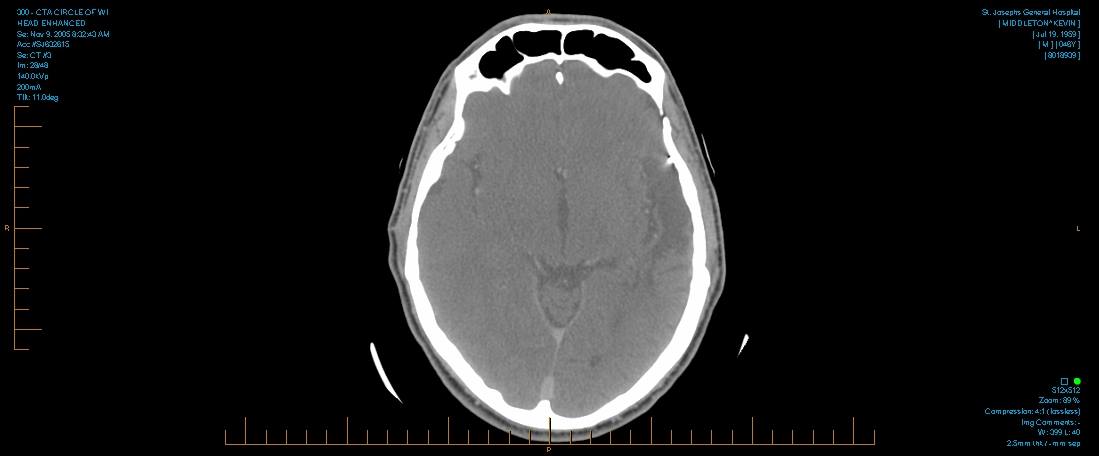
Kevin's brain.

Kevin’s brain.

Thank you, Kevin, for taking part in this interview. I hope that your experience will offer some hope, comfort, and inspiration to my readers.

(Disclaimer: The views or opinions in this post are solely that of the interviewee.)

(Photos compliments of Kevin.)

If you would like to be a part of this project, please go to TBI Survivor Interview Questionnaire for a copy of the questions and the release form.

diemodi jewelry

uniquely hand-crafted jewelry by donna

Welcome to Harmony Kent Online

The home of all things books

Pete Springer

Passionate Teacher and Future Children's Author

HOPE TBI

Helping Other People Excel - To Be Independent

For the Love of Books, Old and New

Katie Fischer, Writer and Reader of Stories

Charlie Bown

Children's Author

Jessica Hinrichs

“We write to taste life twice, in the moment and in retrospect.” ― Anais Nin

VIVIAN KIRKFIELD - Writer for Children

Picture Books Help Kids Soar

Mindy’s Writing Wonderland

For authors, parents, teachers & everyone who loves children’s books.

Kaitlyn Leann Sanchez

Literary Agent

Surviving Traumatic Brain Injury

TBI - Survivors, Caregivers, Family, and Friends

The Care Factor

Loving someone with a Traumatic Brain Injury

Brain Injury Support Group of Duluth-Extension

Brain Injury Information and SUPPORT

Brain Aneurysm Global Insight

Brain Aneurysm, cerebral hemorrhaging, hemorrhage stroke