TBI – Survivors, Caregivers, Family, and Friends

Posts tagged ‘survivingtraumaticbraininjury.com’

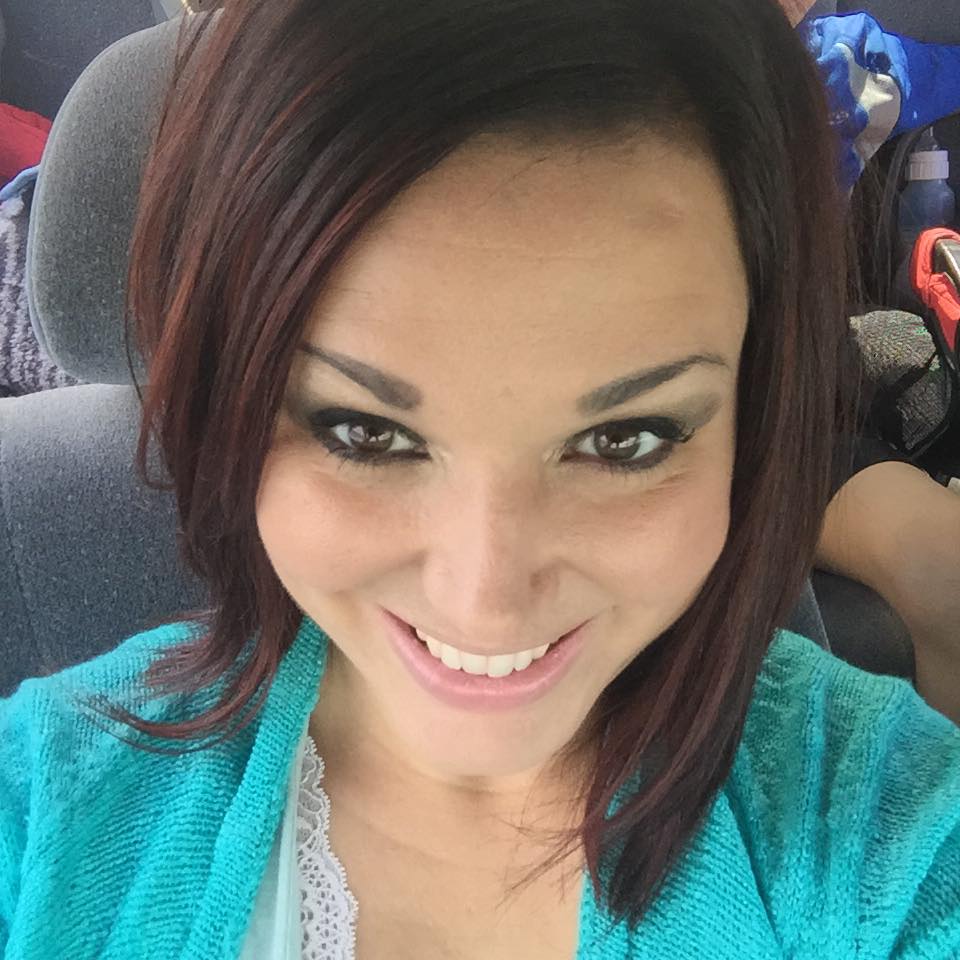
Survivors SPEAK OUT! Kristin Russo

Survivors  SPEAK OUT!  Kristin Russo

by

Donna O’Donnell Figurski

Russo, Kristin December 2014 After

Kristin Russo – Post-TBI Dec. 2014

1. What is your name? (last name optional)

Kristin Russo

2. Where do you live? (city and/or state and/or country) Email (optional)

Annandale, Virginia, USA

3. When did you have your TBI? At what age?

July 22, 2013 – I was 28.

4. How did your TBI occur?

My TBI was caused by a collision with a tractor-trailer. Read about it. “Kristin Russo accident.”

5. When did you (or someone) first realize you had a problem?

It was realized about 2-3 days into my stay in the ICU (Intensive Care Unit).

6. What kind of emergency treatment, if any, did you have?

I have no memory of the accident, the month in the hospital, and even the first 5-6 months at home under 24-hour care.

7. Were you in a coma? If so, how long?

Yes. My coma was induced.

8. Did you do rehab? What kind of rehab (i.e., inpatient or outpatient and occupational and/or physical and/or speech and/or other)? How long were you in rehab?

I had occupational, physical, speech, and recreational therapies for a month as an inpatient. I had therapy as an outpatient until May 2014 when all but physical therapy ended. I’m still in physical therapy for physical injuries.

9. What problems or disabilities, if any, resulted from your TBI
(e.g., balance, perception, personality, etc.)?

I have moderate to severe diminished visual memory, mild to moderate decreased attention span, diminished executive function, and mildly diminished speech and language function. Those are the significant findings as per my neurological addendum. It was also noted that I am likely to have significant permanent neurocognitive dysfunction due to the TBI. This problem with the physical brain injury is further complicated due the fact that I have significant PTSD (post-traumatic stress disorder). I have a college degree, yet I had to learn how to do things as simple as double-digit subtraction. My entire education has been wiped away. Since I graduated with honors, it was easy to get accepted to Liberty University. But, I can’t retain information anymore, so I’m not sure if I’m going to go back to try and learn everything all over again. My neurologist has diagnosed me with ADD (attention deficit disorder) due to the TBI. I’m not allowed to use anything hot without supervision, etc.

10. How has your life changed? Is it better? Is it worse?

Some things are better because I now have an excuse for being directionally challenged or for when I mess up (haha). 😉 Things are worse because I am dependent and I HATE IT! (I am an independent girl.) I was such an intelligent woman. I was still paying off my degree when the accident happened. Not being able to use ANY of the knowledge really made me unhappy. Not being able to work has been horrible because that is all I have ever known. I have been working since the day I turned 14. (My first day of work was on my 14th birthday). I worked at the same place until I graduated high school and went to college. I hate that I can no longer drive. I miss being able to do what I want to do when I want to do it. 😦 I live about eighty miles from where I grew up, so it’s not often that someone comes to visit me. The accident caused me to lose my family because my own father was stealing my pain pills for his sick addiction. I’ve lost some of my friends because I’m a totally different person personality-wise. I’m 100% honest, and I have dedicated my life to Jesus Christ. The girl in the accident died. She wasn’t the best wife. (I’d give more details, but those things are better kept between husband and wife. 😉 ) But, that’s why my accident happened, and I know it. God was showing me what was in front of me, and the same, for my husband. God was bringing us closer together, and that’s exactly what my accident did. So, that’s what I do like about the TBI. Another thing that I like about the TBI is that I don’t remember the accident or being in the hospital or even the 5-6 months after it. I also don’t remember my surgeries up to July. I remember the ones on Black Friday and December 1st. But, yeah, the girl I was before was a girl who drank a lot and went to clubs and acted like she was a single 21-year-old female. Since I’m not her anymore, I’ve lost a couple friends who were just like that girl. I don’t need those girls anyway!

11. What do you miss the most from your pre-TBI life?

I miss being able to drink alcohol sometimes – at least to drink socially. I miss being able to drive. I miss being able to do what I want when I want. I miss working. What I do now is to constantly go to appointments – it’s nuts! I am still in physical therapy – several months post accident. I just got yet another MRI scan (magnetic resonance imaging). I had surgery number eight on January 27th. I began speech therapy in January since insurance started paying again. I miss sleeping like a normal person. I miss being skinny. (I was a size 2 when I was married on July 7th, 2011, and I’m not that size anymore.) I hate being on so many damn medications. I loathe people’s not understanding invisible disabilities. I also have CRPS (complex regional pain syndrome) that was caused by the accident. It’s a chronic pain disease that has no cure.

12. What do you enjoy most in your post-TBI life?

I enjoy the fact that the Trauma Survivors Network Next Steps program taught me to find the positive in everything, so I do. When my legs hurt, I remind myself that I shouldn’t have any, so I thank God for letting me keep my legs! When I have my chronic headaches, I thank God for not making the swelling be so bad that I need to have surgery!

13. What do you like least about your TBI?

I don’t like that I sleep every other day sometimes. I dislike the chronic headaches and the fact that a headache is invisible. I don’t like having memory issues and being confused so often.

14. Has anything helped you to accept your TBI?

God

15. Has your injury affected your home life and relationships and, if so, how?

My husband gets rather upset when I forget that I’m not supposed to use a curling iron, and I fail to remember to turn it off. I no longer speak to my parents – my father makes fun of my TBI and acts like I’m making it up. (A*^#@~! ! I guess that’s what drugs do to ya.)

16. Has your social life been altered or changed and, if so, how?

I don’t really have a social life anymore. Things are so much louder now. People annoy me more. 😦 I have NO filter. I just want to be home with my husband or alone with my dogs. I haven’t watched TV since the accident.

17. Who is your main caregiver? Do you understand what it takes to be a caregiver?

My husband is my main caregiver.

18. What are your future plans? What do you expect/hope to be doing ten years from now?

I’ll be running a photography business. 🙂 And, I better be a mommy to more than just my fur babies!

Russo, Kristin Before Accident

Kristin Russo Pre-TBI

19. Are you able to provide a helpful hint that may have taken you a long time to learn, but which you wished you had known earlier? If so, please state what it is to potentially help other TBI survivors with your specific kind of TBI.

I urge people to try to make a positive out of everything. Depression is so ugly. I wish that I never hit that stage. Having a positive attitude has helped me SOOO much.

20. What advice would you offer to other TBI survivors? Do you have any other comments that you would like to add?

I give back now by volunteering at the hospital where I did my outpatient therapy. I got one of my dogs certified as a therapy dog, and we visit patients. I also visit patients in the trauma unit. My visits help others, and they also help me!


Thank you, Kristin, for taking part in this interview. I hope that your experience will offer some hope, comfort, and inspiration to my readers.

(Disclaimer: The views or opinions in this post are solely that of the interviewee.)

If you would like to be a part of the SPEAK OUT! project, please go to TBI Survivor Interview Questionnaire for a copy of the questions and the release form.

(Photos compliments of Kristin.)

As I say after each post:

Please leave a comment by clicking the blue words “Leave a Comment” below this post.

Feel free to follow my blog. Click on “Follow” on the lower right corner of your screen.

If you like my blog, share it with your friends. It’s easy! Click the “Share” buttons below.

If you don’t like my blog, “Share” it with your enemies. I don’t care!

Feel free to “Like” my post.


SPEAK OUT! Faces of Brain Injury Davien Lopez

Brain Injury is Not Discriminating

bigstock-cartoon-face-vector-people-25671746-e1348136261718It can happen to anyone, anytime, . . . and anywhere.

The Brain Trauma Foundation states that there are 5.3 million people in the United States living with some form of brain injury.

On Faces of Brain Injury,” you will meet survivors living with brain injury. I hope that their stories will help you to understand the serious implications and complications of brain injury.

The stories on SPEAK OUT! Faces of Brain Injury are published with the permission of the survivor or designated caregiver.

If you would like your story to be published, please send a short account and two photos to me at neelyf@aol.com. I’d love to publish your story and raise awareness for Brain Injury – one view at a time.

Davien Lopez (survivor) contributed by Diana Lopez (mom and caregiver)

10501889_768245286553199_2546552260294944140_nI am the mother of a now six-year-old boy who has a TBI (traumatic brain injury). My son, Davien, was four and a half years old when people in a car were shooting at people in Davien Lopez with brotheranother car in front of our house. While Davien was napping in my arms, a stray bullet came through our bedroom window and the headboard and struck my son in his left frontal lobe. The bullet traveled diagonally across Davien’s face and lodged in the right side of his cheek. Davien suffers from bilateral frontal lobe brain damage. He had a fractured jaw, which is healed now. He is completely blind in his right eye. He has PTSD (post-traumatic stress disorder), ADHD (attention deficit hyperactivity disorder), a mood disorder, Davien Lopez 033015and an impulse disorder. A year and a half later, Davien runs around like nothing happened. He still has a ton of psychiatric issues, but that is nothing compared to what could have occurred. A smile emoticon here is a picture of Davien and Bruno (Davien’s service dog in training).

Disclaimer:
Any views and opinions of the Contributor are purely his/her own.

(Clip Art compliments of Bing.)

(Photos compliments of contributor.)

As I say after each post:

Please leave a comment by clicking the blue words “Leave a Comment” below this post.

Feel free to follow my blog. Click on “Follow” on the upper right sidebar.

If you like my blog, share it with your friends. It’s easy! Click the “Share” buttons below.

If you don’t like my blog, “Share” it with your enemies. I don’t care!

Feel free to “Like” my post

SPEAK OUT! Faces of Brain Injury Faith Neaves

Brain Injury is Not Discriminatingbigstock-cartoon-face-vector-people-25671746-e1348136261718

It can happen to anyone, anytime, . . . and anywhere.

The Brain Trauma Foundation states that there are 5.3 million people in the United States living with some form of brain injury.

On “Faces of Brain Injury,” you will meet survivors living with brain injury. I hope that their stories will help you to understand the serious implications and complications of brain injury.

The stories on SPEAK OUT! Faces of Brain Injury are published with the permission of the survivor or designated caregiver.

If you would like your story to be published, please send a short account and two photos to me at neelyf@aol.com. I’d love to publish your story and raise awareness for Brain Injury – one view at a time.

Faith Neaves (survivor)

11104222_10153117046022976_1329541496_nAbout seven years ago, I suffered a traumatic brain injury from a domestic-violence incident. My ex-husband knocked me completely unconscious when I walked around a corner. I was eight months pregnant at the time. I remember opening my eyes and not being able to see. I was lying in a puddle of blood. I never got help. I was too afraid because he was in the military. As I went in and out of consciousness, I wrote my little girls goodbye letters and hoped for the best. After that night, things were never the same. I struggled with severe depression, anxiety, crying spells, memory loss, raging, etc. – you name it. My moods would switch quickly. On a daily basis, I would forget names of people I knew or directions to places I used to go to. For the past eight years, I have been wrongly diagnosed as bipolar. I struggle with suicide, and I almost succeeded, which ended up with my being hospitalized and having more meds. Finally, I was diagnosed with a very severe frontal lobe brain injury with no hope of recovering. The doctor told me that I have a “light switch,” where most people have “thermometers.” It affects my personality, emotions, speech, and sleep. My brain has trouble with cognitive abilities, problem-solving, and conversations. I interrupt people a lot due to my brain trying to get out a word. I struggle with fatigue. The worry, anxiety, and depression are a lot to deal with, but at least I know that it’s not my fault – that it’s not from my being bipolar. 11077229_10153117046027976_657824417_nI have been exhausted, and I have felt crazy and indecisive. I have to write everything down on sticky notes – I forget dates, my phone number, and my address. My in-laws and family have judged me as crazy, having red flags, etc. – you name it. I feel they have no empathy. I’m not a victim, but a SURVIVOR. I miss me. I am devastated at who I used to be and what I have lost. I thought this was temporary and due to stress. I’m only 35, and I’m scared for my future. I’m devastated to carry the ugly scar now on both the outside and the inside. I pray that I will find love and support somewhere.

Disclaimer:
Any views and opinions of the Contributor are purely his/her own.

(Clip art compliments of Bing.)

(Photos compliments of contributor.)

As I say after each post:

Please leave a comment by clicking the blue words “Leave a Comment” below this post.

Feel free to follow my blog. Click on “Follow” on the upper right sidebar.

If you like my blog, share it with your friends. It’s easy! Click the “Share” buttons below.

If you don’t like my blog, “Share” it with your enemies. I don’t care!

Feel free to “Like” my post.

SPEAK OUT! . . . . . . . . . . . . . . . . . Itty-Bitty GIANT Steps

11136933_10155590257065643_153293147_nLisa Marie Cohen (survivor)…I hiked a mountain! It was Mount Beacon on the Hudson River.

Bonita Gibb (caregiver)…I was reflecting on how I came to be the person I am today. One of the moments in my life canstock5980362that showed me my true colors was sitting in the ICU (intensive care unit) and praying for a miracle. It was during that dark time that I realized just how strong I am. While I would do anything to give my husband, Brian, back his independence, I also am thankful for that moment and all it had to teach me.

Sarah Klingler (survivor)Graduate broomfield-orthodontics-graduation-cartoonI learned that I can do anything as long as I put my mind to it. I got my TBI when I was eight. I started having seizures the next week, and they haven’t stopped. As a result, I’ve never driven. But, I graduated from high school with honors, and I am two semesters from getting my Bachelor’s Degree in elementary education.

Pamela Miceli (caregiver)Welcome HomeMy son came home for good last week after fifteen months of rehab! Can we say that this is a Great Big Giant Step?

Tina Thorne (caregiver)…My son, Jordan, is a two-time brain-cancer survivor and has had an ABI (acquired brain injury) since the age of twelve. He is eighteen now. He received a very nice message from a lady representing the Brain Tumour Foundation of London, Ontario, Canada. The foundation wanted Jordan to attend a special dinner for an event on the foundation’s behalf. docs-on-ice-generic“Docs on Ice” is an annual event that travels from community to community. Nine hundred doctors from across Ontario come to a city and raise money for an individual charity every year. This year the city is London and the charity is the Brain Tumour Foundation. Darryl Sittler, a retired National Hockey League player who was elected to the Hall of Fame and who played for the Toronto Maple Leafs, was the guest speaker. Jordan was an ideal choice. He is a brain-injury survivor and a hockey buff. He thanked Darryl Sittler for helping to raise funds for the Brain Tumour Foundation and for raising awareness of brain injury. Jordan also met Master of Ceremonies Joe Bowen, “The Voice of the Leafs.” The mayor of London was also in attendance. I am super proud of Jordan!

Kimberly June West (survivor)…I am a consultant for a therapeutic oils company! YAY! These oils are awesome. I was getting sad from all my pain. EssentialOilsThey have given me a love for life and a passion for living. These are products that people love – bath infusions for pain, migraines, eczema, difficulty sleeping, etc. The awesome thing is that I made the leadership team and VIP consultant two months in a row!

YOU did it!

Congratulations to all contributors!

(Clip Art compliments of Bing.)

SPEAK OUT! . . . . . . . . . . . . . . . . . . . Guest Blogger: Kristin Olliney . . . My Fight: The Reason to Advocate

My Fight: The Reason to Advocate

by

Kristin Olliney

(presented by Donna O’Donnell Figurski)

Girl Blogger cartoon_picture_of_girl_writingIsabella’s Acquired Brain Injury (ABI) is the result of sudden acute encephalitis. However, there was also medical error involved in her care. Given the many factors involved, it is difficult to prove which symptom caused what damage. Due to this, no one will ever be held accountable for what happened. As a result, there are four important reminders that everyone needs to know.

  1. It doesn’t matter where you live. Even in the best city, at the best hospital, with the best doctor, mistakes can happen. I am often told how lucky I am to live in the Boston area because we have access to so many medical facilities. While this is true, not all doctors and care are the same.
  1. Doctors are human. They are people who have studied medicine and, based on their knowledge, give you their opinion. It is not fact. It is opinion. Their opinion is their best guess. This is so important to remember, especially when given a prognosis. Isabella, like many other survivors, was not supposed to make it through the night, and yet she did.

    Kristin Olliney with Isabella 2014

    Kristin Olliney with Isabella 2014

  1. Always follow your gut instinct, especially if something doesn’t seem right. Ask questions. When Isabella first got sick, the Emergency Department wanted to discharge her with a stomach bug. I knew that there was something seriously wrong. I can’t explain how I felt – only that I just knew. I fought and advocated to get Isabella admitted into the hospital. One of Isabella’s specialists was on call, and he trusted my gut instinct. Later in the PICU (pediatric intensive care unit), as I watched my child fighting for her life, I was told by him and other doctors that my fighting and advocating saved Isabella. If Isabella had been discharged, she would have died. Always fight and advocate for what you feel is right. You know your child/loved one better than anyone.
  1. Get another opinion. When you are in crisis, there isn’t always time. When things stabilize, seek out another opinion should you and the doctor have a difference of opinion. On this journey, things can change. Opinions differ, treatment options vary, and, if there are fundamental differences, another opinion can help.

    Kristin Olliney & daughter, Isabella  2015

    Kristin Olliney & daughter, Isabella
    2015

For me, it is hard knowing that the doctors who cared for my daughter made mistakes. Coming to terms with the fact that no one will ever be held accountable for what happened to Isabella is difficult. I know Isabella is here because I fought and advocated. It is still devastating to know that mistakes could have been prevented. I am sharing this part of our journey in hopes that it will encourage others to continue to fight and advocate for their child/loved one. Against all odds, my amazing miracle is here today, and, for that, I am forever grateful.

To learn more about Kristin and Isabella, please visit Kristin’s website/blog at In An Instant Your Life Can Change Forever – Brain Injury Association of Massachusetts Blog

Thank you, Kristin Olliney.

Disclaimer:
Any views and opinions of the Guest Blogger are purely his/her own.

(Clip Art compliments of Bing.)

(Photos compliments of Kristin Olliney.)

As I say after each post:

Please leave a comment by clicking the blue words “Leave a Comment” below this post.

Feel free to follow my blog. Click on “Follow” on the lower right corner of your screen.

If you like my blog, share it with your friends. It’s easy! Click the “Share” buttons below.

If you don’t like my blog, “Share” it with your enemies. I don’t care!

Feel free to “Like” my post.

SPEAK OUT! . . . . . . . . . . . . . . . . . Itty-Bitty GIANT Steps

Michelle Lee Bonnenfant (survivor)…With hubby’s help, I made it through a busy grocery store. pix0138Ken, my hubby, got me in and out in one piece! He even stood three feet behind me in the check out so that I would not get crowded by people. It was the first time in months that I went through a check out. I was plagued by a lot of sweat and chest pain, but I still did it. I hate my TBI and PTSD (post-traumatic stress disorder), but Ken gave me a big hug and told me that he was proud of me. I’m exhausted, but pleased with myself!

Cara Lauderdale Eberle (caregiver)…The one-year anniversary of my husband’s accident was April 1st. While I was at work sitting at a table of four-year-olds trying to get them to do a project with me, Eberle,  Cara Lauderdale  FlowersI saw them all stop and look up. Standing next to me was my husband holding a beautiful bouquet of flowers. I was in complete shock! He hasn’t shown any concern for the feelings of others since the accident. He told me he thought that he should do something to thank me for helping him get through the last year. This was definitely a breakthrough moment for us. 🙂

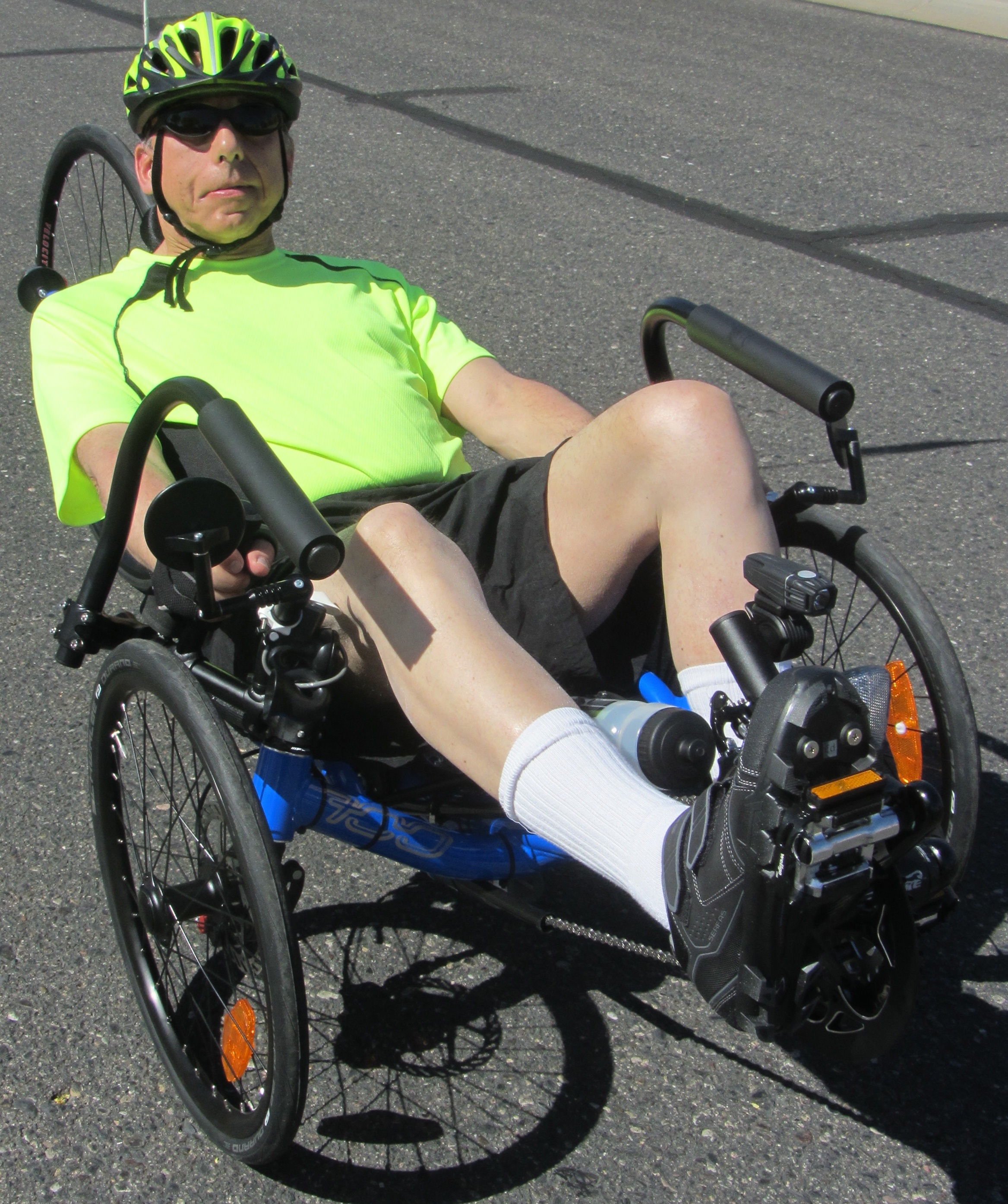
David Figurski (survivor)…I am excited! I took delivery of a Catrike 700 recumbent trike. It’s the same model that was used by Catherine Brubaker (a two-time TBI survivor) and Dan Zimmerman (a stroke Figurski, David Trikesurvivor) on their five-month, cross-country ride from Washington State to Florida. Cat and Dan espouse their new-found freedom, and their new physical capabilities are truly amazing. They both believe that riding a recumbent trike is great therapy. Also, my wife, Donna, just took delivery of the Catrike Pocket, a slightly smaller trike. Donna, Cat, Dan, and I plan to ride together.

Corina Mendoza (survivor)…I passed my teaching exam for Special Education! I passed both teaching exams I needed on the first try.

Mendoza, Corina Test Scores 033015


YOU did it!

Congratulations to all contributors!

(Clip Art compliments of Bing.)

Speaking Engagement . . . . . . . “Prisoner Without Bars . . . . . . . . . . . A Caregiver’s Story”

YOU ARE INVITED!


putthis_on_calendar_clip_artWhen Donna’s spouse, David, did one chin-up too many, he had a brain injury (BI), and Donna became a caregiver. David had three brain surgeries within two weeks. Donna signed on the dotted line for each of them – probably the hardest thing she has ever done in her life. Donna will share her story, “Prisoner Without Bars: A Caregiver’s Story” about David’s unexpected recovery and how she and David are making this “new normal” work for them. She will also share tips and offer David Figurski 2004 Pre-Brain Injurysuggestions from what she learned along the way.

It’s been a long, bumpy road for both David and Donna, but they travel that road together.

Come One! Come ALL!

Donna and David Post-Brain Injury  2010

Post-Brain Injury 2010


What:        Donna will share her experiences with caregiving and will offer tips based on what worked for her. Donna  will also share snippets of her book, “Prisoners Without Bars: A Caregiver’s Memoir,” which is searching for a publisher.

Why:        Hopefully, Donna’s experiences with caregiving will help others who might find themselves in this position

When:       Monday, April 6, 2015

Time:         1:00 to 2:30pm

Where:      Desert Palms Presbyterian Church
13459 W. Stardust Boulevard
Sun City West, Arizona 85375-2548

(Clip Art compliments of Bing.)

(Photos compliments of Donna)

SPEAK OUT! . . . . . . . . . . . . . . . . . Itty-Bitty GIANT Steps

SPEAK OUT! Itty-Bitty GIANT Steps


Itty-Bitty GIant Steps for BlogSPEAK OUT! Itty-Bitty Giant Steps will provide a venue for brain-injury survivors and caregivers to shout out their accomplishments of the week.

If you have an Itty-Bitty Giant Step and you would like to share it, just send an email to me at neelyf@aol.com.

If you are on Facebook, you can simply send a Private Message to me. It need only be a sentence or two. I’ll gather the accomplishments and post them with your name on my blog approximately once a week. (If you do not want your last name to be posted, please tell me in your email or Private Message.)

I hope we have millions of Itty-Bitty Giant Steps.


Here are this week’s Itty-Bitty Giant Steps

Cat Brubaker with Congresswoman Krysten Sinema

Cat Brubaker with Congresswoman Krysten Sinema


Catherine (Cat) Brubaker (survivor)…I’m very excited to have gone all the way to Washington, DC, all by myself.

I planned it, and I got to my appointments on time. I still used a wheelchair at the airport because of overstimulation, shaky balance, and the possibility of getting lost. I met with my congresswoman about brain injury and about helping me with my new foundation, Hope for Trauma. I can’t believe how far I’ve come in a year. I feel very excited.

Jonathan Curtis (survivor)…Today I had an amazing day at Website-Volunteersmy volunteer job at a nursing home. I went with a difficult resident to an eye clinic appointment, and I organized a movie in the nursing home coffee shop. I felt so able and competent!

Keri Giacomini (caregiver)…My husband, John, had a very severe TBI almost twelve years ago. While he was at college, he fell out of a third floor window. The only residual problems are from aphasia. But, he does really well. Also, he is so sweet and thoughtful. A few days ago, we were thtalking about my care bear, which I’ve had since I was four (that is, for 27 years). He is a secret bear. He is now brown, has no eyes, and doesn’t talk. John knows how much my care bear means to me. He’s been with me through the toughest of times – surgery, hospitalizations, etc. I have Crohn’s Disease, and my care bear has always been my comfort. Well after we were talking, John went on eBay and ordered me an original secret care bear that still talks. He knows how much it means to me. It was probably the sweetest thing he’s done. I just thought I’d share what he did because, while John is always caring and sweet, sometimes it’s hard for him to initiate things.

Timothy Guetling (survivor)…Swaim Guetling is soon to graduate from the University of California at Santa Barbara (UCSB). He is a Communications major with a 3.5 GPA. Swaim is my Swaim Guetling21-year-old son. I’m thankful that he is where he can do best for himself and that he took the love, respect, and guidance from his parents to assist him in his future, wherever it takes him. Swaim speaks four languages. He has been around the US, India, and China with his fellow students. I am stoked to the max. He’s a chip off the old block, except he has hair!


YOU did it!

Congratulations to all contributors!

(Clip Art compliments of Bing.)


SPEAK OUT! . . . . . . . . . . . . . . . . . Faces of Brain Injury

Brain Injury is Not Discriminating

bigstock-cartoon-face-vector-people-25671746-e1348136261718It can happen to anyone, anytime, . . . and anywhere.

The Brain Trauma Foundation states that there are 5.3 million people in the United States living with some form of brain injury.

On “Faces of Brain Injury,” you will meet survivors living with brain injury. I hope that their stories will help you to understand the serious implications and complications of brain injury.

The stories on SPEAK OUT! Faces of Brain Injury are published with the permission of the survivor or designated caregiver.

If you would like your story to be published, please send a short account and two photos to me at neelyf@aol.com. I’d love to publish your story and raise awareness for Brain Injury – one view at a time.


Cam Compton (survivor)

11056773_804796876222530_117254145_nOn March 21st, I celebrated my “strokaversary.” Three years ago, I suffered a stroke. It has changed my life dramatically. I am still “me” – still Cam – but at the same time, I am not. I have learned to live and to love this new me. I have had fun. Whatever I was before (like fun or nerdy), I am still that, but three times more so now. I have met many new friends. I have done things that I would never have done if I had not had my stroke: my billboards, the talks, facilitating a stroke support-group, the stroke walk (mark April 18th on your calendar), and my newest – Brain Injury Radio host. I will be hosting my own show on the second Friday of every month. I’m happy to be here alive and on this side of the dirt.


Lindsey Dunn (survivor)

Dumm, Lindsey Survivor 032015 10686800_10101531483831264_2468134818312325958_nYesterday was two years ago that I fell about sixty feet on a spiral staircase in Valencia, Spain. I hit my Dumm, Lindsey Survivor 032015 10407045_10101650526873054_7173077641176124389_nhead on the way down (on one of the metal spindles), causing me to get a traumatic brain injury. I am actually very happy that this happened to me. I’m lucky that people have Dumm, Lindsey Survivor 032015  11043033_10101641035463914_6164584326813463685_nstuck by my side through this trial. Maybe my story will give hope to people and God can use it to help others.


Marcel’s moms (caregivers)

10711_356648177855326_33065405394910668_nWhen our son, Marcel, was eleven months old, he suffered a severe TBI. The doctors told us that he would never eat, walk, see, or talk – basically that he would be a vegetable. It’s been eight months, and his vision is starting to come back, he’s smiling and laughing, and he’s getting neck strength back. His limbs are getting stronger and starting to move a lot. MarcelHe’s learning how to eat again. And he babbles like a baby. Marcel has come so far, but he still has a long way to go. Obviously, God has plans for Marcel because he is a fighter. He was so close to dying, but he fought to stay here. A lot of people, doctors, and nurses told us all the things that our son would never do. Our boy will continue to fight and prove to everyone that he can. He’s doing many of them already.


Daniel Wondercheck (survivor)

Wondercheck, Daniel Survivor 0311815On July 23, 1991, I was involved in a construction accident that was serious enough to smash my hardhat, crack my skull, and knock me out for six days. I spent 85 days in the hospital, 95 days as an inpatient in a rehabilitation hospital, and another 186 days in rehabilitation as an outpatient. Now – twenty-three years and nearly eight months later, I still use a wheelchair, I talk funny, I have involuntary movements in my extremities, my left eye moistens itself approximately half as much as it should, and my right eye does not moisten itself at all. For 26.5 hours per week, I have a personal assistant who helps me with daily-living activities. (My personal assistant is also my best friend and “guardian angel.”) But, I do have enough mental ability to be a top-rated Power Seller on eBay and to be an administrator for an online support-group for traumatic brain injury survivors (Traumatic Brain Injury – TBI – Terrific Beyond Injury).


(Clip art compliments of Bing.)

(Photos compliments of contributors.)

Brain Injury Resources . . . . . . Fatigue and The Spoon Theory

Fatigue and The Spoon Theory

Brain th-2Every brain injury is different. Yet, the survivor interviews on this blog have shown that fatigue is a common effect of a brain injury. Once the survivor was energetic – able to do many things. Now the survivor is often tired or worried about getting tired.

Have you ever tried to explain chronic fatigue to someone healthy? Usually he or she doesn’t get it. Christine Miserandino, who has Lupus – a chronic disease, invented The Spoon Theory to show her healthy friend why she is so concerned with the energy cost of doing anything. Christine’s Spoon Theory 309_1_is a simple way to show the difference between being healthy and energetic and being worried about fatigue by having a chronic condition – like Lupus or a brain injury. In The Spoon Theory, Christine writes, “I explained that some days were worse than others; some days I have more spoons then most. But I can never make it go away, and I can’t forget about it. I always have to think about it.”

Christine’s Spoon Theory can be found HERE.

(Clip Art compliments of Bing.)


diemodi jewelry

uniquely hand-crafted jewelry by donna

Welcome to Harmony Kent Online

The home of all things books

Pete Springer

Passionate Teacher and Future Children's Author

HOPE TBI

Helping Other People Excel - To Be Independent

For the Love of Books, Old and New

Katie Fischer, Writer and Reader of Stories

Charlie Bown

Children's Author

Jessica Hinrichs

“We write to taste life twice, in the moment and in retrospect.” ― Anais Nin

VIVIAN KIRKFIELD - Writer for Children

Picture Books Help Kids Soar

Mindy’s Writing Wonderland

For authors, parents, teachers & everyone who loves children’s books.

Kaitlyn Leann Sanchez

Literary Agent

Surviving Traumatic Brain Injury

TBI - Survivors, Caregivers, Family, and Friends

The Care Factor

Loving someone with a Traumatic Brain Injury

Brain Injury Support Group of Duluth-Extension

Brain Injury Information and SUPPORT

Brain Aneurysm Global Insight

Brain Aneurysm, cerebral hemorrhaging, hemorrhage stroke