TBI – Survivors, Caregivers, Family, and Friends

Posts tagged ‘Prisoners Without Bars: A Caregiver’s Story’

On The Air: . . . . . . . . . . . . . . Brain Injury Radio . . . . . . . . “Another Fork in the Road” Panel: Party Night

On The Air: Brain Injury Radio “Another Fork in the Road” 

with

Panelists: Caregiver, Lisabeth Mackall and Survivor, Daniel Mollino

Topic: Party Night

presented

by

Donna O’Donnell Figurski

Brandy Hunter and her mom were originally scheduled for this show time, but the season, and several personal issues prevented Brandy and her mom from joining me on this show. She will be rescheduled for a later date.

So now it was scramble time and the holiday season is no easy time to recruit panelists. Folks can barely get accomplished what they normally have to do without throwing in an

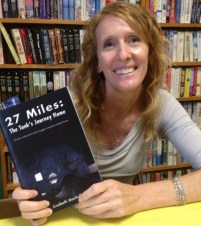
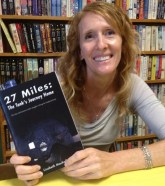
Lisabeth Mackall Book 061215

Caregiver, Lisabeth Mackall – author, 27 Miles: The Tank’s Journey Home

extra activity. I was fortunate to have five of my regular panelists agree to do the show with me and we decided to make it a holiday segment. It sounded like a lot of fun. Then shortly before the show three of the panelists had to decline because of health issues. I

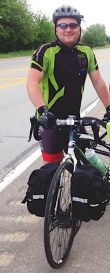
18 Daniel Mollino 060615 copy

Survivor, Daniel Mollino – cross-country cyclist

quickly checked with my remaining two panelists and they were still committed. Phew!

We did the show and sipped our virtual eggnog. We talked about traditions past – and new traditions we have each incorporated into our lives after brain injury took over. We looked at holiday issues through the eyes of survivor, Daniel, Mollino and caregiver, Lisabeth Mackall … and we had a lot of fun. I hope you will take some time during this holiday season to relax, sit back, and listen to the show.

Happy Holidays, Everyone!

See you “On the Air!”

http://www.blogtalkradio.com/braininjuryradio/2015/12/21/another-fork-in-the-road-party-nite-with-daniel-lisabeth-and-me

(Clip Art compliments of Bing.)

As I say after each post: Please leave a comment by clicking the blue words “Leave a Commentanim0014-1_e0-1 below this post.

Feel free to follow my blog. Click on “Follow” on the upper right sidebar.

If you like my blog, share it intact with your friends. It’s easy! Click the “Share” buttons below.

If you don’t like my blog, “Share” it intact with your enemies. I don’t care!

Feel free to “Like” my post.


So, Whaddya Think . . . . . . . . Should We Let Children Play Tackle Football?

So, Whaddya Think?

 Should We Let Children Play Tackle Football?

by

David Figurski and Donna O’Donnell Figurski


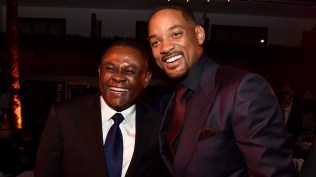
So Whaddya Think Brain th-4Dr. Bennet Omalu, the Nigerian pathologist who discovered the neurodegenerative disease chronic traumatic encephalopathy (CTE) by his study of the brain of Hall-of-Fame center Mike Webster, is making news again with an Op-Ed published in The New York Times. Dr. Omalu’s essay is entitled Don’t Let Kids Play Football. He says that our society has laws forbidding the sale of tobacco and alcohol to minors. There is legislation that mandates bicycle helmets for children. Football Player HurtWhy not protect children’s brains by prohibiting children from playing American-style tackle football? Dr. Omalu writes in his essay, “The risk of permanent impairment is heightened by the fact that the brain, unlike most other organs, does not have the capacity to cure itself ….”

Omalu & Will Smith

(Dr. Omalu’s CTE-discovery story and its impact on American football is told in the much-anticipated movie, Concussion, which will be in theaters on Christmas Day. Dr. Omalu is played by actor Will Smith. As grippingly shown in the Frontline documentary, League of Denial: The NFL’s Concussion Crisis, which is online and free, the National Football League – NFL – immediately attacked Dr. Omalu and tried to get him to retract the published paper.)league-of-denial-raster-br10-81-550x377

There is strong evidence that not only concussions, but also the large number of sub-concussive hits common to players of American football can lead to CTE, whose symptoms may appear as early as in the late teens. The symptoms of CTE include memory loss, reduced intelligence, depression, aggressive behavior, dementia, and suicidal thoughts. Both a college football player and a young professional player committed suicide, and they were found to have CTE. A high-school football player committed suicide. CTE has also been detected in the brains of players of high-school football.

NFLlogoThe NFL is concerned with the growing awareness of brain injuries in players of American football. If players, their families, fans, coaches, and/or parents think that CTE is common among players, a seemingly sacrosanct part of American culture and a multibillion-dollar industry would be put into jeopardy.

To get in front of the concussion issue, the NFL has aggressively promoted its image as a forward-thinking and safety-conscious league. The NFL has donated large sums of money for concussion research. The league has changed the rules of the game to discourage a player from using his helmet to make tackle or to prevent a tackle. It has established a “concussion protocol” to keep a concussed player from practice and/or games until he has been approved to return to play. The NFL has concussion-spotters present at every game and this year has empowered them to stop a game. (However, that protocol failed shamefully and dramatically in the recent instance of quarterback Case Keenum near the end of a tie game.) The rule changes are good progress, but can the NFL actually prevent brain injuries and save the game?

Current and former players have been affected by the brain-injury issue. Some players have had to retire early and fear imminent brain disease. A rookie linebacker for the San Francisco 49ers quit after one year of a four-year contract. (He is returning the signing bonus for the remaining three years.) He said that playing professional football, with all its potential for wealth, is not worth the risk of brain injury. football-brain-injuryLegendary former quarterback Joe Namath has said that, if he knew then what he knows now, he wouldn’t have played. Keith McCants, former NFL linebacker said, “We were paid to give concussions. If we knew that we were killing people, I would have never put on the jersey.”

The brains of several former players, including Hall-of-Fame linebacker

junior-seau-1024x682

Junior Seau

Junior Seau and four-time-Pro-Bowl safety Dave Duerson – both of whom committed suicide, were found to have CTE.

duerson

Dave Duerson

Boston University’s CTE Center has found CTE in 88 of 92 (1, 2) autopsied brains of former NFL players. (Dr. Ann McKee of Boston University says that this is a ridiculously high rate even for a sample of brains in which the individuals showed some signs of brain disease. DOF has written about a simple fix for the claim of bias. In the meantime, there was a report that was consistent with Dr. McKee’s fear that CTE is common among football players. Frank Gifford, Hall-of-Fame running back, apparently died of natural causes, but his brain showed CTE.)

Frank Gifford football

Frank Gifford

Should children play American football with all that is known? Obviously there is much more to be learned, but should society wait to protect the children? Children trust their parents and coaches. Dr. Omalu only wants society to protect the brains of young children until those children are able to understand the risks to the brain from playing Brain in football helmetfootball and to make their own decision of whether or not to play. Boston University’s Dr. Robert Cantu said that a child’s brain is developing until age 14. Should children be subjecting their developing brains to high impact hits? One study showed that sometimes the force of a young child’s hit can reach that of a college football player.

football player catching ball

One argument for safety in American football is that the equipment, especially the helmet, is much improved. The helmet does a very good job of protecting the skull, but does nothing to protect the brain. There is no helmet that can prevent a concussion.Concussions-sports-concussion-crisis

As you might imagine, Dr. Omalu’s position is highly unpopular. Danny Kanell, former NFL quarterback and now ESPN commentator, claims that Dr. Omalu is waging a “War on Football.” Many fans and parents agree with Kanell because they believe that CTE is not common among football players. (DOF has written how this issue can be resolved simply. Dr. Omalu is an author on a paper reporting the accurate detection of CTE in a living person using a special PET – positron emission tomography – scan. The NFL needs to have all of its players scanned.) If Dr. Omalu’s suggestion about not letting kids play tackle football were adopted, one effect would be immediately obvious. The NFL would see its pool of young players dry up, so the talent we now see in the NFL would no longer be seen.

Bennet Omalu

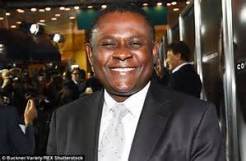
Dr. Bennet Omalu at screening of “Concussion”

It is unlikely that Dr. Omalu’s suggestion would ever come true. But he has the stature to get people talking, and the discussion has already changed. More people are becoming aware of the danger to the brain of playing tackle football. The NFL is concerned with the movie Concussion because it will increase society’s awareness of the danger. (In an article about an early showing of Concussion to former players and their families, the Huffington Post writes “… the wife of former tight end Taz Anderson, said the movie made her question whether her grandchild should continue to play the sport.”) Recently Bob Costas, a renowned sports commentator, said that American football is based on violence. The league has no way of fixing its problem with head trauma.

If you’ve ever seen young children playing tackle football, you will realize that society must do something to protect its children.

So, Whaddya Think?

Let’s get a dialogue going. Post your comments in the Comment Section. Directions are below.

So . . . what do you think? Is there something you are passionate about in this Brain Injury (BI) world? Do you want to be heard? Your opinion matters! You can SPEAK OUT! on “So Whaddya Think?”

Simply send me your opinion, and I will format it for publication. Posts may be short, but please send no more than 500 words. Send to Neelyf@aol.com

I hope to HEAR from you soon.

As I say after each post:

Feel free to leave a comment by clicking the blue words “Leave a Comment” below this post.

Please follow my blog. Click on “Follow Me Via eMail” on the right sidebar of your screen.anim0014-1_e0-1

If you like my blog, click the “Like” button under this post.

If you REALLY like my blog, share it intact with your friends. It’s easy! Click the “Share” buttons below.

If you don’t like my blog, “Share” it intact with your enemies. That works for me too!

(Clip Art compliments of Bing.)


Another Fork in the Road Holiday Stressors

Fork in the Road copy“Another Fork in the Road”

This category is an extension of my radio show, “Another Fork in the Road,” which airs at 5:30 pm (Pacific Time) on the 1st and 3rd Sundays of each month on the Brain Injury Radio Network. (See the “On The Air Show Menu” category for a list – with links – of all my shows, which are archived and thus always available.)

On the 1st Sunday of each month, I host a panel of brain injury survivors, caregivers, and/or professionals in the field. On these shows, my panelists and I examine topics pertaining to brain injury.

On the 3rd Sunday of each month, I host guests – brain-injury survivors, caregivers, or professionals in the field.

Since I spend countless hours in preparation for each show, I decided to share the knowledge that I gather with my readers.

Another Fork in the Road

Holiday Stressors

by

Donna O’Donnell Figurski

The turkey and stuffing are gone, and the winter holidays are around the corner. For most folks, the holidays bring happiness and cheer. Extra gaiety is seen in office parties and large family-gatherings. Secret Santas are chosen and Hanukkah candles are lit, Menorahbut for many survivors of brain injury, the holidays are a stressful time, leaving them anxiety-ridden, exhausted, and distressed.

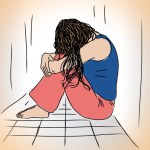
Survivors of brain injury may become melancholy as they remember their lost lives – lives in which they weren’t impaired, lives in which their freedom was at their fingertips, lives in which they were independent and didn’t need to rely on others for their every need. This supposedly joyous time may not be so happy for many folks. The holiday stress can be exaggerated for those living with a brain injury, compounding a survivor’s unhappiness and sometimes causing severe depression. The hustle and bustle of the holidays can definitely add disorganization and chaos to anyone’s life, but for those who live on a Sad GIrl 2daily basis with the confusion that often accompanies brain injury, the holiday season can be an utter nightmare.

The holidays bring many additional activities, like baking dozens and dozens of holiday cookies to give as gifts to family and friends. Entertaining friends might be fun, but decorating the house and preparing food and drinks for guests can be a daunting task. Entertaining out-of-town guests complicates that undertaking even further – arranging sleeping areas with sheets and pillows and extra blankets and towels. Then shopping – ah, shopping – braving the malls with their Women Shoppingwide-eyed, crazed shoppers and their cacophonous noise is not for the faint of heart. The uncertainty of whether Great Aunt Sally will love the little pink unicorn that you found in the bargain basement of Marky’s is tying up your brain in knots. For those who live in colder climes, weather may play a role, as blizzards and freezing rain make it difficult to leave the house and add the pressure of when to get the shopping done. The cold, gray skies can make life seem dreary, altering even the best of temperaments. But the holidays can be conquered, and a survivor can have fun if he or she tones it down a little and takes the holidays in itty-bitty steps.

To help ease their holiday doldrums, survivors of brain injury should try staying in the present or looking to the future. Survivors shouldn’t compare themselves and the current holiday to holidays from the past. It’s normal to feel the loss of one’s “old” self. It’s normal for a survivor to feel sadness at what once was and now is no longer. But if this is the “new normal,” then the survivor needs to make the new normal a better place to be.

Little Christmas TreePerhaps the six-foot tree that a survivor trekked out into the woods to cut down can be replaced by a three-foot artificial tree – something that can beFamily Eating assembled in less than an hour, instead of enduring the stress of an all-afternoon trip. Maybe the family-gathering to eat latkes must be limited to the immediate family to minimize the chaos that a large gathering might cause.

The holiday season is a good time for a survivor of brain injury to pull back. The survivor can make the holidays simpler and avoid their commercialism. So how does a survivor of brain injury still accomplish these goals? Here are some suggestions.

 Plan and Organize

ListMake a list of the things you want to do, and prioritize. Choose to do only one activity or job each day. Decide when you are best able to do the job. Are you better in the early morning hours – when you have more energy? Or are you like me – alive at night? That’s when I get more done. Everyone’s different, and only you will know what works best for you.

Pace Yourself

Baking Cookies-819562Don’t set your expectations too high. That is a guarantee for failure. Instead of baking ten dozen cookies in one afternoon, spread out the job by allowing several afternoons to accomplish the task. Or better still, make a smaller portion of the cookies. Set your sights lower. By planning and pacing yourself, you can avoid becoming overwhelmed, depressed, or simply exhausted.

Keep It Simple

Gift Bags 2Instead of wrapping a present the traditional way with giftwrap and ribbons, pop the gift into a pre-decorated box or a gift bag and stuff some colored tissue paper around it. It will be lovely, and it is so much easier! Do you really need to have a twenty-three-pound turkey with stuffing and all the trimmings? Probably not! A simpler meal will taste just as good and will be enjoyed by all simply because you are spending precious time together.

Accept Help

Wrapping Gifts

Usually family and friends like to offer help, especially during the holidays. Let them! Let them help shop for or wrap presents. Let them help cook dinner or bake cookies. It will be a lot more fun and actually make the holiday a more joyous occasion.


Make a change

Try something different. Plan a new routine or create a new ritual.

With some small steps, life during the holidays can be tolerable – maybe even fun. You just have to open your mind, look at life differently, and begin to make “new” traditions.Stress Free Holiday

Click here to listen to my show:

“Holidays – Less Stress – More Fun,” on “Another Fork in the Road,” on the Brain Injury Radio Network.


This article was also published on the following online magazines and journals.

Holiday Stress and Brain Injury” on Lash & Associates Publishing

Brain Injury – Surviving Holiday Stress” on Disabled Magazine

“Holiday Stressors” on TBI – Hope and Inspiration (coming soon – in press)


(Clip Art compliments of Bing.)

As I say after each post: Please leave a comment by clicking the blue words “Leave a Commentanim0014-1_e0-1 below this post.

Feel free to follow my blog. Click on “Follow” on the upper right sidebar.

If you like my blog, share intact it with your friends. It’s easy! Click the “Share” buttons below.

If you don’t like my blog, “Share” it intact with your enemies. I don’t care!

Feel free to “Like” my post


On The Air: . . . . . . . . . . . . . . Brain Injury Radio . . . . . . . . “Another Fork in the Road” Holidays – Less Stress – More Fun!

On The Air: Brain Injury Radio “Another Fork in the Road” 

with

Panelists: Survivor, Lisa Dryer and Caregiver, Lisabeth Mackall

Topic: Holidays – Less Stress – More Fun!

presented

by

Donna O’Donnell Figurski

images-1The holidays are just around the corner. Though they can be fun for many, for others this time of year is filled with extra stress. There are ways to lessen the anxiety and make the holidays more enjoyable by changing some of your old holiday traditions. My panelists, survivor, Lisa Dryer, and caregiver, Lisabeth Mackall, and I are going to discuss different ways that we make the holidays more fun with less stress.

Lisabeth Mackall Book 061215

Lisabeth Mackall, caregiver  Author of “27 Miles: The Tank’s Journey Home

<–Panelist, Lisabeth Mackall

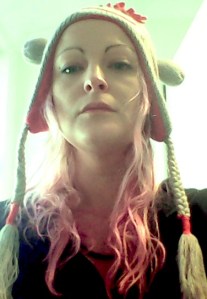
Dryer, Lisa Survivor

Lisa Dryer, survivor – former Renaissance Fair actor

Panelist, Lisa Dryer –>

If you missed this show, “Holidays – Less Stress – More Fun” on “Another Fork in the Road” with survivor, Lisa Dryer and caregiver, Lisabeth Mackall, and me on December 6th, 2015, don’t fret. You can listen to the archived show here.

Click the link below.


See you “On the Air!”

On The Air: Brain Injury Radio “Another Fork in the Road” with Panelists: Survivor, Lisa Dryer and Caregiver, Lisabeth Mackall Topic: Holidays – Less Stress – More Fun!

(Clip Art compliments of Bing.)

As I say after each post: Please leave a comment by clicking the blue words “Leave a Commentanim0014-1_e0-1 below this post.

Feel free to follow my blog. Click on “Follow” on the upper right sidebar.

If you like my blog, share it intact with your friends. It’s easy! Click the “Share” buttons below.

If you don’t like my blog, “Share” it intact with your enemies. I don’t care!

Feel free to “Like” my post.


SPEAK OUT! Guest Blogger Karen Dickerson . . . . . . . . . . . . . . I Love the Person I’ve Become

I Love the Person I’ve Become

by

Karen Dickerson

presented

by

Donna O’Donnell Figurski

Girl Blogger cartoon_picture_of_girl_writingI had a somber moment yesterday as I, for the first time, heard my 9-1-1 call and saw photos of the scene of my accident. I didn’t know that on March 2nd, 2014, my life would be changed forever.

As all my friends are aware, I have a traumatic brain injury (TBI), a brain injury that will affect my life forever. I’ll never be the same person I once was. I still struggle daily with cognitive deficits and problems with memory, lights, sounds, fatigue, and headaches. I wrestle with irritability. Also, the left side of my body is weak. I spent the last year angry for what has happened to me. The struggles were so huge that I didn’t know how I’d ever survive daily life as a woman and single mother.

Next week, I have the opportunity to face the driver who caused this injury to my body and my life. I get the chance to tell that person everything I’ve gone through to get to where I am today. In writing my statement, I found it hard to look back and relive the hell I’ve been through and am still going through today.

Dickerson, Karen Survivor 2 120315

Karen Dickerson – TBI Survivor

However, in many ways, the accident also brought some positivity – the growth that I’ve had as a person, the strength it has given me, my faith to be stronger, and the opportunities to share my story with so many. Through the use of social media alone, I have shared my triumphs and failures all over the country.

I am trying to bring a voice to the small community in which I live, where there isn’t much help or support for this invisible injury. My brain injury has helped me to choose wisely whom I bring into my life and to let go of negative people, including those in my immediate family who did not understand or did not desire to educate themselves to help me.

Dickerson, Karen Survivor 120315 1

Karen Dickerson – TBI Survivor

I’ve asked why this had to happen to me. I thought that life was already difficult enough. It was hard to get on my feet after a tough childhood and an abusive marriage. Today, I know why. I am thankful for what I have – as little as it may be. I am especially grateful for all who I’ve worked for and fought for – my children and the loved ones close to my heart.

My accident could have been worse. My children might not have had a mother to take care of them; I would never have made new friendships and grown stronger relationships with the ones I had; and I would never have met my Okie.

I’m blessed to be here today. TBI or not, I love the person I’ve become because I’ve fought to become her.


Thank you, Karen Dickerson.

Disclaimer:
Any views and opinions of the Guest Blogger are purely his/her own.

(Clip Art compliments of Bing.)

(Photos compliments of Karen Dickerson)

As I say after each post: Please leave a comment by clicking the blue words “Leave a Commentanim0014-1_e0-1 below this post.

Feel free to follow my blog. Click on “Follow” on the upper right sidebar.

If you like my blog, share it (intact) with your friends. It’s easy! Click the “Share” buttons below.

If you don’t like my blog, “Share” it (intact) with your enemies. I don’t care!

Feel free to “Like” my post.

SPEAK OUT! . . . . . . . . . . . . . Faces of Brain Injury . . . . . Jen Swartz

SPEAK OUT! Faces of Brain Injury – Jen Swartz

presented by

Donna O’Donnell Figurski

 Brain Injury is NOT Discriminating!

bigstock-cartoon-face-vector-people-25671746-e1348136261718It can happen to anyone, anytime, . . . and anywhere.

The Brain Trauma Foundation states that there are 5.3 million people in the United States living with some form of brain injury.

On “Faces of Brain Injury,” you will meet survivors living with brain injury. I hope that their stories will help you to understand the serious implications and complications of brain injury.

The stories on SPEAK OUT! Faces of Brain Injury are published with the permission of the survivor or designated caregiver.

If you would like your story to be published, please send a short account and two photos to me at neelyf@aol.com. I’d love to publish your story and raise awareness for Brain Injury.

Jen Swartz (survivor)

Jen Swartz Survivor

Jen Swartz

One incredible fact that I have learned after sustaining a traumatic brain injury (TBI) is that really simple things in life bring me happiness. I

Jen Swartz 2

Jen Swartz

don’t require spending tons of money on a house, on a car, or on an extraordinarily expensive vacation to find happiness. Being with my awesome friends or my family or enjoying the smaller things in life really brings so much joy to my heart. Because I survived something that could have easily taken my life, I know I still have purpose. As do all of you!

(Clip Art compliments of Bing.)

(Photos compliments of contributor.)

As I say after each post: Please leave a comment by clicking the blue words “Leave a Commentanim0014-1_e0-1 below this post.

Feel free to follow my blog. Click on “Follow” on the upper right sidebar.

If you like my blog, share it with your friends. It’s easy! Click the “Share” buttons below.

If you don’t like my blog, “Share” it with your enemies. I don’t care!

Feel free to “Like” my post.

Survivors SPEAK OUT! Jennifer Stokley

Survivors SPEAK OUT! Jennifer Stokley

presented

by

Donna O’Donnell Figurski


Jennifer Stokely Survivor 0526151. What is your name? (last name optional)

Jennifer Stokley

2. Where do you live? (city and/or state and/or country) Email (optional)

Kutztown, Pennsylvania, USA

3. On what date did you have your brain injury? At what age?

May 10, 2007, was the day of my traumatic brain injury (TBI). I was 42.

4. How did your brain injury occur?

I fell out of a second story window of my home to the sidewalk below. I did what I now call my “Amazing, Exotic Jeni Bounce.” I was home alone. Please don’t ask me how the fall occurred. I have no clue, other than I know that back then I was a hard-core alcoholic. My TBI cured me of that completely! No withdrawal. I just never desired alcohol again. Odd, but wonderful!

5. When did you (or someone) first realize you had a problem?

My ex found me on the sidewalk. He thought I had fallen outside (no external injuries, strange). I used to have a seizure disorder back then, so my ex and some friends carried me inside, up the stairs, and put me on the bed. Then I started to have trouble breathing. My ex immediately called 9-1-1. The paramedics arrived, took me back downstairs, across the street at night, and worked on me under a streetlight in a public park. They understood something was terribly wrong then.

The thing I find funny about the whole thing, though, is that the emergency folks cut my clothes off right then and there – for the whole city block to see me naked – under lights! I showed my butt to the city! (LOL) Thank goodness I don’t live there anymore.

6. What kind of emergency treatment, if any, did you have?

I had two cardiac arrests during the life-flight to the hospital. I had ruptured my bladder (which they had to stitch back together like a patchwork blanket). I punctured my lung, due to one of my five broken ribs. I had broken my pelvis in three places. I also had broken my neck.

The only things I remember for sure are a breathing tube down my throat, the surgery on my belly to put my bladder back together, and the two times they restarted my heart. The rest is unknown to me. I haven’t asked; they haven’t told. That is my past. I survived. I do not wish to relive the past while I’m so busy living my present and focusing on my future.

7. Were you in a coma? If so, how long?

I was in a full coma for three weeks. My coma was a 3 on the Glasgow Scale. It’s the lowest score before death. (A score of 3 indicates a severe brain injury.) After all my surgeries and the use of all the professional skills to save my life, the surgeon actually came out to my Momma and said, “We’ve done all that we can. Now it’s in God’s hands.” It literally was. One day prior to their disconnecting my life-support, I took my first breath on my own! They were able to take me off of life-support, knowing I was going to survive. To what extent, they still had no clue, but at least I was no longer in a coma on life-support.

8. Did you do rehab? What kind of rehab (i.e., inpatient or outpatient and occupational and/or physical and/or speech and/or other)?

First, I went to inpatient therapy from the Intensive Care Unit for two and a half months. I was taken to a rehab room (by wheelchair with my “fun-catheter” along for the ride) to exercise a bit and then attempt to stand. (They said my standing would never really happen because of my broken neck, but I showed them. I stand just fine now, and when I leave the house, I walk with only a cane.) Later, when I was discharged, I was in outpatient therapy for … I don’t know how long. There, I did physical therapy, speech therapy, and cognitive therapy. (Speech therapy was a hoot. The therapist would hand me things to read out loud. The problem was I couldn’t see! I’m legally blind now. “Come on. Read the medical records already.” LOL Cognitive therapy was just as much fun – pegs in holes I was unable to see. LOL That didn’t last too long.)

How long were you in rehab?

Inpatient, two and a half months; outpatient, more than six months, I think

9. What problems or disabilities, if any, resulted from your brain injury
(e.g., balance, perception, personality, etc.)?

I have a severe anxiety disorder, cerebellar ataxia, aphasia (not much now, but it used to be severe), bladder/bowel control issues, and taste bud issues. I’m legally blind. Memory issues are HUGE. My ability to smell has been affected. I have issues with concentration and making decisions. My personality did a 180 on me, and for that, I am actually grateful. I was not a very nice person prior to my TBI.

10. How has your life changed? Is it better? Is it worse?

My life is harder than it was prior, but it is also so much better than it’s ever been. I will gladly take the difficulties to have such a wonderful life. I had no difficulties prior, and I had such a horrible life. Go figure. I gladly take the trade I’ve been handed.

11. What do you miss the most from your pre-brain-injury life?

I miss the memories. I lost 42 years of my life. All my memories are gone – my childhood, my college, my graduation, everything – poof, gone in a second. When I woke from my coma, I was a stranger even to myself. I was literally reborn. I was no longer “Jennifer.” I was “Jeni,” a child. I didn’t know anyone or anything. I had to be taught how to eat, how to walk, how to talk – like an infant. I was told things about Jennifer, but they were all foreign to me – even to this day. (But I sure don’t miss memories of three ex-hubbies, so I guess it’s cool with me anyway! LOL)

12. What do you enjoy most in your post-brain-injury life?

I enjoy that I am building my life from scratch. I am building it in a way that brings me joy and peace. I have reconnected with my family, which never would have happened if not for my TBI. That I guess is the best part of this all! I have my Momma and my big sister in my life now, and they never were before. Now they love me, look out for me, and help me just because they want to. I love them with all my heart!

13. What do you like least about your brain injury?Stokley, Jennifer Survivor 112815

I dislike my loss of independence and being legally blind. I will never be able to drive again, and, with my anxiety disorder, I can’t go anywhere without my family’s support anyway. So I can’t just get up and go, even if I feel like it. I have accepted it. But it doesn’t mean I always have to like it.

14. Has anything helped you to accept your brain injury?

Time and God have helped. Please let me explain a bit. It took me nearly five years to find my way through my “brain fog” to the light of awareness, where I could even look around and understand what the heck is even going on. When I mention “God,” please know I am not a believer of any formal religion of any kind. I sure wouldn’t understand any of it anyway. Sorry. I am fully a spiritual gal. I know God saved my life. I speak and pray directly to him privately. I believe in angels. I also feel that I am a part of all things of this earth, sky, and everything in-between. I do not, have never, and never will step inside any church. That is not something that my heart desires. My connection is full and complete. I need nothing more and nothing less.

15. Has your injury affected your home life and relationships and, if so, how?

I had a “love of my life” prior to my TBI. He tried – truly he did – post TBI. He stuck it out for three years, but I myself never emotionally reconnected with him. I do know he loved me. He used to come home from the hospital, walk half way up the stairs, and collapse in tears. He became my full-time caregiver and friend, but emotionally I was unable to love him back. So I personally set him free to find love again, and he has – with a baby on the way. YAY!

16. Has your social life been altered or changed and, if so, how?

My social life changed big time, but it improved big time. My social life had been with drunk folks at the bar and such. I never drink at all post TBI. I never miss drinking for some strange reason. So that circle of folks is no longer in my life. At first, my social life consisted of “my dad,” a neighbor who just cared so much that he would spend about an hour every day with me. Sometimes he would take me places. He always made sure I was safe. My social life now consists of wonderful, caring neighbors who accept me knowing my limitations. They help when needed and spend time with me “just because.” My biggest social life consists of my family, who, for 30+ years, really weren’t much of a part of my life at all.

17. Who is your main caregiver? Do you understand what it takes to be a caregiver?

I am and have been my main caregiver for six years now. I had no one after my ex-boyfriend/caregiver left. I was completely alone. I do, however, understand in many ways what it takes. Many of my dear friends who I know so well on the Internet are caregivers of survivors. They fill me in totally and honestly. I also help them to maybe know what their loved one is thinking when a reaction occurs, things that may stimulate the survivor, things that the survivor may enjoy, etc.

18. What are your plans? What do you expect/hope to be doing ten years from now?

My life will be pretty much what I do now – “pay my life forward” to other survivors and caregivers by helping them – sometimes with info or sometimes with laughter, music, inspiration, joy, etc. I am permanently and totally disabled, so I truly believe that “work” is out of my future. That’s okay with me, truly. I love what I do now, and, as my father used to always say, “If it works, don’t fix it.”

19. Are you able to provide a helpful hint that may have taken you a long time to learn, but which you wished you had known earlier? If so, please state what it is to potentially help other survivors with your specific kind of brain injury.

Realize it is what it is!

20. What advice would you offer to other brain-injury survivors? Do you have any other comments that you would like to add?

Please never rush it. You’ll get there when you’re ready to get there – not a second sooner. It may take years and years, but when YOU are ready, you’ll know it.

Tell folks to get over themselves and their ignorance if they ever say, “Just get over it.” It takes a lifetime!

If you’re unable to do something right now, always say, “I can’t do it AS OF YET!” It leaves room for possibility and hope for your future!


(Disclaimer: The views or opinions in this post are solely that of the interviewee.)

If you would like to be a part of the SPEAK OUT! project, please go to TBI Survivor Interview Questionnaire for a copy of the questions and the release form.

(Clip Art compliments of Bing.)

(Photos compliments of contributor.)

As I say after each post: Please leave a comment by clicking the blue words “Leave a Commentanim0014-1_e0-1 below this post.

Feel free to follow my blog. Click on “Follow” on the upper right sidebar.

If you like my blog, share it with your friends. It’s easy! Click the “Share” buttons below.

If you don’t like my blog, “Share” it with your enemies. I don’t care!

Feel free to “Like” my post.


SPEAK OUT! NewsBit NFL Quarterback With Concussion Stays In Game

NFL Quarterback With Concussion Stays In Game

presented

by

Donna O’Donnell Figurski


newsboy-thThe National Football League (NFL) governs most of professional American football, and it is proud of its “concussion protocol” to protect its players. That system shamefully failed Sunday with 1:04 left in a 13-13 game between the St. Louis Rams and the Baltimore Ravens.

St. Louis quarterback, Case Keenum, had taken his team close to Baltimore territory and was trying to drive for a score. Then Keenum was

Case Keenum 1

Case Keenum Quarterback St. Louis Rams

sacked (tackled for a loss). His head hit the turf hard. Keenum couldn’t get up without assistance, and even when he did, he seemed to be staggering. He showed at least three of the signs of a possible concussion, as defined by the concussion protocol of the NFL. (A concussion was confirmed after the game. It wasn’t a surprise. Fans at the stadium and watching on TV could see Keenum was in trouble.)

Case Keenum 2

Keenum holding head after tackle

The NFL this year empowered the neurotrauma consultants, who are in the broadcast booths for all games, to stop games if necessary. Yet the St. Louis-Baltimore game continued, and Case Keenum remained in it. He fumbled after two plays. Baltimore recovered, which set up a field goal to win the game.

Case Keenum 3

Keenum struggling to return to game

This case seems to show more concern with winning than with Keenum’s health and safety. Both the NFL and the NFL Player’s Association (NFLPA) are investigating. It’s not clear if anyone – the coach, the trainer,

Concussed Brain

Concussed Brain

or the neurotrauma consultant – was at fault. But whatever happened, the system totally failed. (Full story with video)


(Clip Art compliments of Bing.)

As I say after each post:

Please leave a comment by clicking the blue words “Leave a Comment” below this post.anim0014-1_e0-1

Feel free to follow my blog. Click on “Follow” on the upper right sidebar.

If you like my blog, share it with your friends. It’s easy! Click the “Share” buttons below.

If you don’t like my blog, “Share” it with your enemies. I don’t care!

Feel free to “Like” my post.
 

SPEAK OUT! . . . . . . . . . . . . . Faces of Brain Injury Sarah Robinson

SPEAK OUT! Faces of Brain Injury – Sarah Robinson

presented by

Donna O’Donnell Figurski

 Brain Injury is NOT Discriminating!

bigstock-cartoon-face-vector-people-25671746-e1348136261718It can happen to anyone, anytime, . . . and anywhere.

The Brain Trauma Foundation states that there are 5.3 million people in the United States living with some form of brain injury.

On “Faces of Brain Injury,” you will meet survivors living with brain injury. I hope that their stories will help you to understand the serious implications and complications of brain injury.

The stories on SPEAK OUT! Faces of Brain Injury are published with the permission of the survivor or designated caregiver.

If you would like your story to be published, please send a short account and two photos to me at neelyf@aol.com. I’d love to publish your story and raise awareness for Brain Injury.

Sarah Robinson (survivor)

Robinson, Sarah Survivor

Sarah Robinson – I’m proud of how far I’ve come.

I sustained a traumatic brain injury (TBI) when I was a teenager. It drastically changed my personality as well as my life. I experienced rejection from people in my family because of my condition, and it is devastating. I have an important message for people who have a survivor in their family. Please never give up on him or her. My mother selflessly gave me so much of her time in order to help me recover. Her belief in me saw me through my traumatic experience and into adulthood, where I recovered dramatically. I have a brain injury, but it is my little secret. People don’t know if I don’t want them to. I want to share my story because I am proud of how far I have come, and I also want to inspire others.

(Clip Art compliments of Bing.)

(Photos compliments of contributor.)

As I say after each post: Please leave a comment by clicking the blue words “Leave a Commentanim0014-1_e0-1 below this post.

Feel free to follow my blog. Click on “Follow” on the upper right sidebar.

If you like my blog, share it with your friends. It’s easy! Click the “Share” buttons below.

If you don’t like my blog, “Share” it with your enemies. I don’t care!

Feel free to “Like” my post.
 

Brain Injury Resources . . . . . . Will Smith’s Movie, Concussion, Based on True Story

Will Smith’s Movie, Concussion, Based on True Story 

presented

by

Donna O’Donnell Figurski

Brain th-2Concussion is scheduled to be in theaters in late December, but it is already making headlines (review and trailer). The National Football League (NFL) knows that its Achilles heel is the high risk of brain injury to its players, not only from documented concussions, which are likely to be far fewer in number than actual concussions, but also from the repeated sub-concussive hits, which many neurologists believe contribute to brain injury. Former players are concerned (video of the song Final Drive by former NFL star Kyle Turley), and current players are becoming concerned. Recently a promising rookie linebacker with the San Francisco 49ers quit after one season over the fear of brain injury.
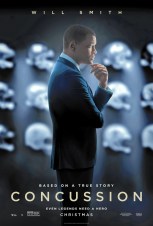
concussion-movie-nfl-20150903

Concussion

Concussion is based on the true story of the discovery of the brain disease known as chronic traumatic encephalopathy (CTE) by Dr. Bennet Omalu, a Nigerian pathologist who did the autopsy of Hall-of-Fame Pittsburgh Steelers center, Mike Webster. Dr. Omalu first saw CTE during his study of Webster’s brain. Webster was homeless, depressed, and suffering from dementia when he died at age 50. Dr. Omalu’s story, which is the basis of Concussion, is given in the PBS Frontline documentary League of Denial: The NFL’s Concussion Crisis. I urge everyone to watch the documentary before seeing Concussion. The 2-hour PBS documentary is available online at no cost. In Concussion, Will Smith plays Dr. Omalu.

Omalu &amp; Smith

Dr. Bennet Omalu & Will Smith

This movie may change what you think about American football and the NFL. Knowing that brain disease is a major problem for the future of the game, the NFL tried to discredit Dr. Omalu and his provocative work. The NFL had previously established a questionable committee of doctors to study mild traumatic brain injuries (MTBIs), otherwise known as concussions. The NFL committee published papers claiming that MTBIs, even multiple MTBIs, were not a problem for players. (The conclusions are contradicted by current data. Also, some scientists question the validity of the published studies.)

NFL LogoDr. Omalu thought that the NFL would be very interested in his data. Instead, the NFL’s MTBI committee immediately attacked Dr. Omalu and his findings. At one point, the committee tried to get Dr. Omalu to retract the paper. Going against the multibillion dollar NFL has a steep price. Dr. Omalu has stated that he wishes he had never discovered CTE.
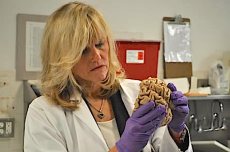

To date, CTE has been found in 88 of 92 autopsied NFL brains (1, 2). The currently accepted way that CTE is identified is by studying the brain postmortem. The major criticism of the postmortem analyses that were done is that the brains came from former players who already showed signs of brain disease. In other words, the claim is that the sample is biased. Dr. Ann McKee, a neuropathologist at Boston University’s CTE Center, studied most of the brains. She argues that the results would be extraordinary even in a biased sample.

AnnMcKeeMD1111

Dr. Ann McKee – neurolpathologist at Boston University

With a recent advance in technology, it seems that the bias criticism can soon be put to rest. Dr. Omalu is an author on a recent publication, in which neuroscientists from the University of California at Los Angeles (UCLA) and from the University of Chicago showed that CTE can be accurately diagnosed in a living person by a special PET (positron emission tomography) scan. If such scans were taken of all the current players, we would know if CTE is rare among players, as the NFL would like players and fans to believe, or if it’s relatively common, as Dr. Ann McKee believes.

Until that happens, we are left to decide about the risk of brain disease in players of American football on the basis of what we know. Concussion tells the little-known story of Dr. Omalu and the discovery of CTE. With this movie, we will be more informed and better able to evaluate the risk.

Omalu

Dr. Bennet Omalu – pathologist

As I say after each post:

Feel free to leave a comment by clicking the blue words “Leave a Comment” below this post.

Please follow my blog. Click on “Follow Me Via eMail” on the right sidebar of your screen.anim0014-1_e0-1

If you like my blog, click the “Like” button under this post.

If you REALLY like my blog, share it with your friends. It’s easy! Click the “Share” buttons below.

If you don’t like my blog, “Share” it with your enemies. That works for me too!


diemodi jewelry

uniquely hand-crafted jewelry by donna

Welcome to Harmony Kent Online

The home of all things books

Pete Springer

Passionate Teacher and Future Children's Author

HOPE TBI

Helping Other People Excel - To Be Independent

For the Love of Books, Old and New

Katie Fischer, Writer and Reader of Stories

Charlie Bown

Children's Author

Jessica Hinrichs

“We write to taste life twice, in the moment and in retrospect.” ― Anais Nin

VIVIAN KIRKFIELD - Writer for Children

Picture Books Help Kids Soar

Mindy’s Writing Wonderland

For authors, parents, teachers & everyone who loves children’s books.

Kaitlyn Leann Sanchez

Literary Agent

Surviving Traumatic Brain Injury

TBI - Survivors, Caregivers, Family, and Friends

The Care Factor

Loving someone with a Traumatic Brain Injury

Brain Injury Support Group of Duluth-Extension

Brain Injury Information and SUPPORT

Brain Aneurysm Global Insight

Brain Aneurysm, cerebral hemorrhaging, hemorrhage stroke