TBI – Survivors, Caregivers, Family, and Friends

Posts tagged ‘Prisoners Without Bars: A Caregiver’s Story’

Caregivers SPEAK OUT! …… Raine Turner

Caregivers  SPEAK OUT!  Raine Turner,

(mother of survivor, Ryan, and author of “Only Son…Only Child”)

presented by

Donna O’Donnell Figurski


Raine Turner - Caregiver & Author: Only Son...Only Child

Raine Turner – Caregiver & Author: Only Son… Only Child

1. What is your name? (last name optional)

Raine Turner

2. Where do you live? (city and/or state and/or country) Email? (optional)

Edmonton, Alberta, Canada

3. What is the brain-injury survivor’s relationship to you? How old was the survivor when he/she had the brain injury? What caused your survivor’s brain injury?

The brain-injury survivor is my son. At 16, he was in a car accident.

4. On what date did you begin care for your brain-injury survivor? Were you the main caregiver? Are you now? How old were you when you began care?

I began care August 13, 2003.

5. Were you caring for anyone else at that time (e.g., children, parents, etc.)?

No

6. Were you employed at the time of your survivor’s brain injury? If so, were you able to continue working?

I was self-employed and unable to manage my business.

7. Did you have any help? If so, what kind and for how long?

Not really
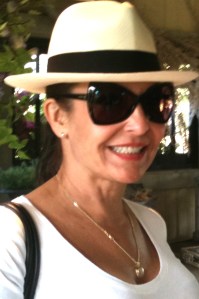
Raine Turner Caregiver & Author

Raine Turner Caregiver & Author


8. When did your support of the survivor begin (e.g., immediately – in the hospital; when the survivor returned home; etc.)?

In the hospital

9. Was your survivor in a coma? If so, what did you do during that time?

Yes. I sat beside my son’s bed and read to him.

10. Did your survivor have rehab? If so, what kind of rehab (i.e., inpatient and/or outpatient and occupational, physical, speech, and/or other)? How long was the rehab? Where were you when your survivor was getting therapy?

Yes. My son had rehab both as an inpatient and an outpatient.

11. What problems or disabilities of your brain-injury survivor required your care, if any?

At first, self-care. Also eating, walking, etc.

12. How has your life changed since you became a caregiver? Is it better? Is it worse?

Trick question. It made me realize what is important in life. It taught me patience, which I did not know I had.

13. What do you miss the most from pre-brain-injury life?

I dislike my son’s loss of the chance for a normal life. I miss having a relationship for myself.

14. What do you enjoy most in post-brain-injury life?

Nothing!

15. What do you like least about brain injury?
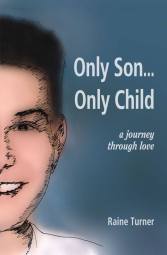
Only Son...Only Child by Raine Turner

Only Son…Only Child by Raine Turner

My son’s daily struggles

16. Has anything helped you to accept your survivor’s brain injury?

There is no choice but to accept.

17. Has your survivor’s injury affected your home life and relationships and, if so, how?

Yes. I did not have a relationship at all for ten years. The one I had at the time ended due to stress. It’s now hard to find someone who wants to be involved with this situation.

18. Has your social life been altered or changed and, if so, how?

Yes. But it’s getting better now with my son in school and his not living with me.

19. What are your plans? What do you expect/hope to be doing ten years from now?

I hope to be on a beach!

20. What advice would you offer other caregivers of brain-injury survivors? Do you have any other comments that you would like to add?

Buckle up! It is going to be a long, tough ride.


 To learn more about Raine Turner, check out her website, “Only Son Only Child: a journey through love.” Look for her book on Amazon.


(Disclaimer: The views or opinions in this post are solely that of the interviewee.)

If you would like to be a part of the SPEAK OUT! project, please go to TBI SPEAK OUT! Caregiver Interview Questionnaire for a copy of the questions and the release form.

(Clip Art compliments of Bing.)


As I say after each post: Please leave a comment by clicking the blue words “Leave a Commentanim0014-1_e0-1 below this post.

Feel free to follow my blog. Click on “Follow” on the upper right sidebar.

If you like my blog, share it with your friends. It’s easy! Click the “Share” buttons below.

If you don’t like my blog, “Share” it with your enemies. I don’t care!

Feel free to “Like” my post.

SPEAK OUT! . . . . . . . . . . . . . Faces of Brain Injury . . . . . . Frank Bruno, Survivor

SPEAK OUT! Faces of Brain Injury Frank Bruno (survivor)

presented

by

Donna O’Donnell Figurski

Brain Injury is NOT Discriminating!

bigstock-cartoon-face-vector-people-25671746-e1348136261718It can happen to anyone, anytime, . . . and anywhere.

The Brain Trauma Foundation states that there are 5.3 million people in the United States living with some form of brain injury.

On “Faces of Brain Injury,” you will meet survivors living with brain injury. I hope that their stories will help you to understand the serious implications and complications of brain injury.

The stories on SPEAK OUT! Faces of Brain Injury are published with the permission of the survivor or designated caregiver.

If you would like your story to be published, please send a short account and two photos to me at neelyf@aol.com. I’d love to publish your story and raise awareness for Brain Injury.


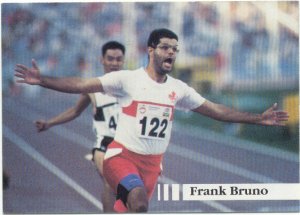
Frank Bruno (survivor)

Frank Bruno - Survivor - Paralympics Contender

Frank Bruno – Survivor –
Paralympics Contender

On June 25, 1986, while at work, I fell twenty feet, fractured both sides of my skull, and was in a coma for three weeks.

In 1983, prior to my brain injury, I graduated in Sports Administration from Durham College. I had the honour of being named Male Athlete of the Year, which included winning the Provincial Basketball Championships in Tier 2 of the Ontario Colleges Athletic Association, being named to the Championship Tournament All-Star team, and capturing a bronze medal at the Provincial Touch Football Championship Tournament. Immediately following graduation, I was employed as the Racquet Sports Director at a popular racquet and fitness centre in Mississauga.

According to the doctors, there was little hope for my recovery. I was given less than a 2% chance of making it out of the operating room – never mind ever walking or talking again. Upon my awakening, I was placed into a rehabilitation program, where I received speech therapy, occupational therapy, and physiotherapy. My first recollection of being awake was that I could turn my head only to the left. The rest of my body was totally paralyzed. I had to be lifted in and out of my bed and wheelchair, as I could not do it myself. After several weeks of therapy, I was able to walk under my own power – much to the surprise of the doctors and therapists. They could not believe I had progressed to this point so quickly.Rehabilitation

In 1987, a fellow classmate who worked at the office of Sport for Disabled Ontario asked if I was interested in taking part in sports again. I had a tough enough time trying to walk, so I declined. In 1988, I decided to give it a try – with the hopes of improving my co-ordination and increasing my stamina. (In case you are wondering, Sport for Disabled is different from the Special Olympics. The Special Olympics is for people who are mentally challenged. Sport for Disabled is for athletes who have a physical disability.) There are four major disability groups: (1) wheelchair, (2) amputee, (3) blind/visually impaired, and (4) cerebral palsy.

After a medical evaluation, I was placed into the cerebral palsy division at level 8. Within this division, there are eight classes: levels 1 to 4 are in wheelchairs and levels 5 to 8 are ambulatory. Level 1 is for those most affected by cerebral palsy, whereas level 8 is for those having the least visible disability. I have never had cerebral palsy, but because of my brain injury, I have the same neurological symptoms as someone born with cerebral palsy.

awardsIn 1988, I began to compete in Sport for the Disabled and at the Provincial Championships. I finished second in both the 100-meter race and the 200-meter race in the CP8 class. In Ottawa, for the 1989 Provincial Championships, I not only won both the 100-meter race and the 200-meter race, but I also won the long-jump and shot-put events. All were Canadian records. This earned me a place on the Provincial Team, which competed in the Foresters’ Games (National Championships) in Richmond, British Columbia. At these games, I won the same four events plus the 4 x 100-meter relay. This was the first time a Canadian cerebral palsy relay team ever finished in less than one minute. This qualified me to be named to the Canadian Team that would compete in the World Championships and Games for the Disabled, which were held in Assen, The Netherlands. I was entered into five sprint races, plus shot-put and long-jump. By the end of the Games, I had won five gold medals and two silver medals! I also set three world records and six Canadian records. The Ministry of Tourism and Recreation Ontario awarded me Ontario’s 1990 Disabled Athlete of the Year.

Frank Bruno - Survivor: 1990 Ontario Disabled Athlete

Frank Bruno – Survivor: 1990 Ontario Disabled Athlete

In 1991, the Barcelona Paralympic Organizing Committee invited me to take part in their “Test Meet” in Barcelona, Spain. I ran in the 200-meter and 400-meter events, winning Gold in both and lowering my world record in the 400-meter. The Paralympics are the Olympics for the physically disabled. They occur every four years in the same city as the Olympics. We use the same venues, eating facilities, and dormitories as the Olympics.

Frank Bruno - Survivor

Frank Bruno – Survivor (back of card)

The Paralympics are usually held two weeks after the Summer/Winter Olympics are completed. At the 1992 IX Summer Paralympics, I competed in three sprint events: 100-meter, 200-meter, and 400-meter. I won three Gold Medals, plus I set two New World and Paralympic records and a Canadian record. In 1993 at the Robin Hood Games (World Championships for Cerebral Palsy), which were held in Nottingham, England, I competed in the 100-meter and 200-meter sprint events. I won Gold Medals in both.

The 1994 World Disabled Athletics Championships was held in Berlin, Germany. This World Championships was not as fruitful, for I was unable to attend any of the practice sessions. My back flared up, as it did not adjust properly to my mattress. After many physiotherapy and acupuncture treatments, my back responded well enough to allow me to compete in the 100-meter semi-final. I was happy just to be able to compete in the event. I finished second with a time of 12:23 seconds. The next day featured the 100-meter final race. I had a fairly good start, but at about the midway point, I felt a sharp pain in my right hamstring. As I continued to push towards the finish line, I tore my hamstring and was out of the competition. In that race, I finished 7th with a time of 12:70 seconds.

For the 1996 Atlanta Paralympics, I participated in only one event – shot-put. My hamstring did not heal to the point where I could train as hard as I wished. Then on May 13, I suffered a tonic clonic seizure, and this really made a mess of my training. I learned to throw the shot-put in just under four weeks. I placed fourth at the Paralympics and threw a personal best of 11.07 meters. I have held the World Record in the 200-meter event for eight years and the Paralympic Record for three Games. I also held the World Record in the 400-meter event for five years and the Paralympic Record for four years and two Paralympic Games.

Frank Bruno - Survivor

Frank Bruno – Survivor

On November 17, 1998 I was inducted into the Terry Fox Hall of Fame (now called the Canadian Disability Hall of Fame). September 1999 saw me come out of retirement again. The Czech Republic Cerebral Palsy Sports Association invited me to take part in the opening of a brand new athletic centre in Turnov, Czech Republic. I was asked to be part of the Field Throwing Triathlon. I was required to throw the shot-put, discus, and javelin. At first I declined, but after speaking with the organizing committee, they still wanted me to compete. I told them that the last time I threw the shot-put was in the Atlanta Paralympics in 1996, that the last time I threw the javelin was in 1989, and that I never threw the discus. I went to the Czech Republic with less than three weeks of practice. Not much was expected, due to my lack of practice time and the fact that the rest of the throwing field had been training for the past three years. I finished fourth in shot-put, seventh in javelin, and eighth in discus. In August of 2004, I was asked to come out of retirement yet again to help build the soccer program for Canadian Cerebral Palsy Sports, with the goal of qualifying for the 2008 Summer Paralympics in Beijing, China.

On February 5, 2010, I was awarded the “King” Clancy Award. On March 10, 2011, I was inducted into the Durham College Sports Hall of Fame and awarded the Queen Elizabeth II Diamond Jubilee Medal (2012). On July 4, 2015, I took part in the Pan Am Torch relay. On April 25, 2016, the Brain Injury Society of 12042850_10207545538739267_7480792831760202695_nToronto selected me as the Volunteer of the Year.


Thank you Frank Bruno for sharing your story.


(Clip Art compliments of Bing.)

(Photos compliments of contributor.)

As I say after each post: Please leave a comment by clicking the blue words “Leave a Commentanim0014-1_e0-1 below this post.

Feel free to follow my blog. Click on “Follow” on the upper right sidebar.

If you like my blog, share it intact with your friends. It’s easy! Click the “Share” buttons below.

If you don’t like my blog, “Share” it intact with your enemies. I don’t care!

Feel free to “Like” my post.

SPEAK OUT! NewsBit . . . . . . Inosine Helps Brain-Injured Monkeys Recover Fine Motor Control

SPEAK OUT! NewsBit

Inosine Helps Brain-Injured Monkeys Recover Fine Motor Control

presented by

Donna O’Donnell Figurski

My husband, David, is a traumatic brain injury survivor since 2005. He is physically disabled as a result of his brain injury. As a molecular biologist from Columbia University, David is always searching for ways to improve his own life after his brain injury. He recently stumbled on this exciting research project, and we wanted to share this hopeful concept with others.


Disclaimer:

Neither David nor I is a medical doctor, and we are not suggesting any medical solutions. We are only publishing this article for your information.


Newsboy th


Inosine is a small molecule found in cells. Research with mice and rats has shown that inosine is released by stressed or damaged neurons. Inosine can turn on the genes for axon development. Axons are the long, threadlike membrane extensions needed for neurons to send an electrochemical message to other neurons. The new axons from undamaged neurons can rewire the brain (plasticity) to allow circuits to form that compensate for circuits lost from damage.

Adding inosine to neurons in culture stimulates the formation of more axons. Would inosine stimulate an increase in plasticity by increasing axon formation and thereby help recovery from brain injury? Consistent with this idea, neuroscientists found that rats recovered from brain injury better when inosine was present.pTqKnRpgc

Now neuroscientists at Boston University report testing inosine’s effect on a primate – the rhesus monkey. The study was small (8 monkeys) because monkey experiments are expensive, but, despite the small number, the results were significant. At the beginning, all 8 monkeys could easily grasp food treats with their dominant hand. The part of the brain needed for the required motor skills in the dominant hand was then deliberately damaged in each monkey. The 8 brain-injured monkeys were divided into two groups: 4 monkeys were treated by giving them inosine, and 4 were given a placebo. The researchers didn’t know which monkeys were getting inosine and which were getting the placebo.

After 14 weeks of treatment, the monkeys were examined for their ability to grasp a food treat. Three of the four inosine-treated monkeys grasped the food with their dominant hand normally. Fine motor control in the hand seemed to be the way it was prior to the brain injury. In contrast, the placebo-treated monkeys retrieved their food by using a compensatory strategy. The placebo-treated monkeys still had a problem with fine motor control in the hand.

mouse-hiThis preliminary study has extended evidence of the inosine benefit from mice and rats to a primate. The result indicates that inosine may one day benefit human victims of brain injury. Inosine is already in clinical trials for the treatment of multiple sclerosis and Parkinson’s Disease. Inosine appears to be safe – athletes have taken inosine supplements for decades.

Strictly speaking, this experiment addressed recovery of only a specific movement. The brain injuries were highly controlled – all were nearly identical, and they were in a specific area of the frontal lobe that affects fine motor control of the hand. Inosine experiments of this type have only been done in animal models. But even with all these caveats, there is reason to be optimistic. Inosine treatment may become a common human therapy for brain injury. Clearly more research is needed before inosine is shown to be useful in the clinic. (Full story)


(Clip Art compliments of Bing.)

As I say after each post: Please leave a comment by clicking the blue words “Leave a Commentanim0014-1_e0-1 below this post.

Feel free to follow my blog. Click on “Follow” on the upper right sidebar.

If you like my blog, share it (intact) with your friends. It’s easy! Click the “Share” buttons below.

If you don’t like my blog, “Share” it (intact) with your enemies. I don’t care!

Feel free to “Like” my post.

Survivors SPEAK OUT! . . . . . . Charles Ross, Jr.

Survivors SPEAK OUT! Charles Ross, Jr.

presented

by

Donna O’Donnell Figurski


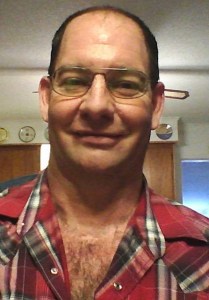
Ross, Charles Survivor

Charles Ross, Jr. – Brain Injury Survivor

1. What is your name? (last name optional)

Charles Ross, Jr.

2. Where do you live? (city and/or state and/or country) Email (optional)

Pittsburg, Missouri, USA     buds5101@gmail.com

3. On what date did you have your brain injury? At what age?

My TBI (traumatic brain injury) happened on November 15, 1985. I was 18 years old.

4. How did your brain injury occur?

I was in a head-on car crash on a narrow, two-lane highway on a rainy and foggy day. I swerved around a truck that was stopped in the road. The truck left the scene.

5. When did you (or someone) first realize you had a problem?

A witness came to the car and forced the door open. I had thrown up on impact. Until help arrived, he held my head up to keep me from choking.

6. What kind of emergency treatment, if any, did you have?

I had the paddles put on me before I got on the helicopter to fly to a large hospital. I also had a tracheotomy.

7. Were you in a coma? If so, how long?

I was in a coma for fifty days.

8. Did you do rehab? What kind of rehab (i.e., inpatient or outpatient and occupational and/or physical and/or speech and/or other)? How long were you in rehab?

I had physical, occupational, and speech therapies as an inpatient for nine months after I came out of the coma. I continued physical therapy as an outpatient for seven years after the accident. My mom then took over. She was a physical therapist aide in a nursing home at the time of the accident. She also did occupational therapy with me too.

9. What problems or disabilities, if any, resulted from your brain injury
(e.g., balance, perception, personality, etc.)?

I was in a wheelchair for one and a half years. I can now walk with a single cane. That level did not immediately come after the wheelchair. It occurred after seven summers of surgeries on my legs. I walked with two canes for many years. I also have epilepsy. That diagnosis took a grand mal seizure five years after the accident. I had thousands of petite mal seizures prior to my grand mal seizure. Only then did the neurologist say that the “spells,” as I called them then, were petite mal seizures. I take multiple medicines to control them. It took twenty-two years to find the right mixture to control them. Balance and memory are also great problems today – thirty years later. My sense of balance is gone. I fall frequently, even using a cane. My short-term and long-term memories were damaged. The short-term memory was destroyed. It took years of training to get back what I have. Long-term memory – I don’t recognize it as affecting me so badly. I just don’t think of it. I take two medicines that they give to Alzheimer’s patients. I am hoping they help me. I don’t know yet if they do.

10. How has your life changed? Is it better? Is it worse?teacher-improvement

I struggled to get two Associate Degrees over seven years. I struggled more in the workforce for fourteen years. Most of the time, I had no insurance. The meds I needed for the seizures came out-of-pocket. So my credit rating tanked, and a bankruptcy followed. I filed for disability insurance after losing my last job. I was making the most money ever, but I still had no benefits. On the last job, I grossed more money in a week and a half than I make in a month now.

11. What do you miss the most from your pre-brain-injury life?

I miss a sense of being normal – being able to go out and do anything at almost any time. My only restriction was money.

12. What do you enjoy most in your post-brain-injury life?

I enjoy knowing the people I have met as a result of the injury – the countless doctors and nurses who took care of me and other individuals who also have had head injuries. I never would have met them, or even thought of meeting them, had I not had a head injury.

13. What do you like least about your brain injury?

I dislike not having my “normal” life.

14. Has anything helped you to accept your brain injury?

I never had the attitude where I just wanted to give up on life, even though it could be depressing at times.

15. Has your injury affected your home life and relationships and, if so, how?

Yes. I think I experienced jealousy from a brother because I got more attention afterward. I’ve had many different relationships, but all have ended up failing. The lack of money was the usual excuse. Most relationships were started over the web.

16. Has your social life been altered or changed and, if so, how?

I don’t go out very much. Right now, I’m living with my mom. (My dad just passed.) As a 48-year-old male, I don’t regret living with my mom. It’s just not normal.

17. Who is your main caregiver? Do you understand what it takes to be a caregiver?

I am able to take care of myself, including my meds and my bills. I cooked when I was not with my mom.

18. What are your plans? What do you expect/hope to be doing ten years from now?

I want to get a place of my own again.

19. Are you able to provide a helpful hint that may have taken you a long time to learn, but which you wished you had known earlier? If so, please state what it is to potentially help other survivors with your specific kind of brain injury.

Charles Ross, Jr. - Brain Injury Survivor

Charles Ross, Jr. – Brain Injury Survivor

My advice: Do not turn down any kind of help that’s offered – do not be too proud.

20. What advice would you offer to other brain-injury survivors? Do you have any other comments that you would like to add?

You should take pride in being a survivor. Most people, if faced with the challenges you have, could not do it. You have already accomplished the hardest thing, which was to survive.


If you would like to be a part of the SPEAK OUT! project, please go to TBI Survivor Interview Questionnaire for a copy of the questions and the release form.

(Clip Art compliments of Bing.)

(Photos compliments of contributor.)


As I say after each post:

Feel free to leave a comment by clicking the blue words “Leave a Comment” below this post.

Please follow my blog. Click on “Follow Me Via eMail” on the right sidebar of your screen.anim0014-1_e0-1

If you like my blog, click the “Like” button under this post.

If you REALLY like my blog, share it intact with your friends. It’s easy! Click the “Share” buttons below.

If you don’t like my blog, “Share” it intact with your enemies. That works for me too!


SPEAK OUT! Guest Blogger . . . David A. Grant . . . . . . . . . . . . . You Gave Me the Life I Was Destined to Have

You Gave Me the Life I Was Destined to Have

by

David A. Grant

presented by

Donna O’Donnell Figurski

Boy Blogger thI’ve been thinking about you again and wondering how life has been treating you.

Last night, Sarah and I were at the high school. We went to watch fireworks.

Like we do most every year, we set up our blanket, then walked the oval track for a couple of laps. It’s a great place to people-watch.

The bleachers caught my eye as I looked up to one of the top rows – to where I was sitting when I saw you graduate.

David A. Grant - Brain Injury Survivor & Author

David A. Grant – Brain Injury Survivor & Author

You had no idea I was there at your graduation. How could you?

Except for the day we met shortly after the accident, we’ve not seen each other.

One of our own kids graduated the same day that you did. It was just another of those “chance meetings” that have too often come to pass.

I never expected to hear your name on the loudspeaker that graduation day.

Nor did I know how deeply my PTSD (post-traumatic stress disorder) ran as I fell into my seat, unable to even stand for the rest of the ceremony.

A while back, I wrote that if I had the chance, I might just thank you for changing the very course of my life.

Today, I would most likely not thank you.

fireworks-animatedBut I need to be very clear, I am not angry, nor do I hold any resentment. To hold bitterness in my heart is to allow myself to be run over again and again – every day that I breathe.

Life is just too short.

Sometimes things just happen.

Sometimes newly-licensed teenage drivers run over cyclists. We both know that better than most.

It’s a safe bet to say that you did not plan your day by saying, “By today’s end, I’ll have T-boned a local cyclist.”onbicycle

It’s weird and hard to put into words – even for a guy like me, but I am living the life I was destined to live.

You just played a small, rather impactful part.

Kind of like a long line of falling dominoes, you knocked over the first domino when you struck me that cold November day back in 2010.

And from there, that line of dominoes has continued to fall. It’s circled the globe a few times … and, one-by-one, the dominoes fall.Dominoes

While I can’t thank you for hitting me that fated day, I can now see that it was unavoidable. It was destined to happen.

Over the years, I have come to realize that I have lost my life. I spend a lot of time living for others.

A few years ago, I was able to find you on Facebook. You were in college then.

Lest we forget, you were only sixteen when we first met.

You looked like a typical college kid – happy, clean cut, smiling … ready to embrace your future and all the promise that it holds.

I looked for you again today. Not in a creepy kind of way – more so, just to see how you are.

After a few minutes, I gave up. You were nowhere to be found.

I suppose that’s best.

You most likely don’t wonder about “that guy” that you hit while you were still a kid, but occasionally he thinks about you.

I have no need to forgive you as I never condemned you. Funny how that works.

If Fate saw our paths cross again, I would most likely not let you know who I was. No greater good would be served by it.

But here, in the faux anonymity that comes with today’s world, I wish you well … and I wish you happiness.

Peace.

About David A. Grant

David A. Grant 2 101115

David A. Grant – Brain Injury Survivor & Author

David A. Grant is a freelance writer, keynote speaker and traumatic brain injury survivor based out of southern New Hampshire. He is the author of “Metamorphosis, Surviving Brain Injury,” a book that chronicles in exquisite detail the first year-and-a-half of his new life as a brain injury survivor. His newest title, “Slices of Life after Traumatic Brain Injury,” was released in 2015.

David is also a contributing author to “Chicken Soup for the Soul, Recovering from Traumatic Brain Injuries.” As a survivor of a cycling accident in 2010, he shares his experience and hope though advocacy work including a public speaking as well as his weekly brain injury blog.

David is a regular contributing writer to Brainline.org, a PBS sponsored website. He is also a BIANH board member as well as a columnist in HEADWAY, the Brain Injury Association of New Hampshire’s periodic newsletter.

David is the founder of TBI Hope and Inspiration, a Facebook community with over 15,000 members including survivors, family members, caregivers as well as members of the medical and professional community as well as the publisher of “TBI Hope and Inspiration Magazine.”


Thank you, David A. Grant.

Disclaimer:
Any views and opinions of the Guest Blogger are purely his/her own.

(Clip Art compliments of Bing.)

(Photos compliments of David A. Grant.)


As I say after each post: Please leave a comment by clicking the blue words “Leave a Commentanim0014-1_e0-1 below this post.

Feel free to follow my blog. Click on “Follow” on the upper right sidebar.

If you like my blog, share it (intact) with your friends. It’s easy! Click the “Share” buttons below.

If you don’t like my blog, “Share” it (intact) with your enemies. I don’t care!

Feel free to “Like” my post.

SPEAK OUT! . . . . . . . . . . . . . . Itty-Bitty GIANT Steps

SPEAK OUT! Itty-Bitty GIANT Steps

presented by

Donna O’Donnell Figurski


Itty-Bitty GIant Steps for BlogSPEAK OUT! Itty-Bitty Giant Steps will provide a venue for brain-injury survivors and caregivers to shout out their accomplishments of the week.

If you have an Itty-Bitty Giant Step and you would like to share it, just send an email to me at neelyf@aol.com.

If you are on Facebook, you can simply send a Private Message to me. It need only be a sentence or two. I’ll gather the accomplishments and post them with your name on my blog approximately once a week. (If you do not want your last name to be posted, please tell me in your email or Private Message.)

I hope we have millions of Itty-Bitty Giant Steps.


Here is this week’s Itty-Bitty GIANT Steps


Brown, Rebekah Survivor

Rebekah Brown – Survivor

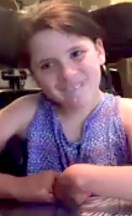
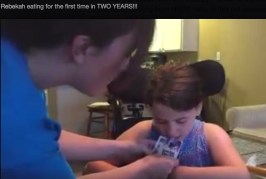
Rebekah Brown (survivor), as told by her caregiver mother…I am really excited! After over two years of not eating, Rebekah is interested in food. I have been able to feed her orally with a pouch of yogurt for breakfast, lunch, and dinner. She opens her mouth for it and sucks it out. Previously, she would bat food away whenever we would put it into her mouth. Now she actually wants it and is participating in feeding!

My heart is exploding for her and what all this opens up for her. All this began the day BEFORE she started stem-cell therapy.

Rebekah Brown - Survivor - 1st time eating in 2-years

Rebekah Brown – Survivor – 1st time eating in 2-years


This is significant because it shows the benefits coming from HBOT (hyperbaric oxygen therapy). (Why is this not covered by insurance?) Thank you to everyone who has supported Rebekah, prayed for her, and contributed to her rehabilitation. It is working!


YOU did it!

Congratulations to contributors!

(Clip Art compliments of Bing.)

As I say after each post:anim0014-1_e0-1

Please leave a comment by clicking the blue words “Leave a Comment” below this post.

Feel free to follow my blog. Click on “Follow” on the upper right sidebar.

If you like my blog, share it intact with your friends. It’s easy! Click the “Share” buttons below.

If you don’t like my blog, “Share” it intact with your enemies. I don’t care!

Feel free to “Like” my post.

SPEAK OUT! . . . . . . . . . . . . . . . Faces of Brain Injury . . . . . . . . Michael J. Kline – Survivor

SPEAK OUT!

Michael J. Kline – Survivor

presented

by

Donna O’Donnell Figurski


Kline, Michael Survivor

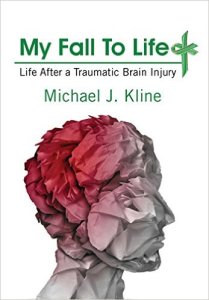
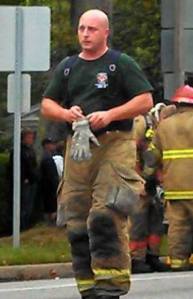
I am a traumatic brain injury (TBI) survivor. On November 18th, 2011, I fell from a standing position. I had a sub-arachnoid hemorrhage, midline brain sheering, contusions, and a 3.5 cm skull fracture. I am happy and lucky to say that “I have made it.” I used many tools to help me focus on recovery, such as coin collecting, photography, metal detecting, and others. After eight months, I returned back to full-time duty as a firefighter. I also published a book, called “My Fall to Life,” that tells the story of my injury. My Fall to LifeMy injury resulted in 100% loss of taste and smell and other lingering effects. I don’t allow that to bring me down, and I am proud to say that, when all is said and done, my injury has helped me to become a better person by refocusing on life and never taking a day for granted. Recovery from brain injury has its challenges, but with motivation and a positive attitude, there is no path that I am afraid of.


To learn more about Michael J. Kline, please see his book, “My Fall To Life: Life After a Traumatic Brain Injury.”

Thank you Michael J. Kline for sharing your story.


(Clip Art compliments of Bing.)

(Photos compliments of contributor.)

As I say after each post: Please leave a comment by clicking the blue words “Leave a Commentanim0014-1_e0-1 below this post.

Feel free to follow my blog. Click on “Follow” on the upper right sidebar.

If you like my blog, share it intact with your friends. It’s easy! Click the “Share” buttons below.

If you don’t like my blog, “Share” it intact with your enemies. I don’t care!

Feel free to “Like” my post.

SPEAK OUT! . . . . . . . . . . . . . . Faces of Brain Injury . . . . . . . . Freya Perry – Survivor & Artist

SPEAK OUT! Faces of Brain Injury

Freya Perry

presented

by

Donna O’Donnell Figurski

 Brain Injury is NOT Discriminating!

bigstock-cartoon-face-vector-people-25671746-e1348136261718It can happen to anyone, anytime, . . . and anywhere.

The Brain Trauma Foundation states that there are 5.3 million people in the United States living with some form of brain injury.

On “Faces of Brain Injury,” you will meet survivors living with brain injury. I hope that their stories will help you to understand the serious implications and complications of brain injury.

The stories on SPEAK OUT! Faces of Brain Injury are published with the permission of the survivor or designated caregiver.

If you would like your story to be published, please send a short account and two photos to me at neelyf@aol.com. I’d love to publish your story and raise awareness for Brain Injury.

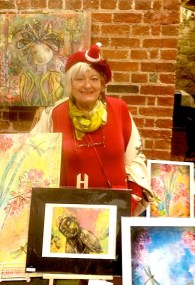
2 Perry, Freya

Freya Perry – Brain Injury Survivor & Artist

Freya Perry (survivor)

3 Perry, Freya

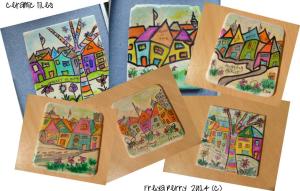
Ceramic Tiles by Freya Perry – Brain Injury Survivor & Artist

I thought my life as I knew it had ended five months after my TBI (traumatic brain injury). Ten months after my TBI, I got into painting as therapy. Now, eighteen months after my TBI, I have a small art studio and love painting. And people are loving my art!

Life is good.

I still have sensory-overload situations, but I am living with it – I am still recovering. Most importantly, I love me and my new life in a way I never thought could be possible.


To learn more about Freya Perry, please visit her website, Freya Perry.

Thank you Freya Perry for sharing your story.


(Clip Art compliments of Bing.)

(Photos compliments of contributor.)

As I say after each post: Please leave a comment by clicking the blue words “Leave a Commentanim0014-1_e0-1 below this post.

Feel free to follow my blog. Click on “Follow” on the upper right sidebar.

If you like my blog, share it intact with your friends. It’s easy! Click the “Share” buttons below.

If you don’t like my blog, “Share” it intact with your enemies. I don’t care!

Feel free to “Like” my post.


Brain Injury Resources . . . . . . “Their War Came Home” . . . . . . . (a documentary on the Effect of PTSD on Veterans and Their Families and Friends)

“Their War Came Home” – a Free (YouTube) Documentary on the Effect of PTSD

on Veterans and Their Families and Friends

presented

by

Donna O’Donnell Figurski


Marilyn-Lash

Marilyn Lash, MSW, president of Lash & Associates Publishing/Training, Inc.


Marilyn Lash, MSW, president of a 20-year-old company dedicated to brain injury, Lash & Associates Publishing/Training, Inc., has been very interested in brain injury and PTSD (post-traumatic stress disorder) in children, adults, and veterans. She was very involved in the production of (and appears in) the newly released documentary “Their War Came Home.” Marilyn told me about it and sent me the link. My husband and I immediately watched it. This documentary is a “must see.”

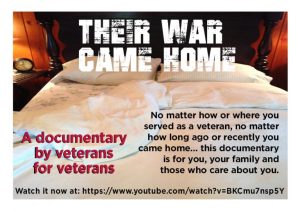
Their-War-Came-Home-Postcard-768x544

“Their War Came Home” A documentary by veterans for veterans

My husband and I watched gut-wrenching interviews of veterans describing the horrors of what PTSD did to them and to their families and friends. The documentary highlights the lack of awareness by the public and the major deficiencies of the military’s dealing with this huge problem. We witness veterans speaking candidly about suicide; outbursts, rage, and other emotional problems; drug abuse; alcoholism; homelessness; the problems of hypervigilance and isolation; and the effects it has on their loved ones. There is a heartfelt interview with a woman who is the spouse of a Navy SEAL with PTSD. Her words may resonate on many levels with some of you caregivers. Her comments on “living grief” are particularly touching. How does one lose the original version of one’s survivor and learn to love the one who took his or her place?

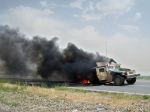
War ExplosionThe documentary ends on a hopeful note. The veterans who gave the interviews are learning to cope with their PTSD, often with great difficulty. There are volunteer organizations that help, and the film ends by showing several hotlines to call.Male Soldier

I highly recommend this documentary. It’s only 50 minutes long and is freely available on YouTube. You can also find it at Lash’s Blog on Brain Injury. It’s a must see!


(Photos compliments of Lash & Associates Publishing/Training, Inc.)

(Clip Art compliments of Bing.)


As I say after each post:

Feel free to leave a comment by clicking the blue words “Leave a Comment” below this post.

Please follow my blog. Click on “Follow Me Via eMail” on the right sidebar of your screen.anim0014-1_e0-1

If you like my blog, click the “Like” button under this post.

If you REALLY like my blog, share it with your friends. It’s easy! Click the “Share” buttons below.

If you don’t like my blog, “Share” it with your enemies. That works for me too!


SPEAK OUT! . . . . . . . . . . . . . Itty-Bitty GIANT Steps

SPEAK OUT! Itty-Bitty GIANT Steps

presented by

Donna O’Donnell Figurski


Itty-Bitty GIant Steps for BlogSPEAK OUT! Itty-Bitty Giant Steps will provide a venue for brain-injury survivors and caregivers to shout out their accomplishments of the week.
If you have an Itty-Bitty Giant Step and you would like to share it, just send an email to me at neelyf@aol.com.

If you are on Facebook, you can simply send a Private Message to me. It need only be a sentence or two. I’ll gather the accomplishments and post them with your name on my blog approximately once a week. (If you do not want your last name to be posted, please tell me in your email or Private Message.)

I hope we have millions of Itty-Bitty Giant Steps.


Here is this week’s Itty-Bitty GIANT Steps

Jump for JoyKaren Dickerson (survivor)…OMG! I was crying and jumping up and down (LOL). I passed my college entrance exam! Even better: 93% in English/Writing! Here I come, Baker College of Michigan, to become an Occupational Therapist Assistant. There is hope!Bakers College

Two years ago, after my motor vehicle accident, I couldn’t even process what I was reading, and I had to learn how to write my name again. I’ve worked very hard to get that comprehension back. I had over two years of speech and occupational therapies. Math is still a problem, just like it was twenty-one years ago. But I’m so proud. I didn’t think that I would ever reach this point after my TBI (traumatic brain injury).


writing pencil animated

Ric Johnson (survivor)…Well, it took me two months, but I was able to write an article concerning the importance of support-groups for the recovery and healing of TBI survivors. I have it published in the TBI Hope TBI Hope & INspiration& Inspiration magazine, June 2016 edition.


FamilyElizabeth Leonard Lawrence (survivor)…I am twelve years post TBI from an accident I got while serving in the military. I was told by doctors that I would never have a family, that I would never drive a car, and that I would take multiple pills a day for the rest of my life. Well guess what! I have a wonderful husband of three years, a three-year-old little boy, and I only take one medication now. So overall, I’d say it’s a huge accomplishment in my life!


Jennifer Stokley (survivor)…I had the most amazing day. I actually went out without any fear with a friend who has been coming over for a while to do “talk therapy” with me. She asked me if I wanted to go over to her farm, and I immediately said, “Yes!” Farm

Out the door I went – no cane, just my coffee in hand and a smile on my face. I totally trust this person; I’ve gotten to know her well. In the car we went. Away… to a place I’ve never been to before. A real farm! WOW! We spent hours there. She cleaned out the stalls, while I sat on the grass watching the cows in the field near the pond. It was beautiful.Cow Then she came, and together, while sitting and lying on the grass, we spent the longest time just talking about anything and everything. It was absolutely the best time. I loved every second of it. I didn’t have a moment of anxiety pop up. I can’t wait to do it again. We intend to real soon.


YOU did it!

Congratulations to contributors!

(Clip Art compliments of Bing.)

As I say after each post:anim0014-1_e0-1

Please leave a comment by clicking the blue words “Leave a Comment” below this post.

Feel free to follow my blog. Click on “Follow” on the upper right sidebar.

If you like my blog, share it intact with your friends. It’s easy! Click the “Share” buttons below.

If you don’t like my blog, “Share” it intact with your enemies. I don’t care!

Feel free to “Like” my post.

diemodi jewelry

uniquely hand-crafted jewelry by donna

Welcome to Harmony Kent Online

The home of all things books

Pete Springer

Passionate Teacher and Future Children's Author

HOPE TBI

Helping Other People Excel - To Be Independent

For the Love of Books, Old and New

Katie Fischer, Writer and Reader of Stories

Charlie Bown

Children's Author

Jessica Hinrichs

“We write to taste life twice, in the moment and in retrospect.” ― Anais Nin

VIVIAN KIRKFIELD - Writer for Children

Picture Books Help Kids Soar

Mindy’s Writing Wonderland

For authors, parents, teachers & everyone who loves children’s books.

Kaitlyn Leann Sanchez

Literary Agent

Surviving Traumatic Brain Injury

TBI - Survivors, Caregivers, Family, and Friends

The Care Factor

Loving someone with a Traumatic Brain Injury

Brain Injury Support Group of Duluth-Extension

Brain Injury Information and SUPPORT

Brain Aneurysm Global Insight

Brain Aneurysm, cerebral hemorrhaging, hemorrhage stroke