TBI – Survivors, Caregivers, Family, and Friends

Posts tagged ‘concussion’

SPEAK OUT! NewsBit . . . . . . . . . . . National Hockey League Player Retires at 24 Because of Concussions

National Hockey League Player Retires at 24 Because of Concussions

presented by

Donna O’Donnell Figurski

newsboy-thFootball and hockey are the two sports that are responsible for the majority of concussions in athletes. A concussion is now known to be a brain injury and can be serious. More and more people are becoming aware of the possibility that a concussion may lead to a major life-change.Capitals_Predators_Hockey-09eb6

Previously I wrote about Chris Borland, a starting rookie linebacker for the San Francisco 49ers in the NFL (National Football League) who quit after one season because of his concerns about brain injury.

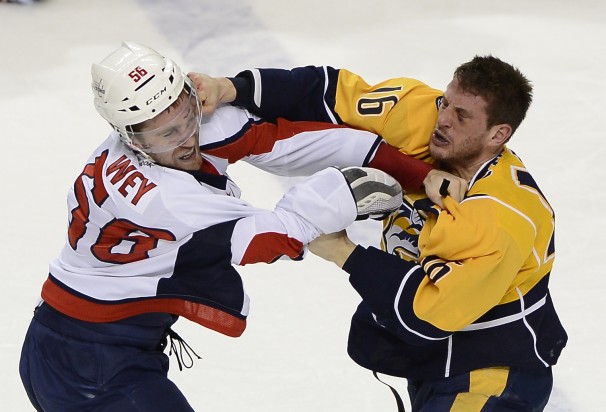
Now, Patrick Wey is quitting the Washington Capitals in the NHL (National Hockey League) at a young age (24) 185618_ebbecause he had two concussions in 2014. Wey plans to substitute “educational interests” for hockey.

(Clip Art compliments of Bing.)

As I say after each post:

Please leave a comment by clicking the blue words “Leave a Comment” below this post.anim0014-1_e0-1

Feel free to follow my blog. Click on “Follow” on the upper right sidebar.

If you like my blog, share it with your friends. It’s easy! Click the “Share” buttons below.

If you don’t like my blog, “Share” it with your enemies. I don’t care!

Feel free to “Like” my post.

Caregivers SPEAK OUT! . . . . . Kendra Brittain

Caregivers SPEAK OUT! – Kendra Brittain

presented

by

Donna O’Donnell Figurski

Kendra Brittain 2 Survivor 0423151. What is your name? (last name optional)

Kendra Brittain

2. Where do you live? (city and/or state and/or country) Email? (optional)

Sapulpa, Oklahoma, USA     brittainhome@yahoo.com

3. What is the brain-injury survivor’s relationship to you? How old was the survivor when he/she had the brain injury? What caused your survivor’s brain injury?

My TBI (traumatic brain injury) survivor is my son. He was about 13 when his injury happened. He was playing football and got hit on both sides of his helmet. This caused a severe concussion. No one knew what was going on at that time. Of course, both the coach and we let him keep playing any sport out of not knowing what happened to him. As a result, his injury did not have time to heal.

4. On what date did you begin care for your brain-injury survivor? Were you the main caregiver? Are you now? How old were you when you began care?

I immediately took him to a seizure-doctor because I suspected his juvenile epilepsy had come back. But, it was very different. Nothing showed up on what was wrong with him until six months later. My son’s concussion was around 2008. I was 37 when his injury occurred. My son is now 18, and he is mostly unable to take care of himself.

5. Were you caring for anyone else at that time (e.g., children, parents, etc.)?

My husband and I were taking care of our daughter in addition to our son.

6. Were you employed at the time of your survivor’s brain injury? If so, were you able to continue working?

No, I wasn’t working. I had been injured at work, which left me disabled. So, I wouldn’t have been able to work anyway. But, I was able to care for my son better.

7. Did you have any help? If so, what kind and for how long?

My husband helped me a lot when he could. Other than that, I didn’t have any help.

8. When did your support of the survivor begin (e.g., immediately – in the hospital; when the survivor returned home; etc.)?Brittain, Tyler Survivor 2 042315

My husband and I helped our son immediately by taking him to the doctor.

9. Was your survivor in a coma? If so, what did you do during that time?

No, my son wasn’t in a coma, but he lost all memory of before the accident and the week of the injury. He can’t remember his childhood at all.

10. Did your survivor have rehab? If so, what kind of rehab (i.e., inpatient and/or outpatient and occupational, physical, speech, and/or other)? How long was the rehab? Where were you when your survivor was getting therapy?

My son did have to do a lot of physical therapy for his back because he developed a syrinx due to the injury. (A syrinx results when cerebrospinal fluid, which normally flows around the spinal cord and brain and transports nutrients and waste products, collects in a small area of the spinal cord and forms a pseudocyst.)

11. What problems or disabilities of your brain-injury survivor required your care, if any?

My son needs constant reminders to do stuff because his memory isn’t very long. He requires reminders to take his medicine. Because his depression was so great, we had to give it to him.

12. How has your life changed since you became a caregiver? Is it better? Is it worse?

My son’s brain injury has made life better because we are closer as a family, and it made us realize what is important in life.

13. What do you miss the most from pre-brain-injury life?

My son loved sports, and we loved to watch him play. But, because of his memory, no one will give him a chance – not even to play basketball, which he is good at and enjoys. He really misses playing too, so he has had to find enjoyment someplace else.

14. What do you enjoy most in post-brain-injury life?

I enjoy our family life and the closeness we have as a family. I would not change it for the world.

15. What do you like least about brain injury?

I dislike all the struggles my son has to go through and the limitations he has that no one can see by looking at him. I also dislike when he has a seizure and I can’t do anything about it.

16. Has anything helped you to accept your survivor’s brain injury?

I’ve been helped by my faith in God’s wisdom and knowing He can heal anyone.

17.  Has your survivor’s injury affected your home life and relationships and, if so, how?

We are a closer family than ever before.

18. Has your social life been altered or changed and, if so, how?

No, not really.

Brittain, Tyler Survivor 04231519. What are your plans? What do you expect/hope to be doing ten years from now?

My son got his driver’s license. He’s graduating high school and then heading to college to learn about computers. He will have a job that he went to school for – doing what he wants to do.

20. What advice would you offer other caregivers of brain-injury survivors? Do you have any other comments that you would like to add? 

Don’t give up – even though your circumstances may look dim. There is hope in life and in God. There is a better plan for your life in the future. God will make something good out of something bad. Also, if you know your child or your survivor and you know that something is not right and you feel that what the doctors say doesn’t make sense, get a second opinion and pursue it. We did that, and my son is ten times better.


Disclaimer: Any views and opinions of the Contributor are purely his/her own.

(Clip Art compliments of Bing.)

(Photos compliments of contributor.)

As I say after each post: Please leave a comment by clicking the blue words “Leave a Commentanim0014-1_e0-1 below this post.

Feel free to follow my blog. Click on “Follow” on the upper right sidebar.

If you like my blog, share it with your friends. It’s easy! Click the “Share” buttons below.

If you don’t like my blog, “Share” it with your enemies. I don’t care!

Feel free to “Like” my post.

Caregivers SPEAK OUT! . . . . . Jeannette Davidson-Mayer

Caregivers SPEAK OUT! – Jeannette Davidson-Mayer

presented

by

Donna O’Donnell Figurski
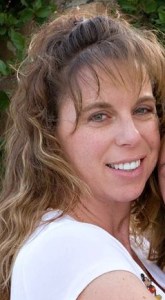
jeannette davidson-Mayer 0417151. What is your name? (last name optional)

Jeannette Davidson-Mayer

2. Where do you live? (city and/or state and/or country) Email? (optional)

New Plymouth, Idaho, USA     2004djmjdm@gmail.com

3. What is the brain-injury survivor’s relationship to you? How old was the survivor when he/she had the brain injury? What caused your survivor’s brain injury?

My husband, DeWayne, has a traumatic brain injury (TBI). He was 38 when it happened. While serving in Iraq, DeWayne survived one Humvee rollover, two close-range IEDs (improvised explosive devices), one helicopter explosion (They were guarding a downed helicopter when the remains were blown-up for disposal), and lastly an IED that went off right under the command seat, where DeWayne was sitting. All this happened in 2005 between May 23rd and October 3rd.

4. On what date did you begin care for your brain-injury survivor?

At the end of October 2004, DeWayne was flown to Madigan Air Force Base in Washington State on the advance plane from Iraq. I made a few trips there to see him. He was allowed occasional trips home. By February 2006, DeWayne was home for good. We didn’t know DeWayne had a TBI until mid-2007. We just knew something wasn’t connecting right in his daily mental functions.

Were you the main caregiver?

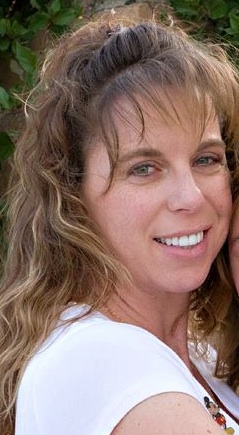
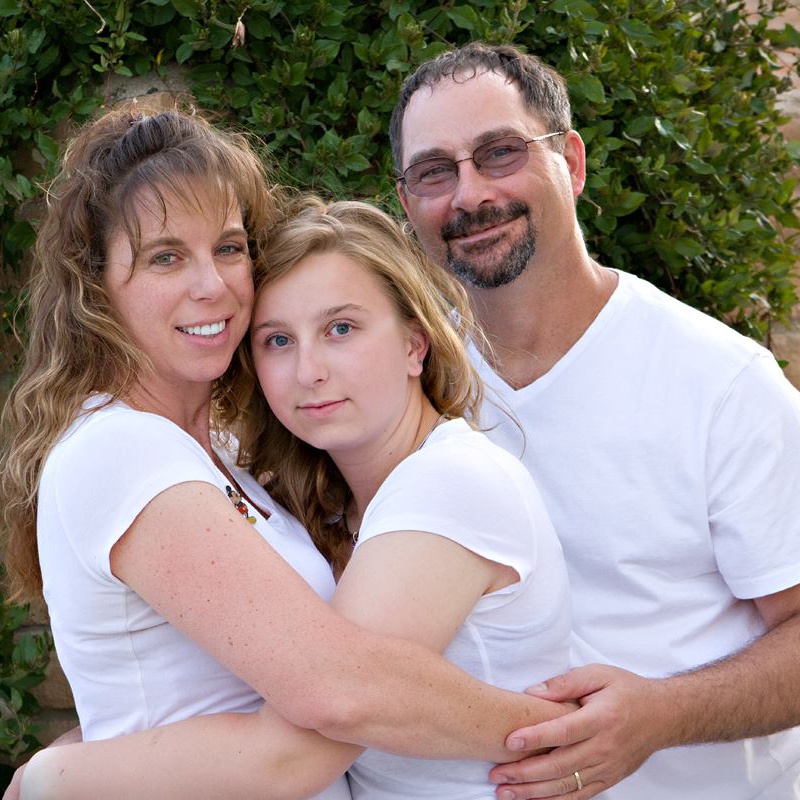
Yes. Our daughter as well has learned to be a caregiver over the years.486770_10200560183360321_1086965832_n

Are you now?

Yes

How old were you when you began care?

33

5. Were you caring for anyone else at that time (e.g., children, parents, etc.)?

No

6. Were you employed at the time of your survivor’s brain injury? If so, were you able to continue working?

Yes, I was employed. My employer helped above the call of duty. In mid-October 2014, I did have to quit working because DeWayne’s medical needs had increased. Also, I had gone to one of our smaller companies, which is a 10-minute drive vs. a 5-minute walk. DeWayne couldn’t comprehend this change, which created hardships for our daughter and for DeWayne and me as a couple.

7. Did you have any help? If so, what kind and for how long?

I couldn’t make it without the love and support of our family, friends, and church family. Help is from driving DeWayne to assisting with happenings at home. Most of all, help is providing an ear to listen.

8. When did your support of the survivor begin (e.g., immediately – in the hospital; when the survivor returned home; etc.)?

My quality of care has grown over the years. It took a while because I didn’t know how to ask for help. I was embarrassed to ask, and I didn’t understand how to ask either. I felt that if I couldn’t do it myself, I was failing my family.

9. Was your survivor in a coma? If so, what did you do during that time?

No, but DeWayne was knocked out several times.

10. Did your survivor have rehab?

Yes

If so, what kind of rehab (i.e., inpatient and/or outpatient and occupational, physical, speech, and/or other)?

DeWayne had occupational, physical, speech, and recreational therapies as an outpatient. He also had behavioral health therapy.

How long was the rehab?

Rehab started out three days a week, eight hours a day, for three months at Idaho Elks Rehab. DeWayne was then moved to the Boise VA (Veterans Administration) facility, where he went several days a week. DeWayne still has recreational therapy, physical therapy, and occasionally occupational therapy. And, monthly behavioral health therapy.

Where were you when your survivor was getting therapy?

Idaho Elk’s Rehab, Boise VA Medical Center, Tri-Cities Physical Therapy, St. Luke’s Spinal Care

11. What problems or disabilities of your brain-injury survivor required your care, if any?

DeWayne has many difficulties. He has fixations. He’s easily lost, confused, and disoriented. He tires easily. His short-term memory is a problem. DeWayne doesn’t always understand what is happening around him or what is being said to him. Also we don’t always understand what he is trying to say to us. He suffers from migraines/headaches. He has silent seizures, bi-lateral hearing loss, tremors, and sensitivity to light.

12. How has your life changed since you became a caregiver? Is it better? Is it worse?

I can’t really say if life is better or worse because of the TBI. We are both different from the deployment alone. I am the lucky wife because he came home alive, which is a celebration in itself.

13. What do you miss the most from pre-brain-injury life?

There is a lot I miss (for example, long hiking trips and long conversations). But, the trade-off is worth it.

14. What do you enjoy most in post-brain-injury life?Jeannette Davidson-Mayer & DeWayne

We have learned to depend on each other completely – as spouses and as a family. We tend to stand up for what we believe in. We hold on tighter. We often show each other how important we are. We travel off-season, which is nice because the crowds are less. Nicer indeed!

15. What do you like least about brain injury?

We never know what to expect from day to day, yet it is also a positive, for we never have a dull moment.

16. Has anything helped you to accept your survivor’s brain injury?

Through many trials and errors, we have finally discovered our saving grace. Our kitchen has become our “Central Command Post.” Our lives center around our kitchen. We were able to set up an atmosphere that can adapt to DeWayne’s ever-changing daily new normal. Post-it Notes and whiteboard markers saved our family.

17. Has your survivor’s injury affected your home life and relationships and, if so, how?

Of course, DeWayne’s TBI has affected home life, relationships, and so on. We have lost.

18. Has your social life been altered or changed and, if so, how?

Our social life has been cut. We don’t go out as much. We avoid crowds, noisy situations, and places that make DeWayne uncomfortable. I also have become uneasy about the same things that make DeWayne uneasy.

19. What are your plans? What do you expect/hope to be doing ten years from now?

Our plans for the future are to continue to live in joy and love together, to share our lives with our children as they continue to grow, to travel the world in an RV, and to reach out to others to show them that they have the inner strength needed to move forward. (How they move forward is unique to each family.)

20. What advice would you offer other caregivers of brain-injury survivors?

Never give up. Give in from time to time. Let it out – cry or scream. Then look back on what is happening to find ways to make adjustments or to find solutions to the challenges. Know that you are not alone. You yourself, along with your family, have so much to offer.

Do you have any other comments that you would like to add?

Military families are not alone in living with TBIs and/or PTSD (post-traumatic stress disorder) and in being caregivers. We didn’t sign up for this life, but we have it. Now let’s figure out how to keep moving forward, so we can reach higher, dream bigger, and hold on tighter.

To learn more about Jeannette Davidson-Mayer, you can listen to her interview with me on “Another Fork in the Road” on blogtalkradio.com or at R4 Alliance.


Jeannette Davidson-MayerThank you, Jeannette, for taking part in this interview. I hope that your experience will offer some hope, comfort, and inspiration to my readers.

If you would like to be a part of this project, please go to TBI Caregiver Interview Questionnaire for a copy of the questions and the release form.

(Photo compliments of Jeannette.)

Disclaimer: The views or opinions in this post are solely that of the interviewee.

As I say after each post: Please leave a comment by clicking the blue words “Leave a Comment” below this post.

Feel free to follow my blog. Click on “Follow” on the upper right sidebar.

If you like my blog, share it with your friends. It’s easy! Click the “Share” buttons below.

If you don’t like my blog, “Share” it with your enemies. I don’t care! Feel free to “Like” my post.

So, Whaddya Think? . . . . . . . . Tackle Football League for Young Girls – REALLY, Utah! What Are You Thinking?

Outrageous: A Tackle Football League for Young Girls

by

David Figurski

presented by

Donna O’Donnell Figurski

So Whaddya Think Brain th-4There is growing public concern, backed by scientific evidence, about the violence of football and the possibility of a life-altering brain injury, especially in children. Former professional players have spoken out about the risks inherent to the game of football. Evidence now exists that a concussion can be dangerous (1, 2), especially to the developing brain of a young player. Even the repetitive sub-concussive hits can be harmful. Legendary quarterback Joe Namath, who had a recent scare with his cognitive functioning, said that if he knew then what is known now, he wouldn’t have played. A talented rookie linebacker on the San Francisco 49ers has quit the game after one season, saying “…I don’t want to have any neurological diseases or die younger than I would otherwise.”

Utah organizers are excited to establish the first tackle football league for girls. A video of a nine-year-old girl, Sam Gordon – now twelve, playing tackle football in a boys’ league confirms that she is talented and shows what many of us have always believed – that girls can be as skilled as boys. The Utah Girls Tackle Football League has teams of fifth- and sixth-grade girls. To enhance its visibility, the league advertises Sam Gordon as a marquee player.

This is dangerous and a step in the wrong direction. At a time when some adults are calling for the abolishment of children’s football leagues, Utah has established a tackle football league for girls. It’s one thing when players are old enough to understand the risks and decide to play, but it’s another thing when children trust that their parents will protect them. I’m sure that every parent who allows a child to play football is well-meaning, but those parents are likely to be unaware of the risks. We have a lot of work to do to spread awareness about football’s risk of brain injury.

There is no doubt that the games in this new league will be exciting. But, how many girls will have their lives dramatically changed by a brain injury?

So, Whaddya Think?

Let’s get a dialogue going. Post your comments in the Comment Section. Directions are below.

So . . . what do you think? Is there something you are passionate about in this Brain Injury (BI) world? Do you want to be heard? Your opinion matters! You can SPEAK OUT! on “So Whaddya Think?”

Simply send me your opinion, and I will format it for publication. Posts may be short, but please send no more than 500 words. Send to Neelyf@aol.com

I hope to HEAR from you soon.

As I say after each post:

Feel free to leave a comment by clicking the blue words “Leave a Comment” below this post.

Please follow my blog. Click on “Follow Me Via eMail” on the right sidebar of your screen.anim0014-1_e0-1

If you like my blog, click the “Like” button under this post.

If you REALLY like my blog, share it with your friends. It’s easy! Click the “Share” buttons below.

If you don’t like my blog, “Share” it with your enemies. That works for me too!

(Clip Art compliments of Bing.)

On the Air: Brain Injury Radio “Another Fork in the Road” with Jeannette Davidson-Mayer, Caregiver – Military Spouse

On the Air: Brain Injury Radio

“Another Fork in the Road”

with Jeannette Davidson-Mayer, Caregiver – Military Spouse

presented by Donna O’Donnell Figurski

images-1

When Jeannette Davidson-Mayer’s husband, DeWayne, had five brain injuries – the result of his active duty in Iraq – Jeannette became his caregiver. To combat this 24-hour job, Jeannette redesigned her kitchen to become the family’s “Central Command Post.”  Jeannette will discuss how she, DeWayne, and their daughter make11023816_10204963754366844_8119135603280691384_n this system work for them.

If you missed her interview on “Another Fork in the Road” on April 19th, you are in luck. You can listen to the archived show here.

Click the link below to listen to Jeannette Davidson-Mayer and me.

See you “On the Air!”

On the Air: Brain Injury Radio – Another Fork in the Road”

with Jeannette Davidson-Mayer, Caregiver – Military Spouse

Click here for a list of all “Another Fork in the Road” shows on the Brain Injury Radio Network.

Survivors SPEAK OUT! – GeorgeAnna Bell

  SPEAK OUT! – GeorgeAnna Bell

by

Donna O’Donnell Figurski

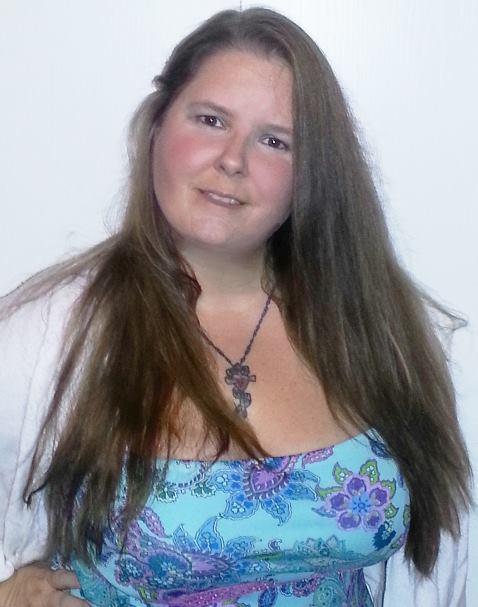
10570970_836853459658124_752128615_n1. What is your name? (last name optional)

GeorgeAnna

2. Where do you live? (city and/or state and/or country) Email (optional)

San Tan Valley, Arizona, USA

3. When did you have your TBI? At what age?

My first was at the age of 6 years old. I have had multiple concussions as a child. I had yet another head injury in 2001 and another concussion from another car accident on June 25, 2014. I am now 40 years old.

4. How did your TBI occur?

My first brain injury was from a bicycle accident – I lost control of my bike. I flipped over the handlebars and landed on the right side of my head, cracking my skull. The concussions were from falls; sports; an ATV (all terrain vehicle); motor vehicle accidents; rapes; abuse; falls; and being young, foolish, and idiotic.

5. When did you (or someone) first realize you had a problem?

My parents realized I was a different child the day they brought me home from the hospital.

6. What kind of emergency treatment, if any, did you have?

I’ve been treated by the ICU (intensive care unit). I’ve had eye/vision therapy and cognitive behavior therapy. I attended specialized schools – junior high school and senior high school – that were for children with mental, emotional, physical, and developmental disabilities.

7. Were you in a coma? If so, how long?

Yes     72 hours

8. Did you do rehab? What kind of rehab (i.e., inpatient or outpatient and occupational and/or physical and/or speech and/or other)? How long were you in rehab?

I did not go to a rehab center. I got everything from schools, specialized doctors, etc.

9. What problems or disabilities, if any, resulted from your TBI
(e.g., balance, perception, personality, etc.)?

I have a balance problem, dizziness, seizures, short- and long-term memory loss, mental illness (anxiety, depression, mood disorder, personality disorder), cognitive issues, social issues and social anxiety, headaches and migraines, numbness and tingling in my extremities, ringing in my ears (the ear, nose, and throat specialist calls it tinnitus), insomnia, vision and hearing issues (optic and audio nerve damage), and blurred vision (on and off). I am easily confused and distracted. (For example, I cannot multitask. I have to do one thing at a time. Otherwise, I get flustered and stressed out.) I am sensitive to lights, sounds, or distractions. I developed fibromyalgia, tremors, and speech issues, all of which the doctor thinks are the result of my head injury. I also have arthritis (rheumatoid arthritis and osteoarthritis). I have a developmental disability (due to the age at which I sustained my first head injury) and learning disabilities. I attended a special educational school from 7th grade until my senior year because I could not stay mainstream in a public school.

10. How has your life changed? Is it better? Is it worse?

I honestly do not know because I was so young when my first head injury occurred. However, over the years, I have sustained multiple head injuries. (For example, because of a short-term coma and concussions, I have increased mental, emotional, and physical issues.)

11. What do you miss the most from your pre-TBI life?

I wouldn’t remember what it was like before because I was only 6 years old when I sustained my first head injury.

12. What do you enjoy most in your post-TBI life?

I am grateful for my Significant Other – the ONLY person I personally know who is supportive of me and tries to be understanding.

13. What do you like least about your TBI?

I dislike how people treat me. People act as if I am some kind of idiot because I am slower than others, and then they look at me as if I have serious issues. I hate being judged. I want people to treat me as I would treat them. I don’t want them to judge me and look at me and say, “Well, you look fine.”

14. Has anything helped you to accept your TBI?

People’s ignorant behaviors and idiosyncrasies

15. Has your injury affected your home life and relationships and, if so, how?

My parents did not want to deal with my issues. They did not allow me to speak of my issues to anyone because it embarrassed them that they had a child with a disability. They still do not like my talking about my disabilities and TBI. However, I tell them I am a full-grown adult now, and I say to them, “If you do not like it, do not listen.”

16. Has your social life been altered or changed and, if so, how?

I have issues keeping friends. People tend to easily get annoyed with me. I tend to get frustrated easily, too. As for relationship with guys, I was always told I am a very taxing person – annoying, weird, and psychotic. I have had nicknames given to me by guys over the years: pain-in-my-ass, crack baby, wacko, weirdo, dumbass, stupid, idiot, retarded, sensitive bitch, nagging bitch, crazy, worthless.

17. Who is your main caregiver? Do you understand what it takes to be a caregiver?

My main caregiver is my boyfriend. No, I do not understand what it takes to be a caregiver.

18. What are your future plans? What do you expect/hope to be doing ten years from now?

I would love to open a 501c3 animal shelter and help unwanted animals – mainly dogs. I would like to extend the knowledge I currently have on animal studies and have better knowledge and understanding of the animal behavior.

19. Are you able to provide a helpful hint that may have taken you a long time to learn, but which you wished you had known earlier? If so, please state what it is to potentially help other TBI survivors with your specific kind of TBI.

Do not stop trying. Eventually it will work out.

20. What advice would you offer to other TBI survivors? Do you have any other comments that you would like to add?

I encourage you to just try your best and keep trying. Do not give up. Once you give up, you lose everything, and it is not easy to get everything back again – even if you are able to get things back again.10695279_836854542991349_1216029697_n


Thank you, GeorgeAnna, for taking part in this interview. I hope that your experience will offer some hope, comfort, and inspiration to my readers.

(Disclaimer: The views or opinions in this post are solely that of the interviewee.)

If you would like to be a part of the SPEAK OUT! project, please go to TBI Survivor Interview Questionnaire for a copy of the questions and the release form.

(Photos compliments of GeorgeAnna.)

SPEAK OUT! NewsBit . . . . . . . . White House Concussion Summit

Newsboy thWhite House Concussion Summit


Parents, coaches, teachers, and others are becoming increasingly concerned that youth sports can affect children’s brains and in many cases cause life-altering injuries (see “Children’s Brains at Risk,” in my “So Whaddya Think?” category, May 28, 2014). To address this epidemic-like problem and to increase awareness of the hazards of concussions, President Obama held the Healthy Kids & Safe Sports Concussion Summit today. The President called for more research into the brain and in better equipment. Several organizations, both commercial and publically funded, have made commitments of money and effort to find a solution to this “invisible crisis.” The goal is a national plan that will cover all youth sports. (Story 1 with video, story 2, story 3, and the White House fact sheet)


As I say after each post:

Feel free to leave a comment by clicking the blue words “Leave a Comment” below this post.

Please follow my blog. Click on “Follow Me Via eMail” on the right sidebar of your screen.anim0014-1_e0-1

If you like my blog, click the “Like” button under this post.

If you REALLY like my blog, share it with your friends. It’s easy! Click the “Share” buttons below.

If you don’t like my blog, “Share” it with your enemies. That works for me too!


(Clip Art compliments of Bing.)


SPEAK OUT! NewsBit . . . . . . . . . . Men Take Longer to Recover From Concussions Than Women

Men Take Longer to Recover From Concussions Than Women


Newsboy thConcussions are common mild TBIs. With time, the brain often heals. A recent study showed that recovery from concussion was substantially shorter (average=26 days) in women than in men (average=67 days), regardless of the severity of the symptoms. Concussions affect the white matter of the brain. The neurologists used a special MRI scan to “see” the white matter. They found that men had more abnormalities in their white matter. The recovery time increased with the number of abnormalities. Why women have fewer abnormalities is not known. (Full story)


SPEAK OUT! NewsBit . . . . . . . . . . . . Football – Is It Dangerous to Your Brain?

Football May Affect the Brain


Newsboy thThe Journal of the American Medical Association has recently published a study of the brains of 25 University of Tulsa (TU) football players without a known concussion, 25 TU players known to have at least one concussion, and 25 college students who are non-players. The study showed that there was a correlation of years of playing football with differences in behavior and brain anatomy. The researchers found that football players had slower reaction times, and the reaction time was directly related to the length of time an individual played football. The researchers also found that the hippocampus in football players was smaller than it was in non-players. The hippocampus is a part of the brain whose volume is related to memory and emotion. Even players who did not have a concussion had a hippocampus that was smaller than it was in non-players, but there was a greater decrease in volume in those players who had had a concussion. This study does not prove that playing football causes a reduction of hippocampus volume, but it is suggestive. The researchers want to know what causes the smaller hippocampus. David Polanski, head athletic trainer at TU and a co-author on the study, said. “This research brings us one step closer to understanding the connection between contact sports and brain injury.” (Full story 1 and Full story 2)


diemodi jewelry

uniquely hand-crafted jewelry by donna

Welcome to Harmony Kent Online

The home of all things books

Pete Springer

Passionate Teacher and Future Children's Author

HOPE TBI

Helping Other People Excel - To Be Independent

For the Love of Books, Old and New

Katie Fischer, Writer and Reader of Stories

Charlie Bown

Children's Author

Jessica Hinrichs

“We write to taste life twice, in the moment and in retrospect.” ― Anais Nin

VIVIAN KIRKFIELD - Writer for Children

Picture Books Help Kids Soar

Mindy’s Writing Wonderland

For authors, parents, teachers & everyone who loves children’s books.

Kaitlyn Leann Sanchez

Literary Agent

Surviving Traumatic Brain Injury

TBI - Survivors, Caregivers, Family, and Friends

The Care Factor

Loving someone with a Traumatic Brain Injury

Brain Injury Support Group of Duluth-Extension

Brain Injury Information and SUPPORT

Brain Aneurysm Global Insight

Brain Aneurysm, cerebral hemorrhaging, hemorrhage stroke