TBI – Survivors, Caregivers, Family, and Friends

Posts tagged ‘Brain Injury’

SPEAK OUT! . . . You Are Invited! Launch “Another Fork in the Road” on Brain Injury Radio Network: Donna Tells Her Story Aug. 4, 2014

Come one! Come ALL!putthis_on_calendar_clip_art

What:        Launch “Another Fork in the Road” on Brain Injury Radio Network: “Thursday, the 13th – an unlucky day!”

Why:         Donna tells about the onset of David’s Traumatic Brain Injury and their life together after TBI.

Where:     Brain Injury Radio Network

When:       Monday, August 4, 2014

Time:         5:00p PDT (6:00p MDT, 7:00p CDT, and 8:00p EDT) 90 minute show

How:         Click: Brain Injury Radio Network.


Call In
:    424-243-9540

Call In:     855-473-3711 toll free in USA

Call In:    202-559-7907 free outside US

or SKYPE

If you miss the show, but would like to still hear the interview, you can access the archive on On Demand listening (Archived show) will be available after the show

(Clip Art compliments of Bing.)

SPEAK OUT! . . . You Are Invited! Interview with Stephanie Carbone July 27, 2014


                           Come one! Come ALL!putthis_on_calendar_clip_art


What:        Interview with Stephanie Carbone

Why:         Her husband, Sean, is accused of a crime. Is he “unjustly condemned?”

Where:     Brain Injury Radio Network

When:       July 27, 2014

Time:         5:00p PDT (6:00p MDT, 7:00p CDT, and 8:00p EDT) 90 minute show

(Clip Art compliments of Bing.)

Survivors SPEAK OUT! Julie Kintz

                                                        SPEAK OUT! – Julie Kintz

                                                       by

Julie Kintz

Donna O’Donnell Figurski


1. What is your name? (last name optional)

Julie Kintz

2. Where do you live? (city and/or state and/or country) Email (optional)

Fort Wayne, Indiana, USA     juliekintz@gmail.com

3. When did you have your TBI? At what age?

1991     Age 21

4. How did your TBI occur?

Car accident

5. When did you (or someone) first realize you had a problem?

My car went off a cliff in California. There was a house being built, and the construction workers saw it happen as they sat on the roof eating their lunches. They are the reason I am alive today. I doubt that I would have ever been found. I never did get to thank them.

6. What kind of emergency treatment, if any, did you have (e.g., surgery, tracheotomy, G-peg)?

I had surgery to relieve the swelling in my brain.

7. Were you in a coma? If so, how long?

Yes.     One week

8. Did you do rehab? What kind of rehab (i.e., In-patient or Out-patient and Occupational, Physical, Speech, Other)?

I did not have any rehab, although I really needed it.

How long were you in rehab?

I never had the opportunity to attend a rehab center.

9. What problems or disabilities, if any, resulted from your TBI?
(e.g., balance, perception, personality, etc.)

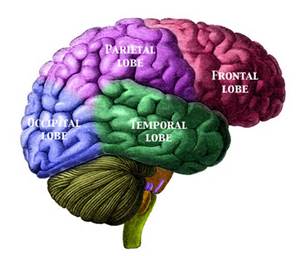
I find it funny that this question is difficult to answer. I do not see them as “disabilities” as much as I see them just as the realities of my life. My condition has become the way it is. I normally do not think about it very much. For instance, the left side of my body is weaker than my right. My left leg is three inches bigger than my right leg and has little muscle tone. My legs look like the “before” and “after” pictures for when someone begins to work out. I used to think of myself more like “the elephant man.” Then I learned to accept me with all my flaws because I have so many positives going for me. The effects of my injury that cannot be seen are frontal lobe damage (both on the right and left sides) and damage to my hypothalamus/pituitary axis. I have learned great coping skills, but I still struggle with ADHD (attention deficit hyperactivity disorder) and other frontal lobe issues, including memory issues.

10. How has your life changed? Is it better? Is it worse?

I do not remember my life before the accident. I lost the memory of my life previous to the accident. I still struggle with both long- and short-term memory issues. I have learned to accept where I am at the moment. Doing this helps to empower my future. At any second, we can decide if we are going to be a victim or a survivor. I may struggle with an issue for a bit. Then I decide that the only way to go is forward and determine what will help my goals become reality.

11. What do you miss the most from your pre-TBI life?

I wonder what I would have been capable of doing if not for this brain injury.

12. What do you enjoy most in your post-TBI life?

I have the ability to understand the shortcomings of others, even if they do not want to understand mine. I also have embraced the idea that this is my journey, and I try to make the best out of what is in front of me.

13. What do you like least about your TBI?

The struggle of living with chaos in my head can be overwhelming. The lack of understanding about brain injury by our society makes everyday life a bit tougher than it needs to be. It is the reason why I am working on starting a brain injury center – so one could say “I found my purpose by having these struggles.”

14. Has anything helped you to accept your TBI?

The more I understand who I am outside of my injury, the more I have learned to love myself unconditionally. By doing this, I am not afraid to try new things.

15. Has your injury affected your home life and relationships and, if so, how?

Yes. Emotional dis-regulation was not understood when I had my accident, like it is now. My family did not know how to deal with it, so I was left to fend for myself.

16. Has your social life been altered or changed and, if so, how?

Absolutely! I really need a lot of downtime, even 23 years post brain injury. I enjoy being with people, but eventually I need time in a quiet place. I do spend a great amount of time alone.

17. Who is your main caregiver? Do you understand what it takes to be a caregiver?

I have been my main caregiver since the accident.

18. What are your future plans?

I will be starting graduate school in the fall in a Purdue University program: Interpersonal and Organizational Communication Theory. By attaining this degree, I hope to help those with brain injury live a fuller and more productive life.

What do you expect/hope to be doing ten years from now?

I am currently working with some wonderful professionals to open a not-for-profit brain injury center where I live. My dream is to build centers all over to educate survivors, their families, and professionals about brain injury. The center will also focus on the unmet needs of those with brain injury. These are considered secondary to the original problems. These would include, but not be limited to, the following: low self-esteem, making and keeping friends, and learning to communicate effectively.

19. Are you able to provide a helpful hint that may have taken you a long time to learn, but which you wished you had known earlier? If so, please state what it is to potentially help other TBI survivors with your specific kind of TBI.

Come to terms with where you are in life. Instead of spending time wishing the injury did not happen, accept it and figure out what you can do to get you to where you want to be. Accepting that your brain injury cannot be changed frees your mind to figure out how to get you to where you want to go. If you do not know where you want to go, then try new things. Finding your passion will help you heal both your body and your mind. What we think really does affect how well we heal. You will get what you look for. If you are looking for how bad life is, you will find things to verify it. If you look for the good, you will find that as well. Finding who you are will help put you on a better path.

20. What advice would you offer to other TBI survivors?

Find who you are – not who people say you are, but who you truly are. Let your struggle build you to be the best you can be. Look at it as if you were writing a book. Every day, when you wake up, ask yourself, “What do I want to write in my book today?” You can choose to write about how you overcame a struggle just to get out of bed. When you conquer that struggle, it will fuel you to set a new goal. Everyone climbs a mountain one step at a time.

Do you have any other comments that you would like to add?

It is important that you find a support group in your area. Support group members can be a great deal of help in figuring out what doctors and professionals in the area will be good, or not so good, for you to see.

Also there are a ton of Facebook support groups; find some that you feel comfortable in. They can be a huge source of support and knowledge. Please keep in mind that people can use these groups to prey on people who are desperate for a cure. A red flag should go up if they, or people they know, are making money off what you are sharing with them. Ask for research. If the research is not from a reputable source (for example, the Mayo Clinic), then research it some more. Ask others on the site if they have heard of it. There are others on the site who will help with the research. If it sounds to good to be true, it normally is.

Educate yourself about brain injury.  Make sure you know what your MRIs (magnetic resonance imaging) and other tests tell you about your injury. You will need to learn to be your own advocate. But, getting an advocate can be of great help when you are too fatigued to advocate for yourself. A great place to start is at the Kintz, JulieBrain Injury Association of America (BIAA).

I also have a talk show, Quantum Leap, on the Brain Injury Radio Network. On it, I discuss current research, as well as interview professionals who work in the brain injury world. The network has shows seven nights a week. Volunteers who either have a brain injury or are caregivers run the Brain Injury Network. Just as brain injury is different in everyone, the hosts have different approaches to their shows. Everyone should be able to find a show that he or she enjoys.


Thank you, Julie, for taking part in this interview. I hope that your experience will offer some hope, comfort, and inspiration to my readers.

(Disclaimer: The views or opinions in this post are solely that of the interviewee.)

(Photos compliments of Julie.)

If you would like to be a part of this project, please go to TBI Survivor Interview Questionnaire for a copy of the questions and the release form.

Brain Injury Resources . . . Facts and Myths About the Brain

Facts and Myths About the Brain

Brain th-2


This short video tells us what’s known to be true about the brain and clears up some common misconceptions.


(Clip Art compliments of Bing.)

SPEAK OUT! Letters . . . . . . . to Rachel

colored-envelopes-hi


Dear Rachel,

Your last post breaks my heart. I can hear so clearly your confusion, your frustration, and your sadness. I won’t lie to you and tell you that it will get completely better. As Penelope said, every TBI is different. It depends on how much damage the brain incurred and where the injury took place. My husband is 9 1/2 years out. I still remember vividly when I brought him home. He was in an infantile state and didn’t know much of what was going on around him. I thought I would lose my mind. I was feeding him, dressing him, moving him from bed to wheelchair to chair to wheelchair, etc. Fortunately, he is my best friend. We met when I was 16. AND I was committed to him. Do I now have the same man I married? NO! I have a different version of him. I longed for many years to have the old version of David back, but, alas, he’s gone, and a newer version took his place. I do miss the other David at times, but I love this “new” guy too. If the old one came back, I would be in a dilemma.

David has made many gains throughout the 9+ years. He’s worked hard to get where he is now. Is it great? Is it perfect? Is it pre-TBI? NO! NO! NO! But it is a life we can live with. It’s not what I had hoped for. It’s not what I want, but it IS! You are still so early in the process. And it’s a very hard and trying process. Diane said, “You can’t look back, and you can’t look forward.” I agree. It’s best to live in the moment. I said in a post on my blog, ” . . . there is an ‘us’ after TBI, though it’s a different ‘us.’ ”

[I write a lot about my experiences with TBI on my blog. You can read some stories there. You might start with “TBI Tales: Energizer-Ostrich. It’s how I deal with David’s and my new life.]

I don’t think or dwell on the horror of TBI and how it changed everything. I know what you mean when you said, “Husbands and wives happily sharing life’s moments.” I think that is a common feeling among us wives of TBI survivors. I know I often feel it, but then I resign myself to it and am grateful that David is still with me. I can’t promise you it will get better, but for us . . . we’ve learned to live and enjoy the “new normal” because it’s what we’ve got.

[If you want to read more about David’s and my story and how we have made a new life after TBI, you can read the stories on my blog under “TBI TALES” or “Prisoner Without Bars: Conquering Traumatic Brain Injury” (my book in search of a publisher). You can also listen to my new radio show, which will launch on Monday, August 4th, at 5:00 pm PDT (6:00 pm MDT, 7:00 pm CDT, and 8:00 pm EDT) on the Brain Injury Radio Network. It’s called “Another Fork in the Road.”]

Rachel, I didn’t mean for my response to be this long, but I hope you can gain some solace from it and maybe more understanding. The road you and your husband, Ryan, are on is not an easy one, but it can be traversed. If you want to talk, you can private-message me. I’m glad you are in this group. There are so many caring people who can offer help.

Sincerely,

Donna O’Donnell Figurski

(Clip Art compliments of Bing.)

SPEAK OUT! . . . . . . . . . . . . . . . . . . . . #1 Itty-Bitty GIANT Steps

Itty-Bitty GIant Steps for Blog

SPEAK OUT! #1 Itty-Bitty GIANT Steps

SPEAK OUT! Itty-Bitty Giant Steps will provide a venue for brain-injury survivors and caregivers to shout out their accomplishments of the week.

If you have an Itty-Bitty Giant Step and you would like to share it, just send me an email at donnaodonnellfigurski@gmail.com. It need only be a sentence. I’ll gather the accomplishments and post them with your name on my blog approximately once a week. (If you do not want your last name to be posted, please tell me in your email.)

I hope we have millions of Itty-Bitty Giant Steps.


Here are this week’s Itty-Bitty Giant Steps.

My Itty-Bitty Giant Step is that I started my blog finally and I’m going back to school to become a speech pathologist. Go me! It feels good to accomplish things I never would’ve done before.

Cheri Richardson Hicks

On May 3, I graduated from Florida State University with a Bachelor of Science in Nursing – with a 3.64 GPA and 16 years post TBI. It took many “Itty-Bitty Giant Steps” and a lot of patience to get to this point. Now I will have plenty of “patients” to go with it. LOL. Thank you for gathering this, Donna!

Erin Lea Beville

My dream is to walk a 5K race (3.1 miles) in an hour. I reached 1.6 miles in 35 minutes on a treadmill (while holding on to the handrails, of course!).

David Figurski

I was able to stand on my right foot (my “impaired” side) while holding my left foot off the ground and not hold onto anything for 33 seconds.  My therapist’s time goal for me was 30 seconds.

Jodi Jizmejian

Congratulations to all contributors!

(Clip Art compliments of Bing.)

Survivors SPEAK OUT! Jodi Jizmejian

SPEAK OUT! – Jodi Jizmejian

by

Donna O’Donnell Figurski

Jizmejian, Jodi Pre- Accident 2

Jodi Jezmejian – Pre-TBI


1. What is your name? (last name optional)

Jodi Jizmejian

2. Where do you live? (city and/or state and/or country) Email (optional)

Fresno, California, USA

3. When did you have your TBI? At what age?

September 8, 2011   I was 47, almost 48.

4. How did your TBI occur?

Roof crush due to a single vehicle roll-over

5. When did you (or someone) first realize you had a problem?

A woman in a house by the road heard the accident. My 16-year-old daughter was in the accident also, but she was ejected from the vehicle and landed in the dirt on the side of the road. She was coherent and gave the lady my husband’s cell-phone number. He was called after a 9-1-1 call.

6. What kind of emergency treatment, if any, did you have (e.g., surgery,

tracheotomy, G-peg)?

I was told (because I don’t remember anything) that I had a craniotomy. I did have a tracheotomy and a g-tube (gastrostomy tube). I’m sure I had multiple surgeries because I have scars that I didn’t have before. I was told that I had multiple facial breaks and other broken bones. My husband told me that the doctors were happy that they could say – after 7 days – that they saved my life.

7. Were you in a coma? If so, how long?

Yes, I was in a coma. I was told it was for 30 days, but my current memory starts December 1, so I think I was in some sort of coma from September 8 to December 1.

8. Did you do rehab? What kind of rehab (i.e., In-patient or Out-patient and Occupational, Physical, Speech, Other)?
How long were you in rehab?

I’m still doing physical therapy. I did physical, occupational, speech, and recreational therapy when I was in Santa Clara Valley Medical Center. I was there from December 1, 2011, until I came home on December 29. I did physical, occupational, and speech therapy as an Out-patient for a few months after I returned home.

9. What problems or disabilities, if any, resulted from your TBI
(e.g., balance, perception, personality, etc.)?

My balance was affected for sure. I also have several other issues: vision, hearing, fine-motor skills, slower (speed), reasoning, and personality.

10. How has your life changed? Is it better? Is it worse?

I think my life is better. Pre-accident, I worked all the time. My husband and I owned our own business, so I worked all the time. After my accident, he said he “fired” me because I didn’t show up for work. I abandoned my “job.” He is being funny, but I really don’t work anymore because there is no way I could have returned to what I was doing.

Jizmejian, Jodi Accident

Jodi Jezmejian – 2011 Accident

11. What do you miss the most from your pre-TBI life?

I miss being able to play tennis.

12. What do you enjoy most in your post-TBI life?

I have more time to do things that I’m physically capable of doing.

13. What do you like least about your TBI?

I don’t like my balance issues. I also dislike that my head feels “big/heavy/muffled,” and there is a “numbness/heavy/big” feeling of my right arm and leg.

14. Has anything helped you to accept your TBI?

Jesus. I’m a positive person, so having the mentality of “It is what it is” helps me accept that “_ _ _ _” happens.

15. Has your injury affected your home life and relationships and, if so, how?

Yes.

Home life – I’m now home most of the time.

Relationships – I now have time to develop friendships.

16. Has your social life been altered or changed and, if so, how?

I don’t drive right now and don’t know if I’ll ever be ready to drive. My social life is pretty much reliant on my husband to drive me around, so if I want to do something and he doesn’t or he is busy, I don’t/can’t do it. I’m also reliant on friends to take me places.

17. Who is your main caregiver? Do you understand what it takes to be a caregiver?

My husband is my main caregiver. I do understand what it takes to be a caregiver, but there’s nothing that I or he can do to change that. Hence the marriage commitment, “Until death do us part.”

18. What are your future plans? What do you expect/hope to be doing ten years from now?

I hope someday to be able to drive again and to play tennis. I want to write and speak to help other TBI survivors.

19. Are you able to provide a helpful hint that may have taken you a long time to learn, but which you wished you had known earlier? If so, please state what it is to potentially help other TBI survivors with your specific kind of TBI.

Accept that you have a “new” normal and that you will never be the person you were pre-TBI. Learn to like the new you and make friends with the new you. Realize you weren’t “picked” out to have a TBI. There is always someone else who has it “worse.” Research Nick Vujicic, Life Without Limbs. When I started to have a pity party or a “woe is me” or a “life isn’t fair” attitude, I think of Nick.  I also tell myself that we all have a cross to bear, meaning an unpleasant situation or responsibility that you must accept because you cannot change it.

20. What advice would you offer to other TBI survivors? Do you have any other comments that you would like to add?

Never give up, but never expect things or you to get back to “normal,” i.e., the way they were pre-TBI. Learn to like yourself in your “new” normal. Realize you survived for a purpose. Do that purpose. If you don’t believe in Jesus, then start there and do whatever research you need to. Publicly and verbally accept Jesus as your personal Lord and Savior. Then I’ll see you in Eternity. God bless. Thank you for letting me participate.

Jodi Jezmejian - Post-accident

Jodi Jezmejian – Post-accident


Thank you, Jodi, for taking part in this interview. I hope that your experience will offer some hope, comfort, and inspiration to my readers.

(Disclaimer: The views or opinions in this post are solely that of the interviewee.)

(Photos compliments of Jodi.)

If you would like to be a part of this project, please go to TBI Survivor Interview Questionnaire for a copy of the questions and the release form.


Brain Injury Resources . . . . . . . Compensating for a Disability – Guitarist Billy McLaughlin

Compensating for a Disability – Guitarist Billy McLaughlin


th-1

Right hand dominant, Billy McLaughlin, plays the guitar left-handed.

TBI survivors often have a life-long disability. The temptation, and sometimes the advice, is to submit to the disability, often causing one to stop an activity that he or she loves. This video tells the story of Billy McLaughlin’s early life. His passion for the guitar led him to develop a unique sound that made him one of best up-and-coming guitarists in the world. Then he got a neuromuscular disease (focal dystonia – see this video for details) that affected his right hand and his ability to play the guitar. This video shows that he didn’t give up. He accomplished a seemingly impossible task – he learned to play the guitar equally well with his left hand. This uplifting story shows the power of the human spirit and will affect anyone who is trying to deal with a disability.


SPEAK OUT! . . . . . . . . . . . . . . . Itty-Bitty GIANT Steps

SPEAK OUT! Itty-Bitty GIANT Steps

by

Donna O’Donnell Figurski

 What have you accomplished this week? Itty-Bitty GIant Steps for BlogHave you met any goals – BIG or small? It can be as teeny as blinking an eye – something that most of us take for granted, never think twice about. But for someone with no motion in his or her body, this would be a monumental accomplishment.

Your “giant step” may be tying a shoe, walking a few steps, not interrupting a conversation, or remembering an appointment. Or maybe you started a new job or are heading to college. All these are accomplishments.

SPEAK OUT! Itty-Bitty Giant Steps will provide a venue for brain-injury survivors and caregivers to shout out their accomplishments of the week.

If you have an Itty-Bitty Giant Step and you would like to share it, just send me an email at donnaodonnellfigurski@gmail.com. It need only be a sentence. I’ll gather the accomplishments and post them with your name on my blog approximately once a week. (If you do not want your last name to be posted, please tell me in your email.)

I hope we have millions of Itty-Bitty Giant Steps.

(Clip Art compliments of Bing.)


Survivors SPEAK OUT! . . . . . Cezar Cehan

SPEAK OUT! – Cezar Cehan

by

Donna O’Donnell Figurski

Cehan, Cezar After

1. What is your name? (last name optional)

Cezar Cehan

2. Where do you live? (city and/or state and/or country) Email (optional)

Denver, Colorado, USA

3. When did you have your TBI? At what age?

Age40

4. How did your TBI occur?

My TBI wasn’t really an “injury.” I discovered a (benign) tumor (acoustic neuroma) inside my skull, due to some “weird” sensations, balance issues, vision disturbances, etc. But they weren’t so serious, and I opted for a radiation-type of intervention (Gamma Knife). However, the tumor was already large (3.5 cm), so the radiation did not stop the growth. When it got to almost 4 cm, I had to ask for a surgical intervention. That surgical intervention was the actual “injury.” I’ve been told that the surgery lasted more than 10 hours.

5. When did you (or someone) first realize you had a problem?

I first knew I had a problem in 2004, due to some (minor, but repeated) issues with balance, walking, and vision – especially when I was tired. (Since I had quite a demanding occupation at that time, the tiredness was almost continuous.)

6. What kind of emergency treatment, if any, did you have (e.g., surgery,

tracheotomy, G-peg)?

I had Gamma Knife. (They literally screw a metal frame into the skull, but it’s not as bad as it sounds.) I also had brain surgery to remove the tumor.

7. Were you in a coma? If so, how long?

No

8. Did you do rehab? What kind of rehab (i.e., In-patient or Out-patient and Occupational, Physical, Speech, Other)?
How long were you in rehab?

Yes. I did both – In-patient and Out-patient. They kept me in the hospital for an entire month. (I actually had three brain interventions, besides the tumor removal itself. They also had to insert a shunt – a tube to help me with the hydrocephalus that developed.) Other patients left the hospital after a week. They also told me that I would not be able to walk all that much, given the state of my body. (I had taken steroids and stayed in bed without moving for about one year, so my muscles were pretty weak.) I’d been given a wheelchair and a walker (just in case I wanted to “be brave” and walk on my own). I had some great physical therapists – with huge hearts, who encouraged and challenged me to become a “walking” human being again. Fortunately enough, I didn’t have any mental impairments (at least from my perspective ☺). Also my speech was only a little bit affected, and I am actively working on that. (In the past, I studied Bel Canto, i.e., voice training.) After the “official” physical therapy ended, I continued at home on my own (since there wasn’t much I could do all day anyway!). However – being human – once I reached a level where I could function again independently, I slowed down my practice. That means that I would probably walk better (or even be able to run) and I would have improved my balance if I had continued the exercises with the same determination that I put in when I could not walk at all.

9. What problems or disabilities, if any, resulted from your TBI
(e.g., balance, perception, personality, etc.)?

Balance is an issue that I have. Fatigue also. As for personality, I would say that the change was two-fold. On one hand, I tend (sometimes) to feel embarrassed and intimidated when I have balance issues in public. My self-esteem seems to want to be lower, and I want to apologize. On the other hand, all this happening is, for me, a “rebirth,” if you wish, a “second chance.” I feel now that it is “my duty” to “be the best that I can be,” to live by my values, to go for what I feel that my purpose is. I appreciate more “what is.” I choose to be present and expanded, since I’ve been given this “second chance” to experience consciousness with which to create my reality. I feel that it’s my duty now to create it – to the best of my potential – by expanding my understanding of the world. Whining, feeling self-pity, or focusing on shortcomings – these are not options that I entertain. They would be of no help anyhow.

10. How has your life changed? Is it better? Is it worse?

Both. I could call “worse” the fact that I have less energy (so I need to take naps during the day) and I get tired easier. Also my balance is “funny.” (Sometimes I carry a walking stick – which I also find “trendy.”) Perhaps my patience with other people’s melodrama and self-imposed limitations is shorter (but I’m already better with that). I could call “better” the fact that I feel that I am now “allowed” to focus on my values, on my purpose (the way I feel it). I feel more connected with “what is.” Considering that I have already been “on the other side of the fence,” fear is just a word for me now. (For most situations, of course, I am still human.) Even the fact that I am not able to do now the previous (money-making) activity that I used to do, it’s probably a good thing, after all. This “limitation” has the gift to guide me into doing what I really love to do – assisting people to let go of the limitations of their own minds and to become extraordinary in what they are.

11. What do you miss the most from your pre-TBI life?

That’s an interesting question – because it made me think. I didn’t think of this before.

Why would I even think of “what’s missing”? I choose to focus on “what I CAN do,” on “becoming.”

12. What do you enjoy most in your post-TBI life?

Somehow, in a weird way, I feel freer – of the cultural conditionings and of the “you have to do this because that’s nice and people would like you.” I am able to think in terms of the values that I have, instead of needing other people’s approval for what I do. I feel that I am “allowed” to be more creative. (Note: It’s not that somebody stopped me from being creative and living by my values before the TBI. But, weirdly enough, suffering frees people of their ego’s limiting stories that they “should do this” or that they “could never do that”!)

13. What do you like least about your TBI?

Again, a tricky question. One rule of my life is to only do things that would help me. Somehow, I fail to see how focusing on what I “don’t like” would be of any help – for me or for anyone else reading this ☺.

14. Has anything helped you to accept your TBI?

Meditation, acceptance, and NLP (neuro-linguistic programming). Also continuous reading, studying, learning, and maintaining a live curiosity about life. Never surrender on despair. I accepted the possibility of death. I mentioned that I was immobilized in bed for almost one year. All that time, I never stopped reading, learning, or, when my eyes would hurt, listening to books or audio programs.

15. Has your injury affected your home life and relationships and, if so, how?

Yes, it did, unfortunately. My income dropped dramatically. Also, this situation put my new wife through tremendously challenging emotional turmoil. For her, besides the pressure of having moved to a new country, living in a different culture, and not knowing the language well, was my health condition. No wonder she was scared, stressed out, and pressured. She took good care of me, but her emotional state was affected. I can see why. I’m also sure that (at least at times) I wasn’t the most pleasant sick person that one could meet ☺. So, all in all, our relationship suffered.

16. Has your social life been altered or changed and, if so, how?

I hear with only one ear now. So, loud environments make me really uneasy. I cannot hear properly what people say. Since my balance is “shaky,” I have to pay attention to the surfaces that I walk on. Uneven surfaces are not fun ☺.

17. Who is your main caregiver? Do you understand what it takes to be a caregiver?

If by “caregiver” you mean someone who “takes care of me,” I don’t have one. I am alright on my own now.

18. What are your future plans? What do you expect/hope to be doing ten years from now?

I plan to get better and better at the things that I can improve – like my balance, my muscles, and speaking. Other than that, I plan to learn to live perfectly well with what I have and to be an inspiration for people who tend to let themselves down and surrender to the stories of their ego. I plan to learn from everything and everybody around me and to become the best that I can be (that is, there is no need to compare myself with others’ possibilities).

19. Are you able to provide a helpful hint that may have taken you a long time to learn, but which you wished you had known earlier? If so, please state what it is to potentially help other TBI survivors with your specific kind of TBI.

To be able to reach a destination, you need to know where you are now – and to accept that. If I want to go to Los Angeles, and it so happens that I am in New York, it makes no sense to start complaining and feeling bad about the fact that I AM in New York. It is only after I accept that fact that I am able to design a trip and to start going on that trip – towards Los Angeles. Similarly, I had a tumor. This was a fact. (Of course, I had my episodes of tears and “why me?!”) It took me a while until I took that fact as “what is.” But once I did it (experientially, not only logically or intellectually), a lot of things became clearer to me. This did not mean that I “surrendered.” Not at all – acceptance is not surrender! But I was able to “design” a path – a “trip” – in a detached manner, rather than in an emotional one (which never leads to good results – you know that!).

So, the lesson, the understanding, that I gained is this:

– if you feel and look THROUGH the life-situation you find yourself in, you’ll only create more of that.

– if you don’t want to create that, the trick is to accept that life-situation (that it does exist) and look AT it, as an observer, as a scientist of your life (that you are, actually, because you’re much more than the body you see in the mirror).

20. What advice would you offer to other TBI survivors? Do you have any other comments that you would like to add?

Besides the “lesson” above, consider this: all your life, you have experienced all sorts of emotions, sensations, situations, etc. You’ve been happy, sad, healthy, ill, energetic, and exhausted. You’ve experienced love and being out of love, etc. Beyond all that, is there a part of you that is constant among all of those things? Consider for a moment – what is constant all the way? Is it your emotions? Perhaps not. Is your energy level? Perhaps not, also. What is it for you? Get in touch with that. You may discover who you really are.

 Cehan, Cezar Before

Thank you, Cezar, for taking part in this interview. I hope that your experience will offer some hope, comfort, and inspiration to my readers.

(Disclaimer: The views or opinions in this post are solely that of the interviewee.)

(Photos compliments of Cezar.)

If you would like to be a part of this project, please go to TBI Survivor Interview Questionnaire for a copy of the questions and the release form.

diemodi jewelry

uniquely hand-crafted jewelry by donna

Welcome to Harmony Kent Online

The home of all things books

Pete Springer

Passionate Teacher and Future Children's Author

HOPE TBI

Helping Other People Excel - To Be Independent

For the Love of Books, Old and New

Katie Fischer, Writer and Reader of Stories

Charlie Bown

Children's Author

Jessica Hinrichs

“We write to taste life twice, in the moment and in retrospect.” ― Anais Nin

VIVIAN KIRKFIELD - Writer for Children

Picture Books Help Kids Soar

Mindy’s Writing Wonderland

For authors, parents, teachers & everyone who loves children’s books.

Kaitlyn Leann Sanchez

Literary Agent

Surviving Traumatic Brain Injury

TBI - Survivors, Caregivers, Family, and Friends

The Care Factor

Loving someone with a Traumatic Brain Injury

Brain Injury Support Group of Duluth-Extension

Brain Injury Information and SUPPORT

Brain Aneurysm Global Insight

Brain Aneurysm, cerebral hemorrhaging, hemorrhage stroke