TBI – Survivors, Caregivers, Family, and Friends

Drug Reduces Aggressive Behavior in TBI Survivors

presented

by

Donna O’Donnell Figurski

th


Emotional changes after traumatic brain injury (TBI) affect quality of life for survivors and are difficult to treat. Aggressive behavior often adversely impacts family and friends. The drug Amantadine, an antiviral no longer commonly used, was found to reduce aggressive behavior in TBI survivors.th-1

The discovery was made by Dr. Flora Hammond, chair of the Department of Physical Medicine & Rehabilitation at the Indiana University School of Medicine and reported in the Journal of Head Trauma Rehabilitation. Amantadine was on Dr. Hammond’s radar because it was found to improve cognition in patients with Parkinson’s Disease who were taking the drug as therapy for the flu virus.

pills-clip-art-free-1685197After other drugs failed on a colleague who was found to have a minor brain injury, Dr. Hammond tried Amantadine.  Dr. Hammond’s colleague said, “The effects were immediate and just amazing. … It calms down part of your brain and gives you a moment to pause and reflect.” Dr. Hammond has used Amantadine on other patients with success.  She says, “It helps you reclaim your identity a bit. … And to get that back helps you get your quality of life back too.” (Full story)


(Clip Art compliments of Bing.)

As I say after each post: Please leave a comment by clicking the blue words “Leave a Commentanim0014-1_e0-1 below this post.

Feel free to follow my blog. Click on “Follow” on the upper right sidebar.

If you like my blog, share it (intact) with your friends. It’s easy! Click the “Share” buttons below.

If you don’t like my blog, “Share” it (intact) with your enemies. I don’t care!

Feel free to “Like” my post.


Survivors SPEAK OUT! Paul McMahon

presented 

by

Donna O’Donnell Figurski


Paul McMahon 1 082817

Paul McMahon – Brain Injury Survivor from Down Under

1. What is your name? (last name optional)

Paul McMahon

2. Where do you live? (city and/or state and/or country) Email (optional)

Sydney, Australia

3. On what date did you have your brain injury? At what age?

I was 28 years old.

4. How did your brain injury occur?

At my birthday party, I fell 3 1/2 floors – off a building onto concrete.

5. When did you (or someone) first realize you had a problem?

The moment it occurred

6. What kind of emergency treatment, if any, did you have?

I had surgeries for my physical condition. I have had no assistance with brain injury.

7. Were you in a coma? If so, how long?

Yes. Three days, I believe

8. Did you do rehab? What kind of rehab (i.e., inpatient or outpatient and occupational and/or physical and/or speech and/or other)? How long were you in rehab?

Yes. I was in rehabilitation during my first three months at hospital and then a required three months following my exit. It was six months in total, but I now realise that it should have gone for longer. Part of that was my own fault – by passing the neurological test at the minimum six-month recovery point (Australia). I should have waited longer – to realise the challenges I could face. I needed more time to think of how my second stage of recovery would take place.

9. What problems or disabilities, if any, resulted from your brain injury
(e.g., balance, perception, personality, etc.)?

Paul McMahon 2 082817

Paul McMahon- Brain Injury Survivor from Down Under

I have problems with short-term memory and especially with attention to detail. Attention to detail in quick moments was a great challenge. I work in communications/policy, and so this is certainly a working issue that can’t be avoided. Also, my aura was different, and I could not connect with people as I once did. This emotional issue lasted about three years.

10. How has your life changed? Is it better? Is it worse?

It’s different. I have learnt so much. I have fewer friends, but I knew my intelligence was not taken by the accident. I started a Master’s degree and wrote my book. I am editing now.

11. What do you miss the most from your pre-brain-injury life?

I miss people’s lack of judgement about me. People assume they are helping by telling you what is wrong with you. That is 100%, and it is an instigator for suicide, as you feel no one understands, but tells you how to react. The loss of their lack of judgement is my deepest pain from the brain injury.

12. What do you enjoy most in your post-brain-injury life?

I have learned to be more compassionate. I have a deeper understanding of mental health and realise that I couldn’t understand depression or other illnesses in the same way previously.

13. What do you like least about your brain injury?

I dislike the way people handle my judgement – when you assume you are right, but others judge a situation with no thought of your opinion. It hurts and is damaging psychologically and, at times, in your economic life at work.

14. Has anything helped you to accept your brain injury?

Man Writing BookYes – writing. My book was my therapy. It is safe to say that, if I sell zero books and have zero readers, I will still be happy, as I believe writing helped me heal faster.

15. Has your injury affected your home life and relationships and, if so, how?

Yes. Many friends just ignore me or keep away to feel self-security. I guess the upcoming book tells the rest of the story.

16. Has your social life been altered or changed and, if so, how?

Yes! I felt very anti-social. While I would attempt a little, I needed people to be more open and accepting of my changes. I felt this was a lonely journey, so I took that avenue – different from my old caring self.

17. Who is your main caregiver? Do you understand what it takes to be a caregiver?

I don’t have one.

18. What are your plans? What do you expect/hope to be doing ten years from now?

I will finish the book, earn a Master’s Degree, and be as different as I always am. I’ll be economically safe and live the full experiences of this world.

19. Are you able to provide a helpful hint that may have taken you a long time to learn, but which you wished you had known earlier? If so, please state what it is to potentially help other survivors with your specific kind of brain injury.

From the beginning, I felt my brain injury was temporary, so all I can say is to KEEP GOING and DON’T GIVE UP! I learnt that when the accident occurred. I would also say to FOLLOW YOUR PASSIONS. Don’t do only what a therapist tells you – you know you better than any external you-decider.

20. What advice would you offer to other brain-injury survivors? Do you have any other comments that you would like to add?

Paul McMahon & Camel 082817

Paul McMahon – Brain Injury Survivor and Camel

Remember that your passion to follow your dreams may have been limited due to the accident. That does not mean STOP! It means you continue to train your brain in what you love and hold dear. Listen to you!


You can learn more about Paul McMahon on his Facebook site (https://www.facebook.com/paulmcmahonauthor/).


If you would like to be a part of the SPEAK OUT! project, please go to TBI SPEAK OUT! Survivors Interview Questionnaire for a copy of the questions and the release form.

(Clip Art compliments of Bing.)

As I say after each post: Please leave a comment by clicking the blue words “Leave a Commentanim0014-1_e0-1 below this post.

Feel free to follow my blog. Click on “Follow” on the upper right sidebar.

If you like my blog, share it with your friends. It’s easy! Click the “Share” buttons below.

If you don’t like my blog, “Share” it with your enemies. I don’t care!

Feel free to “Like” my post.

Meditation After a Brain Injury

by

Ric Johnson

presented

by

Donna O’Donnell Figurski


Boy Blogger thI didn’t meditate before my injury, and I don’t remember what caused me to start meditation. Whatever it was, I’m glad meditation and I became friends.

Many people tend to think that meditation is a “religious” practice. Meditation is actually a broad variety of practices, and the most commonly heard practice is called “mindfulness.” Do I have to get into a yoga pose? Do I have to start saying “Om”? No, I don’t. Nobody needs to.

For me, meditation is actually the practice of focusing on the moment. After my traumatic brain injury, staying focused was (and still is) the hardest part of daily life. Meditation helps me to continue moving forward. I don’t need to clear my mind or empty my thoughts when starting a session – that seems to happen by itself. The longer meditation becomes part of your life, the easier it becomes.

I try to meditate twice a day, especially during a “hard” day. Most of the time, though, I meditate only once – other things seem to get in the way. I try to carve out 30 minutes for each session, but 15-20 minutes is pretty much the normal length I’m able to use. Not sure if 30 minutes would give me better results. Results are really based on the ability to continue to meditate.

I use the breathing-meditation method. We all breathe, so no equipment is necessary. I can do it anywhere and anytime. I only need 15-30 minutes. After waking up, the first thing I do is look at my calendar to see what the day brings. After eating breakfast, I set the kitchen alarm for 30 minutes, sit down and relax in a comfy chair, close my eyes, and listen to my breathing. My breath is the object of my attention. I begin to feel and hear my breath flowing in and out of my body. I use my normal breathing pace. Breathe in – breathe out; breathe in – breathe out; and on and on until the alarm sounds. Like everybody else in the world, I can get distracted by anything. Or, my mind just wanders off (by itself). When that happens, my breathing can bring me back to meditation. Yes, I have start all over again. But that only takes a few seconds, and I’ll be back in the groove.

My second meditation of the day is between lunch and dinner. I actually do the same routine as before, but most times there’s no alarm involved, so I just do it as long as time permits. Those two sessions really help break the day into manageable pieces. I have even meditated in my doctor’s office while waiting to be called for my appointment. I have found that playing music or a white-noise CD just distracts me, so I need to be in a quiet room.

What does meditation give me? I think awareness is the gift meditation gives me. Awareness of the present moment and awareness of my body and mind. When I began meditation, I thought I had to count my breaths to succeed, but that’s not true. Meditation really takes being aware and focusing on your breathing – focusing on feeling the air going in and out of my nose, feeling my lungs expand and contract. My mind opens up to let those feelings become positive thoughts and to block negative thoughts.

If you would like to see if meditation is your cup of tea, find a good place and a good time to give meditation a chance. There are also many websites to get more information – just Google “breathing meditation.” It is not a miracle drug – it’s a place for your mind to open and relax. Meditation hasn’t cured my brain injury, but it does make most days good days.


Ric Johnson
13+ years TBI survivor
Facilitator for the Courage Kenny Brain Injury Support Group
Member of the Speaker Bureau for the Mn. Brain Injury Alliance


Thank you, Ric Johnson


Disclaimer:
Any views and opinions of the Guest Blogger are purely his/her own.

(Clip Art compliments of Bing.)

(Photos compliments of Ric Johnson.)

As I say after each post: Please leave a comment by clicking the blue words “Leave a Commentanim0014-1_e0-1 below this post.

Feel free to follow my blog. Click on “Follow” on the upper right sidebar.

If you like my blog, share it (intact) with your friends. It’s easy! Click the “Share” buttons below.

If you don’t like my blog, “Share” it (intact) with your enemies. I don’t care!

Feel free to “Like” my post.


NFL Rookie Retires
(This news underscores the previous NewsBit.)

presented

by

Donna O’Donnell Figurski


johnson_combine Clemson Safety Jadar Johnson was undrafted in the 2017 draft. As a Free Agent, though, he was signed by the New York Giants of the NFL (National Football League). Many thought he was a diamond-in-the-rough. DiamondJadar himself was excited and said he would do “whatever” it takes to become part of the team that the Giants field on Sundays. But, before he played a single regular-season game, he abruptly retired. His agent’s statement said “… and he values his health. …” Some say that Jadar retired because he became aware of the research on NFL brains recently published in the CTEJournal of the American Medical Association. That article showed that 99% of autopsied NFL brains (110/111) had the devastating and contact-sport-specific brain disease CTE (chronic traumatic encephalopathy).


(Clip Art compliments of Bing.)

As I say after each post: Please leave a comment by clicking the blue words “Leave a Commentanim0014-1_e0-1 below this post.

Feel free to follow my blog. Click on “Follow” on the upper right sidebar.

If you like my blog, share it (intact) with your friends. It’s easy! Click the “Share” buttons below.

If you don’t like my blog, “Share” it (intact) with your enemies. I don’t care!

Feel free to “Like” my post.

Football, Brain Injury & Kids

presented

by

Donna O’Donnell Figurski


newsboy-thIs American football a dying sport? With football’s prominence in American culture, it seems safe to assume no one would predict that its days are numbered. But, there is a growing undercurrent that may eventually lead to the demise of football as we know it. There is more and more evidence that the constant subconcussive hits experienced by football players lead to a high risk of the brain disease CTE (chronic traumatic encephalopathy). CTE can lead to early dementia, football12depression, suicidal thoughts, or problems with cognition, memory, or impulsive behavior.

Recently published by the Journal of the American Medical Association is more evidence of the enormous risk of developing CTE by playing American football. (CTE can at present only be confirmed upon studying brain tissue at autopsy, although research is being directed to finding a test that can detect CTE in the brains of living players.) A study of 202 brains of former football players was done by researchers at the VA Boston Healthcare System and Boston University. They found CTE in 87% of all the brains studied. Of the 110 brains of former professional players in the NFL (National Football League, the premier professional football league in the US), 109 (99%) showed CTE. Playing only college football did not significantly reduce the risk of having CTE, which was found in 91% of the brains of former college players. Playing less football did seem to lower the risk. Only 27% of the brains of former players who played through high school, but no further, showed evidence of CTE. Also, the severity of CTE was probably less with less playing time.

brain4The results have important implications for players. Many players feel they’ve been left ignorant of the risks of brain injury by the NFL, or worse, assured by the league that there is minimal risk. [Some players have quit or retired early (1, 2). Recently, a class-action lawsuit about concussions brought by former players against the NFL was settled for $1 billion.] The NFL has argued, and most players and fans who know about CTE believe, that the brains being studied are biased toward CTE because the autopsied brains in large part are from players already suspected of having a brain injury. Dr. Ann McKee, a Boston University researcher who has examined many of the brains, has stated that the results are staggering even for a biased sample (go to 1:35:58 in the video). She has stated, “It is no longer debatable whether or not there is a problem in football; there is a problem.”

Evidence of any CTE in high school football players is particularly disturbing (go to 1:29:08 in the video). Parents have taken note. Even though the NFL is actively promoting football directly to children, enrollment in youth football leagues is significantly down. Dr. Bennet Omalu, who discovered CTE by studying the brain of Mike Webster, the football-teamfamous Pittsburgh Steeler Center, wrote an Op-Ed in the New York Times titled “Don’t Let Kids Play Football.” During my radio interview of George Visger, a former lineman for the NFL’s San Francisco 49ers who had to quit the game because of a brain injury, he speculated that the preeminence of football in American society will disappear because the NFL’s talent pool will dry up. He speculates that the cost of liability insurance will be too high for youth football leagues to pay (go to 30 minutes into my interview of him).

There is no doubt that American football is exciting to watch, and there are many benefits to playing such a demanding team sport. But, difficult as it is to believe, it seems likely that the high risk of brain injury will eventually end the game.


(Clip Art compliments of Bing.)

As I say after each post: Please leave a comment by clicking the blue words “Leave a Commentanim0014-1_e0-1 below this post.

Feel free to follow my blog. Click on “Follow” on the upper right sidebar.

If you like my blog, share it (intact) with your friends. It’s easy! Click the “Share” buttons below.

If you don’t like my blog, “Share” it (intact) with your enemies. I don’t care!

Feel free to “Like” my post.

SPEAK OUT! Faces of Brain Injury

Jason Holcomb (survivor)

presented by

Donna O’Donnell Figurski

Brain Injury is NOT Discriminating!

bigstock-cartoon-face-vector-people-25671746-e1348136261718It can happen to anyone, anytime, . . . and anywhere.

The Brain Trauma Foundation states that there are 5.3 million people in the United States living with some form of brain injury.

On “Faces of Brain Injury,” you will meet survivors living with brain injury. I hope that their stories will help you to understand the serious implications and complications of brain injury.

The stories on SPEAK OUT! Faces of Brain Injury are published with the permission of the survivor or designated caregiver.

If you would like your story to be published, please send a short account and two photos to me at neelyf@aol.com. I’d love to publish your story and raise awareness for Brain Injury.


Jason Holcomb (survivor)

Jason Holcomb Survivor

Jason Holcomb – Survivor

In 2005, I was walking a dog (somebody else’s), and a woman’s dog ran out her front door and caused my dog to go nuts. I tripped over the leash and fell backward, and I hit my head on the sidewalk. My brain swelled, I had a craniotomy, and I was in an induced coma for about six weeks. (I don’t remember anything from that day.) I had a trach tube and a feeding tube, and the doctors couldn’t say how I would be if I lived.man Waalking Dog

I went through years of depression and back-pain, which was caused by PTSD (post-traumatic stress disorder) turning my muscles into knots. My back-pain also caused years of poor sleep. I took antidepressants for a couple years. When I stopped completely, I had what I call “racing-mind syndrome.” My back is finally good, I sleep well, and I pretty much feel everything is back to normal except this racing mind. I figured it would go away after enough time, but it has not.

Professor3I was told medication might help. I would rather avoid medication, but I am so tired of this. It has been years, and it gets worse when I have more stress. I am a college professor, and my job is very stressful at

Jason Holcomb 2

Jason Holcomb – Survivor

times. If anyone has experience with this and knows what medication might help, I would be very grateful for that information.

Cheers to all my fellow brain injury survivors!


(Clip Art compliments of Bing.)

(Photos compliments of contributor.)

As I say after each post: Please leave a comment by clicking the blue words “Leave a Commentanim0014-1_e0-1 below this post.

Feel free to follow my blog. Click on “Follow” on the upper right sidebar.

If you like my blog, share it intact with your friends. It’s easy! Click the “Share” buttons below.

If you don’t like my blog, “Share” it intact with your enemies. I don’t care!

Feel free to “Like” my post.

Caregivers  SPEAK OUT!  Charity Hamilton

(caregiver for her momma)

presented by

Donna O’Donnell Figurski


Charity Hamilton – Caregiver for her Momma

1. What is your name? (last name optional)

Charity Hamilton

2. Where do you live? (city and/or state and/or country) Email? (optional)

Shippensburg, Pennsylvania, USA

3. What is the brain-injury survivor’s relationship to you?

The survivor is my momma. 🙂

How old was the survivor when he/she had the brain injury? What caused your survivor’s brain injury?

My mother’s affliction is brain cancer and seizures. It was diagnosed in 2012 when she was seen after a car accident. (She didn’t remember what happened.) The hospital was going to let her leave, but we demanded a CT (computerized tomography) scan and an MRI (magnetic resonance imaging), as her husband (now deceased) knew something was wrong. That’s when the cancer was found. It had apparently started as a child!

4. On what date did you begin care for your brain-injury survivor? Were you the main caregiver? Are you now? How old were you when you began care?

I became my mother’s only caregiver in 2016, as her husband helped care for her, but he recently passed due to bad health. I am now her full-time caregiver. I am 24.

5. Were you caring for anyone else at that time (e.g., children, parents, etc.)?

I have three beautiful children of my own, whom I care for.

6. Were you employed at the time of your survivor’s brain injury? If so, were you able to continue working?

I was then and am now a full-time employee.

7. Did you have any help? If so, what kind and for how long?

I had no help after my mother’s husband passed.

8. When did your support of the survivor begin (e.g., immediately – in the hospital; when the survivor returned home; etc.)?

I began care immediately after my mother was diagnosed.

9. Was your survivor in a coma? If so, what did you do during that time?

No

10. Did your survivor have rehab? If so, what kind of rehab (i.e., inpatient and/or outpatient and occupational, physical, speech, and/or other)? How long was the rehab? Where were you when your survivor was getting therapy?

My mother had no rehab.

11. What problems or disabilities of your brain-injury survivor required your care, if any?

My care was needed whenever my mother had seizures. I also helped her deal with memory loss. I assisted her with medications, and I helped her with showers.

12. How has your life changed since you became a caregiver? Is it better? Is it worse?

With everything I have on my plate, my life is complicated and very busy. Only brain-injury-caregivers truly understand.

13. What do you miss the most from pre-brain-injury life?

I miss not being so busy!

14. What do you enjoy most in p

Charity Hamilton – Caregiver for Mom, Jean Jones

ost-brain-injury life?

I enjoy talking to mom and going out and about with her.

15. What do you like least about brain injury?

I don’t like the tons of errands and feeling like the parent.

16. Has anything helped you to accept your survivor’s brain injury?

Caregiving came naturally because she’s my mother and I would never let her be alone.

17. Has your survivor’s injury affected your home life and relationships and, if so, how?

Yes. My mother’s brain injury has made home-life and relationships tough and stressful sometimes, as they don’t understand I HAVE to care for my mother – no one else will.

18. Has your social life been altered or changed and, if so, how?

Not really. I didn’t have a social life before my mother’s diagnosis.

19. What are your plans? What do you expect/hope to be doing ten years from now?

My future is nursing.

20. What advice would you offer other caregivers of brain-injury survivors? Do you have any other comments that you would like to add?

Have patience!!


(Disclaimer: The views or opinions in this post are solely that of the interviewee.)

If you would like to be a part of the SPEAK OUT! project, please go to TBI SPEAK OUT! Caregiver Interview Questionnaire for a copy of the questions and the release form.

(Clip Art compliments of Bing.)

As I say after each post: Please leave a comment by clicking the blue words “Leave a Commentanim0014-1_e0-1 below this post.

Feel free to follow my blog. Click on “Follow” on the upper right sidebar.

If you like my blog, share it with your friends. It’s easy! Click the “Share” buttons below.

If you don’t like my blog, “Share” it with your enemies. I don’t care!

Feel free to “Like” my post.

Brain Injury Journey Bulletin by Lash & Associates Publishing

presented by

Donna O’Donnell Figurski


Lash & Associates

Lash and Associates Publishing/Training, Inc. introduces its newest brainchild. The Brain Injury Journey BULLETIN is a compilation of brain-injury resources on a variety of topics of interest to those who live in the world of brain injury. Caregiving, memory issues, and grief and loss are some of the interest areas presented in the bulletin.

Lash and Associates Publishing/Training, Inc. is the leading publisher of brain-injury-related books and resources. They are in the know!

The bulletin is published free of charge each month. You only need to sign up for your subscription. Follow this link to get your free subscription, and YOU can be in the know too. Brain Injury Journey BULLETIN


July 2017
Brain Injury Journey BULLETIN: GRIEF and LOSS

June 2017
Brain Injury Journey BULLETIN: Executive Functions Critical and Vital to Organization, Prioritizing, and Behaviors

May 2017
Brain Injury Journey BULLETIN: “Caregivers – The Visible/Invisible TBI Support Network”

April 2017
Brain Injury Journey BULLETIN: Memory


To locate additional books pertaining to brain injury, please check out Lash & Associates Publishing/Training Inc.


(Clip Art compliments of Bing.)

As I say after each post:

Feel free to leave a comment by clicking the blue words “Leave a Comment” below this post.

Please follow my blog. Click on “Follow Me Via eMail” on the right sidebar of your screen.anim0014-1_e0-1

If you like my blog, click the “Like” button under this post.

If you REALLY like my blog, share it with your friends. It’s easy! Click the “Share” buttons below.

If you don’t like my blog, “Share” it with your enemies. That works for me too!


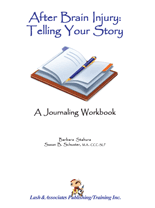
After Brain Injury: Telling Your Story, A Journaling Workbook

by

Barbara Stahura, C.J.F. and Susan B. Schuster, M.A., CCC-SLP

presented by
Donna O’Donnell Figurski

After Brain Injury Telling Your StoryThis workbook by Barbara Stahura and Susan B. Schuster guides survivors of brain injury and blast injury through the powerful healing experience of telling their own stories with simple journaling techniques.

By writing short journal entries, survivors explore the challenges, losses, changes, emotions, adjustments, stresses, and milestones as they rebuild their lives.

Journaling after brain injury helps written and verbal communication skills and provides cognitive retraining for following instruction. It helps promote self awareness as well as recognition of strengths and difficulties after brain injury.

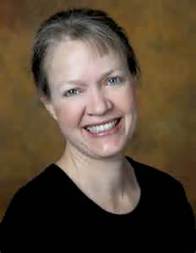
Susan B. Schuster

Susan B. Schuster, M.A., CCC-SLP Author of “After Brain Injury: Telling Your Story – A Journaling Workbook”

It is a tool for planning for the future and discussions with family members. Journaling can be done individually, in a group or with assistance from caregivers or family.

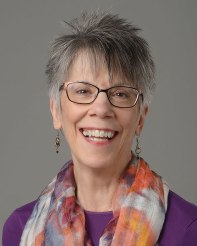
Barbara Stahura, C.J.F. Author of “After Brain Injury: Telling Your Story – A Journaling Workbook”


To locate additional books pertaining to brain injury, please check out Lash & Associates Publishing/Training Inc.


(Clip Art compliments of Bing.)

As I say after each post:

Feel free to leave a comment by clicking the blue words “Leave a Comment” below this post.

Please follow my blog. Click on “Follow Me Via eMail” on the right sidebar of your screen.anim0014-1_e0-1

If you like my blog, click the “Like” button under this post.

If you REALLY like my blog, share it with your friends. It’s easy! Click the “Share” buttons below.

If you don’t like my blog, “Share” it with your enemies. That works for me too!


A Messy Kitchen
by
Michael Puffer (caregiver for his wife, Maria)
presented by
Donna O’Donnell Figurski


Puffer. Michael & Mari a

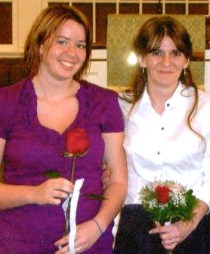
Maria Puffer – Brain Injury Survivor Michael Puffer – Caregiver for Maria

I came home after a long day and found what looked like a mess in the kitchen. I sat down and put my face in my hands and cried. I couldn’t believe what I came home to. I wasn’t angry, but I couldn’t stop the tears.

Twenty-three months ago, the state of the kitchen would not have been a remarkable finding. Tonight, it was truly unbelievable, and I was blown away!Messy Kitchen

Just under two years ago, I thought I had lost the most important person in my life. My loving wife, Maria Puffer, was in a horrific car accident. She suffered a severe traumatic brain injury and a spinal cord contusion, and she was in a coma at North Memorial Hospital near Minneapolis.

Ever since that day, Maria has fought to show us she is still with us and she is ever-determined to recover and get her life back. Week by week, day by day, hour by hour – she never quits, complains, or feels sorry for herself. Maria practices walking with a walker an hour a day, sometimes nearly falling asleep because she always wants to push herself. She thanks me every night for taking care of her. She shows all of us what true grit and love is.

Fruit_salad_clipartMaria asked me a few days ago where the Kitchen Aid mixer was. I told her it was in the pantry. The next day – there it was on the counter. Maria asked daughter Samantha to pick up the ingredients to make fruit salad. I told her we would make fruit salad over the weekend, but there never was time to do it.

Maria didn’t wait. She made the fruit salad by herself.

My tears were tears of joy and wonder. When she came into the kitchen, I reached out, gave her a huge hug, and said, “You are awesome!” (Maria is absolutely the strongest person I’ll ever know. I can’t believe how lucky I am to be in her life!)Man & Woman Hugging

We had dinner together and enjoyed the very best fruit salad in the world for desert.

I will try forever to be the best husband that I can be. I know I have the best wife, and she deserves the best from me.

14449717_1157500687641271_6923286480652057034_n


14358883_1157501060974567_1502463441729171801_n


14344307_1157501104307896_5377028616340304482_n


As I say after each post: Please leave a comment by clicking the blue words “Leave a Commentanim0014-1_e0-1 below this post.

Feel free to follow my blog. Click on “Follow” on the upper right sidebar.

If you like my blog, share intact it with your friends. It’s easy! Click the “Share” buttons below.

If you don’t like my blog, “Share” it intact with your enemies. I don’t care!

Feel free to “Like” my post

diemodi jewelry

uniquely hand-crafted jewelry by donna

Welcome to Harmony Kent Online

The home of all things books

Pete Springer

Passionate Teacher and Future Children's Author

HOPE TBI

Helping Other People Excel - To Be Independent

For the Love of Books, Old and New

Katie Fischer, Writer and Reader of Stories

Charlie Bown

Children's Author

Jessica Hinrichs

“We write to taste life twice, in the moment and in retrospect.” ― Anais Nin

VIVIAN KIRKFIELD - Writer for Children

Picture Books Help Kids Soar

Mindy’s Writing Wonderland

For authors, parents, teachers & everyone who loves children’s books.

Kaitlyn Leann Sanchez

Literary Agent

Surviving Traumatic Brain Injury

TBI - Survivors, Caregivers, Family, and Friends

The Care Factor

Loving someone with a Traumatic Brain Injury

Brain Injury Support Group of Duluth-Extension

Brain Injury Information and SUPPORT

Brain Aneurysm Global Insight

Brain Aneurysm, cerebral hemorrhaging, hemorrhage stroke