TBI – Survivors, Caregivers, Family, and Friends

Posts tagged ‘TBI’

SPEAK OUT! NewsBit . . . . . . . . Portable Concussion Indicator

High-school Football Teams Test Portable Concussion Indicator

Newsboy thThere is growing concern about brain injuries arising from concussions, especially in young players. Research has shown that concussions, once thought to be harmless, actually injure the brain. In fact, a concussion is regarded as a form of TBI (mTBI, or mild TBI). (The term “mild” is deceiving because even some mTBIs can be life-threatening or can leave an individual with life-long mental deficits.)

A researcher has developed a scanner that can detect a player’s concussion during a game. It is being tested by four Texas high-school football programs. The scanner looks similar to binoculars, but it compares a possibly concussed player’s eye movements to the player’s normal eye movements taken earlier. (A possible concussion-causing hit is indicated by a microchip-containing sensor in the helmet.) The scanner is hooked up to a computer to quickly analyze the eye-movement data. A coach or trainer can readily determine if the player has experienced a concussion. New guidelines on when to return to play have been adopted by many schools to protect the player from further brain injury and to allow the traumatized brain to heal. (Full story.)

(Clip Art compliments of Bing.)

SPEAK OUT! NewsBit . . . . . . Scientists Search for Therapies for Brain Injury

Stimulation of Specific Neurons Enhances Recovery

Research at Stanford newsboy-thUniversity examined recovery from stroke in mice, but its significance will affect future therapy for brain injuries in humans. The scientists were the first to use a relatively new technique, called “optogenetics,” for studies of the brain. They engineered mice to make a light-sensitive protein in the motor cortex of the brain. They also implanted an optical fiber so they could use light to stimulate that protein, and therefore those neurons specifically.

Stroke-impaired mice (stroke mice) that were stimulated with light recovered significantly more in tests of coordination, balance, and muscle mass than did stroke mice that were not stimulated. Unlike the only drug currently used for strokes, which works to dissolve a clot and must be given within a few hours of a clot-induced stroke, the neural stimulation was effective even five days after a stroke. There were no side effects from stimulating the brains of healthy mice in the same way.

The scientists also found that stimulated stroke mice showed better weight gain than did unstimulated stroke mice. Also, the brains of stimulated stroke mice showed enhanced blood flow, produced more natural neural growth factors, and made more of a protein that strengthens neural circuits during therapy, when compared to the brains of unstimulated stroke mice.

This research is just beginning. The objective is to identify specific neural circuits that have roles in the recovery of the brain to injury. Once the circuits are known, implants that stimulate specific neurons in humans (as is being done now to control epilepsy) and/or new therapies will enhance recovery from brain injury. (Full story)

(Clip Art compliments of Bing.)

Caregivers SPEAK OUT! . . . . . . . . Kelly Reader

SPEAK OUT! – Kelly Reader

by

Donna O’Donnell Figurski


Reader Eric & Reader, Kelly Spouse1. What is your name? (last name optional)

 Kelly Reader

 2. Where do you live? (city and/or state and/or country)     Email? (optional)

 Railton, Tasmania     kelly.reader@gmail.com

3. What is the TBI survivor’s relationship to you? How old was the survivor when he/she had the TBI? What caused your survivor’s TBI?

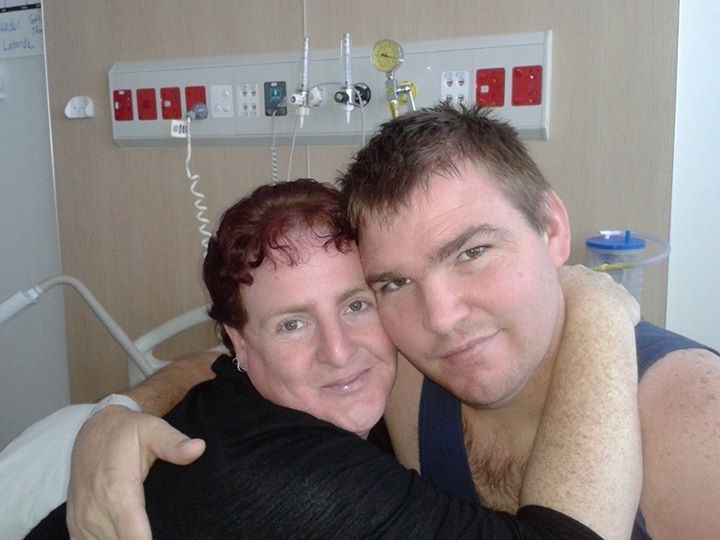
My TBI survivor is my husband, Eric. He was 29 when he has his accident seven months ago on Boxing Day 2013. He was sitting on the back of a trailer, tavelling along a gravel road, when they hit a bump. He fell off – hitting his head.

4. On what date did you begin care for your TBI survivor? Were you the main caregiver? Are you now? How old were you when you began care?

I began my caring role when Eric was released from the hospital on the 6th of February 2014. I was 33, and I was his main caregiver throughout his recovery.

5. Were you caring for anyone else at that time (e.g., children, parents, etc.)?

No. I used to be a full-time caregiver for my mum, but she passed away last May.

6. Were you employed at the time of your survivor’s TBI? If so, were you able to continue working?

I was studying to become a vet nurse when Eric had his accident. Because of the stress, I could not concentrate on my studies and had to ask for a deferment.

7. Did you have any help? If so, what kind and for how long?

Eric has had an Occupational Therapist since he came home, and she has been amazing. She helped us with whatever we needed, and she is still continuing today.

8. When did your support of the survivor begin (e.g., immediately – in hospital, when survivor returned home, etc.)?

As soon as Eric was hurt, he was flown to a hospital four hours away from our hometown. My sister Sally and I spent six weeks at Eric’s bedside every day, until he was released from the hospital. Being away from home for so long was hard.

9. Was your survivor in a coma? If so, what did you do at that time?

Eric was in an induced coma for two days, before they allowed him to wake up. They told me that he might not pull through, so this time was very hard. I stayed by his side hoping he would make it.

10. Did your survivor have rehab? If so, what kind of rehab (i.e., In-patient and/or Out-patient and Occupational, Physical, Speech, and/or Other)? How long was the rehab? Where were you when this was happening?

Eric spent four weeks in a rehab unit at the hospital, where he did physiotherapy and brain activities. When he came home, he went to physiotherapy twice a week. He is now going once a fortnight.

11. What problems or disabilities of your TBI survivor required your care, if any?

When Eric first came home, he required 24-hour supervision because he was not safe to be left alone. He has memory problems, so forgetting to take tablets or turn the stove off was a real problem. He suffered tremors in his hand and legs. Also his balance when walking was not safe.

12. How has your life changed since you became a caregiver? Is it better? Is it worse?

I was a caregiver for my mum since I was 16 years old, so my whole life has revolved around caring for someone I love. If I had to do it all over again, I would. To see how much progress Eric has made since his accident has been so rewarding. To know that I helped him get there makes every heartbreaking moment worth it.

13. What do you miss the most from pre-TBI life?

Eric has always been the strong one in our marriage. When he had his accident, the roles were reversed, and I had to take over doing a lot of the bill management, etc. He was always my protector when things went wrong. After his accident, I didn’t have that anymore. Things are better now. He is becoming that same person again.

14. What do you enjoy most in post-TBI life?

Eric has become sensitive since his accident – something he never showed before. He always had a wall up and wouldn’t let anyone inside. Now, if he watches a sad movie, he will cry. I love this new sensitive side of him, as I feel I can talk to him more. He will let me be a part of his life he never shared before.

15. What do you like least about TBI?

The mood swings are not so bad these days, but in the beginning, they were a nightmare. His moods would change so dramatically it put a real strain on our marriage.

16. Has anything helped you to accept your survivor’s TBI?

When I feel down, I tell myself that he was one of the lucky ones to survive and that I’m lucky to still have him in my life.

17. Has your survivor’s injury affected your home life and relationships and, if so, how?

It put a strain on our marriage because I had to be his caregiver – something he never wanted to happen. I had to be by his side 24/7 for the first four months after he was released from the hospital. That was really hard for him, as he was so used to going to work and having his freedom. Some days he would lash out at me for something that he was in the wrong for, but because of his memory problems, he didn’t remember what he had done.

18. Has your social life been altered or changed and, if so, how?

Our social life has changed for the better, as we spend more time with family and friends now because we realise that life is too short to waste.

19. What are your plans? What do you expect/hope to be doing ten years from now?

I would like to have a family – something that we were working on before his accident. I feel it would make our lives complete.

20. What advice would you offer other TBI survivor caregivers? Do you have any other comments that you would like to add?

Just be there for them when they need a shoulder to cry on. Don’t take anything they say to you in the heat of the moment to heart, as it’s not what they feel about you. It’s just the frustration coming out.Reader Eric & Reader, Kelly Spouse gchjcbfd


Thank you, Kelly, for taking part in this interview. I hope that your experience will offer some hope, comfort, and inspiration to my readers.

If you would like to be a part of this project, please go to TBI Caregiver Interview Questionnaire for a copy of the questions and the release form.

(Photo compliments of Kelly.)

Disclaimer: The views or opinions in this post are solely that of the interviewee.


Brain Injury Resources . . . . . . Music May Optimize the Brain

Music May Optimize the Brain

I found this interesting, short (4 min 45 sec) video on the blog “Beyond Injury,” which is authored by Scott, who was diagnosed with brain cancer. I thought the video should be reposted here for you. It shows how listening to music Brain th-2or – better yet – playing it stimulates several parts of the brain simultaneously, unlike other activities. The video says that musicians’ brains have developed a higher level of functioning, including – but not limited to – problem solving, perceiving emotional cues, expanding fine-motor skills, and enhancing memory. Maybe the stimulation from music will enhance recovery from TBI. But, be aware that there is no hard evidence showing a link between music and recovery from TBI. Neuroscientists do know, however, that music benefits a healthy brain. It is reasonable to expect that an activity that enhances many brain functions should at least be beneficial to TBI survivors with deficits in any of those functions.

(Clip Art compliments of Bing.)

Comments are welcome.

SPEAK OUT! . . . . . . . . . . . . . . . . . Itty-Bitty GIANT Steps

              SPEAK OUT! Itty-Bitty GIANT Steps

Itty-Bitty GIant Steps for BlogSPEAK OUT! Itty-Bitty Giant Steps will provide a venue for brain-injury survivors and caregivers to shout out their accomplishments of the week.

If you have an Itty-Bitty Giant Step and you would like to share it, just send an email to me at donnaodonnellfigurski@gmail.com. If you are on Facebook, you can simply send a Private Message to me. It need only be a sentence or two. I’ll gather the accomplishments and post them with your name on my blog approximately once a week. (If you do not want your last name to be posted, please tell me in your email or Private Message.)

I hope we have millions of Itty-Bitty Giant Steps.


Here are this week’s Itty-Bitty Giant Steps.

Cheri Richardson Hicks…My Itty-Bitty Giant Step is that I ventured away from outpatient therapy into a new program called Quest. It is a program that gets people back to work and back into the community. I really feel like this is what I need to get me to where I need to be, so it couldn’t have

Melinda's 100 piece puzzle

Melinda’s 100 piece puzzle

Melinda Murphy…Here is one for your Itty-Bitty Giant Steps. I used to be able to do 5000-piece puzzles in 2 or 3 days. I have not done any at all since the accident, until now. Four days, 2 tables, and only 100 pieces – but I did one, and I am thrilled (even if a piece was missing)!

Carmen Gaarder Kumm…Here is my Itty-Bitty Giant Step. I worked 4 1/5 hours today. I took three kids to town (20 minutes away), completed what needed to be done (I only forgot one thing, but my daughter will do that for me in the morning, as she is going anyway), picked up supper (knowing that I wouldn’t have much time once we got home), finished a Facebook page for our church, helped a bit with Vacation Bible School, picked green beans in the garden, and packed for the weekend away. I’m in bed before 10:00, and I don’t feel I overdid it…feeling good actually.

Donna O’Donnell Figurski (caregiver)…This week we have friends from Germany visiting us. They wanted to go to the Grand Canyon, which is about 4 hours from my home – too far for a day trip. Though David would have liked to go, he knew it would be too difficult for him, and he had seen it a few times before. He chose to remain home.

Caboose - haunted by ghost

Caboose – haunted by ghost

That’s where my dilemma came in. David is 9+ years out from his TBI and still deals with many issues, including balance deficits, and I have never left him alone at night. Though he is completely

able to stay at home during the day, I always worry about the night. David convinced me he would be just fine, and after much discussion and a ton of angst, I agreed to go with our friends to the canyon. I insisted that David and I be in constant cell-phone contact.

So off we went to Williams, Arizona, where I slept in a little red caboose, which is supposedly haunted. The ghost may or may not have made an appearance. The jury is still out on that one.

But the jury is in on my trip to the Grand Canyon and on David’s staying overnight by himself. He did it! I did it!

WE did it!

Congratulations to all contributors!

(Clip Art compliments of Bing.)

TBI Tales: Michael Coss Awakes After 6 Months in Coma

Meet Michael Coss

presented by

Donna O’Donnell Figurski


Michael Coss 2006

Michael Coss 2006

Michael Coss is the author of The Courage to Come Back: Triumph over TBI – A Story of Hope (2011) and the inspiration behind the creation of the Michael Coss Brain Injury Foundation. The foundation was created to raise money for children in need of financial support to access brain injury treatment. The proceeds from the sale of Michael’s book go directly to help the kids. The book is a moving account of Michael’s journey facing the challenges of traumatic brain injury.

Michael is also the winner of the 2011 Courage to Come Back Award for Physical Rehabilitation (Coastal Health). Michael will tell you that his life was changed forever, and it’s been changed for the good. First though, he will usually tell you that he is the very proud father of twins, Nathan and Danielle, who are now eight years old.

On May 18th, 2006, Michael was driving to Kelowna, British Columbia, Canada, with his former spouse and seven-month-old twins to attend a work function and stay with friends. Catastrophe struck while on the Coquilhalla highway — Michael lost control of the van, and it rolled at least one and a half times.

Miraculously, Michael’s former wife, Ann, and daughter, Danielle, escaped with only minor injuries, but Nathan and Michael were not as fortunate. Nathan spent several weeks at BC Children’s Hospital with head injuries. When the medical services arrived at the scene of the accident, Michael was unresponsive, even though the airbags had deployed and Michael had been restrained by his seatbelt. The Glasgow coma scale (CGS) rating at the scene was 8 out of a possible 15, which indicated a comatose state.

Michael was transported by air to Royal Inlands Hospital in Kamloops, where he was assessed by Neurosurgery. Bilateral ventriculoperitoneal shunts were inserted to relieve the pressure on Michael’s brain from the accumulation of fluid. Later he was transferred to Royal Columbian Hospital to be closer to his family. He remained comatose.

Michael’s injuries were nearly fatal, and despite comprehensive treatment at two hospitals, Michael remained in a coma for six and a half months. Doctors told his family that his chances of recovery were remote. His wife was devastated because she faced the possibility of raising their two babies without a father. Recommendations were made to Michael’s family to look for a long-term-care facility to look after him for the rest of his life.

But they did not know Michael Coss and his family. Michael’s family had researched hyperbaric oxygen therapy (HBOT), the medical use of oxygen at a level higher than atmospheric pressure. The treatments are commonly used in Asia and Europe and are available in Canada. But the treatments are not approved by Health Canada, and, therefore, they are not covered in Canada by medical insurance. The more the family learned, the more they came to believe that these treatments might work for Michael, though the treatments were prohibitively expensive and came with no guarantee.

His friends and co-workers saw a chance to mobilize and make a difference in Michael’s life. Within a few weeks, funds were raised by donations from friends, family, and his former work-colleagues at Molson Coors Canada.

Michael was transferred daily from Royal Columbian Hospital to the Richmond Hyperbaric Health Centre via ambulance. His mother, who accompanied him, would dampen a sponge with water to make him swallow and equalize the pressure within his ears. HBOT worked quickly, and on Christmas Eve of 2006, after half a year in a coma, Michael awoke and uttered his first words.

Only three months out of his coma, Michael learned about Rick Hansen’s Wheels in Motion events to raise funds for research and to improve the quality of life for people with spinal cord injuries. Michael was inspired by Rick Hansen and wanted to be a part of the event. In the midst of his rehabilitation, Michael canvassed his network, and once again they rallied in support. Friends, family members, Molson Coors co-workers, and other corporations raised over $22,000. His team (Team Cosco) not only won the award for the top fundraiser in Canada for Wheels in Motion 2007, but they also set a fundraising record for the entire six-year history of the program.

Through a long, intensive, and grueling rehabilitation, Michael relearned how to talk and eat. He is now relearning how to walk.Coss, Michael Survivor Family Photo Magazine COver

Today Michael serves as an inspiration, a motivational speaker, and a catalyst for traumatic brain injury survivors everywhere. He currently resides in a group-home not too far from his family and visits with them several times a week. His long-term goal is to be an able and active participant in his family’s life. Michael is not yet ready to walk to the park hand-in-hand with his children, but at least he is in training for it.


If you have a story to tell, please contact me at donnaodonnellfigurski@gmail.com

(Pictures compliments of Michael.)

(Clip Art compliments of Bing.)


As I say after each post:

Please leave a comment by clicking the blue words “Leave a Comment” below this post.anim0014-1_e0-1

Please follow my blog. Click on “Follow” on the lower right corner of your screen. (It’s nice to know there are readers out there.)

If you like my blog, share it with your friends. It’s easy! Click the “Share” buttons below.

If you don’t like my blog, “Share” it with your enemies. I don’t care!

Feel free to “Like” my post.


Brain Injury Resources . . . “Invisible” TBIs

What Are the Effects of “Invisible” TBIs?

Brain th-2A traumatic brain injury survivor who has a physical disability deals with a problem that is obvious, but many survivors have brain injuries that are “invisible.” The problem with invisible TBIs is that the brain injuries are not obvious, yet they can cause serious difficulties for the survivors. Life may seem chaotic to a survivor with an invisible brain injury, but those in the “outside world” may think that nothing is wrong. As a result, some survivors face expectations that don’t reflect their reality. This disconnection is generally caused by the public’s lack of understanding about the myriad effects of brain injuries. Here is a site devoted to explaining the possible effects of “invisible” TBIs and what survivors can do to diminish them.

(Clip Art compliments of Bing.)

Survivors SPEAK OUT! Melinda Murphy

SPEAK OUT! – Melinda Murphy

by

Donna O’Donnell Figurski


Melinda Murphy with TBI

Melinda Murphy with TBI

1. What is your name? (last name optional)

Melinda Murphy

2. Where do you live? (city and/or state and/or country) Email (optional)

Middletown, Ohio, USA

3. When did you have your TBI? At what age?

February 9, 2011 I was 40 years old.

4. How did your TBI occur?

I fell down a flight of steps into a basement.

5. When did you (or someone) first realize you had a problem?

Immediately, although the TBI was not diagnosed for quite some time.

6. What kind of emergency treatment, if any, did you have?

None

7. Were you in a coma? If so, how long?

No

8. Did you do rehab? What kind of rehab (i.e., In-patient or Out-patient and Occupational, Physical, Speech, Other)?

I have had all of the above, and I am still in therapy. I have had some fantastic therapists over the years, and I just have to say that they are the key in so many ways. I don’t know where I would be without them.

How long were you in rehab?

They did in-home rehab and therapy with me for about 5 months, if memory serves me. I do not remember most of those first months, though, so I could be lying to ya :).

9. What problems or disabilities, if any, resulted from your TBI?

I have horrible balance. I live with headaches constantly. My vision and hearing have both been affected to the point that I can no longer go out in public on my own because of the amount of stuff coming in, so to speak. I miss my church and independence. I have short-term memory loss. I lost organizational skills and basic life functions, like just being able to make simple decisions. I lost a lot of other skills, like math and English. I have trouble speaking; I lose words before they hit my mouth. Many times my brain gets over-tired and just quits working at all. I can’t explain it. I can’t drive. I could go on, but…LOL.

10. How has your life changed? Is it better? Is it worse?

Both – honestly! No one being truthful would tell you there is nothing that he or she wouldn’t give back. It’s hard, and it stinks a big chunk of the time. Learning to live again and differently is the hardest thing I have ever had to do, and I didn’t live the easiest life, so…. Learning how strong I am, though, and learning to receive (which is not something I was used to and I think not many of us are used to) is a tremendous thing. Learning of people and the spirit and nature of them – that is a very rich gift I have been given through this. Learning to be okay with not being okay – that is again a huge thing that has bettered my life. So, I think that – as sad as it is at times and as hard as it is (and it is) – it is also a blessing.

11. What do you miss the most from your pre-TBI life?

Almost everything – I miss being able to drive; I miss my independence; I miss hot meals because most days I cannot cook for fear I will forget to turn off the oven; I miss my job and clients; I miss my social life; I miss being able to keep my house clean (balance issues keep me from up and down and forward and back motions); I MISS MY CHURCH!

12. What do you enjoy most in your post-TBI life?

I enjoy the quiet. Everything is quiet in my world now, out of necessity. It’s very nice. Quiet is better than you think it is – I had forgotten how nice. I think most of us have. I like things that I have learned from having a TBI and the people whom I have met because of it. I like the growth that I see in me because of my TBI.

13. What do you like least about your TBI?

Almost everything

Melinda Murphy - after fall

Melinda Murphy – after fall

14. Has anything helped you to accept your TBI?

Time, only time. People can tell you what they want, and they can try and say anything, but until your brain is ready, well hang it up. It’s been three and a half years, and I have just accepted it this year. When you are ready, it will happen. I will say this about acceptance. People say that once you accept it, you will be fine and everything will be easier. In the end, that is correct and true, but let me tell you, acceptance itself is hard. It is the toughest thing in the world to acknowledge that you – the person you are now – are broken and that that is okay. Getting there and getting through it takes time and patience from yourself and your caregiver.

15. Has your injury affected your home life and relationships and, if so, how?

Yes. I touched on my home life earlier – it is difficult to live with a TBI. Memory, balance, and sensory issues affect me far more than people could know, and my home very often suffers. I often feel like I am a burden on my family and on those relationships. When you are dependent, the structure of the relationship is changed.

16. Has your social life been altered or changed and, if so, how?

Yes. All of my relationships changed – I am dependent now. That is a hard place to be. It stands in the way of traditional friendships. (At least, it feels that way on this end.) When you need, people tend to view you differently. We all have those friends, don’t we? I had them before my accident and still do, but those friends were different from all my other friends and from my social circle. I can’t complain now because I used to do it. I was no more aware of doing it then than are so many who are unaware of my situation now. I can say that I am blessed beyond measure to have a handful that do not fit into that mold and are there for me. God is good all the time because without them I would be in a home.

17. Who is your main caregiver? Do you understand what it takes to be a caregiver?

I am. I live alone and do the very best I can. I had to move in with my family just after the accident because of seizures and not being able to even stand up or sit down on my own. I was 100%-dependent then, but I moved back on my own as soon as I was able.

18. What are your future plans? What do you expect/hope to be doing ten years from now?

I would love to be fully functional. By that, I mean holding a job (any job) – just feeling productive and serving – and doing things more independently. (I have a servant’s heart and desire nothing more than to be helping others in any way the good Lord leads.)

19. Are you able to provide a helpful hint that may have taken you a long time to learn, but which you wished you had known earlier? If so, please state what it is to potentially help other TBI survivors with your specific kind of TBI.
You’re okay just the way you are.

It took me forever and a day to accept that, and, frankly, I am still getting there. I know those words probably mean no more than anyone else’s, but I pray they touch someone. I always had a perfect picture of what healthy looked like in my mind, and I was working so hard to get there until one day, I realized that I was already there. I don’t need to walk up those steps upright like my neighbor. If I get up all the steps with my tail in the air and bear-crawling like a two-year-old, but I make it to the top, well by Jove, I can climb a flight of stairs – can’t I? It matters not the way you get there, only that you do. The fact that you do is what makes you as healthy and whole as that beefcake next to ya. Find a way.

20. What advice would you offer to other TBI survivors? Do you have any other comments that you would like to add?
My faith has held me so strong from day 1 of this. Without it, I’m not sure I would have survived. My God is greater than my broken brain and all the problems and mess that come with it – make no mistake.

Murphy, Melinda

Melinda Murphy

Advice? I am finding that there are tools everywhere for me. Some work and some don’t, but never, ever stop looking. I still find therapies and little things that can greatly improve things in my world all the time. If there is even the slightest bit of hope that something can bring a touch of independence or relief, then you need to jump with both feet. Stop thinking, all you caregivers. Just try, try, try. You never know what will work. The more you get out there into the world of TBI, the more you find. Never stop looking; never stop trying.


Thank you, Melinda, for taking part in this interview. I hope that your experience will offer some hope, comfort, and inspiration to my readers.

(Disclaimer: The views or opinions in this post are solely that of the interviewee.)

(Photos compliments of Melinda.)

If you would like to be a part of the SPEAK OUT! project, please go to TBI Survivor Interview Questionnaire for a copy of the questions and the release form.

SPEAK OUT! Guest Blogger: Broken Brain – Brilliant Mind Change . . . for the Better

SPEAK OUT! Guest Blogger:  Broken Brain – Brilliant Mind

Change . . . for the Better


Boy Blogger thWhen it comes to TBI recovery, it’s easy to feel like things are never going to change. After I fell down a flight of stairs and hit my head in 2004, my personality changed dramatically. Before my fall, I used to be very levelheaded and thorough. I was competent to an extreme. Being a Type A overachiever was a big part of my personal identity, and any time I fell short in the know-how department, I worked my butt off to make up for it. I was very funny, once upon a time, and I was fun to work with. People sought me out and asked specifically to have me assigned to high-profile, high-stakes projects at work. I could pick up new skills with little or no problem, and I was always up for a challenge.

After my fall, I basically fell apart. I lost the ability to read things and understand them. I hardly could sleep. I was always on edge, and my hot temper flared at an instant’s notice. The worst was I lost my sense of humor. I no longer thought anything was funny. Plus, I could not learn new skills . . . at all. I could never figure out for myself where to begin new tasks, and, when others told me where to begin, I could not stick with things long enough to complete them. But I could not see that something was “up” with me. It was always someone or something else’s fault.

And I thought that nothing would ever change. So did my spouse. Both of us figured the old me was gone for good.

But it hasn’t turned out that way at all.

I somehow managed to find a neuropsychologist who is a strong believer in neuroplasticity — the idea that people’s brains change and that we can get better after TBI. My “neuropsych” is convinced that the brain can rewire itself, and so am I. In fact, I have been a believer in neuroplasticity for 30 years. Back in the early 1980s, I came across a scientific report that showed the brains of rats that had been exposed to a rich learning environment versus those that had not received any stimulation. The brains of the stimulated rats were chock-full of additional connections (their wiring). The proof was in the picture, and it was undeniable. If that happened to the brains of rats, surely it happened with humans as well!

In the last 5 years, since I started my TBI rehab, I have seen so many changes for the better. I realize now that my fall in 2004 was really the most recent of a series of mild traumatic brain injuries, which started when I was a kid. I’ve had at least 9 mild TBIs since I was about 7 years old, and there could have been more that I just can’t remember. So, I’m not just recovering from a fall in 2004. I’m recovering from a lifetime of concussions — some of them worse than others, which finally culminated in my nearly catastrophic traumatic brain injury ten years ago.

To say that I’m a different person now would be an understatement. There have been many ups and downs, and some days I still wonder who the heck I am. But in the end, things are so much better now than they were just five short years ago. TBI recovery takes years and years — and even when we reach a level of decent functioning in the outside world, our inside world can still feel like utter chaos.

My life can “feel” very chaotic, when it’s actually very calm and orderly. That’s one of the weird and frustrating things about my injury — it makes many things seem far worse than they are, and I tend to react to that impression, rather than stepping back and taking a logical look at things. It’s hard to trust my brain, when it’s constantly sending me signals that something’s wrong while everything is actually pretty awesome.

But to be honest, it’s tough to believe everything is okay when you have constant issues that never seem to go away. I get overwhelmed by back and neck pain, loud ringing in my ears, sensitivities to light and noise, and feeling like I’m always playing catch-up. My memory comes and goes; I’m tired a lot and have trouble sleeping; and my energy level is unpredictable. Some days I just need to disappear into my own world — going for long walks in the woods or walks on the country roads around my home, spending time surfing the Web, working in the yard or my workshop, or just sleeping all afternoon on the weekends.

After years of trying to fix the problems, I’ve found that a better strategy is to concentrate on creating new and better experiences that eclipse the bad ones and to get my mind off my troubles. Yes, I’m in pain. Yes, I forget things. Yes, I often feel like I’m in damage-control-mode. But when I focus my attention on the good parts of my life, the troubles fade away and become part of the scenery, instead of the defining factors of my life.

My present recovery strategy is to enjoy myself as much as humanly possible. I go out of my way to slow down and really enjoy the life around me. I want to give my brain as much good to react to, as bad. I’m an expert in identifying problems that I can fix, and it gives me a lot of pleasure to fix them. At the same time, there’s more to life than constant problems. Being able to stop and enjoy an amazing day…just breathe deeply and soak it all in…really taste the food I’m eating…feel myself getting stronger when I work out in the mornings before work…and feel my body soaking up the water I drink after my workout is done. All those things are good for my spirit AND my brain. I figure the more good things I notice and dwell on, the more “wiring” for good I’m building in my brain.

Traumatic brain injury comes with a host of predicaments and issues that you’d never expect to come up in a regular life. If I’m going to have to deal with all of that, I might as well get to enjoy myself too. There’s a ton of stuff I cannot control in my life — but my attitude and my outlook are something I can control. So, I focus my energy there.

Granted, it doesn’t always work. It takes a lot of energy, and some days I just can’t manage the whole “positive” thing. So, I cut myself a break, make myself a nice steak dinner, watch a man-against-nature television show, and call it a day.

There’s always tomorrow.Broken Brain Brilliant Mind Gravatar dc1f49ad8493ea68c0c1c5e9b24d2e69


Thank you, Broken Brain – Brilliant Mind.

Disclaimer:
Any views and opinions of the Guest Blogger are purely his/her own.


You can read more about Broken Brain – Brilliant Mind on his blog.

(Clip Art compliments of Bing.)

On the Air – Brain Injury Radio “Prisoner Without Bars” (segment 1)

On the Air – Brain Injury Radio

“Prisoner Without Bars” (segment 1)

by

Donna O’Donnell Figurski


images-1When I was asked to host my own radio show, my first reaction was disbelief, quickly followed by “Are you kidding?” Being a radio host is something I had never aspired to. It had never crossed my mind. I didn’t have the least idea of how to go about achieving a goal such as that.

I’ve never spoken in front of an adult audience, unless, of course, you count Back-To-School-Night audiences of parents who are dying to meet their child’s new teacher and see what their child will be doing for 6 hours each weekday while under my tutelage. My audiences were always 9 years old and under. They made up my “captive” audiences as I taught them to read, ‘rite, and do ‘rithmetic. (I admit some may have felt they were a “captured” audience.)

After I got over my first feeling of doubt, I let the idea tumble in my brain. I felt flattered, and the seed began to grow. “Why not?” I have a story to tell. I know a LOT about Traumatic Brain Injury (TBI). I had already written a book, “Prisoner Without Bars: Conquering Traumatic Brain Injury” (searching for a publisher) about David’s and my life living with his traumatic brain injury, and I write a blog dedicated totally to raising awareness of TBI and helping survivors and caregivers. So, I said, “YES!”

Then came the hours and days of preparation. Yes, I knew my story. It’s never far from my mind, but I wanted the show to be organized and cohesive. When the day of the show arrived, so did the butterflies that were doing a jitterbug in my stomach as the minutes clicked down the clock to showtime. “Your show will start in 5, 4, 3, 2, 1 second. You’re ‘On the Air.’” There was a second of dead air time before the Brain Injury Radio logo music began. Then there was no turning back…

“We lived a normal life…until we didn’t….”

I hope you’ll tune into my show the 1st and 3rd Monday evenings of every month. The show airs at 5:00p Pacific time and runs for 90 minutes.

See you “On the Air!”


(Clip Art compliments of Bing.)

diemodi jewelry

uniquely hand-crafted jewelry by donna

Welcome to Harmony Kent Online

The home of all things books

Pete Springer

Passionate Teacher and Future Children's Author

HOPE TBI

Helping Other People Excel - To Be Independent

For the Love of Books, Old and New

Katie Fischer, Writer and Reader of Stories

Charlie Bown

Children's Author

Jessica Hinrichs

“We write to taste life twice, in the moment and in retrospect.” ― Anais Nin

VIVIAN KIRKFIELD - Writer for Children

Picture Books Help Kids Soar

Mindy’s Writing Wonderland

For authors, parents, teachers & everyone who loves children’s books.

Kaitlyn Leann Sanchez

Literary Agent

Surviving Traumatic Brain Injury

TBI - Survivors, Caregivers, Family, and Friends

The Care Factor

Loving someone with a Traumatic Brain Injury

Brain Injury Support Group of Duluth-Extension

Brain Injury Information and SUPPORT

Brain Aneurysm Global Insight

Brain Aneurysm, cerebral hemorrhaging, hemorrhage stroke