TBI – Survivors, Caregivers, Family, and Friends

Posts tagged ‘TBI Caregiver’

On the Air . . . . . . . . . . . . . . . . . . . Brain Injury Radio “Prisoner Without Bars” (segment 3 & epilogue)

On the Air – Brain Injury Radio

“Prisoner Without Bars” (segment 3 & epilogue)


images-1

The red light in the studio is blinking. A voice from nowhere says, “Your show will start in 5, 4, 3, 2, 1 second. ‘You’re On the Air.’” Then a second of dead air occurs before the Brain Injury Radio logo music plays. There’s no turning back…

“We lived a normal life…until we didn’t….”

In this third and last part of “Prisoner Without Bars: Conquering Traumatic Brain Injury,” I completed my husband David’s and my journey through the first year-and-a-half of our new life in this TBI maze. I also included an epilogue, which brings the story to current time.

I tell stories of how David loved the barium-dipped cookies during the fluoroscopy test to determine his swallowing ability – or lack of it. I tell how David insisted on having “dessert first” before all meals, of my crash course in Nursing 101, 102, and 103 before David was released to my custody – all too soon – from the rehabilitation hospital, and how he was honored as the keynote speaker at a scientific symposium in Colorado to present his research. I talked about David’s transition to home after rehab and eventually his return to his laboratory at Columbia University. The story goes on and on, as does life. There’s never a dull moment when living with TBI.

I hope you’ll tune in to my show, “Another Fork in the Road,” which airs the 1st and 3rd Sunday evenings of every month. The show starts at 5:00p Pacific Time and runs for 90 minutes. On the 2nd and 4th Sundays at 5:00p Pacific Time, Julie Kintz hosts “Quantum Leap.” When there is a fifth Sunday in a month, Julie and I will team up to cohost a show called “Another Quantum Leap in the Road.”

“See you “On the Air!”

Click on the bar below to hear this radio show.

(Clip Art compliments of Bing.)

On the Air – Brain Injury Radio “Prisoner Without Bars” (segment 2)

On the Air – Brain Injury Radio

“Prisoner Without Bars” (segment 2)

images-1This show takes David bouncing across the George Washington Bridge in an ambulance blaring rap music to his rehabilitation hospital where he would spend the next two months of recovery.

Listen to stories about life in the lockdown unit, of strange roommates, staff being fired, and Hasidic chanting in this second segment of “Prisoner Without Bars: Conquering Traumatic Brain Injury.” There’s never a dull moment when living with TBI.

“Your show will start in 5, 4, 3, 2, 1 second. ‘You’re On the Air.’” There was a second of dead air time before the Brain Injury Radio logo music began. Then there was no turning back…

“We lived a normal life…until we didn’t….”

I hope you’ll tune into my show the 1st and 3rd Sunday evenings of every month. The show airs at 5:00p Pacific time and runs for 90 minutes.

“See you “On the Air!”

“Another Fork in the Road” . . . Brain Injury Radio Network: “Prisoner Without Bars” (part 2)

                  Come one! Come ALL!putthis_on_calendar_clip_art

(NOTE: New Day, Sunday – Same Time)

What:        “Another Fork in the Road” on Brain Injury Radio Network:                               “Prisoner Without Bars” (part 2)

(This show was originally scheduled for August 18th, but was aborted due to technical difficulties in the studio.)

Why:         Donna continues her story of David’s Traumatic Brain Injury and their life together after TBI.

Where:     Brain Injury Radio Network

When:       Sunday, September 7th, 2014

Time:         5:00p PDT (6:00p MDT, 7:00p CDT, and 8:00p EDT) 90 minute show

How:         Click: Brain Injury Radio Network.

Call In:    424-243-9540

Call In:     855-473-3711 toll free in USA

Call In:    202-559-7907 free outside US

or SKYPE

If you miss the show, but would like to still hear the interview, you can access the archive on On Demand listening (Archived show) will be available after the show both on the Brain Injury radio Network site and on my blog in “On the Air.”

(Clip Art compliments of Bing.)

Caregivers SPEAK OUT! Rosemary Rawlins

SPEAK OUT! – Rosemary Rawlins

by

Donna O’Donnell Figurski


Rawlins, Rosemary

Rosemary Rawlins – TBI Caregiver, Author, Blogger, Speaker

1. What is your name? (last name optional)

Rosemary Rawlins

2. Where do you live? (city and/or state and/or country)     Email? (optional)

Glen Allen, Virginia, USA

3. What is the TBI survivor’s relationship to you?

Husband – Hugh Rawlins (We had been married 24 years at the time of his injury.)

How old was the survivor when he/she had the TBI?

46

What caused your survivor’s TBI?

A car (driving nearly 50 mph) hit him directly from behind as he was riding his bicycle home from an afternoon workout.

4. On what date did you begin care for your TBI survivor?

Immediately. I stayed in the Intensive Care Unit, and I visited him every day in Acute Brain Rehab. Hugh was in the hospital 33 days.

Were you the main caregiver?

Yes

Are you now?

I don’t consider myself his caregiver anymore.

How old were you when you began care?

46

5. Were you caring for anyone else at that time (e.g., children, parents, etc.)?

Yes – twin daughters, age 14. My daughters, Anna and Mary, are wonderful. They were the reason Hugh and I were able to go on.

6. Were you employed at the time of your survivor’s TBI? If so, were you able to continue working?

I was a self-employed résumé writer and consultant. I continued working, but I drastically cut down on work to care for Hugh.

7. Did you have any help? If so, what kind and for how long?

All of my immediate family lived out of state, but people visited periodically, and that helped. Neighbors and friends helped with driving and food, but caring for Hugh was mainly my full-time responsibility. I hired a night nurse so my daughters and I could sleep. That went on for several weeks, until we were able to get Hugh on a day/night sleep schedule. I was exhausted all the time.

8. When did your support of the survivor begin (e.g., immediately – in hospital, when the survivor returned home, etc.)?

Immediately

9. Was your survivor in a coma? If so, what did you do at that time?

Yes – for a week. I sat by Hugh’s bed for most of it. I kept a journal. My daughters were there a lot too. We simply waited and read notes to him from friends and family far away. We talked to him and waited.

10. Did your survivor have rehab?

Yes

If so, what kind of rehab (i.e., inpatient and/or outpatient and occupational, physical, speech, and/or other)?

Hugh was put into the inpatient hospital acute brain rehab for two weeks. He was then released to Day Rehab at a nearby facility for daily outpatient recreational, occupational, physical, speech, and other therapies. (He was in a group therapy and did Interactive Metronome therapy.)

How long was the rehab?

He was released from physical therapy first after a few months, then occupational therapy, and finally speech/cognitive therapy after about 14 months.

Where were you when this was happening?

I was usually at home trying to work, but went in with Hugh from time to time. I wanted to know his therapists, and they worked with me on ways to supplement therapy at home. It was a great help to learn from them. I also hired a personal trainer to cross-train Hugh after he was released from physical therapy, and that helped him make strides in his progress. He swam and did exercises that would use both sides of the brain. Physical exercise helps the brain; at least in his case it made a huge difference.

11. What problems or disabilities of your TBI survivor required your care, if any?

For three months, Hugh required a helmet and gait belt every time he stood up because he had a chunk of his skull cut out to relieve brain swelling. After three months, he had that bone replaced, and his balance improved. Hugh required help and prompting with everything – grooming, eating, dressing, and walking. He had swallowing problems and lost most of the use of his left side. By four months, he was more independent, but he had some short-term memory and judgment issues. By two years out, he was in very good shape and started working again.

12. How has your life changed since you became a caregiver?

I don’t consider myself a caregiver anymore in the regular sense of the word, at least not for my husband. Life was miserable in the beginning because there were so many questions without answers. I suffered ambiguous loss because Hugh sat and stared into space, and I missed him. He was with me, but radically changed. I felt grateful and ungrateful at the same time.

Is it better? Is it worse?

I see my life as “just life” with all its ups and downs, and I try to live it day-to-day as it unfolds. It’s the only thing that’s kept me sane. Life right now is good. I work and Hugh works. He made an amazing recovery.

13. What do you miss the most from pre-TBI life?

Feeling safe in the world and feeling a full sense of joy. TBI has made me more neurotic, and I find I get stressed easier now. I work on trying to minimize this every day.

14. What do you enjoy most in post-TBI life?

The love we rekindled and share. Also the work we do together to help others going through what we went through. Hugh speaks with me at some conferences, and we now have a shared mission in life – we didn’t have that before.

15. What do you like least about TBI?

How it robs a person of his or her identity. How it hijacks a family and takes over your lives for a very long time. TBI is full of cruel surprises popping out of nowhere, new deficits that surface, drugs and side effects, seizures and personality changes.

16. Has anything helped you to accept your survivor’s TBI?

Yes. Loving him, plain and simple.

17. Has your survivor’s injury affected your home life and relationships and, if so, how?

I’m sure it has affected my home life in ways I never imagined. My children became caregivers early in life to help me, and they had stresses of their own. In many ways, they missed out on doing a lot of things because their father was very sick, and I was completely focused on Hugh, when I used to be focused on them. But we are all very close today and know that things could have turned out much worse than they did. We’re thankful he achieved the level of recovery he did.

18. Has your social life been altered or changed and, if so, how?

Yes. Friends come and go, but I see that as part of modern life too. We have one set of friends in school, then another when we start work, then they change as we marry and have children. It’s a part of life. We love our friends, and some have stuck by us through all of it – we cherish those friendships immensely. I have no hard feelings for friends that drift away; it’s just the natural ebb and flow. I love it when I see someone I haven’t seen in years and we pick up where we left off. Friends mean a lot to me. On positive note, I’ve met some of the best friends of my life through Hugh’s TBI. I feel very close to several people I’ve met because of brain injury, including a few doctors and therapists.

19. What are your plans?

To keep being a writer, a job I love. TBI started my book writing and speaking career, and I love working from my home and connecting with others.

What do you expect/hope to be doing ten years from now?

I hope to be semi-retired and living in Nags Head, North Carolina, at the beach. Hugh loves to surf, and I love the ocean and the serenity it brings. I’ll always keep reading and writing, though, for the love of it.

20. What advice would you offer other TBI survivor caregivers?

Wow, there’s so much I’ve learned in the past twelve years. Here are some I consider most important for caregivers:

  • Pace yourself – TBI is definitely a marathon, so be sure to keep some space in your life for you at all times
  • Keep up with friends, and ask them how they are. Try to do things that are not TBI-focused all the time. Go to a movie, or go for a walk and talk about your girlfriend’s new job. Friendship is a two-way street. Being isolated can lead to depression.
  • Watch your own health. I came down with shingles 15 months after Hugh’s injury because I didn’t manage my stress. I love guided-imagery tapes. They helped me sleep and relax.
  • Seek counseling or join a support group for times you want to vent, instead of using your family and friends to vent to all the time. You will be redirected toward more healthy outlets, and talking to someone “neutral” has a healing effect.
  • Right after Hugh’s TBI, I kept working toward returning to our “old” life. It took me a very long time to realize that the changes that occurred made that impossible. We had to start over. Counseling helped with this.
  • Be honest with yourself about what to expect, and try to celebrate each advance.
  • Advocate, vote, stay informed of your rights and let your voice be heard. Support your local Brain Injury Association and WETA, who produces BrainLine.org.

Do you have any other comments that you would like to add?

I have great respect for TBI caregivers. I can’t think of a harder job on this earth. Hugh got better, much better than most people do, and for that I am humbled and grateful, but I pray every single day for people who struggle a lifetime with TBI in ways that drastically limit them – especially when they cannot find the resources they need. These are the families that keep me motivated to advocate for the rights and support of TBI individuals and their caregivers. So much more research and funding needs to happen to make life more manageable and enjoyable for all families affected by TBI. We need awareness, education, support, research, treatments, and many people need ongoing rehab to maximize their potential. If we join together, we can all make a difference.

Rosemary’s BIO:
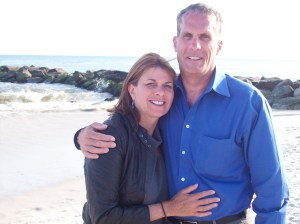
100_1987

Rosemary and Hugh Rawlins

Rosemary Rawlins is the author of Learning by Accident: A Caregiver’s True Story of Fear, Family, and Hope, and a regular blogger for BrainLine.org. She also writes the Family Matters column for Brain Injury Journey Magazine. Rosemary speaks nationally at libraries, TBI events, and conferences. You can learn more about her at www.rosemaryrawlins.com


You can also watch a very informative video about how Rosemary and Hugh pieced their lives together again with the help of some very special counselors. Brain Injury Resources – Couples and Traumatic Brain Injury


Thank you, Rosemary, for taking part in this interview. I hope that your experience will offer some hope, comfort, and inspiration to my readers.

If you would like to be a part of this project, please go to TBI Caregiver Interview Questionnaire for a copy of the questions and the release form.

(Photo compliments of Rosemary.)

Disclaimer: The views or opinions in this post are solely that of the interviewee.

On the Air . . . . . . . . . . . . . . . . . . . “Another Fork in the Road” meets “Quantum Leap”

Breaking News! Breaking News! Breaking News!

images-1“Another Fork in the Road” and “Quantum Leap” have merged for every 5th Sundays of a month. (August 31, 2014, November 30, 2014, March 29 2015, May 31, 2015, August 30, 2015, and November 29, 2015) Join Julie Sharp Kintz and me (Donna O’Donnell Figurski) in “Another Quantum Leap on the Road” as we explore topics directly related to Traumatic Brain Injury.

The topic for August 31, 2014 delved into how “Life Changes After TBI” from the viewpoints of both survivor (Julie) and caregiver (me).

It was a great show and a great discussion. Some of the topics we covered were:

1. Personality change in the survivor

2. Loss of old friends

3. Making new friends

4. Role reversal. Caregiver becomes dominant partner taking on ALL of the responsibilities

5. Loss of career/job

6. Loss of substantial income

7. Frustration of family and friends not understand the extent of TBI

If you missed the show, don’t fret. You can always listen to the archived show. I’ve included the link below.

Please SHARE!

I hope you’ll tune into my regular show the 1st and 3rd Sunday evenings of every month. The show airs at 5:00p Pacific time and runs for 90 minutes.

See you “On the Air!”

(Clip Art compliments of Bing.)

Brain Injury Resources . . . . . . Couples and Traumatic Brain Injury

Couples and Traumatic Brain Injury

Brain th-2Not only does the survivor deal with the effects of a TBI, but the caregiver does too. Much of the concern is directed to the survivor. But the trauma has totally changed the life of the caregiver also. The good news is that the love, partner, and “best friend” of the caregiver survived, but the survivor may look different, sound different, and/or act differently. The survivor may not be the same person that the caregiver knew and loved. In fact, the previous relationship may not seem to exist at all with the current version of the survivor. Often the caregiver works tirelessly out of love or in hopes that some part of their close relationship will return.

TBIs can be hard on relationships. Most relationships struggle, and some do not survive. A few psychologists now specialize in relationships affected by TBI. Here is a video of one couple, who, with the help of two psychologists, managed to withstand the storm of a TBI. Dr. Jeffrey Kreutzer and Dr. Emilie Godwin point out that neither the survivor (Hugh) nor the caregiver (Rosemary) is the same person that he and she were before the TBI. Drs. Kreutzer and Godwin emphasize the importance of acceptance of the “new normal,” not only by the survivor, but also by the caregiver. They both must accept that life will not return to the way it was pre-TBI. Dr. Kreutzer advised Rosemary and Hugh to “…grieve for your old life and build a new one.”

(Clip Art compliments of Bing.)

Comments are welcome.

Caregivers SPEAK OUT! . . . . . . . . Kelly Reader

SPEAK OUT! – Kelly Reader

by

Donna O’Donnell Figurski


Reader Eric & Reader, Kelly Spouse1. What is your name? (last name optional)

 Kelly Reader

 2. Where do you live? (city and/or state and/or country)     Email? (optional)

 Railton, Tasmania     kelly.reader@gmail.com

3. What is the TBI survivor’s relationship to you? How old was the survivor when he/she had the TBI? What caused your survivor’s TBI?

My TBI survivor is my husband, Eric. He was 29 when he has his accident seven months ago on Boxing Day 2013. He was sitting on the back of a trailer, tavelling along a gravel road, when they hit a bump. He fell off – hitting his head.

4. On what date did you begin care for your TBI survivor? Were you the main caregiver? Are you now? How old were you when you began care?

I began my caring role when Eric was released from the hospital on the 6th of February 2014. I was 33, and I was his main caregiver throughout his recovery.

5. Were you caring for anyone else at that time (e.g., children, parents, etc.)?

No. I used to be a full-time caregiver for my mum, but she passed away last May.

6. Were you employed at the time of your survivor’s TBI? If so, were you able to continue working?

I was studying to become a vet nurse when Eric had his accident. Because of the stress, I could not concentrate on my studies and had to ask for a deferment.

7. Did you have any help? If so, what kind and for how long?

Eric has had an Occupational Therapist since he came home, and she has been amazing. She helped us with whatever we needed, and she is still continuing today.

8. When did your support of the survivor begin (e.g., immediately – in hospital, when survivor returned home, etc.)?

As soon as Eric was hurt, he was flown to a hospital four hours away from our hometown. My sister Sally and I spent six weeks at Eric’s bedside every day, until he was released from the hospital. Being away from home for so long was hard.

9. Was your survivor in a coma? If so, what did you do at that time?

Eric was in an induced coma for two days, before they allowed him to wake up. They told me that he might not pull through, so this time was very hard. I stayed by his side hoping he would make it.

10. Did your survivor have rehab? If so, what kind of rehab (i.e., In-patient and/or Out-patient and Occupational, Physical, Speech, and/or Other)? How long was the rehab? Where were you when this was happening?

Eric spent four weeks in a rehab unit at the hospital, where he did physiotherapy and brain activities. When he came home, he went to physiotherapy twice a week. He is now going once a fortnight.

11. What problems or disabilities of your TBI survivor required your care, if any?

When Eric first came home, he required 24-hour supervision because he was not safe to be left alone. He has memory problems, so forgetting to take tablets or turn the stove off was a real problem. He suffered tremors in his hand and legs. Also his balance when walking was not safe.

12. How has your life changed since you became a caregiver? Is it better? Is it worse?

I was a caregiver for my mum since I was 16 years old, so my whole life has revolved around caring for someone I love. If I had to do it all over again, I would. To see how much progress Eric has made since his accident has been so rewarding. To know that I helped him get there makes every heartbreaking moment worth it.

13. What do you miss the most from pre-TBI life?

Eric has always been the strong one in our marriage. When he had his accident, the roles were reversed, and I had to take over doing a lot of the bill management, etc. He was always my protector when things went wrong. After his accident, I didn’t have that anymore. Things are better now. He is becoming that same person again.

14. What do you enjoy most in post-TBI life?

Eric has become sensitive since his accident – something he never showed before. He always had a wall up and wouldn’t let anyone inside. Now, if he watches a sad movie, he will cry. I love this new sensitive side of him, as I feel I can talk to him more. He will let me be a part of his life he never shared before.

15. What do you like least about TBI?

The mood swings are not so bad these days, but in the beginning, they were a nightmare. His moods would change so dramatically it put a real strain on our marriage.

16. Has anything helped you to accept your survivor’s TBI?

When I feel down, I tell myself that he was one of the lucky ones to survive and that I’m lucky to still have him in my life.

17. Has your survivor’s injury affected your home life and relationships and, if so, how?

It put a strain on our marriage because I had to be his caregiver – something he never wanted to happen. I had to be by his side 24/7 for the first four months after he was released from the hospital. That was really hard for him, as he was so used to going to work and having his freedom. Some days he would lash out at me for something that he was in the wrong for, but because of his memory problems, he didn’t remember what he had done.

18. Has your social life been altered or changed and, if so, how?

Our social life has changed for the better, as we spend more time with family and friends now because we realise that life is too short to waste.

19. What are your plans? What do you expect/hope to be doing ten years from now?

I would like to have a family – something that we were working on before his accident. I feel it would make our lives complete.

20. What advice would you offer other TBI survivor caregivers? Do you have any other comments that you would like to add?

Just be there for them when they need a shoulder to cry on. Don’t take anything they say to you in the heat of the moment to heart, as it’s not what they feel about you. It’s just the frustration coming out.Reader Eric & Reader, Kelly Spouse gchjcbfd


Thank you, Kelly, for taking part in this interview. I hope that your experience will offer some hope, comfort, and inspiration to my readers.

If you would like to be a part of this project, please go to TBI Caregiver Interview Questionnaire for a copy of the questions and the release form.

(Photo compliments of Kelly.)

Disclaimer: The views or opinions in this post are solely that of the interviewee.



SPEAK OUT! . . . . . . . . . . . . . . . . . Itty-Bitty GIANT Steps

              SPEAK OUT! Itty-Bitty GIANT Steps

Itty-Bitty GIant Steps for BlogSPEAK OUT! Itty-Bitty Giant Steps will provide a venue for brain-injury survivors and caregivers to shout out their accomplishments of the week.

If you have an Itty-Bitty Giant Step and you would like to share it, just send an email to me at donnaodonnellfigurski@gmail.com. If you are on Facebook, you can simply send a Private Message to me. It need only be a sentence or two. I’ll gather the accomplishments and post them with your name on my blog approximately once a week. (If you do not want your last name to be posted, please tell me in your email or Private Message.)

I hope we have millions of Itty-Bitty Giant Steps.


Here are this week’s Itty-Bitty Giant Steps.

Cheri Richardson Hicks…My Itty-Bitty Giant Step is that I ventured away from outpatient therapy into a new program called Quest. It is a program that gets people back to work and back into the community. I really feel like this is what I need to get me to where I need to be, so it couldn’t have

Melinda's 100 piece puzzle

Melinda’s 100 piece puzzle

Melinda Murphy…Here is one for your Itty-Bitty Giant Steps. I used to be able to do 5000-piece puzzles in 2 or 3 days. I have not done any at all since the accident, until now. Four days, 2 tables, and only 100 pieces – but I did one, and I am thrilled (even if a piece was missing)!

Carmen Gaarder Kumm…Here is my Itty-Bitty Giant Step. I worked 4 1/5 hours today. I took three kids to town (20 minutes away), completed what needed to be done (I only forgot one thing, but my daughter will do that for me in the morning, as she is going anyway), picked up supper (knowing that I wouldn’t have much time once we got home), finished a Facebook page for our church, helped a bit with Vacation Bible School, picked green beans in the garden, and packed for the weekend away. I’m in bed before 10:00, and I don’t feel I overdid it…feeling good actually.

Donna O’Donnell Figurski (caregiver)…This week we have friends from Germany visiting us. They wanted to go to the Grand Canyon, which is about 4 hours from my home – too far for a day trip. Though David would have liked to go, he knew it would be too difficult for him, and he had seen it a few times before. He chose to remain home.

Caboose - haunted by ghost

Caboose – haunted by ghost

That’s where my dilemma came in. David is 9+ years out from his TBI and still deals with many issues, including balance deficits, and I have never left him alone at night. Though he is completely

able to stay at home during the day, I always worry about the night. David convinced me he would be just fine, and after much discussion and a ton of angst, I agreed to go with our friends to the canyon. I insisted that David and I be in constant cell-phone contact.

So off we went to Williams, Arizona, where I slept in a little red caboose, which is supposedly haunted. The ghost may or may not have made an appearance. The jury is still out on that one.

But the jury is in on my trip to the Grand Canyon and on David’s staying overnight by himself. He did it! I did it!

WE did it!

Congratulations to all contributors!

(Clip Art compliments of Bing.)

SPEAK OUT! Letters . . . . . . . to Rachel

colored-envelopes-hi


Dear Rachel,

Your last post breaks my heart. I can hear so clearly your confusion, your frustration, and your sadness. I won’t lie to you and tell you that it will get completely better. As Penelope said, every TBI is different. It depends on how much damage the brain incurred and where the injury took place. My husband is 9 1/2 years out. I still remember vividly when I brought him home. He was in an infantile state and didn’t know much of what was going on around him. I thought I would lose my mind. I was feeding him, dressing him, moving him from bed to wheelchair to chair to wheelchair, etc. Fortunately, he is my best friend. We met when I was 16. AND I was committed to him. Do I now have the same man I married? NO! I have a different version of him. I longed for many years to have the old version of David back, but, alas, he’s gone, and a newer version took his place. I do miss the other David at times, but I love this “new” guy too. If the old one came back, I would be in a dilemma.

David has made many gains throughout the 9+ years. He’s worked hard to get where he is now. Is it great? Is it perfect? Is it pre-TBI? NO! NO! NO! But it is a life we can live with. It’s not what I had hoped for. It’s not what I want, but it IS! You are still so early in the process. And it’s a very hard and trying process. Diane said, “You can’t look back, and you can’t look forward.” I agree. It’s best to live in the moment. I said in a post on my blog, ” . . . there is an ‘us’ after TBI, though it’s a different ‘us.’ ”

[I write a lot about my experiences with TBI on my blog. You can read some stories there. You might start with “TBI Tales: Energizer-Ostrich. It’s how I deal with David’s and my new life.]

I don’t think or dwell on the horror of TBI and how it changed everything. I know what you mean when you said, “Husbands and wives happily sharing life’s moments.” I think that is a common feeling among us wives of TBI survivors. I know I often feel it, but then I resign myself to it and am grateful that David is still with me. I can’t promise you it will get better, but for us . . . we’ve learned to live and enjoy the “new normal” because it’s what we’ve got.

[If you want to read more about David’s and my story and how we have made a new life after TBI, you can read the stories on my blog under “TBI TALES” or “Prisoner Without Bars: Conquering Traumatic Brain Injury” (my book in search of a publisher). You can also listen to my new radio show, which will launch on Monday, August 4th, at 5:00 pm PDT (6:00 pm MDT, 7:00 pm CDT, and 8:00 pm EDT) on the Brain Injury Radio Network. It’s called “Another Fork in the Road.”]

Rachel, I didn’t mean for my response to be this long, but I hope you can gain some solace from it and maybe more understanding. The road you and your husband, Ryan, are on is not an easy one, but it can be traversed. If you want to talk, you can private-message me. I’m glad you are in this group. There are so many caring people who can offer help.

Sincerely,

Donna O’Donnell Figurski

(Clip Art compliments of Bing.)

SPEAK OUT! . . . . . . . . . . . . . . . Itty-Bitty GIANT Steps

SPEAK OUT! Itty-Bitty GIANT Steps

by

Donna O’Donnell Figurski

 What have you accomplished this week? Itty-Bitty GIant Steps for BlogHave you met any goals – BIG or small? It can be as teeny as blinking an eye – something that most of us take for granted, never think twice about. But for someone with no motion in his or her body, this would be a monumental accomplishment.

Your “giant step” may be tying a shoe, walking a few steps, not interrupting a conversation, or remembering an appointment. Or maybe you started a new job or are heading to college. All these are accomplishments.

SPEAK OUT! Itty-Bitty Giant Steps will provide a venue for brain-injury survivors and caregivers to shout out their accomplishments of the week.
If you have an Itty-Bitty Giant Step and you would like to share it, just send me an email at donnaodonnellfigurski@gmail.com. It need only be a sentence. I’ll gather the accomplishments and post them with your name on my blog approximately once a week. (If you do not want your last name to be posted, please tell me in your email.)

I hope we have millions of Itty-Bitty Giant Steps.

(Clip Art compliments of Bing.)


diemodi jewelry

uniquely hand-crafted jewelry by donna

Welcome to Harmony Kent Online

The home of all things books

Pete Springer

Passionate Teacher and Future Children's Author

HOPE TBI

Helping Other People Excel - To Be Independent

For the Love of Books, Old and New

Katie Fischer, Writer and Reader of Stories

Charlie Bown

Children's Author

Jessica Hinrichs

“We write to taste life twice, in the moment and in retrospect.” ― Anais Nin

VIVIAN KIRKFIELD - Writer for Children

Picture Books Help Kids Soar

Mindy’s Writing Wonderland

For authors, parents, teachers & everyone who loves children’s books.

Kaitlyn Leann Sanchez

Literary Agent

Surviving Traumatic Brain Injury

TBI - Survivors, Caregivers, Family, and Friends

The Care Factor

Loving someone with a Traumatic Brain Injury

Brain Injury Support Group of Duluth-Extension

Brain Injury Information and SUPPORT

Brain Aneurysm Global Insight

Brain Aneurysm, cerebral hemorrhaging, hemorrhage stroke