TBI – Survivors, Caregivers, Family, and Friends

Posts tagged ‘http://www.blogtalkradio.com/braininjuryradio’

SPEAK OUT! NewsBit . . . . . . Scientists Search for Therapies for Brain Injury

Stimulation of Specific Neurons Enhances Recovery

Research at Stanford newsboy-thUniversity examined recovery from stroke in mice, but its significance will affect future therapy for brain injuries in humans. The scientists were the first to use a relatively new technique, called “optogenetics,” for studies of the brain. They engineered mice to make a light-sensitive protein in the motor cortex of the brain. They also implanted an optical fiber so they could use light to stimulate that protein, and therefore those neurons specifically.

Stroke-impaired mice (stroke mice) that were stimulated with light recovered significantly more in tests of coordination, balance, and muscle mass than did stroke mice that were not stimulated. Unlike the only drug currently used for strokes, which works to dissolve a clot and must be given within a few hours of a clot-induced stroke, the neural stimulation was effective even five days after a stroke. There were no side effects from stimulating the brains of healthy mice in the same way.

The scientists also found that stimulated stroke mice showed better weight gain than did unstimulated stroke mice. Also, the brains of stimulated stroke mice showed enhanced blood flow, produced more natural neural growth factors, and made more of a protein that strengthens neural circuits during therapy, when compared to the brains of unstimulated stroke mice.

This research is just beginning. The objective is to identify specific neural circuits that have roles in the recovery of the brain to injury. Once the circuits are known, implants that stimulate specific neurons in humans (as is being done now to control epilepsy) and/or new therapies will enhance recovery from brain injury. (Full story)

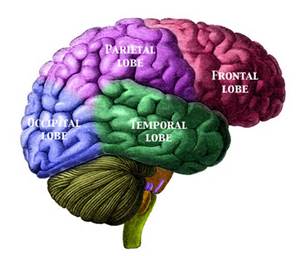
(Clip Art compliments of Bing.)

Brain Injury Resources . . . . . . Music May Optimize the Brain

Music May Optimize the Brain

I found this interesting, short (4 min 45 sec) video on the blog “Beyond Injury,” which is authored by Scott, who was diagnosed with brain cancer. I thought the video should be reposted here for you. It shows how listening to music Brain th-2or – better yet – playing it stimulates several parts of the brain simultaneously, unlike other activities. The video says that musicians’ brains have developed a higher level of functioning, including – but not limited to – problem solving, perceiving emotional cues, expanding fine-motor skills, and enhancing memory. Maybe the stimulation from music will enhance recovery from TBI. But, be aware that there is no hard evidence showing a link between music and recovery from TBI. Neuroscientists do know, however, that music benefits a healthy brain. It is reasonable to expect that an activity that enhances many brain functions should at least be beneficial to TBI survivors with deficits in any of those functions.

(Clip Art compliments of Bing.)

Comments are welcome.

Survivors SPEAK OUT! . . . Catherine (Cat) Brubaker

SPEAK OUT! – Catherine (Cat) Brubaker

by

Donna O’Donnell Figurski

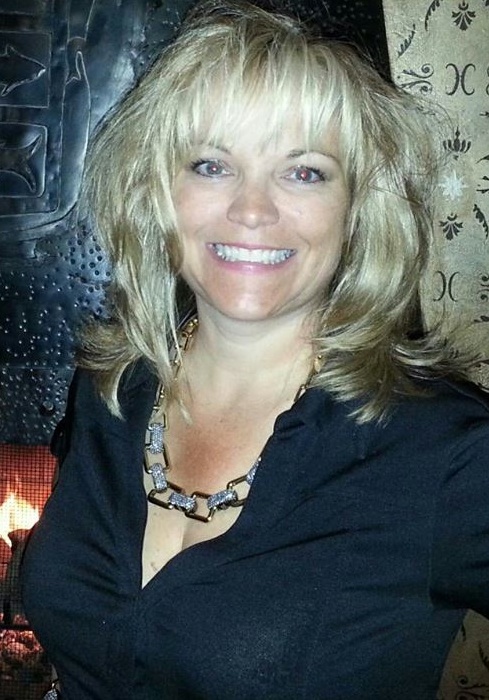
Catherine (Cat) Brubaker

Catherine (Cat) Brubaker

1. What is your name? (last name optional)

Catherine Brubaker

 2. Where do you live? (city and/or state and/or country) Email (optional)

Tempe, Arizona, USA    
CatBrubaker@gmail.com

3. When did you have your TBI? At what age?

The first TBI was in 2010. I was 39. I had another TBI in 2011 at age 40.

4. How did your TBI occur?

1st TBI: assault     2nd TBI: car accident

5. When did you (or someone) first realize you had a problem?

I couldn’t get up without assistance.

6. What kind of emergency treatment, if any, did you have?

1st TBI: After I went to see him, a doctor called 9-1-1. I was then treated in an Emergency Room. 2nd TBI: I was first treated in an Emergency Room. My treatment was then handled for a month by St. Joseph’s Neurological (Phoenix). That was followed by my living in a nursing home. I was then an outpatient.

7. Were you in a coma? If so, how long?

No – both times.

8. Did you do rehab? What kind of rehab (i.e., Inpatient or Outpatient and Occupational, Physical, Speech, Other)?

Yes. I rehabbed as both an inpatient and an outpatient. I had all three therapies (occupational, physical, and speech). I highly recommend a recumbent tricycle.

How long were you in rehab?

I don’t remember.

9. What problems or disabilities, if any, resulted from your TBI
(e.g., balance, perception, personality, etc.)?

Balance. Boundaries. Personality. Independence. Ability to function in everyday things

10. How has your life changed? Is it better? Is it worse?

It’s taken everything – career and relationships. Walking was learned twice…But given everything, now I can ride my trike and paint…freedom.

11. What do you miss the most from your pre-TBI life?

Independence. Freedom. People saw me as capable. I felt I was dating material.

12. What do you enjoy most in your post-TBI life?

I got to ride my trike across the country.

13. What do you like least about your TBI?

It’s frustrating beyond belief. It is like a cage I can’t get out of. I sometimes can’t find words. I don’t like the headaches. I need to plan ahead. My thinking is sometimes not clear or engaged.
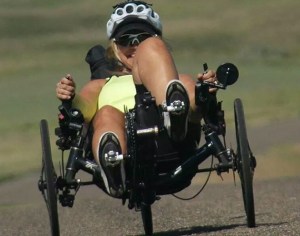
Catherine (Cat) Brubaker riding her recumbent tricycle on 5,200 mile diagonal crossing of USA - from Washinton (state) to Florida

Catherine (Cat) Brubaker riding her recumbent tricycle on 5,200 mile diagonal crossing of USA – from Anacortes, Washinton (state) to Key West, Florida (June/November 2014)

14. Has anything helped you to accept your TBI?

Triking with Dan Zimmerman. He deals with stroke every day.

15. Has your injury affected your home life and relationships and, if so, how?

Yes. I lost a 14-year relationship. I get angry and act out. I also have PTSD (post-traumatic stress disorder). It’s hard to maintain relationships – even new ones. I can’t say what I want to say. Miscommunication happens all the time.

16. Has your social life been altered or changed and, if so, how?

Yes. I lost friends. I had been in a partnership. I stayed in my room for a year after I lost the partnership, my primary relationship.

17. Who is your main caregiver? Do you understand what it takes to be a caregiver?

I was in my mom’s care. One morning in November, I found her passed away. Now my caregiver is my brother. He and I live in my mom’s house.
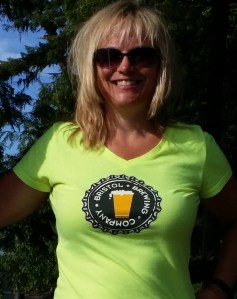
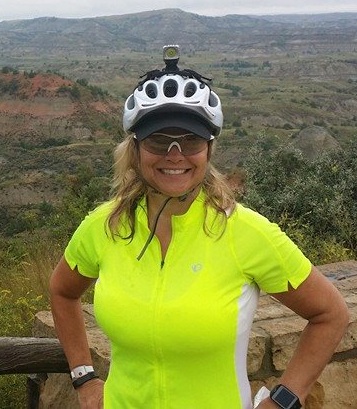
Catherine (Cat) Brubaker - taking a break from riding in Glacier National Park in Montana (August 2014)

Catherine (Cat) Brubaker – taking a break from riding in Glacier National Park in Montana (August 2014)

18. What are your future plans? What do you expect/hope to be doing ten years from now?

Ride my trike. Inspire others to get up off of the couch. I hope to stop people from being depressed and to find purpose.

19. Are you able to provide a helpful hint that may have taken you a long time to learn, but which you wished you had known earlier? If so, please state what it is to potentially help other TBI survivors with your specific kind of TBI.

Let go of “mad.” Earlier. I wish I did. There is so much less to carry around, and it makes room for “happy.” It gives you real joy and purpose.

20. What advice would you offer to other TBI survivors? Do you have any other comments that you would like to add?

If you can, adapt. You will overcome. Get a trike. You can balance three wheels, and it gives you freedom. I cherish mine.
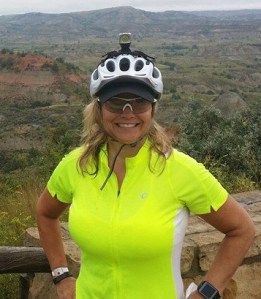
Catherine (Cat) Brubaker "Triking Acoss America"

Catherine (Cat) Brubaker “Triking Acoss America”

(You’ll have to “peel it from my cold dead fingers.”) I have control, joy, and freedom. It allows me to explore the world and see new places.


If you want to learn more about Catherine’s adventures of Triking Across America go to Spokes Fighting Strokes Tour.


Thank you, Catherine, for taking part in this interview. I hope that your experience will offer some hope, comfort, and inspiration to my readers.

(Disclaimer: The views or opinions in this post are solely that of the interviewee.)

(Photos compliments of Catherine.)

If you would like to be a part of the SPEAK OUT! project, please go to TBI Survivor Interview Questionnaire for a copy of the questions and the release form.

On The Air – Brain Injury Radio Discrimination of TBI Survivors

On the Air

with

Donna O’Donnell Figurski and Julie Kintz

images-1With my first radio stint under my belt (my interview with Kim Justus on her show, “Recovery Now,”) I felt relieved. I’d made it through my first time on “live” radio. Now my new friend, Julie Kintz, another Brain Injury Radio Network host asked me to help her co-host a show. Her computer sound was not working properly and she didn’t want to not do a show.

Though I was nervous, I felt that it would allow me to familiarize myself with the studio and the studio hosting tools, and give me more practice on the air before I took the microphone myself. And . . .  I wanted to help a fellow host. So, I reluctantly agreed.

There were some glitches before the show. We expected to be interviewing a guest, but because communications got twisted, the guest never arrived. Julie and I had only minutes to decide what to do as the minutes ticked down to “On the Air” time. Since we’d planned to discuss discrimination of TBI survivors with the guest, we decided to pursue that topic as our discussion for the evening. I think it turned out well. What do you think.

You can listen here.

(Clip Art compliments of Bing.)

On the Air – Brain Injury Radio Donna’s Interview with Kim Justus

On the Air

with

Donna O’Donnell Figurski & Kim Justus

     (interview to tell David’s TBI story)

images-1I was surprised when I got a Private Message from one of the Brain Injury Radio Network hosts one evening while I was browsing through the many Traumatic Brain Injury sites that I belong to on Facebook. The host, Julie Kintz (“Quantum Leap”), asked if I’d be interested in becoming a BIR host too and referred me to Kim Justus, who is in charge of recruiting new hosts.

Of course, I was interested, but I wondered if I could even do something like this. I told David (my husband), and, surprisingly, he encouraged me. (He usually worries that I’ll take on too much.) I was glad for his encouragement, but I wasn’t convinced yet and threw the idea around with several close friends. They also gave me their “thumbs up.” I agreed to do it!

Then Kim invited me to be a guest on her show (“Recovery Now”) as a Traumatic Brain Injury caregiver. She wanted me to tell an abridged version of David’s and my story of our travels in the TBI maze.

I am featured in the first two hours of Kim’s three-hour show. You can listen by clicking the link below. So sit back, relax, and enjoy the show.

My show, “Another Fork in the Road,” will debut on Monday, August 4, 2014, at 5:00 pm Pacific time. It will air the 1st and 3rd Mondays of each month. On that show, I will tell a more complete version of our tale based on my book, “Prisoner Without Bars: Conquering Traumatic Brain Injury,” which is searching for a publisher. I hope to see you there.

Subsequent shows will feature interviews with TBI survivors and caregivers and offer brain injury resources and interviews with professionals in the field of TBI. There will also be discussions on current topics of interest.

(Clip Art compliments of Bing.)

Click here for a list of all “Another Fork in the Road” shows on the Brain Injury Radio Network.

SPEAK OUT! . . . You Are Invited! Launch “Another Fork in the Road” on Brain Injury Radio Network: Donna Tells Her Story Aug. 4, 2014

Come one! Come ALL!putthis_on_calendar_clip_art

What:        Launch “Another Fork in the Road” on Brain Injury Radio Network: “Thursday, the 13th – an unlucky day!”

Why:         Donna tells about the onset of David’s Traumatic Brain Injury and their life together after TBI.

Where:     Brain Injury Radio Network

When:       Monday, August 4, 2014

Time:         5:00p PDT (6:00p MDT, 7:00p CDT, and 8:00p EDT) 90 minute show

How:         Click: Brain Injury Radio Network.


Call In
:    424-243-9540

Call In:     855-473-3711 toll free in USA

Call In:    202-559-7907 free outside US

or SKYPE

If you miss the show, but would like to still hear the interview, you can access the archive on On Demand listening (Archived show) will be available after the show

(Clip Art compliments of Bing.)

SPEAK OUT! . . . You Are Invited! Interview with Stephanie Carbone July 27, 2014


                           Come one! Come ALL!putthis_on_calendar_clip_art


What:        Interview with Stephanie Carbone

Why:         Her husband, Sean, is accused of a crime. Is he “unjustly condemned?”

Where:     Brain Injury Radio Network

When:       July 27, 2014

Time:         5:00p PDT (6:00p MDT, 7:00p CDT, and 8:00p EDT) 90 minute show

(Clip Art compliments of Bing.)

diemodi jewelry

uniquely hand-crafted jewelry by donna

Welcome to Harmony Kent Online

The home of all things books

Pete Springer

Passionate Teacher and Future Children's Author

HOPE TBI

Helping Other People Excel - To Be Independent

For the Love of Books, Old and New

Katie Fischer, Writer and Reader of Stories

Charlie Bown

Children's Author

Jessica Hinrichs

“We write to taste life twice, in the moment and in retrospect.” ― Anais Nin

VIVIAN KIRKFIELD - Writer for Children

Picture Books Help Kids Soar

Mindy’s Writing Wonderland

For authors, parents, teachers & everyone who loves children’s books.

Kaitlyn Leann Sanchez

Literary Agent

Surviving Traumatic Brain Injury

TBI - Survivors, Caregivers, Family, and Friends

The Care Factor

Loving someone with a Traumatic Brain Injury

Brain Injury Support Group of Duluth-Extension

Brain Injury Information and SUPPORT

Brain Aneurysm Global Insight

Brain Aneurysm, cerebral hemorrhaging, hemorrhage stroke