TBI – Survivors, Caregivers, Family, and Friends

Archive for the ‘NewsBits’ Category

SPEAK OUT! NewsBit . . . . . . . . . . . Gel Helps Stem Cells Heal the Brain

Gel Helps Stem Cells Heal the Brain

presented by

Donna O’Donnell Figurski

Newsboy thIn previous posts, I have highlighted new research that shows the amazing potential of stem cells to repair organs, including the brain. Exciting new research at the University of Toronto is bringing stem cell therapy closer to reality. Dr. Molly Shoichet and her colleagues showed that a gel, which they originally designed to support stem cells and help them grow, also enhances the ability of stem cells to heal an organ after transplantation. The gel then dissolves and is absorbed by the body. The experiment was conducted in mice (which is a good first model for humans). Specifically Dr. Shoichet’s team transplanted stem cell-gel complexes into the brains of mice with stroke. Within weeks, the treated mice began to improve their motor skills. (Full story)

[This post also directs the reader to several NewsBits.]

(Clip Art compliments of Bing.)

As I say after each post:

Please leave a comment by clicking the blue words “Leave a Comment” below this post.anim0014-1_e0-1

Feel free to follow my blog. Click on “Follow” on the upper right sidebar.

If you like my blog, share it with your friends. It’s easy! Click the “Share” buttons below.

If you don’t like my blog, “Share” it with your enemies. I don’t care!

Feel free to “Like” my post.

SPEAK OUT! NewsBit . . . . . . . . . . . National Hockey League Player Retires at 24 Because of Concussions

National Hockey League Player Retires at 24 Because of Concussions

presented by

Donna O’Donnell Figurski

newsboy-thFootball and hockey are the two sports that are responsible for the majority of concussions in athletes. A concussion is now known to be a brain injury and can be serious. More and more people are becoming aware of the possibility that a concussion may lead to a major life-change.Capitals_Predators_Hockey-09eb6

Previously I wrote about Chris Borland, a starting rookie linebacker for the San Francisco 49ers in the NFL (National Football League) who quit after one season because of his concerns about brain injury.

Now, Patrick Wey is quitting the Washington Capitals in the NHL (National Hockey League) at a young age (24) 185618_ebbecause he had two concussions in 2014. Wey plans to substitute “educational interests” for hockey.

(Clip Art compliments of Bing.)

As I say after each post:

Please leave a comment by clicking the blue words “Leave a Comment” below this post.anim0014-1_e0-1

Feel free to follow my blog. Click on “Follow” on the upper right sidebar.

If you like my blog, share it with your friends. It’s easy! Click the “Share” buttons below.

If you don’t like my blog, “Share” it with your enemies. I don’t care!

Feel free to “Like” my post.

SPEAK OUT! NewsBit . . . . . . . . . . . Depression Reversed in Mice

Depression Reversed in Mice

presented by

Donna O’Donnell Figurski

newsboy-thNOTE: This news is especially important for young brain-injury survivors because clinical application may take 10-20 years.

In a major advance in basic research of the brain, neuroscientists were able to reverse depression in mice by activating neurons storing a positive memory. The work was done by a team of brain scientists headed by Massachusetts Institute of Technology (MIT) Professor and Nobel Laureate, Dr. Susumu Tonegawa. This work on depression extended Dr. Tonegawa’s earlier work, on which I reported previously. The current research was done at the RIKEN-MIT Center for Neural Circuit Genetics.

The experiments were done on mice. (I have previously written why mice are good first models for humans.) Dr. Tonegawa’s team was able to use light to activate cells of the dentate gyrus, a part of the hippocampus – the area of the brain where memories are stored. They also showed that tagging a memory with a positive or negative feeling involved a pathway composed not only of neurons of the dentate gyrus, but also of neurons in two other areas of the brain: the nucleus accumbens and the basolateral amygdala.mouse-clipart-5

(The use of light to activate specific neurons is a powerful and relatively recent method called “optogenetics.” The mice are genetically engineered to allow the neurons that made new memories to be turned on by light. The light is supplied by implanting optical fibers near the desired neurons, in this case in the dentate gyrus of the mouse brain, and shining light from a laser through the fibers.)

When neurons storing a positive memory were light-activated in mice that showed the symptoms of depression, the mice no longer acted depressed. The depression had been reversed by turning on those neurons. Briefly activating the neurons storing a positive memory for five days and then stopping the trigger of activation (light) was also effective in reversing depression. This shows that the positive-memory neurons do not need to be continuously activated.

Current therapeutic drugs for the treatment of depression in humans act on all neurons of the brain. It is hoped that eventually drugs will be designed for specific neurons. Another approach to stimulate specific neurons is to use a kind of “pacemaker” that could be implanted in the brain. Such treatments would have fewer side effects. (Full story)

(Clip Art compliments of Bing.)

As I say after each post:

Please leave a comment by clicking the blue words “Leave a Comment” below this post.anim0014-1_e0-1

Feel free to follow my blog. Click on “Follow” on the upper right sidebar.

If you like my blog, share it with your friends. It’s easy! Click the “Share” buttons below.

If you don’t like my blog, “Share” it with your enemies. I don’t care!

Feel free to “Like” my post.

SPEAK OUT! NewsBit . . . . . . . . . . . . Comedian Tracy Morgan: Exclusive Interview One Year After Accident

Comedian Tracy Morgan: Exclusive Interview One Year After Accident

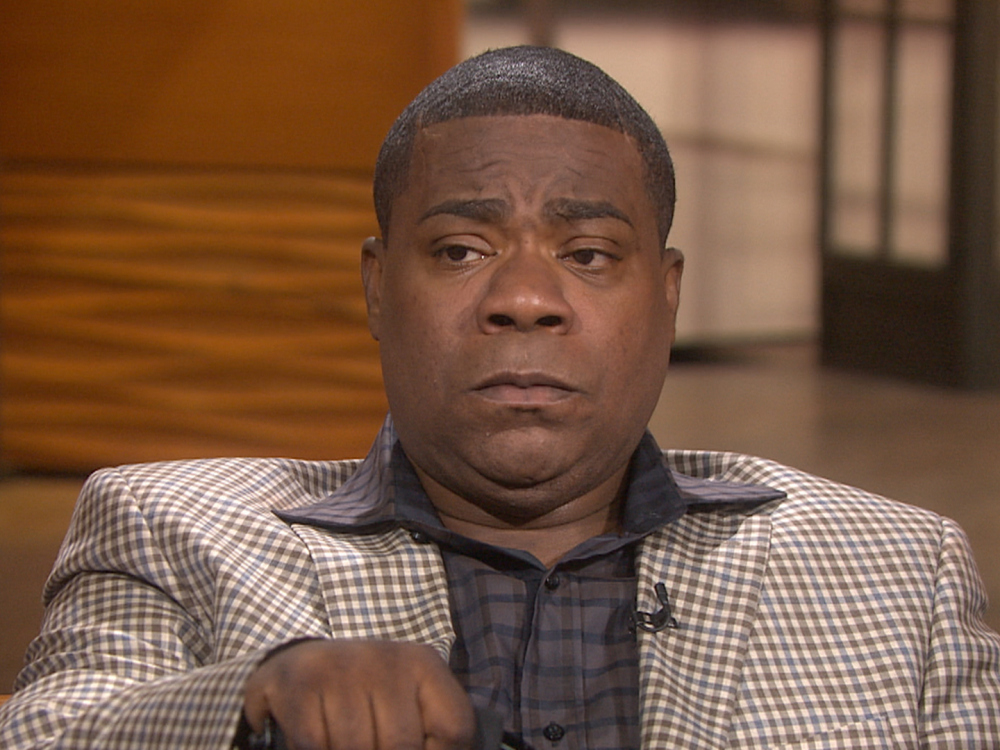
tracy-morgan-crashJune 7th was the one-year anniversary of the horrific motor vehicle accident that gave comedian Tracy Morgan broken bones and a serious brain injury and also claimed the life of Morgan’s close friend, James “Jimmy Mac” McNair. Matt Lauer Shot_3-10863spoke with Morgan in a two-part exclusive interview on the Today show and on the set of Saturday Night Live (part 1 with video, part 2 with video).

Morgan, who at times was tearful, said, “I love comedy, and I wonder how I’m going to be funny again.”

(Clip Art compliments of Bing.)

As I say after each post:

Please leave a comment by clicking the blue words “Leave a Comment” below this post.anim0014-1_e0-1

Feel free to follow my blog. Click on “Follow” on the upper right sidebar.

If you like my blog, share it with your friends. It’s easy! Click the “Share” buttons below.

If you don’t like my blog, “Share” it with your enemies. I don’t care!

Feel free to “Like” my post.

SPEAK OUT! NewsBit . . . . . . . . . . . . Domestic Violence in Women May Result in Brain Injury

Domestic Violence in Women May Result in Brain Injury

presented by

Donna O’Donnell Figurski

Estimate: Every year, domestic violence gives 20 million women a TBI

Maria Garay Sojourner Center 060315

Maria Garay, CEO Sojourner Center Phoenix, Az

Newsboy thThe news media have made people aware of traumatic brain injury (TBI) in soldiers returning from war and in sports, especially football. But, no one has been tracking TBIs in domestic violence cases. Maria Garay, CEO of the Sojourner Center in Phoenix, Arizona, which is responsible for a new program to identify TBIs in victims of domestic violence, said of the failure to identify TBIs in abuse cases, “The fact that no one is tracking this is, to me, a crime.”

The number of victims of domestic violence with a TBI will dwarf military and sports-related TBIs combined. One estimate says 20 million abused women a year in the US will get a TBI. The Sojourner Center is initiating a program to identify TBIs in women and children who are victims of domestic violence.

Sojourner Center Maria Garay 060315

Sojourner Center Phoenix, Az

One issue is that shelters do not routinely test for a TBI, so one objective is to develop tools that allow shelter workers to routinely screen for TBIs. Another objective is to provide every victim who has a TBI with a treatment plan. Soldiers and athletes are often directed to a rehab center. Victims of domestic abuse with a TBI are not currently helped. The TBI may actually make it more difficult for a woman to leave because it may be difficult to find a job. Kim Gandy, president of the National Network To End Domestic Violence, warns that women who are known to have a TBI may be at a disadvantage in child custody cases. But, Kerri Walker, a coordinator for a women’s shelter and herself a victim of domestic violence said, “The one thing that abusers tell us over and over is that we are stupid. The relief factor for so many women is going to be unmeasurable.” (Full story)stop-domestic-violence

(Clip Art compliments of Bing.)

As I say after each post:

Please leave a comment by clicking the blue words “Leave a Comment” below this post.anim0014-1_e0-1

Feel free to follow my blog. Click on “Follow” on the upper right sidebar.

If you like my blog, share it with your friends. It’s easy! Click the “Share” buttons below.

If you don’t like my blog, “Share” it with your enemies. I don’t care!

Feel free to “Like” my post.

SPEAK OUT! NewsBit . . . . . . . . . . . . Joe Namath – Football – Brain Injury

Joe Namath Speaks OUT About Brain Injury and Football

presented by

Donna O’Donnell Figurski

Newsboy thJoe Namath, former star quarterback for the New York Jets and football legend, said that, now knowing the sport’s likely danger to the brain, he wouldn’t have played football.joe namath large

Namath’s wake up call happened when he saw a problem with his brain in a brain scan. It revealed that the right side was not getting enough oxygen, whereas the left side was normal. He was worried about the several concussions he had had, but he thought his growing forgetfulness was caused by old age.

Fortunately, after several months of rigorous treatment alg-joe-namath-jpg(1-hour sessions, 5 days a week) in a hyperbaric chamber, in which he was subjected to a high pressure of oxygen, a new scan indicated that both sides of Namath’s brain were normal. (Full story 1 and Full story 2 – with video)

(Clip Art compliments of Bing.)

As I say after each post:

Please leave a comment by clicking the blue words “Leave a Comment” below this post.anim0014-1_e0-1

Feel free to follow my blog. Click on “Follow” on the upper right sidebar.

If you like my blog, share it with your friends. It’s easy! Click the “Share” buttons below.

If you don’t like my blog, “Share” it with your enemies. I don’t care!

Feel free to “Like” my post.

SPEAK OUT! NewsBit . . . . . . . . . . Chris Borland – Rookie Linebacker Retires Over Fear of Brain Trauma

Rookie Linebacker, Chris Borland,  Retires Over Fear of Brain Trauma


newsboy-thChris Borland, a promising rookie linebacker with the San Francisco 49ers, retired after one year of a four-year contact because the possibility of brain disease wasn’t “worth the risk.” (Full story 1; story and video 2)Borland, Chris

There is a growing body of evidence that repeated head trauma can lead to neurological problems and premature death. A NewsBit on this blog reported that a University of Tulsa study revealed changes to the brains of football players, even in the absence of a documented concussion. Last season, an Ohio State University football player apparently committed suicide. Concussions may have had a role in his death. The National Football League (NFL), the premier professional football organization in the United States, is in the middle of a multimillion-dollar lawsuit over concussions and neurological problems.

Chris Borland gave careful thought to his early and unexpected retirement. He talked with family, friends, teammates, and brain researchers before making his decision to retire from a game he was good at. He said the game is inherently dangerous, which is not necessarily a bad thing, but a player should make an informed decision. Borland also said, “There’s just too much unknown for me, and there have been too many tragedies for me to be comfortable playing…I just want to live a long, healthy life, and I don’t want to have any neurological diseases or die younger than I would otherwise.” He was asked about walking away from probable wealth. Borland answered that no amount of money could take the place of being there for his family. (Full story 3)

(Clip Art compliments of Bing.)

Speak OUT! NewsBit . . . . . . . . . Major News About Football-Caused Concussions

Major News About Football-Caused Concussions

Newsboy thYou’ve probably heard of Kosta Karageorge, the senior on the Ohio State University football team who apparently committed suicide. He enjoyed hitting his opponents. He had several known concussions, and probably several more that were unreported. It’s now very clear that concussions injure the brain. Kosta complained about his concussions in his last text message to his mother, saying “…but these concussions have my head all f—ed up.” His tragic case is still being investigated, but because he played on a major football team and because he had a history of brain trauma, his case has highlighted the need to know more about concussions and the need to better protect players, particularly young players, whose brains are still developing. (Full stories 1 and 2)

Both the National Football League (NFL), a league of professional players, and the National Collegiate Athletic Association (NCAA), a national organization that oversees most college football, have settled class-action lawsuits about concussions. (The NFL settled for $765 million, and the NCAA, for $70 million, but judges are likely to rule that more is needed.) High school football is not regulated by a national organization, but rather by the individual states. Now the first class-action lawsuit has been filed against the athletic association of a state – Illinois. The attorney is the same one that filed the NCAA lawsuit. This is the first lawsuit for high school football, and the attorney believes that high school athletic associations need to be sued in every state to affect the sport nationally. He is representing a former high school quarterback who suffered several concussions. The objective of the lawsuit is to make the sport safer. (Full stories 3 and 4)

A star high school football player has written a poignant essay about why his concussion landed him in the hospital fighting for his life. He definitely enjoyed being one of the “elite,” but now he writes that football wasn’t worth shattering his life and dreams (“…was playing football worth it? The answer is no. Not by a long shot”). He hopes to warn other youths of the incredible danger. (Full story)

(Clip Art compliments of Bing.)


SPEAK OUT! NewsBit . . . The Future of Treatment for Brain Injuries – New Brain Tissue From Special Cells

The Future of Treatment for Brain Injuries – New Brain Tissue From Special Cells

Newsboy thResearch on synthesis and regeneration of brain tissue is advancing rapidly. Here are four recent news reports on current research (1, 2, 3, 4) that predict that the near future of medicine will seem like science fiction.

Why is there so much excitement? Neuroscientists have found that the answer to regenerating brain tissue lies in the enormous potential of “stem cells.” Each of your organs, including the brain, has a reservoir of special cells (“stem cells”) that can regenerate the tissue of that organ. Since all cells of the body have exactly the same DNA (or blueprint for the cell), the cells of different tissues are formed by activating different subsets of the DNA. (Think of the cells of different tissues as running different programs.) The reports discuss ways to make neural stem cells, how stem cells reproduce, and how implanting neural stem cells into the brain is already controlling or curing diseases of the brains of animals. When neural stem cells are implanted into the brain (a relatively simple surgical procedure), they become whichever cells are needed to replace old, missing, or damaged brain cells. In this way, the brain essentially heals itself. The additional (i.e., implanted) stem cells help a natural process. Some of the experiments have been done in mice (see my previous explanation of why the mouse is a good first model for humans), but soon the experiments will be done in humans. The current research predicts that repair of brain injury is not only possible, but is also likely to be done in the near future.

In paper #1, neuroscientists from the Medical College of Georgia at Georgia Regents University identified a molecule of neural stem cells (ganglioside GD3). GD3 is crucial for the ability of neural stem cells to reproduce and maintain a pool of healthy stem cells that can be used to replace old or damaged cells in the brain. Normally organ formation means that the cells are finished reproducing. They’re at a kind of “dead end” for cells. The ability to continuously reproduce is one of the amazing properties of stem cells. They’re part of the organ, yet they can reproduce and they can become any cell, so there is always a reservoir of stem cells ready to become any needed cell. In a major advance, the research team at the Medical College of Georgia showed in mice that the pool of neural stem cells in the part of the brain they examined was greatly reduced when the cells lacked ganglioside GD3, and the pool was restored when GD3 was present. The scientists want to figure out how to keep neural stem cells making abundant GD3. That way, there will always be plenty of neural stem cells to replace brain cells as needed.

Paper #2 describes groundbreaking research by neuroscientists at the Whitehead Institute of MIT. They were able to take the cells of fully developed tissue (cells that can no longer form new tissue and don’t reproduce) and turn them into neural stem cells that can reproduce and form new brain tissue. There are two exciting aspects of this research. First, the team was able to form “pluripotent” stem cells (i.e., cells able to form new tissue of any kind) directly from “mature” cells (i.e., cells of any fully developed organ) without requiring them to go through an undeveloped state normally seen only in the cells of early embryos before their development into our various tissues. Second, the necessary factors were introduced and turned on by a chemical. Once neural stem cells were formed, the chemical was removed, and the cells retained the properties of neural stem cells. This was the first time such a feat had been accomplished. It guarantees an abundance of neural stem cells that will be needed for transplantation therapy.

Paper #3 describes the research done at Lund University in Sweden. Parkinson’s Disease is a disease of the brain that causes movement problems. Millions of people worldwide have this affliction. It’s known that the Parkinson’s brain is deficient in the production of a chemical (dopamine) that is needed for proper movement. Neuroscientists derived dopamine-producing neurons from human stem cells. The dopamine-producing neurons were implanted into the brains of rats with a Parkinson’s-like disease. The synthetic neurons were specifically implanted into the region of the rat brain that controls movement. The implanted dopamine-producing neurons colonized the brain and led to normal levels of dopamine in the brain. As a result, the diseased rats had normal motor function.

Sixty-five million people worldwide are afflicted with epileptic seizures. About 1/3 are not helped by any medication. One highly regarded hypothesis is that the cause of seizures is due to a low number of seizure-inhibiting neurons (interneurons). Paper #4 tells of the research of neuroscientists at McLean Hospital in Massachusetts and the Harvard Stem Cell Institute. They implanted seizure-inhibiting neurons into the brains of mice bred to have epileptic-like seizures. The seizure-inhibiting neurons were human cells derived from human stem cells. Fifty percent of the mice with the implanted cells no longer had seizures. The other 50% had a severely reduced number of seizures. The scientists showed that the human neurons integrated into the mouse brains and dampened the signals from the highly excited mouse neurons that lead to epileptic seizures. The next step is to find a way to purify the interneurons, so only seizure-inhibiting neurons would be implanted.

(Clip Art compliments of Bing.)
SPEAK OUT! NewsBit . . . . . . . Electrical Stimulation of the Brain Improves Memory

Electrical Stimulation of the Brain Improves Memory

Newsboy th


Neuroscientists at Northwestern University have found that electrical stimulation of the brain results in long-term improvement of memory. The researchers applied magnetic pulses to generate an electrical current (Transcranial Magnetic Stimulation or TMS) at specific areas of the skull to stimulate specific neurons near the surface of the brain. They were surprised to find that, while memory circuits are complex and involve some neurons deep in the brain, stimulating the accessible neurons near the surface of the brain stimulates the entire circuit. TMS does not require surgery, and, unlike a therapeutic drug, which would affect all parts of the brain, TMS can be used to target specific areas of the brain. The neuroscientists believe that electrical current induces better communication between neurons and stimulates the neuroplasticity of the brain, but the molecular mechanism is unknown. (Full story, Video)

(Clip Art compliments of Bing.)

diemodi jewelry

uniquely hand-crafted jewelry by donna

Welcome to Harmony Kent Online

The home of all things books

Pete Springer

Passionate Teacher and Future Children's Author

HOPE TBI

Helping Other People Excel - To Be Independent

For the Love of Books, Old and New

Katie Fischer, Writer and Reader of Stories

Charlie Bown

Children's Author

Jessica Hinrichs

“We write to taste life twice, in the moment and in retrospect.” ― Anais Nin

VIVIAN KIRKFIELD - Writer for Children

Picture Books Help Kids Soar

Mindy’s Writing Wonderland

For authors, parents, teachers & everyone who loves children’s books.

Kaitlyn Leann Sanchez

Literary Agent

Surviving Traumatic Brain Injury

TBI - Survivors, Caregivers, Family, and Friends

The Care Factor

Loving someone with a Traumatic Brain Injury

Brain Injury Support Group of Duluth-Extension

Brain Injury Information and SUPPORT

Brain Aneurysm Global Insight

Brain Aneurysm, cerebral hemorrhaging, hemorrhage stroke