TBI – Survivors, Caregivers, Family, and Friends

Archive for March, 2015

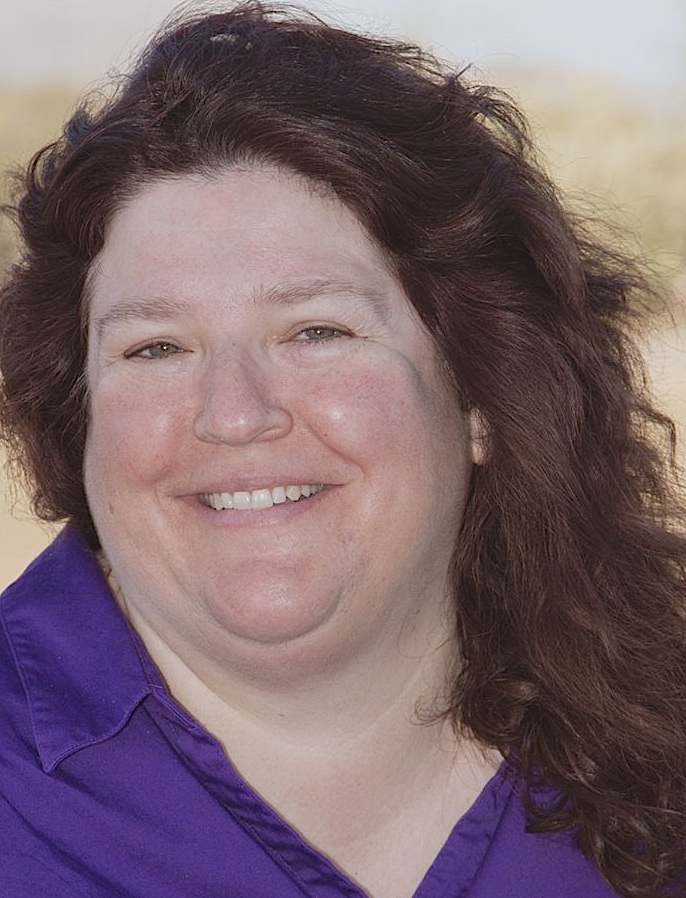
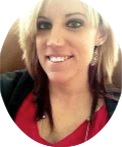
Survivors SPEAK OUT! Amanda Parten

Survivors  SPEAK OUT!  Amanda Parten

by

Donna O’Donnell Figurski


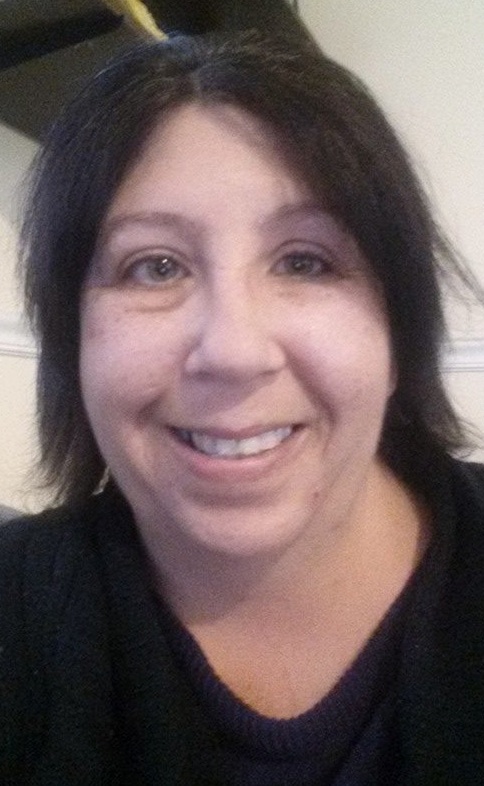
Amanda Parten - TBI Survivor

Amanda Parten – TBI Survivor

1. What is your name? (last name optional)

Amanda Parten

2. Where do you live? (city and/or state and/or country) Email (optional)

Grove Hill, Alabama, USA     amanda.parten@yahoo.com

3. When did you have your TBI? At what age?

Age 29

4. How did your TBI occur?

My Jeep was hit by a Mack Truck. I was sitting in the median, and a Brand Energy Mack Truck jackknifed me in the driver’s door.

5. When did you (or someone) first realize you had a problem?

The EMS (Emergency Medical Service) technicians realized I had a problem as soon as they were on the scene.

6. What kind of emergency treatment, if any, did you have?

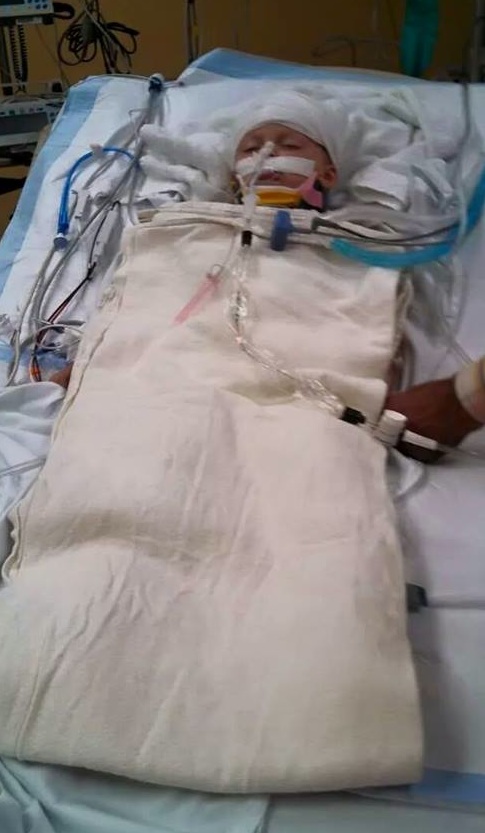
I was life-flighted south to the Medical Center at The University of South Alabama in Mobile. I suffered a broken hip, a crushed pelvis, and a lacerated spleen. Transverse processes were broken off my spine. I had a “mild to moderate” parietal TBI. I was in a coma, and I remained in the hospital for a few weeks after I woke up. I was in physical therapy for six weeks after I was released from the hospital.

7. Were you in a coma? If so, how long?

Yes. I was in a coma for eleven days. Technically, I was still in my coma for an additional 4-6 months after the wreck – according to the Rancho Los Amigos coma scale.

8. Did you do rehab? What kind of rehab (i.e., inpatient or outpatient and occupational and/or physical and/or speech and/or other)?

I had physical therapy as an outpatient.

How long were you in rehab?

Six weeks

9. What problems or disabilities, if any, resulted from your TBI
(e.g., balance, perception, personality, etc.)?

I am mostly plagued by short-term memory loss. I experience hip pain, mood swings, and personality changes. I have difficulty sleeping. I had a year of depression.

10. How has your life changed? Is it better? Is it worse?

Everything about my life has changed. Sometimes I feel like my life is better; sometimes I feel like it’s worse.

11. What do you miss the most from your pre-TBI life?

I miss my awesome memory. I could remember things from every moment – no matter how long ago. I never had to write anything down.

12. What do you enjoy most in your post-TBI life?

I appreciate little things more now. For example, when I wake up and remember a dream, it’s like a gift! This has happened maybe six times in six years.

13. What do you like least about your TBI?

I dislike the fact that I really have to warm up to new people. New people tend to make me nervous.

14. Has anything helped you to accept your TBI?

Time…knowing that there is nothing that will undo the accident and that I must press on.

15. Has your injury affected your home life and relationships and, if so, how?

I feel like people don’t want to stay around for more than a few months once they see what an impact the TBI has had on me. I was living with my boyfriend at the time of the accident. We broke up two years later. I was married a couple years after that – but for only four months.

16. Has your social life been altered or changed and, if so, how?

It has. I don’t go out anymore. I’m no longer spontaneous. Everything has to be very scheduled.

17. Who is your main caregiver? Do you understand what it takes to be a caregiver?

I am my own caregiver. I also take care of my two children.

18. What are your future plans? What do you expect/hope to be doing ten years from now?

Ten years from now, I expect one daughter to be graduating from college. The other will be in middle school. I will still be a therapist.

19. Are you able to provide a helpful hint that may have taken you a long time to learn, but which you wished you had known earlier? If so, please state what it is to potentially help other TBI survivors with your specific kind of TBI.

If you cannot accept your new self, then try to compensate. When I stopped thinking that I would “wake up” and be back to normal, accepted myself, and started putting compensatory strategies into place, life stopped being such a struggle.

20. What advice would you offer to other TBI survivors? Do you have any other comments that you would like to add?

Get into a group, whether it is on Facebook or somewhere else on the Internet. Having access to others who are going through the same thing as you can be such a help. Sometimes knowing that you aren’t the only one who has ever felt a certain way or that the same thing that happened to you has happened to someone else can make a huge difference.

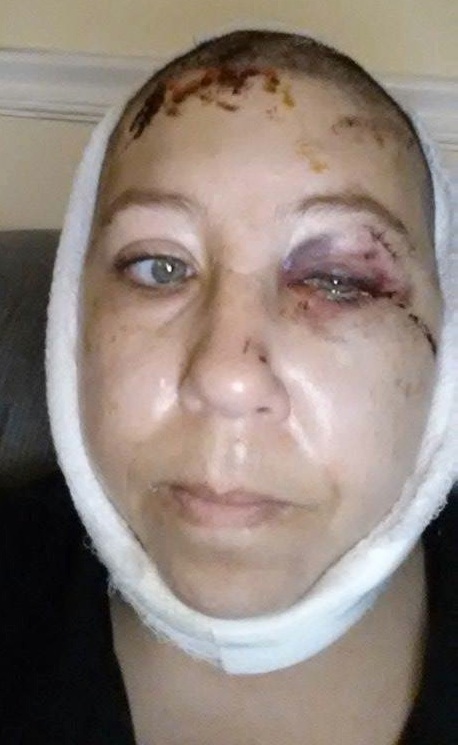
Amanda Parten - TBI Survivor

Amanda Parten – TBI Survivor


Thank you, Amanda, for taking part in this interview. I hope that your experience will offer some hope, comfort, and inspiration to my readers.

(Disclaimer: The views or opinions in this post are solely that of the interviewee.)

If you would like to be a part of the SPEAK OUT! project, please go to TBI Survivor Interview Questionnaire for a copy of the questions and the release form.

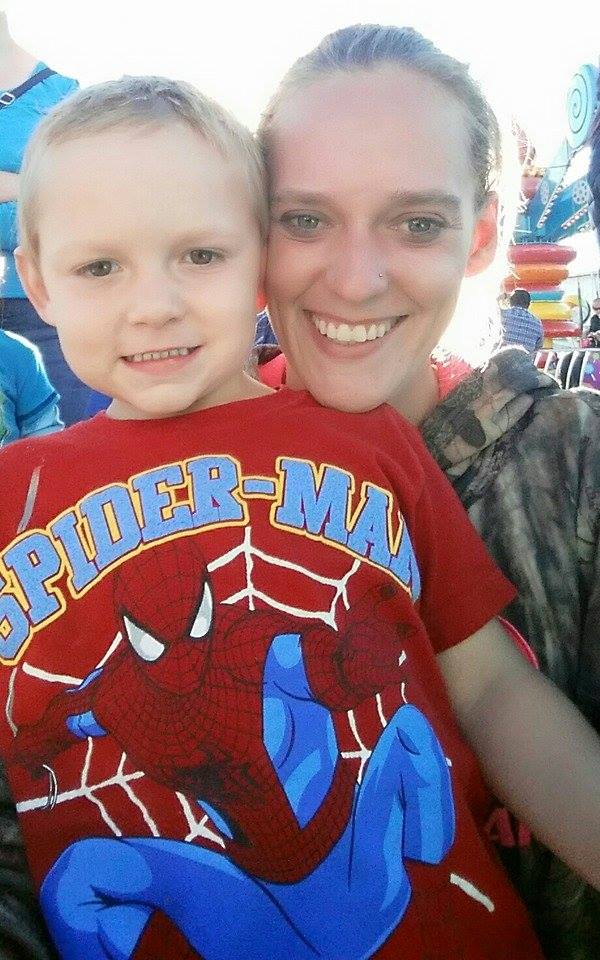
(Photos compliments of Amanda.)

SPEAK OUT! Faces of Brain Injury

Brain Injury is Not Discriminating.

bigstock-cartoon-face-vector-people-25671746-e1348136261718

It can happen to anyone, anytime, . . . and anywhere.

The Brain Trauma Foundation states that there are 5.3 million people in the United States living with some form of brain injury.

On “Faces of Brain Injury,” you will meet survivors living with brain injury. I hope that their stories will help you to understand the serious implications and complications of brain injury.

The stories on SPEAK OUT! Faces of Brain Injury are published with the permission of the survivor or designated caregiver.

If you would like your story to be published, please send a short account and two photos to me at donnaodonnellfigurski@gmail.com. I’d love to publish your story and raise awareness for Brain Injury.


Chorn, Jennifer Girouard & SpouseJennifer Girouard Chorn (survivor)

I am a TBI (traumatic brain injury) survivor. I fell from the second story of my house onto a tile floor in August 2010. I was life-flighted to the shock and trauma center of the Chorn, Jennifer Girouard & Kidshospital. I was in a coma for almost a month. I broke my arm, back/sacrum, and eye socket. But, the most serious invisible injury is my TBI. Apparently God wasn’t yet done with me. So I’m very thankful for my family, who helps me overcome my TBI every day.

West, Kimberly JuneKimberly June West (survivor)

I am the face of TBI (traumatic brain injury). In 2001, I had a sagittal sinus thrombosis, a clot in the main vein of my brain. Three weeks after I gave birth to my last baby and with only a 10% chance to live, I had several strokes. In 2013, I had a frontal lobe stroke that changed me completely.

Michael - TBI Survivor

Michael – TBI Survivor

Sandy Cutshall Williams (caregiver of son, Michael)

My survivor is twenty months post injury. We visited his neurosurgeon Friday. The doctor stopped mid-sentence with a tear in his eye and said, “Wow, Michael! I just cannot believe you are the same kid I thought would never make it through surgery. I never in a million years thought you would survive and be as well as you are.” Michael walks, talks, and has a part-time job. He still cannot remember much from the previous day, and it’s obvious his speech is a problem. He is more than my survivor and my hero; he is MY son. I am so glad that God gave him back to me.


(Clip art compliments of Bing.)

(Photos compliments of contributors.)

SPEAK OUT! . . . . . . . . . . . . . . . . . Guest Blogger: Sue Hannah “Bittersweet TBI”

Bittersweet TBI

by

Sue Hannah

presented by

Donna O’Donnell Figurski

Girl Blogger cartoon_picture_of_girl_writingI once had a client whose words have stayed with me: “How could this happen? Why would God allow it?” The man who said this was very religious, and he genuinely was confused as to how such agony could affect his family. The incident he spoke of was about a cruel betrayal that a dear family member had endured. After much reflection and therapy with him, one thing became very clear. He and I believed that in order to see God’s grace, there must be challenge.

Let me take this a step further. The traumatic brain injury I have came from violence very early in my life. Throughout growing up and in school, a very clear split emerged. Verbal skills came very easily to me. I was able to do well in spelling and in any class that involved interaction or debate. Then there was the other side of my life. I struggled to learn to tie my shoes. Don’t ever ask me to tie a bow, and please don’t ever ask me to give you directions or to read any public transit schedule. While we’re at it, don’t ask me to get you one of those luggage carts at the airport either. I am also very sensitive to light, sound, and movement. In fact, I am so sensitive to light and color that party shops and fabric stores cause me to feel faint and the color to drain from my face.

Sue Hannah

Sue Hannah – TBI Survivor

Everything that ever involved spatial processing, like horseback riding, dog sports, exercise, or any sport, was so not my thing. I struggled to get on a horse. The fear of not knowing where I was in space was so scary and then was critiqued because most people don’t have that issue. Dog sports, like agility, obedience, and herding, require you to know where you and your dog are in space, and herding involves knowing where the obstacles and livestock are as well. I participated in these things but struggled horribly with them. Aerobics, swimming, dodge ball, softball, tennis, or any other sport showed how impaired my visual and vestibular processing was. It took me years to get beyond my motion sickness in all vehicles, and please, I beg of you, don’t ask me to go to an amusement park because for me there is no enjoyment in it.

When you’re “normal-looking,” the last thing people think of is that you are disabled. Because I was bright, there was no testing in school. I was just told I was lazy, sloppy, and careless. I could learn the theory of lots of topics, but I struggled to understand the physical application of things. Until I was a middle-aged adult and my husband taught me how to do a puzzle, I was without the skills of matching and understanding how things fit together. I even had a neuropsychologist tell me that I couldn’t possibly be a therapist because I didn’t have the neurological skills to do the job. This occurred during the end of my 20-year career!

Her comment of “You can’t!” is probably the core of what I believe about traumatic brain injuries. Many experts and well-meaning people, licensed or otherwise, often mean well and want to stop those of us “disabled” not to set our hopes too high, so we, and they, don’t get disappointed. It is my very strong belief that no one can know what any of us is capable of achieving. Whether we appear outwardly disabled or not, those of us who know traumatic brain injury know what it’s like to question yourself: “Can I do it today? Will I be able to do it? I could do it yesterday! What’s wrong with me?” TBI, like all disabilities, causes us to have good days and bad. Some days our brains click along with few glitches; other days we literally cannot put a sentence together. Perhaps that’s why I am as spiritual as I am. On those days when I can be productive, I want to do as much as I can. On the days when I can’t, I work to remember that my worth is defined because I have the light of God within me. Regardless of what my struggles are, I matter. Life matters.

The stories of those whose lives have been forever changed by TBI can rock someone to his or her core. Truly my client’s words – “How could this happen?” – is exactly what so many of us feel. Personally, I don’t believe in coincidences. I believe all things have significance in our lives. Every time we survivors do what the professionals said we couldn’t, we remember. Every time a professional is caring and kind, we remember. Each moment we are blessed to feel love and gentleness in our lives, we remember. What is it that we remember, you may ask? I believe we remember that our lives matter. Les Brown, speaker and motivator, often spoke of how only we can give life and power to our dreams.

Just when we question our importance – our reason for being, God shows us how much we matter. Sometimes we are so lost in our pain that only hurt is released from our hearts and minds. Even within the deepest, darkest night of the soul, there is light. It may be small, dim, and weak, but it is there. It is up to us to remember it exists and to allow it into our lives.

Sue Hannah - TBI Survivor

Sue Hannah – TBI Survivor

Because I have TBI: I have intuition that others do not.

Because I have TBI: I can hear what others aren’t saying.
Because I have TBI: I can “see” people and places in a bold and global way.

Because I have TBI: I can feel touch and connection in a way that is uniquely mine.
Because I have TBI: I can hold the space for others in pain in a courageous way.
Because I have TBI: I have been able to see how strong I truly am.
Because I have TBI: I have seen the suffering in others in a kind and compassionate way.
Because I have TBI: I have the opportunity to make an impression on this world that is my own.

To learn more about Sue, please visit her website/blog at Platypus Expressions.

Thank you, Sue Hannah.

Disclaimer:
Any views and opinions of the Guest Blogger are purely his/her own.

(Clip Art compliments of Bing.)

Survivors SPEAK OUT! Lessia Malloy

Survivors  SPEAK OUT!  Lessia Malloy

by

Donna O’Donnell Figurski

Lessia Malloy - Survivor

Lessia Malloy – Survivor – Pre-Brain Injury

1. What is your name? (last name optional)

Lessia Malloy

2. Where do you live? (city and/or state and/or country) Email (optional)

Doyline, Louisiana, USA

3. When did you have your TBI? At what age?

Age 51

4. How did your TBI occur?

My TBI resulted from a motorcycle accident. I wasn’t wearing a helmet.

5. When did you (or someone) first realize you had a problem?

I don’t know. I was knocked unconscious upon impact.

6. What kind of emergency treatment, if any, did you have?

I had a tracheotomy. I was given CPR (cardiopulmonary resuscitation). Then I had surgery to remove my skull plate.

7. Were you in a coma? If so, how long?

Yes. I was in a coma thirty days.

8. Did you do rehab? What kind of rehab (i.e., inpatient or outpatient and occupational and/or physical and/or speech and/or other)? How long were you in rehab?

I had thirty days of rehab – both in- and outpatient.

9. What problems or disabilities, if any, resulted from your TBI
(e.g., balance, perception, personality, etc.)?

I have short-term memory issues.

10. How has your life changed? Is it better? Is it worse?

I’m no longer totally independent.

11. What do you miss the most from your pre-TBI life?

I miss being independent and working.

12. What do you enjoy most in your post-TBI life?

I have less stress, since I don’t take on more than I can handle.

13. What do you like least about your TBI?

I dislike that my TBI makes me second-guess myself.

14. Has anything helped you to accept your TBI?

I came to accept my TBI because I had to rebuild my life in every way.

15. Has your injury affected your home life and relationships and, if so, how?

My TBI put an end to an already rocky marriage. But, I came out a winner on that.

16. Has your social life been altered or changed and, if so, how?

My injury has made me very wary of people. I’m not as outgoing, and I watch and listen more.

17. Who is your main caregiver? Do you understand what it takes to be a caregiver?

My husband helps me.

18. What are your future plans? What do you expect/hope to be doing ten years from now?

Maybe I’ll be working in something that fulfills me.

19. Are you able to provide a helpful hint that may have taken you a long time to learn, but which you wished you had known earlier? If so, please state what it is to potentially help other TBI survivors with your specific kind of TBI.

Don’t push it. Let yourself heal. Accept what you went through. Then tackle the world. Learning stuff all over again is good for the soul in so many ways. Have fun.

Lessia Malloy - Survivor

Lessia Malloy – Survivor – Post-Brain Injury

20. What advice would you offer to other TBI survivors? Do you have any other comments that you would like to add?

Take it one day at a time. Do what you can with what you have. Work with that and build on it.


Thank you, Lessia, for taking part in this interview. I hope that your experience will offer some hope, comfort, and inspiration to my readers.

(Disclaimer: The views or opinions in this post are solely that of the interviewee.)

If you would like to be a part of the SPEAK OUT! project, please go to TBI Survivor Interview Questionnaire for a copy of the questions and the release form.

(Photos compliments of Lessia.)


SPEAK OUT! Faces of Brain Injury

Brain Injury is Not Discriminating.

bigstock-cartoon-face-vector-people-25671746-e1348136261718

It can happen to anyone, anytime, . . . and anywhere.

The Brain Trauma Foundation states that there are 5.3 million people in the United States living with some form of brain injury.

On “Faces of Brain Injury,” you will meet survivors living with brain injury. I hope that their stories will help you to understand the serious implications and complications of brain injury.

The stories on SPEAK OUT! Faces of Brain Injury are published with the permission of the survivor or designated caregiver.

If you would like your story to be published, please send  a short account and two photos to me at donnaodonnellfigurski@gmail.com. I’d love to publish your story and raise awareness for Brain Injury.

Allegra Merzlock  (caregiver for her son)

Allegra Merzlock and son, Gibson


This is my hero, Gibson – my mirMerzlock, Gibsonacle baby. On August 21, 2013, he was kicked in the head by a horse. He has a severe TBI, but he is doing well. We still have a long road ahead, but he is still here with us.

Joanne SmithSmith Joanne 030515

I’m almost eleven months out. I was assaulted fromSmith, Joanne behind with a metal handle while at work in a prison. I am a survivor. I am a Phoenix. I am proud. ♡


(Clip art compliments of Bing.)

(Photos compliments of contributors.)

SPEAK OUT! . . . . . . . . . . . . . . . . . Itty-Bitty GIANT Steps

SPEAK OUT! Itty-Bitty GIANT Steps


Itty-Bitty GIant Steps for BlogSPEAK OUT! Itty-Bitty Giant Steps will provide a venue for brain-injury survivors and caregivers to shout out their accomplishments of the week.

If you have an Itty-Bitty Giant Step and you would like to share it, just send an email to me at donnaodonnellfigurski@gmail.com.

If you are on Facebook, you can simply send a Private Message to me. It need only be a sentence or two. I’ll gather the accomplishments and post them with your name on my blog approximately once a week. (If you do not want your last name to be posted, please tell me in your email or Private Message.)

I hope we have millions of Itty-Bitty Giant Steps.

Here are this week’s Itty-Bitty Giant Steps.

Karie Jacobson Collins (caregiver)…Today’s victory was that my husband initiated saying “I love you” to me. He i_love_you_by_pambahas responded in kind when I have said it to him. But, this is the first time since the morning he had his accident that he initiated it. My cup runneth o’er.

Jonathan Curtis (survivor)…I just bought myself art paper and colored pencils for the first time. It’s an Itty-Bitty Giant Step that could lead to great things.Writing+and+art+supplies

Michael Montepara (survivor)…My Itty-Bitty Giant Step for this week: I kept all appointments, did chores like Hazel thehappy-pill-sparkling-bottle housekeeper, twice shopped for snowstorms, got a much-needed haircut, refilled meds that I was nearly out of, filled my truck with gas, reached out to an old friend, wrote a letter to my Ex and sent it, contacted a lawyer for advice, sent faxes for a hearing, and managed to piss off several Facebookies! It’s been a busy week so far, and it’s only hump day!

Pam McClurg Richardson (survivor)…Sometimes I OVERTHINK things. I am MY OWN worst enemy! I need to learn not to be so hard on myself. After all, each of us is human with human flaws (with or without a brain injury). 🙂 I came to a point where I realized that Girl_thinking_ct_smI was a different person now than I was before my TBI. It’s OK for me to be a “different” me now and to grieve the loss of the “old” me. Besides, in some ways, I am a BETTER me. 🙂

JR Vigil (survivor)…I moved back to the U.S after Christmas. I was in Orlando in January for a month while I was being fitted for a new prosthetic socket. At the urging of my dad, I searched for a job. (I was actually offered a job, but I turned it down.) When the other job prospects weren’t looking so great, I thought, “Who do I know that I can stay with?” I’ve been in Seattle a little over two weeks, and today I had an interview at a temp agency that offers benefits. This temp agency is paid by companies looking for temp-to-hire workers, so it did not cost me a thing. A few hours after the interview, I bought a car for the first time in my life. I still can’t believe it! I will be applying to business us_map-736562schools in the following months. Driving around in the U.S. is definitely interesting with a brain injury. It’s a good thing we have map apps now because I have gotten lost so many times. There was one time where I had to make five U-Turns – no joke! On the other hand, after about two weeks, I didn’t need the apps for the places I frequented, so there is hope.


YOU did it!

Congratulations to all contributors!

(Clip Art compliments of Bing.)

SPEAK OUT! Faces of Brain Injury

Brain Injury is Not Discriminating.

bigstock-cartoon-face-vector-people-25671746-e1348136261718

It can happen to anyone, anytime, . . . and anywhere.

The Brain Trauma Foundation states that there are 5.3 million people in the United States living with some form of brain injury.

On “Faces of Brain Injury,” you will meet survivors living with brain injury. I hope that their stories will help you to understand the serious implications and complications of brain injury.

The stories on SPEAK OUT! Faces of Brain Injury are published with the permission of the survivor or designated caregiver.

If you would like your story to be published, please send  a short account and two photos to me at donnaodonnellfigurski@gmail.com. I’d love to publish your story and raise awareness for Brain Injury.

(Clip art compliments of Bing.)

Caregivers SPEAK OUT! . . . . . Jessica Fell

Caregivers SPEAK OUT! – Jessica Fell

by

Donna O’Donnell Figurski


Jessica Fell – Caregiver

1. What is your name? (last name optional)

Jessica Fell

2. Where do you live? (city and/or state and/or country)     Email? (optional)

Mobile, Alabama, USA     chrissmomi05@gmail.com

3. What is the TBI survivor’s relationship to you? How old was the survivor when he/she had the TBI? What caused your survivor’s TBI?

The survivor was my boyfriend of four years, now my husband. We just got married on New Year’s Eve, his birthday.
 Daniel was 29 when he got his TBI. He was driving to work on his motorcycle, and a truck turned into a driveway without yielding. Daniel had no time to stop, slow down, or swerve. He collided with the truck.

4. On what date did you begin care for your TBI survivor? Were you the main caregiver? Are you now? How old were you when you began care?

I never left the hospital. There wasn’t a single day in the two months Daniel was in the hospital that I didn’t stay the night with him. Initially I was waiting for him to “wake up” from his coma. I am, and have been, Daniel’s only caregiver. We lived together with my two little girls. I stopped working to take care of him at home, instead of having him go to a rehab hospital. I was 27 when he was injured. I turned 28 while he was in the hospital.

5. Were you caring for anyone else at that time (e.g., children, parents, etc.)?

I was caring for my two children. I still do now.

6. Were you employed at the time of your survivor’s TBI? If so, were you able to continue working?

I continued to work until a few days before Daniel was released from the hospital. I do not work now.

7. Did you have any help? If so, what kind and for how long?

I had no help at all. Daniel’s family came into town every weekend, but they did not stay at our home.

8. When did your support of the survivor begin (e.g., immediately – in hospital, when the survivor returned home, etc.)?

Immediately

9. Was your survivor in a coma? If so, what did you do at that time?

Daniel was in a coma for nineteen days. I stayed by his side constantly waiting for him to wake up.

10. Did your survivor have rehab? If so, what kind of rehab (i.e., inpatient and/or outpatient and occupational, physical, speech, and/or other)? How long was the rehab? Where were you when this was happening?

Daniel had rehab in the two-month period that he was in the hospital. He only had physical therapy afterwards – once a week. He has not yet started any other therapy.

11. What problems or disabilities of your TBI survivor required your care, if any?

The only thing Daniel needs me for now is driving. I did have to help with his walking, showering, and getting dressed. But, he’s fully capable of those things now.

12. How has your life changed since you became a caregiver? Is it better? Is it worse?

I have had to grow up a lot and learn to be more patient. It’s not better because I would like to be working now and to still be doing outgoing things with him. But, I am hopeful that he’ll get back there soon. It’s not worse because our relationship is so much better than it’s ever been.

13. What do you miss the most from pre-TBI life?

I miss Daniel’s crazy, spontaneous personality. I miss his being so full of life. He’s still very funny, and he loves to laugh. But, he can’t hang for long, and he gets very anxious and worried so easily.

14. What do you enjoy most in post-TBI life?

I enjoy that our loyalty to each other is so much stronger. I am happy that Daniel has calmed down some.

15. What do you like least about TBI?

I dislike the anxiety Daniel has, his memory’s not being as good, and sometimes his temperament.

16. Has anything helped you to accept your survivor’s TBI?

I believe I have come to accept Daniel’s TBI through God and family and by trusting each other. I’ve come a long way.

17. Has your survivor’s injury affected your home life and relationships and, if so, how?

Daniel and my mom no longer speak because she doesn’t understand. It makes it difficult for me to balance their time together and ours.

18. Has your social life been altered or changed and, if so, how?

I can’t leave the house without worrying that Daniel is going to be OK or wants me to come home. I feel guilty that he’s not with me.

19. What are your plans? What do you expect/hope to be doing ten years from now?

I hope that we are both back at work and in our own home, which we hope to purchase one day. I hope we have a child together.

20. What advice would you offer other TBI survivor caregivers? Do you have any other comments that you would like to add? 

Jessica Fell

Jessica Fell – Caregiver

My main advice is to never, ever give up. Don’t let TBI take away your life. Don’t let it destroy your relationship. It shouldn’t just be the survivors who are forced to change. The survivors might not have control, but you can change how you handle yourself when it comes to certain things. We have to adapt to this new person and learn to love him or her again. The survivor deserves love and needs it. Be dedicated. Be a believer in yourself and in your survivor because spirituality does take you a long way in this journey. God puts you in situations for a reason – to learn from them. Find out your reason; learn from it; let go and let God. He will get you through any situation he places you in. Trust and believe in that and in yourself.


Thank you, Jessica, for taking part in this interview. I hope that your experience will offer some hope, comfort, and inspiration to my readers.

If you would like to be a part of this project, please go to TBI Caregiver Interview Questionnaire for a copy of the questions and the release form.

(Photo compliments of Jessica.)

Disclaimer: The views or opinions in this post are solely that of the interviewee.


On the Air: Brain Injury Radio Another Fork in the Road . . . . . . Deb Angus – Survivor & Author

On the Air: Brain Injury Radio

Another Fork in the Road

with Mild Brain Injury Survivor & Author, Deb Angus

images-1Most rear-end collisions are caused by distracted drivers or drivers following too closely to the car ahead. In either case, it is the unsuspecting driver in the car ahead who may suffer whiplash, which may result in a variety of injuries such as problems with light sensitivity, depth-perception problems, tinnitus, memory problems, concentration, and balance.

The list goes on and on and on.Deb Angus

Deb Angus, brain injury survivor and author of “Regaining Consciousness: My Encounter with Mild Brain Injury–the Silent Epidemic,” will share her story about how she and her husband were sitting at a stoplight and how a distracted driver changed her life forever.

Deb Angus 2If you missed her interview on “Another Fork in the Road” on March 1st, you are in luck. You can listen to the archived show here.

Click the link below to listen to Deb Angus, and me.Book Cover-FINAL-6x9-web3

See you “On the Air!”

Survivor & Author of “Regaining Consciousness: My Encounter with Mild Brain Injury–the Silent Epidemic”

(Photos compliments of Deb Angus.)

Click here for a list of all “Another Fork in the Road” shows on the Brain Injury Radio Network.

diemodi jewelry

uniquely hand-crafted jewelry by donna

Welcome to Harmony Kent Online

The home of all things books

Pete Springer

Passionate Teacher and Future Children's Author

HOPE TBI

Helping Other People Excel - To Be Independent

For the Love of Books, Old and New

Katie Fischer, Writer and Reader of Stories

Charlie Bown

Children's Author

Jessica Hinrichs

“We write to taste life twice, in the moment and in retrospect.” ― Anais Nin

VIVIAN KIRKFIELD - Writer for Children

Picture Books Help Kids Soar

Mindy’s Writing Wonderland

For authors, parents, teachers & everyone who loves children’s books.

Kaitlyn Leann Sanchez

Literary Agent

Surviving Traumatic Brain Injury

TBI - Survivors, Caregivers, Family, and Friends

The Care Factor

Loving someone with a Traumatic Brain Injury

Brain Injury Support Group of Duluth-Extension

Brain Injury Information and SUPPORT

Brain Aneurysm Global Insight

Brain Aneurysm, cerebral hemorrhaging, hemorrhage stroke