TBI – Survivors, Caregivers, Family, and Friends

Posts tagged ‘SPEAK OUT!’

Brain Injury Resources . . . . . . . . . . Facts and Advice

TBI Resources: Facts and Advice

th

“When caregivers care so much that they neglect themselves, it can create a downward spiral of self-destruction known as Compassion Fatigue,” which can result in “feeling immune to the suffering of others,” “feeling hopeless,” “insomnia,” “excessive blaming,” “bottled up emotions,” “isolation,” “addiction,” “neglecting yourself,” “financial problems,” “chronic physical ailments,” “apathy,” “preoccupation…with your loved one’s health and well-being,” or “violent thoughts.”…”Unidentified compassion fatigue causes a decline in health for caregivers and diminished care for their loved ones.”

13 signs of compassion fatigue (lift)

“Currently, almost a third of strokes occur in people under the age of 65, and this figure is set to rise.”

‘My arm went numb and I had a headache – but I never dreamed it was a STROKE’: Healthy woman, 20, is left paralysed down one side (Mail Online)

“One reason behind this jump in brainpower may lie in how much of the human metabolism is devoted to the human brain — it consumes a whopping 20 percent of the body’s total energy.”

Brain Evolution Study Shows Humans Sacrificed Brawn For High Intelligence (The Huffington Post)

“Some 20-60% of people with a TBI experience depression soon after the injury or even years later.”

Why Is Depression the Number One Symptom After a Brain Injury? (brainline.org)

“Studies show that more than 50 percent of people suffer from chronic pain disorders in the years following a brain injury.”

Why Does Everything Hurt So Much After Brain Injury? (brainline.org)th-1

“Dealing with ambiguous loss (i.e., a TBI survivor who has changed) means:

  • Recognizing and accepting your own feelings; mourn whenever you feel the need;
  • Finding a safe and supportive connection to a therapist, counselor or church;
  • Getting to know the survivor as the person he or she is now;
  • Utilizing healthy coping skills of having fun and using humor whenever possible;
  • Finding hope and exploring new treatment options;
  • Accepting what you’ve lost, but refusing to give-up on recovery!”

More than One Victim: Recovering from a Loved One’s Traumatic Brain Injury (CoSozo)

“When communicating with a person who has a brain injury, it’s important to listen, listen, listen. It’s important to be positive and encouraging in your statements, to be empathetic and at times to use humor in a positive and supportive manner.”

Making a Difference #8: Communication (brainline.org)

“No one can know for certain what our potential is.”

Lost & Found: What Brain Injury Survivors Want You to Know (brainline.org)


As I say after each post:

Feel free to leave a comment by clicking the blue words “Leave a Comment” below this post.

Please follow my blog. Click on “Follow Me Via eMail” on the right sidebar of your screen.anim0014-1_e0-1

If you like my blog, click the “Like” button under this post.

If you REALLY like my blog, share it with your friends. It’s easy! Click the “Share” buttons below.

If you don’t like my blog, “Share” it with your enemies. That works for me too!


(Clip Art compliments of Bing.)


SPEAK OUT! NewsBit . . . . . . . . . How Stem Cells Form Specific Tissues

How Stem Cells Form Specific Tissues

Stem cells have the potential to form any kind of tissue. But, they were only recently discovered, and research is in its early stages on this highly promising cell type. Exciting research at Case Western Reserve University has identified a type of genetic signal Newsboy ththat induces stem cells to form a specific tissue. The clinical implications are immense. It will eventually be possible to remove stem cells from an individual to avoid immune rejection and grow neural cells (for example) that can repair or replace damaged neurons. (Full story)


SPEAK OUT! NewsBit . . . . . . . . . . . Rats Paralyzed by Stroke Recover Almost Fully

Rats Paralyzed by Stroke Recover Almost Fully


Breakthrough research at the University of Zurich, ETH Zurich’s Neuroscience Center, and the University of Heidelberg has shown that well-timed treatment and therapy can lead to new nerve growth and allow rats to recover 85% of motor function after stroke. Newsboy thWhen nerves are damaged, certain proteins (Nogo proteins) block growth of those nerves. The researchers used antibodies against the Nogo proteins to block their inhibitory action. They then saw new and functional nerve fibers begin to sprout. Rehabilitation therapy that began immediately had little effect, but when time was allowed for nerve growth to occur, rehabilitation therapy had a dramatic effect: the paralyzed rats recovered almost fully. The scientists believe that rehabilitation at the right time helps solidify key neural circuits. First author Anna-Sophia Wahl said “This new rehabilitative approach at least triggered an astonishing recovery of the motor skills in rats, which may become important for the treatment of stroke patients in the future.” (Full story)


SPEAK OUT! NewsBit . . . . . . . . Brain Implant to Control Epilepsy

A Brain Implant to Control Epilepsy

Epileptic seizures can be caused by a TBI. The FDA recently approved a Michigan company’s experimental brain implant that has the potential to prevent seizures. Microprocessors were surgically inserted into the craniums of adult patients. The device monitors Newsboy thbrain activity and stops seizures. Once the brain activity that leads to a seizure is localized and identified, it can be interfered with by programming the implant to emit specific electrical signals. The result should be that the patient never has the seizure. (Full story)


SPEAK OUT! Guest Blogger Danielle Karst

 SPEAK OUT! Guest Blogger Danielle Karst

Balls of Yarn

Girl Blogger cartoon_picture_of_girl_writing

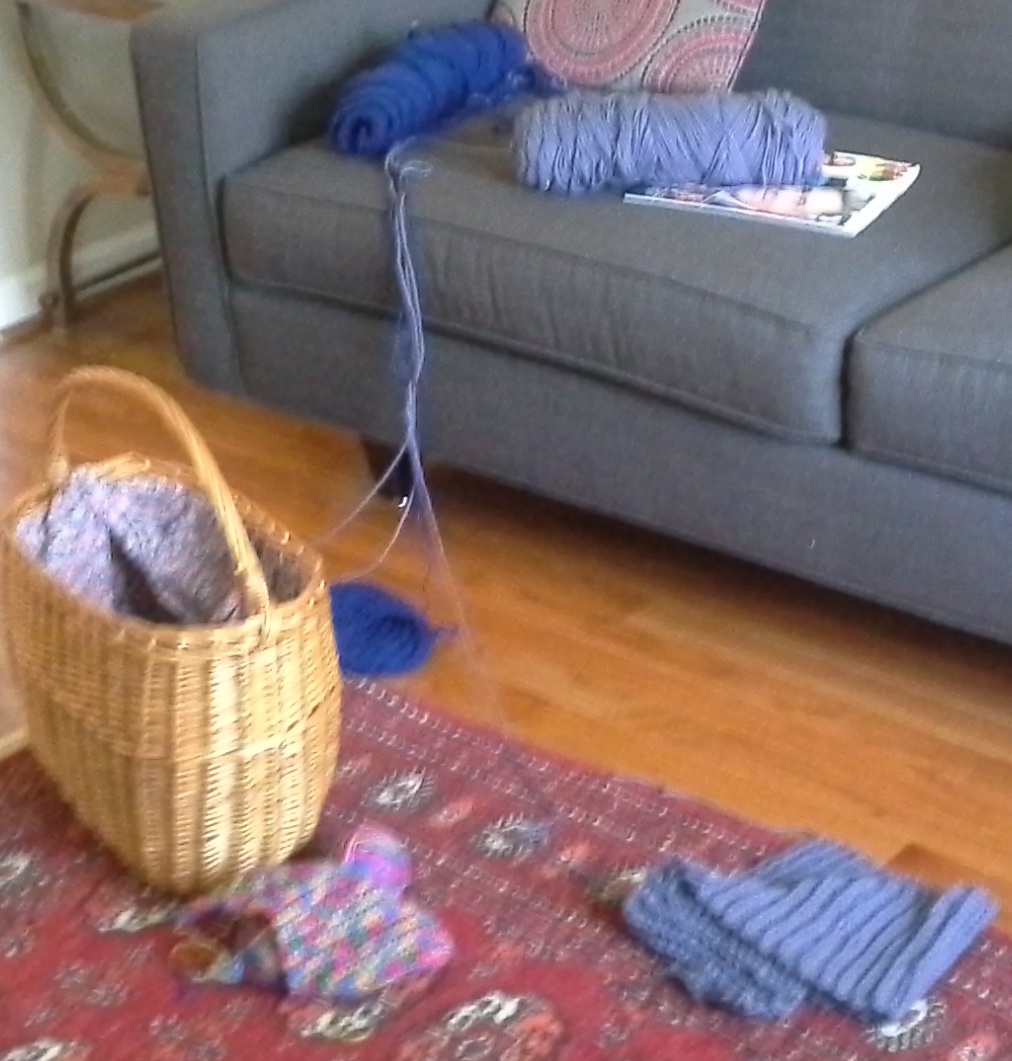
I was amazed when I finally got the first ball untangled from the mess of four different spools. First, I was surprised to see that I had two spools of the same color. After I had gotten the first two untangled, I was relieved to know that I was halfway there.

I had been a devoted crocheter a year and a half ago. Because I finally felt peace with my life, I decided to pick up crocheting again. But when I returned to crocheting, things were in a mess.

I don’t mean to dwell on the past, but the tangled yarn reminds me of my situation from long ago. After my accident, things were a mess. You can imagine how hard it was being a young athletic girl and suddenly finding out that I couldn’t walk.

Back to the yarn – once I found the end of one yarn untangled, I noticed it was the other end of the yarn that I was trying to separate! So, there I was, with only two different colors of yarn and four separate ends. I got one yarn unwound, only messily winding it on top its respective skein. The navy blue was all separated from the other colors, but it was still caught in a web of tangles. After that was finally taken care of (or I got too close to it with a pair of scissors), I vowed to sit there and wind them into balls.

Great balls of yarn – in a tangled mess

My difficulty with the yarn is a metaphor for my life after TBI. It took a while, but I eventually realized how my difficult situation was a blessing in disguise. If I had gotten the dark blue string totally unwound, I wouldn’t have had the opportunity to wind it into a ball (the other end was in the shawl that I was making), so it actually turned out to be good that I needed to cut the yarn. I could then wind the other end into a ball! The same is true about my horrible car accident. If that didn’t happen, I would not have done a lot of things that I have accomplished. My life would be completely different. I would not have chosen the field of study that I did. Being in all of that rehab helped me see that I wanted to help others in the same type of situation. I attended Longwood College because they have the best Therapeutic Recreation major. It allowed me to pursue a career. Now I work at a nursing home. If the car accident had never happened, I wouldn’t have met my husband. (We met on MySpace, the big Internet social networking site from like 10 years ago, because he had seen that we had gone to the same high school and college.) Who knows? I might have been involved with someone else, probably someone who had not gone to Longwood College. I met wonderful friends at Longwood and at my place of employment. Of course, I also became close to the older adults that I care for.

Danielle Karst pondering the complexities of living life with a Traumatic Brain Injury

Danielle Karst – pondering the complexities of living life with a Traumatic Brain Injury

So, no matter how tangled life may get, keep your mind open to see the blessings coming from the storms.

“Our real blessings often appear to us in the shape of pains, losses and disappointments; but let us have patience and we soon shall see them in their proper figures.”
Joseph Addison


Thank you, Danielle.

Disclaimer:
Any views and opinions of the Guest Blogger are purely his/her own.

Survivors SPEAK OUT! . . . . . . . . . . Stuart ‘lucky’ White


Survivors SPEAK OUT! – Stuart ‘lucky’ White

by

Donna O’Donnell Figurski


White, Stuart "lucky"

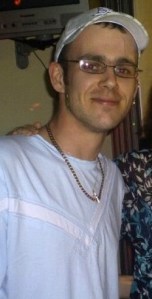
Stuart with friend, Trevor.

1. What is your name? (last name optional)

Stuart White

2. Where do you live? (city and/or state and/or country) Email (optional)

England

3. When did you have your TBI? At what age?

August 9, 1996

4. How did your TBI occur?

I was riding my bike, and I was hit by a car.

5. When did you (or someone) first realize you had a problem?

My problem was apparent as soon as the accident happened. I went straight into a coma. I was fortunate enough that a First Aider wasn’t far from me.

6. What kind of emergency treatment, if any, did you have?
(e.g., surgery,

tracheotomy, G-peg)

I was in Emergency for nine days. I’m not sure what they did to me. Sorry.

7. Were you in a coma? If so, how long?

Yes. 9 days.

8. Did you do rehab? What kind of rehab (i.e., In-patient or Out-patient and Occupational, Physical, Speech, Other)?
How long were you in rehab?

I was at the hospital for about a month and a half. Then I had a form of rehab at home, due to having a home tutor and the fact that I wasn’t able to do anything on my own. It took years for me to be back to normal.

9. What problems or disabilities, if any, resulted from your TBI?
(e.g., balance, perception, personality, etc.)

Balance, personality, couldn’t read or write, speech problems, memory loss

10. How has your life changed? Is it better? Is it worse?

My life was worse at first, but now I can finally say that, after accepting the past, I can look into the future with confidence.

11. What do you miss the most from your pre-TBI life?

I miss my teenage childhood as I had to regain a lot of things I had lost.

12. What do you enjoy most in your post-TBI life?

I realise how lucky I have been, and I enjoy that I am now able to give something back to other TBI survivors.

13. What do you like least about your TBI?

I dislike my fatigue. (It sucks.)

14. Has anything helped you to accept your TBI?

Mainly my family

15. Has your injury affected your home life and relationships and, if so, how?

My relationships have been affected a bit. It is hard to explain TBI to someone who doesn’t understand it and who thinks it has passed, so I should just get over it.

16. Has your social life been altered or changed and, if so, how?

Yes, mainly planning things. I cannot plan many things due to being sleepy a lot.

17. Who is your main caregiver? Do you understand what it takes to be a caregiver?

I would say my parents, as they helped me a lot.

18. What are your future plans? What do you expect/hope to be doing ten years from now?

I hope to be helping other survivors.

19. Are you able to provide a helpful hint that may have taken you a long time to learn, but which you wished you had known earlier? If so, please state what it is to potentially help other TBI survivors with your specific kind of TBI.

Yes. Realise that you cannot give up on yourself. TBI is very hard work, but NEVER give up. You never know what is going to happen in the future.

20. What advice would you offer to other TBI survivors? Do you have any other comments that you would like to add?

It is hard work, but accept the past. You can still look back at it, and then in the future you will realise how White, Stuart "lucky" Younger photofar you have come. Be proud of yourself no matter what others say, as you are a survivor who has fought against the odds!


Thank you, Stuart, for taking part in this interview. I hope that your experience will offer some hope, comfort, and inspiration to my readers.

(Disclaimer: The views or opinions in this post are solely that of the interviewee.)

(Photos compliments of Stuart.)

If you would like to be a part of the SPEAK OUT! project, please go to TBI Survivor Interview Questionnaire for a copy of the questions and the release form.

Survivors SPEAK OUT! . . . . . . . . Danielle (Houston) Karst

                                        Survivors SPEAK OUT! – Danielle (Houston) Karst

                                    by

                                     Donna O’Donnell Figurski

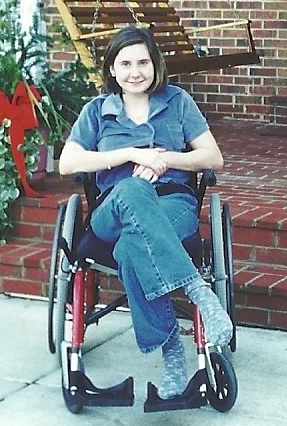
Danielle after her Traumatic Brain Injury

Danielle after her Traumatic Brain Injury


1. What is your name? (last name optional)

Danielle (Houston) Karst

2. Where do you live? (city and/or state and/or country) Email (optional)

Burke, VA, USA         daniellekarst920@gmail.com

3. When did you have your TBI? At what age?

September 1997          16 years old

4. How did your TBI occur?

I was in a car accident.

5. When did you (or someone) first realize you had a problem?

Upon impact (I was unconscious and taken to the hospital.)

6. What kind of emergency treatment, if any, did you have (e.g., surgery,

tracheotomy, G-peg)?


G-tube (gastrostomy tube – a feeding tube that is inserted through the abdomen into the stomach)

7. Were you in a coma? If so, how long?

Yes, 2 ½ months

8. Did you do rehab? What kind of rehab (i.e., In-patient or Out-patient and Occupational, Physical, Speech, Other)?
How long were you in rehab?

Yes. I had In-patient therapy (physical, speech, and occupational) for 5 months at the University of Virginia Children’s Hospital in Charlottesville, Virginia; In-patient therapy, but sleeping at home, by Mount Vernon Hospital in Northern Virginia; and Out-patient physical therapy at Mount Vernon Hospital.

9. What problems or disabilities, if any, resulted from your TBI (e.g., balance, perception, personality, etc.)?


Balance, a little perception, a little vision, handwriting, slow speech and typing, easily fatigued, seizures (though controlled by medication and calming techniques), anxiety

10. How has your life changed? Is it better? Is it worse?

It drastically changed. I have a fabulous life now – a husband, a dog, a townhouse, and a wonderful part-time job.

11. What do you miss the most from your pre-TBI life?

I miss my athleticism and the freedom to have an independent social life. (I don’t drive, so I can’t really jump up and meet people anywhere.)

12. What do you enjoy most in your post-TBI life?

Happiness, my life, my work at a nursing home (helping with activities on the Special Care Unit)

13. What do you like least about your TBI?

I try not to think about what could have been.

14. Has anything helped you to accept your TBI?

I have a supportive family and friends. I am helped by thinking, “Yeah, this sucks, but what can I do with it to move past it and improve my quality of life?”

15. Has your injury affected your home life and relationships and, if so, how?

Yes, my old friends couldn’t see me getting better and didn’t want to wait around for me.

16. Has your social life been altered or changed and, if so, how?

Yes. Pre accident, I was very social. Post accident, I hung out with my parents on weekends.

17. Who is your main caregiver? Do you understand what it takes to be a caregiver?

My parents were my main caregivers for 10 years – until my marriage. Now my husband is my main caregiver, with my parents consulting or giving their opinions when asked.

18. What are your future plans? What do you expect/hope to be doing ten years from now?

I hope to continue the work I am doing – helping in the nursing home and interacting with the residents, providing joy, and helping all those in need of care. Meanwhile, I will continue to advocate for people with TBIs, while writing my story and helpful ways to handle TBI.

19. Are you able to provide a helpful hint that may have taken you a long time to learn, but which you wished you had known earlier? If so, please state what it is to potentially help other TBI survivors with your specific kind of TBI.

Yeah, this sucks. Try to accept what happened. Move forward and better your life. LISTEN, and don’t shut out others’ advice.

20. What advice would you offer to other TBI survivors? Do you have any other comments that you would like to add?

Never give up or get discouraged. God does have a purpose for doing this. Turn your crappy situation into a positive one. Listen to your parents and elders – they are only trying to help.

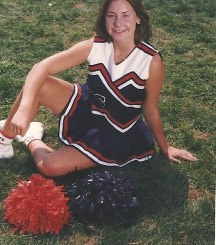
Danielle before TBI – on the Cheering Squad


Thank you, Danielle, for taking part in this interview. I hope that your experience will offer some hope, comfort, and inspiration to my readers.

(Disclaimer: The views or opinions in this post are solely that of the interviewee.)

(Photos compliments of Danielle.)

You can read more about Danielle on her blog at Inside Danielle’s Mind.

If you would like to be a part of the SPEAK OUT! project, please go to TBI Survivor Interview Questionnaire for a copy of the questions and the release form.

SPEAK OUT! Guest Blogger . . . . . . Cheri R. Hicks

SPEAK OUT! Guest Blogger Cheri R. Hicks

My Story


Girl Blogger cartoon_picture_of_girl_writingTo say that I’m a planner would be an understatement. I plan everything in my life. I always knew I wanted a second baby – and that too was planned. On June 18, 2013, we found out we were pregnant again. I was so excited. I had visions of what life was going to look like with two babies. As my due date drew near and we found out we were having a second boy, I visualized what life would be like around my house. The craziness and chaotic atmosphere of two little boys running around elated my heart. I told my husband all the time that we truly hit the jackpot.

Fast forward to February 18, 2014. I went for my last prenatal visit. This time it was different though. My blood pressure was running slightly high. My OB-GYN told me to check into the hospital because I was having the baby that day. But wait! That’s not how the plan was supposed to go. My son was scheduled to be born February 19th via C-section. I walked out to my minivan sobbing and called my husband at work. I met him at home where I packed my bag, and we were off to meet our second son.

It was hard to wrap my brain around the way things were going to look at home. My son was coming a day early, so I wasn’t quite as prepared as I thought. I recovered quickly from my C-section, and I was home by February 21st. The first week went smoothly. He was such a happy baby – a great baby.

On Wednesday, February 26th, I woke up with a headache. I remember being in my bedroom, and I felt like a bomb was exploding in my head. I called my husband into the room. He told me to lie on the bed. I just kept repeating, “Why won’t the pain go away?” We suspected that it was from the spinal anesthesia, so we called my OB-GYN. She instructed us to get a CT scan immediately and check into the delivering hospital. The CT scan came back “unremarkable.” They pumped me full of magnesium, which is the protocol for high blood pressure. They released me on Thursday afternoon. I felt completely normal again. That night was uneventful.

Friday February 28th was the day that my life changed forever. I woke up and noticed my vision was a little blurry. I took my blood pressure, and it was high. I lay in the bed. It all started happening as it did before. I felt like there was an explosion in my head. My neck became extremely stiff. Pain radiated down my spine. It seemed like my husband was moving in slow motion, and I felt like I was dying. He rushed me to the hospital again. My last memory of that day is walking through the hospital doors. I wouldn’t have my next memory for at least a week.

My next memory was being in a hospital bed with a bunch of tubes hooked up to me. I remember it was very hard to talk, so I had to write everything. Doctors would come in and ask me random questions, like “What day is it?” and “Who is the president?” This is when I learned what happened to me – a post-hemorrhagic stroke due to post-partum eclampsia. I had had a major brain bleed, and the left side of my body was not moving. I had just had a craniectomy. Those tubes in my mouth were a breathing tube and a feeding tube. I was in the ICU.

The ICU was trying to give me enough therapy to get me transferred to a rehab hospital. After 6 days, I was transported by ambulance to an inpatient rehabilitation facility. Luckily, I was at the best rehabilitation center in the state. They had to get me in and out of the bed using a sling. I was completely helpless. Everyone kept telling me, “Cheri, look to the left.” I had severe left neglect. My brain wouldn’t allow me to see things on my left side.

The hospital started therapy immediately. Therapy became my new job. Most days were the same. They would come get me in the morning, put me in a wheelchair, and whisk me off to the gym to do therapy. I made friends quickly, and I would introduce myself with “I’m Cheri, and I should not be able to say about myself that I’m 37 and survived a stroke.” I learned at the hospital that your mindset is your “golden ticket.” I quickly changed my mantra to “I’m Cheri. I’m 37 years old. I survived a post-hemorrhagic stroke, and I will walk again one day.”

I maintained a positive attitude. Sure, it was hard. I was away from my family and could not envision what my life was going to be like. Was I going to be able to take my boys to the park like I thought? This was a hard feeling to overcome.

On day 27 of 30 at the rehab hospital, I began to take my first steps. I had outgrown my sling, and I began transferring myself out of bed and onto the wheelchair on my own. Everyone told me I was making improvements very quickly. I told them I was going to be the fastest person they had ever rehabbed. By the end of therapy, I was walking. It was a miracle. I was a miracle!

On April 4th, one week before I was to be discharged from the hospital, I got the best surprise ever. My mom and sister and two nephews drove from Texas to see me for the weekend. It was great. My sister gave me a pedicure and a manicure. On April 5th, I got the first movement in my left arm. I attribute it to their coming to town.

On April 11, 2014, it was time for me to be discharged. My husband came to pick me up, and I broke out of rehab with my husband driving the getaway car. I was on my way home to see my boys.

I was scared at how life was going to be at home. I was still in a wheelchair. I could not use my left hand. Things went surprisingly well. We began to create a new normal, but it was great to be at home. I had outpatient therapy 3 days a week. More movement came to my left arm, and I got cleared to walk at Hicks, Cheri Before Tbi 050914home with a cane. This gave me much more freedom.

Now I was right back where I belonged. I felt like I had missed out on so much. Things are definitely different than what I thought. My mom always told me life is what’s happening when you’re making plans. I intend to continue to make strides. I will settle for nothing less than who I was before. I have my family and friends to thank for that. Through all of this, I realized I became a person who lives in the NOW and not in the PAST or the FUTURE. And I now know that even the best plan can be broken.


Thank you, Cheri.

Disclaimer:
Any views and opinions of the Guest Blogger are purely his/her own.

Caregivers SPEAK OUT! . . . . . . . . . Kristin Olliney

 SPEAK OUT! – Kristin Olliney

by

Donna O’Donnell Figurski

Kristin Olliney with her daughter, Isabella, (age 4 1/2) on the day Isabella woke up from her coma. Kristin says, “It was the happiest and best day of my life.”


1. What is your name? (last name optional)

Kristin Olliney

2. Where do you live? (city and/or state and/or country)     Email? (optional)

Just south of Boston, Massachusetts, USA

3. What caused your survivor’s TBI?

Sudden acute encephalitis of unknown etiology

4. On what date did you begin care for your TBI survivor? Are you the main caregiver?

Our journey began on November 25, 2010 (Thanksgiving night).

How old were you when you began care?

I was 31 years old, and Isabella was 4.5 years old

5. Were you caring for anyone else at that time (e.g., children, parents, etc.)?

No, I was a single parent to Isabella.

6. Were you employed at the time of your survivor’s TBI?

No, I was laid off about 18 months before Isabella got sick.

If so, were you able to continue working?

N/A

7. Did you have any help? If so, what kind and for how long?

I was a single parent from the day Isabella was born. I have always been her sole caregiver.

8. When did your support of the survivor begin (e.g., immediately – in hospital, when survivor returned home, etc.)?

Isabella was 4.5 years old at the time, so I was already supporting her.

9. Was your survivor in a coma?

Yes, Isabella was in a drug-induced coma and then her own coma. The total time was 6 days. On the 7th day, she woke up. That was the best day of my entire life.

If so, what did you do at that time?

I never left Isabella’s side. I spent the first 73 hours without sleep because, if she was going to die (which she was supposed to), I didn’t want to miss a single second. I eventually collapsed, and I was forced to sleep. After that, I lived off coffee, and I took sporadic naps.

10. Did your survivor have rehab? If so, what kind of rehab? (i.e., In-patient and/or Out-patient and Occupational, Physical, Speech, and/or Other) How long was the rehab? Where were you when this was happening?

Yes, Isabella went to In-patient rehab [occupational therapy (OT), physical therapy (PT), and speech therapy (ST)] for 15 days post brain injury. She was there for only 13 days, due to my insurance. I was with her the entire time. Isabella is currently still receiving Out-patient rehab for OT and ST. Her PT ended last summer. Isabella also did aquatics therapy for a few months.

11. What problems or disabilities of your TBI survivor required your care, if any?

Isabella requires 24/7 care due to her extensive medical needs. She has a cognitive disorder due to her brain injury. Isabella has debilitating hallucinations (not psychotic) and anxiety, which causes multiple panic attacks every single day. She has migraines and tics. Isabella has sensory issues and Obsessive-Compulsive Disorder (OCD). She has learning difficulties. Isabella has aggression due to her inability to control or regulate her mood, emotions, and behavior. Isabella has speech difficulties, especially in word retrieval and expressing herself. Isabella also needs help with daily living skills, such as using the bathroom, getting dressed, showering, using the stairs, teeth brushing, etc. Isabella also suffers from various types of seizures and many other things that require around-the-clock care.

12. How has your life changed since you became a caregiver?

I was already Isabella’s caregiver. Prior to her brain injury, she had some medical issues, including life-threatening allergies to food, an immune deficiency (and another more serious one diagnosed post brain injury), and a few other conditions. Once Isabella got sick though, everything changed because I was parenting and caring for an entirely different child. It was like completely starting over.

Is it better? Is it worse?

It is different. It is challenging. It is amazing. It is heartbreaking. I wouldn’t want to be anywhere else. I want to be the one caring for my child. She needs me more now than ever before.

13. What do you miss the most from pre-TBI life?

I miss the Isabella that I used to have, although I love the Isabella I have now more than I ever knew was possible. I miss our carefree, social, active life. Isabella is worth it though.

14. What do you enjoy most in post-TBI life?

I have learned the value of life and how in an instant it can all change. It is both a blessing and a curse to know how fragile life really is. I appreciate the small things that most can’t value unless they have come close to losing it all. I cherish each laugh, each silly joke, the smiles, hugs, and kisses, and hearing Isabella say “Mommy,” and I notice things like the sunset (or, in our case, the sunrise too), the way flowers smell, etc.

15. What do you like least about TBI?

It’s the one of the most rewarding, yet most heartbreaking, journeys that you can go on. I hate that it has robbed Isabella of the life she was meant to have. This journey is also extremely isolating. I chose to focus on the positive and the blessing that I have, which is Isabella’s still being here.

16. Has anything helped you to accept your survivor’s TBI?

I have always been a single parent, so I had no choice but to accept it from the start. I think that was a blessing. Writing my bi-monthly blog, “Mommy of a Miracle,” for the Brain Injury Association of Massachusetts has helped me give a voice to our journey. I also started a Facebook support group, “Parents of Children with Brain Injuries,” which has helped me know that I am not alone. I knew statistically speaking that I was not the only parent with a child who has a brain injury, and yet I couldn’t find anyone.  This group has been the most amazing support for me.

17. Has your survivor’s injury affected your home life and relationships and, if so, how?

Yes, how could it not? Brain injury changes not only the survivor but also the caregiver as well. Our home life is very structured and centered completely around what helps Isabella be successful. It has changed my relationships tremendously. In the face of a life-altering event, you learn quickly who is going to be there and who isn’t. I would rather have a few people whom I know I can count on than a whole lot of people who will just disappoint.

18. Has your social life been altered or changed and, if so, how?

Yes. Isabella and I had a very active social life. We were never home. Friends and family were always a huge part of our life. Now it is not possible, due to the extensive care that she requires and her instability. I no longer have the time to invest in one-sided friendships. We are not able to attend parties, get-togethers, events, and the like. Phone conversations are no longer possible. I only get to see a friend or a family member if he or she comes by at night when Isabella is asleep in bed.

19. What are your plans?

I live day-by-day. I take each day as it comes. Looking beyond that is too difficult.

What do you expect/hope to be doing ten years from now?

I hope that Isabella is doing better and stable. I hope that we are able to enjoy more things in life. Personally, I want to have a nonprofit organization to specifically help parents of children with brain injuries. I hope to be on the floor of congress advocating for change, for funding for research, and for additional resources for brain injury survivors and their caregivers.

20. What advice would you offer other TBI survivor caregivers?

Always follow your gut-instinct. You are your survivor’s biggest advocate. Stand your ground. Your survivor is not ever going to be who he or she once was. The faster you are able to come to that realization, the better off you will be. This is a journey, not a race. Take life one day at a time.  You are not alone.

Do you have any other comments that you would like to add?
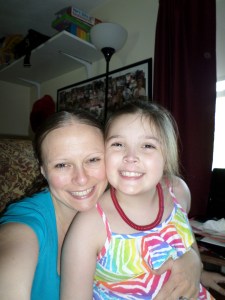
Kristin Olliney with her lovely daughter, Isabella – 8 years old. 2014

Thank you for this amazing opportunity to tell people a little bit more about our journey.


Check out my blog: In An Instant Your Life Can Change Forever: Brain Injury Association of Massachusetts Blog – Mommy of a Miracle

Check out this video for Brain Injury Awareness.


Thank you, Kristin, for taking part in this interview. I hope that your experience will offer some hope, comfort, and inspiration to my readers.

If you would like to be a part of this project, please go to TBI Caregiver Interview Questionnaire for a copy of the questions and the release form.

(Photo compliments of Kristin.)

Disclaimer: The views or opinions in this post are solely that of the interviewee.

Survivors SPEAK OUT! . . . . . . . . . Cheri R. Hicks

Hicks, Cheri Aftrer TBI 050914

Survivors SPEAK OUT! – Cheri R. Hicks

by

Donna O’Donnell Figurski


1. What is your name? (last name optional)

Cheri H.

2. Where do you live? (city and/or state and/or country) Email (optional)

Jackson, MS, USA

3. When did you have your TBI? At what age?

February 28, 2014     Age 37

4. How did your TBI occur?

Hemorrhagic stroke as a result of elevated blood pressure from postpartum eclampsia (10 days postpartum)

5. When did you (or someone) first realize you had a problem?

While at home, I felt what seemed like a bomb was going off in my head, and my neck became very stiff. The pain radiated down my spine. I was disoriented and unable to put words together. While being treated for suspected eclampsia at the hospital (I had recently delivered our second child), my nurse noticed one-sided weakness when she asked me to smile.

6. What kind of emergency treatment, if any, did you have?
(e.g., surgery,

tracheotomy, G-peg)

There were two ambulance rides. (The first facility thought it was an aneurysm, and they were not equipped to repair it.) I had multiple CT scans, a decompressive craniectomy, post-op ventilation, and nasogastric feedings.

7. Were you in a coma? If so, how long?

No

8. Did you do rehab? What kind of rehab (i.e., In-patient or Out-patient and Occupational, Physical, Speech, Other)?
How long were you in rehab?

I did 30 days of In-patient therapy [physical (PT), occupational (OT), and speech (ST)]. I am currently doing Out-patient rehab three times a week (3 hours a session for PT, OT, and ST).

9. What problems or disabilities, if any, resulted from your TBI?
(e.g., balance, perception, personality, etc.)

Left neglect, balance issues, blurred vision

10. How has your life changed? Is it better? Is it worse?

I can’t do what I want when I want. But, I guess my life is better. I don’t really know why though. I guess it’s better because I realize how short and precious life is. Also, through this whole process, I’ve made some really good friends and met some really great people whom I would have never met otherwise.

11. What do you miss the most from your pre-TBI life?

I miss picking my son up from school, being independent, and being able to drive.

12. What do you enjoy most in your post-TBI life?

I love challenging myself and seeing how strong I really am.

13. What do you like least about your TBI?

There are so many things. I especially dislike having to rely on others to do things for me and waiting for the things I once took for granted to come back.

14. Has anything helped you to accept your TBI?

I don’t know. My TBI does not define who I am. I will become the whole person I was before and settle for nothing less.

15. Has your injury affected your home life and relationships and, if so, how?

Yes. I can’t be the stay-at-home mom I once was and care for my own children.

16. Has your social life been altered or changed and, if so, how?

Yes, but I also had our second child (two under 2) ten days before my TBI.

17. Who is your main caregiver? Do you understand what it takes to be a caregiver?

My husband is my main caregiver. I only know physically what it takes to be a caregiver.

18. What are your future plans? What do you expect/hope to be doing ten years from now?

I intend to have a full recovery and become the same person I was before my TBI. I hope to travel to interesting places with my family.

19. What advice would you offer to other TBI survivors

Find a way to keep a positive attitude, and give 100% of yourself to your therapy. Also, find someone to talk with about how you’re feeling, and never give up!

20. Do you have any other comments that you would like to add?

There will be bad days, but each new day will also bring new advances and victories. Time is both a healer Hicks, Cheri Before Tbi 050914and your enemy. You need it to heal, but you can’t wait for the long days to pass until you are better. You will be a stronger person because of your experience, and nothing will ever scare you again.


Thank you, Cheri, for taking part in this interview. I hope that your experience will offer some hope, comfort, and inspiration to my readers.

(Disclaimer: The views or opinions in this post are solely that of the interviewee.)

(Photos compliments of Cheri.)

If you would like to be a part of the SPEAK OUT! project, please go to TBI Survivor Interview Questionnaire for a copy of the questions and the release form.

diemodi jewelry

uniquely hand-crafted jewelry by donna

Welcome to Harmony Kent Online

The home of all things books

Pete Springer

Passionate Teacher and Future Children's Author

HOPE TBI

Helping Other People Excel - To Be Independent

For the Love of Books, Old and New

Katie Fischer, Writer and Reader of Stories

Charlie Bown

Children's Author

Jessica Hinrichs

“We write to taste life twice, in the moment and in retrospect.” ― Anais Nin

VIVIAN KIRKFIELD - Writer for Children

Picture Books Help Kids Soar

Mindy’s Writing Wonderland

For authors, parents, teachers & everyone who loves children’s books.

Kaitlyn Leann Sanchez

Literary Agent

Surviving Traumatic Brain Injury

TBI - Survivors, Caregivers, Family, and Friends

The Care Factor

Loving someone with a Traumatic Brain Injury

Brain Injury Support Group of Duluth-Extension

Brain Injury Information and SUPPORT

Brain Aneurysm Global Insight

Brain Aneurysm, cerebral hemorrhaging, hemorrhage stroke