TBI – Survivors, Caregivers, Family, and Friends

Posts tagged ‘PTSD (post-traumatic stress disorder)’

On the Air: Brain Injury Radio Another Fork in the Road . . . . . Joshua Puckett and wife, Tatiana

On the Air: Brain Injury Radio

Another Fork in the Road

with Brain Injury Survivor, Joshua Puckett and his wife, Tatiana

images-1

Joshua Puckett was just minding his business in his own front yard when he was attacked by a “random
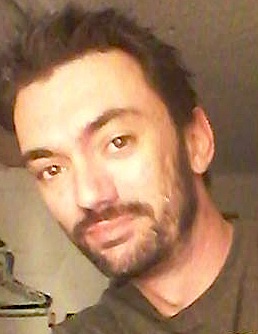
drunk person” causing his brain injury. Now he says he has a “memory of a fish.”Joshua Puckett - TBI Survivor 2013
Memory problems combined with balance issues, anger, and confusion have become the “new norm” in his new life.

But, Joshua is overcoming his deficits by directing his attentions to his art and his music. Both are opening new doors in this talented young man’s life.

If you missed his interview on “Another Fork in the Road” on March 15th, you are in luck. You can listen to the archived show here.Joshua Puckett & Tatiana Puckett

Click the link below to listen to Joshua Puckett, his wife, Tatiana, and me.

See you “On the Air!”

On the Air: Brain Injury Radio – Another Fork in the Road

with Brain Injury Survivor, Joshua Puckett and his wife, Tatiana

Click here for a list of all “Another Fork in the Road” shows on the Brain Injury Radio Network.

“Another Fork in the Road” . . . Brain Injury Radio Network … Interview with Joshua Puckett

YOU ARE INVITED!

putthis_on_calendar_clip_art


Joshua Puckett was minding his own business in his own front yard when an unknown assailant attacked him. This attack resulted in a life-change for Joshua. Joshua, with his wife, Tatiana, will join me on my show, “Another Fork in the Road,” to share his story about how he … about how they … are adapting to life after TBI.

Come One! Come ALL!

What:        Interview with Joshua Puckett, brain injury survivor. Joshua’s wife, Tatiana, will join Joshua.

Why:        Joshua will talk about his brain injury and how his life is affected by it.

Where:     Brain Injury Radio Network

When:       Sunday, March  15th, 2015

Time:         5:00p PT (6:00p MT, 7:00p CT, and 8:00p ET) 90 minute show

How:         Click: Brain Injury Radio Network

Joshua Puckett - Survivor 2013

Joshua Puckett – Survivor 2013

Call In:    424-243-9540

Call In:     855-473-3711 toll free in USA

Call In:    202-559-7907 free outside USA

or SKYPE

If you miss the show, but would like to still hear the interview, you can access the archive on On Demand listening. The archived show will be available after the show both on the Brain Injury Radio Network site and on my blog in “On the Air.”

(Clip Art compliments of Bing.)

(Photo compliments of Joshua Puckett.)

Survivors SPEAK OUT! . . . . . Tracy Johnson

SPEAK OUT! – Tracy Johnson

by

Donna O’Donnell Figurski

Tracy Johnson Pre-TBI

Tracy Johnson
Pre-TBI

1. What is your name? (last name optional)

Tracy Johnson

2. Where do you live? (city and/or state and/or country) Email (optional)

Hogansville, Georgia, USA    lacigurl1@gmail.com

3. When did you have your TBI? At what age?

November 18, 1990    Age 20

4. How did your TBI occur?

Motor vehicle accident

5. When did you (or someone) first realize you had a problem?

It was noticed that I had a problem as I was slowly coming out of my coma. From then on, it was noticed daily.

6. What kind of emergency treatment, if any, did you have?

I was life-flighted to the trauma center at Georgia Baptist Medical Hospital, which is now Atlanta Medical Center. The life-flight EMTs (emergency medical technicians) performed a tracheostomy. As they arrived, I was hanging outside the driver’s door having seizures, with lots of blood coming out of my mouth due to a busted spleen and a lacerated liver. At the trauma center, I received 37 pints of blood. Mom stopped asking about me after this because the situation looked grim. I even had docs (twelve of them) telling my mom there was nothing else they could do. They even made her sign some documents to this effect. On top of all the blood loss and trauma, I developed a bleeding stomach ulcer and required a PPI drip (proton-pump inhibitor). I had severely bruised my heart. My brain swelled to where my ears were set two inches deep within the swelling. The steering wheel had broken and jammed my front teeth up into my gums. My top teeth bit through my lower gums, so stitches were required. I had emergency surgery to my legs. I had broken my left hip. Three screws were required. (It healed, but at 23, I had to have a left hip replacement due to the dying of the blood vessel to the femur head.) My left femur was repaired (a rod was put in). It had also ripped through the skin. I had a left pelvic fracture. My left knee was broken in three places and required three screws. My left tibia and fibula were broken, but they’re okay now. My right knee was broken in four places. It was thought it may have been crushed, but an Emory specialist was able to save it. However, right knee arthroscopy a year ago yielded no good results, so I’m waiting for right knee replacement.

7. Were you in a coma? If so, how long?

Yes. I was in a coma for five and a half weeks. I was on a breathing machine for four weeks. My heart stopped at the scene of the accident due to all the trauma my body was already in, but drugs were used to restart it.

8. Did you do rehab? What kind of rehab (i.e., inpatient or outpatient and occupational and/or physical and/or speech and/or other)? How long were you in rehab?

I had rehab as an outpatient because my mother refused to let me go and stay at the Shepherd Center in Atlanta. I can’t remember how long I was at Georgia Baptist’s physical therapy. I know my mother was busy working at the time. This rehabilitation was for my multiple lower broken extremities, pelvis, and left hip. Nobody cared about the injury to my brain, except for me. And, I have just found my fellow sister and brother survivors via the Brain Injury Network. Praise God! 😉

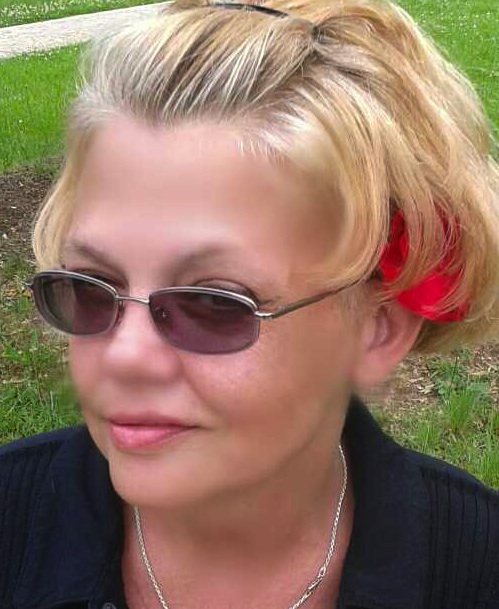
Tracy Johnson - TBI Survivor

Tracy Johnson – TBI Survivor

9. What problems or disabilities, if any, resulted from your TBI
(e.g., balance, perception, personality, etc.)?

I had a problem with all my memory at first, but the doctors said I would remember as my life took place. I had just given birth to my one and only child not even a month before my accident, and I know he belonged to me because this is what my family told me. Today he is 24, and I am 43. Our relationship has always been as “best friends” since my accident. My family often spoke of my deficits and of my inability to raise a child. My memory has greatly improved over the years. I repeated myself continuously, and I still do to this day. My emotions are all out of whack – I feel too happy, too sad, or too mad. I’ve been told by physicians that I am called a cycling bipolar manic depressive. But, I never knew a day of depression until I started being prescribed drugs. My anger goes to extremes. I guess it has something to do with growing up with a violent, alcoholic father and two brothers older than I. Hence, it was suggested that I was suffering from being left behind and of being deprived of parental love. My dad chased us around with shotguns. He beat my mom and brothers. He would point and shoot guns all the time. Oh yeah, I would be noticed and would be told to run and hide. My dad was always damaging things, causing me to have PTSD (post-traumatic stress disorder) along with the PTSD I already had from the auto accident. I also have PTSD from a carjacking and kidnapping/rape back in 2005, due to my being too trusting. Now it leads me not to trust anyone and to be very suspicious. I walk with a limp, due to one hip replacement and worn out right knee. I’m beginning to be aphasic in speech and can’t deliver my thoughts into the proper wording.

10. How has your life changed? Is it better? Is it worse?

I feel my life is better because I was very judgmental. Having this injury occur and being out of this world for that length of time made me realize that the world keeps spinning around and people go on with their lives whether you’re here or not. Jeez, I was naïve. I now know that one’s life and recovery is what that person makes of it – NO ONE else. After the accident, I was, by the grace of God, very compassionate, nonjudgmental, and indeed touched by an Angel.

11. What do you miss the most from your pre-TBI life?

I miss the ability to think cognitively. I miss my memory. I only remember bits and pieces from my early childhood and preteen years. I don’t have much memory of my high school years – I guess because those memories were made so close to my coma days. (I was in high school from ages 16 to 19.) I guess as I’m thinking this through now, my traumatic dysfunctional childhood explains my issues with anger.

12. What do you enjoy most in your post-TBI life?

I like having the ability of not staying angry at someone for long, having the ability to forgive easily, and being able to experience things (always) as though they are the first experiences. Some of the learned knowledge of first experiences can lead to better outcomes, like relationships.

13. What do you like least about your TBI?

I can no longer think cognitively or remember as I did before. Oh, and almost all people have trouble relating. For example, people sometimes say I am making up my injury and symptoms, or I use it as an excuse.

14. Has anything helped you to accept your TBI?

I have been helped by my belief that Jesus Christ died on the cross for me. That is the gift of Grace from my heavenly Father above.

15. Has your injury affected your home life and relationships and, if so, how?

Yes, oh yes! It has caused distrust, dishonesty, and fighting. It has broken some of my most meaningful, close family relations to where I know they still love me, but they feel they have to love me from a distance.

16. Has your social life been altered or changed and, if so, how?

I had friends, but they could not cope with such a tragic event happening so close to them, so they are not around anymore. I try to isolate myself now because I am rather paranoid of people and their motives.

17. Who is your main caregiver? Do you understand what it takes to be a caregiver?

My caregiver is my fiancé. I have been engaged for 7 years. Please don’t laugh – I just find it hard to trust anyone after being hurt by people time and time again, including my own mother. I know what is entailed in being the caregiver of someone with Alzheimer’s, as I, just this week, have made arrangements for my dad to go to a nursing home. I cared and assisted him for three years.

18. What are your future plans? What do you expect/hope to be doing ten years from now?

I stopped chemical prescription drug therapy, except for 1200 mg of a medicine for mental seizures until I can become part of protein therapy at Emory University Hospital in Atlanta, 53 miles from where I live. I would like to help others. I want to devote my time to helping motivate others by decreasing the negativity in their lives, even if it is just one person. I want to find a way to counsel young folks. I want to transform their lives if their parents feel they are too busy with work or if their parents just didn’t have anyone in their lives to show or explain to them.

19. Are you able to provide a helpful hint that may have taken you a long time to learn, but which you wished you had known earlier? If so, please state what it is to potentially help other TBI survivors with your specific kind of TBI.

To control my emotions, I had to learn, study, and meditate on the Word of God. In doing so, I realized there are no set rules for being a child of God or to be loved by God. We all walk different paths with different hurdles, and all sins are different because of such. Therefore, our Father in Heaven does not judge each of us to the same measure or degree. We are CHILDREN of God, and we are learning each and every day. So, unlike the legal system, we shall not be punished for NOT knowing something.

20. What advice would you offer to other TBI survivors? Do you have any other comments that you would like to add?

Be your own unique, strong self – the one who made you a survivor. Do not be too hard on yourself. Take each step in stride knowing Jesus walks right there beside you. Know that family and friends do not intentionally mean to shift blame by calling you names or cutting you down – it’s just their way, however, of dealing with an injury of such scope and magnitude to their loved one. Learn to laugh it off, and if you can’t laugh it off, well then, smile it off. Humor and inner peace are always the best medicine. Sorry, docs. 🙂

Tracy Johnson, Tbi-Survivor

Tracy Johnson, Tbi-Survivor


Thank you, Tracy, for taking part in this interview. I hope that your experience will offer some hope, comfort, and inspiration to my readers.

(Disclaimer: The views or opinions in this post are solely that of the interviewee.)

If you would like to be a part of the SPEAK OUT! project, please go to TBI Survivor Interview Questionnaire for a copy of the questions and the release form.

(Clip Art compliments of Tracy.)

Survivors SPEAK OUT! . . . . . . . . . Randy Davis

Survivors SPEAK OUT! – Randy Davis

by

Donna O’Donnell Figurski

Davis, Randy


1. What is your name? (last name optional)

Randy

2. Where do you live? (city and/or state and/or country) Email (optional)

Longmont, CO, USA         bikn4u@hotmail.com

3. When did you have your TBI? At what age?

November 3, 1984         age 16

4. How did your TBI occur?

I was in a target-shooting accident. I was shot in the head.

5. When did you (or someone) first realize you had a problem?

I realized I had a problem the moment the bullet impacted my head.

6. What kind of emergency treatment, if any, did you have (e.g., surgery,

tracheotomy, G-peg)?

I had emergency brain surgery to remove the bullet that penetrated into my brain and an emergency right temporal lobectomy.

7. Were you in a coma? If so, how long?

No

8. Did you do rehab? What kind of rehab (i.e., In-patient or Out-patient and Occupational, Physical, Speech, Other)?
How long were you in rehab?

I didn’t have formal therapy to learn to walk and talk again, but I had psychological and neuropsych/speech therapy on and off over a period of several years.

9. What problems or disabilities, if any, resulted from your TBI (e.g., balance, perception, personality, etc.)?

I dealt with massive PTSD (post-traumatic stress disorder) and right temporal mood-swing seizures, which were more mental than physical.

10. How has your life changed? Is it better? Is it worse?

My life has been a progression from post-TBI teenage-hood into adulthood. It took many years of trial and error to make a living and to get my TBI in order so I could move forward in life. I was eventually able to heal and to make a career in Law Enforcement and to have an 8-year career in the US Army Reserves.

11. What do you miss the most from your pre-TBI life?

I miss the innocence and vitality for living without worrying that I’d be injured again.

12. What do you enjoy most in your post-TBI life?

I’ve discovered how resilient I am to adversity and challenge.

13. What do you like least about your TBI?

I have terrible tinnitus and head pains.

14. Has anything helped you to accept your TBI?

Time

15. Has your injury affected your home life and relationships and, if so, how?

It’s been hard. I’ve let my guard down and been through three horrible marriages.

16. Has your social life been altered or changed and, if so, how?

I’m more cautious and tend not to go out and “party.” I don’t like crowds anymore.

17. Who is your main caregiver? Do you understand what it takes to be a caregiver?

N/A

18. What are your future plans? What do you expect/hope to be doing ten years from now?

I want to get into public speaking about TBI and triumphing over tragedy. I want to help our veterans from Iraq and Afghanistan deal with brain injuries. I’m also pursuing becoming an NRA Firearms Instructor, in hopes of using my story of surviving a near fatal shooting to spread safety.

19. Are you able to provide a helpful hint that may have taken you a long time to learn, but which you wished you had known earlier? If so, please state what it is to potentially help other TBI survivors with your specific kind of TBI.

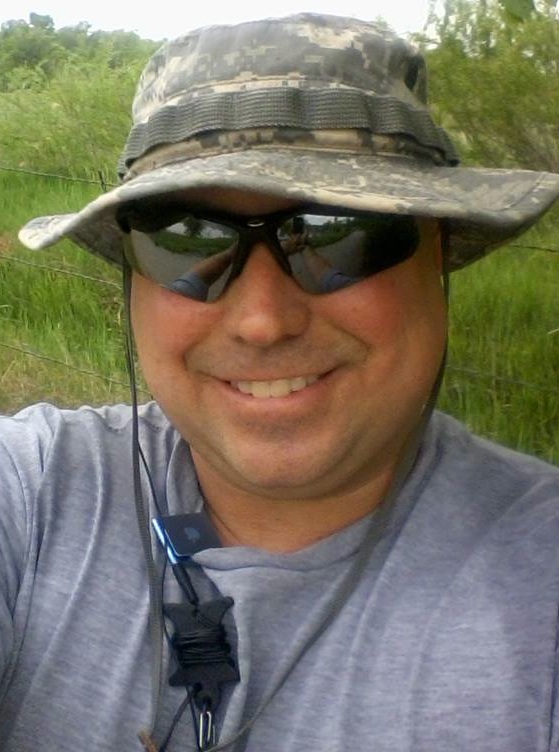
It takes time to heal. Healing won’t happen overnight or even in a few weeks. It’s a lifelong journey.Davis, Randy Army Jeep

20. What advice would you offer to other TBI survivors? Do you have any other comments that you would like to add?

Never accept defeat; never quit. Things can be hard. People usually don’t understand what you’re dealing with, but if you survived the injury, you’re a survivor – a fighter.


Thank you, Randy, for taking part in this interview. I hope that your experience will offer some hope, comfort, and inspiration to my readers.

(Disclaimer: The views or opinions in this post are solely that of the interviewee.)

(Photos compliments of Randy.)

If you would like to be a part of the SPEAK OUT! project, please go to TBI Survivor Interview Questionnaire for a copy of the questions and the release form.

Survivors SPEAK OUT! Pauline Southern

SPEAK OUT! – Pauline Southern

by

Donna O’Donnell Figurski

Pauline with her TBI


1. What is your name? (last name optional)

Pauline

2. Where do you live? (city and/or state and/or country) Email (optional)

South Carolina, USA

3. When did you have your TBI? At what age?

6/22/2012    52 years old

4. How did your TBI occur?

Another 18-wheeler hit the 18-wheeler my husband was driving. I was asleep in the sleeper in the back and got tossed around like a rag doll.

5. When did you (or someone) first realize you had a problem?

I’m not sure who first realized it. Just to name a few issues – I had a problem remembering old friends, finding words, and doing math. I had a shortened attention span and a panic attack every time I got into a car. I was distracted all the time and slept a lot. There is much more. I just can’t remember them all.

6. What kind of emergency treatment, if any, did you have?
(e.g., surgery,

tracheotomy, G-peg)

I was taken by ambulance to an emergency room in a little town in Iowa. I don’t have much of a memory of what went on, other than that I was treated for nausea and for pain for rib injuries. I don’t remember anything else.

7. Were you in a coma? If so, how long?

No

8. Did you do rehab? What kind of rehab (i.e., In-patient or Out-patient and Occupational, Physical, Speech, Other)?
How long were you in rehab?

Yes. I did Out-patient physical therapy, occupational therapy, and speech therapy. I spoke with a psychologist. Now I am doing PTSD (post-traumatic stress disorder) therapy. I’ve also had vision therapy for double vision and blurry vision. It’s been a year and counting.

9. What problems or disabilities, if any, resulted from your TBI?
(e.g., balance, perception, personality, etc.)

I can’t control angry outbursts. I have no patience, have panic attacks in the car, cannot tolerate people who don’t understand what I’m going through. I have balance and vision problems. I cannot multitask. I have memory loss (short-term and some long-term). I can’t read more than one chapter in a book, and then I don’t remember what I read. I used to be able to cook for hundreds of people, and now I have trouble cooking for two.

10. How has your life changed? Is it better? Is it worse?

I’m not able to do things I used to do – bookkeeping, quilting, reading. I can’t drive a car for more than one hour. I need a GPS to find my way to my destination and back home.

11. What do you miss the most from your pre-TBI life?

Happiness, laughing, and my friends

12. What do you enjoy most in your post-TBI life?

Nothing yet. I’m still trying to find something I like.

13. What do you like least about your TBI?

The way that it has changed my personality. I used to be fun-loving, happy, and

smiling. Now I’m sad and angry all the time.

14. Has anything helped you to accept your TBI?

Not yet. I’m still trying to accept it.

15. Has your injury affected your home life and relationships and, if so, how?

Yes. It has brought me closer to my husband. He is my caregiver, and my love for him has grown tremendously. But on the other hand, it has put a distance between me and the rest of the family. They don’t understand me. They get angry with me, and I get very angry with them for not wanting to understand me.

16. Has your social life been altered or changed and, if so, how?

Yes. Because of the accident, we have lost our home and had to move to a new state. I have no friends – no one who I can hang out with and do things with. I don’t like to go out in public. I feel very alone. I cannot follow conversations, and I don’t like crowds, loud noises, or lights.

17. Who is your main caregiver? Do you understand what it takes to be a caregiver?

My husband. He does a great job. I don’t think I understand how he does it. He is a very strong person and helps me with my memory. He goes to doctor appointments because I don’t remember what was said during those discussions. I have no idea what it takes to be a caregiver to someone like me. I used to be a caregiver for my elderly in-laws, so I know what it takes to be a caregiver – but not for someone as bad as me.

18. What are your future plans? What do you expect/hope to be doing ten years from now?

To learn more about the loss of the old me and to accept the new me. To have a life again.

19. What advice would you offer to other TBI survivors?

Sit back. Buckle your seatbelt. It’s a long, bumpy road ahead. It will have highs and lows and good and bad days. Just hang in there. Don’t give up. There’s a reason we were given these injuries. Find your purpose in life.

20. Do you have any other comments that you would like to add?

I wish there was more interest and more programs that teach non-TBI survivors what it’s like to be in our heads. I guess I’m trying to say I would like the rest of the world to understand we are still people. We just do things differently.

Pauline before her TBI

Thank you, Pauline, for taking part in this interview. I hope that your experience will offer some hope, comfort, and inspiration to my readers.

(Disclaimer: The views or opinions in this post are solely that of the interviewee.)


If you would like to be a part of the SPEAK OUT! project, please go to TBI Survivor Interview Questionnaire for a copy of the questions and the release form.

diemodi jewelry

uniquely hand-crafted jewelry by donna

Welcome to Harmony Kent Online

The home of all things books

Pete Springer

Passionate Teacher and Future Children's Author

HOPE TBI

Helping Other People Excel - To Be Independent

For the Love of Books, Old and New

Katie Fischer, Writer and Reader of Stories

Charlie Bown

Children's Author

Jessica Hinrichs

“We write to taste life twice, in the moment and in retrospect.” ― Anais Nin

VIVIAN KIRKFIELD - Writer for Children

Picture Books Help Kids Soar

Mindy’s Writing Wonderland

For authors, parents, teachers & everyone who loves children’s books.

Kaitlyn Leann Sanchez

Literary Agent

Surviving Traumatic Brain Injury

TBI - Survivors, Caregivers, Family, and Friends

The Care Factor

Loving someone with a Traumatic Brain Injury

Brain Injury Support Group of Duluth-Extension

Brain Injury Information and SUPPORT

Brain Aneurysm Global Insight

Brain Aneurysm, cerebral hemorrhaging, hemorrhage stroke