TBI – Survivors, Caregivers, Family, and Friends

Posts tagged ‘motorcycle accident’

SPEAK OUT! Faces of Brain Injury “Maria King”

 SPEAK OUT! Faces of Brain Injury – Maria King

presented by

Donna O’Donnell Figurski

 Brain Injury is NOT Discriminating!

facesOn a beautiful day, I went on a bike ride with some friends near San Francisco. The plan was to climb Mt. Tamalpais and even ride to gems like the Alpine Dam.

I loved cycling, but it wasn’t my life. I was a recent college graduate devoted and dedicated to working as a teacher in my hometown. I planned on going home to finish lesson-planning and grading after my morning bike ride. graphics-cycling-473021

I didn’t expect to crash while descending to the Alpine Dam – lacerating my kidney, getting a brain hematoma, and breaking my wrist. The crash also resulted in severe brain trauma – something that I and many of my friends don’t have enough awareness of. I don’t remember anything at all injury-clipart-kid-head-injury-sketch18385136from the downhill section that changed my life to most things that occurred to me and around me the following month. My senses of time, identity, personality, values, education, and motivation all temporarily left. The doctors in the ICU (intensive care unit) weren’t sure if I’d survive. All I can remember from the experience is being alive, but not feeling like myself.

When I finally went home from the hospital, I had a natural high from rediscovering life and surviving, despite all the “what ifs.” As I began to feel more like myself, I started feeling angry, disappointed, and guilty in regards to myself and the accident. It isn’t easy living with all these uncertainties, since I somewhat had a “plan” for my life. But, I survived, and I’m going to continue fighting the good fight.

Disclaimer: Any views and opinions of the Contributor are purely his/her own.

(Clip Art compliments of Bing.)

(Photos compliments of contributor.)

As I say after each post: Please leave a comment by clicking the blue words “Leave a Commentanim0014-1_e0-1 below this post.

Feel free to follow my blog. Click on “Follow” on the upper right sidebar.

If you like my blog, share it with your friends. It’s easy! Click the “Share” buttons below.

If you don’t like my blog, “Share” it with your enemies. I don’t care!

Feel free to “Like” my post.

SPEAK OUT! Faces of Brain Injury Lesley Ann Graham

SPEAK OUT! Faces of Brain Injury – Lesley Ann Graham (survivor)

presented by

Donna O’Donnell Figurski

 Brain Injury is NOT Discriminating!


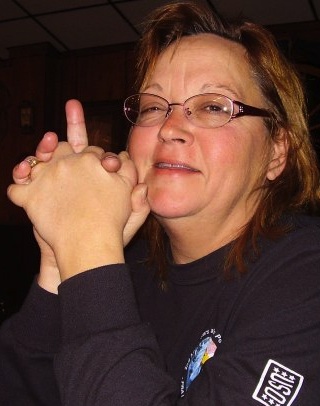
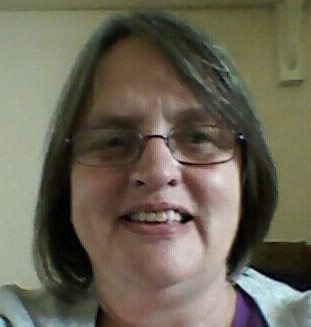
bigstock-cartoon-face-vector-people-25671746-e1348136261718April 14th was the ten-year anniversary of the accident that should have killed me. It’s a miracle that I’m still alive and doing as well as I am. I had a base-of-skull fracture and bilateral frontal lobe damage. I was in a coma for three days. I had four brain operations. The doctors didn’t think that I would have anything like a “normal” life. I showed them. (Ha ha!) I went back to university, Graham, Lesley Ann Survivor2  061115got my degree, and worked part-time. (I will never be able to work full-time.) I then moved into my own flat. I got married, and we have an eight-month-old son. I hope my story can help others and make people realize that there is life after a brain injury. I believe it’s by the grace of God that we are all alive anLesley Ann Graham Survivor 061115d in this group.

Disclaimer: Any views and opinions of the Contributor are purely his/her own.

(Clip Art compliments of Bing.)

(Photos compliments of contributor.)

As I say after each post: Please leave a comment by clicking the blue words “Leave a Commentanim0014-1_e0-1 below this post.

Feel free to follow my blog. Click on “Follow” on the upper right sidebar.

If you like my blog, share it with your friends. It’s easy! Click the “Share” buttons below.

If you don’t like my blog, “Share” it with your enemies. I don’t care!

Feel free to “Like” my post.

Survivors SPEAK OUT! Lessia Malloy

Survivors  SPEAK OUT!  Lessia Malloy

by

Donna O’Donnell Figurski

Lessia Malloy - Survivor

Lessia Malloy – Survivor – Pre-Brain Injury

1. What is your name? (last name optional)

Lessia Malloy

2. Where do you live? (city and/or state and/or country) Email (optional)

Doyline, Louisiana, USA

3. When did you have your TBI? At what age?

Age 51

4. How did your TBI occur?

My TBI resulted from a motorcycle accident. I wasn’t wearing a helmet.

5. When did you (or someone) first realize you had a problem?

I don’t know. I was knocked unconscious upon impact.

6. What kind of emergency treatment, if any, did you have?

I had a tracheotomy. I was given CPR (cardiopulmonary resuscitation). Then I had surgery to remove my skull plate.

7. Were you in a coma? If so, how long?

Yes. I was in a coma thirty days.

8. Did you do rehab? What kind of rehab (i.e., inpatient or outpatient and occupational and/or physical and/or speech and/or other)? How long were you in rehab?

I had thirty days of rehab – both in- and outpatient.

9. What problems or disabilities, if any, resulted from your TBI
(e.g., balance, perception, personality, etc.)?

I have short-term memory issues.

10. How has your life changed? Is it better? Is it worse?

I’m no longer totally independent.

11. What do you miss the most from your pre-TBI life?

I miss being independent and working.

12. What do you enjoy most in your post-TBI life?

I have less stress, since I don’t take on more than I can handle.

13. What do you like least about your TBI?

I dislike that my TBI makes me second-guess myself.

14. Has anything helped you to accept your TBI?

I came to accept my TBI because I had to rebuild my life in every way.

15. Has your injury affected your home life and relationships and, if so, how?

My TBI put an end to an already rocky marriage. But, I came out a winner on that.

16. Has your social life been altered or changed and, if so, how?

My injury has made me very wary of people. I’m not as outgoing, and I watch and listen more.

17. Who is your main caregiver? Do you understand what it takes to be a caregiver?

My husband helps me.

18. What are your future plans? What do you expect/hope to be doing ten years from now?

Maybe I’ll be working in something that fulfills me.

19. Are you able to provide a helpful hint that may have taken you a long time to learn, but which you wished you had known earlier? If so, please state what it is to potentially help other TBI survivors with your specific kind of TBI.

Don’t push it. Let yourself heal. Accept what you went through. Then tackle the world. Learning stuff all over again is good for the soul in so many ways. Have fun.

Lessia Malloy - Survivor

Lessia Malloy – Survivor – Post-Brain Injury

20. What advice would you offer to other TBI survivors? Do you have any other comments that you would like to add?

Take it one day at a time. Do what you can with what you have. Work with that and build on it.


Thank you, Lessia, for taking part in this interview. I hope that your experience will offer some hope, comfort, and inspiration to my readers.

(Disclaimer: The views or opinions in this post are solely that of the interviewee.)

If you would like to be a part of the SPEAK OUT! project, please go to TBI Survivor Interview Questionnaire for a copy of the questions and the release form.

(Photos compliments of Lessia.)


Caregivers SPEAK OUT! . . . . . Gill Evans

SPEAK OUT! – Gill Evans

by

Donna O’Donnell Figurski


Evans, Gill Caregiver with Flamingoes

Gill Evans – Caregiver for her Husband

1. What is your name? (last name optional)

Gill Evans

2. Where do you live? (city and/or state and/or country)     Email? (optional)

Birmingham, England     gce46@hotmail.co.uk

3. What is the TBI survivor’s relationship to you? How old was the survivor when he/she had the TBI? What caused your survivor’s TBI?

The TBI survivor is my husband. He had his TBI in 1984 at age 23. The TBI was originally due to a motorcycle accident, but he has been reinjured three times since then, the last being 11 years ago. He has had one work-related injury and two motorcycle-related head injuries.

4. On what date did you begin care for your TBI survivor? Were you the main caregiver? Are you now? How old were you when you began care?

I was 22 and in full-time work. He was living with his mom. We decided to split up due to his being violent, but we continued seeing each other as friends. We got back together when I was 40 and he was 41. We married 2 years later. I have looked after him since because the last injury left him unable to work.

5. Were you caring for anyone else at that time (e.g., children, parents, etc.)?

When we got back together, I had two teenage boys.

6. Were you employed at the time of your survivor’s TBI? If so, were you able to continue working?

I work full-time, but I have 13-hour shifts, so I’m home 4 days each week. I no longer work night shifts, as he struggles with the change that causes.

7. Did you have any help? If so, what kind and for how long?

No

8. When did your support of the survivor begin (e.g., immediately – in hospital, when the survivor returned home, etc.)?

My husband finally accepted help three weeks ago. When he had his TBI 30 years ago, there was nothing in place for him. He got speech therapy, and that was it.

9. Was your survivor in a coma? If so, what did you do at that time?

No

10. Did your survivor have rehab? If so, what kind of rehab (i.e., inpatient and/or outpatient and occupational, physical, speech, and/or other)? How long was the rehab? Where were you when this was happening?

He got speech therapy at home.

11. What problems or disabilities of your TBI survivor required your care, if any?

He required constant prompting of his memory and calming down due to temper. He had a broken leg, so he was wheelchair-bound for a couple of weeks until he was able to have crutches.

12. How has your life changed since you became a caregiver? Is it better? Is it worse?

I’m not really sure that I can answer this. My response probably wouldn’t make sense, as it would be “better than what, and worse than what?”

13. What do you miss the most from pre-TBI life?

I miss my independence – not having to worry about my husband when I’m out or not having to walk on eggshells because he’s in a bad mood. But, as much as I miss my independence, I regret that over the last couple of years he has stopped going out unless he has to. So, I go everywhere on my own. Sometimes I wish I didn’t have to.

Evans, Gill Caregiver IMG_1130

Gill Evans

14. What do you enjoy most in post-TBI life?

On reflection, not a lot

15. What do you like least about TBI?

I dislike that my husband’s last injury took him away from me and that he is like a stranger sometimes. He can forget who I am, and he will talk to me like I’m his ex-wife.

16. Has anything helped you to accept your survivor’s TBI?

I’m helped by the fact that I have loved my husband since I was 17 years old. (So, I have known him with the TBI most of my life.)

17. Has your survivor’s injury affected your home life and relationships and, if so, how?

When we married, I had two teenage sons living at home, and this became really difficult. There were lots of arguments. After two years of our fighting, my sons decided it was better if they moved out. I have spent the last eight years trying to rebuild my relationship with them, and thankfully we are much closer. Also they, to an extent, get on with my husband.

18. Has your social life been altered or changed and, if so, how?

Not really. My husband doesn’t go out much, and I go out with my sons or with colleagues from work. The one rule I have when I am out is that, unless it’s an emergency, he is only allowed to phone me once and the rest has to be text messages. Also he is not to bombard me with texts if I don’t reply.

19. What are your plans? What do you expect/hope to be doing ten years from now?

I’m hoping to be retired (or at least to be coming up to retirement) and spending some quality time with my family.

20. What advice would you offer other TBI survivor caregivers? Do you have any other comments that you would like to add? 

Evans, Gill Caregiver IMG_1129

Gill Evans – Caregiver for her Husband

Have boundaries, boundaries, and boundaries – to protect your own sanity. Remember to keep time for yourself. Don’t tolerate violence. It’s okay for you to get mad occasionally, but walk away. You won’t win a fight (verbal) with him or her. Grow a thick skin – he or she doesn’t always mean what is said. If you take everything personally, you won’t survive. Remember most of all, regardless of the effects of the TBI, your partner is still in there, so don’t give up hope of ever seeing him or her again – even if it’s only for a fraction of a second that he or she shines through. That’s why at the end of the day you are still there.


Thank you, Gill, for taking part in this interview. I hope that your experience will offer some hope, comfort, and inspiration to my readers.

If you would like to be a part of this project, please go to TBI Caregiver Interview Questionnaire for a copy of the questions and the release form.

(Photo compliments of Gill.)

Disclaimer: The views or opinions in this post are solely that of the interviewee.

Survivors SPEAK OUT! DuWayne Hall

SPEAK OUT! – DuWayne Hall

by

Donna O’Donnell Figurski


Hall, DuWayne 1

DuWayne Hall

1. What is your name? (last name optional)

DuWayne Hall

2. Where do you live? (city and/or state and/or country) Email (optional)

Colorado Springs, Colorado, USA    Braindamagedguy@gmail.com

3. When did you have your TBI? At what age?

August 16, 1992 – I was 32 years old.

4. How did your TBI occur?

It was a single vehicle motorcycle accident. (For complete story see Guest Blog.)

5. When did you (or someone) first realize you had a problem?

As soon as I became aware in the hospital!

6. What kind of emergency treatment, if any, did you have?

I was on total life support, so they did whatever was necessary for that. My arm was tied around my neck because they expected me to die.

I was not wearing my helmet at the time of the accident. I had my right ear torn off; they sewed it back on. My right cheek was crushed from my shoulder’s smacking my face as I face-planted the road. They put a titanium cheekbone in to fix my face. My right eye was hanging out of its socket; it had to be placed back into my skull. I sustained a closed-head injury. My right frontal lobe and the pons portion of my brain sustained what they refer to as a “contracoup” injury (that is, the brain is damaged exactly opposite to the impact point). They implanted a shunt on the top of my head. I’ve got a metal plate in the top of my head.

I had road rash from being dragged 100 or so feet before the motorcycle stopped sliding. My arm was shattered at the elbow. My collarbone was broken in two places. I had knee surgery.

7. Were you in a coma? If so, how long?

I was in a coma 24 days. On the 25th day, my living will was going to become effective, and they were going to unplug me from life support.

8. Did you do rehab? What kind of rehab (i.e., inpatient or outpatient and occupational, physical, speech, and/or other)?
How long were you in rehab?

I was in rehab three years. I relearned everything from how to go to the bathroom to how to eat again, talk again, and interact again. I was just like a child relearning how to do everything – dress myself, cook, shower, stand upright, etc.

9. What problems or disabilities, if any, resulted from your TBI
(e.g., balance, perception, personality, etc.)?

As a result of my TBI, I became increasingly more isolated, until Facebook came into the picture about ten years ago. I walk with an uneven gait. I have problems seeing just one of something. I’m partially deaf. My face is partially paralyzed. Over the years, I’ve developed PTSD (post-traumatic stress disorder) as a result of multiple TBI’s. I get frustrated very easily, but it is perceived as anger by others.

10. How has your life changed? Is it better? Is it worse?

It became more burdensome and unfulfilled.

11. What do you miss the most from your pre-TBI life?

I miss friends, family, social relationships, and camping. Any exercise is burdensome. Personal relationships ended. I can’t defend myself. I lost my hospital job of 8 years.

12. What do you enjoy most in your post-TBI life?

Nothing!

13. What do you like least about your TBI?
It gave me PTSD. Anybody diagnosed with it understands what I am talking about! It is hell!

14. Has anything helped you to accept your TBI?

It is hard to define “accept.” I know that it has happened and that I can’t do anything about it. I believe all things happen for a reason, but I cannot find any good being returned because I am disabled. So, if I can help keep one soul from going through the hell I’ve been through these last 24 years, then that would be worth it to me!

15. Has your injury affected your home life and relationships and, if so, how?

I have been married two times since my TBI. No lady wants me because I’m broken, not only physically, but also emotionally and mentally.

16. Has your social life been altered or changed and, if so, how?

I have no social life! At first, people seemed happy that I did not die. However, after time, I no longer had the number of friends that I had before my accident. The example would be that I receive a get-well card at the hospital with approximately 825 signatures of people wishing me well during recovery. If only 25 percent were sincere, I would have 207 friends. I have two – one who lives out-of-state and one who lives out-of-town. I am constantly lonely and feeling rejected!

17. Who is your main caregiver? Do you understand what it takes to be a caregiver?

I don’t have one. I am my own caregiver!

18. What are your future plans? What do you expect/hope to be doing ten years from now?

I don’t have any plans. I believe that life has ended for me! I am just waiting to die.

19. Are you able to provide a helpful hint that may have taken you a long time to learn, but which you wished you had known earlier? If so, please state what it is to potentially help other TBI survivors with your specific kind of TBI.

I’m too gullible. Most TBIers are.

20. What advice would you offer to other TBI survivors? Do you have any other comments that you would like to add?

Hall, DuWayne 2

DuWayne Hall

Be patient with yourself. Recovery takes a long time!


Thank you, DuWayne, for taking part in this interview. I hope that your experience will offer some hope, comfort, and inspiration to my readers.

(Disclaimer: The views or opinions in this post are solely that of the interviewee.)

(Photos compliments of DuWayne.)

If you would like to be a part of the SPEAK OUT! project, please go to TBI Survivor Interview Questionnaire for a copy of the questions and the release form.


diemodi jewelry

uniquely hand-crafted jewelry by donna

Welcome to Harmony Kent Online

The home of all things books

Pete Springer

Passionate Teacher and Future Children's Author

HOPE TBI

Helping Other People Excel - To Be Independent

For the Love of Books, Old and New

Katie Fischer, Writer and Reader of Stories

Charlie Bown

Children's Author

Jessica Hinrichs

“We write to taste life twice, in the moment and in retrospect.” ― Anais Nin

VIVIAN KIRKFIELD - Writer for Children

Picture Books Help Kids Soar

Mindy’s Writing Wonderland

For authors, parents, teachers & everyone who loves children’s books.

Kaitlyn Leann Sanchez

Literary Agent

Surviving Traumatic Brain Injury

TBI - Survivors, Caregivers, Family, and Friends

The Care Factor

Loving someone with a Traumatic Brain Injury

Brain Injury Support Group of Duluth-Extension

Brain Injury Information and SUPPORT

Brain Aneurysm Global Insight

Brain Aneurysm, cerebral hemorrhaging, hemorrhage stroke