TBI – Survivors, Caregivers, Family, and Friends

Posts tagged ‘Brain Injury’

Survivors SPEAK OUT! Melissa Cronin

SPEAK OUT! – Melissa Cronin

by

Donna O’Donnell Figurski

 

Melissa Cronin Head Shot 2

Melissa Cronin

1. What is your name? (last name optional)

Melissa Cronin

2. Where do you live? (city and/or state and/or country) Email (optional)

South Burlington, Vermont, USA

3. When did you have your TBI? At what age?

Age 36

4. How did your TBI occur?

In 2003, when visiting the Santa Monica Farmers’ Market, an elderly driver confused the gas pedal for the brake and sped through the market. I was thrown forward, and my head hit the pavement. The force of the impact resulted in a ruptured spleen and multiple fractures, including my pelvis.

5. When did you (or someone) first realize you had a problem?

Fourteen months after the accident, when I returned to part-time work as a public health nurse, I experienced increased fatigue, difficulty concentrating, and multitasking. My boss threatened to fire me, so I resigned and attempted part-time work in a pediatrician’s office (bad idea for someone with a TBI), but I struggled to keep up in a fast-paced environment. In May 2006, I finally saw a neuropsychiatrist for testing, and the results proved to be consistent with a TBI.

6. What kind of emergency treatment, if any, did you have?

I did not have emergency treatment for a TBI. The CT (computerized tomography, also known as “CAT”) scans showed no bleeding (typical for a “mild” TBI). I did have emergency surgery, though, to remove my ruptured spleen.

7. Were you in a coma? If so, how long?

No

8. Did you do rehab? What kind of rehab (i.e., inpatient or outpatient and occupational and/or physical and/or speech and/or other)? How long were you in rehab?

I had physical and occupational therapy at Cedars Sinai Hospital in Los Angeles to help regain muscle mass and strength after being hospitalized for nearly one month. I would be in a wheelchair for four months while my fractures healed, so rehab taught me ways to navigate through my day.

9. What problems or disabilities, if any, resulted from your TBI
(e.g., balance, perception, personality, etc.)?

Fatigue, difficulty multitasking and concentrating, occasional irritability, depression; and difficulty processing verbal, auditory, and visual information

10. How has your life changed? Is it better? Is it worse?

My life is both better and worse. It’s better because my TBI, and other injuries, opened up a path for me to writing. And my husband, whom I met only three weeks prior to the accident, has been my strongest support. It’s worse because I eventually had to give up my 20-year nursing career.

11. What do you miss the most from your pre-TBI life?

Running and skiing, and the babies I cared for in the neonatal intensive care unit where I worked before my injury

12. What do you enjoy most in your post-TBI life?

Writing, playing the Irish fiddle, going for walks, and, of course, my husband’s unwavering support

13. What do you like least about your TBI?

I’m much slower at getting things done. I often sleep in until 9:30 or 10:00 am, and I feel as if I’ve wasted much of the day. Also, I often fail to understand concepts others seem to grasp so easily.

14. Has anything helped you to accept your TBI?

I’ve been helped by the neuropsychiatrist who diagnosed me with a TBI and by the cognitive therapist who treated me. Also, my therapist – he continually reminds me that my brain has been rewired.

15. Has your injury affected your home life and relationships and, if so, how?

Definitely my home life has been affected. I rely on my husband to do much of the “heavy” lifting, like cooking, grocery shopping, and driving, because I am easily distracted.

16. Has your social life been altered or changed and, if so, how?

Absolutely. I do not socialize as much as I did before my injury because it doesn’t take much for me to become fatigued.
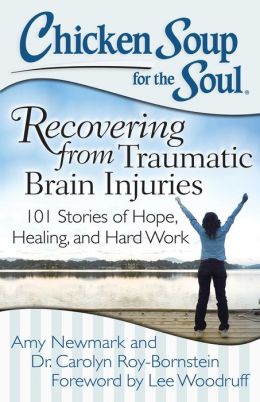
9781611592399_p0_v3_s260x420

“Invisible Bruise” Chicken Soup for the Soul: Recovering from Traumatic Brain Injuries. June 2014

17. Who is your main caregiver? Do you understand what it takes to be a caregiver?

I am my own main caregiver, though my husband does much of the cooking. I do not know what it takes to be a caregiver, though my father is living with Alzheimer’s, and I help out as much as I can.

18. What are your future plans? What do you expect/hope to be doing ten years from now?

Writing and traveling

19. Are you able to provide a helpful hint that may have taken you a long time to learn, but which you wished you had known earlier? If so, please state what it is to potentially help other TBI survivors with your specific kind of TBI.

I wish I understood much earlier the truth about TBIs before I re-entered the workplace and had to face the threat of being fired. For example, I wish someone had warned me that I might have actually suffered a TBI, and that the initial presentation of milder injuries does not mean the consequences are mild.

20. What advice would you offer to other TBI survivors? Do you have any other comments that you would like to add?

Persevere. Try not to compare yourself to non-brain injured individuals – you’ll only get frustrated. Pay attention to what your body and brain are telling you, and give yourself permission to take naps. Exercise your brain, in moderation, by doing crossword puzzles or learning a new skill. Whatever you accomplish, even if it’s getting out of bed by 7:00 am, is an accomplishment.

Melissa is the author of “Invisible Bruise,” published in Chicken Soup for the Soul: Recovering from Traumatic Brain Injuries.

Melissa playing fiddle

Melissa Cronin with her fiddle

To learn more about Melissa, please visit her website/blog at Melissa Cronin.


Thank you, Melissa, for taking part in this interview. I hope that your experience will offer some hope, comfort, and inspiration to my readers.

(Disclaimer: The views or opinions in this post are solely that of the interviewee.)

(Photos compliments of Melissa.)

If you would like to be a part of the SPEAK OUT! project, please go to TBI Survivor Interview Questionnaire for a copy of the questions and the release form.
Brain Injury Resources . . . . . . Amazing Potential of Stem Cells to Repair the Brain

Amazing Potential of Stem Cells to Repair the Brain

Brain th-2My NewsBits are often about advances in stem cell research (1, 2, 3, 4). There is good reason – the recent advances in our understanding of stem cells make them a key component in efforts to heal the brain. This video shows the potential of stem cell-based therapy.

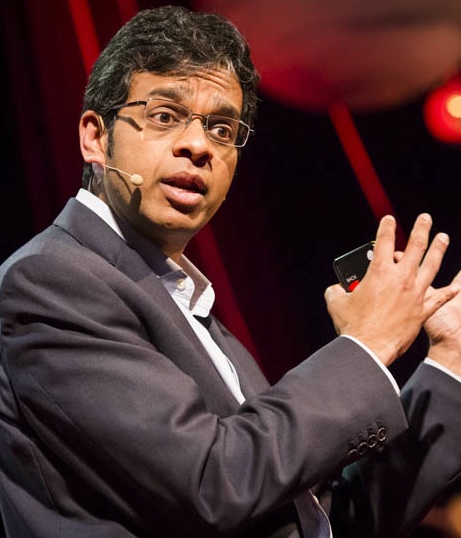
Siddharthan Chandran

Dr. Siddharthan Chandran on TED Talk

For years, medical students have been taught incorrectly that the brain cannot repair itself. Recent exciting research on stem cells has definitely put that “dogma” to rest. In fact, the rapid pace of discoveries about the brain indicates that the future may be closer than you think. The brain actually does repair itself, just not enough. The repair the brain does do uses a natural reservoir of stem cells (pluripotent cells that have the potential to become any cell). Recent research has shown that we will be able add more stem cells to boost the natural repair of the brain and restore lost functions, even functions usually considered to be lost forever. In the video, Dr. Siddharthan Chandran hypothesizes that the added stem cells help repair the brain, not by acting themselves to do the repairs, but by activating more of the brain’s own stem cells.


As I say after each post:

Feel free to leave a comment by clicking the blue words “Leave a Comment” below this post.

Please follow my blog. Click on “Follow Me Via eMail” on the right sidebar of your screen.anim0014-1_e0-1

If you like my blog, click the “Like” button under this post.

If you REALLY like my blog, share it with your friends. It’s easy! Click the “Share” buttons below.

If you don’t like my blog, “Share” it with your enemies. That works for me too!


(Clip Art compliments of Bing.)

On the Air – Brain Injury Radio Interview – Catherine Brubaker Triking Across America

On the Air – Brain Injury Radio

Interview with Catherine (Cat) Brubaker

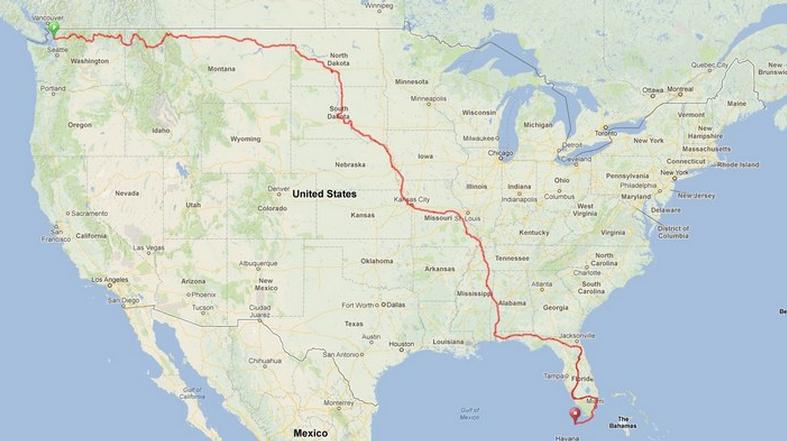
Triking Across America – diagonally


images-1In my interview of Catherine (“Cat”) Brubaker, Cat tells the story of her life before her brain injury, her two TBIs, and her recent 5200-mile trip across the US (diagonally) on a recumbent trike.

Cat came from a humble and religious family. As a child, she loved sports and the outdoors. Her parents sacrificed so that she could go to college, where she earned a B.S. degree in Psychology. That education has been immensely valuable to Cat, especially now that she has a brain injury. It was “probably the best education I have ever received from any institution.” Cat then went on to earn a Master’s Degree in 2007, with a perfect 4.0 average (all As). Her father passed away two years earlier, and Cat knew he would’ve been proud.

From Anacortes, Washington to Key West, Florida (5,200 miles)

In her mid-30s, Cat had made a great life for herself. She had a good job with lots of responsibility; she had a long-term relationship; and she was enjoying the independence of her life. Then she acquired her first TBI from an assault. She had to learn everything again. Cat had many deficits from her brain injury, including problems with balance. She suffered from Post-Concussive Syndrome and Post Traumatic Stress Disorder (PTSD). When Cat left the hospital a year later, she became involved in a head-on collision and received another TBI. For a second time, she had to relearn everything from scratch. Her long-term relationship ended, and she desperately missed her independence and freedom.  When her mother died unexpectedly, Cat hit bottom.

Meet Cat’s Grizzly Bear

Then Cat discovered the recumbent trike and regained some of her independence. She later met Dan Zimmerman, a stroke survivor, while he was riding his recumbent trike. They stopped and talked, and he told her of his plan to ride across the country. Cat decided immediately that she wanted to do it too. After much preparation, the trip is happening. Cat has been greatly moved by the outpouring of love and generosity. She wishes that everyone could experience so much love at least once. Cat discusses some details of her trip so far, including one time in Montana when she was alone and encountered a grizzly bear. Cat’s discussion will mesmerize you.

Ride, Cat, RIDE!


If you missed the show, don’t fret. You can always listen to the archived show. I’ve included the link below.

Please SHARE!

I hope you’ll tune in to my show, “Another Fork in the Road,” which airs the 1st and 3rd Sunday evenings of every month. The show starts at 5:00p Pacific Time and runs for 90 minutes. On the 2nd and 4th Sundays at 5:00p Pacific Time, Julie Kintz hosts “Quantum Leap.” When there is a fifth Sunday in a month, Julie and I will team up to cohost a show called “Another Quantum Leap in the Road.”

See you “On the Air!”


(Clip Art compliments of Bing.)

“Another Fork in the Road” . . . Brain Injury Radio Network: “Triking Across America – diagonally,” with Catherine (Cat) Brubaker

YOU ARE INVITED!


putthis_on_calendar_clip_art“Another Fork in the Road” on Brain Injury Radio Network invites you to meet Catherine (Cat) Brubaker who is “Triking Across America – diagonally.” Cat looks like your normal, everyday, young woman. But what you don’t know about Cat, by just looking at her, is that she is living with not one, but two, traumatic brain injuries. But, Cat does not let her brain injury tie her down. No, she is on a 5,200 mile trike trip across America – diagonally – to raise awareness for TBI. Come hear Cat.

Come One! Come ALL!

(NOTE: New Day, Sunday – Same Time)

What:        “Another Fork in the Road” . . . Brain Injury Radio Network presents “Triking Across America – diagonally” with Catherine (Cat) Brubaker

Why:         Hear Cat’s amazing story of how she is pedaling into her future on he recumbent trike despite two traumatic brain injuries..

Where:     Brain Injury Radio Network

When:       Sunday, October 5th, 2014

Time:         5:00p PDT (6:00p MDT, 7:00p CDT, and 8:00p EDT) 90 minute show

How:         Click: Brain Injury Radio Network.

Call In:    424-243-9540

Call In:     855-473-3711 toll free in USA

Call In:    202-559-7907 free outside US

or SKYPE

If you miss the show, but would like to still hear the interview, you can access the archive on On Demand listening. The archived show will be available after the show both on the Brain Injury Radio Network site and on my blog in “On the Air.”

(Clip Art compliments of Bing.)

Survivors SPEAK OUT! . . . . . . . . . . Lisa Parker McGreggor

SPEAK OUT! – Lisa Parker McGreggor

by

Donna O’Donnell Figurski

McGreggor, Lisa Parker1. What is your name? (last name optional)

Lisa Parker McGreggor

2. Where do you live? (city and/or state and/or country) Email (optional)

Tampa Bay, Florida, USA    parkermcgreggor@yahoo.com

3. When did you have your TBI? At what age?

July 24, 2000     I was 15 – only two weeks shy of 16.

4. How did your TBI occur?

Car accident

5. When did you (or someone) first realize you had a problem?

When I didn’t get up at the scene

6. What kind of emergency treatment, if any, did you have?

I had a G (gastrostomy) peg (feeding tube). My spleen was removed.

7. Were you in a coma? If so, how long?

Yes. I was in a coma for three months.

8. Did you do rehab? What kind of rehab (i.e., inpatient or outpatient and occupational and/or physical and/or speech and/or other)? How long were you in rehab?

Yes. I had rehab at the hospital for six months. Afterwards, I was still going, but insurance would only pay every three months.

9. What problems or disabilities, if any, resulted from your TBI
(e.g., balance, perception, personality, etc.)?

I have a problem with my balance. My mood is an issue. My right arm is drawn up.

10. How has your life changed? Is it better? Is it worse?

My life may be better, but it’s lonelier.

11. What do you miss the most from your pre-TBI life?

My freedom

12. What do you enjoy most in your post-TBI life?

Food

13. What do you like least about your TBI?

The fact that it exists

14. Has anything helped you to accept your TBI?

Reality

15. Has your injury affected your home life and relationships and, if so, how?

Yes. It made me reliant on my parents. I hardly ever go out, so I don’t have a boyfriend.

16. Has your social life been altered or changed and, if so, how?

Most of my friends left.

17. Who is your main caregiver? Do you understand what it takes to be a caregiver?

My mom is my main caregiver. Yes, I understand what it takes.

18. What are your future plans? What do you expect/hope to be doing ten years from now?

I don’t have any plans.

19. Are you able to provide a helpful hint that may have taken you a long time to learn, but which you wished you had known earlier? If so, please state what it is to potentially help other TBI survivors with your specific kind of TBI.

You can never “quit.”

20. What advice would you offer to other TBI survivors? Do you have any other comments that you would like to add?

Be strong.

Enjoy the ride. Life is shorter than you think!McGreggor, Lisa Parker 2

Thank you, Lisa, for taking part in this interview. I hope that your experience will offer some hope, comfort, and inspiration to my readers.

(Disclaimer: The views or opinions in this post are solely that of the interviewee.)

(Photos compliments of Lisa.)

If you would like to be a part of the SPEAK OUT! project, please go to TBI Survivor Interview Questionnaire for a copy of the questions and the release form.

Caregivers SPEAK OUT! . . . . . Trisha

SPEAK OUT! – Trisha

by

Donna O’Donnell Figurski


Trisha

1. What is your name? (last name optional)

Trisha

2. Where do you live? (city and/or state and/or country)    Email? (optional)

Rural western Oklahoma, USA

3. What is the TBI survivor’s relationship to you? How old was the survivor when he/she had the TBI? What caused your survivor’s TBI?

My son fell asleep while driving to work. The pickup left the roadway and rolled several times, and he was thrown through the window. It was ten days after his 20th birthday.

4. On what date did you begin care for your TBI survivor? Were you the main caregiver? Are you now? How old were you when you began care?

I began immediately – the morning of November 3, 2011 – as soon as I got the phone call from the Highway Patrol telling us what had happened and that my son was being medevacked to a hospital in Oklahoma City. I called my husband; he left work, and we headed that way. I stayed in Oklahoma City the entire four months. I am still his main caregiver, but my husband, my son’s girlfriend, and my other sons help.

5. Were you caring for anyone else at that time (e.g., children, parents, etc.)?

I had two younger sons, ages 16 and 11, at home. (They’re still at home.) My stepdaughter, her husband, and their four children had just moved in with us about three weeks before the wreck. They moved out about three weeks after we came home from the hospitals. And I was about six months pregnant.

6. Were you employed at the time of your survivor’s TBI? If so, were you able to continue working?

I was running my own photography business, and I still am.

7. Did you have any help? If so, what kind and for how long?

Every church, countless people in our area, and family not only prayed, but also made it financially possible for me and my sister to stay in Oklahoma City the entire time my son was in the hospitals and also for my husband to be there whenever he had time off work. My husband’s bosses also were also able to get him extra time when it first happened, so he was able to stay for several weeks before he had to go back to work.

8. When did your support of the survivor begin (e.g., immediately – in hospital, when the survivor returned home, etc.)?

Immediately, at all the hospitals

9. Was your survivor in a coma? If so, what did you do at that time?

Yes. My son was in an induced coma. We stayed by his side and prayed, until they’d make us leave at night. Then we’d be right back in the morning.

10. Did your survivor have rehab? If so, what kind of rehab (i.e., inpatient and/or outpatient and occupational, physical, speech, and/or other)? How long was the rehab? Where were you when this was happening?

My son was at Oklahoma University Medical Center first. Then he went to Select Specialty Hospital for a few weeks. From there, he was at Valir Rehabilitation Hospital from the middle of December until we came home in February. He had about 8 weeks of therapy at Elk City Hospital as an outpatient after we came home. Since then, we’ve continued doing therapy ourselves at home. I was with him the entire time, except at night, when we’d go to the motel.

11. What problems or disabilities of your TBI survivor required your care, if any?

Trisha's Son after TBI

Trisha’s Son after TBI

My son suffers from short-term memory problems, lack of balance and coordination, problems with fine-motor skills, and incontinence. One of our biggest battles has been depression. He is in a wheelchair, but he is able to use a walker for short periods of time.

12. How has your life changed since you became a caregiver? Is it better? Is it worse?

Everything is pretty much centered around my son. He can be home alone, but only for a couple hours at a time. If I have to leave, I need to make sure either someone else is here or will be here.

13. What do you miss the most from pre-TBI life?

The active and outdoor lifestyle we had

14. What do you enjoy most in post-TBI life?

This is actually a difficult question to answer. Post-TBI for us is also the start of our daughter’s life. She was born one week after my son and I got home from Valir.

15. What do you like least about TBI?

Even though it is going on three years, there are still times that I feel like it’s a bad dream, and I’m waiting to wake up. I’m distressed by the fact that my son had a ton of friends before, and now he will go weeks, sometimes months, at a time without seeing or hearing from any of them.

16. Has anything helped you to accept your survivor’s TBI?

I honestly don’t know if I have actually accepted it yet. To me, acceptance pretty much means we give up, and he hasn’t given up. In fact, this week, for the first time ever, he has walked on a treadmill. For the first time since the day before his wreck, I saw him make full strides with both feet! He didn’t do his normal “step with one foot, catch up with the other” like he does when he uses his walker.

17. Has your survivor’s injury affected your home life and relationships and, if so, how?

Yes. We had to remodel one of our bathrooms to make it accessible for a wheelchair. His younger brothers help out with some of his needs.

18. Has your social life been altered or changed and, if so, how?

My son and I both have friends who no longer come around. People, including his own grandfather, get upset with us because he refuses to go to their houses. Yet, their homes don’t have access for a wheelchair – let alone have a bathroom that he could get into if needed.

19. What are your plans? What do you expect/hope to be doing ten years from now?

I take things day-by-day, with a lot of prayers going up.

Trisha's Son before TBI

Trisha’s Son before TBI

20. What advice would you offer other TBI survivor caregivers? Do you have any other comments that you would like to add?

Fight for answers from all doctors or “teams.” Insist on seeing each one. When the accident first happened, my son had “teams” of doctors for his different injuries. We never saw the neurology team. They always came through before we were allowed into his room. His brain injury was made out to us like it was a secondary injury – not that bad. In reality, it was his worst injury, but that’s not what we were told.


Thank you, Trisha, for taking part in this interview. I hope that your experience will offer some hope, comfort, and inspiration to my readers.

If you would like to be a part of this project, please go to TBI Caregiver Interview Questionnaire for a copy of the questions and the release form.

(Photo compliments of Trisha.)

Disclaimer: The views or opinions in this post are solely that of the interviewee.

Brain Injury Resources “You Disappear”

“You Disappear” by Christian Jungersen

(Insight Into the World of Brain Damage)

reviewed by

Donna O’Donnell Figurski

"You_Disappear"_Jungersen-205x300

You Disappear by Christian Jungersen

As anyone who has had a brain injury and his or her caregiver know, life is forever altered. It will never be the same. Christian Jungersen takes his readers on the twisted journey of Frederick, a headmaster at a prestigious school; Mia, his wife and a reputable schoolteacher; and their teenage son, Niklas. Unlike many brain injuries that occur by an impact, an accident, or a hemorrhage, Frederick’s brain “injury” evolved over time, changing his personality bit by bit. Mia slowly noticed inexplicable changes in her husband. Talking too loud and eating too much were just two of the little signs that were manifested as Frederick’s brain changed. While on a vacation in Majorca, Frederick drove unusually erratically and dangerously. His driving caused their rental car to scrape a stone cliff. When Frederick, in a crazed state, jumped from the car, fell down a hillside, and woke in the local hospital, he was forced to seek help, and the mystery of his strange behavior is unveiled.

Once Frederick is diagnosed with a slow-growing brain tumor, his aberrant behavior becomes more understandable, but not excusable. As is the case for many brain-injured persons, Frederick’s behavior hampered his decision–making process. Frederick illegally took large sums of money from his school, causing the school to become bankrupt and Frederick to lose the respect and friendship of many people, including his chairman and close friend, Laust. Eventually Frederick, while seeking help, loses his job and faces a possible prison sentence.

Mia fondly remembers the years before the change in Frederick. She remembers the love they shared. She does what she can to help him, but his deviant and erratic behavior makes living with him difficult. Finally, Mia seeks help and companionship with a local brain-injury support group, where she meets Bernard, who not only becomes Frederick’s attorney, but also a “special” friend to Mia.

As Christian Jungersen so aptly states, “As any family member of someone with brain damage knows, the hard part isn’t the initial shock. The hard part comes when the adrenalin recedes and you have to set out down the endless gray corridor of disheartening days, days that look like they’ll last the rest of your life.”

As the caregiver for my husband, who has a traumatic brain injury, I understand Jungersen’s words completely. The adrenalin gets you through the early surgeries and the beginning days in the hospital. It may even carry you through the weeks in the rehabilitation facility. But the adrenalin-rush ends, and “real life” sets in when the caregiver brings the survivor home. That’s when the realization occurs that life will never be the same as it was. The survivor will never be the same as before, and neither will the caregiver. Brain damage has a way of changing the normal. That’s when the survivor and caregiver realize that the journey through the brain-damage maze has just started. They eventually realize that it has no end. Once brain damage comes to stay, it can tear families apart. But, it can also make families stronger, as they pull together to overcome the trials of brain injury.

In “You Disappear,” Jungersen portrays how one family finds their world breaking up. Will they find enough glue to repair it?


Jungersen 2

Christian Jungersen

As I say after each post:

Feel free to leave a comment by clicking the blue words “Leave a Comment” below this post.

Please follow my blog. Click on “Follow Me Via eMail” on the right sidebar of your screen.anim0014-1_e0-1

If you like my blog, click the “Like” button under this post.

If you REALLY like my blog, share it with your friends. It’s easy! Click the “Share” buttons below.

If you don’t like my blog, “Share” it with your enemies. That works for me too!


(Clip Art compliments of Bing.)

TBI Tales: Can Music Rewire Brain?

Playing a Mandolin

 by

 Richard Johnson

(presented by Donna O’Donnell Figurski)


mandolin-for-gloggtserMy traumatic brain injury took place in October 2003. I did survive (fortunately), but one of the main side effects from my injury is short-term memory loss.

Years ago, I was in a local coffee shop drinking a cup of coffee and thinking – not “Why me? Why me?” but “What can I do to help my short-term memory loss?” The coffee shop had two people playing guitars. One person put down his guitar and picked up a mandolin. They then played three of my favorite songs. What they triggered was like a bolt of lightning had gone through me! I knew right away that learning how to play an instrument, how to read sheet music, and, most importantly, remembering what I just practiced would be the best memory therapy in the world.

When the musicians took a break, I asked about the mandolin. I told the mandolin-player that I had never played any instrument before. I asked if I could chord with less than four fingers (I only have about two-and-a-half usable fingers), and on and on we talked. He showed me a couple of mandolin chords and said to search on Google for two-finger mandolin chords. He told me to buy a beginner’s mandolin to start and to have fun. And that’s exactly what I did. I bought a good-enough beginner’s mandolin from a friend of a friend, found a great local music store that gives mandolin lessons, bought a couple of books and DVD’s, and started playing.

Well, it’s been a few years now, and I play at least one hour every day. It seems to take a month to learn a song. I’m taking the old “practice, practice, practice” route. I’m able to remember and play (most of) those songs without reading the sheet music. If I haven’t played one of those songs in a couple of weeks, I may need to read the sheet music to remember a measure or two.

I wake up in the morning thinking about the songs I practiced and played the day before. I think about the songs I will practice and play that day by “singing” the songs in my head (not the lyrics, but how they’re fretted and picked). When I’m playing, I’m in a whole different world, and the daily toils just slide away.  I’m sure I could refer to my playing-time as “therapy,” but, for me, it’s pure bliss.

In short, playing a musical instrument is one of the main keys I have gained for rewiring my brain. I truly think that beginning and learning a new hobby or new skill is very important, as it makes us think, think, and think. I also believe that playing music, any type of music, all the time helps my brain find those broken nodes and, with its neuroplasticity, “fixes” them. And most importantly, my short-term memory problem is less and less pronounced. Sure, I can still forget what I had for lunch an hour after eating it, but I can bring that memory back a few seconds later. I can still forget who called me earlier today or why, but again it’s easier to make that connection again.

I would like to continue talking, but my mandolin is calling me.

(Richard Johnson’s experience is an excellent example of something I thought might be true – using the playing of a musical instrument to stimulate the brain and thereby help heal an injured brain.)


RJohnson-PortraitThank you, Richard, for sharing your story in TBI Tales. I hope that your experience will offer inspiration to my readers.

(Disclaimer: The views or opinions in this post are solely that of the author.)


If you have a story to share and would like to be a part of the SPEAK OUT! project, please submit your TBI Tale to me at donnaodonnellfigurski@gmail.com. I will publish as many stories as I can.

(Pictures compliments of Richard.)

(Clip Art compliments of Bing.)


As I say after each post:

Please leave a comment by clicking the blue words “Leave a Comment” below this post.anim0014-1_e0-1

Please follow my blog. Click on “Follow” on the lower right corner of your screen. (It’s nice to know there are readers out there.)

If you like my blog, share it with your friends. It’s easy! Click the “Share” buttons below.

If you don’t like my blog, “Share” it with your enemies. I don’t care!

Feel free to “Like” my post.


SPEAK OUT! NewsBit . . . . . . . Electrical Stimulation of the Brain Improves Memory

Electrical Stimulation of the Brain Improves Memory

Newsboy th


Neuroscientists at Northwestern University have found that electrical stimulation of the brain results in long-term improvement of memory. The researchers applied magnetic pulses to generate an electrical current (Transcranial Magnetic Stimulation or TMS) at specific areas of the skull to stimulate specific neurons near the surface of the brain. They were surprised to find that, while memory circuits are complex and involve some neurons deep in the brain, stimulating the accessible neurons near the surface of the brain stimulates the entire circuit. TMS does not require surgery, and, unlike a therapeutic drug, which would affect all parts of the brain, TMS can be used to target specific areas of the brain. The neuroscientists believe that electrical current induces better communication between neurons and stimulates the neuroplasticity of the brain, but the molecular mechanism is unknown. (Full story, Video)

(Clip Art compliments of Bing.)

Caregivers SPEAK OUT! . . . Charline

SPEAK OUT! – Charline

by

Donna O’Donnell Figurski


Charline

Charline & Rick April 2012


1. What is your name? (last name optional)

Charline

2. Where do you live? (city and/or state and/or country)     Email? (optional)

Abilene, Texas, USA

3. What is the TBI survivor’s relationship to you?

He (Rick) is my husband.

How old was the survivor when he/she had the TBI?

52

What caused your survivor’s TBI?

The TBI was caused by an aneurysm that started to hemorrhage. Two days after the surgery to repair the aneurysm, he had a major stroke.

4. On what date did you begin care for your TBI survivor?

September 2013

Were you the main caregiver?

No

Are you now?

Yes

How old were you when you began care?

49

5. Were you caring for anyone else at that time (e.g., children, parents, etc.)?

No

6. Were you employed at the time of your survivor’s TBI?

Yes

If so, were you able to continue working?

No. My husband and I were snowbirds at the time of the TBI. We worked on the Gunflint Trail in Minnesota during the summer and at an antique store in Texas during the winter. Rick is a Minnesota native, and I am a Texan. He was flown to Minneapolis, so I was not able to continue my summer job. We came back to Texas in June 2014.

7. Did you have any help?

Yes

If so, what kind and for how long?

My two daughters and their families live here and are able to come and relieve me for a few hours a week.

8. When did your support of the survivor begin (e.g., immediately – in hospital, when the survivor returned home, etc.)?

Immediately

9. Was your survivor in a coma?

Yes. Rick was in a medically induced coma.

If so, what did you do at that time?

I spent every day in the Intensive Care Unit talking and reading to Rick. He had family that came daily to visit as well.

10. Did your survivor have rehab?

Yes

If so, what kind of rehab (i.e., inpatient and/or outpatient and occupational, physical, speech, and/or other)?

Rick was in a nursing home between the hospital and rehab. He had to relearn everything. He had physical therapy, occupational therapy, and speech therapy when he was moved to the rehab facility.

How long was the rehab?

3 months

Where were you when this was happening?

I attended most of every therapy session and doctor visits. Rick responded better to me than to anyone else.

11. What problems or disabilities of your TBI survivor required your care, if any?

His memory was severely damaged. He can never be left alone. He is also incontinent. (I have him on a bathroom schedule. If I ask him if he needs to go, he always says no; but if I tell him it’s time to go, he does.) His appetite is great.

12. How has your life changed since you became a caregiver? Is it better? Is it worse?

I can’t say that my life is better or worse. I can say that it’s different.

13. What do you miss the most from pre-TBI life?

I miss the freedom to be able to just “go.” My husband and I were very active. We hiked, canoed, fished, shopped, and worked. I miss my jobs and the people I worked with.

14. What do you enjoy most in post-TBI life?

I enjoy the brief moments of lucidity.

15. What do you like least about TBI?

The lack of “me time.” I hit the floor running every day – taking care of his needs and taking care of all the household duties.

16. Has anything helped you to accept your survivor’s TBI?

I am still learning how to accept my new life.

17. Has your survivor’s injury affected your home life and relationships and, if so, how?

Yes. I sometimes feel like a prisoner. I can’t just go shopping for groceries anymore. If I take him with me, he gets distracted and puts everything in the basket or tries to eat it before buying. I usually have to get one of my kids to come and sit with him so I can do any errands.

18. Has your social life been altered or changed and, if so, how?

Yes. I don’t have a social life anymore.

19. What are your plans? What do you expect/hope to be doing ten years from now?

I hope and pray that in ten years we will be a little more active.

20. What advice would you offer other TBI survivor caregivers? Do you have any other comments that you would like to add? 

Charline image

Charline & Rick July 2014

My advice is to stay strong. Take time to care for yourself.


Thank you, Charline, for taking part in this interview. I hope that your experience will offer some hope, comfort, and inspiration to my readers.

If you would like to be a part of this project, please go to TBI Caregiver Interview Questionnaire for a copy of the questions and the release form.
(Photo compliments of Charline.)

Disclaimer: The views or opinions in this post are solely that of the interviewee.

diemodi jewelry

uniquely hand-crafted jewelry by donna

Welcome to Harmony Kent Online

The home of all things books

Pete Springer

Passionate Teacher and Future Children's Author

HOPE TBI

Helping Other People Excel - To Be Independent

For the Love of Books, Old and New

Katie Fischer, Writer and Reader of Stories

Charlie Bown

Children's Author

Jessica Hinrichs

“We write to taste life twice, in the moment and in retrospect.” ― Anais Nin

VIVIAN KIRKFIELD - Writer for Children

Picture Books Help Kids Soar

Mindy’s Writing Wonderland

For authors, parents, teachers & everyone who loves children’s books.

Kaitlyn Leann Sanchez

Literary Agent

Surviving Traumatic Brain Injury

TBI - Survivors, Caregivers, Family, and Friends

The Care Factor

Loving someone with a Traumatic Brain Injury

Brain Injury Support Group of Duluth-Extension

Brain Injury Information and SUPPORT

Brain Aneurysm Global Insight

Brain Aneurysm, cerebral hemorrhaging, hemorrhage stroke