TBI – Survivors, Caregivers, Family, and Friends

Archive for the ‘TBI Tales’ Category

TBI Tales . . . . . . . . . . . . . . . . . . . . Global Head Shots Unique

Global Head Shots Unique

 by

Timothy Guetling

(presented by Donna O’Donnell Figurski)
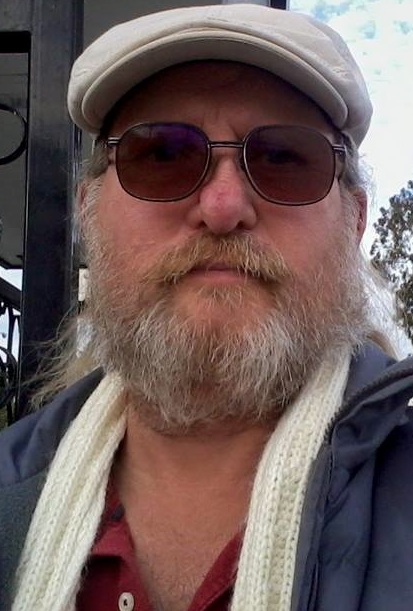
 

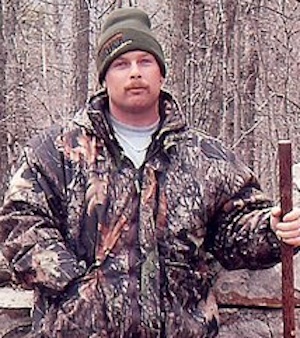
Timothy Guetling  TBI Survivor

Timothy Guetling
TBI Survivor

My TBI occurred in 1972. At that time, neurologists were known as “neurosurgeons.” The only test that was available for testing at that time was an X-ray. The neurosurgeon told my mother, “I won’t give a dime for his recovery!”

After being unconscious for nineteen days, which included thirteen days of right-side paralysis, and forty-six days in the hospital, including twice-a-day intensive physical therapy, I came home to a new world. After about one year, I was deemed “100% recovered.” I knew better, but each time I tried to speak of it, I was shut down with “You are using that as an excuse.”

I missed a semester of my junior year in high school, but I graduated with my class in 1974. I then entered the world of work and college. I was successful. I worked many positions, and I graduated college. There was always the knowledge that something inside was not right, but I kept up in the world.

In 1998, due to recurring accidents at my place of employment, I was sent to be checked by a neurologist. X-rays, an EEG (electroencephalogram), an EKG (electrocardiogram), a CT scan (computerized tomography), and an MRI (magnetic resonance imaging) revealed “pressed plates” in my neck at vertebrae C4-C5, C5-C6, and C6-C7. These vertebrae deal with hand-eye coordination and balance/dizziness. My vision, my cognitive reflex/response from my brain to spinal cord, and my equilibrium were deemed 85% on a good day.

My work and recreation patterns changed. In 2011, due to recurring repercussions from my injury, I stopped working. SSDI (Social Security Disability Insurance) was approved in 2013. Now my equilibrium is at best 75%. My success is right here on this site and other sites related to TBI, brain injury, addiction/abuse, PTSD (post-traumatic stress disorder), etc. I offer my knowledge from my experience of over 42 years of “recovery evolution.” It is with a smile on my face and tears in my eyes that I can say, with no sadness or fear, that you and I are Global Head Shots Unique. We know more than anyone about us. Lets talk!


(Disclaimer: The views or opinions in this post are solely that of the author.)

If you have a story to share and would like to be a part of the SPEAK OUT! project, please submit your TBI Tale to me at donnaodonnellfigurski@gmail.com. I will publish as many stories as I can.


As I say after each post:

Please leave a comment by clicking the blue words “Leave a Comment” below this post.anim0014-1_e0-1

Please follow my blog. Click on “Follow” on the top right sidebar. (It’s nice to know there are readers out there.)

If you like my blog, share it with your friends. It’s easy! Click the “Share” buttons below.

If you don’t like my blog, “Share” it with your enemies. I don’t care!

Feel free to “Like” my post.

(Clip Art compliments of Bing.)
TBI Tales . . . . It’s OK to Say “OK”

It’s OK to Say “OK”

by

Barbara Wilson Asby

(presented by Donna O’Donnell Figurski)

Barbara Wilson Asby - TBI Survivor

Barbara Wilson Asby – TBI Survivor

For the first time in over five years, I finally broke down and reached out to my husband for help today when I was having a seizure.

Why in the world do we have to be so darn strong all of the time?? For those who don’t really know me, I am going through a change right now – my seizures have gotten worse for the past few weeks or so. Today was no different. I don’t know if it was caused by the traveling, the holidays, or the stress of the Redskins versus the Cowboys game (LMAO), but I started having the seizure just after noon.

I began watching the game and started feeling worse – no, not Redskinsdue to the game (LOL). “We” (the ‘skins, that is – LOL) were looking pretty good at this point. I started going downhill quickly, and hubby watched this. He kept asking what to do. There really isn’t anything a spouse can do. I am the type that likes to be alone when these things are happening.

Then I started to feel like I was going to faint. I personally think there is no worse feeling than when your body puts you through this, especially when the feeling stays right there – not making up its mind what to do. I call it a “brown out.” For 30 minutes or so, I fought the brown out.

David Asby - husband of Barbara Wilson Asby

David Asby – husband of Barbara Wilson Asby

Then I looked at my husband and said, “Now don’t freak out, but I am going to faint. Don’t freak out, OK?”

He came over to me and said, “OK. Baby, is there anything I can do?” OMG, how nice it felt for him to be there with me.

I said, “No. Just don’t freak out! OK? Just don’t freak out!”

Meanwhile, I was the one freaking out because he was there. I normally handle things so much better when no one is around (LOL). Then I just gave in and had my hubby hold me. I was so wiped out – too tired even to cry. He put his arms around me and said, “Breathe, Baby. I am here. Just breathe – calm down.”

So for once, I did breathe. Dang it! Why do people with a TBI have to be so STRONG!!!!!

(Disclaimer: The views or opinions in this post are solely that of the author.)

If you have a story to share and would like to be a part of the SPEAK OUT! project, please submit your TBI Tale to me at donnaodonnellfigurski@gmail.com. I will publish as many stories as I can.

(Clip Art compliments of Bing.)

As I say after each post:

Please leave a comment by clicking the blue words “Leave a Comment” below this post.anim0014-1_e0-1

Please follow my blog. Click on “Follow” on the top right sidebar. (It’s nice to know there are readers out there.)

If you like my blog, share it with your friends. It’s easy! Click the “Share” buttons below.

If you don’t like my blog, “Share” it with your enemies. I don’t care!

Feel free to “Like” my post.

TBI Tales . . . . . . . . . . Thanksgiving Surprise

Thanksgiving Surprise

by

Kristina Hopkins

(presented by Donna O’Donnell Figurski)


Hopkins, KristinaI love my husband’s TBI. There are days when it frustrates me, but we go with the flow. Then there are days like today when we laugh about it.

My husband sustained his brain injury back in 2007 during his last of four deployments in Iraq. We ALWAYS open up our house around the holidays to the military/veterans and their families so they can have a home-cooked meal and be around other military.

This year was going to be a quiet Thanksgiving for us – just my husband, my father-in-law, and me. Apparently my husband “forgot” to tell me that families have been calling him the past couple of days to verify times. I didn’t know until I got a Facebook message this morning from one of the wives.

I asked him about it. He looked at me with the giant smile that I love so much and said, “Sorry, Babe. No more quiet Thanksgiving.”Thanksgiving-Turkey-Cartoon-Wallpapers

Never in all the years that I have been with my husband have I regretted my life. It does get hard and lonely at times, but it’s all worth it. He has overcome so many obstacles since his injury and is constantly doing so. I’m truly honored to be his wife.

Just thought you all could enjoy a good laugh today. Happy Thanksgiving.

Thank you, Kristina, for sharing your story in TBI Tales. I hope that your experience will offer inspiration to my readers. I know it made me laugh. It made me cry.


(Disclaimer: The views or opinions in this post are solely that of the author.)

If you have a story to share and would like to be a part of the SPEAK OUT! project, please submit your TBI Tale to me at donnaodonnellfigurski@gmail.com. I will publish as many stories as I can.

(Clip Art compliments of Bing.)


As I say after each post:

Please leave a comment by clicking the blue words “Leave a Comment” below this post.anim0014-1_e0-1

Please follow my blog. Click on “Follow” on the lower right corner of your screen. (It’s nice to know there are readers out there.)

If you like my blog, share it with your friends. It’s easy! Click the “Share” buttons below.

If you don’t like my blog, “Share” it with your enemies. I don’t care!

Feel free to “Like” my post.


TBI Tales: One Usable Hand

Living With One Usable Hand

by

Dorothy Mah Poh Choo

(presented by Donna O’Donnell Figurski)


As a hemiplegic, I have one usable hand. It’s definitely very challenging. To carry on with life, I had to find new ways of doing things. I lost my job when I could not return to work full-time. Though I live with my children, I am home alone during the day when they go to work.

I learnt that the saying “Necessity is the mother of invention” is true. Creative thinking can find new solutions to old ways. Besides finding new ways, I also use many aids, the most useful of which is a portable trolley. With it, I can carry things around. I found a one-touch can opener, which does the job with just one press of a button.th-1

The fingers of my remaining hand can do much more than before. I can hang socks on a peg carousel with one hand. Using a peg system I invented, I hang towels and small items on an airer. (It was most frustrating trying to hang undies before that.) I still do most indoor house chores. Washing dishes is very noisy, but I do my best.

My best achievement is putting the bread clip back onto the bread bag, after an occupational therapist I asked in rehab told me it couldn’t be done with one hand. It is important to acknowledge all achievements, no matter how small.

Cutting Board with NailsI cut meat and vegetables using a special cutting board with nails in one corner to hold the item. I butter bread using a special board with raised sides that hold the bread in place. I open jars by pressing down on an anti-slip mat, which stops the jar from moving. There are mats everywhere. There is one where I eat so the plate doesn’t move around. I cook using a heavier pan so it doesn’t turn round and round from stir-frying. I use the gas burner closest to the wall so that the pan doesn’t fall off the stove onto me.

Doing things with one hand is a matter of breaking the activity down into individual steps. For example, to put a cup into the cupboard, I open the cupboard door, get the cup, then put it into the cupboard. Before I had only one good hand, I would just take the cup, open the door with one hand, and put the cup in with the other hand.207041972

Of course, some results won’t be as good as they would be using two hands. I have accepted that and learnt to laugh at myself. Folding clothes takes double the time now and results in a messy pile. Wrapping presents is a sloppy task. After I lost my left arm, I wrapped presents for the last time at the end of that year. I handed the “wrapped” presents to my friends saying, “Sorry – not my best effort. It’s a one-handed job”. LOL! Life is better when you are laughing.

Doing things with only one hand takes a lot of patience and determination. I keep trying until I do it. I’m also very safety conscious. If I can work out in my mind to do something safely, I will do it. Waiting for someone else to do something can be quite frustrating. (I don’t like sitting on leather chairs – it’s cold. I had an old doona on the electric recliner I sleep in. It kept slipping off, and it annoyed me terribly. I had the brilliant idea to sew one end so it would slip over the chair like a cover. I asked my daughter to do it, but she was very busy, and the days stretched on. I got up one morning, helpplanned everything in my head, took some measurements, threaded the needle using a needle-threader, and off I went. The work took four hours, but I did it. My daughter didn’t notice it for weeks, until I pointed out that she didn’t need to do it for me anymore. She was impressed.)

Most things are possible if you put your mind to it. If something is truly hard, ask for help. It is not worth it to get hurt.

I have learnt that success is just one more try after failure. Life is worth living. Don’t give up.


Thank you, Dorothy, for sharing your story in TBI Tales. I hope that your experience will offer inspiration to my readers.

(Disclaimer: The views or opinions in this post are solely that of the author.)


If you have a story to share and would like to be a part of the SPEAK OUT! project, please submit your TBI Tale to me at donnaodonnellfigurski@gmail.com. I will publish as many stories as I can.

(Clip Art compliments of Bing.)


As I say after each post:

Please leave a comment by clicking the blue words “Leave a Comment” below this post.anim0014-1_e0-1

Please follow my blog. Click on “Follow” on the lower right corner of your screen. (It’s nice to know there are readers out there.)

If you like my blog, share it with your friends. It’s easy! Click the “Share” buttons below.

If you don’t like my blog, “Share” it with your enemies. I don’t care!

Feel free to “Like” my post.


TBI Tales: Can Music Rewire Brain?

Playing a Mandolin

 by

 Richard Johnson

(presented by Donna O’Donnell Figurski)


mandolin-for-gloggtserMy traumatic brain injury took place in October 2003. I did survive (fortunately), but one of the main side effects from my injury is short-term memory loss.

Years ago, I was in a local coffee shop drinking a cup of coffee and thinking – not “Why me? Why me?” but “What can I do to help my short-term memory loss?” The coffee shop had two people playing guitars. One person put down his guitar and picked up a mandolin. They then played three of my favorite songs. What they triggered was like a bolt of lightning had gone through me! I knew right away that learning how to play an instrument, how to read sheet music, and, most importantly, remembering what I just practiced would be the best memory therapy in the world.

When the musicians took a break, I asked about the mandolin. I told the mandolin-player that I had never played any instrument before. I asked if I could chord with less than four fingers (I only have about two-and-a-half usable fingers), and on and on we talked. He showed me a couple of mandolin chords and said to search on Google for two-finger mandolin chords. He told me to buy a beginner’s mandolin to start and to have fun. And that’s exactly what I did. I bought a good-enough beginner’s mandolin from a friend of a friend, found a great local music store that gives mandolin lessons, bought a couple of books and DVD’s, and started playing.

Well, it’s been a few years now, and I play at least one hour every day. It seems to take a month to learn a song. I’m taking the old “practice, practice, practice” route. I’m able to remember and play (most of) those songs without reading the sheet music. If I haven’t played one of those songs in a couple of weeks, I may need to read the sheet music to remember a measure or two.

I wake up in the morning thinking about the songs I practiced and played the day before. I think about the songs I will practice and play that day by “singing” the songs in my head (not the lyrics, but how they’re fretted and picked). When I’m playing, I’m in a whole different world, and the daily toils just slide away.  I’m sure I could refer to my playing-time as “therapy,” but, for me, it’s pure bliss.

In short, playing a musical instrument is one of the main keys I have gained for rewiring my brain. I truly think that beginning and learning a new hobby or new skill is very important, as it makes us think, think, and think. I also believe that playing music, any type of music, all the time helps my brain find those broken nodes and, with its neuroplasticity, “fixes” them. And most importantly, my short-term memory problem is less and less pronounced. Sure, I can still forget what I had for lunch an hour after eating it, but I can bring that memory back a few seconds later. I can still forget who called me earlier today or why, but again it’s easier to make that connection again.

I would like to continue talking, but my mandolin is calling me.

(Richard Johnson’s experience is an excellent example of something I thought might be true – using the playing of a musical instrument to stimulate the brain and thereby help heal an injured brain.)


RJohnson-PortraitThank you, Richard, for sharing your story in TBI Tales. I hope that your experience will offer inspiration to my readers.

(Disclaimer: The views or opinions in this post are solely that of the author.)


If you have a story to share and would like to be a part of the SPEAK OUT! project, please submit your TBI Tale to me at donnaodonnellfigurski@gmail.com. I will publish as many stories as I can.

(Pictures compliments of Richard.)

(Clip Art compliments of Bing.)


As I say after each post:

Please leave a comment by clicking the blue words “Leave a Comment” below this post.anim0014-1_e0-1

Please follow my blog. Click on “Follow” on the lower right corner of your screen. (It’s nice to know there are readers out there.)

If you like my blog, share it with your friends. It’s easy! Click the “Share” buttons below.

If you don’t like my blog, “Share” it with your enemies. I don’t care!

Feel free to “Like” my post.


TBI Tales: Michael Coss Awakes After 6 Months in Coma

Meet Michael Coss

presented by

Donna O’Donnell Figurski


Michael Coss 2006

Michael Coss 2006

Michael Coss is the author of The Courage to Come Back: Triumph over TBI – A Story of Hope (2011) and the inspiration behind the creation of the Michael Coss Brain Injury Foundation. The foundation was created to raise money for children in need of financial support to access brain injury treatment. The proceeds from the sale of Michael’s book go directly to help the kids. The book is a moving account of Michael’s journey facing the challenges of traumatic brain injury.

Michael is also the winner of the 2011 Courage to Come Back Award for Physical Rehabilitation (Coastal Health). Michael will tell you that his life was changed forever, and it’s been changed for the good. First though, he will usually tell you that he is the very proud father of twins, Nathan and Danielle, who are now eight years old.

On May 18th, 2006, Michael was driving to Kelowna, British Columbia, Canada, with his former spouse and seven-month-old twins to attend a work function and stay with friends. Catastrophe struck while on the Coquilhalla highway — Michael lost control of the van, and it rolled at least one and a half times.

Miraculously, Michael’s former wife, Ann, and daughter, Danielle, escaped with only minor injuries, but Nathan and Michael were not as fortunate. Nathan spent several weeks at BC Children’s Hospital with head injuries. When the medical services arrived at the scene of the accident, Michael was unresponsive, even though the airbags had deployed and Michael had been restrained by his seatbelt. The Glasgow coma scale (CGS) rating at the scene was 8 out of a possible 15, which indicated a comatose state.

Michael was transported by air to Royal Inlands Hospital in Kamloops, where he was assessed by Neurosurgery. Bilateral ventriculoperitoneal shunts were inserted to relieve the pressure on Michael’s brain from the accumulation of fluid. Later he was transferred to Royal Columbian Hospital to be closer to his family. He remained comatose.

Michael’s injuries were nearly fatal, and despite comprehensive treatment at two hospitals, Michael remained in a coma for six and a half months. Doctors told his family that his chances of recovery were remote. His wife was devastated because she faced the possibility of raising their two babies without a father. Recommendations were made to Michael’s family to look for a long-term-care facility to look after him for the rest of his life.

But they did not know Michael Coss and his family. Michael’s family had researched hyperbaric oxygen therapy (HBOT), the medical use of oxygen at a level higher than atmospheric pressure. The treatments are commonly used in Asia and Europe and are available in Canada. But the treatments are not approved by Health Canada, and, therefore, they are not covered in Canada by medical insurance. The more the family learned, the more they came to believe that these treatments might work for Michael, though the treatments were prohibitively expensive and came with no guarantee.

His friends and co-workers saw a chance to mobilize and make a difference in Michael’s life. Within a few weeks, funds were raised by donations from friends, family, and his former work-colleagues at Molson Coors Canada.

Michael was transferred daily from Royal Columbian Hospital to the Richmond Hyperbaric Health Centre via ambulance. His mother, who accompanied him, would dampen a sponge with water to make him swallow and equalize the pressure within his ears. HBOT worked quickly, and on Christmas Eve of 2006, after half a year in a coma, Michael awoke and uttered his first words.

Only three months out of his coma, Michael learned about Rick Hansen’s Wheels in Motion events to raise funds for research and to improve the quality of life for people with spinal cord injuries. Michael was inspired by Rick Hansen and wanted to be a part of the event. In the midst of his rehabilitation, Michael canvassed his network, and once again they rallied in support. Friends, family members, Molson Coors co-workers, and other corporations raised over $22,000. His team (Team Cosco) not only won the award for the top fundraiser in Canada for Wheels in Motion 2007, but they also set a fundraising record for the entire six-year history of the program.

Through a long, intensive, and grueling rehabilitation, Michael relearned how to talk and eat. He is now relearning how to walk.Coss, Michael Survivor Family Photo Magazine COver

Today Michael serves as an inspiration, a motivational speaker, and a catalyst for traumatic brain injury survivors everywhere. He currently resides in a group-home not too far from his family and visits with them several times a week. His long-term goal is to be an able and active participant in his family’s life. Michael is not yet ready to walk to the park hand-in-hand with his children, but at least he is in training for it.


If you have a story to tell, please contact me at donnaodonnellfigurski@gmail.com

(Pictures compliments of Michael.)

(Clip Art compliments of Bing.)


As I say after each post:

Please leave a comment by clicking the blue words “Leave a Comment” below this post.anim0014-1_e0-1

Please follow my blog. Click on “Follow” on the lower right corner of your screen. (It’s nice to know there are readers out there.)

If you like my blog, share it with your friends. It’s easy! Click the “Share” buttons below.

If you don’t like my blog, “Share” it with your enemies. I don’t care!

Feel free to “Like” my post.


TBI Tales It’s Just a Fork in the Road

It’s Just a Fork in the Road

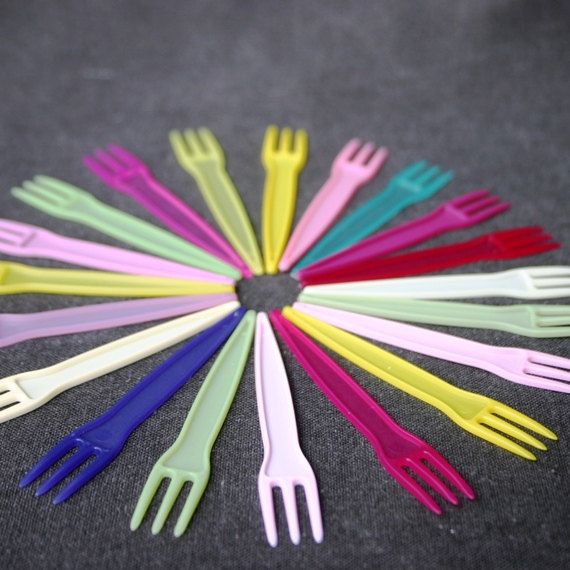
Fork


Life offers many forks-in-the-road. We all run into them. As a teenager, you might have to choose between going to the Friday night football game or going to the Saturday night dance. Without knowing, you choose the dance and meet the boy you are going to marry someday. You have to wonder – would you have met someone else at the game, someone whom you would have been interested in? Who knows!

You’re graduating high school and preparing to choose your life career. Being a flight attendant would make you soar to the clouds. So, you send out tons of applications to every airline, both domestic and international, and then wait with excitement and anticipation. When weeks later each application is returned with a “Sorry you do not meet our height restrictions,” you brush away the tears as if your life were ending. Then through blurry vision you move on – searching for your next fork-in-the-road. True story!Green frok

That was a major fork that was decided for me. Of course, I was devastated. At that young age, I didn’t know there’d be other forks down the road – forks that would have better paths for me. Some years later, I stumbled onto the road to teaching young students (5- through 9-year-olds), which would become my career, one that I loved for more than thirty years. Forks can literally change the course of your life.

Some forks may be joyous. Choosing the number 4 on the lottery ticket instead of your usual 7 may put that winning ticket in your pocket.abeb43281f0b208b78694177f687e2b7

Other forks may save you time. By turning down Delancey Street instead of going your normal route down Avenue One, you may have avoided the unadvertised construction that would have added an hour to your commute.

Forks can even be disastrous, like the one that has governed my life since January 13, 2005 – the day my husband, David, had a traumatic brain injury. That morning altered the course of my/our life/lives forever.

We encounter forks in the road every day, sometimes every minute of our days. Most of the time we aren’t 062314 Fork in the Middle of the Roadaware of them or don’t think about them. Many of them we have no control over – even the ones we do don’t always have the outcomes we might wish for.

Forks-in-the-road are what make up our lives – what make our lives different from any other life.

So, enjoy the good forks. Make the best of the ones that put up the detours in your life and … get on with living.


(Clip Art compliments of Bing.)
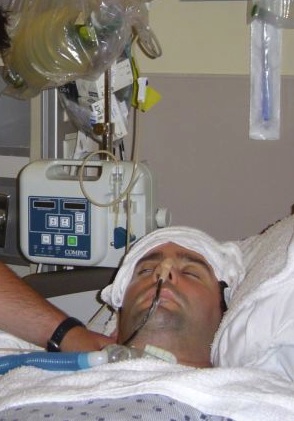
(Photos compliments of John Hanlon.)

TBI Tales: Energizer-Ostrich

TidBits About Donna #49 Energizer-Ostrich

(Reposted from my other blog – Donna O’Donnell Figurski’s Blog Jan. 13, 2012)


What do you get when you cross a hyperactive rabbit with a pink-feathered bird on a beach? That would be ME – or in other words an Energizer-Ostrich.

I guess that warrants an explanation of sorts. But I will have to retrace my steps a bit – about seven years worth – to the source of what has changed me into a replica of an energizer bunny with her head in the sand.

Today, January 13th, seven years ago, David, my husband, suffered a Traumatic Brain Injury (TBI). If you have been following my blog, you already know this. If this is your first visit, you can learn the sordid details and do a cram course by reading the following posts. Or … you can just read on to get the Cliff Notes version.

Musings by Donna #39 TBI – Traumatic Brain Injury – One Size Does Not Fit All

TBI Tales: Bittersweet is Today


TBI Tales: A Fork in the Road to Recovery

This morning I woke with a start – at precisely 7:05 – the exact time, seven years ago that David and I began the journey of our new and unexpected life. Seven years ago we did not know what was in store for us. We didn’t even know if there was going to be an “us”. This morning, as I do each year on this day, I relived the moments of David’s TBI. From excruciating pain to a wild ambulance ride, to signing on the dotted line to taking a saw to my husband’s brain (I didn’t do that – the surgeon did.) to talking incessantly on the cell phone – arranging, arranging, arranging – flights, accommodations, squeezing David’s hand and promising him he would get better – when I wasn’t sure that he would, threatening that I would never forgive him if he didn’t fight to stay with me, telling the story over and over and over … of how he stumbled into our bedroom, his hand clutching his eye – then falling into a coma as the paramedics strapped an oxygen mask over his face.

After seven years I would have expected the intense memories to fade, but they remain vivid – with maybe just a few blurred edges. I remember many of the names of the nurses and caretakers. I remember the unwanted words of the doctor. I remember how family and friends converged on the hospital at all hours both day and … well into the night from all corners of the United States. I remember the day was one of intense fog both outdoors (and inside my brain). The outdoor fog caused airline flights to be delayed. The fog inside my brain insulated me from the tragic reality around me.

That same fog has dulled the pain over the years of watching David struggle to dress himself, to learn to feed himself again, to walk and talk. That fog blurs the hurt of seeing him hunched over his keyboard painstakingly tapping each key as he prepares another paper for publication or works on a book he’s editing for an international scientific journal or sends detailed instructions to his technicians in his lab about the next experiment to do. I welcomed the fog as I not-so-patiently waited for David to recover from a recent eye surgery.

I marvel at this man I call my husband. I’m proud of his accomplishments both before and after his trauma. I admire his patience, his persistence, his positive attitude as I watch him tackle life in the “hard” lane. He does it with grace, with no complaint, and with gentle optimism.

So, there is an “us” after TBI, though it’s a different “us.” We are not the same people we were before David’s trauma. I miss the before TBI “us.” Traumatic Brain Injury seriously changes the victim, but it also alters the spouse. TBI can rend marriages. It can tear families apart. Or it can make you stronger. See the New York Times article from January 9th 2012, When Injuries to the Brain Tear at Hearts.

David’s TBI tears my heart everyday, but each day, too, it gets glued back together with a kiss, with a smile, with a hug, with a laugh – but no tears. No, NO tears.

I still have not had a good cry. Life is too busy for tears. Besides, “Tears would make this too real – and it’s not … is it?” asked the Energizer-Ostrich.

(Clip Art compliments of Bing.)

TBI Tales: Bittersweet is Today

(Reposted from my other blog – Donna O’Donnell Figurski’s Blog Jan. 13, 2011)

 Bittersweet! is Today!

It’s the mix of heavenly sweetness followed quickly by harsh reality. It’s pleasure mixed with pain. It’s happiness and regret. That’s bittersweet!

Bittersweet is today!

Today – six years ago on January 13, 2005, with no invitation, bittersweet moved in with David and me. He was an uninvited guest.

He ripped David’s and my lives apart. – Bitter!

We won’t let bittersweet beat us. We are building our lives up again – together. – Sweet!

David suffered a traumatic brain injury. He endured an operation that lasted about 5 to 6 hours. He wasn’t supposed to live – Bitter!

He lived! – Sweet!

David endured two more open-brain surgeries in less that two weeks and slept the sleep of coma for more than that. He wasn’t supposed to live. – Very Bitter!

After several weeks he began to respond to the world around him. He wiggled his toes and blinked his eyes. – Sweet!

For three months he was in hospitals learning to walk, learning to talk, learning to feed and dress himself again – learning to be a part of society. He desperately missed his job at Columbia University. He did not know when or if he would ever return. Bitter-very-bitter!

Columbia welcomed David back with an article about him in the newsletter of Columbia University called, In Vivo-CUMC At Large. Very Sweet!

And by conferrring upon him in 2006, at the Medical School Commencement, the Charles Bohmfalk Award for teaching in clinical years. Sweet! Sweet! Sweet!

David still has difficulty walking, talking, swallowing, and seeing. His right arm shakes erratically. He remains a prisoner of his body. Bitter-oh-so-bitter!

He wont let anything get him down. Life has become as normal as it can with all of these disabilities. He exercises to strengthen his body. He works to strengthen his mind. Improvements are being made – slowly, but they come. Sweet!

David has lived six years longer than any of his doctors expectations. Sweet! Oh-so-Sweet!

I have my best friend with me. Sweet! Sweet! Sweet!

Bittersweet move over. There is not enough room in our lives for you.

(Picture compliments of ME)

TBI Tales: Dancer Extraordinaire

(Reposted from my other blog – Donna O’Donnell Figurski’s Blog Sep. 3, 2012)

Meet Paula Nieroda 

Paula was David’s dance instructor for almost two years. She not only guided him through his dance steps, but she assessed his every movement to help him regain his balance.

Paula is much more than a dance instructor.

She is a wonderfully sensitive and compassionate young woman.

David and I took lessons with Paula once a week for nearly two years.


We learned a number of ballroom dances, including the Cha-Cha, the Tango, and the Swing – all very quick dances, which we did not do so quickly. We learned the Waltz and the Fox Trot, too. We stumbled around the dance floor amid the elegant contestants who were preparing for their next performance. They twirled and glided and dipped and swooped with feet barely touching the floor, while we firmly planted one foot and then the other in slow succession hoping that we would not topple over. We never did.

Paula taught David form – focusing on his posture. “Renew! Renew! Renew!” was her mantra – the reminder to David to stand taller.

When Paula moved to another studio, too far from us, we did not continue our lessons because we knew we could never replace her.

Paula is also a performance dancer and has competed and won many dance contests.  In the video below you will see Paula in action. In a pink fairy-princess gown, she glides over the floor with her partner, George Valasquez, who performs an amazing routine with only one leg.

Paula is truly an inspiration.

Watch this video to see what I mean. Truly AMAZING!!!!!


If you have a story to tell, please contact me at donnaodonnellfigurski@gmail.com

(Pictures compliments of ME.)

(Video compliments of YouTube.)


As I say after each post:

Please leave a comment by clicking the blue words “Leave a Comment” below this post.anim0014-1_e0-1

Please follow my blog. Click on “Follow” on the lower right corner of your screen. (It’s nice to know there are readers out there.)

If you like my blog, share it with your friends. It’s easy! Click the “Share” buttons below.

If you don’t like my blog, “Share” it with your enemies. I don’t care!

Feel free to “Like” my post.

Permission granted to “Reblog” my post.


diemodi jewelry

uniquely hand-crafted jewelry by donna

Welcome to Harmony Kent Online

The home of all things books

Pete Springer

Passionate Teacher and Future Children's Author

HOPE TBI

Helping Other People Excel - To Be Independent

For the Love of Books, Old and New

Katie Fischer, Writer and Reader of Stories

Charlie Bown

Children's Author

Jessica Hinrichs

“We write to taste life twice, in the moment and in retrospect.” ― Anais Nin

VIVIAN KIRKFIELD - Writer for Children

Picture Books Help Kids Soar

Mindy’s Writing Wonderland

For authors, parents, teachers & everyone who loves children’s books.

Kaitlyn Leann Sanchez

Literary Agent

Surviving Traumatic Brain Injury

TBI - Survivors, Caregivers, Family, and Friends

The Care Factor

Loving someone with a Traumatic Brain Injury

Brain Injury Support Group of Duluth-Extension

Brain Injury Information and SUPPORT

Brain Aneurysm Global Insight

Brain Aneurysm, cerebral hemorrhaging, hemorrhage stroke