TBI – Survivors, Caregivers, Family, and Friends

Posts tagged ‘survivingtraumaticbraininjury.com’

SPEAK OUT! Itty-Bitty GIANT Steps

SPEAK OUT! Itty-Bitty GIANT Steps
Itty-Bitty GIant Steps for Blog

SPEAK OUT! Itty-Bitty Giant Steps will provide a venue for brain-injury survivors and caregivers to shout out their accomplishments of the week.

If you have an Itty-Bitty Giant Step and you would like to share it, just send an email to me at donnaodonnellfigurski@gmail.com. If you are on Facebook, you can simply send a Private Message to me. It need only be a sentence or two. I’ll gather the accomplishments and post them with your name on my blog approximately once a week. (If you do not want your last name to be posted, please tell me in your email or Private Message.)

I hope we have millions of Itty-Bitty Giant Steps.


Here are this week’s Itty-Bitty Giant Steps.

Melinda Murphy…I made it to church last week for the first time in two years, and I managed to stay through the whole service. I still had a decent day. Oh my!

Catherine (Cat) Brubaker…I stood up for myself by establishing boundaries. I made sure someone talked to me with respect. This is a big step for me because my self-esteem has been in the toilet for a long time – after being humiliated in my assault in 2010, which gave me my first TBI.

Jenny Marie…I can drive now if I use a GPS so I don’t get lost.

Judy Feeley…I was proud of myself today. My head hurt, and I am not good with crowds. Despite these issues, I went to a funeral and stayed through it.

Ellie K. Payton (caregiver)…This week Claus Nowell hit his 6-month mark and stood using the parallel bars. He also began weaning off the trach.

Michael Anthony Boccio…Hey People!! Michael and Rachel down here in HOT Florida, and we are trying to keep things cool. Rachy is nearly done with her studies at Liberty University, and me – well, even through the pains, I keep pushing on to that finish line. (Rachel is 12 years out from her TBI, and me – well, I’m 35 years post-TBI, and life keeps getting more interesting every day!!)

Cheri Richardson Hicks…Okay, my Itty-Bitty Giant Step is that with two very small children in tow, I made a three-hour trip to visit my in-laws. It was much easier than I’d expected. We had a really relaxing and enjoyable trip. It was due time because it has been over a year since we’ve gone to visit them. Well worth the drive!

Tracy McDonald (caregiver)…I am happy to say that my son has asked his neurologist to wean him off The DURAGESIC® (fentanyl transdermal system) CII patch. He has been on it for over two years for pain – not only from his TBI, but also for the pains he suffers from injuries. He has gone without the patch for five days now, and he is toughing it out with the horrific withdrawal associated with the pain patch. This is a challenge for anyone with pain of this magnitude. The plan is custom – scheduled doses with a different medication that has little or no withdrawal or addiction problems. I wanted to share something positive today, as many times I get on here to tell of my woes or of the struggles of my son. I am glad to celebrate a positive thing. We really celebrate each and every move forward for our TBI survivor. It is a great thing for all of us. All positive developments are precious for TBI survivors – no matter how small or minor they may seem to “outsiders.”

YOU did it!

Congratulations to all contributors!

(Clip Art compliments of Bing.)
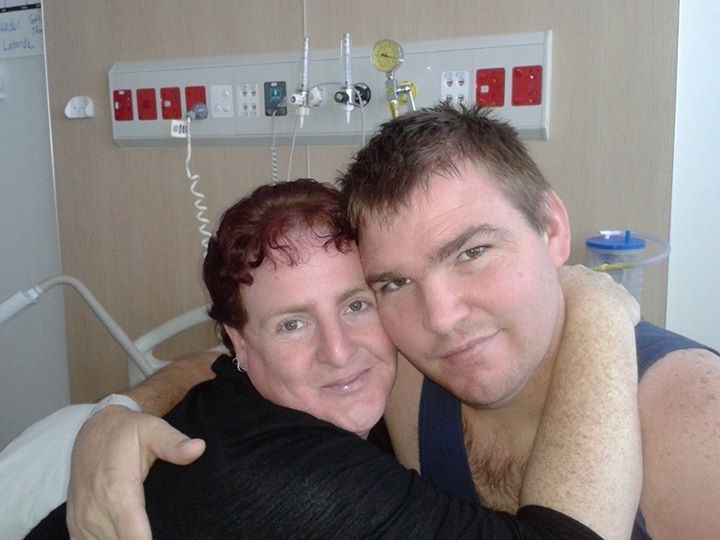


Caregivers SPEAK OUT! . . . . . . . . Kelly Reader

SPEAK OUT! – Kelly Reader

by

Donna O’Donnell Figurski


Reader Eric & Reader, Kelly Spouse1. What is your name? (last name optional)

 Kelly Reader

 2. Where do you live? (city and/or state and/or country)     Email? (optional)

 Railton, Tasmania     kelly.reader@gmail.com

3. What is the TBI survivor’s relationship to you? How old was the survivor when he/she had the TBI? What caused your survivor’s TBI?

My TBI survivor is my husband, Eric. He was 29 when he has his accident seven months ago on Boxing Day 2013. He was sitting on the back of a trailer, tavelling along a gravel road, when they hit a bump. He fell off – hitting his head.

4. On what date did you begin care for your TBI survivor? Were you the main caregiver? Are you now? How old were you when you began care?

I began my caring role when Eric was released from the hospital on the 6th of February 2014. I was 33, and I was his main caregiver throughout his recovery.

5. Were you caring for anyone else at that time (e.g., children, parents, etc.)?

No. I used to be a full-time caregiver for my mum, but she passed away last May.

6. Were you employed at the time of your survivor’s TBI? If so, were you able to continue working?

I was studying to become a vet nurse when Eric had his accident. Because of the stress, I could not concentrate on my studies and had to ask for a deferment.

7. Did you have any help? If so, what kind and for how long?

Eric has had an Occupational Therapist since he came home, and she has been amazing. She helped us with whatever we needed, and she is still continuing today.

8. When did your support of the survivor begin (e.g., immediately – in hospital, when survivor returned home, etc.)?

As soon as Eric was hurt, he was flown to a hospital four hours away from our hometown. My sister Sally and I spent six weeks at Eric’s bedside every day, until he was released from the hospital. Being away from home for so long was hard.

9. Was your survivor in a coma? If so, what did you do at that time?

Eric was in an induced coma for two days, before they allowed him to wake up. They told me that he might not pull through, so this time was very hard. I stayed by his side hoping he would make it.

10. Did your survivor have rehab? If so, what kind of rehab (i.e., In-patient and/or Out-patient and Occupational, Physical, Speech, and/or Other)? How long was the rehab? Where were you when this was happening?

Eric spent four weeks in a rehab unit at the hospital, where he did physiotherapy and brain activities. When he came home, he went to physiotherapy twice a week. He is now going once a fortnight.

11. What problems or disabilities of your TBI survivor required your care, if any?

When Eric first came home, he required 24-hour supervision because he was not safe to be left alone. He has memory problems, so forgetting to take tablets or turn the stove off was a real problem. He suffered tremors in his hand and legs. Also his balance when walking was not safe.

12. How has your life changed since you became a caregiver? Is it better? Is it worse?

I was a caregiver for my mum since I was 16 years old, so my whole life has revolved around caring for someone I love. If I had to do it all over again, I would. To see how much progress Eric has made since his accident has been so rewarding. To know that I helped him get there makes every heartbreaking moment worth it.

13. What do you miss the most from pre-TBI life?

Eric has always been the strong one in our marriage. When he had his accident, the roles were reversed, and I had to take over doing a lot of the bill management, etc. He was always my protector when things went wrong. After his accident, I didn’t have that anymore. Things are better now. He is becoming that same person again.

14. What do you enjoy most in post-TBI life?

Eric has become sensitive since his accident – something he never showed before. He always had a wall up and wouldn’t let anyone inside. Now, if he watches a sad movie, he will cry. I love this new sensitive side of him, as I feel I can talk to him more. He will let me be a part of his life he never shared before.

15. What do you like least about TBI?

The mood swings are not so bad these days, but in the beginning, they were a nightmare. His moods would change so dramatically it put a real strain on our marriage.

16. Has anything helped you to accept your survivor’s TBI?

When I feel down, I tell myself that he was one of the lucky ones to survive and that I’m lucky to still have him in my life.

17. Has your survivor’s injury affected your home life and relationships and, if so, how?

It put a strain on our marriage because I had to be his caregiver – something he never wanted to happen. I had to be by his side 24/7 for the first four months after he was released from the hospital. That was really hard for him, as he was so used to going to work and having his freedom. Some days he would lash out at me for something that he was in the wrong for, but because of his memory problems, he didn’t remember what he had done.

18. Has your social life been altered or changed and, if so, how?

Our social life has changed for the better, as we spend more time with family and friends now because we realise that life is too short to waste.

19. What are your plans? What do you expect/hope to be doing ten years from now?

I would like to have a family – something that we were working on before his accident. I feel it would make our lives complete.

20. What advice would you offer other TBI survivor caregivers? Do you have any other comments that you would like to add?

Just be there for them when they need a shoulder to cry on. Don’t take anything they say to you in the heat of the moment to heart, as it’s not what they feel about you. It’s just the frustration coming out.Reader Eric & Reader, Kelly Spouse gchjcbfd


Thank you, Kelly, for taking part in this interview. I hope that your experience will offer some hope, comfort, and inspiration to my readers.

If you would like to be a part of this project, please go to TBI Caregiver Interview Questionnaire for a copy of the questions and the release form.

(Photo compliments of Kelly.)

Disclaimer: The views or opinions in this post are solely that of the interviewee.


On the Air – Brain Injury Radio Oops, Glitch Apology

On the Air – Brain Injury Radio

“Prisoner Without Bars” (segment 2) (Oops – aborted show)

by

Donna O’Donnell Figurski

images-1I’m sorry! Извините! Lo siento! Desculpe! סליחה! Mille Excuses! λυπάμαι! Scusami! Entschuldigung! ごめんなさい! jag är ledsen!

Like I said, “I’m sorry!

Yesterday I was excited to air my second show on “Another Fork in the Road.” I did all my “HOMEFUN” (as I always called it with my 1st and 3rd grade students). My notes were ready at my side. I logged into the studio, opened the chat room, checked my mic, and waited for the countdown. “Your show will start in 5, 4, 3, 2, 1 second. You are on the Air.” I waited still for the prerecorded introduction music and ad to run down. I waited for the dead space, which indicates that I am indeed live. That is my time to start talking – and I did for a brief second or two – until I realized that a male voice was still talking. I soon realized that a prerecorded show was playing. How that happened – I do not know. (But as my son said to me after the show, “Well, looks like you ran into another fork in the road!”) There seem to be a lot of them, but they just add interest to your life, and you move on.

Anyway, I left the studio to troubleshoot the problem behind the scenes in the tech part of the show, but there was nothing to be done. The prerecorded show was irreversible. And so I apologize to all those who came to find a “dark” studio.

As my son also said, “I bet your next show will be extra good.” And it will. But PLEASE NOTE THE CHANGE OF DAY AND THE NEW DATES. Because of scheduling conflicts, my show is moving to the 1st and 3rd Sundays of every month. It will still air at 5:00 pm Pacific time. The show I had planned to do yesterday (segment 2 of David’s and my story) will now be at 5:00 PDT on Sunday, September 7. The final part (segment 3) will be on Sunday, September 21. On my next show (Sunday, October 5), David will be my guest to give his perspective.

Whenever there is a fifth Sunday in a month, I will co-host the show with Julie Sharp Kintz, who is another host on Brain Injury Radio. Julie’s show, “Quantum Leap,” airs opposite mine on the 2nd and 4th Sundays of each month. So every Sunday, there will always be live entertainment from 5:00 pm to 6:30 pm by Julie or me or both. (Julie and I plan to co-host the show on Sunday, August 31.)

I hope you will be listening every Sunday at 5:00 Pacific time.

See you “On the Air!

(Clip Art compliments of Bing.)


“Another Fork in the Road” . . . Brain Injury Radio Network: “Prisoner Without Bars” (part 2)

Come one! Come ALL!putthis_on_calendar_clip_art

What:        “Another Fork in the Road” on Brain Injury Radio Network:                               “Prisoner Without Bars” (part 2)

Why:         Donna continues her story of David’s Traumatic Brain Injury and their life together after TBI.

Where:     Brain Injury Radio Network

When:       Monday, August 18, 2014

Time:         5:00p PDT (6:00p MDT, 7:00p CDT, and 8:00p EDT) 90 minute show

How:         Click: Brain Injury Radio Network.

Call In:    424-243-9540

Call In:     855-473-3711 toll free in USA

Call In:    202-559-7907 free outside US

or SKYPE

If you miss the show, but would like to still hear the interview, you can access the archive on On Demand listening (Archived show) will be available after the show

(Clip Art compliments of Bing.)

Brain Injury Resources . . . . . . Music May Optimize the Brain

Music May Optimize the Brain

I found this interesting, short (4 min 45 sec) video on the blog “Beyond Injury,” which is authored by Scott, who was diagnosed with brain cancer. I thought the video should be reposted here for you. It shows how listening to music Brain th-2or – better yet – playing it stimulates several parts of the brain simultaneously, unlike other activities. The video says that musicians’ brains have developed a higher level of functioning, including – but not limited to – problem solving, perceiving emotional cues, expanding fine-motor skills, and enhancing memory. Maybe the stimulation from music will enhance recovery from TBI. But, be aware that there is no hard evidence showing a link between music and recovery from TBI. Neuroscientists do know, however, that music benefits a healthy brain. It is reasonable to expect that an activity that enhances many brain functions should at least be beneficial to TBI survivors with deficits in any of those functions.

(Clip Art compliments of Bing.)

Comments are welcome.

Survivors SPEAK OUT! . . . Catherine (Cat) Brubaker

SPEAK OUT! – Catherine (Cat) Brubaker

by

Donna O’Donnell Figurski

Catherine (Cat) Brubaker

Catherine (Cat) Brubaker

1. What is your name? (last name optional)

Catherine Brubaker

 2. Where do you live? (city and/or state and/or country) Email (optional)

Tempe, Arizona, USA    
CatBrubaker@gmail.com

3. When did you have your TBI? At what age?

The first TBI was in 2010. I was 39. I had another TBI in 2011 at age 40.

4. How did your TBI occur?

1st TBI: assault     2nd TBI: car accident

5. When did you (or someone) first realize you had a problem?

I couldn’t get up without assistance.

6. What kind of emergency treatment, if any, did you have?

1st TBI: After I went to see him, a doctor called 9-1-1. I was then treated in an Emergency Room. 2nd TBI: I was first treated in an Emergency Room. My treatment was then handled for a month by St. Joseph’s Neurological (Phoenix). That was followed by my living in a nursing home. I was then an outpatient.

7. Were you in a coma? If so, how long?

No – both times.

8. Did you do rehab? What kind of rehab (i.e., Inpatient or Outpatient and Occupational, Physical, Speech, Other)?

Yes. I rehabbed as both an inpatient and an outpatient. I had all three therapies (occupational, physical, and speech). I highly recommend a recumbent tricycle.

How long were you in rehab?

I don’t remember.

9. What problems or disabilities, if any, resulted from your TBI
(e.g., balance, perception, personality, etc.)?

Balance. Boundaries. Personality. Independence. Ability to function in everyday things

10. How has your life changed? Is it better? Is it worse?

It’s taken everything – career and relationships. Walking was learned twice…But given everything, now I can ride my trike and paint…freedom.

11. What do you miss the most from your pre-TBI life?

Independence. Freedom. People saw me as capable. I felt I was dating material.

12. What do you enjoy most in your post-TBI life?

I got to ride my trike across the country.

13. What do you like least about your TBI?

It’s frustrating beyond belief. It is like a cage I can’t get out of. I sometimes can’t find words. I don’t like the headaches. I need to plan ahead. My thinking is sometimes not clear or engaged.

Catherine (Cat) Brubaker riding her recumbent tricycle on 5,200 mile diagonal crossing of USA - from Washinton (state) to Florida

Catherine (Cat) Brubaker riding her recumbent tricycle on 5,200 mile diagonal crossing of USA – from Anacortes, Washinton (state) to Key West, Florida (June/November 2014)

14. Has anything helped you to accept your TBI?

Triking with Dan Zimmerman. He deals with stroke every day.

15. Has your injury affected your home life and relationships and, if so, how?

Yes. I lost a 14-year relationship. I get angry and act out. I also have PTSD (post-traumatic stress disorder). It’s hard to maintain relationships – even new ones. I can’t say what I want to say. Miscommunication happens all the time.

16. Has your social life been altered or changed and, if so, how?

Yes. I lost friends. I had been in a partnership. I stayed in my room for a year after I lost the partnership, my primary relationship.

17. Who is your main caregiver? Do you understand what it takes to be a caregiver?

I was in my mom’s care. One morning in November, I found her passed away. Now my caregiver is my brother. He and I live in my mom’s house.

Catherine (Cat) Brubaker - taking a break from riding in Glacier National Park in Montana (August 2014)

Catherine (Cat) Brubaker – taking a break from riding in Glacier National Park in Montana (August 2014)

18. What are your future plans? What do you expect/hope to be doing ten years from now?

Ride my trike. Inspire others to get up off of the couch. I hope to stop people from being depressed and to find purpose.

19. Are you able to provide a helpful hint that may have taken you a long time to learn, but which you wished you had known earlier? If so, please state what it is to potentially help other TBI survivors with your specific kind of TBI.

Let go of “mad.” Earlier. I wish I did. There is so much less to carry around, and it makes room for “happy.” It gives you real joy and purpose.

20. What advice would you offer to other TBI survivors? Do you have any other comments that you would like to add?

If you can, adapt. You will overcome. Get a trike. You can balance three wheels, and it gives you freedom. I cherish mine.

Catherine (Cat) Brubaker "Triking Acoss America"

Catherine (Cat) Brubaker “Triking Acoss America”

(You’ll have to “peel it from my cold dead fingers.”) I have control, joy, and freedom. It allows me to explore the world and see new places.


If you want to learn more about Catherine’s adventures of Triking Across America go to Spokes Fighting Strokes Tour.


Thank you, Catherine, for taking part in this interview. I hope that your experience will offer some hope, comfort, and inspiration to my readers.

(Disclaimer: The views or opinions in this post are solely that of the interviewee.)

(Photos compliments of Catherine.)

If you would like to be a part of the SPEAK OUT! project, please go to TBI Survivor Interview Questionnaire for a copy of the questions and the release form.

SPEAK OUT! . . . . . . . . . . . . . . . . . Itty-Bitty GIANT Steps

              SPEAK OUT! Itty-Bitty GIANT Steps

Itty-Bitty GIant Steps for BlogSPEAK OUT! Itty-Bitty Giant Steps will provide a venue for brain-injury survivors and caregivers to shout out their accomplishments of the week.

If you have an Itty-Bitty Giant Step and you would like to share it, just send an email to me at donnaodonnellfigurski@gmail.com. If you are on Facebook, you can simply send a Private Message to me. It need only be a sentence or two. I’ll gather the accomplishments and post them with your name on my blog approximately once a week. (If you do not want your last name to be posted, please tell me in your email or Private Message.)

I hope we have millions of Itty-Bitty Giant Steps.


Here are this week’s Itty-Bitty Giant Steps.

Cheri Richardson Hicks…My Itty-Bitty Giant Step is that I ventured away from outpatient therapy into a new program called Quest. It is a program that gets people back to work and back into the community. I really feel like this is what I need to get me to where I need to be, so it couldn’t have

Melinda's 100 piece puzzle

Melinda’s 100 piece puzzle

Melinda Murphy…Here is one for your Itty-Bitty Giant Steps. I used to be able to do 5000-piece puzzles in 2 or 3 days. I have not done any at all since the accident, until now. Four days, 2 tables, and only 100 pieces – but I did one, and I am thrilled (even if a piece was missing)!

Carmen Gaarder Kumm…Here is my Itty-Bitty Giant Step. I worked 4 1/5 hours today. I took three kids to town (20 minutes away), completed what needed to be done (I only forgot one thing, but my daughter will do that for me in the morning, as she is going anyway), picked up supper (knowing that I wouldn’t have much time once we got home), finished a Facebook page for our church, helped a bit with Vacation Bible School, picked green beans in the garden, and packed for the weekend away. I’m in bed before 10:00, and I don’t feel I overdid it…feeling good actually.

Donna O’Donnell Figurski (caregiver)…This week we have friends from Germany visiting us. They wanted to go to the Grand Canyon, which is about 4 hours from my home – too far for a day trip. Though David would have liked to go, he knew it would be too difficult for him, and he had seen it a few times before. He chose to remain home.

Caboose - haunted by ghost

Caboose – haunted by ghost

That’s where my dilemma came in. David is 9+ years out from his TBI and still deals with many issues, including balance deficits, and I have never left him alone at night. Though he is completely

able to stay at home during the day, I always worry about the night. David convinced me he would be just fine, and after much discussion and a ton of angst, I agreed to go with our friends to the canyon. I insisted that David and I be in constant cell-phone contact.

So off we went to Williams, Arizona, where I slept in a little red caboose, which is supposedly haunted. The ghost may or may not have made an appearance. The jury is still out on that one.

But the jury is in on my trip to the Grand Canyon and on David’s staying overnight by himself. He did it! I did it!

WE did it!

Congratulations to all contributors!

(Clip Art compliments of Bing.)

Brain Injury Resources . . . Safe Sports

Safe Sports


Bubble-Soccer


This short video (1 min 38 sec) shows a solution to the danger of contact sports, and it looks like fun! (Video)


(Clip Art compliments of Bing.)


diemodi jewelry

uniquely hand-crafted jewelry by donna

Welcome to Harmony Kent Online

The home of all things books

Pete Springer

Passionate Teacher and Future Children's Author

HOPE TBI

Helping Other People Excel - To Be Independent

For the Love of Books, Old and New

Katie Fischer, Writer and Reader of Stories

Charlie Bown

Children's Author

Jessica Hinrichs

“We write to taste life twice, in the moment and in retrospect.” ― Anais Nin

VIVIAN KIRKFIELD - Writer for Children

Picture Books Help Kids Soar

Mindy’s Writing Wonderland

For authors, parents, teachers & everyone who loves children’s books.

Kaitlyn Leann Sanchez

Literary Agent

Surviving Traumatic Brain Injury

TBI - Survivors, Caregivers, Family, and Friends

The Care Factor

Loving someone with a Traumatic Brain Injury

Brain Injury Support Group of Duluth-Extension

Brain Injury Information and SUPPORT

Brain Aneurysm Global Insight

Brain Aneurysm, cerebral hemorrhaging, hemorrhage stroke