Survivors SPEAK OUT! Paul McMahon
Survivors SPEAK OUT! Paul McMahon
presented
by
Donna O’Donnell Figurski

Paul McMahon – Brain Injury Survivor from Down Under
1. What is your name? (last name optional)
Paul McMahon
2. Where do you live? (city and/or state and/or country) Email (optional)
Sydney, Australia
3. On what date did you have your brain injury? At what age?
I was 28 years old.
4. How did your brain injury occur?
At my birthday party, I fell 3 1/2 floors – off a building onto concrete.
5. When did you (or someone) first realize you had a problem?
The moment it occurred
6. What kind of emergency treatment, if any, did you have?
I had surgeries for my physical condition. I have had no assistance with brain injury.
7. Were you in a coma? If so, how long?
Yes. Three days, I believe
8. Did you do rehab? What kind of rehab (i.e., inpatient or outpatient and occupational and/or physical and/or speech and/or other)? How long were you in rehab?
Yes. I was in rehabilitation during my first three months at hospital and then a required three months following my exit. It was six months in total, but I now realise that it should have gone for longer. Part of that was my own fault – by passing the neurological test at the minimum six-month recovery point (Australia). I should have waited longer – to realise the challenges I could face. I needed more time to think of how my second stage of recovery would take place.
9. What problems or disabilities, if any, resulted from your brain injury (e.g., balance, perception, personality, etc.)?

Paul McMahon- Brain Injury Survivor from Down Under
I have problems with short-term memory and especially with attention to detail. Attention to detail in quick moments was a great challenge. I work in communications/policy, and so this is certainly a working issue that can’t be avoided. Also, my aura was different, and I could not connect with people as I once did. This emotional issue lasted about three years.
10. How has your life changed? Is it better? Is it worse?
It’s different. I have learnt so much. I have fewer friends, but I knew my intelligence was not taken by the accident. I started a Master’s degree and wrote my book. I am editing now.
11. What do you miss the most from your pre-brain-injury life?
I miss people’s lack of judgement about me. People assume they are helping by telling you what is wrong with you. That is 100%, and it is an instigator for suicide, as you feel no one understands, but tells you how to react. The loss of their lack of judgement is my deepest pain from the brain injury.
12. What do you enjoy most in your post-brain-injury life?
I have learned to be more compassionate. I have a deeper understanding of mental health and realise that I couldn’t understand depression or other illnesses in the same way previously.
13. What do you like least about your brain injury?
I dislike the way people handle my judgement – when you assume you are right, but others judge a situation with no thought of your opinion. It hurts and is damaging psychologically and, at times, in your economic life at work.
14. Has anything helped you to accept your brain injury?
 Yes – writing. My book was my therapy. It is safe to say that, if I sell zero books and have zero readers, I will still be happy, as I believe writing helped me heal faster.
15. Has your injury affected your home life and relationships and, if so, how?
Yes. Many friends just ignore me or keep away to feel self-security. I guess the upcoming book tells the rest of the story.
16. Has your social life been altered or changed and, if so, how?
Yes! I felt very anti-social. While I would attempt a little, I needed people to be more open and accepting of my changes. I felt this was a lonely journey, so I took that avenue – different from my old caring self.
17. Who is your main caregiver? Do you understand what it takes to be a caregiver?
I don’t have one.
18. What are your plans? What do you expect/hope to be doing ten years from now?
I will finish the book, earn a Master’s Degree, and be as different as I always am. I’ll be economically safe and live the full experiences of this world.
19. Are you able to provide a helpful hint that may have taken you a long time to learn, but which you wished you had known earlier? If so, please state what it is to potentially help other survivors with your specific kind of brain injury.
From the beginning, I felt my brain injury was temporary, so all I can say is to KEEP GOING and DON’T GIVE UP! I learnt that when the accident occurred. I would also say to FOLLOW YOUR PASSIONS. Don’t do only what a therapist tells you – you know you better than any external you-decider.
20. What advice would you offer to other brain-injury survivors? Do you have any other comments that you would like to add?

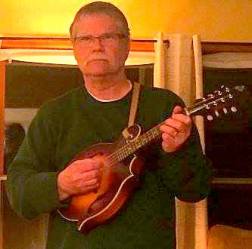
Paul McMahon – Brain Injury Survivor and Camel
Remember that your passion to follow your dreams may have been limited due to the accident. That does not mean STOP! It means you continue to train your brain in what you love and hold dear. Listen to you!
You can learn more about Paul McMahon on his Facebook site (https://www.facebook.com/paulmcmahonauthor/).
If you would like to be a part of the SPEAK OUT! project, please go to TBI SPEAK OUT! Survivors Interview Questionnaire for a copy of the questions and the release form.
(Clip Art compliments of Bing.)
As I say after each post: Please leave a comment by clicking the blue words “Leave a Comment” below this post.
Feel free to follow my blog. Click on “Follow” on the upper right sidebar.
If you like my blog, share it with your friends. It’s easy! Click the “Share” buttons below.
If you don’t like my blog, “Share” it with your enemies. I don’t care!
Feel free to “Like” my post.

 h, I meditate only once – other things seem to get in the way. I try to carve out 30 minutes for each session, but 15-20 minutes is pretty much the normal length I’m able to use. Not sure if 30 minutes would give me better results. Results are really based on the ability to continue to meditate.
 my breathing. My breath is the object of my attention. I begin to feel and hear my breath flowing in and out of my body. I use my normal breathing pace. Breathe in – breathe out; breathe in – breathe out; and on and on until the alarm sounds. Like everybody else in the world, I can get distracted by anything. Or, my mind just wanders off (by itself). When that happens, my breathing can bring me back to meditation. Yes, I have start all over again. But that only takes a few seconds, and I’ll be back in the groove.
 Meditation really takes being aware and focusing on your breathing – focusing on feeling the air going in and out of my nose, feeling my lungs expand and contract. My mind opens up to let those feelings become positive thoughts and to block negative thoughts.
 Clemson Safety Jadar Johnson was undrafted in the 2017 draft. As a Free Agent, though, he was signed by the New York Giants of the NFL (National Football League). Many thought he was a diamond-in-the-rough.
  Jadar himself was excited and said he would do “whatever” it takes to become part of the team that the Giants field on Sundays. But, before he played a single regular-season game,
  Journal of the American Medical Association.
  Is American football a dying sport? With football’s prominence in American culture, it seems safe to assume no one would predict that its days are numbered. But, there is a growing undercurrent that may eventually lead to the demise of football as we know it. There is more and more evidence that the constant subconcussive hits experienced by football players lead to a high risk of the brain disease
  depression, suicidal thoughts, or problems with cognition, memory, or impulsive behavior.
 The results have important implications for players. Many players feel they’ve been left ignorant of the risks of brain injury by the NFL, or worse, assured by the league that there is minimal risk. [Some players have quit or retired early (
 famous Pittsburgh Steeler Center, wrote an


 Raising Awareness of Traumatic Brain Injury - one view at a time. Thanks for visiting my blog
 Surviving Traumatic Brain Injury
Recent Comments