TBI – Survivors, Caregivers, Family, and Friends

Posts tagged ‘Traumatic Brain Injury Survivor’

Survivors SPEAK OUT! . . . . . . . . . . Ruby Taylor

Survivors SPEAK OUT! – Ruby Taylor

by

Donna O’Donnell Figurski

Taylor, Ruby Survivor 061814


1. What is your name? (last name optional)

Ruby

2. Where do you live? (city and/or state and/or country) Email (optional)

Lancaster, Pennsylvania, but I was born and raised in The Bronx, New York. Go GIANTS! (Yes, I am a football fan.)

3. When did you have your TBI?

I had my TBI in December 2012.

4. How did your TBI occur?

I was in car accident. (My car was totaled, and the airbags went off.)

5. When did you (or someone) first realize you had a problem?

When I returned to work, my supervisor was worried. She said I was not acting like myself, and she directed me to see my doctor. I went to my doctor, and I have not been able to return to work since.

6. What kind of emergency treatment, if any, did you have?
(e.g., surgery, tracheotomy, G-peg)

I went to the Emergency Room and was released the same day.

7. Were you in a coma? If so, how long?

I did not have a coma, to my memory, but I do not remember the impact.

8. Did you do rehab? What kind of rehab (i.e., In-patient or Out-patient and Occupational, Physical, Speech, Other)?
How long were you in rehab?

I have Out-patient rehab, and I still see a neuropsychologist weekly.

9. What problems or disabilities, if any, resulted from your TBI
(e.g., balance, perception, personality, etc.)?

My personality changed. My voice changed. I have a very short fuse. I am unable to deal with excessive noise and bright lights. I become confused easily. I have balance problems, attention and impulsivity issues, fatigue, and an inability to tolerate crowds.

Also, my TBI made me curse – every other word was a curse word. There are other things that I can’t think of now. The funny thing is that my stuttering stopped.

10. How has your life changed? Is it better? Is it worse?

I am no longer able to drive long distances. I can’t work as a school social worker.

My family life is suffering because my TBI overwhelms me. I can’t spend time with my family, like I once did. My life is not worse or better. It’s just different, and I am learning to live with the differences.

11. What do you miss the most from your pre-TBI life?

I miss jumping in my car and going to visit my family or taking a trip for the weekend. I also miss having my dog live with me. My fatigue and short fuse made it impossible for me to care for my dog, so my dog is now living with my parents in another state.

12. What do you enjoy most in your post-TBI life?

It is giving me an opportunity to slow down, to think about me, and to consider how great and awesome God is.

13. What do you like least about your TBI?

It stopped my career, and I can’t drive wherever I want to anymore.

14. Has anything helped you to accept your TBI?

Yes. Therapy, medicine, prayer, faith, and God through Christ Jesus

15. Has your injury affected your home life and relationships and, if so, how?

Yes. Sometimes my family becomes upset because I go off, but they are trying to understand and work with me. No matter how tired I am, my nieces and nephew still think I am the same Aunt Ruby, but it’s hard to see their disappointment when I can’t do what they want me to do.

16. Has your social life been altered or changed and, if so, how?

Dating is on hold for now. I realized who my true friends really are, and those relationships became stronger. Other relationships ended.

17. Who is your main caregiver? Do you understand what it takes to be a caregiver?

My mother would make my meals, freeze them for me, and bring them to me. My parents also took my dog off my hands. My caregivers were myself, my neighbors, my friends, and God. It takes a huge dose of love, patience, and compassion to care for a TBI survivor.

18. What are your future plans? What do you expect/hope to be doing ten years from now?

I plan to continue healing and to make films. I created Compassion Pictures (http://CompassionPictures.net) to help change the way brain-injury survivors are viewed and treated, one film at a time. Ten years from now, I hope to be an award-winning filmmaker and a brain-injury advocate.

19. Are you able to provide a helpful hint that may have taken you a long time to learn, but which you wished you had known earlier? If so, please state what it is to potentially help other TBI survivors with your specific kind of TBI.
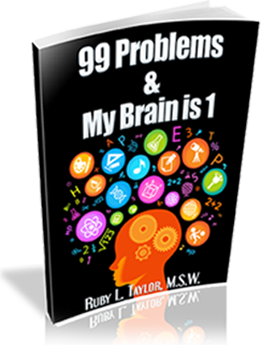
bookcover

Get Ruby’s free book here. http://compassionpictures.net/ourstory/

Grieve the old Ruby, and stop fighting to get her to return. It was very stressful not being who I used to be prior to my TBI and who I strived to go back to. If I could do things differently, I would have grieved earlier and released myself from being someone I was no more, and I would embrace who I am.

20. What advice would you offer to other TBI survivors? Do you have any other comments that you would like to add?

Ask for help. Keep asking until you receive the help you need.

Don’t be afraid of “NO.” A “NO” means you are one step closer to a “YES.”

Life gets better. It takes a very long time, but it will get better. You will be able to smile, laugh, and enjoy the simple things in life. Just keep living.


Thank you, Ruby, for taking part in this interview. I hope that your experience will offer some hope, comfort, and inspiration to my readers.

(Disclaimer: The views or opinions in this post are solely that of the interviewee.)

(Photos compliments of Ruby.)

If you would like to be a part of the SPEAK OUT! project, please go to TBI Survivor Interview Questionnaire for a copy of the questions and the release form.

 

Survivors SPEAK OUT! . . . . . . . . . . Stuart ‘lucky’ White


Survivors SPEAK OUT! – Stuart ‘lucky’ White

by

Donna O’Donnell Figurski


White, Stuart "lucky"

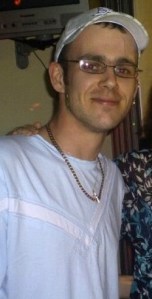
Stuart with friend, Trevor.

1. What is your name? (last name optional)

Stuart White

2. Where do you live? (city and/or state and/or country) Email (optional)

England

3. When did you have your TBI? At what age?

August 9, 1996

4. How did your TBI occur?

I was riding my bike, and I was hit by a car.

5. When did you (or someone) first realize you had a problem?

My problem was apparent as soon as the accident happened. I went straight into a coma. I was fortunate enough that a First Aider wasn’t far from me.

6. What kind of emergency treatment, if any, did you have?
(e.g., surgery,

tracheotomy, G-peg)

I was in Emergency for nine days. I’m not sure what they did to me. Sorry.

7. Were you in a coma? If so, how long?

Yes. 9 days.

8. Did you do rehab? What kind of rehab (i.e., In-patient or Out-patient and Occupational, Physical, Speech, Other)?
How long were you in rehab?

I was at the hospital for about a month and a half. Then I had a form of rehab at home, due to having a home tutor and the fact that I wasn’t able to do anything on my own. It took years for me to be back to normal.

9. What problems or disabilities, if any, resulted from your TBI?
(e.g., balance, perception, personality, etc.)

Balance, personality, couldn’t read or write, speech problems, memory loss

10. How has your life changed? Is it better? Is it worse?

My life was worse at first, but now I can finally say that, after accepting the past, I can look into the future with confidence.

11. What do you miss the most from your pre-TBI life?

I miss my teenage childhood as I had to regain a lot of things I had lost.

12. What do you enjoy most in your post-TBI life?

I realise how lucky I have been, and I enjoy that I am now able to give something back to other TBI survivors.

13. What do you like least about your TBI?

I dislike my fatigue. (It sucks.)

14. Has anything helped you to accept your TBI?

Mainly my family

15. Has your injury affected your home life and relationships and, if so, how?

My relationships have been affected a bit. It is hard to explain TBI to someone who doesn’t understand it and who thinks it has passed, so I should just get over it.

16. Has your social life been altered or changed and, if so, how?

Yes, mainly planning things. I cannot plan many things due to being sleepy a lot.

17. Who is your main caregiver? Do you understand what it takes to be a caregiver?

I would say my parents, as they helped me a lot.

18. What are your future plans? What do you expect/hope to be doing ten years from now?

I hope to be helping other survivors.

19. Are you able to provide a helpful hint that may have taken you a long time to learn, but which you wished you had known earlier? If so, please state what it is to potentially help other TBI survivors with your specific kind of TBI.

Yes. Realise that you cannot give up on yourself. TBI is very hard work, but NEVER give up. You never know what is going to happen in the future.

20. What advice would you offer to other TBI survivors? Do you have any other comments that you would like to add?

It is hard work, but accept the past. You can still look back at it, and then in the future you will realise how White, Stuart "lucky" Younger photofar you have come. Be proud of yourself no matter what others say, as you are a survivor who has fought against the odds!

 

Thank you, Stuart, for taking part in this interview. I hope that your experience will offer some hope, comfort, and inspiration to my readers.

(Disclaimer: The views or opinions in this post are solely that of the interviewee.)

(Photos compliments of Stuart.)

If you would like to be a part of the SPEAK OUT! project, please go to TBI Survivor Interview Questionnaire for a copy of the questions and the release form.

SPEAK OUT! NewsBit . . . . . . . . . . . Military and Traumatic Brain Injury

The Military and Traumatic Brain Injury


Newsboy thIt has been said that traumatic brain injury is the signature wound of troops returning from the wars in Iraq and Afghanistan. Mild TBIs (mTBIs), many of which are concussions, constitute the majority of TBIs. Often an mTBI is invisible. Even the injured soldier may not be aware that he/she has an mTBI. Treatment, if it is obtained at all, is sometimes sought weeks or months later. mTBIs are common, but they can have serious consequences. The Military has increased its awareness of TBI. For example, they are supporting research to develop a hand-held eye-tracking device that will enable a troop with an mTBI to be diagnosed quickly in the field. It will help soldiers get immediate treatment, and it will prevent those troops from being sent back into the field. Here are two powerful videos (parts 1 and 2) of returning soldiers with a TBI and their families discussing their new lives. I have also provided a link to the Department of Defense’s material on TBI. (Videos Part 1 and Part 2) (DoD page)


TBI Tales: Bittersweet is Today

(Reposted from my other blog – Donna O’Donnell Figurski’s Blog Jan. 13, 2011)

 Bittersweet! is Today!

It’s the mix of heavenly sweetness followed quickly by harsh reality. It’s pleasure mixed with pain. It’s happiness and regret. That’s bittersweet!

Bittersweet is today!

Today – six years ago on January 13, 2005, with no invitation, bittersweet moved in with David and me. He was an uninvited guest.

He ripped David’s and my lives apart. – Bitter!

We won’t let bittersweet beat us. We are building our lives up again – together. – Sweet!

David suffered a traumatic brain injury. He endured an operation that lasted about 5 to 6 hours. He wasn’t supposed to live – Bitter!

He lived! – Sweet!

David endured two more open-brain surgeries in less that two weeks and slept the sleep of coma for more than that. He wasn’t supposed to live. – Very Bitter!

After several weeks he began to respond to the world around him. He wiggled his toes and blinked his eyes. – Sweet!

For three months he was in hospitals learning to walk, learning to talk, learning to feed and dress himself again – learning to be a part of society. He desperately missed his job at Columbia University. He did not know when or if he would ever return. Bitter-very-bitter!

Columbia welcomed David back with an article about him in the newsletter of Columbia University called, In Vivo-CUMC At Large. Very Sweet!

And by conferrring upon him in 2006, at the Medical School Commencement, the Charles Bohmfalk Award for teaching in clinical years. Sweet! Sweet! Sweet!

David still has difficulty walking, talking, swallowing, and seeing. His right arm shakes erratically. He remains a prisoner of his body. Bitter-oh-so-bitter!

He wont let anything get him down. Life has become as normal as it can with all of these disabilities. He exercises to strengthen his body. He works to strengthen his mind. Improvements are being made – slowly, but they come. Sweet!

David has lived six years longer than any of his doctors expectations. Sweet! Oh-so-Sweet!

I have my best friend with me. Sweet! Sweet! Sweet!

Bittersweet move over. There is not enough room in our lives for you.

(Picture compliments of ME)

TBI Tales: Dancer Extraordinaire

(Reposted from my other blog – Donna O’Donnell Figurski’s Blog Sep. 3, 2012)

Meet Paula Nieroda 

Paula was David’s dance instructor for almost two years. She not only guided him through his dance steps, but she assessed his every movement to help him regain his balance.

Paula is much more than a dance instructor.

She is a wonderfully sensitive and compassionate young woman.

David and I took lessons with Paula once a week for nearly two years.


We learned a number of ballroom dances, including the Cha-Cha, the Tango, and the Swing – all very quick dances, which we did not do so quickly. We learned the Waltz and the Fox Trot, too. We stumbled around the dance floor amid the elegant contestants who were preparing for their next performance. They twirled and glided and dipped and swooped with feet barely touching the floor, while we firmly planted one foot and then the other in slow succession hoping that we would not topple over. We never did.

Paula taught David form – focusing on his posture. “Renew! Renew! Renew!” was her mantra – the reminder to David to stand taller.

When Paula moved to another studio, too far from us, we did not continue our lessons because we knew we could never replace her.

Paula is also a performance dancer and has competed and won many dance contests.  In the video below you will see Paula in action. In a pink fairy-princess gown, she glides over the floor with her partner, George Valasquez, who performs an amazing routine with only one leg.

Paula is truly an inspiration.

Watch this video to see what I mean. Truly AMAZING!!!!!


If you have a story to tell, please contact me at donnaodonnellfigurski@gmail.com

(Pictures compliments of ME.)

(Video compliments of YouTube.)


As I say after each post:

Please leave a comment by clicking the blue words “Leave a Comment” below this post.anim0014-1_e0-1

Please follow my blog. Click on “Follow” on the lower right corner of your screen. (It’s nice to know there are readers out there.)

If you like my blog, share it with your friends. It’s easy! Click the “Share” buttons below.

If you don’t like my blog, “Share” it with your enemies. I don’t care!

Feel free to “Like” my post.

Permission granted to “Reblog” my post.


SPEAK OUT! NewsBits . . . . . . . . . . . Yoga May Help TBI Survivors

Yoga May Help TBI Survivors

Newsboy th


Janna Leyde, whose father had a TBI when she was a teen, found help for herself in yoga. Later, as a yoga instructor, she decided to work with her father. They both saw that yoga seemed to bring significant benefits to him. Janna started a yoga program for people with TBIs, including many veterans. The Military is so convinced that yoga has helped soldiers returning from Iraq and Afghanistan with TBIs that they employ a yoga instructor full-time. (Full story)


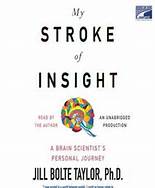
Brain Injury Resources . . . . . . . . . My Stroke of Insight: A Brain Scientist’s Personal Journey

My Stroke of Insight th


My Stroke of Insight: A Brain Scientist’s Personal Journey
by
Jill Bolte-Taylor, Ph.D


There are several books published about Traumatic Brain Injury (TBI). Of course there is Jill Bolte-Taylor’s book, “My Stroke of Insight: A Brain Scientist’s Personal Journey,” which is amazing. It took Jill nearly eight years to regain her near-normal self after suffering a stroke. She has been a speaker about this subject for TED talks. Her talk, called How It Feels to Have a Stroke, is worth every second of the nearly twenty minutes. Dr. Taylor is a neuroanatomist, a scientist, who studies the nervous system of the brain. Her book will help you to understand the differences between the right hemisphere and the left hemisphere of your brain.


anim0014-1_e0-1

As I say after each post:

Feel free to leave a comment by clicking the blue words “Leave a Comment” below this post.

Please follow my blog. Click on “Follow Me Via eMail” on the right sidebar of your screen.

If you like my blog, click the “Like” button under this post.

If you REALLY like my blog, share it with your friends. It’s easy! Click the “Share” buttons below.

If you don’t like my blog, “Share” it with your enemies. That works for me too!


(Clip Art compliments of Bing.)

diemodi jewelry

uniquely hand-crafted jewelry by donna

Welcome to Harmony Kent Online

The home of all things books

Pete Springer

Passionate Teacher and Future Children's Author

HOPE TBI

Helping Other People Excel - To Be Independent

For the Love of Books, Old and New

Katie Fischer, Writer and Reader of Stories

Charlie Bown

Children's Author

Jessica Hinrichs

“We write to taste life twice, in the moment and in retrospect.” ― Anais Nin

VIVIAN KIRKFIELD - Writer for Children

Picture Books Help Kids Soar

Mindy’s Writing Wonderland

For authors, parents, teachers & everyone who loves children’s books.

Kaitlyn Leann Sanchez

Literary Agent

Surviving Traumatic Brain Injury

TBI - Survivors, Caregivers, Family, and Friends

The Care Factor

Loving someone with a Traumatic Brain Injury

Brain Injury Support Group of Duluth-Extension

Brain Injury Information and SUPPORT

Brain Aneurysm Global Insight

Brain Aneurysm, cerebral hemorrhaging, hemorrhage stroke