TBI – Survivors, Caregivers, Family, and Friends

Posts tagged ‘TBI Survivor’

Survivors SPEAK OUT! . . . . . . . . Danielle (Houston) Karst

                                        Survivors SPEAK OUT! – Danielle (Houston) Karst

                                    by

                                     Donna O’Donnell Figurski
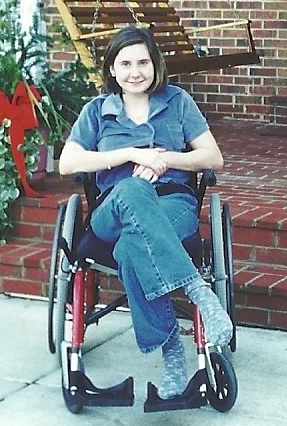
Danielle after her Traumatic Brain Injury

Danielle after her Traumatic Brain Injury


1. What is your name? (last name optional)

Danielle (Houston) Karst

2. Where do you live? (city and/or state and/or country) Email (optional)

Burke, VA, USA         daniellekarst920@gmail.com

3. When did you have your TBI? At what age?

September 1997          16 years old

4. How did your TBI occur?

I was in a car accident.

5. When did you (or someone) first realize you had a problem?

Upon impact (I was unconscious and taken to the hospital.)

6. What kind of emergency treatment, if any, did you have (e.g., surgery,

tracheotomy, G-peg)?


G-tube (gastrostomy tube – a feeding tube that is inserted through the abdomen into the stomach)

7. Were you in a coma? If so, how long?

Yes, 2 ½ months

8. Did you do rehab? What kind of rehab (i.e., In-patient or Out-patient and Occupational, Physical, Speech, Other)?
How long were you in rehab?

Yes. I had In-patient therapy (physical, speech, and occupational) for 5 months at the University of Virginia Children’s Hospital in Charlottesville, Virginia; In-patient therapy, but sleeping at home, by Mount Vernon Hospital in Northern Virginia; and Out-patient physical therapy at Mount Vernon Hospital.

9. What problems or disabilities, if any, resulted from your TBI (e.g., balance, perception, personality, etc.)?


Balance, a little perception, a little vision, handwriting, slow speech and typing, easily fatigued, seizures (though controlled by medication and calming techniques), anxiety

10. How has your life changed? Is it better? Is it worse?

It drastically changed. I have a fabulous life now – a husband, a dog, a townhouse, and a wonderful part-time job.

11. What do you miss the most from your pre-TBI life?

I miss my athleticism and the freedom to have an independent social life. (I don’t drive, so I can’t really jump up and meet people anywhere.)

12. What do you enjoy most in your post-TBI life?

Happiness, my life, my work at a nursing home (helping with activities on the Special Care Unit)

13. What do you like least about your TBI?

I try not to think about what could have been.

14. Has anything helped you to accept your TBI?

I have a supportive family and friends. I am helped by thinking, “Yeah, this sucks, but what can I do with it to move past it and improve my quality of life?”

15. Has your injury affected your home life and relationships and, if so, how?

Yes, my old friends couldn’t see me getting better and didn’t want to wait around for me.

16. Has your social life been altered or changed and, if so, how?

Yes. Pre accident, I was very social. Post accident, I hung out with my parents on weekends.

17. Who is your main caregiver? Do you understand what it takes to be a caregiver?

My parents were my main caregivers for 10 years – until my marriage. Now my husband is my main caregiver, with my parents consulting or giving their opinions when asked.

18. What are your future plans? What do you expect/hope to be doing ten years from now?

I hope to continue the work I am doing – helping in the nursing home and interacting with the residents, providing joy, and helping all those in need of care. Meanwhile, I will continue to advocate for people with TBIs, while writing my story and helpful ways to handle TBI.

19. Are you able to provide a helpful hint that may have taken you a long time to learn, but which you wished you had known earlier? If so, please state what it is to potentially help other TBI survivors with your specific kind of TBI.

Yeah, this sucks. Try to accept what happened. Move forward and better your life. LISTEN, and don’t shut out others’ advice.

20. What advice would you offer to other TBI survivors? Do you have any other comments that you would like to add?

Never give up or get discouraged. God does have a purpose for doing this. Turn your crappy situation into a positive one. Listen to your parents and elders – they are only trying to help.
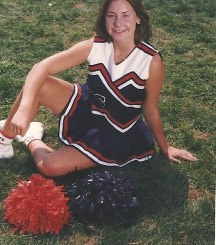
Danielle before TBI – on the Cheering Squad


Thank you, Danielle, for taking part in this interview. I hope that your experience will offer some hope, comfort, and inspiration to my readers.

(Disclaimer: The views or opinions in this post are solely that of the interviewee.)

(Photos compliments of Danielle.)

You can read more about Danielle on her blog at Inside Danielle’s Mind.

If you would like to be a part of the SPEAK OUT! project, please go to TBI Survivor Interview Questionnaire for a copy of the questions and the release form.

SPEAK OUT! Guest Blogger . . . . . . Cheri R. Hicks

SPEAK OUT! Guest Blogger Cheri R. Hicks

My Story


Girl Blogger cartoon_picture_of_girl_writingTo say that I’m a planner would be an understatement. I plan everything in my life. I always knew I wanted a second baby – and that too was planned. On June 18, 2013, we found out we were pregnant again. I was so excited. I had visions of what life was going to look like with two babies. As my due date drew near and we found out we were having a second boy, I visualized what life would be like around my house. The craziness and chaotic atmosphere of two little boys running around elated my heart. I told my husband all the time that we truly hit the jackpot.

Fast forward to February 18, 2014. I went for my last prenatal visit. This time it was different though. My blood pressure was running slightly high. My OB-GYN told me to check into the hospital because I was having the baby that day. But wait! That’s not how the plan was supposed to go. My son was scheduled to be born February 19th via C-section. I walked out to my minivan sobbing and called my husband at work. I met him at home where I packed my bag, and we were off to meet our second son.

It was hard to wrap my brain around the way things were going to look at home. My son was coming a day early, so I wasn’t quite as prepared as I thought. I recovered quickly from my C-section, and I was home by February 21st. The first week went smoothly. He was such a happy baby – a great baby.

On Wednesday, February 26th, I woke up with a headache. I remember being in my bedroom, and I felt like a bomb was exploding in my head. I called my husband into the room. He told me to lie on the bed. I just kept repeating, “Why won’t the pain go away?” We suspected that it was from the spinal anesthesia, so we called my OB-GYN. She instructed us to get a CT scan immediately and check into the delivering hospital. The CT scan came back “unremarkable.” They pumped me full of magnesium, which is the protocol for high blood pressure. They released me on Thursday afternoon. I felt completely normal again. That night was uneventful.

Friday February 28th was the day that my life changed forever. I woke up and noticed my vision was a little blurry. I took my blood pressure, and it was high. I lay in the bed. It all started happening as it did before. I felt like there was an explosion in my head. My neck became extremely stiff. Pain radiated down my spine. It seemed like my husband was moving in slow motion, and I felt like I was dying. He rushed me to the hospital again. My last memory of that day is walking through the hospital doors. I wouldn’t have my next memory for at least a week.

My next memory was being in a hospital bed with a bunch of tubes hooked up to me. I remember it was very hard to talk, so I had to write everything. Doctors would come in and ask me random questions, like “What day is it?” and “Who is the president?” This is when I learned what happened to me – a post-hemorrhagic stroke due to post-partum eclampsia. I had had a major brain bleed, and the left side of my body was not moving. I had just had a craniectomy. Those tubes in my mouth were a breathing tube and a feeding tube. I was in the ICU.

The ICU was trying to give me enough therapy to get me transferred to a rehab hospital. After 6 days, I was transported by ambulance to an inpatient rehabilitation facility. Luckily, I was at the best rehabilitation center in the state. They had to get me in and out of the bed using a sling. I was completely helpless. Everyone kept telling me, “Cheri, look to the left.” I had severe left neglect. My brain wouldn’t allow me to see things on my left side.

The hospital started therapy immediately. Therapy became my new job. Most days were the same. They would come get me in the morning, put me in a wheelchair, and whisk me off to the gym to do therapy. I made friends quickly, and I would introduce myself with “I’m Cheri, and I should not be able to say about myself that I’m 37 and survived a stroke.” I learned at the hospital that your mindset is your “golden ticket.” I quickly changed my mantra to “I’m Cheri. I’m 37 years old. I survived a post-hemorrhagic stroke, and I will walk again one day.”

I maintained a positive attitude. Sure, it was hard. I was away from my family and could not envision what my life was going to be like. Was I going to be able to take my boys to the park like I thought? This was a hard feeling to overcome.

On day 27 of 30 at the rehab hospital, I began to take my first steps. I had outgrown my sling, and I began transferring myself out of bed and onto the wheelchair on my own. Everyone told me I was making improvements very quickly. I told them I was going to be the fastest person they had ever rehabbed. By the end of therapy, I was walking. It was a miracle. I was a miracle!

On April 4th, one week before I was to be discharged from the hospital, I got the best surprise ever. My mom and sister and two nephews drove from Texas to see me for the weekend. It was great. My sister gave me a pedicure and a manicure. On April 5th, I got the first movement in my left arm. I attribute it to their coming to town.

On April 11, 2014, it was time for me to be discharged. My husband came to pick me up, and I broke out of rehab with my husband driving the getaway car. I was on my way home to see my boys.

I was scared at how life was going to be at home. I was still in a wheelchair. I could not use my left hand. Things went surprisingly well. We began to create a new normal, but it was great to be at home. I had outpatient therapy 3 days a week. More movement came to my left arm, and I got cleared to walk at Hicks, Cheri Before Tbi 050914home with a cane. This gave me much more freedom.

Now I was right back where I belonged. I felt like I had missed out on so much. Things are definitely different than what I thought. My mom always told me life is what’s happening when you’re making plans. I intend to continue to make strides. I will settle for nothing less than who I was before. I have my family and friends to thank for that. Through all of this, I realized I became a person who lives in the NOW and not in the PAST or the FUTURE. And I now know that even the best plan can be broken.


Thank you, Cheri.

Disclaimer:
Any views and opinions of the Guest Blogger are purely his/her own.

Caregivers SPEAK OUT! . . . . . . . . . Kristin Olliney

 SPEAK OUT! – Kristin Olliney

by

Donna O’Donnell Figurski

Kristin Olliney with her daughter, Isabella, (age 4 1/2) on the day Isabella woke up from her coma. Kristin says, “It was the happiest and best day of my life.”


1. What is your name? (last name optional)

Kristin Olliney

2. Where do you live? (city and/or state and/or country)     Email? (optional)

Just south of Boston, Massachusetts, USA

3. What caused your survivor’s TBI?

Sudden acute encephalitis of unknown etiology

4. On what date did you begin care for your TBI survivor? Are you the main caregiver?

Our journey began on November 25, 2010 (Thanksgiving night).

How old were you when you began care?

I was 31 years old, and Isabella was 4.5 years old

5. Were you caring for anyone else at that time (e.g., children, parents, etc.)?

No, I was a single parent to Isabella.

6. Were you employed at the time of your survivor’s TBI?

No, I was laid off about 18 months before Isabella got sick.

If so, were you able to continue working?

N/A

7. Did you have any help? If so, what kind and for how long?

I was a single parent from the day Isabella was born. I have always been her sole caregiver.

8. When did your support of the survivor begin (e.g., immediately – in hospital, when survivor returned home, etc.)?

Isabella was 4.5 years old at the time, so I was already supporting her.

9. Was your survivor in a coma?

Yes, Isabella was in a drug-induced coma and then her own coma. The total time was 6 days. On the 7th day, she woke up. That was the best day of my entire life.

If so, what did you do at that time?

I never left Isabella’s side. I spent the first 73 hours without sleep because, if she was going to die (which she was supposed to), I didn’t want to miss a single second. I eventually collapsed, and I was forced to sleep. After that, I lived off coffee, and I took sporadic naps.

10. Did your survivor have rehab? If so, what kind of rehab? (i.e., In-patient and/or Out-patient and Occupational, Physical, Speech, and/or Other) How long was the rehab? Where were you when this was happening?

Yes, Isabella went to In-patient rehab [occupational therapy (OT), physical therapy (PT), and speech therapy (ST)] for 15 days post brain injury. She was there for only 13 days, due to my insurance. I was with her the entire time. Isabella is currently still receiving Out-patient rehab for OT and ST. Her PT ended last summer. Isabella also did aquatics therapy for a few months.

11. What problems or disabilities of your TBI survivor required your care, if any?

Isabella requires 24/7 care due to her extensive medical needs. She has a cognitive disorder due to her brain injury. Isabella has debilitating hallucinations (not psychotic) and anxiety, which causes multiple panic attacks every single day. She has migraines and tics. Isabella has sensory issues and Obsessive-Compulsive Disorder (OCD). She has learning difficulties. Isabella has aggression due to her inability to control or regulate her mood, emotions, and behavior. Isabella has speech difficulties, especially in word retrieval and expressing herself. Isabella also needs help with daily living skills, such as using the bathroom, getting dressed, showering, using the stairs, teeth brushing, etc. Isabella also suffers from various types of seizures and many other things that require around-the-clock care.

12. How has your life changed since you became a caregiver?

I was already Isabella’s caregiver. Prior to her brain injury, she had some medical issues, including life-threatening allergies to food, an immune deficiency (and another more serious one diagnosed post brain injury), and a few other conditions. Once Isabella got sick though, everything changed because I was parenting and caring for an entirely different child. It was like completely starting over.

Is it better? Is it worse?

It is different. It is challenging. It is amazing. It is heartbreaking. I wouldn’t want to be anywhere else. I want to be the one caring for my child. She needs me more now than ever before.

13. What do you miss the most from pre-TBI life?

I miss the Isabella that I used to have, although I love the Isabella I have now more than I ever knew was possible. I miss our carefree, social, active life. Isabella is worth it though.

14. What do you enjoy most in post-TBI life?

I have learned the value of life and how in an instant it can all change. It is both a blessing and a curse to know how fragile life really is. I appreciate the small things that most can’t value unless they have come close to losing it all. I cherish each laugh, each silly joke, the smiles, hugs, and kisses, and hearing Isabella say “Mommy,” and I notice things like the sunset (or, in our case, the sunrise too), the way flowers smell, etc.

15. What do you like least about TBI?

It’s the one of the most rewarding, yet most heartbreaking, journeys that you can go on. I hate that it has robbed Isabella of the life she was meant to have. This journey is also extremely isolating. I chose to focus on the positive and the blessing that I have, which is Isabella’s still being here.

16. Has anything helped you to accept your survivor’s TBI?

I have always been a single parent, so I had no choice but to accept it from the start. I think that was a blessing. Writing my bi-monthly blog, “Mommy of a Miracle,” for the Brain Injury Association of Massachusetts has helped me give a voice to our journey. I also started a Facebook support group, “Parents of Children with Brain Injuries,” which has helped me know that I am not alone. I knew statistically speaking that I was not the only parent with a child who has a brain injury, and yet I couldn’t find anyone.  This group has been the most amazing support for me.

17. Has your survivor’s injury affected your home life and relationships and, if so, how?

Yes, how could it not? Brain injury changes not only the survivor but also the caregiver as well. Our home life is very structured and centered completely around what helps Isabella be successful. It has changed my relationships tremendously. In the face of a life-altering event, you learn quickly who is going to be there and who isn’t. I would rather have a few people whom I know I can count on than a whole lot of people who will just disappoint.

18. Has your social life been altered or changed and, if so, how?

Yes. Isabella and I had a very active social life. We were never home. Friends and family were always a huge part of our life. Now it is not possible, due to the extensive care that she requires and her instability. I no longer have the time to invest in one-sided friendships. We are not able to attend parties, get-togethers, events, and the like. Phone conversations are no longer possible. I only get to see a friend or a family member if he or she comes by at night when Isabella is asleep in bed.

19. What are your plans?

I live day-by-day. I take each day as it comes. Looking beyond that is too difficult.

What do you expect/hope to be doing ten years from now?

I hope that Isabella is doing better and stable. I hope that we are able to enjoy more things in life. Personally, I want to have a nonprofit organization to specifically help parents of children with brain injuries. I hope to be on the floor of congress advocating for change, for funding for research, and for additional resources for brain injury survivors and their caregivers.

20. What advice would you offer other TBI survivor caregivers?

Always follow your gut-instinct. You are your survivor’s biggest advocate. Stand your ground. Your survivor is not ever going to be who he or she once was. The faster you are able to come to that realization, the better off you will be. This is a journey, not a race. Take life one day at a time.  You are not alone.

Do you have any other comments that you would like to add?

Kristin Olliney with her lovely daughter, Isabella – 8 years old. 2014

Thank you for this amazing opportunity to tell people a little bit more about our journey.


Check out my blog: In An Instant Your Life Can Change Forever: Brain Injury Association of Massachusetts Blog – Mommy of a Miracle

Check out this video for Brain Injury Awareness.


Thank you, Kristin, for taking part in this interview. I hope that your experience will offer some hope, comfort, and inspiration to my readers.

If you would like to be a part of this project, please go to TBI Caregiver Interview Questionnaire for a copy of the questions and the release form.

(Photo compliments of Kristin.)

Disclaimer: The views or opinions in this post are solely that of the interviewee.

Survivors SPEAK OUT! . . . . . . . . . Cheri R. Hicks

Hicks, Cheri Aftrer TBI 050914

Survivors SPEAK OUT! – Cheri R. Hicks

by

Donna O’Donnell Figurski


1. What is your name? (last name optional)

Cheri H.

2. Where do you live? (city and/or state and/or country) Email (optional)

Jackson, MS, USA

3. When did you have your TBI? At what age?

February 28, 2014     Age 37

4. How did your TBI occur?

Hemorrhagic stroke as a result of elevated blood pressure from postpartum eclampsia (10 days postpartum)

5. When did you (or someone) first realize you had a problem?

While at home, I felt what seemed like a bomb was going off in my head, and my neck became very stiff. The pain radiated down my spine. I was disoriented and unable to put words together. While being treated for suspected eclampsia at the hospital (I had recently delivered our second child), my nurse noticed one-sided weakness when she asked me to smile.

6. What kind of emergency treatment, if any, did you have?
(e.g., surgery,

tracheotomy, G-peg)

There were two ambulance rides. (The first facility thought it was an aneurysm, and they were not equipped to repair it.) I had multiple CT scans, a decompressive craniectomy, post-op ventilation, and nasogastric feedings.

7. Were you in a coma? If so, how long?

No

8. Did you do rehab? What kind of rehab (i.e., In-patient or Out-patient and Occupational, Physical, Speech, Other)?
How long were you in rehab?

I did 30 days of In-patient therapy [physical (PT), occupational (OT), and speech (ST)]. I am currently doing Out-patient rehab three times a week (3 hours a session for PT, OT, and ST).

9. What problems or disabilities, if any, resulted from your TBI?
(e.g., balance, perception, personality, etc.)

Left neglect, balance issues, blurred vision

10. How has your life changed? Is it better? Is it worse?

I can’t do what I want when I want. But, I guess my life is better. I don’t really know why though. I guess it’s better because I realize how short and precious life is. Also, through this whole process, I’ve made some really good friends and met some really great people whom I would have never met otherwise.

11. What do you miss the most from your pre-TBI life?

I miss picking my son up from school, being independent, and being able to drive.

12. What do you enjoy most in your post-TBI life?

I love challenging myself and seeing how strong I really am.

13. What do you like least about your TBI?

There are so many things. I especially dislike having to rely on others to do things for me and waiting for the things I once took for granted to come back.

14. Has anything helped you to accept your TBI?

I don’t know. My TBI does not define who I am. I will become the whole person I was before and settle for nothing less.

15. Has your injury affected your home life and relationships and, if so, how?

Yes. I can’t be the stay-at-home mom I once was and care for my own children.

16. Has your social life been altered or changed and, if so, how?

Yes, but I also had our second child (two under 2) ten days before my TBI.

17. Who is your main caregiver? Do you understand what it takes to be a caregiver?

My husband is my main caregiver. I only know physically what it takes to be a caregiver.

18. What are your future plans? What do you expect/hope to be doing ten years from now?

I intend to have a full recovery and become the same person I was before my TBI. I hope to travel to interesting places with my family.

19. What advice would you offer to other TBI survivors

Find a way to keep a positive attitude, and give 100% of yourself to your therapy. Also, find someone to talk with about how you’re feeling, and never give up!

20. Do you have any other comments that you would like to add?

There will be bad days, but each new day will also bring new advances and victories. Time is both a healer Hicks, Cheri Before Tbi 050914and your enemy. You need it to heal, but you can’t wait for the long days to pass until you are better. You will be a stronger person because of your experience, and nothing will ever scare you again.


Thank you, Cheri, for taking part in this interview. I hope that your experience will offer some hope, comfort, and inspiration to my readers.

(Disclaimer: The views or opinions in this post are solely that of the interviewee.)

(Photos compliments of Cheri.)

If you would like to be a part of the SPEAK OUT! project, please go to TBI Survivor Interview Questionnaire for a copy of the questions and the release form.

Survivors SPEAK OUT! Tabbie

 SPEAK OUT! – Tabbie

by

Donna O’Donnell Figurski

Tabbie Survivor MRI Photo 050215

Tabbie on her way into the MRI


1. What is your name? (last name optional)

Tabitha! But my friends and family call me Tabbie!

2. Where do you live? (city and/or state and/or country) Email (optional)

In the U.S!

3. When did you have your TBI? At what age?

I got my TBI back in September 2012, and I was 14 years old!

4. How did your TBI occur?

My TBI occurred during the warm-ups at an away volleyball game. A girl from the opposing team purposely served a ball at my face to get me out of the game.

5. When did you (or someone) first realize you had a problem?

My mom realized the next day, but she couldn’t take me to the doctor because it was a Saturday.

6. What kind of emergency treatment, if any, did you have?
(e.g., surgery,

tracheotomy, G-peg)

I didn’t get any. The first doctor I saw said it wouldn’t be possible for me to get a concussion from a volleyball.

7. Were you in a coma? If so, how long?

I don’t think so, but I don’t remember anything after I got hit until the next day.

8. Did you do rehab? What kind of rehab (i.e., In-patient or Out-patient and Occupational, Physical, Speech, Other)?
How long were you in rehab?

I saw a psychologist, but that’s it for any type of rehab!

9. What problems or disabilities, if any, resulted from your TBI?
(e.g., balance, perception, personality, etc.)

Balance, dizziness, lightheadedness, constant severe headache/migraines, poor concentration and focus, noise/light sensitivity, tiredness, memory

10. How has your life changed? Is it better? Is it worse?

It’s been a bit of both! It’s been mostly better right now, because I can do a bit more than I could since I got hit.

11. What do you miss the most from your pre-TBI life?

My way of exercising and learning/education

12. What do you enjoy most in your post-TBI life?

The people I’ve gotten to meet, the people I’ve gotten to help, and the fact they’ve allowed me into their life/journey!

13. What do you like least about your TBI?

The amount of extreme pain I’m always in

14. Has anything helped you to accept your TBI?

Yes! Prayer, acceptance of having a TBI, and forgiving the person who had caused all of this for me!

15. Has your injury affected your home life and relationships and, if so, how?

Yes. It’s hard to relay how I’m feeling to family, and I’m constantly tired.

16. Has your social life been altered or changed and, if so, how?

It has in weird ways! My friends became distant when I was homebound, but I’ve also gained tons of support through social media.

17. Who is your main caregiver?

My parents

Do you understand what it takes to be a caregiver?

I think I do for the most part, but all I can say is “God bless them” because I know it’s hard on then too.

18. What are your future plans? What do you expect/hope to be doing ten years from now?

I just want to be able to reach out and inspire as many people as I can in awareness and happiness! I’m not sure what I’ll be doing in ten years honestly, but I know it’ll be something great!

19. What advice would you offer to other TBI survivors

Not to lose hope and to know that you’re not alone in this. It’s a bumpy journey, but what you’ll get from it and the people you’ll meet are worth it!

Tabbie

Tabbie – doing what she loves – playing volleyball

20. Do you have any other comments that you would like to add?

If you ever need someone to talk to, you can follow my twitter account: @brainyblondegal (https://twitter.com/brainyblondegal). I’m always here to help!


Thank you, Tabbie, for taking part in this interview. I hope that your experience will offer some hope, comfort, and inspiration to my readers.

(Disclaimer: The views or opinions in this post are solely that of the interviewee.)

(Photo compliments of Tabbie.)

If you would like to be a part of the SPEAK OUT! project, please go to TBI Survivor Interview Questionnaire for a copy of the questions and the release form.

Survivors SPEAK OUT! . . . . . . . . . . . Carmen Kumm

SPEAK OUT! – Carmen Kumm

by

Donna O’Donnell Figurski

Kumm, Carmen 050514

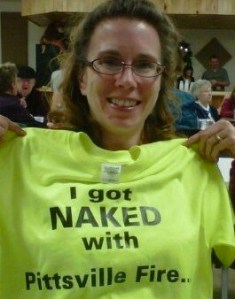
Carmen with a T-shirt from the firefighters who helped to save her life

1. What is your name? (last name optional)

Carmen Kumm

2. Where do you live? (city and/or state and/or country) Email (optional)

Pittsville, WI, USA    cjkumm87@gmail.com

3. When did you have your TBI? At what age?

July 19, 2010     Age 41

4. How did your TBI occur?

I was T-boned in a car accident.

5. When did you (or someone) first realize you had a problem?

When I was in the hospital

6. What kind of emergency treatment, if any, did you have?
(e.g., surgery,

tracheotomy, G-peg)

I was airlifted to Marshfield hospital. I was treated for broken bones, but I’m not sure about surgery. I had a tracheotomy, and I was in a drug-induced coma.

7. Were you in a coma? If so, how long?

I was unable to respond or know who I was for about 2 ½ months.

8. Did you do rehab? What kind of rehab (i.e., In-patient or Out-patient and Occupational, Physical, Speech, Other)?
How long were you in rehab?

I did In-patient and Out-patient therapy. I had occupational, physical, and speech therapies. I think it was about 8 months after my accident.

9. What problems or disabilities, if any, resulted from your TBI?
(e.g., balance, perception, personality, etc.)

Memory, personality, temperament

10. How has your life changed? Is it better? Is it worse?

I worked so hard to be a high-school Spanish teacher again. That’s what I believe got me to how well I’m doing now. On May 2, 2013, I hit a student (sophomore boy) because he was “egging” me on, and he knew it. Then he reported me to the administration. Rather than let them fire me, I resigned after 25 years – 2 ½ years post-accident. I was so very angry afterwards. I believe up until about 6 months ago I was still angry, but now I love my life. There are days when I struggle, but, if I choose to take care of myself first, I get better.

11. What do you miss the most from your pre-TBI life?

My ability to do more than one thing at a time

12. What do you enjoy most in your post-TBI life?

I enjoy my family much more.

13. What do you like least about your TBI?

Fatigue

14. Has anything helped you to accept your TBI?

Honestly, God has done so much in my life as of late, or maybe I’m listening now.

15. Has your injury affected your home life and relationships and, if so, how?

My youngest daughter was 10 when my accident happened, and I wasn’t a very nice person for a long time. Our relationship struggled, but as of late it has improved. My eldest daughter had taken much of the responsibility for my three other kids, so I had to make sure she was reminded that she no longer needed to be the mom. That has greatly improved as of late – I don’t think I’ve had to tell her that in about 3 months. My youngest son was only 4 at the time, and we struggled too. I was so mean for a couple of years that he didn’t trust me, but that is returning too.

16. Has your social life been altered or changed and, if so, how?

No, I still have all the friends I had before and maybe more.

17. Who is your main caregiver? Do you understand what it takes to be a caregiver?

My husband is my main caregiver. My parents even moved for about 4 months to be closer to me.

18. What are your future plans? What do you expect/hope to be doing ten years from now?

I am working part-time at a local post office. In 10 years I will be 55. I’m not sure what my plans are. I hope to have an almost empty nest.

19. What advice would you offer to other TBI survivors

Accept that you now have a new life to start and rejoice in it. Plan your days and plan for disaster and what you will do if it doesn’t go as planned. Have a back-up plan. Always assume it won’t go well so that you will know what to do if it doesn’t work.

20. Do you have any other comments that you would like to add?

Depression is something that I didn’t allow myself to acknowledge. Now I know it’s an issue for me, so I’m constantly working to keep it at bay. I try not to worry about things that I don’t have control over. I can’t waste my energy on that. It’s a commodity that needs to be saved. I know when I’m struggling too much that I need to stop and put myself first, and others will follow suit. For example, I’m too tired tonight, and my morning will be hard, so I’m taking care of myself tonight and my son is making his lunch for tomorrow.


Thank you, Carmen, for taking part in this interview. I hope that your experience will offer some hope, comfort, and inspiration to my readers.

(Disclaimer: The views or opinions in this post are solely that of the interviewee.)


If you would like to be a part of the SPEAK OUT! project, please go to TBI Survivor Interview Questionnaire for a copy of the questions and the release form.


SPEAK OUT! Guest Blogger Jeff Sebell

SPEAK OUT! Guest Blogger Jeff Sebell

TBI Disconnection


Boy Blogger th

Of all the behaviors and peculiarities I have adopted since my brain injury, one of the most infuriating is how disconnected I can become. Although I have improved substantially over time and have learned how to deal with them better when they happen, I have moments when I am just not there.

When I say “not there,” what I mean is that I am “not present” to what is going on. The end result of “not being present” is that, instead of living my life, I watch as others participate in theirs, or I stay strangely passive as things happen around me. It is the damnedest thing to be right in the middle of what is happening and yet to be so far away mentally and emotionally. Right then, I have this urge to call the phone company and tell them I have a bad connection – could they send a repairman right away?

Ah, if it were only that easy.

When I am in one of those states of either disconnection or passivity, I become accepting of what others say or do, and I nod a lot and I shrug. Afterwards, with the dust still settling around me, as I begin to recover my wits and I reflect on what just happened, I always wish I could live that little piece of life over again – this time with the wherewithal to participate or to make my wishes known.

Finding myself in a state of disconnection from what is happening around me is something that happens all too often. I feel as though I am a lamp that has had its electric cord disconnected from the socket. Where I was once shining brightly on the various conversations, activities and people in the room, I have had my juice turned off, and I am stuck in the corner as an afterthought. People I had once been speaking with move me to another corner and complain about my not being plugged in.

Being disconnected can be something that happens to me in a social situation, or it could happen to me when I’m trying to do something or accomplish something on my own. I’ve gotten used to having it happen to me in social situations, and I have gotten pretty good at being able to avert or mitigate those instances, mostly by using my nonsensical sense of humor – perfect for that kind of situation.

What throws me off most is when I am trying to perform some task and I become disconnected from a situation. This usually happens when I get confused or overwhelmed, or when I’ve done something a bunch of times and now can’t remember how to do it. Nothing seems to make any sense, and I sit dumbfounded, unable to put two and two together. Having the ability to put two and two together is a skill that enables you to understand why things happen the way they do, how one thing can lead to another, etc., and it’s important when figuring out problems on your own. Adding two and two is so easy, and that’s what makes it so infuriating when I just can’t do it – sort of like word-find problems.

You would think that by the time I reached 58 years old, I would be able to put two and two together in my sleep, but I’m not always able to. What could be causing me to be so removed from what is going on? Is it something I can control, or is that the normal way my brain behaves now?

The answer for me seems to be, as with so many other TBI-related issues, preparation. I do my best to prepare for situations that I know I’m going to find myself in, and my preparations include taking a futurist’s approach to what I am about to do by planning ahead for different conversations, outcomes and eventualities.

It takes work to not be disconnected. In addition to preparation work and getting yourself ready for different eventualities, there is the work it takes to be present in situational disconnects – doing your best to stay in the present by controlling your thoughts and emotions. One kind of work we haven’t talked about is the work it takes after a disconnection happens. Let’s face it – they are going to happen, so how do you get a grip on yourself when things seem to be slipping from you?

Sebell, Jeff, Photo CAQBARA5

Jeff Sebell

It is both easy and tempting to get on your own case and blame yourself or laugh at yourself for something you just did or didn’t do, but it is work to just accept it as reality and move on. The only way you’re going to learn not to do things is to do the following: first, accept the reality of where you are, and second, move forward with dignity and a clear head.

You can read more about Jeff on his blog at TBI Survivor: Support for TBISurvivors. You can follow him on Twitter or at @ttbisurvivor.

Thank you, Jeff.

Disclaimer:
Any views and opinions of the Guest Blogger are purely his/her own.

Survivors SPEAK OUT! . . . . . . . . . . . Marty Salo

SPEAK OUT! – Marty Salo

by

Donna O’Donnell Figurski

051614 Salo, Marty Photo for Interview


1. What is your name? (last name optional)

Marty Salo

2. Where do you live? (city and/or state and/or country) Email (optional)

Tampa, FL, USA     msalo@verizon.net

3. When did you have your TBI? At what age?

April 7, 1982      Age 11

4. How did your TBI occur?

Bike/motor vehicle accident

5. When did you (or someone) first realize you had a problem?

Immediately. I was medivacked to Children’s Hospital of the Kings Daughters in Norfolk, Virginia

6. What kind of emergency treatment, if any, did you have?
(e.g., surgery,

tracheotomy, G-peg)

I had an intracranial pressure monitor and I assume some other tubes. The divot in my head is still visible after all these years when the hair is cut very short.

7. Were you in a coma? If so, how long?

I was officially in a coma for something like 53 days. I was brought home on Day 49, but I had been in pediatric ICU for 14 days.

8. Did you do rehab? What kind of rehab (i.e., In-patient or Out-patient and Occupational, Physical, Speech, Other)?
How long were you in rehab?

I did most of the recovery at home. I was tutored by a 5th grade teacher over summer, and I progressed through Catholic primary school. I had some speech therapy at public school. I had help from vocational rehabilitation to get training leading to a job.

9. What problems or disabilities, if any, resulted from your TBI?
(e.g., balance, perception, personality, etc.)

Fortunately, I had been brilliant as a child, and much of the brilliance continued. There were memory problems, I guess, as well as balance problems and the need to re-master skills from traumatic amnesia. I read more online. I’ve been excited about the Internet from my days in college – even before then. I had been excited about my Apple 2c with a 300-baud modem, which allowed me to communicate to others through asynchronous communications.

10. How has your life changed? Is it better? Is it worse?

I adapted. I chose easier courses, changed majors at the university, graduated with an undergraduate degree in Religious Studies, and continued to get my Master’s Degree in Library and Information Science. There are still situations where I can get overwhelmed, I suppose.

11. What do you miss the most from your pre-TBI life?

I don’t really have much memory of my pre-TBI life. I have only vague, fleeting memories of childhood.

12. What do you enjoy most in your post-TBI life?

I like having fun. I like going to EPCOT and Disney World. I enjoy being around other happy people.

13. What do you like least about your TBI?

I’ve been different from others, but I didn’t really understanding how different from others I was. I just knew that things were not as easy for me. I have adapted by not driving, after an accident at age 19 or so.

14. Has anything helped you to accept your TBI?

My father is in AA. He exposed me to the Serenity Prayer: “God, grant me the serenity to accept the things I cannot change, courage to change the things I can, and wisdom to know the difference.”

15. Has your injury affected your home life and relationships and, if so, how?

From childhood, there is no comparison. Fortunately, I met a woman who would later become my wife. She has been very beneficial to me and my experiences.

16. Has your social life been altered or changed and, if so, how?

Again, childhood and adulthood are largely incomparable, but I’d venture to say that as a financially minded individual, I don’t spend a lot of money on alcohol or cigarettes. We have a pretty happy life, even if not much time is spent out drinking with fellas, or whatever. Other usual socialization patterns exist.

17. Who is your main caregiver? Do you understand what it takes to be a caregiver?

My mother, then my wife. My wife is not so much of a caregiver as a partner, but she does drive.

18. What are your future plans? What do you expect/hope to be doing ten years from now?

It’d be very nice if I were somehow able to get something going where I work at the VA Hospital – doing something to help others with computers and expanding awareness. But, I’m happy enough continuing to work with computers, getting them ready for issuance to providers.

19. What advice would you offer to other TBI survivors

Keep on progressing. Life gets better if you allow it to get better. Most people probably want to see you succeed. Some bosses might not have patience, but your progress is more important. Do not compare yourself to peers who are doing more than you are. Compare yourself to where you have been. Appreciate what you have overcome to get where you are.

20. Do you have any other comments that you would like to add?

So many things. Realize that you are not alone. Realize that others have had similar journeys. Realize that others probably would like to see you succeed. Your success builds collective good will, and helps people feel better.  http://martysalo.wordpress.com/ is a website I maintain. I have some TBI-related stuff there as well.051614 Salo, Marty Photo 2 for Interview


Thank you, Marty, for taking part in this interview. I hope that your experience will offer some hope, comfort, and inspiration to my readers.

(Disclaimer: The views or opinions in this post are solely that of the interviewee.)


If you would like to be a part of the SPEAK OUT! project, please go to TBI Survivor Interview Questionnaire for a copy of the questions and the release form.

Survivors SPEAK OUT! Joyce Hoffman

Joyce Hoffman – Before her TBI

SPEAK OUT! – Joyce Hoffman

by

Donna O’Donnell Figurski


1. What is your name? (last name optional)

Joyce Hoffman

2. Where do you live? (city and/or state and/or country) Email (optional)

New Jersey, USA

3. When did you have your TBI? At what age?

April 8, 2009

4. How did your TBI occur?

Hemorrhagic stroke, i.e., a blood vessel erupted

5. When did you (or someone) first realize you had a problem?

I started to convulse at 4 am. My partner saw it, and he called 911.

6. What kind of emergency treatment, if any, did you have?
(e.g., surgery, tracheotomy, G-peg)

Tracheotomy

7. Were you in a coma? If so, how long?

Yes. 8 days

8. Did you do rehab? What kind of rehab (i.e., In-patient or Out-patient and Occupational, Physical, Speech, Other)?
How long were you in rehab?

In-patient rehab for 15 weeks, and then Out-patient rehab 2 or 3 times a year

9. What problems or disabilities, if any, resulted from your TBI?
(e.g., balance, perception, personality, etc.)

Right-sided weakness. Paralyzed arm. I use a quad cane for walking.

10. How has your life changed? Is it better? Is it worse?

Better—I wrote my 2nd book, “The Tales of a Stroke Patient,” with one hand, all 265 pages, within 2 years.

Worse—I miss my career as a senior technical trainer and writer for legal applications, and I go slowly now – one step at a time.

11. What do you miss the most from your pre-TBI life?

Total independence

12. What do you enjoy most in your post-TBI life?

Reading and computing

Getting together with friends and family

13. What do you like least about your TBI?

My speaking slowly when I want to talk faster

14. Has anything helped you to accept your TBI?

Time heals all, but I’m not completely there yet.

15. Has your injury affected your home life and relationships and, if so, how?

My partner had to take over, whereas I did most everything domestic before.

16. Has your social life been altered or changed and, if so, how?

A few friends remain. Most of them headed “for the hills.”

17. Who is your main caregiver? Do you understand what it takes to be a caregiver?

Cece is my main caregiver. She understands my dilemmas.

18. What are your future plans? What do you expect/hope to be doing ten years from now?

Doing the same thing I am now—plus more time for lectures

19. What advice would you offer to other TBI survivors

Patience

20. Do you have any other comments that you would like to add?

I am starting to NOT resent people who have the ability to go the beach or to run fast. I used to be a runner. My book tells it all. Click the link to buy it

The Tales of a Stroke Patient (from the publisher)

The Tales of a Stroke Patient (from Amazon)

The Tales of a Stroke Patient (Barnes & Noble)


Joyce Hoffman - After her TBI

Joyce Hoffman – After her TBI

Thank you, Joyce, for taking part in this interview. I hope that your experience will offer some hope, comfort, and inspiration to my readers.

(Disclaimer: The views or opinions in this post are solely that of the interviewee.)


If you would like to be a part of the SPEAK OUT! project, please go to TBI Survivor Interview Questionnaire for a copy of the questions and the release form.

Caregivers SPEAK OUT! Trish Herzog

SPEAK OUT! – Trish Herzog

by

Donna O’Donnell Figurski

Herzog Trish 042314  photo


1. What is your name? (last name optional)

Trish Herzog

2. Where do you live? (city and/or state and/or country)     Email? (optional)

Platte City, Missouri, USA         herzogtrish@gmail.com

3. What caused your survivor’s TBI?

An auto-racing accident

4. On what date did you begin care for your TBI survivor? Are you the main caregiver? How old were you when you began care?

June 6, 1998     I was the main caregiver.     I was 33.

5. Were you caring for anyone else at that time? (e.g., children, parents, etc.)

No

6. Were you employed at the time of your survivor’s TBI? If so, were you able to continue working?

No. I was a housewife.

7. Did you have any help? If so, what kind and for how long?

Yes – in-home caregivers for 11 years, until my husband passed away in 2009 as a result of complications from his TBI.

8. When did your support of the survivor begin? (e.g., immediately – in hospital, when survivor returned home, etc.)

Immediately – in the hospital

9. Was your survivor in a coma? If so, what did you do at that time?

Yes – for 6 days. I cried, prayed, journaled, and read books and pamphlets about TBI to educate myself about the condition as much as possible.

10. Did your survivor have rehab? If so, what kind of rehab? (i.e., In-patient and/or Out-patient and Occupational, Physical, Speech, and/or Other) How long was the rehab

In-patient for 3 months

Out-patient for over a year and off and on, as needed in the years

Where were you when this was happening?

I was with my husband during most therapies, except for speech. They suggested against my being there, as I was too much of a distraction for him. He didn’t filter things as well after he suffered the TBI.

11. What problems or disabilities of your TBI survivor required your care, if any?

My husband was full-care. He was paralyzed from the waist down and remained in a wheelchair for the remaining 11 years of his life. He suffered memory issues and speech dysphasia issues initially. His motor skills were also affected. He had significant spasticity in his legs. He had a shunt put in due to hydrocephalus. He suffered a few strokes after his TBI over the years. We spent quite a bit of time in and out of the hospital for various infections and health issues

12. How has your life changed since you became a caregiver? Is it better? Is it worse?

My husband died in 2009. I cared for him and managed his care in our home from 1998-2009. It was exhausting at times, but I wouldn’t have had him anywhere else. After he passed, it was quite an adjustment period for me. Losing him and losing the chaos of daily life, with therapists and caregivers in your home, was quite the change

13. What do you miss the most from pre-TBI life?

I missed our intimacy. We were still able to cuddle and be affectionate, but I became the stronger role in our relationship after he was injured. I missed my protector, my confidante, etc. We still had that together, but the dynamic was somewhat changed. He was still my best friend.

14. What do you enjoy most in post-TBI life?

I can’t explain how, because my husband was my best friend and we were so close, but, in the years after he was injured, we became even closer at deeper levels. We were in this together, and we fought the battles of day-to-day TBI life together.

15. What do you like least about TBI?

It took away the husband I loved and married and left me with a different one. I loved him just as much, but in some ways very differently.

16. Has anything helped you to accept your survivor’s TBI?

We saw humor in so many things on a day-to-day basis. You have to find the humor in the basic things. Our general positive outlook on life and love for each other helped us survive and thrive in the shadow of TBI.

17. Has your survivor’s injury affected your home life and relationships and, if so, how?

It changed our dynamic completely. I took on more of a motherly role with my husband. My parents, seeing everything I was dealing with and managing, developed a greater respect and appreciation for me as an adult and not just as their little girl. I was making life-and-death decisions and handling rather scary things.

18. Has your social life been altered or changed and, if so, how?

Yes. It was isolating, to a certain extent. Life moves on for others after the initial traumatic occurrence, but you are still dealing with the day-to-day of your new TBI life. The real friends and family will hang around. You find out who your diehard friends are.

19. What are your plans? What do you expect/hope to be doing ten years from now?

I am doing it now. As I said, my husband died in 2009. I have been rediscovering who I am for over four years now. It’s still a process. I was a caregiver for so many years. It was who I was, and when he passed away, my entire purpose and reason for existence went away too. I had to figure out what I wanted to do with my life and re-invent myself…solo. It’s an ongoing process.

20. What advice would you offer other TBI survivor caregivers? Do you have any other comments that you would like to add?

You have to take care of yourself. If you are going to be in it for the long haul, respite is a must! In the years of dealing with a loved one with a TBI, there were ups and downs, sadness, laughter, eureka moments, and exhaustive moments. It was all worthwhile, every minute of it. I am a far better person today because of the hand my husband and I were dealt back in 1998. I have a much greater appreciation for many things we often take for granted – life, love, health, all of them. I miss my husband, and I wish I still had him with me…TBI or no TBI.


Thank you, Trish, for taking part in this interview. I hope that your experience will offer some hope, comfort, and inspiration to my readers.


If you would like to be a part of this project, please go to TBI Caregiver Interview Questionnaire for a copy of the questions and the release form.

(Photo compliments of Trish.)

Disclaimer: The views or opinions in this post are solely that of the interviewee.

diemodi jewelry

uniquely hand-crafted jewelry by donna

Welcome to Harmony Kent Online

The home of all things books

Pete Springer

Passionate Teacher and Future Children's Author

HOPE TBI

Helping Other People Excel - To Be Independent

For the Love of Books, Old and New

Katie Fischer, Writer and Reader of Stories

Charlie Bown

Children's Author

Jessica Hinrichs

“We write to taste life twice, in the moment and in retrospect.” ― Anais Nin

VIVIAN KIRKFIELD - Writer for Children

Picture Books Help Kids Soar

Mindy’s Writing Wonderland

For authors, parents, teachers & everyone who loves children’s books.

Kaitlyn Leann Sanchez

Literary Agent

Surviving Traumatic Brain Injury

TBI - Survivors, Caregivers, Family, and Friends

The Care Factor

Loving someone with a Traumatic Brain Injury

Brain Injury Support Group of Duluth-Extension

Brain Injury Information and SUPPORT

Brain Aneurysm Global Insight

Brain Aneurysm, cerebral hemorrhaging, hemorrhage stroke