TBI – Survivors, Caregivers, Family, and Friends

Posts tagged ‘Brain Injury’

SPEAK OUT! NewsBit . . . . . . . . . Brain Implants To Restore Lost Memories?

Brain Implants To Restore Lost Memories?

newsboy-th270,000 veterans of the wars in Iraq and Afghanistan have been diagnosed with a traumatic brain injury. TBI could become the signature injury of these wars. The Military is therefore very concerned with finding treatments for vets and troops with brain injuries. A major concern is memory loss. As part of President Obama’s multimillion-dollar BRAIN (Brain Research through Advancing Innovative Technology) initiative, DARPA (the Defense Advanced Research Projects Agency) has awarded $15 million to the University of California at Los Angeles (UCLA) and $22.5 million to the University of Pennsylvania (Penn) for four years of research on brain implants that will provide electrostimulation to neurons involved in specific memories. This seems like science fiction, but the neuroscientists heading the two teams are optimistic, although they say the work will be very hard. From their research on epileptic patients, they think stimulation will help neurons retrieve memories. (Full story)


Survivors SPEAK OUT! . . . . . . . . Kevin Middleton

SPEAK OUT! – Kevin Middleton

by

Donna O’Donnell Figurski

Kevin with his granddaughter

Kevin with his granddaughter


1. What is your name? (last name optional)

Kevin Middleton

2. Where do you live? (city and/or state and/or country) Email (optional)

Courtenay, British Columbia, Canada     
5gemm9@gmail.com

3. When did you have your TBI? At what age?

Circa 1973

4. How did your TBI occur?

Birth defect

5. When did you (or someone) first realize you had a problem?

1977

6. What kind of emergency treatment, if any, did you have (e.g., surgery,

tracheotomy, G-peg)?

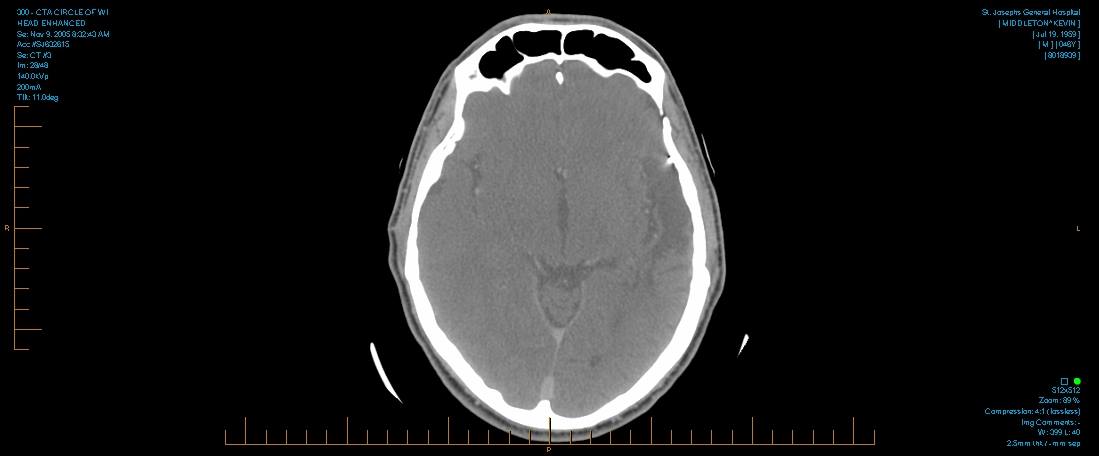
I had 7.5 hours of surgery to remove two blood clots and to clip off several aneurysms. An AVM (arteriovenous malformation) and a haematoma were removed December 05, 1977.

7. Were you in a coma? If so, how long?

No

8. Did you do rehab? What kind of rehab (i.e., In-patient or Out-patient and Occupational, Physical, Speech, Other)?
How long were you in rehab?

No. I was just sent home and told “No school for a year.”

9. What problems or disabilities, if any, resulted from your TBI (e.g., balance, perception, personality, etc.)?

Neuropsychological tests in 1978 and 1994 showed identical results. Short-term memory and recall in the 7 percentile mean that I am disabled. Anger issues ensued, born of frustration over continually forgetting.  Editing oneself is challenging.

10. How has your life changed? Is it better? Is it worse?

Since I was quite young, the loss of a photographic memory was a challenge. I withdrew from society. I have no close friends. I have many acquaintances, but I don’t like to socialize. The plus side is that my intellect increased from the removal of the blood clots. The downside is that by then I resented school. Learning took four times longer, and it was difficult to write an exam. My greatest joys are my five children and ten grandchildren.

11. What do you miss the most from your pre-TBI life?

My memory

12. What do you enjoy most in your post-TBI life?

Family

13. What do you like least about your TBI?

I dislike the fact people say they forget too. They don’t understand the frequency or the fact you lost your kids more than once or your wallet eight times.

14. Has anything helped you to accept your TBI?

Time helped. Being involved with a brain injury society has been beneficial. Even having friends who understand is helpful.

15. Has your injury affected your home life and relationships and, if so, how?

I experienced a divorce. I attribute partial blame to my not being rehabilitated professionally.

16. Has your social life been altered or changed and, if so, how?

Yes. Though I have been married 23 years, I like being by myself with my dogs. My wife socializes without me.

17. Who is your main caregiver? Do you understand what it takes to be a caregiver?

My wife is my main caregiver. It was she who said, “There’s something wrong here.” Due to her, I sought out help, which she supported.

18. What are your future plans? What do you expect/hope to be doing ten years from now?

I’m 54, so retirement is my goal. I’m so done with my brain injury. I like to help online those who are just beginning the healing journey.

19. Are you able to provide a helpful hint that may have taken you a long time to learn, but which you wished you had known earlier? If so, please state what it is to potentially help other TBI survivors with your specific kind of TBI.

It’s not your fault that you forget…it’s the fault of the brain injury. In other words, don’t take forgetting personally. I beat myself up for this all the time. However, why am I apologizing for something I have no control of?

20. What advice would you offer to other TBI survivors? Do you have any other comments that you would like to add?

Don’t get caught in the trap of chasing your past self. Before you know it, it’s 40 years later, and still your former self is bigger than life itself. My 18-year-old self had not fathered, had not grandfathered, had not held a job for 14 years, nor owned several businesses, yet he still was bigger than what I have accomplished. How ludicrous is that? Embrace who you are…a survivor…and move forward because that is where the future lies. Leave your past self in the rear view mirror where he/she belongs.


If you’d Like to learn more about Kevin Middleton, please visit his blog at My Broken Brain.


Kevin's brain.

Kevin’s brain.

Thank you, Kevin, for taking part in this interview. I hope that your experience will offer some hope, comfort, and inspiration to my readers.

(Disclaimer: The views or opinions in this post are solely that of the interviewee.)

(Photos compliments of Kevin.)

If you would like to be a part of this project, please go to TBI Survivor Interview Questionnaire for a copy of the questions and the release form.

So, Whaddya Think? . . . . . . . Contact Sports Are Not Safe for Children

So . . . what do you think? Is there something you are passionate about in this TBI world? Do you want to be heard? Your opinion matters! You can SPEAK OUT! on “So Whaddya Think?”

Simply send me your opinion, and I will format it for publication. Posts may be short, but please send no more than 1,000 words. Send to donnaodonnellfigurski@gmail.com

I hope to HEAR from you soon.

So Whaddya Think Brain th-4

Contact Sports Are Not Safe for Children

by

David Figurski

presented by

Donna O’Donnell Figurski

In 4-6 weeks, American football players will be getting ready for the 2014-2015 season. Millions of people enjoy playing the sport – from the pros in the NFL to college and high school athletes to young children in Pop Warner leagues. Millions more enjoy watching the sport and participating in pools and fantasy leagues. There is no question that football is a major part of US culture.

I admit I enjoy watching the game, but do players and spectators really know the risk involved? As a TBI survivor and someone who has learned first-hand how a brain injury can dramatically change a person and affect his or her life, as well as significantly change the lives of loved ones, I have become acutely aware of the dark side of contact sports. This revelation has been reinforced by the interviews Donna has published on this blog.

Many of the news items posted here have to do with the risk of brain injury in contact sports. Donna and I also posted an opinion about the danger of some sports to children. In fact, one of the TBI survivor interviews was by a young girl whose brain was injured during a volleyball match. On Thursday, Donna and I watched the PBS Frontline report (available online) called “League of Denial” about the NFL and its policy on concussions. The next interview will be from a former defensive lineman of the San Francisco 49ers, who had to quit because of a brain injury. A recent documentary, “Gladiators: The Uncertain Future of American Football” (trailer here), depicts the brutality of football. On the other hand, Roger Goodell, the Commissioner of the NFL, has gotten behind the Zackary Lystedt Law, which is designed to protect young players with a concussion. The PBS and Lystedt videos show contrasting sides of the NFL. I recommend watching both.

Knowing what I know now has greatly diminished my enthusiasm for contact sports, especially football. I see a crisis growing, but awareness by the public is also increasing. It is important that we make at least players, parents, coaches, and educators fully aware of the risk to the developing brains of young people. A brain injury can affect someone’s entire life. No parent wants that for his or her child. We who know need to speak out.

As I say after each post:

Feel free to leave a comment by clicking the blue words “Leave a Comment” below this post.

Please follow my blog. Click on “Follow Me Via eMail” on the right sidebar of your screen.anim0014-1_e0-1

If you like my blog, click the “Like” button under this post.

If you REALLY like my blog, share it with your friends. It’s easy! Click the “Share” buttons below.

If you don’t like my blog, “Share” it with your enemies. That works for me too!

(Clip Art compliments of Bing.)

Survivors SPEAK OUT! . . . . . . . . . Michael J. Kline

SPEAK OUT! – Michael J. Kline

by

Donna O’Donnell Figurski

Kline, MIchael unknown


1. What is your name? (last name optional)

Michael J. Kline

2. Where do you live? (city and/or state and/or country) Email (optional)

Franklin, Pennsylvania, USA         9lt308@gmail.com

3. When did you have your TBI? At what age?

November 18, 2011   09:35 am         Age 41

4. How did your TBI occur?

While on duty as a firefighter, I fell from a standing position to a concrete floor.

5. When did you (or someone) first realize you had a problem?

I knew immediately that there was a problem because of the sound when I hit the floor. The fall was not witnessed.

6. What kind of emergency treatment, if any, did you have (e.g., surgery,

tracheotomy, G-peg)?


I was intubated. I had induced paralysis and an induced coma due to combativeness and the need to fly me to a trauma center in Pittsburgh.

7. Were you in a coma? If so, how long?

My coma lasted 5 days.

8. Did you do rehab? What kind of rehab (i.e., In-patient or Out-patient and Occupational, Physical, Speech, Other)?
How long were you in rehab?

I had occupational therapy. I don’t recall the length. I think it was about 3 months.

9. What problems or disabilities, if any, resulted from your TBI
(e.g., balance, perception, personality, etc.)?

I have 100% loss of taste and smell, and a 40% hearing deficit in my left ear. I have positional vertigo. I am unable to control my verbal filter at times. I have personality changes – I am a rogue or “lone wolf.” I do not drop my guard, and I protect myself ferociously with my words.

10. How has your life changed? Is it better? Is it worse?

My life has changed in many ways. I enjoy the Earth much more because I do not take anything for granted like I used to. It is worse because I am very misunderstood. I look the same, but people don’t understand that the pre-injury Mike is not here anymore. I am judged by the words that I say and the way I protect myself from harm. I have a very hard time letting people close to me. I feel like everyone is out to see if I am truly different or making it up.

11. What do you miss the most from your pre-TBI life?

I miss having fear. The only thing that I am afraid of is people seeing me as disabled or a worse person because of my injury. People just cannot grasp the change that has happened and continues to happen and bothers me every morning when I wake up.

12. What do you enjoy most in your post-TBI life?

I love my new-found love for the outdoors. Everything on this Earth has a purpose, and I am able to see that now. I enjoy speaking to other survivors and caregivers. I enjoy educating others and making them aware of this relentless hidden injury.

13. What do you like least about your TBI?

I don’t like the burden that I have placed on my family and friends. I am no longer the father with an “S” on his chest, even though I try so hard. My focus and concentration are nowhere near what they used to be. I feel like I have aged 20 years because of this injury.

14. Has anything helped you to accept your TBI?

I do not accept this injury at all. I have spent my entire life helping people. It may sound selfish, but I did not deserve this. I have lived a very fulfilling life in my effort to help others. I have lost some of that ability, and it pisses me off.

15. Has your injury affected your home life and relationships and, if so, how?

I am no longer the “King of the Castle” who can solve anything quickly. I can see it in my family’s eyes. They love me unconditionally, but I can see how they view me a little differently. I want to be the bulletproof man in the house like I used to be.

16. Has your social life been altered or changed and, if so, how?

My social life has changed tremendously. I have lost many friends because they do not understand me like they used to. I have gained other friends in some of the support groups, and they are AWESOME people. I feel like I do not fit in the way I used to because I have been beaten up by this injury. I am a very positive thinker, but sometimes I have to put up a facade to prove it.

17. Who is your main caregiver? Do you understand what it takes to be a caregiver?

My wife and daughters take care of me and keep me in check when needed. I wish I knew what it is like to be in their shoes. I know I can be a bear at times, and I know that everything they do is best for me. I don’t always agree with it, but they do not give up, and I am thankful for that.

18. What are your future plans? What do you expect/hope to be doing ten years from now?

My plans are to retire from my job and become a speaker. I want to speak about my experiences to survivors, caregivers, and medical professionals. I will not give up, and I will reach that goal. Every cloud has a silver lining. Sometimes it is just very hard to see it.

19. Are you able to provide a helpful hint that may have taken you a long time to learn, but which you wished you had known earlier? If so, please state what it is to potentially help other TBI survivors with your specific kind of TBI.

I tried to rush my recovery way too much. At times, I refused to listen to anyone. That has held me back. If I would have just been patient and allowed myself time to recover without overloading my brain all of the time, I may be better off and less angry about my TBI.

20. What advice would you offer to other TBI survivors? Do you have any other comments that you would like to add?

Keep trying to improve yourself. It may be the smallest forward step ever, but it is a step. Then follow through and achieve that goal. Wake up every morning and tell yourself how you are going to be awesome that day. Do not be hard on yourself when you hit a roadblock – we all have them and always will.


Thank you, Michael, for taking part in this interview. I hope that your experience will offer some hope, comfort, and inspiration to my readers.

(Disclaimer: The views or opinions in this post are solely that of the interviewee.)

(Photo compliments of Michael.)

You can learn more about Michael on his blog, “My Fall to Life.”


If you would like to be a part of this project, please go to TBI Survivor Interview Questionnaire for a copy of the questions and the release form.



Brain Injury Resources . . . . . . . . . . TBI Awareness, The Drew Carter Project Interviews Me!

Interview with TBI caregiver, Donna O’Donnell Figurski
as seen on TBI Awareness, The Drew Carter Project

 Drew, thank you for your interest and for taking your time to interview me for your blog. Drew writes about a lot of great topics. I hope my readers will stop by to see what he shares with his readers – as we raise awareness of TBI – one view at a time.

image-2


1. How do you find time for yourself? Does this change according to your husband’s recovery? (I think I remember you telling me he had one)

My husband’s traumatic brain injury happened more than nine years ago. He wasn’t expected to survive any of his three brain surgeries (for a cerebellar hemorrhage, removal of an aneurysm, and removal of an arterio-venous malformation), but he did! When David returned home from his stays at the general hospital and the rehabilitation hospital (two and a half months after his event), picture a rag doll. He was reduced to an infantile state and was completely dependent on me. He was unable to feed himself, dress himself, and take care of any of his daily activities. Fortunately, some friends and family helped me in the beginning. After taking a family leave for three and a half months to stay by David’s side in the hospitals, I returned to teaching my first graders. However, whenever I was home, I was totally responsible for David’s welfare. For at least a year, I was never able to leave him alone. David was a prisoner without bars. So was I.As the years passed, David became more adept at caring for himself, and slowly I felt confident enough to leave him alone at home for short periods of time. The intervals grew as the years marched on, and now I can comfortably leave David for long spans of time. This has freed me immensely. I am able to run errands without having David accompany me. I am able to attend my writing-group meetings, and I have joined the theater, as an actor, assistant stage manager, and director. Despite my new freedoms, David and I remain tethered together by our cell phones. I am only a phone call away.
Unfortunately, because of David’s severe loss of balance, even nine years later he cannot leave the house unassisted.

2. Do you have a sense of community, like support groups or other services?

When David was released from the rehabilitation hospital, I took him to a local brain-injury support group. Although David’s brain was severely damaged, he was not able to relate to the other folks there. He said it made him feel worse, so we stopped going.

When David was in the hospital, I met a woman whose husband had a TBI two weeks after David. I made a point of getting to know her because I thought I could help her. Though the TBI of Judy’s husband is very different from David’s TBI, Judy and I became close friends. But, since we live a distance apart, we offered support via email, phone calls, and an occasional visit.

I was not aware of any other support groups for caregivers back then. It was only in December of 2013 that I found via Facebook brain-injury support groups online. I am now an active member of several traumatic-brain-injury groups, all of which offer friendship and support and answer questions for both caregivers and survivors.

I’m so glad to have found these groups. They provide instant information and support for anyone who needs it.

3. What have you found to be the hardest part of a TBI recovery?

Wow! That’s a hard question. The lives we knew were ripped from us on that fateful morning of January 13, 2005.

I feel very much like Dorothy, when the cyclone picked her up in Kansas and dropped her on the yellow brick road. Like Dorothy, I searched for a way home to the secure and familiar. Unlike Dorothy, I’m still searching.

When something burst inside David’s head, our lives changed forever. It was a complete role reversal. In an instant, I was suddenly in charge, and I was not prepared for my new life. Before TBI, David oversaw the business of running our home – juggling the bills, doing home repairs, making decisions, and . . . taking out the trash. I liked it that way. I chauffeured the children to their soccer games, gymnastic meets, doctor’s appointments, etc. and prepared breakfasts, lunches, and dinners. I liked it that way. In the evenings when David returned from his laboratory at Columbia University and I came home from my 1st or 3rd graders, we fit in “walk-talks” through the neighborhood. We liked it that way.

After David’s TBI, I had to figure out how to run the house. The kids were grown and gone, but I had to pay the bills. (What bills? I didn’t even know what bills we had!) I had to get money from an ATM. I know it’s crazy, but I didn’t know how. David had shown me many times, but, like Scarlet O’Hara, I never paid attention. “Tomorrow, I’ll do it tomorrow.” Well tomorrow slammed me in the face on January 13th, 2005. I was stuck when David slipped into an unconscious state and the code slept with him. I didn’t know who to call for home repairs or to distinguish between junk-mail and important mail, and . . . I had to take out the trash.

Those are some of the things that were very difficult for me. Another was dealing with insurance companies. Fighting with them to pay the bills was overwhelming and extremely stressful. The phone calls and the letters seemed unending. I felt it was unfair for my insurance company not to pay the claims that they so proudly advertised they would do when they were recruiting my business. I kept my part of the bargain. I paid my hefty insurance payments for countless years on-time each month, with no reminders or urging from the insurance company. I never missed a premium payment, though I hadn’t need of their services. Yet, when it came time for them to cover David’s hospital and doctor bills, they tried to renege, not only making me jump through hoops, but also making me feel like I was shaking a tin can on the corner. It was not only downright insensitive, it bordered on criminality. I know many folks will relate to this. I am not alone.

But, the absolute worst of course, was losing the man I married. The man I met at age sixteen went to sleep in a coma, and the man who woke up is a new version of him – a wonderful guy, just the same, whom I will love to forever, but I often miss the “old” guy too.

4. What has been the easiest part of recovery?

This question, too, takes some thought. When I brought David home after his spending two and a half months in hospitals, I thought I would lose my mind. Not only was he like a rag doll and able to do nothing for himself, he was also not quite right with his thinking. He didn’t understand what was going on, and it was very difficult for him and me to live our daily lives without the hospital support. For years, I became his extra self. I did everything for him.

But after time, as he slowly regained some of his missing skills, life became a little easier. David eventually returned to his laboratory at Columbia University. His nature before his TBI was always good, but with his job, he was usually on overload and lived with a lot of stress. After his TBI, he seems more relaxed and lets many things roll by. He tries to make things easier for me, and, now that he is more able to care for himself, he encourages me to pursue my many interests. I have become involved with the theater and my writing groups. I am able to meet girlfriends for lunch dates and walk-talks, or slip out for a quick coffee with a friend.

So, I guess David’s accepting attitude, coupled with his persistence to get better and to make a better life for both of us, is what gets us through.

5. Have you found a spiritual path helpful?

Truthfully, neither of us follows a spiritual path, but our belief and love for each other is what bolsters us through each day, week, month, and year. Together, we will do this!


Survivors SPEAK OUT! Amy Rankin

SPEAK OUT! – Amy Rankin

by

Donna O’Donnell Figurski

Rankin, Amy Book

1. What is your name? (last name optional)

Amy Rankin

2. Where do you live? (city and/or state and/or country) Email (optional)

Auburn, New York, USA

3. When did you have your TBI? At what age?

October 30, 2004           Age 23

4. How did your TBI occur?

While walking home, I was hit by a drunk driver in a pickup.

5. When did you (or someone) first realize you had a problem?

The driver of a passing car saw the truck flipping and called 9-1-1. They found my roommate dead a ways from myself and the truck.

6. What kind of emergency treatment, if any, did you have (e.g., surgery, tracheotomy, G-peg)?

Wonderful doctors removed half my skull to relieve swelling. I had a tracheotomy and a G-tube (gastrostomy tube).

7. Were you in a coma? If so, how long?

Yes, 33 days

8. Did you do rehab? What kind of rehab (i.e., In-patient or Out-patient and Occupational, Physical, Speech, Other)?
 How long were you in rehab?

I did rehab in Baltimore (but it wasn’t great) at Kernan Hospital. After they put my skull back together, I went to St. Camillus, where I did wonderful speech, physical, and occupational therapies both as an In-patient and an Out-patient. I did other therapies after my discharge from St. Camillus as an Out-patient. I continue to work with a language pathologist.

9. What problems or disabilities, if any, resulted from your TBI 
(e.g., balance, perception, personality, etc.)?

I’ve worked very hard to overcome many of my disabilities. I’ve run a couple of 5Ks and wrote a book about never giving up – Nobody Thought I Could Do It, But I Showed Them, and So Can You! (Amazon.com). My vision continues to be trouble. I cannot recognize people. It gets embarrassing.

10. How has your life changed? Is it better? Is it worse?

Better – My faith in God has grown. I’ve met and worked with absolutely wonderful people.

Worse – I don’t like the loss of independence, the embarrassing moments, and not being with my friends as often as I’d like.

11. What do you miss the most from your pre-TBI life?

I greatly miss driving and being with friends.

12. What do you enjoy most in your post-TBI life?

I love to volunteer and to help other TBI victims or any victim. I wrote my book to help others. I met my great boyfriend, who is also a TBI survivor.

13. What do you like least about your TBI?

I don’t like being unable to drive and see friends. I’m sad that I can no longer teach Special Ed. I miss teaching very much, but I believe my book can do some teaching for me.

14. Has anything helped you to accept your TBI?

I’ve been helped by God and by the positive attitudes and support of my family and all my doctors and therapists.

15. Has your injury affected your home life and relationships and, if so, how?

We moved to a beautiful new house. I met my wonderful boyfriend. I don’t communicate with my girlfriends from college as much as I used to.

16. Has your social life been altered or changed and, if so, how?

My boyfriend also survived a TBI. We don’t see each other as much as we’d like to. When we do, it’s magical.

17. Who is your main caregiver? Do you understand what it takes to be a caregiver?

My father is my main caregiver. I dedicated my book to him. I know both my parents have given up a lot and changed dramatically. A good caregiver is caring and has love and respect for you.

18. What are your future plans? What do you expect/hope to be doing ten years from now?

I’m hoping to go back to school to become a recreational therapist and to have my book help even more people.

19. What advice would you offer to other TBI survivors

Have a positive attitude.

Be aware of the love of other people.

Do what you can.

Find something to smile about daily.

20. Do you have any other comments that you would like to add?

A TBI changes your life forever, but don’t feel disabled. Work out of it! Believe you’re a survivor!


Thank you, Amy, for taking part in this interview. I hope that your experience will offer some hope, comfort, and inspiration to my readers.

(Disclaimer: The views or opinions in this post are solely that of the interviewee.)

(Photo compliments of Amy.)


If you would like to be a part of this project, please go to TBI Survivor Interview Questionnaire for a copy of the questions and the release form.


SPEAK OUT! NewsBit . . . . . . . . . . . Public Release of the First Comprehensive Guidelines on Concussions in Children

Public Release of the First Comprehensive Guidelines

on Concussions in Children


newsboy-thChildren’s Hospital of Eastern Ontario, the Ontario Neurotrauma Foundation, and a panel of 30 experts from the US and Canada established and released guidelines meant to standardize the identification and management of concussions in 5- to 18-year-old children. Dr. Roger Zemek, who headed the panel, said, “We’ve developed a reliable resource that is valuable for everyone affected by pediatric concussion: from children and their families, to healthcare providers, and to schools and recreational organizations. This is so important because children get more concussions than adults do, with increased risk because their brains are still developing.” The group read over 4,000 publications and considered current technology. In one example, a pocket-sized device will allow a coach to determine on the sideline whether a player has a concussion or not. There are explicit guidelines for the diagnosis and care of concussions in children, as well as for determining when a child should return to school or play a sport again. The guidelines have been posted on a website and are freely available to anyone, especially parents, educators, coaches, and heathcare providers. (Full story)


Survivors SPEAK OUT! . . . . . . . . . Drew Carter

SPEAK OUT! – Drew Carter

by

Donna O’Donnell Figurski

Carter, Drew Rehab


1. What is your name? (last name optional)

Drew Carter

2. Where do you live? (city and/or state and/or country) Email (optional)

Asheville, North Carolina, USA

3. When did you have your TBI? At what age?

My TBI happened 13 years ago. I was 20 or about 21.

4. How did your TBI occur?

I was in the second semester of my first year at Western Carolina University. I was attending a party and fell off a retaining wall. I hit my head on the concrete.

5. When did you (or someone) first realize you had a problem?

I was diagnosed with ADHD (attention deficit hyperactive disorder) and a learning disability before my accident. After my TBI, they got much worse. My accident put me in a coma for five weeks. I slowly woke up from the coma, and my injuries were obvious.

6. What kind of emergency treatment, if any, did you have (e.g., surgery, tracheotomy, G-peg)?

I had a tracheotomy and a belly tube for food. When I came out of my coma at Mission Hospital, they sent me to Shepherd Center in Atlanta and then to Thomas Rehabilitation Center.  

7. Were you in a coma? If so, how long?

I was in a coma for five weeks at Mission Hospital in Asheville.

8. Did you do rehab? What kind of rehab (i.e., In-patient or Out-patient and Occupational, Physical, Speech, Other)?
How long were you in rehab?

I don’t do rehab anymore. I do exercise regularly, and I practice speaking.

9. What problems or disabilities, if any, resulted from your TBI (e.g., balance, perception, personality, etc.)?


At first, I had a lot of problems. I had to learn to swallow. My physical ability came back first, and then my mental ability returned. I’m about at a level people might say is normal. I believe that, as TBI survivors, we can continue to grow and pass what we think our limits are. It’s the TRUTH.

10. How has your life changed? Is it better? Is it worse?

For me, I would say my life is far better. Going through the ordeal made me a stronger person. After the accident, I was forced to grow up faster.

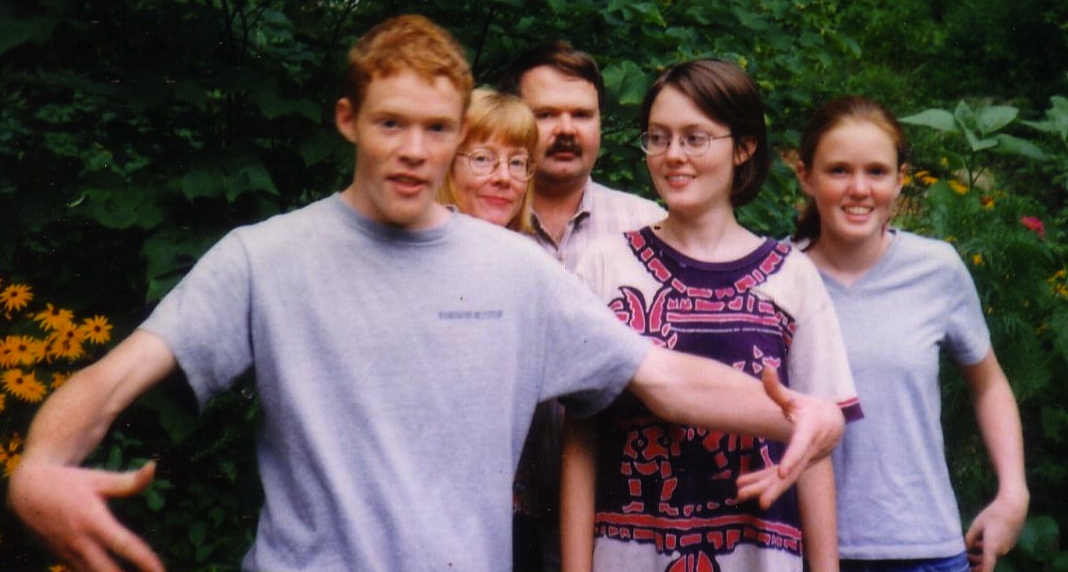
Drew Carter - before TBI with his family

Drew Carter – before TBI with his family

11. What do you miss the most from your pre-TBI life?

I miss my young, carefree life, but with more responsibility comes more freedom.

12. What do you enjoy most in your post-TBI life?

I like the idea that I might be able to help and support other survivors.

13. What do you like least about your TBI?

They call me bipolar now.

14. Has anything helped you to accept your TBI?

I was helped by my faith as a Christian.

15. Has your injury affected your home life and relationships and, if so, how?

I became closer with my mother.

16. Has your social life been altered or changed and, if so, how?

I lost lots of friends because my personality changed, and I had to relearn almost all my life-skills.

17. Who is your main caregiver? Do you understand what it takes to be a caregiver?

My main caregiver is my mother. I know that being a caregiver can be hard for a parent or loved one. I have seen lots of caregivers who believe that a survivor will not or cannot progress anymore. Sometimes the TBI recovery seems impossible to caregivers because they are watching the situation from the outside. This can affect the TBI survivor. I imagine it can be very hard for the caregiver. My recovery has caused a lot of stress for my mother.

18. What are your future plans? What do you expect/hope to be doing ten years from now?

I would like to be a successful artist. I hope to produce my own ceramics and clothing. I also want to help other TBI survivors.

19. Are you able to provide a helpful hint that may have taken you a long time to learn, but which you wished you had known earlier? If so, please state what it is to potentially help other TBI survivors with your specific kind of TBI.

Always set your goals beyond what you think is possible. Don’t just accept other people’s opinion of how much you can recover.

20. What advice would you offer to other TBI survivors? Do you have any other comments that you would like to add?

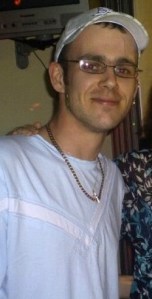
Drew Carter - after TBI

Drew Carter – after TBI

Stay strong and embrace your life.


Thank you, Drew, for taking part in this interview. I hope that your experience will offer some hope, comfort, and inspiration to my readers.


(Disclaimer: The views or opinions in this post are solely that of the interviewee.)

If you would like to be a part of this project, please go to TBI Survivor Interview Questionnaire for a copy of the questions and the release form.

(Photos compliments of Drew.)

Speak Out! NewsBit . . . . . . . . . . . . . New Helmet Saves Time in Stroke Diagnosis

Newsboy th

New Helmet Saves Time in Stroke Diagnosis

Scientists from Chalmers University of Technology, Sahlgrenska Academy, and Sahlgrenska University Hospital in Sweden have presented clinical evidence that a helmet able to generate and analyze microwaves can quickly distinguish the type of stroke. A stroke resulting from a ruptured blood vessel can be differentiated from a stroke caused by a blood vessel blocked by a loose clot. Since clots can be dissolved by therapeutic drugs, treatment of this class of strokes (85% of all strokes) can begin as soon as the diagnosis is made. The helmet has no effect on the other class of strokes. Time is important. Stroke-caused deaths and disabilities are fewer with earlier treatment. The clinical studies on the helmet were done in a hospital, but the helmet is designed for use in the ambulance. (Full story)


Survivors SPEAK OUT! . . . . . . . . . . Stuart ‘lucky’ White


Survivors SPEAK OUT! – Stuart ‘lucky’ White

by

Donna O’Donnell Figurski


White, Stuart "lucky"

Stuart with friend, Trevor.

1. What is your name? (last name optional)

Stuart White

2. Where do you live? (city and/or state and/or country) Email (optional)

England

3. When did you have your TBI? At what age?

August 9, 1996

4. How did your TBI occur?

I was riding my bike, and I was hit by a car.

5. When did you (or someone) first realize you had a problem?

My problem was apparent as soon as the accident happened. I went straight into a coma. I was fortunate enough that a First Aider wasn’t far from me.

6. What kind of emergency treatment, if any, did you have?
(e.g., surgery,

tracheotomy, G-peg)

I was in Emergency for nine days. I’m not sure what they did to me. Sorry.

7. Were you in a coma? If so, how long?

Yes. 9 days.

8. Did you do rehab? What kind of rehab (i.e., In-patient or Out-patient and Occupational, Physical, Speech, Other)?
How long were you in rehab?

I was at the hospital for about a month and a half. Then I had a form of rehab at home, due to having a home tutor and the fact that I wasn’t able to do anything on my own. It took years for me to be back to normal.

9. What problems or disabilities, if any, resulted from your TBI?
(e.g., balance, perception, personality, etc.)

Balance, personality, couldn’t read or write, speech problems, memory loss

10. How has your life changed? Is it better? Is it worse?

My life was worse at first, but now I can finally say that, after accepting the past, I can look into the future with confidence.

11. What do you miss the most from your pre-TBI life?

I miss my teenage childhood as I had to regain a lot of things I had lost.

12. What do you enjoy most in your post-TBI life?

I realise how lucky I have been, and I enjoy that I am now able to give something back to other TBI survivors.

13. What do you like least about your TBI?

I dislike my fatigue. (It sucks.)

14. Has anything helped you to accept your TBI?

Mainly my family

15. Has your injury affected your home life and relationships and, if so, how?

My relationships have been affected a bit. It is hard to explain TBI to someone who doesn’t understand it and who thinks it has passed, so I should just get over it.

16. Has your social life been altered or changed and, if so, how?

Yes, mainly planning things. I cannot plan many things due to being sleepy a lot.

17. Who is your main caregiver? Do you understand what it takes to be a caregiver?

I would say my parents, as they helped me a lot.

18. What are your future plans? What do you expect/hope to be doing ten years from now?

I hope to be helping other survivors.

19. Are you able to provide a helpful hint that may have taken you a long time to learn, but which you wished you had known earlier? If so, please state what it is to potentially help other TBI survivors with your specific kind of TBI.

Yes. Realise that you cannot give up on yourself. TBI is very hard work, but NEVER give up. You never know what is going to happen in the future.

20. What advice would you offer to other TBI survivors? Do you have any other comments that you would like to add?

It is hard work, but accept the past. You can still look back at it, and then in the future you will realise how White, Stuart "lucky" Younger photofar you have come. Be proud of yourself no matter what others say, as you are a survivor who has fought against the odds!


Thank you, Stuart, for taking part in this interview. I hope that your experience will offer some hope, comfort, and inspiration to my readers.

(Disclaimer: The views or opinions in this post are solely that of the interviewee.)

(Photos compliments of Stuart.)

If you would like to be a part of the SPEAK OUT! project, please go to TBI Survivor Interview Questionnaire for a copy of the questions and the release form.

diemodi jewelry

uniquely hand-crafted jewelry by donna

Welcome to Harmony Kent Online

The home of all things books

Pete Springer

Passionate Teacher and Future Children's Author

HOPE TBI

Helping Other People Excel - To Be Independent

For the Love of Books, Old and New

Katie Fischer, Writer and Reader of Stories

Charlie Bown

Children's Author

Jessica Hinrichs

“We write to taste life twice, in the moment and in retrospect.” ― Anais Nin

VIVIAN KIRKFIELD - Writer for Children

Picture Books Help Kids Soar

Mindy’s Writing Wonderland

For authors, parents, teachers & everyone who loves children’s books.

Kaitlyn Leann Sanchez

Literary Agent

Surviving Traumatic Brain Injury

TBI - Survivors, Caregivers, Family, and Friends

The Care Factor

Loving someone with a Traumatic Brain Injury

Brain Injury Support Group of Duluth-Extension

Brain Injury Information and SUPPORT

Brain Aneurysm Global Insight

Brain Aneurysm, cerebral hemorrhaging, hemorrhage stroke