TBI – Survivors, Caregivers, Family, and Friends

Posts tagged ‘blogtalkradio.com’

SURVIVORS SPEAK OUT! Sandee Rodriguez


Survivors SPEAK OUT! Sandee Rodriguez

presented by

Donna O’Donnell Figurski


Sandee Rodriguez Survivor 072624

1. What is your name? (last name optional)

Sandee Rodriguez

  1. Where do you live? (city and/or state and/or country) Email (optional)

Ypsilanti, Michigan, USA

  1. On what date did you have your brain injury? At what age?

January 4, 1995     I was 24.

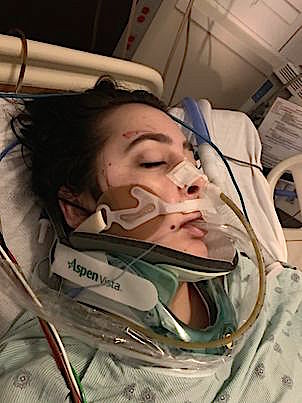
  1. How did your brain injury occur?car accident R-2

Nasty car accident

  1. When did you (or someone) first realize you had a problem?

Immediately. I was unconscious and paralyzed.

  1. What kind of emergency treatment, if any, did you have?

I was airlifted to the hospital of the University of Michigan.

  1. Were you in a coma? If so, how long?

Yes. Two weeks.

  1. Did you do rehab? What kind of rehab (i.e., inpatient or outpatient and occupational and/or physical and/or speech and/or other)? How long were you in rehab?

I was in outpatient rehab for seven hours a day at Med Rehab in Ann Arbor, Michigan. I had physical, occupational, speech, talk, and recreational therapies. I also had retrograde amnesia. (At 24, I woke up with my past erased.)

Erased Memory

  1. What problems or disabilities, if any, resulted from your brain injury
(e.g., balance, perception, personality, etc.)?

I had problems with all of the examples listed.

  1. How has your life changed? Is it better? Is it worse?

This question has no easy or short answer.

  1. What do you miss the most from your pre-brain-injury life?

My pre-injury life is still a blank mostly.

  1. What do you enjoy most in your post-brain-injury life?

I appreciate the experiences I may not have had if my TBI (traumatic brain injury) had never happened. It’s different every day.

  1. What do you like least about your brain injury?

Having it. It stopped the life I was creating at a time people become fully realized adults. 

  1. Has anything helped you to accept your brain injury?

I have been helped by my family and by the tenacity I have.

  1. Has your injury affected your home life and relationships and, if so, how?

Other people have had issues with my brain injury. Those people are no longer in my life.

  1. Has your social life been altered or changed and, if so, how?

I have no active social life.

  1. Who is your main caregiver? Do you understand what it takes to be a caregiver?

I am my own caregiver. My husband helps with what I ask. My mom and stepdad and my aunt were my caregivers in the beginning.

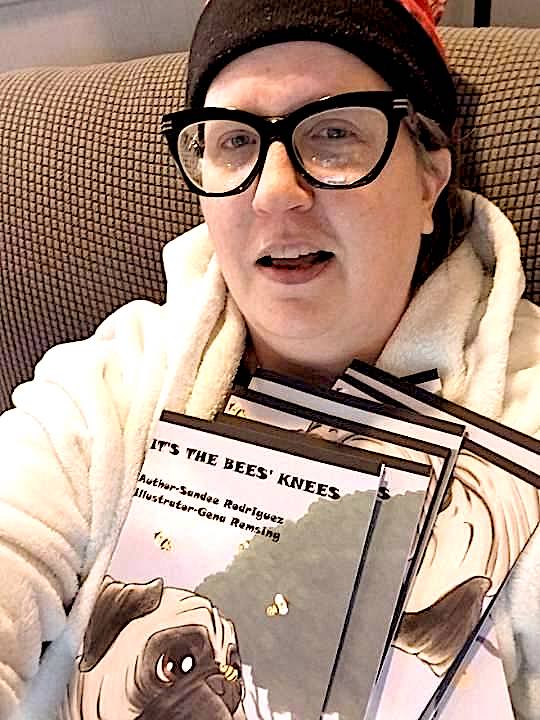
  1. What are your plans? What do you expect/hope to be doing ten years from now?Sandee Rodriguez & Book_n

The musical I wrote about my life with a TBI will be on Broadway by then.

  1. Are you able to provide a helpful hint that may have taken you a long time to learn, but which you wished you had known earlier? If so, please state what it is to potentially help other survivors with your specific kind of brain injury.

(I don’t understand this question due to some aphasia I have now.)

  1. What advice would you offer to other brain-injury survivors? Do you have any other comments that you would like to add?

Carpe diem (seize the day) and be easy on yourself. Meet one challenge at a time.

Get Your Copy Now

Read It!               Review It!

Click Links under Book

PAPERBACK!        Read it Now!                             

e-BOOK!      Read it Now!

Clip Art compliments of Bing.)

(Photos compliments of contributor.)

As I say after each post:

Please leave a comment by clicking the blue words “Leave a Comment” below this post.

Feel free to follow my blog. Click on “Follow” on the upper right sidebar.

If you like my blog, share it intact with your friends. It’s easy! Click the “Share” buttons below.


Survivors SPEAK OUT! Rob Baugh

1. What is your name? (last name optional)

Rob Baugh

2. Where do you live? (city and/or state and/or country) Email (optional)

Home: Clarksville, Indiana, USA     Email: Rob.Baugh@outlook.com  

3. On what date did you have your brain injury? At what age?

Date: July 21, 2020     Age: 45

4. How did your brain injury occur?

I knocked myself out opening a screen door. I suffered a 3-inch laceration to my skull, which required five stitches.

5. When did you (or someone) first realize you had a problem?

Immediately. The after-effects began right away, and we knew I needed medical treatment.

6. What kind of emergency treatment, if any, did you have?

I went to the Emergency Room of the hospital. They put five staples into my head and did a CAT scan (CT or CAT = computed tomography) and X-rays.

7. Were you in a coma? If so, how long?

No

8. Did you do rehab? What kind of rehab (i.e., inpatient or outpatient and occupational and/or physical and/or speech and/or other)? How long were you in rehab?

I did speech and cognitive (outpatient) therapies.

9. What problems or disabilities, if any, resulted from your brain injury
(e.g., balance, perception, personality, etc.)?

I have personality changes. (I don’t pick up on sarcasm very well.) I have had a headache since the day I hit my head, and it never goes away. I also have anxiety, depression, memory issues, and stress.

10. How has your life changed? Is it better? Is it worse?

In some ways, my life is better, but it’s also worse. I have become more of a home-body. I don’t like loud noises and crowds. So being at home is my safe place. I still mourn my old self. But I have also made so many friends since my brain injury that it is kind of a blessing in that fact.

11. What do you miss the most from your pre-brain-injury life?

I used to sing and play piano at church, but I can’t do that anymore because of the stress of being in front of people.

12. What do you enjoy most in your post-brain-injury life?

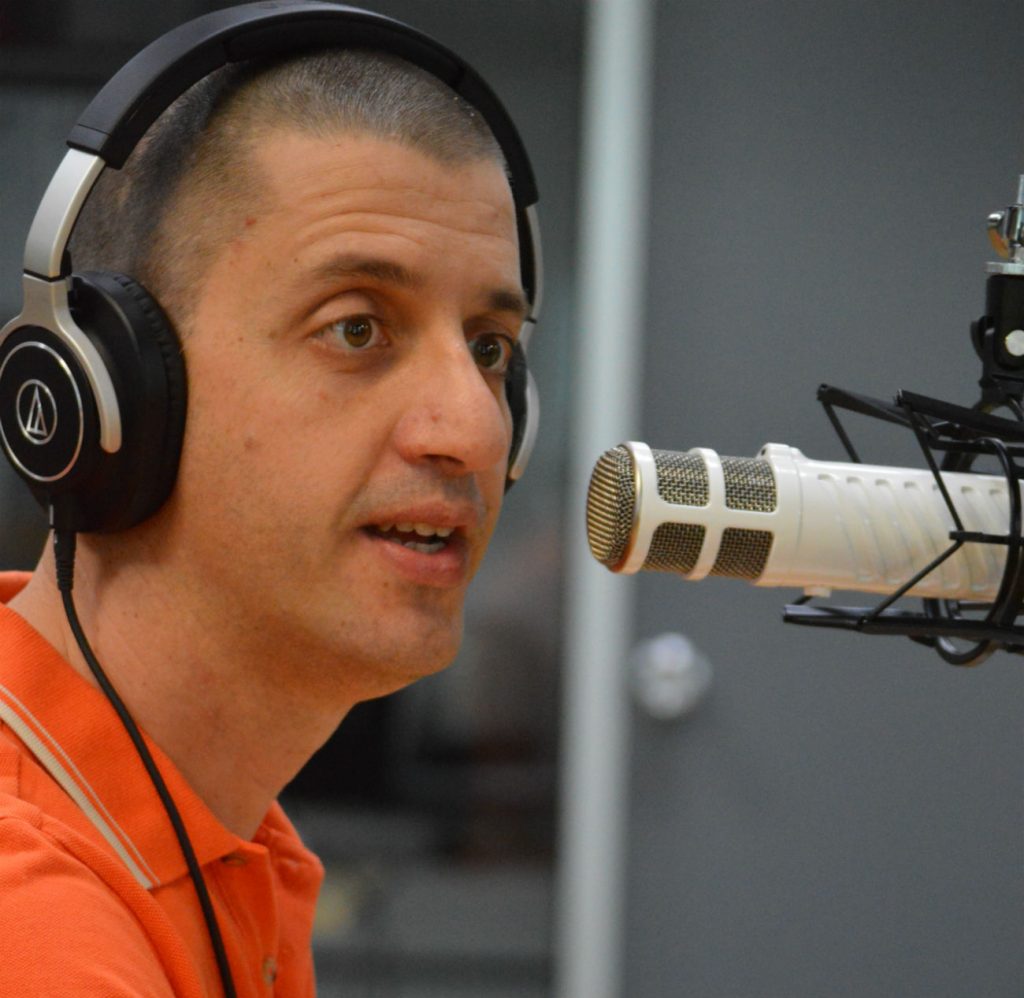
I enjoy doing the brain-injury podcast that I started to help spread awareness and give a platform to other survivors to use to tell their stories.

13. What do you like least about your brain injury?

I dislike my constant pain and my memory issues. 

14. Has anything helped you to accept your brain injury?

I think being in a brain-injury support group and learning that I am not alone in this journey have helped me the most.

15. Has your injury affected your home life and relationships and, if so, how?

My brain injury has caused more stress on my wife. She misses the old me, and she does have to carry much more of the load than she should have to. She doesn’t complain about having to do more, but I know it has to be very stressful for her.

16. Has your social life been altered or changed and, if so, how?

Yes, it has. I don’t do a lot of things outside my home. I don’t visit people like I want to or get to do things that involve big crowds.

17. Who is your main caregiver? Do you understand what it takes to be a caregiver?

My wife and I do understand what it takes. I call all caregivers “unsung heroes.”

18. What are your plans? What do you expect/hope to be doing ten years from now?

I hope in ten years that I will have grown my platform so big that everyone who hears my name will think “brain injury” and will know what a brain injury is. I am a big advocate for survivors, and I want to educate as many people as I can.

19. Are you able to provide a helpful hint that may have taken you a long time to learn, but which you wished you had known earlier? If so, please state what it is to potentially help other survivors with your specific kind of brain injury.

What I wish I would have done from day one is to get myself into a support group. My having a support group has helped me so much. It took me almost three years to join one. I felt like I was too weak to be joining a support group, but being part of a support group is totally necessary for survivors – and caregivers as well.

20. What advice would you offer to other brain-injury survivors? Do you have any other comments that you would like to add?

Surround yourself with positive people. Understand that the people you felt like you could count on when life gets tough will more than likely disappoint you. Don’t give into that or feel bad for relationships lost. You cannot heal if you are swimming in a toxic negative environment. 

 *****

Get Your Copy Now!

51r7mht63el._sx332_bo1204203200_-1

             Read It!                Listen to It!              Review It!

Click Links under Book

 PAPERBACK!   Read it Now!    

e-BOOK!   Read it Now!  

AUDIO BOOK Listen to it Now!

                                                               Stay Safe and Healthy!

Clip Art compliments of Bing.)

(Photos compliments of contributor.)

As I say after each post:

Please leave a comment by clicking the blue words “Leave a Comment” below this post.

Feel free to follow my blog. Click on “Follow” on the upper right sidebar.

If you like my blog, share it intact with your friends. It’s easy! Click the “Share” buttons below

Survivors SPEAK OUT! Simon Limbrick

Survivors SPEAK OUT! Simon Limbrick

by

Donna O’Donnell Figurski


Simon Limbrick 2

1. What is your name? (last name optional)
My name is Simon C. Limbrick.

2. Where do you live? (city and/or state and/or country) Email (optional)
I live in Gloucester, UK.

3. On what date did you have your brain injury? At what age?
My brain injury happened in 1980. I was 15 at the time.

4. How did your brain injury occur?
My brain injury occurred when I was crossing a duel carriageway on my bicycle – something I did safely on hundreds of occasions. R

5. When did you (or someone) first realize you had a problem?
When I emerged from my coma (See my answer below.)

6. What kind of emergency treatment, if any, did you have?
My CT (computerized tomography) scan revealed a massive left temporal hematoma (The left temporal lobe is associated with understanding language, forming speech, and remembering verbal information); an aneurysm deep in the basal ganglia, which may have affected my coordination; and that I’d broken my neck in three places. The hematoma was operated on straight away at my local hospital, Gloucester Royal. They weren’t equipped to deal with the aneurysm, so, as soon as the first operation was completed, I was put into an ambulance and red-lighted 35 miles to Frenchay Hospital in Bristol. When I emerged from a two-week coma, I found I was paralyzed from the neck down. I also had a tracheotomy tube in my throat.

7. Were you in a coma? If so, how long?
Yes – two weeks

8. Did you do rehab? What kind of rehab (i.e., inpatient or outpatient and occupational and/or physical and/or speech and/or other)? How long were you in rehab?
During my five-month stint at Gloucester Royal, I underwent the full raft of therapies: physio, speech, and occupational.

9. What problems or disabilities, if any, resulted from your brain injury
(e.g., balance, perception, personality, etc.)?
I had to relearn how to use my limbs, how to talk, how to dress myself, and how to walk. Although my right side had “come on line” first, walking was something I found very hard to do. Compounded by balance issues, I had a dropped right foot – a trip hazard in itself. I had leg braces made, but these meant I had to learn to walk with a slightly wider gait, as the inner rods and spurs would meet and cause me to stumble.

It was evident early on that I had fixed and dilated pupils. The right eye recovered some time after, but the left eye remained fixed. As the left eyelid gradually opened, double vision was apparent. This caused me to miss the bowl of the toilet a few times until I re-adjusted! My balance was shocking. Even when given a wheelchair later on, I told my hands to release, but the left was slow to react. As a result, I often got my fingers caught in the spokes. I compensated by learning to push with my right arm and steer and pull with my right leg.

My short-term memory and concentration were atrocious. My personality, mainly shy and introverted, now flourished in the attention I was getting from all quarters. My inhibitions quickly diminished in hospital. My personality grew with this new “gift” of disinhibition. Unfortunately, it was a double-edged sword, as I found I often did not engage my brain before putting my mouth into gear. I caused untold damage to myself and much angst to others countless times because of my lack of social inhibitions. There was nobody else to blame for this.

Simon Limbrick 110. How has your life changed? Is it better? Is it worse?
One never fully recovers from this sort of trauma. We learn to cope with it, or not, in our own ways. Me? I have learned the value of laughter – of being able to laugh at myself. How can we justify laughing at others if we cannot laugh at ourselves? In essence, having others laugh with us instead of at us changes our whole outlook on life. It enables us to put things into perspective.

11. What do you miss the most from your pre-brain-injury life?
I missed my youth and fitness, definitely. I miss my dexterity.

12. What do you enjoy most in your post-brain-injury life?
I enjoy my gratitude … my ability to put things into perspective … laughter … love … and the empathy to communicate with others.

13. What do you like least about your brain injury?
I dislike that, because of my brain injury, I’ve hurt people and I’ve made mistakes.

14. Has anything helped you to accept your brain injury?
Even though I cannot remember the incident, accepting my brain injury was key, but it was an accident.

Of all the cars I could have come into contact with that day, the car I collided with turned out to be driven by my dad’s best mate! Both he and two or three other witnesses attested that I caused the collision by pulling out when I did. I was then able to see things in perspective. I realised that the incident was an accident. I finally stopped blaming myself for the hurt I was causing others.

15. Has your injury affected your home life and relationships and, if so, how?
Of course my life and relationships were affected! My personality changed, which my family and friends … and I … found hard to cope with. Two friends – my closest – stuck by me, no matter what – even when their school exams were on. After I left the sheltered environment of the hospital, the severity of my situation dawned on me. Although I had made and continued to make great strides physically, the fact that I could not control my emotions and aspects of my behaviour continued to cause anger, intense frustration, and distress both in myself and in others. This situation went largely unvented and inevitably led to feelings of hopelessness and depression, which in turn led to thoughts of suicide. I’m ashamed to say that I even got uncomfortably close to seriously considering it a few times.

16. Has your social life been altered or changed and, if so, how?
My pre-accident social life was mainly confined to school, friends, and family. The gift/ curse of disinhibition has its pluses and minuses, as I’ve already mentioned. Learning how best to deploy it takes years, and, even after four decades, I can still get it wrong. However, I am a much more confident and outgoing person compared to my younger self. (Perhaps I would have been anyway. I guess I will never know.) Simon Limbrick & Wife 3

17. Who is your main caregiver? Do you understand what it takes to be a caregiver?
I am fully independent and have been living on my own for the past 27 years – though I do need help whenever I am faced with filling out a form.

18. What are your plans? What do you expect/hope to be doing ten years from now?
It may seem somewhat pessimistic, but I tend not to make plans. I have a will, of course, and my kids are looked after, but aside from that, I live day to day – not planning too far ahead.

19. Are you able to provide a helpful hint that may have taken you a long time to learn, but which you wished you had known earlier? If so, please state what it is to potentially help other survivors with your specific kind of brain injury.
Never accept a prognosis. If you do that, you’ve lost 50% of the battle straight away.

To illustrate this point, I can remember my mother telling me I had not been expected to survive the first operation – or the second. “If he does,” the doctors told her, “he will be in a wheelchair for the rest of his life and needing 24-hour care.” I promised her she would have me back just like I was before.

Also, my consultant told me that I had 3rd-nerve damage in my left eye. The result is that I have a lazy left eye. I was told that I would never be able to move it and that I would be blind in that eye eventually. I reminded him that I was not supposed to pull out of my coma and that I should not be making the gains I was achieving. Within the first year, I had achieved slight lateral movement in my left eye. Over the years, it became more pronounced. It took a further 37 years to induce a good measure of vertical movement. My left eye is not yet synced with the right, but maybe it will be over time.

The road to recovery is never complete from this sort of trauma and is fraught with many pitfalls. The trick is to never give up. Win as many of the small battles as you can so you tip the advantage in your favour.

20. What advice would you offer to other brain-injury survivors? Do you have any other comments that you would like to add?
a. NEVER ACCEPT A PROGNOSIS. If you do that, you’ve immediately surrendered 50% of your chances of recovery.
b. DO NOT RELY ON ALCOHOL OR DRUGS TO GET YOU THROUGH. You are stronger than you believe you are. Excepting prescribed medications, mood-altering drugs just anchor you to dependence. You will never discover how strong you really are until you face reality and deal with it in the flesh.
c. DON’T BE AFRAID TO CRY. Realising pent up emotions enables you to carry on.
d. BE COMPASSIONATE IN ALL AREAS OF LIFE. You wouldn’t wish on anybody what you’ve been through.
Life Isn't Fair Re. ACCEPT THAT LIFE ISN’T FAIR. We need emotions to help us learn. Grow towards the light. Don’t become a weed and strangle those next to you. Treat others as you would want to be treated.
f. LEARN TO FORGIVE YOURSELF – AND OTHERS.
g. REALISE THAT YOU ARE NOT PERFECT.
h. REALISE THAT RESPECT, REAL RESPECT, IS BORN NOT OUT OF FEAR, BUT OUT OF COMPASSION. Compassion is a strength, not a weakness.

Get Your Copy Now!

51r7mht63el._sx332_bo1204203200_-1

             Read It!                Listen to It!              Review It!

Click Links under Book

 PAPERBACK!   Read it Now!    

e-BOOK!   Read it Now!  

AUDIO BOOK Listen to it Now!

                                                               Stay Safe and Healthy!

Clip Art compliments of Bing.)

(Photos compliments of contributor.)

As I say after each post:

Please leave a comment by clicking the blue words “Leave a Comment” below this post.

Feel free to follow my blog. Click on “Follow” on the upper right sidebar.

If you like my blog, share it intact with your friends. It’s easy! Click the “Share” buttons below.

Book anim0014-1_e0-1

Survivors SPEAK OUT! Ariel Johnson

Survivors SPEAK OUT! Ariel Johnson

by

Donna O’Donnell Figurski

Ariel johnson

1. What is your name? (last name optional)

Ariel Johnson

2. Where do you live? (city and/or state and/or country)

Long Island, New York, USA

-Email (optional)

ArielAnn.Johnson@gmail.com

3. On what date did you have your brain injury? At what age?

My brain injury occurred on December 13th, 2007. I was 17 years old.

4. How did your brain injury occur?

My brain injury is from a car accident. While rounding a bend, I entered the oncoming lane, collided with a van, and hit a tree.     Car Accident R

5. When did you (or someone) first realize you had a problem?

I realized I had a serious problem the minute I woke up from the coma I had been in for a month and a half.

6. What kind of emergency treatment, if any, did you have?

I had a craniectomy (surgery to remove a portion of the skull), brain surgery, then eventually cranioplasty (surgery to repair the skull).

7. Were you in a coma? If so, how long?

Yes – for a month and a half

8. Did you do rehab? What kind of rehab (i.e., inpatient or outpatient and occupational and/or physical and/or speech and/or other)? How long were you in rehab?

I was hospitalized for about three months. I received outpatient physical rehab for about five months after I was hospitalized. I was at Mount Sinai Outpatient Rehab’s Phase Two program, which taught me emotional regulation and how to be aware of myself.

9. What problems or disabilities, if any, resulted from your brain injury (e.g., balance, perception, personality, etc.)?

I have issues with sensations on my right side because I have nerve damage there (hemiparesis). My personality changed completely – I didn’t care as much about certain people in my life who were not helping me. My perception of life got better as I became more in touch with my family and who I was as a person. I had emotional issues in the beginning of my recovery, but I feel like I have healed a lot of me. I can now give back and help others.

10. How has your life changed? Is it better? Is it worse?    Blessing in Disguise

The accident was a blessing in disguise; I am so grateful that it happened. I would not know where I would be if it did not happen. I learned structure and life experience.

11. What do you miss the most from your pre-brain-injury life?

I miss the friends I once had. For a long while (and I mean almost 13 years), I was letting go of my friends. We were all at a point of our lives when we were moving on to college, and they did not understand my brain injury. I expected a lot of them, and I feel it wasn’t fair on my end. Plus, I found comfort in knowing that my sisters (including one childhood-friend whom I consider to be a sister) were my true friends all along and would never leave me.

12. What do you enjoy most in your post-brain-injury life?

I value learning to be so self-aware, learning to be structured, and understanding that I have been to hell and back. No one can bring me down.

13. What do you like least about your brain injury?

Sometimes, my head feels weird when I’m trying to sleep at night. I also don’t like the fact that I have to part my hair a certain way to hide my scar.

14. Has anything helped you to accept your brain injury?

Yes. I found help in exercise, experience, eating the right foods, word games, and just going through the motions of my recovery – both the negative and the positive parts.   Exercise R

15. Has your injury affected your home life and relationships and, if so, how?

My parents had been divorced for about seven years, but, after my accident, they actually got back together again. But I lost all my friends. I couldn’t keep friendships because I didn’t have any respect, love, or care for my own self. Plus, I had to relearn how to be human again.

16. Has your social life been altered or changed and, if so, how?

Heck yea! For a while, I could not drink or drive; that limited me tremendously. Also, I could not keep relationships.

17. Who is your main caregiver? Do you understand what it takes to be a caregiver?

I am my own caregiver, but for a while, my needs were taken care of by my parents. I did have a woman take me to doctor appointments – she was lovely.

Positive Attitude R18. What are your plans? What do you expect/hope to be doing ten years from now?

In ten years, I am going to be motivating people every day through public speaking and collaborating with others on books, podcasts, and seminars. I am going to own at least five apartment complexes, each of which will make around $1 million yearly. I am going to be married and have at least two children. I am going to be happy, confident, and loving every moment of my life!

19. Are you able to provide a helpful hint that may have taken you a long time to learn, but which you wished you had known earlier? If so, please state what it is to potentially help other survivors with your specific kind of brain injury.

Time heals all wounds, but you need to go through the pain to heal. You also need to experience and practice – to push yourself even when you think it is not possible. Convince yourself that fear is just a word.

20. What advice would you offer to other brain-injury survivors? Do you have any other comments that you would like to add?      OIP

Enjoy every moment of your life. Perfect each baby-step, so that it turns into a habit and a better life.

Get Your Copy Now!

prisoners-cover

             Read It!                Listen to It!              Review It!

Click Links under Book

 PAPERBACK!   Read it Now!    

e-BOOK!   Read it Now!  

AUDIO BOOK Listen to it Now!

                                                               Stay Safe and Healthy!

Clip Art compliments of Bing.)

(Photos compliments of contributor.)

As I say after each post:

Please leave a comment by clicking the blue words “Leave a Comment” below this post.

Feel free to follow my blog. Click on “Follow” on the upper right sidebar.

If you like my blog, share it intact with your friends. It’s easy! Click the “Share” buttons below.

anim0014-1_e0-1

HOW TO FIND A SUPPORT GROUP

How to Find a Support Group

presented by

Donna O’Donnell Figurski

Have you ever needed a support group? Needed the help of others to assist you with the problems that life throws at you? Have you been open to asking for and accepting the help offered? Or are you like me––struggling to stand alone––and thinking you can go it alone?

Be SMART! Check out the possibilities below.

Your healthcare provider may be able to offer assistance. doctor, nurse, social worker, chaplain or psychologist

Google It! Search the Internet. Online support groups are available on social media sites like Facebook.

Local centers like libraries, churches, or synagogues may be able to direct you to an appropriate support group.

Check your local listings. Search your local telephone book (Does anyone even have a phone book anymore?) or check your local newspaper for support resources.

Ask family, friends, or anyone who knows someone with a brain injury for support group suggestions. 

Contact Organizations.

Contact a state or national organization affiliated with brain injury.

 Contact the Brain Injury Association of America to find support groups in your state. http://www.biausa.org/

Check out the Mayo Clinic for resources.

http://www.mayoclinic.org/healthy-lifestyle/stress-management/in-depth/support-groups/art-200655

                           Get Your Copy Now

                               Read It!               Review It!              Click Links!

51R7Mht63EL._SX332_BO1,204,203,200_

PAPERBACK!        Read it Now!

e-BOOK!      Read it Now!

AUDIOBOOK      Read/Listen to it Now!

Stay Safe and Healthy!

Clip Art compliments of Bing.)

(Photos compliments of contributor.)

As I say after each post:

Please leave a comment by clicking the blue words “Leave a Comment” below this post.

Feel free to follow my blog. Click on “Follow” on the upper right sidebar.anim0014-1_e0-1

If you like my blog, share it intact with your friends. It’s easy! Click the “Share” buttons below.

Caregivers SPEAK OUT! . . . Norma Myers ~ Author, Advocate, & Mom

Caregivers SPEAK OUT! Norma Myers ~ Author, Advocate, & Mom

presented by

Donna O’Donnell Figurski

Norma Myers Caregiver

1. What is your name? (last name optional)

Norma Myers

2. Where do you live? (city and/or state and/or country) Email? (optional)

Salem, Virginia, USA

3. What is the brain-injury survivor’s relationship to you? How old was the survivor when he/she had the brain injury? What caused your survivor’s brain injury?

Steven was 22 years old. He was involved in a car crash with his brother Aaron. Aaron didn’t survive the accident. Aaron was 26 years old

4. On what date did you begin care for your brain-injury survivor?

August 13, 2012

Were you the main caregiver?

I resigned from my career with Advance Auto and went to Shepherd Center in Atlanta, Georgia, with Steven, but I had complete support from my husband, Carlan. He drove back and forth from Salem to Atlanta to provide support.

Are you now?

Steven lives independently.

How old were you when you began care?

47 years old

5. Were you caring for anyone else at that time (e.g., children, parents, etc.)?

No

6. Were you employed at the time of your survivor’s brain injury? If so, were you able to continue working?

I was employed, but we choose for me to resign so that I could be Steven’s primary caregiver. I returned to the workforce 2.5 years ago – big accomplishment!

7. Did you have any help? If so, what kind and for how long?

I had my husband’s support. We also had offers of help from family and friends. We also received financial support from family and friends through fundraisers.

8. When did your support of the survivor begin (e.g., immediately – in the hospital; when the survivor returned home; etc.)?

Steven was at Carilion Roanoke Memorial Hospital for a month before being transported to Shepherd Center in Atlanta, Georgia.

9. Was your survivor in a coma? If so, what did you do during that time?

Steven was in a medically induced coma. He had a craniectomy (actually, the first of two). (A craniectomy is the surgical removal of a portion of the skull.) We sat by his bedside, and we also planned a life-celebration for his brother Aaron.

10. Did your survivor have rehab? If so, what kind of rehab (i.e., inpatient and/or outpatient and occupational, physical, speech, and/or other)? How long was the rehab? Where were you when your survivor was getting therapy?

Steven received every discipline of therapy available at the Shepherd Center and when he returned home to Virginia. We spent two months at the Shepherd Center for Rehab –

one month, inpatient; second month, outpatient. I spent time learning everything possible about Steven’s rehab needs for when we returned home.

11. What problems or disabilities of your brain-injury survivor required your care, if any?

Getting Steven to his appointments. Making sure we stayed on top of every available resource, including grants, gifts, and programs that would help Steven with his recovery.

12. How has your life changed since you became a caregiver? Is it better? Is it worse?

That is a loaded question. It has changed in many ways, such as I feel like I was there for Steven when he needed me, which I am thankful I was able to do so. We have experienced “firsts” all over again, such as waiting for Steven to speak his first word, to take his first step, and to become independent all over again. It has made me a stronger person because not only have I experienced the death of my first-born son, but I have also experienced what it’s like to watch my other son learn how to do life all over again.

13. What do you miss the most from pre-brain-injury life?

Witnessing my sons’ enjoying being brothers. I miss being a mother to both of my sons. I also think about what Aaron’s life would look like at every stage of his life if he had survived and what Steven’s life would look like without a traumatic brain injury (Ambiguous Loss).

14. What do you enjoy most in post-brain-injury life?

Celebrating Steven’s victories in life. Helping other families navigate through their journey of TBI (traumatic brain injury).

15. What do you like least about brain injury?

There is no cure, and it’s an invisible disease. I also wish that when people are curious about what happened to Steven, they would ask instead of stare … Steven is fully comfortable in discussing his accident.

16. Has anything helped you to accept your survivor’s brain injury?

13 NORMA MYERS , Steven, Dad Graduation

Steven’s motto helps me put things into perspective … ”Deficits do not define him.” He is an overcomer.

17. Has your survivor’s injury affected your home life and relationships and, if so, how?

We rearrange life to be available to Steven should he need us if he has a seizure. Currently, with no license due to seizures, we make sure he is where he needs to be all while balancing our careers. We make it work as a family!

18. Has your social life been altered or changed and, if so, how?

Of course! As parents, we will always put our son’s needs first.

19. What are your plans? What do you expect/hope to be doing ten years from now?

I have no idea! We can only take one day – actually one minute – at a time, always trying to better ourselves and be thankful that, while this journey isn’t what we planned for our lives, it’s what God gave us. And we will do the very best we can day by day to honor Him.

20. What advice would you offer other caregivers of brain-injury survivors? Do you have any other comments that you would like to add?

tenor

Every brain injury is different, so please don’t do the comparison game. Take one day at a time. Tap into every resource available to you, and, trust me, there are so many out there. You are not alone – there is no shame in asking for help! I will do anything for my fellow brain injury survivors and their families. I am here to offer a word of encouragement through my blogs and volunteer work. Don’t give up!

Get Your Copy Now!

             Read It!                Listen to It!              Review It!

Click Links under Book

 PAPERBACK!   Read it Now!    

e-BOOK!   Read it Now!  

  AUDIO BOOK Listen to it Now!

Stay Safe and Healthy!

Clip Art compliments of Bing.)

(Photos compliments of contributor.)

As I say after each post:

Please leave a comment by clicking the blue words “Leave a Comment” below this post.

anim0014-1_e0-1

Feel free to follow my blog. Click on “Follow” on the upper right sidebar.

If you like my blog, share it intact with your friends. It’s easy! Click the “Share” buttons below.

Caregivers SPEAK OUT! . . . . Jenifer Fallert

Caregivers SPEAK OUT! Jenifer Fallert

presented by

Donna O’Donnell Figurski

  1. Jenifer Fallert CaregiverWhat is your name? (last name optional)

Jenifer Fallert

  1. Where do you live? (city and/or state and/or country) Email? (optional)

Lake Saint Louis, Missouri, USA

  1. What is the brain-injury survivor’s relationship to you? How old was the survivor when he/she had the brain injury? What caused your survivor’s brain injury?

My brain injury survivor is my daughter, Jordan. She was one month away from her 24th birthday when she was struck by another car as she drove home from work.

  1. On what date did you begin care for your brain-injury survivor? Were you the main caregiver? Are you now? How old were you when you began care?Jordan Fallert

Jordan was in the ICU (intensive care unit) for about 25 days before she was transferred to a regular floor. Thirty days after her accident, she was transferred by ambulance to another hospital (Madonna Rehabilitation Hospital) in Lincoln, Nebraska. Jordan was at Madonna until June 25. She was then discharged to home care. I was Jordan’s only visitor, along with her nurses who cared for her from the time of her admission. Even in the ICU, nurses aren’t able to attend to every need, so I did as much for Jordan as I could. I am Jordan’s primary caregiver, but my role has changed to more of an advisor. I was 47 at the time of Jordan’s accident.

  1. Were you caring for anyone else at that time (e.g., children, parents, etc.)?Young Teenagers Colorful Casual Clothes

I had two other teenage children whom I was caring for at the time of Jordan’s accident.

  1. Were you employed at the time of your survivor’s brain injury? If so, were you able to continue working?

I was employed as the Director of Operations for a preschool at the time of Jordan’s accident. I took a six-month leave and worked part-time before deciding to stay home with Jordan full-time.

  1. Did you have any help? If so, what kind and for how long?

Jordan was injured during COVID, so most of the time that she was in the hospital or rehab, I was the only one helping her.

  1. When did your support of the survivor begin (e.g., immediately – in the hospital; when the survivor returned home; etc.)?

I provided as much care for Jordan as I possibly could. I started immediately after the accident.

  1. Was your survivor in a coma? If so, what did you do during that time?

Jordan was in a coma for about 14 days and minimally conscious for about another month. While Jordan was in a coma or in her minimally conscious state, I did as much as I could to care for her. I read or crocheted a little to pass the time in the hospital and rehab. I was also dealing with insurance companies and the legal entities involved.

  1. Did your survivor have rehab? If so, what kind of rehab (i.e., inpatient and/or outpatient and occupational, physical, speech, and/or other)? How long was the rehab? Where were you when your survivor was getting therapy?

Jordan received inpatient rehab at Madonna Rehabilitation Hospital in Lincoln, Nebraska. She received physical, occupational, speech, and recreational therapies. She also did intensive outpatient therapy at Madonna for another six weeks before coming back home and doing outpatient therapy at SSM Rehab in Lake Saint Louis, Missouri. I moved to Nebraska and lived in a home for caregivers on the grounds of the rehab facility. Once Jordan was released to outpatient therapy, she lived with me in Nebraska until we came home.

  1. What problems or disabilities of your brain-injury survivor required your care, if any?

R-4When Jordan first came home from rehab, she required help with most of her ADLs (Activities of Daily Living). As time has gone on, she has been able to perform most of her ADLs on her own. She has short-term memory loss, so my role is helping to make sure that she remembers things and stays safe.

  1. How has your life changed since you became a caregiver? Is it better? Is it worse?

My life has changed a lot since I have become Jordan’s caregiver. I no longer work, and I spend most of my time with her at home. The thing is that I wouldn’t have it any other way. I have always loved being with Jordan and spending time with her. My greatest joy is being a mother to all my daughters. I’ve gotten to help raise Jordan twice, and that is quite the gift!

  1. What do you miss the most from pre-brain-injury life?

I miss the daughter whom I knew for 23 years, the relationship Jordan had with her sisters, and the innocence that we all had – the blissful unawareness that most people have that tragedy can strike at a moment’s notice.

  1. What do you enjoy most in post-brain-injury life?

I enjoy getting to spend so much time with Jordan and helping her grow into the wonderful person that she is.

  1. What do you like least about brain injury?

The emotional and cognitive side of brain injury can be very draining and hard on family relationships.

  1. Has anything helped you to accept your survivor’s brain injury?

No answer

  1. Has your survivor’s injury affected your home life and relationships and, if so, how?

Jordan’s accident, the legal trial, and COVID have had profound impacts on our family. (The other driver in Jordan’s accident was charged with second degree assault. He was driving 79 mph in a 45-mph zone and had a history of aggressive driving. I can’t describe how that feels. His act of violence on an innocent human will reverberate through our lives forever.)Jordan Fallert Survivor

  1. Has your social life been altered or changed and, if so, how?

We spend more time at home now. Social settings are hard on Jordan’s ability to communicate effectively, which makes her feel very frustrated.

  1. What are your plans? What do you expect/hope to be doing ten years from now?

I don’t know what I hope to be doing in ten years. Even though it’s been over a year since Jordan’s brain injury, we are still in the early stages. I hope she is more healed.

  1. What advice would you offer other caregivers of brain-injury survivors? Do you have any other comments that you would like to add? 

When Jordan was in the hospital, the doctors and nurses would tell me that this is not a sprint; it’s a marathon. That is the truest statement. It takes years and years to heal from a brain injury. Time and patience are key.

Get Your Copy Now!

             Read It!                Listen to It!              Review It!

Click Links under Book

  PAPERBACK!   Read it Now!    

                                                  e-BOOK!   Read it Now!  

                                                                                       AUDIO BOOK Listen to it Now!

Stay Safe and Healthy!

Clip Art compliments of Bing.)

(Photos compliments of contributor.)

As I say after each post:

Please leave a comment by clicking the blue words “Leave a Comment” below this post.

anim0014-1_e0-1

Feel free to follow my blog. Click on “Follow” on the upper right sidebar.

If you like my blog, share it intact with your friends. It’s easy! Click the “Share” buttons below.

Advertisements


Survivors SPEAK OUT! . . . . . . . Bill Gasiamis Stroke Survivor & Podcaster

Survivors SPEAK OUT!     Bill Gasiamis

Stroke Survivor & Podcaster

by

Donna O’Donnell Figurski

Bill Gasiamis

1. What is your name? (last name optional)

Bill Gasiamis

2. Where do you live? (city and/or state and/or country) Email (optional)

Melbourne, Australia

3. On what date did you have your brain injury? At what age?

My stroke happened on February 12, 2012. I was 37.

4. How did your brain injury occur?

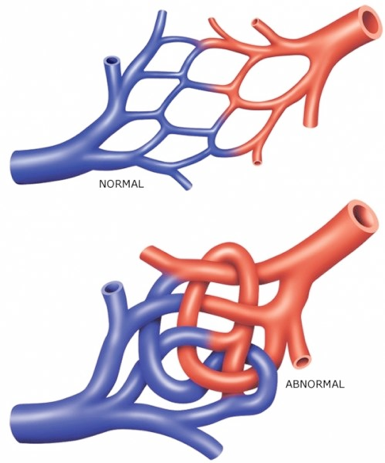
It was caused by bleeding of an AVM (arteriovenous malformation).avm-clipart-1

5. When did you (or someone) first realize you had a problem?

It was seven days before I took any action about it.

6. What kind of emergency treatment, if any, did you have?

I was in hospital for seven days. After six weeks at home, my brain bled again (March). It bled again in November 2014, and then I had surgery.

7. Were you in a coma? If so, how long?

No

8. Did you do rehab? What kind of rehab (i.e., inpatient or outpatient and occupational and/or physical and/or speech and/or other)? How long were you in rehab?

I had inpatient rehab for one month and out-patient rehab for six months. I had to learn to use my left side again and learn how to walk.

9. What problems or disabilities, if any, resulted from your brain injury
(e.g., balance, perception, personality, etc.)?

I have numbness on my left side. Fatigue is a problem. I have minor balance issues when I am tired.

10. How has your life changed? Is it better? Is it worse?

Life is better. It’s more complicated because of what happened but my personal growth has been huge.

11. What do you miss the most from your pre-brain-injury life?

I miss playing running-sports, like soccer.R-2

12. What do you enjoy most in your post-brain-injury life?

I have a new appreciation for working on things that are hard and take a long time to complete.

13. What do you like least about your brain injury?

Sometimes, I wish I had more energy.

14. Has anything helped you to accept your brain injury?

I was helped by lots of counselling.

15. Has your injury affected your home life and relationships and, if so, how?

It has, but for the better. By my own standards, I am a better person than I used to be.

16. Has your social life been altered or changed and, if so, how?

No

17. Who is your main caregiver? Do you understand what it takes to be a caregiver?

I don’t have one. (I am my own caregiver.)

03 BILL GASIAMIS mage-1024x998-118. What are your plans? What do you expect/hope to be doing ten years from now?

I intend to continue to interview stroke survivors on my podcast, to speak on stroke-related topics, and to write books on stroke recovery.

19. Are you able to provide a helpful hint that may have taken you a long time to learn, but which you wished you had known earlier? If so, please state what it is to potentially help other survivors with your specific kind of brain injury.

Survivors need to understand that emotional recovery is a very important part of recovery. It is often overlooked. Emotional recovery supports both the physical and mental aspects of a survivor’s recovery.

R20. What advice would you offer to other brain-injury survivors? Do you have any other comments that you would like to add?

Take responsibility for your own recovery, and learn to put your energy into solutions instead of focusing on the problem.

Get Your Copy Now!

             Read It!                Listen to It!              Review It!


Click Links under Book

  PAPERBACK!   Read it Now!    

                                                  e-BOOK!   Read it Now!  

                                                                                       AUDIO BOOK Listen to it Now!

Stay Safe and Healthy!

Clip Art compliments of Bing.)

(Photos compliments of contributor.)

As I say after each post:

Please leave a comment by clicking the blue words “Leave a Comment” below this post.

anim0014-1_e0-1

Feel free to follow my blog. Click on “Follow” on the upper right sidebar.

If you like my blog, share it intact with your friends. It’s easy! Click the “Share” buttons below.


Survivors SPEAK OUT! Casey Chaffey – Living and Dealing with Chronic Pain

Survivors SPEAK OUT!     Casey Chaffey

Living and Dealing with Chronic Pain

by

Donna O’Donnell Figurski

Casey Chaffey 1

1. What is your name? (last name optional)

Casey Chaffey

2. Where do you live? (city and/or state and/or country) Email (optional)

Kentucky, USA     iluvtkj@yahoo.com

3. On what date did you have your brain injury? At what age?

In 1998, at the age of 22, migraines had become a part of my life.

4. How did your brain injury occur?

Besides the severe head-throbbing, the migraines were often accompanied by nausea, vomiting, extreme sensitivity to light and sound, mental confusion, and more. I gave up caffeine (including chocolate), dairy, and gluten to try to reduce as much inflammation as possible. After being passed from doctor to doctor, I was diagnosed with a vestibular imbalance. That did not improve, even with almost a year of physical therapy, and it became the scapegoat for all of my symptoms.

A few years later, the pain changed from an unwelcome visitor to a permanent resident. Even on my migraine-free days, I still had a persistent headache. Dizziness, blurred vision, fatigue, and constant light-sensitivity decided to join the party as well. Fifteen years after my migraines first started, I was spending about five days a week in bed, and prescription medication was required for me to complete simple daily activities. Finally, after trying more than eighteen different prescriptions and seeing ten different doctors, I had a diagnosis. A fairly large cyst had been growing in the middle of my brain and putting pressure on my optic nerve, which is what caused the vision issues.Migraine
When I was 38 years old, a neurosurgeon removed the cyst. Recovery was not easy or quick. I had double vision for more than four weeks. My brain felt exhausted all the time, and I could not look at any screens (TV, phone, or computer). I had a panic attack for the first time in my life. I had to rest a lot. And my hypothalamus was damaged.

However, the moment I woke up from surgery, my constant headache was gone. I no longer felt and heard my pulse in my head. I went from migraines five days a week to six or seven days a month. My dizzy spells rarely show their unwelcome face anymore. I still have limitations and light-sensitivity, and I am always in some level of pain. My blurry vision will occasionally return, and an MRI (magnetic resonance imaging) in 2019 showed evidence of a small stroke at some point. In spite of that, I am thankful for how far I’ve come.

5. When did you (or someone) first realize you had a problem?

See above.

6. What kind of emergency treatment, if any, did you have?

I’ve had treatments, but I didn’t go to the Emergency Room of a hospital.

There are two types of brain injury. Traumatic brain injury is caused by an external force, like a blow to the head or an object passing through the skull. A non-traumatic brain injury is caused by internal factors, such as a lack of oxygen or pressure from a tumor. I had both a cyst that put pressure on my brain for many years (non-traumatic). Surgical tools that were used to get to the center of my brain to remove the cyst (traumatic).

7. Were you in a coma? If so, how long?

No

8. Did you do rehab? What kind of rehab (i.e., inpatient or outpatient and occupational and/or physical and/or speech and/or other)? How long were you in rehab?

I did not do any clinical rehab. My husband helped me go for walks, even when I didn’t want to. We started by just going to the end of our short driveway and back. We slowly worked our way up to crossing the street and then circling our small cul-de-sac. When we decided to attempt a loop at the park, I eventually made it. As I continued to push through, the distances grew.

When I was one day shy of being three-months post-op, I stood at the starting line of a half marathon in Nashville, Tennessee. I obviously could not run, but it was possible to walk 13.1 miles in the four-hour time limit, so I was going to try. It was one of the most difficult things I have done, but I crossed the finish line just under the wire.narathon

9. What problems or disabilities, if any, resulted from your brain injury
(e.g., balance, perception, personality, etc.)?

Looking at computer and phone screens for extended periods of time increases my migraines. I still have to rest more than healthy people, and my vision will get blurry if I do not rest in time. Socializing exhausts me, and I often spend the next day in bed with a migraine. Since my hypothalamus was compromised during surgery, I experience frequent hot and cold flashes. (The hypothalamus helps regulate the body’s core temperature.) I get overheated and feel like I cannot breathe, but when I take just my socks or sweatshirt off, I can start shivering and feel chilled to the bone within a minute or two. I used to love the heat of summer, but now it makes me sick if I spend much time in it.

10. How has your life changed? Is it better? Is it worse?

My life is immensely better than it was the few years before my surgery. At that point, I wasn’t really living; I was simply existing. I have been able to offer advice and encouragement to others who were going to undergo brain surgery. Without my experiences, I would not have had those opportunities. I also recently published a book called 30 Days to Understanding Chronic Illness and Pain.Casey Chaffey 2

11. What do you miss the most from your pre-brain-injury life?

Besides just feeling healthy, I used to be active and fit. Working out gave me an energy boost and made me feel better, like it is supposed to. Now, I still try to exercise and I love hiking, but those things exhaust me. I often have to nap right afterward, and physical exertion can make my head hurt and feel foggy.

12. What do you enjoy most in your post-brain-injury life?

Besides my brain injury, I have other chronic illnesses. I believe that if I want people to understand, then it is my job to teach them (with patience and kindness). Of course, not everyone is willing to listen; but if I do not at least try, then I am not even giving them the opportunity. Navigating through the limitations and suffering can be discouraging. In addition to the symptoms themselves, the stigmas and misconceptions may seem insurmountable. My goal for my book is for it to be an easy and informal read that covers a wide range of topics, including invisible illnesses, cost, guilt and loneliness, fatigue, brain fog, pacing, prevalence, and more. My hope is that it will help me help healthy people gain a better understanding of what life with chronic illness and pain is really like, while also offering support and encouragement to those who are struggling. 

13. What do you like least about your brain injury?

See above.

14. Has anything helped you to accept your brain injury?

No answer

15. Has your injury affected your home life and relationships and, if so, how?

No answer

16. Has your social life been altered or changed and, if so, how?

See above.

17. Who is your main caregiver? Do you understand what it takes to be a caregiver?

No answer

18. What are your plans? What do you expect/hope to be doing ten years from now?

See above.

19. Are you able to provide a helpful hint that may have taken you a long time to learn, but which you wished you had known earlier? If so, please state what it is to potentially help other survivors with your specific kind of brain injury.

this little girl has something to say

I wish I would not have stayed silent about my struggles for so long. I used to avoid talking about my pain and the journey that I was on. I do not like to complain, and I know that everyone has challenges in life. But as I slowly began to open up, people came out of the shadows. I realized that I was not alone in feeling alone and that others were going through the same or similar things. When we keep our suffering to ourselves, it can steal our entire focus and limit outside interests and distractions. This can lead to feelings of hopelessness, resentment, or loneliness. There is no shame in seeking therapy or other support to help you develop coping skills. While you may not be able to control the pain or limitations themselves, you can take control of how you deal with them. 

20. What advice would you offer to other brain-injury survivors? Do you have any other comments that you would like to add?

Rest is not laziness, and pacing is vital. We live in such a fast-paced world, and there is always so much to do. One of the hardest lessons to learn is to slow down because you cannot do everything that you used to. It is easy to feel guilty, lazy, or left out. It is difficult to leave projects unfinished and to stay home when everyone else is out having fun. But once your body informs you that you are overdoing it, you need to rest and stop comparing yourself to others. When you rest because your body is weak, you are not wasting time doing nothing. You are doing exactly what you need to do. You are recovering.

Get Your Copy Now!

             Read It!                Listen to It!              Review It!               


Click Links under Book

  PAPERBACK!   Read it Now!    

                                                  e-BOOK!   Read it Now!  

                                                                                       AUDIO BOOK Listen to it Now!

Stay Safe and Healthy!

Clip Art compliments of Bing.)

(Photos compliments of contributor.)

As I say after each post:

Please leave a comment by clicking the blue words “Leave a Comment” below this post.

anim0014-1_e0-1

Feel free to follow my blog. Click on “Follow” on the upper right sidebar.

If you like my blog, share it intact with your friends. It’s easy! Click the “Share” buttons below.
 

Covid-19: Vaccines (Part 3 of 3): You’re Safe if You’re Vaccinated

COVID-19: Vaccines (Part 3 of 3): You’re Safe if You’re Vaccinated

by
Columbia University Professor Emeritus, Dr. David Figurski
presented by
Donna O’Donnell Figurski

(Disclaimer: The World Health Organization <WHO> has officially named the new coronavirus as SARS-CoV-2 and the disease it causes as COVID-19.  Because the majority of people, including much of the press, commonly refer to the virus as “COVID-19,” to avoid confusion, I use COVID-19 as the name of the virus.)

David Figurski

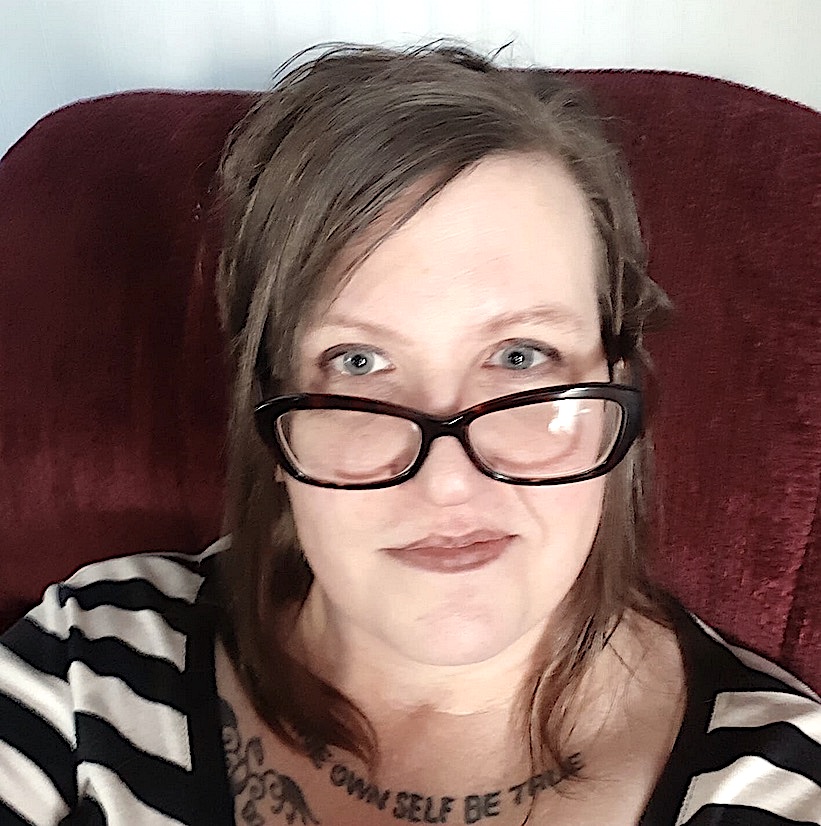
David H. Figurski, Ph.D & Survivor of Brain Injury

     Some things people need to know about vaccination and life after vaccination.

     If you’re healthy, you don’t need a booster, but it won’t hurt to get it. Donna and I will get the booster because we’re in the senior demographic, and our immune systems may have declined somewhat.

     Vaccinated people can get infected, but their disease will be mild or asymptomatic. There is no such thing as a “breakthrough infection.” All vaccines allow infection, but prevent severe disease.

Because vaccination doesn’t prevent infection, we definitely don’t want to infect any of the as-yet-unvaccinated children. We always wear our masks around children and try to keep a distance between them and us.

vaccine Stop Coronavirus, covid – 19 , China, Wuhan, Danger, vector Illustration.

For the reasons I discuss below, virologists in my former department at Columbia say the vaccines will protect you from all the variants we know about – despite all the hysteria.

Columbia virologist Vincent Racaniello continues to emphasize that there are no data to support increased transmissibility of any variant. Delta might be widespread for any one of a number of possible reasons.

All the US vaccines are safe. Because of them, my fears of hospitalization and death are gone.

But we still may be susceptible to getting Long COVID (see below). (There aren’t enough data yet on whether vaccinated people can still get Long COVID.) The reason this is an issue is because Long COVID can apparently be brought on by a mild infection.

4i9pkz4ATEven though we’ve been vaccinated, we are still being careful. We try to mix with vaccinated people only. We try to avoid people and places that might be hot spots for infection. We only eat on restaurant patios; we never eat inside. We still practice social-distancing when we can, and we still wash our hands thoroughly and use disinfectant if we can’t wash our hands.

But we have also relaxed several things. Donna now goes into stores, but she always wears her mask. We’ve traveled by car, so we have stayed in motels. Although we don’t eat inside, we have walked through several restaurants with our masks on. Also, we’ve eliminated some precautions with our mail and our food packages.

You can stop here.

If you want more detail, the following is an easily understood explanation of what the vaccines do and why they’re so protective.

All the currently approved US vaccines are directed to one viral protein: the Spike protein. Spike proteins decorate the virus coat. They are responsible for allowing the virus to bind to a protein (ACE2) on the surface of lung cells. Because the viral-encoded Spike protein and the host-encoded ACE2 protein bind to each other, the virus can bind to the lung cell and get inside to start an infection. This means the lung cell will be hijacked and reprogrammed to make more virus particles. Each infected cell will release thousands of new virus particles. They can then attach to more lung cells. And the cycle repeats. You can easily see how a virus can quickly overwhelm its host animal.

(Incidentally, the Spike protein probably got its name because pictures (electron micrographs) of the virus show that it resembles a “mace,” a weapon used in medieval times. The head of the mace had spikes which did the damage. Similarly, the coronavirus particle is coated with “spikes.” They are made from trimers (assemblies of three copies of a single kind of protein) of the Spike protein. Coronavirus definitely got its name from pictures. Several Spike protein trimers on the surface of each virus particle make the virus look like a cartoon-drawing of the sun. The spikes on the virus look like the “corona” of the sun.)

Antibodies work by binding to the Spike protein and preventing the Spike protein from binding the lung cell’s ACE2 protein. As a result, the virus can’t bind a lung cell to start an infection.

All proteins are made up of a series of amino acids linked end to end. The Spike protein has 1273 amino acids. The sequence and types of amino acids (of which there are 20) determine the property and the folding of the Spike protein. The proteins are molecular machines. There are tens of thousands of different proteins in the human body – each one doing a unique job. The virus-encoded Spike protein is the viral machine that makes it possible for the SARS-2 coronavirus to infect lung cells.

Of the 1273-amino acids in Spike protein, only a few amino acids form the binding domain that allows binding of Spike protein to ACE2. Antibodies that bind to this binding domain of Spike protein inactivate the Spike protein and prevent the virus from infecting lung cells. Such antibodies are called “neutralizing antibodies.” The purpose of the vaccines is to stimulate the production of antibodies to the entire Spike protein, some of which will be neutralizing antibodies that can block infection. In other words, the neutralizing antibodies are a subset of all the antibodies produced that bind to the Spike protein. Because the Spike protein has lots of amino acids and lots of domains, it will stimulate lots of different antibodies that will bind the Spike protein, but only those that bind to the Spike domain that binds ACE2 are neutralizing antibodies. Only they will prevent the ability of the virus particles to bind to lung cells and get in.

The sequence of the 1273 amino acids in the Spike protein can also be seen as several smaller sequences of amino acids. Some small sequences of amino acids can fold properly and stimulate the formation of specific antibodies directed against that small domain. So most of the Spike-protein-specific antibodies bind the Spike protein at other places and do not block the ability of the virus to bind to and infect lung cells. The most relevant domain is the sequence of amino acids needed to form and fold properly so that Spike protein (and therefore the virus) can bind the lung cell’s ACE2 protein. Antibodies to that domain prevent binding of the virus to lung cells. These are the antibodies of interest – the so-called “neutralizing” antibodies. In fact, scientists are thinking of using only the amino acids that allow the proper structure of the ACE2-binding domain to form. If a vaccine can be made from the ACE2-binding domain only of the Spike protein, then maybe more neutralizing antibodies would be made, and the vaccine might even be better at preventing disease.

Some variants are known to bind the neutralizing antibodies less well. The virus has “seen” many vaccinated people, so there is “pressure” for the virus to change to ensure its survival. Some altered viruses randomly arise with slight changes, like differences in the amino acid used at a certain position of the Spike protein. (There is a reason why Nature allows DNA and RNA replication to make some random, but very rare, errors.) Some changed (=mutant=variant) viruses are still able to form a domain of Spike protein that can bind ACE2 yet evade some of the neutralizing antibodies that block the original Spike protein. Such changed viruses may do better and eventually become predominant. So random errors in replication can lead to viruses that have some ability to resist neutralizing antibodies, yet still bind to lung cells to start infection. These are what we are calling “variants.” Because the change increased the virus’ chance of escaping neutralizing antibodies, it survives better.  The arising of variants is evolution that we can see happening in real time.

But we got lucky! Some of the variants (like Delta) may escape some neutralizing antibodies. But we are still protected! The Spike protein also stimulates killer T cells, an important arm of the immune system that is usually ignored.

The killer T cell arm of the immune system is as potent as the more commonly known antibody arm. Not every protein has sequences that can instruct killer T cells, but Spike protein does. When a cell makes proteins, a small fraction of each protein being synthesized is chopped up, and small fragments of that protein are displayed on the surface of the cell. The immune system has a way to instruct a killer T cell to kill any cell making a foreign protein (that is, one not made by the human body). A killer T cell that has “learned” to recognize a fragment of Spike protein on a cell’s surface will kill the cell making it because that cell is considered to be making virus.

And that’s not all! The antibody arm of the immune system is less potent in the variants, but the killer T cell arm is completely unaffected. Not only that, but, whereas a variant resistant to the antibodies can affect an entire population, because of mechanism, it is impossible for a variant resistant to killer T cells to spread beyond a couple of individuals in the worst-case scenario.

Bottom line: All the Spike-protein-based vaccines we know about (Pfizer-BioNTech, Moderna, J&J, and the UK’s Oxford-Astra Zeneca) are protective beyond expectations. You’re safe if you’re vaccinated.

Get Your Copy Now

Read It!               Review It!

Click Links under Book

51r7mht63el._sx332_bo1204203200_


  PAPERBACK!        Read it Now!                              e-BOOK!      Read it Now!

Stay Safe and Healthy!

Clip Art compliments of Bing.com.

(Photos compliments of contributor.)

As I say after each post:

Please leave a comment by clicking the blue words “Leave a Comment” below this post.

Feel free to follow my blog. Click on “Follow” on the upper right sidebar.anim0014-1_e0-1

If you like my blog, share it intact with your friends. It’s easy! Click the “Share” buttons below.
diemodi jewelry

uniquely hand-crafted jewelry by donna

Welcome to Harmony Kent Online

The home of all things books

Pete Springer

Passionate Teacher and Future Children's Author

HOPE TBI

Helping Other People Excel - To Be Independent

For the Love of Books, Old and New

Katie Fischer, Writer and Reader of Stories

Charlie Bown

Children's Author

Jessica Hinrichs

“We write to taste life twice, in the moment and in retrospect.” ― Anais Nin

VIVIAN KIRKFIELD - Writer for Children

Picture Books Help Kids Soar

Mindy’s Writing Wonderland

For authors, parents, teachers & everyone who loves children’s books.

Kaitlyn Leann Sanchez

Literary Agent

Surviving Traumatic Brain Injury

TBI - Survivors, Caregivers, Family, and Friends

The Care Factor

Loving someone with a Traumatic Brain Injury

Brain Injury Support Group of Duluth-Extension

Brain Injury Information and SUPPORT

Brain Aneurysm Global Insight

Brain Aneurysm, cerebral hemorrhaging, hemorrhage stroke