TBI – Survivors, Caregivers, Family, and Friends

Posts tagged ‘SPEAK OUT!’

Survivors SPEAK OUT! Luke R. Hostetler

SPEAK OUT! – Luke R. Hostetler

by

Donna O’Donnell Figurski
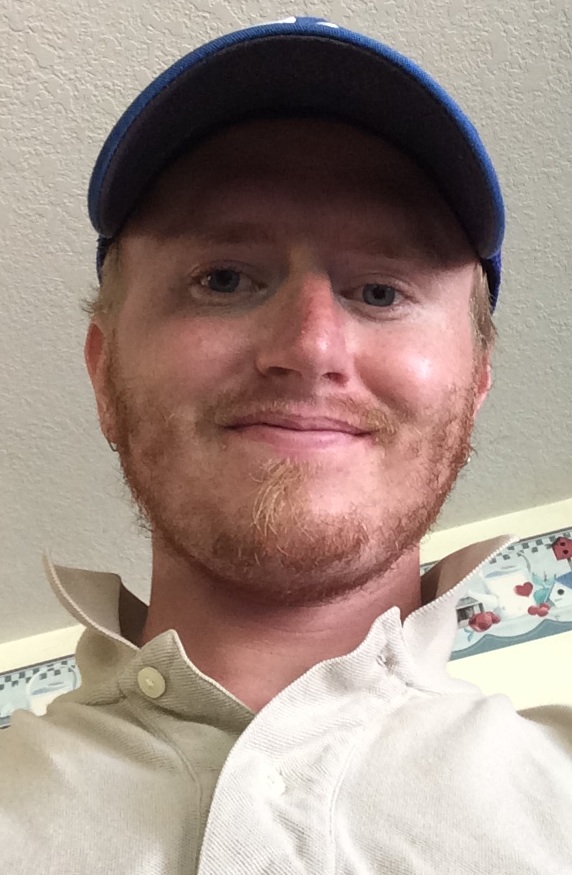
 

Use This Hostetler, Luke

Luke R. Hostetler

1. What is your name? (last name optional)

Luke R. Hostetler

2. Where do you live? (city and/or state and/or country) Email (optional)

Woodburn, Indiana, USA     Lrhostetler@gmail.com

3. When did you have your TBI? At what age?

September 10, 2010     Age 26

4. How did your TBI occur?

I fell down stairs.

5. When did you (or someone) first realize you had a problem?

Friends looked for me when they realized I was absent from the party for too long. The doctors diagnosed the TBI!

6. What kind of emergency treatment, if any, did you have?

I had a tracheotomy, and a feeding tube was inserted. My jaw was wired shut. 😦

7. Were you in a coma? If so, how long?

I think I was, but I don’t think it was for an extended period of time.

8. Did you do rehab? What kind of rehab (i.e., inpatient or outpatient and occupational and/or physical and/or speech and/or other)? How long were you in rehab?

I had rehab (occupational therapy, physical therapy, and speech therapy – maybe others), both as an inpatient and an outpatient. Rehab was maybe two years?

9. What problems or disabilities, if any, resulted from your TBI
(e.g., balance, perception, personality, etc.)?

My right optic nerve is damaged. I have a problem with short-term memory. 😦

10. How has your life changed? Is it better? Is it worse?

I’ve met many new people, so that’s a very good thing!

11. What do you miss the most from your pre-TBI life?

I miss my occupation and driving!

12. What do you enjoy most in your post-TBI life?

A new friend whom I met because of my TBI. 🙂

13. What do you like least about your TBI?

My short-term-memory is junk. 😦

14. Has anything helped you to accept your TBI?

My new friend. She also has a TBI!

15. Has your injury affected your home life and relationships and, if so, how?

Home life: At 30 years old, I still live with my mom, and I depend on others for most everyday activities.

Relationships: I’ve made countless new friends. That’s ALL GOOD. 🙂

16. Has your social life been altered or changed and, if so, how?

I am much more of a social being.

17. Who is your main caregiver? Do you understand what it takes to be a caregiver?

My Loving Mother, Vicki Rose Hostetler, is my caregiver. I know and understand it’s hard work, and I appreciate that!

18. What are your future plans? What do you expect/hope to be doing ten years from now?

I hope to be able to live independently. I’d like to have had found the love of my life!

19. Are you able to provide a helpful hint that may have taken you a long time to learn, but which you wished you had known earlier? If so, please state what it is to potentially help other TBI survivors with your specific kind of TBI.

Patience is a virtue!

20. What advice would you offer to other TBI survivors? Do you have any other comments that you would like to add?

Live your life in stride. Good things come to those who wait. God has a perfect plan. 🙂

Hostetler with Muskie 10639383_10204875651152455_5899253425922197294_n

Luke R. Hostetler & Muskie


Thank you, Luke, for taking part in this interview. I hope that your experience will offer some hope, comfort, and inspiration to my readers.

(Disclaimer: The views or opinions in this post are solely that of the interviewee.)

(Photos compliments of Luke.)

If you would like to be a part of the SPEAK OUT! project, please go to TBI Survivor Interview Questionnaire for a copy of the questions and the release form.


Brain Injury Resources “You Disappear”

“You Disappear” by Christian Jungersen

(Insight Into the World of Brain Damage)

reviewed by

Donna O’Donnell Figurski

"You_Disappear"_Jungersen-205x300

You Disappear by Christian Jungersen

As anyone who has had a brain injury and his or her caregiver know, life is forever altered. It will never be the same. Christian Jungersen takes his readers on the twisted journey of Frederick, a headmaster at a prestigious school; Mia, his wife and a reputable schoolteacher; and their teenage son, Niklas. Unlike many brain injuries that occur by an impact, an accident, or a hemorrhage, Frederick’s brain “injury” evolved over time, changing his personality bit by bit. Mia slowly noticed inexplicable changes in her husband. Talking too loud and eating too much were just two of the little signs that were manifested as Frederick’s brain changed. While on a vacation in Majorca, Frederick drove unusually erratically and dangerously. His driving caused their rental car to scrape a stone cliff. When Frederick, in a crazed state, jumped from the car, fell down a hillside, and woke in the local hospital, he was forced to seek help, and the mystery of his strange behavior is unveiled.

Once Frederick is diagnosed with a slow-growing brain tumor, his aberrant behavior becomes more understandable, but not excusable. As is the case for many brain-injured persons, Frederick’s behavior hampered his decision–making process. Frederick illegally took large sums of money from his school, causing the school to become bankrupt and Frederick to lose the respect and friendship of many people, including his chairman and close friend, Laust. Eventually Frederick, while seeking help, loses his job and faces a possible prison sentence.

Mia fondly remembers the years before the change in Frederick. She remembers the love they shared. She does what she can to help him, but his deviant and erratic behavior makes living with him difficult. Finally, Mia seeks help and companionship with a local brain-injury support group, where she meets Bernard, who not only becomes Frederick’s attorney, but also a “special” friend to Mia.

As Christian Jungersen so aptly states, “As any family member of someone with brain damage knows, the hard part isn’t the initial shock. The hard part comes when the adrenalin recedes and you have to set out down the endless gray corridor of disheartening days, days that look like they’ll last the rest of your life.”

As the caregiver for my husband, who has a traumatic brain injury, I understand Jungersen’s words completely. The adrenalin gets you through the early surgeries and the beginning days in the hospital. It may even carry you through the weeks in the rehabilitation facility. But the adrenalin-rush ends, and “real life” sets in when the caregiver brings the survivor home. That’s when the realization occurs that life will never be the same as it was. The survivor will never be the same as before, and neither will the caregiver. Brain damage has a way of changing the normal. That’s when the survivor and caregiver realize that the journey through the brain-damage maze has just started. They eventually realize that it has no end. Once brain damage comes to stay, it can tear families apart. But, it can also make families stronger, as they pull together to overcome the trials of brain injury.

In “You Disappear,” Jungersen portrays how one family finds their world breaking up. Will they find enough glue to repair it?


Jungersen 2

Christian Jungersen

As I say after each post:

Feel free to leave a comment by clicking the blue words “Leave a Comment” below this post.

Please follow my blog. Click on “Follow Me Via eMail” on the right sidebar of your screen.anim0014-1_e0-1

If you like my blog, click the “Like” button under this post.

If you REALLY like my blog, share it with your friends. It’s easy! Click the “Share” buttons below.

If you don’t like my blog, “Share” it with your enemies. That works for me too!


(Clip Art compliments of Bing.)

SPEAK OUT! . . . . . . . . . . . . . . . Itty-Bitty GIANT Steps

SPEAK OUT! Itty-Bitty GIANT Steps

Itty-Bitty GIant Steps for Blog

SPEAK OUT! Itty-Bitty Giant Steps will provide a venue for brain-injury survivors and caregivers to shout out their accomplishments of the week.

If you have an Itty-Bitty Giant Step and you would like to share it, just send an email to me at donnaodonnellfigurski@gmail.com. If you are on Facebook, you can simply send a Private Message to me. It need only be a sentence or two. I’ll gather the accomplishments and post them with your name on my blog approximately once a week. (If you do not want your last name to be posted, please tell me in your email or Private Message.)

I hope we have millions of Itty-Bitty Giant Steps.


Here are this week’s Itty-Bitty Giant Steps.

(Though we’ve only two contributors, their accomplishments are great.)

DuWayne Hall…I got a job! My baby step this week is working for a non-profit organization that works with TBI survivors.

Carmen Gaarder Kumm…A giant step. I taught high-school Spanish for 23 years, but I had to resign because I couldn’t do it post accident. Tuesday I taught 20 adults how to tell their name, age, and condition and how to count to 100. I can hardly wait until next week.

DuWayne Hall…I’ve just been offered another job! It provides a paid apartment, full salary, and profit sharing. And that is in addition to the job I was offered on Monday, in which I would be working with military survivors who have PTSD (post-traumatic stress disorder)! Wow! Life is funny and God is Great!

YOU did it!

Congratulations to all contributors!

(Clip Art compliments of Bing.)

TBI Tales: Can Music Rewire Brain?

Playing a Mandolin

 by

 Richard Johnson

(presented by Donna O’Donnell Figurski)


mandolin-for-gloggtserMy traumatic brain injury took place in October 2003. I did survive (fortunately), but one of the main side effects from my injury is short-term memory loss.

Years ago, I was in a local coffee shop drinking a cup of coffee and thinking – not “Why me? Why me?” but “What can I do to help my short-term memory loss?” The coffee shop had two people playing guitars. One person put down his guitar and picked up a mandolin. They then played three of my favorite songs. What they triggered was like a bolt of lightning had gone through me! I knew right away that learning how to play an instrument, how to read sheet music, and, most importantly, remembering what I just practiced would be the best memory therapy in the world.

When the musicians took a break, I asked about the mandolin. I told the mandolin-player that I had never played any instrument before. I asked if I could chord with less than four fingers (I only have about two-and-a-half usable fingers), and on and on we talked. He showed me a couple of mandolin chords and said to search on Google for two-finger mandolin chords. He told me to buy a beginner’s mandolin to start and to have fun. And that’s exactly what I did. I bought a good-enough beginner’s mandolin from a friend of a friend, found a great local music store that gives mandolin lessons, bought a couple of books and DVD’s, and started playing.

Well, it’s been a few years now, and I play at least one hour every day. It seems to take a month to learn a song. I’m taking the old “practice, practice, practice” route. I’m able to remember and play (most of) those songs without reading the sheet music. If I haven’t played one of those songs in a couple of weeks, I may need to read the sheet music to remember a measure or two.

I wake up in the morning thinking about the songs I practiced and played the day before. I think about the songs I will practice and play that day by “singing” the songs in my head (not the lyrics, but how they’re fretted and picked). When I’m playing, I’m in a whole different world, and the daily toils just slide away.  I’m sure I could refer to my playing-time as “therapy,” but, for me, it’s pure bliss.

In short, playing a musical instrument is one of the main keys I have gained for rewiring my brain. I truly think that beginning and learning a new hobby or new skill is very important, as it makes us think, think, and think. I also believe that playing music, any type of music, all the time helps my brain find those broken nodes and, with its neuroplasticity, “fixes” them. And most importantly, my short-term memory problem is less and less pronounced. Sure, I can still forget what I had for lunch an hour after eating it, but I can bring that memory back a few seconds later. I can still forget who called me earlier today or why, but again it’s easier to make that connection again.

I would like to continue talking, but my mandolin is calling me.

(Richard Johnson’s experience is an excellent example of something I thought might be true – using the playing of a musical instrument to stimulate the brain and thereby help heal an injured brain.)


RJohnson-PortraitThank you, Richard, for sharing your story in TBI Tales. I hope that your experience will offer inspiration to my readers.

(Disclaimer: The views or opinions in this post are solely that of the author.)


If you have a story to share and would like to be a part of the SPEAK OUT! project, please submit your TBI Tale to me at donnaodonnellfigurski@gmail.com. I will publish as many stories as I can.

(Pictures compliments of Richard.)

(Clip Art compliments of Bing.)


As I say after each post:

Please leave a comment by clicking the blue words “Leave a Comment” below this post.anim0014-1_e0-1

Please follow my blog. Click on “Follow” on the lower right corner of your screen. (It’s nice to know there are readers out there.)

If you like my blog, share it with your friends. It’s easy! Click the “Share” buttons below.

If you don’t like my blog, “Share” it with your enemies. I don’t care!

Feel free to “Like” my post.


On the Air . . . . . . . . . . . . . . . . . . . Brain Injury Radio “Prisoner Without Bars” (segment 3 & epilogue)

On the Air – Brain Injury Radio

“Prisoner Without Bars” (segment 3 & epilogue)


images-1

The red light in the studio is blinking. A voice from nowhere says, “Your show will start in 5, 4, 3, 2, 1 second. ‘You’re On the Air.’” Then a second of dead air occurs before the Brain Injury Radio logo music plays. There’s no turning back…

“We lived a normal life…until we didn’t….”

In this third and last part of “Prisoner Without Bars: Conquering Traumatic Brain Injury,” I completed my husband David’s and my journey through the first year-and-a-half of our new life in this TBI maze. I also included an epilogue, which brings the story to current time.

I tell stories of how David loved the barium-dipped cookies during the fluoroscopy test to determine his swallowing ability – or lack of it. I tell how David insisted on having “dessert first” before all meals, of my crash course in Nursing 101, 102, and 103 before David was released to my custody – all too soon – from the rehabilitation hospital, and how he was honored as the keynote speaker at a scientific symposium in Colorado to present his research. I talked about David’s transition to home after rehab and eventually his return to his laboratory at Columbia University. The story goes on and on, as does life. There’s never a dull moment when living with TBI.

I hope you’ll tune in to my show, “Another Fork in the Road,” which airs the 1st and 3rd Sunday evenings of every month. The show starts at 5:00p Pacific Time and runs for 90 minutes. On the 2nd and 4th Sundays at 5:00p Pacific Time, Julie Kintz hosts “Quantum Leap.” When there is a fifth Sunday in a month, Julie and I will team up to cohost a show called “Another Quantum Leap in the Road.”

“See you “On the Air!”

Click on the bar below to hear this radio show.

(Clip Art compliments of Bing.)

Catherine (Cat) Brubaker . . . Triking Across America

Pedaling Into the Future – Triking Across America (diagonally)

by

Donna O’Donnell Figurski


Catherine (Cat) Brubaker

Catherine (Cat) Brubaker

Catherine (Cat) Brubaker, a 43-year-old perky, young woman, is on the ride of her life. She is getting a second – no – third chance at life.

Catherine’s life changed in an instant in 2010, when she was assaulted. The assault resulted in a traumatic brain injury and the implantation of a heart pacemaker. A year after her first TBI, Catherine was in a head-on collision, which caused her to have a second TBI. The result of both injuries took away Catherine’s freedom. She lost her independence in the world.Cat Brubaker wheelchair pose

In an article, Catherine said, “ … I lost everything – my ability to work, drive, talk and function independently.” But what Catherine did not lose was her drive – her ambition to take back the reins of her life. But, it wasn’t easy, and it didn’t happen all at once.

Catherine not only lost her independence, she also lost her partner of 14 years when they parted ways. This, along with the increasingly difficult life she now faced as the result of her disabilities, sent Catherine into a deep slump. When her mother passed, Cat almost went over the edge. She found it difficult to understand why she was here on this earth. She contemplated ending her life. To Cat, it seemed that everything had been stripped away.

Catherine (Cat) Brubaker - Triking Across America (diagonally)

Catherine (Cat) Brubaker – Triking Across America (diagonally)

It was around that time that Cat bought a recumbent trike and found that the trike allowed her the freedom to get out of her house. Because Cat has issues with balance as the result of her brain injury, it was difficult for her to walk unassisted. Also, she was not able to drive a car because of the many issues related to her TBI. Her recumbent trike gave her the independence that she so missed and so greatly desired. It made her world bigger. Cat rode her trike in the parks near her home. There she met Dan Zimmerman, a stroke survivor, on his recumbent trike – the very same model that Cat was riding (Catrike 700). (Cat said she was attracted to that trike not only for its performance, but also because of its name.) Dan and Cat began to ride together, and Dan shared his plan of pedaling his recumbent trike across America to raise awareness for stroke survivors. He also hoped to spread the word of the benefits of cycling. Cat thought this a great idea, and soon she was in training to accompany Dan.

Initially Cat rode her trike to escape the four walls that seemed to hold her prisoner, but she soon realized that she was riding for others too – for those who can’t ride and those who may follow her lead and discover the joys and freedom of the recumbent trike. But most of all, Cat rides to offer hope to her fellow traumatic brain injury survivors.

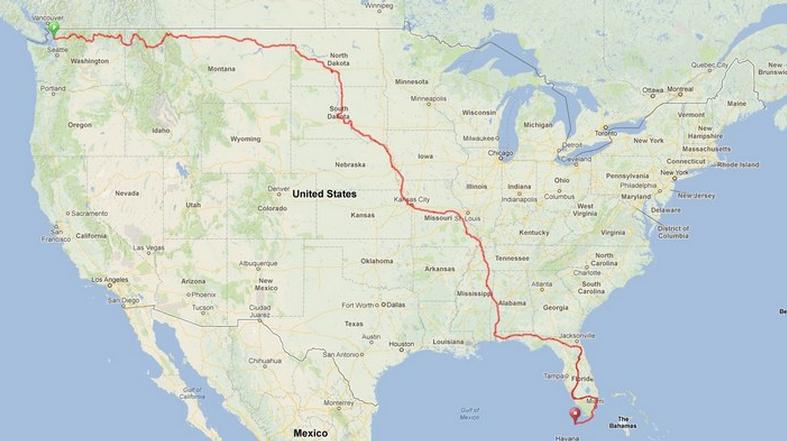
From Anacortes, Washington to Key West, Florida (5,200 miles)

From Anacortes, Washington to Key West, Florida (5,200 miles)

On June 29th, the pair – with their riding team of Bill and Dana Brown (owners of Sign Me Up Tours,) and David Babcock (photo-journalist, driver, and all-around “chief cook and bottle washer”) – set off from the northwestern corner of the United States at Anacortes, Washington, on their way to Key West on the tip of Florida at the southeastern part of the USA. Cat and Dan will ride a total of 5,200 miles on their ocean-to-ocean trip. They plan to finish in late November.

Check back often to see photo updates of Cat’s (and Dan’s) progress.

(Photos compliments of Cat Brubaker.)

SPEAK OUT! . . . . . . . . . . . . . . . Itty-Bitty GIANT Steps

SPEAK OUT! Itty-Bitty GIANT Steps

Itty-Bitty GIant Steps for Blog

SPEAK OUT! Itty-Bitty Giant Steps will provide a venue for brain-injury survivors and caregivers to shout out their accomplishments of the week.

If you have an Itty-Bitty Giant Step and you would like to share it, just send an email to me at donnaodonnellfigurski@gmail.com. If you are on Facebook, you can simply send a Private Message to me. It need only be a sentence or two. I’ll gather the accomplishments and post them with your name on my blog approximately once a week. (If you do not want your last name to be posted, please tell me in your email or Private Message.)

I hope we have millions of Itty-Bitty Giant Steps.


Here are this week’s Itty-Bitty Giant Steps.

Tim Short…After four years, I started back in physical therapy to work on my balance. My condition was from a 42-foot fall from a roof on October 24, 2009. The fall led to a two-month coma, a shattered left wrist, a broken pelvis, and vision problems. I had two eye operations on my optical nerves to change a 45-degree world to one that was almost normal. After 4 ½ years, I was able to drive again. Now I volunteer at Mercy Hospital and get to help the TBI/MS/stroke people at the start of their journey. And the best part of my own long journey is now knowing Jesus is my personal savior. When I came off that roof, I knew him by words only. Now he lives in me. Though I often fail daily…I strive to do things that are pleasing to him.

DemItra Manna Dema…I can lose my temper without going into a full-blown seizure within two days or feeling a very serious migraine coming on. I still do have migraines, but they’re not as severe.

Cheri Hicks…My Itty-Bitty Giant Step is that every time I go to therapy night, I take the stairs up instead of taking the elevator. (I take the elevator to go down when I leave.) I figured it’s good practice and a good feeling of accomplishment.

Carmen Gaarder Kumm…I am visiting my parents, who live 10 hours from my house, for the second time this month. So far, I haven’t had any meltdowns. That’s my Itty-Bitty Giant Step.

Melinda Murphy…Okay, so for the very first time, I did all my own coupons and my grocery list without my wonderful mentor. I still managed to save 45%. I’m no Mandy yet, but I’m getting there. Love that my therapist is working with me to help me learn grocery shopping and meal planning and just being a huge blessing in this area. I love learning how to accomplish things on my own again and how to do them right. I love taking that load off of those who have become my caregivers as much as possible. (Love you, Manders!) And I love saving money. Win, win, win!

YOU did it!

Congratulations to all contributors!

(Clip Art compliments of Bing.)

Caregivers SPEAK OUT! . . . Charline

SPEAK OUT! – Charline

by

Donna O’Donnell Figurski


Charline

Charline & Rick April 2012


1. What is your name? (last name optional)

Charline

2. Where do you live? (city and/or state and/or country)     Email? (optional)

Abilene, Texas, USA

3. What is the TBI survivor’s relationship to you?

He (Rick) is my husband.

How old was the survivor when he/she had the TBI?

52

What caused your survivor’s TBI?

The TBI was caused by an aneurysm that started to hemorrhage. Two days after the surgery to repair the aneurysm, he had a major stroke.

4. On what date did you begin care for your TBI survivor?

September 2013

Were you the main caregiver?

No

Are you now?

Yes

How old were you when you began care?

49

5. Were you caring for anyone else at that time (e.g., children, parents, etc.)?

No

6. Were you employed at the time of your survivor’s TBI?

Yes

If so, were you able to continue working?

No. My husband and I were snowbirds at the time of the TBI. We worked on the Gunflint Trail in Minnesota during the summer and at an antique store in Texas during the winter. Rick is a Minnesota native, and I am a Texan. He was flown to Minneapolis, so I was not able to continue my summer job. We came back to Texas in June 2014.

7. Did you have any help?

Yes

If so, what kind and for how long?

My two daughters and their families live here and are able to come and relieve me for a few hours a week.

8. When did your support of the survivor begin (e.g., immediately – in hospital, when the survivor returned home, etc.)?

Immediately

9. Was your survivor in a coma?

Yes. Rick was in a medically induced coma.

If so, what did you do at that time?

I spent every day in the Intensive Care Unit talking and reading to Rick. He had family that came daily to visit as well.

10. Did your survivor have rehab?

Yes

If so, what kind of rehab (i.e., inpatient and/or outpatient and occupational, physical, speech, and/or other)?

Rick was in a nursing home between the hospital and rehab. He had to relearn everything. He had physical therapy, occupational therapy, and speech therapy when he was moved to the rehab facility.

How long was the rehab?

3 months

Where were you when this was happening?

I attended most of every therapy session and doctor visits. Rick responded better to me than to anyone else.

11. What problems or disabilities of your TBI survivor required your care, if any?

His memory was severely damaged. He can never be left alone. He is also incontinent. (I have him on a bathroom schedule. If I ask him if he needs to go, he always says no; but if I tell him it’s time to go, he does.) His appetite is great.

12. How has your life changed since you became a caregiver? Is it better? Is it worse?

I can’t say that my life is better or worse. I can say that it’s different.

13. What do you miss the most from pre-TBI life?

I miss the freedom to be able to just “go.” My husband and I were very active. We hiked, canoed, fished, shopped, and worked. I miss my jobs and the people I worked with.

14. What do you enjoy most in post-TBI life?

I enjoy the brief moments of lucidity.

15. What do you like least about TBI?

The lack of “me time.” I hit the floor running every day – taking care of his needs and taking care of all the household duties.

16. Has anything helped you to accept your survivor’s TBI?

I am still learning how to accept my new life.

17. Has your survivor’s injury affected your home life and relationships and, if so, how?

Yes. I sometimes feel like a prisoner. I can’t just go shopping for groceries anymore. If I take him with me, he gets distracted and puts everything in the basket or tries to eat it before buying. I usually have to get one of my kids to come and sit with him so I can do any errands.

18. Has your social life been altered or changed and, if so, how?

Yes. I don’t have a social life anymore.

19. What are your plans? What do you expect/hope to be doing ten years from now?

I hope and pray that in ten years we will be a little more active.

20. What advice would you offer other TBI survivor caregivers? Do you have any other comments that you would like to add? 

Charline image

Charline & Rick July 2014

My advice is to stay strong. Take time to care for yourself.


Thank you, Charline, for taking part in this interview. I hope that your experience will offer some hope, comfort, and inspiration to my readers.

If you would like to be a part of this project, please go to TBI Caregiver Interview Questionnaire for a copy of the questions and the release form.

(Photo compliments of Charline.)

Disclaimer: The views or opinions in this post are solely that of the interviewee.

Survivors SPEAK OUT! Joey Buchanan

SPEAK OUT! – Joey Buchanan

by

Donna O’Donnell Figurski


Buchanan, Joey Injuries1. What is your name? (last name optional)

Joey Buchanan

2. Where do you live? (city and/or state and/or country) Email (optional)

Flovilla, Georgia, USA     Dekalbfd19@yahoo.com

3. When did you have your TBI? At what age?

Date of accident – July 18, 2012     Age at the time – 46

4. How did your TBI occur?

We were overhauling at a house fire (which means searching for hidden fire). I was standing against a wall, when a full sheet of sheetrock (4 ft. x 8 ft.) fell from a vaulted ceiling, striking me on top of the head.

5. When did you (or someone) first realize you had a problem?

Immediately. I was told that I fell into the wall, then onto the floor. I was asked twice if I was okay.  I don’t remember any of that.  It broke and cut my nose, and I could feel the blood running down my face.

6. What kind of emergency treatment, if any, did you have?

Nothing major – just a routine X-ray and a cat (CT) scan

7. Were you in a coma? If so, how long?

No

8. Did you do rehab? What kind of rehab (i.e., inpatient or outpatient and occupational and/or physical and/or speech and/or other)?
How long were you in rehab?

Yes – cognitive therapy, emotional therapy, physical therapy, and vestibular therapy.  I am waiting on a driving exam and endocrinology testing.  I am currently in therapy.

9. What problems or disabilities, if any, resulted from your TBI
(e.g., balance, perception, personality, etc.)?

I have difficulties with balance, decision-making, and reading and comprehension. I’m more emotional (crying and anxiety). I have headaches, dizziness, and tinnitus. My sorting skills and my ability to multitask (very important for a firefighter) have been affected. I experience depression, fatigue, and pains in my neck, hands, and feet. My motivation is a problem.

10. How has your life changed? Is it better? Is it worse?

The mental and physical issues have been difficult. I went from working two fire-department jobs, homeschooling our daughter, and building a pool house to spending most of my time in bed, due to fatigue, depression, pain, and lack of motivation. My wife and daughter both say that I am much more easy-going. I tell them, “Well, yes. I am not working 120-plus hours per week.” (LOL)

11. What do you miss the most from your pre-TBI life?Buchana, Joey & Fire Truck

My other family at the fire department

12. What do you enjoy most in your post-TBI life?

To be able (when I am able) to be home with my daughter, and the chance of starting a new chapter of my life

13. What do you like least about your TBI?

The fatigue, the lack of motivation, and the pain

14. Has anything helped you to accept your TBI?

My faith in God and the support of family and friends

15. Has your injury affected your home life and relationships and, if so, how?

It has been a mixed bag in my home life. Although I am home, the majority of my time is spent in bed.

16. Has your social life been altered or changed and, if so, how?

Yes. We don’t go to concerts, and we don’t go out to eat. I try to avoid crowds. This is all due to overstimulation and anxiety.

17. Who is your main caregiver? Do you understand what it takes to be a caregiver?

My wife is my main caregiver. In some respects, I became her caregiver when she became ill in 2005.

18. What are your future plans? What do you expect/hope to be doing ten years from now?

I hope to recover as much as possible and to start a group that goes out and assists other first responders when they are injured and have to be home. In 10 years, I would like to be able to travel.

19. Are you able to provide a helpful hint that may have taken you a long time to learn, but which you wished you had known earlier? If so, please state what it is to potentially help other TBI survivors with your specific kind of TBI.

I want people to know that this injury will take much longer to recover from than they could ever imagine.

20. What advice would you offer to other TBI survivors? Do you have any other comments that you would like to add?

Try to keep emotions and stimulation to a minimum in the beginning – it will help in the long run. Find a support group – they have valuable knowledge.  Doctors are not always as educated on TBI as they need to be. The sooner you can accept the “new normal,” the easier it will be. Don’t ever give up or stop trying. Find an advocate who will help you in your journey.Buchanan, Joey


Thank you, Joey, for taking part in this interview. I hope that your experience will offer some hope, comfort, and inspiration to my readers.

(Disclaimer: The views or opinions in this post are solely that of the interviewee.)

(Photos compliments of Joey.)

If you would like to be a part of the SPEAK OUT! project, please go to TBI Survivor Interview Questionnaire for a copy of the questions and the release form.



SPEAK OUT! . . . . . . . . . . . . . . . Itty-Bitty GIANT Steps

SPEAK OUT! Itty-Bitty GIANT Steps

Itty-Bitty GIant Steps for Blog

SPEAK OUT! Itty-Bitty Giant Steps will provide a venue for brain-injury survivors and caregivers to shout out their accomplishments of the week.

If you have an Itty-Bitty Giant Step and you would like to share it, just send an email to me at donnaodonnellfigurski@gmail.com. If you are on Facebook, you can simply send a Private Message to me. It need only be a sentence or two. I’ll gather the accomplishments and post them with your name on my blog approximately once a week. (If you do not want your last name to be posted, please tell me in your email or Private Message.)

I hope we have millions of Itty-Bitty Giant Steps.


Here are this week’s Itty-Bitty Giant Steps.

Jodi Jizmejian…I did this today, August 30, 2014,  for the first time since my accident and TBI on September 8, 2011.

Jizmejian, Jodi ibGs Holding 3 glasses of water


Amanda Spencer (caregiver)…My boyfriend, Ed, rode his bike tonight for the first time since his car accident. He tried right after relearning to walk, but he just couldn’t master it and gave up. (He used to do BMX competitions.)

YOU did it!

Congratulations to all contributors!

(Clip Art compliments of Bing.)

diemodi jewelry

uniquely hand-crafted jewelry by donna

Welcome to Harmony Kent Online

The home of all things books

Pete Springer

Passionate Teacher and Future Children's Author

HOPE TBI

Helping Other People Excel - To Be Independent

For the Love of Books, Old and New

Katie Fischer, Writer and Reader of Stories

Charlie Bown

Children's Author

Jessica Hinrichs

“We write to taste life twice, in the moment and in retrospect.” ― Anais Nin

VIVIAN KIRKFIELD - Writer for Children

Picture Books Help Kids Soar

Mindy’s Writing Wonderland

For authors, parents, teachers & everyone who loves children’s books.

Kaitlyn Leann Sanchez

Literary Agent

Surviving Traumatic Brain Injury

TBI - Survivors, Caregivers, Family, and Friends

The Care Factor

Loving someone with a Traumatic Brain Injury

Brain Injury Support Group of Duluth-Extension

Brain Injury Information and SUPPORT

Brain Aneurysm Global Insight

Brain Aneurysm, cerebral hemorrhaging, hemorrhage stroke