TBI – Survivors, Caregivers, Family, and Friends

Posts tagged ‘Donna O’Donnell Figurski’

SPEAK OUT! NewsBit . . . . . . . . . . . Brain Anatomy & Function & TBI

Brain Anatomy and Function and TBI

Newsboy th


An informative video explains what each part of the brain does and the relevance to TBI. Good graphics, short (8 min. 20 sec.), and easy to understand. (Video)


SPEAK OUT! Guest Blogger Jeff Sebell

SPEAK OUT! Guest Blogger Jeff Sebell

TBI Disconnection


Boy Blogger th

Of all the behaviors and peculiarities I have adopted since my brain injury, one of the most infuriating is how disconnected I can become. Although I have improved substantially over time and have learned how to deal with them better when they happen, I have moments when I am just not there.

When I say “not there,” what I mean is that I am “not present” to what is going on. The end result of “not being present” is that, instead of living my life, I watch as others participate in theirs, or I stay strangely passive as things happen around me. It is the damnedest thing to be right in the middle of what is happening and yet to be so far away mentally and emotionally. Right then, I have this urge to call the phone company and tell them I have a bad connection – could they send a repairman right away?

Ah, if it were only that easy.

When I am in one of those states of either disconnection or passivity, I become accepting of what others say or do, and I nod a lot and I shrug. Afterwards, with the dust still settling around me, as I begin to recover my wits and I reflect on what just happened, I always wish I could live that little piece of life over again – this time with the wherewithal to participate or to make my wishes known.

Finding myself in a state of disconnection from what is happening around me is something that happens all too often. I feel as though I am a lamp that has had its electric cord disconnected from the socket. Where I was once shining brightly on the various conversations, activities and people in the room, I have had my juice turned off, and I am stuck in the corner as an afterthought. People I had once been speaking with move me to another corner and complain about my not being plugged in.

Being disconnected can be something that happens to me in a social situation, or it could happen to me when I’m trying to do something or accomplish something on my own. I’ve gotten used to having it happen to me in social situations, and I have gotten pretty good at being able to avert or mitigate those instances, mostly by using my nonsensical sense of humor – perfect for that kind of situation.

What throws me off most is when I am trying to perform some task and I become disconnected from a situation. This usually happens when I get confused or overwhelmed, or when I’ve done something a bunch of times and now can’t remember how to do it. Nothing seems to make any sense, and I sit dumbfounded, unable to put two and two together. Having the ability to put two and two together is a skill that enables you to understand why things happen the way they do, how one thing can lead to another, etc., and it’s important when figuring out problems on your own. Adding two and two is so easy, and that’s what makes it so infuriating when I just can’t do it – sort of like word-find problems.

You would think that by the time I reached 58 years old, I would be able to put two and two together in my sleep, but I’m not always able to. What could be causing me to be so removed from what is going on? Is it something I can control, or is that the normal way my brain behaves now?

The answer for me seems to be, as with so many other TBI-related issues, preparation. I do my best to prepare for situations that I know I’m going to find myself in, and my preparations include taking a futurist’s approach to what I am about to do by planning ahead for different conversations, outcomes and eventualities.

It takes work to not be disconnected. In addition to preparation work and getting yourself ready for different eventualities, there is the work it takes to be present in situational disconnects – doing your best to stay in the present by controlling your thoughts and emotions. One kind of work we haven’t talked about is the work it takes after a disconnection happens. Let’s face it – they are going to happen, so how do you get a grip on yourself when things seem to be slipping from you?

Sebell, Jeff, Photo CAQBARA5

Jeff Sebell

It is both easy and tempting to get on your own case and blame yourself or laugh at yourself for something you just did or didn’t do, but it is work to just accept it as reality and move on. The only way you’re going to learn not to do things is to do the following: first, accept the reality of where you are, and second, move forward with dignity and a clear head.

You can read more about Jeff on his blog at TBI Survivor: Support for TBISurvivors. You can follow him on Twitter or at @ttbisurvivor.

Thank you, Jeff.

Disclaimer:
Any views and opinions of the Guest Blogger are purely his/her own.

Caregivers SPEAK OUT! . . . . . . . . . Marleen Salo

SPEAK OUT! – Marleen Salo

by

Donna O’Donnell Figurski

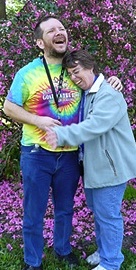
Marleen Salo with her son, Marty Salo (TBI Survivor) and her husband, Al Salo.

Marleen Salo with her son, Marty Salo (TBI Survivor) and her husband, Al Salo.


1. What is your name? (last name optional)

Marleen Salo (Marty’s Mom)

2. Where do you live? (city and/or state and/or country)     Email? (optional)

Lutz, Florida, USA      marleensalogm@gmail.com

3. What caused your survivor’s TBI?

A car hit my son while he was crossing a street on his bicycle.

4. On what date did you begin care for your TBI survivor? Are you the main caregiver? How old were you when you began care?

April 1982     36 years old

5. Were you caring for anyone else at that time? (e.g., children, parents, etc.)

No

6. Were you employed at the time of your survivor’s TBI? If so, were you able to continue working?

I was employed as a Registered Nurse. I took several weeks off and then returned to work per advice from professional friends.

7. Did you have any help? If so, what kind and for how long?

My husband (Marty’s father) and I were co-caregivers. Physical therapists, school tutors, and friends assisted at intervals.

8. When did your support of the survivor begin? (e.g., immediately – in hospital, when survivor returned home, etc.)

Upon Marty’s discharge from the hospital

9. Was your survivor in a coma? If so, what did you do at that time?

He was in a coma for 7 1/2 weeks. We stayed with him for long hours at the hospital. We went home to sleep, bathe, eat, etc.

We brought him home in semi-coma. We fed him, bathed him, and helped him do exercises in bed. He was bedridden for the first few weeks at home. He then used a wheelchair. Eventually he walked with assistance; then he walked unsupported. By fall, he was able to walk into classroom at a private school, with lots of school support.

10. Did your survivor have rehab? If so, what kind of rehab? (i.e., In-patient and/or Out-patient and Occupational, Physical, Speech, and/or Other) How long was the rehab? Where were you when this was happening?

Doctors told us to place him into a nursing home. His pediatrician advised us to set up a “hospital bed” at home and have the physical therapist make home visits. There was no In-patient rehab.

11. What problems or disabilities of your TBI survivor required your care, if any?

Feeding, bathing, moving from bed to chair, exercises to legs and feet

12. How has your life changed since you became a caregiver? Is it better? Is it worse?

It’s hard to answer. I learned that it is possible to come through such trauma stronger and more aware of the precious entity that is life. I learned how many people come around in support at times of crisis.

Worse, in that I worried more about every aspect of Marty’s life. Worse, when I saw him struggle in daily activities and when he had to prove himself over and over in every grade level of school. Heartaches, when he could not achieve a goal.

13. What do you miss the most from pre-TBI life?

I miss the freedom from guilt that I could prevent such pain. I miss Marty’s carefree independence with other kids his age.

14. What do you enjoy most in post-TBI life?

I like that all of us place more value in day-to-day experiences. We also feel a closeness for having survived as a family.

15. What do you like least about TBI?

Marty’s physical deficits – driving, etc.

16. Has anything helped you to accept your survivor’s TBI?

Internet TBI support sources

Friends’ acceptance

17. Has your survivor’s injury affected your home life and relationships and, if so, how?

We have been a cohesive family. Some marriages dissolve with such stress, but our lives came together.

18. Has your social life been altered or changed and, if so, how?

Vacations were put on hold for a few years. Now our social life is good.

19. What are your plans? What do you expect/hope to be doing ten years from now?

I hope to spend summers in the mountains and winters in Florida. I want to continue to be in a close relationship with Marty and his wife, Fran.

20. What advice would you offer other TBI survivor caregivers? Do you have any other comments that you would like to add?

Don’t give up.

Appreciate the small increments of change.

Marty & Fran Salo

Marty Salo (TBI Survivor) with his wife, Fran

Find external support, such as on the Internet or from other families.

Know there is something in you that does not exist until you pass through pain and suffering.  It is then you understand.


Thank you, Marleen, for taking part in this interview. I hope that your experience will offer some hope, comfort, and inspiration to my readers.

(Disclaimer: The views or opinions in this post are solely that of the interviewee.)


If you would like to be a part of the SPEAK OUT! project, please go to TBI Caregiver Interview Questionnaire for a copy of the questions and the release form.

Survivors SPEAK OUT! . . . . . . . . . . . Marty Salo

SPEAK OUT! – Marty Salo

by

Donna O’Donnell Figurski

051614 Salo, Marty Photo for Interview


1. What is your name? (last name optional)

Marty Salo

2. Where do you live? (city and/or state and/or country) Email (optional)

Tampa, FL, USA     msalo@verizon.net

3. When did you have your TBI? At what age?

April 7, 1982      Age 11

4. How did your TBI occur?

Bike/motor vehicle accident

5. When did you (or someone) first realize you had a problem?

Immediately. I was medivacked to Children’s Hospital of the Kings Daughters in Norfolk, Virginia

6. What kind of emergency treatment, if any, did you have?
(e.g., surgery,

tracheotomy, G-peg)

I had an intracranial pressure monitor and I assume some other tubes. The divot in my head is still visible after all these years when the hair is cut very short.

7. Were you in a coma? If so, how long?

I was officially in a coma for something like 53 days. I was brought home on Day 49, but I had been in pediatric ICU for 14 days.

8. Did you do rehab? What kind of rehab (i.e., In-patient or Out-patient and Occupational, Physical, Speech, Other)?
How long were you in rehab?

I did most of the recovery at home. I was tutored by a 5th grade teacher over summer, and I progressed through Catholic primary school. I had some speech therapy at public school. I had help from vocational rehabilitation to get training leading to a job.

9. What problems or disabilities, if any, resulted from your TBI?
(e.g., balance, perception, personality, etc.)

Fortunately, I had been brilliant as a child, and much of the brilliance continued. There were memory problems, I guess, as well as balance problems and the need to re-master skills from traumatic amnesia. I read more online. I’ve been excited about the Internet from my days in college – even before then. I had been excited about my Apple 2c with a 300-baud modem, which allowed me to communicate to others through asynchronous communications.

10. How has your life changed? Is it better? Is it worse?

I adapted. I chose easier courses, changed majors at the university, graduated with an undergraduate degree in Religious Studies, and continued to get my Master’s Degree in Library and Information Science. There are still situations where I can get overwhelmed, I suppose.

11. What do you miss the most from your pre-TBI life?

I don’t really have much memory of my pre-TBI life. I have only vague, fleeting memories of childhood.

12. What do you enjoy most in your post-TBI life?

I like having fun. I like going to EPCOT and Disney World. I enjoy being around other happy people.

13. What do you like least about your TBI?

I’ve been different from others, but I didn’t really understanding how different from others I was. I just knew that things were not as easy for me. I have adapted by not driving, after an accident at age 19 or so.

14. Has anything helped you to accept your TBI?

My father is in AA. He exposed me to the Serenity Prayer: “God, grant me the serenity to accept the things I cannot change, courage to change the things I can, and wisdom to know the difference.”

15. Has your injury affected your home life and relationships and, if so, how?

From childhood, there is no comparison. Fortunately, I met a woman who would later become my wife. She has been very beneficial to me and my experiences.

16. Has your social life been altered or changed and, if so, how?

Again, childhood and adulthood are largely incomparable, but I’d venture to say that as a financially minded individual, I don’t spend a lot of money on alcohol or cigarettes. We have a pretty happy life, even if not much time is spent out drinking with fellas, or whatever. Other usual socialization patterns exist.

17. Who is your main caregiver? Do you understand what it takes to be a caregiver?

My mother, then my wife. My wife is not so much of a caregiver as a partner, but she does drive.

18. What are your future plans? What do you expect/hope to be doing ten years from now?

It’d be very nice if I were somehow able to get something going where I work at the VA Hospital – doing something to help others with computers and expanding awareness. But, I’m happy enough continuing to work with computers, getting them ready for issuance to providers.

19. What advice would you offer to other TBI survivors

Keep on progressing. Life gets better if you allow it to get better. Most people probably want to see you succeed. Some bosses might not have patience, but your progress is more important. Do not compare yourself to peers who are doing more than you are. Compare yourself to where you have been. Appreciate what you have overcome to get where you are.

20. Do you have any other comments that you would like to add?

So many things. Realize that you are not alone. Realize that others have had similar journeys. Realize that others probably would like to see you succeed. Your success builds collective good will, and helps people feel better.  http://martysalo.wordpress.com/ is a website I maintain. I have some TBI-related stuff there as well.051614 Salo, Marty Photo 2 for Interview


Thank you, Marty, for taking part in this interview. I hope that your experience will offer some hope, comfort, and inspiration to my readers.

(Disclaimer: The views or opinions in this post are solely that of the interviewee.)


If you would like to be a part of the SPEAK OUT! project, please go to TBI Survivor Interview Questionnaire for a copy of the questions and the release form.

SPEAK OUT! Guest Blogger Joel Goldstein

SPEAK OUT! Guest Blogger Joel Goldstein

What Veterans Need………….and Deserve


Boy Blogger thChristmas 2001 my wife and I were plunged into a parent’s worst nightmare – a car accident resulting in our teenager’s traumatic brain injury.  After a month long coma, he gradually emerged with severe and disabling cognitive, emotional and physical deficits.

Eight months of grueling hospital therapies and the school district agrees with the hospital – Bart is not ready to return to class and would be better served by placement in an institution. We railed against warehousing our 17-year-old son in a convalescent home and fought time and again to win Bart a chance to struggle, heal and progress.

We were determined to keep the bar up, set with difficult, but attainable, goals, and then raise the bar again and again. Who knows for sure how far anybody can go? It takes a little faith. These officials were not mean-spirited so much as driven by economics and statistical models of probable outcomes, without taking into account the character of the boy or his family.

We began exploring nonconventional therapies, cobbling together an unofficial “medical board” of trusted physicians. “Members” didn’t know each other or that they served on a “board.” If we found a promising therapy, we’d ask each of them whether it might do any harm. Some exciting approaches failed this Hippocratic test. Eventually we tried several therapies. Though harmless, some proved useless too. Others, including hyperbaric oxygen (HBOT), craniosachral therapy (CST), neurofeedback and high doses of Omega-3 fish oils, were remarkably successful, gradually transforming Bart’s life prospects. Successes were anecdotal, but a neuropsych exam several years after the accident reported that the examiner had hardly ever seen such improvement in someone so severely injured.

Today, with high school and even a semester of college under his belt, and a couple of years of cognitive therapy, Bart is a lively, charming young man, living nearly independently in his own apartment. How different the outcome had we heeded the advice of well-meaning busy bureaucrats. Brain injury is far and away the leading cause of death and disability in young people. It leaves roughly 2% of the population permanently disabled, yet remains a stubbornly invisible epidemic. With the controversy surrounding concussions in sports and TBI, the signature injury of this generation of wounded warriors, that may be finally changing.

TBI will remain a tragic legacy of wars in Iraq and Afghanistan for a lifetime. According to the Woodruff Family Foundation Remind.org, there are 320,000 TBI survivors among combat veterans. Today the elements of the VA and DOD are experimenting with HBOT for severely wounded warriors. Sheer weight of numbers presents a unique opportunity to improve outcomes for survivors, military and civilian.

Like other nonconventional therapies that helped Bart, HBOT is relatively safe, inexpensive, easy to deploy and scalable. For the cost of a couple of F-16 fighters, one could outfit and staff 300 TBI treatment centers in existing VA and DOD facilities around the country. Technicians and therapists can be trained to deliver HBOT in months, not years; medics, corpsman, LPNs, and EMTs are all suitable candidates. As an alternative to setting up centers in VA facilities, one might issue vouchers directly to veterans’ families. Private clinics should spring up to meet the demand.

After wounded veterans have been treated, centers could migrate to the civilian sector, helping the wider fellowship of TBI survivors, most of whom have no access to these treatments. Thousands might leave nursing homes, cut back on their meds and live more fulfilling lives. Nothing we could do for so little could ease the suffering of so many.

Scientific proof is still the gold standard in medicine, but in its absence what risk is there in trying alternative therapies with well-established safety records? (Divers have safely used HBOT to prevent the “bends” for 200 years.) Of course, nothing is 100% safe and effective, not even aspirin or acetaminophen. In much of Europe, HBOT is already standard treatment for TBI. The obstacles to adoption here seem to be more bureaucratic – doctors, hospitals, the FDA and insurers have yet to sort out reimbursement protocols.

For survivors of severe TBI, unconventional therapies are not merely a reasonable option, they are a necessity. Best practices of conventional medicine only take us so far, often ending at the nursing home door or heavily medicated at home, facing long empty hours and overwhelming family resources. Survivors are already more susceptible to a number of conditions, including Alzheimer’s, Parkinson’s, suicide and subsequent TBIs. To do nothing – to ignore safe alternative therapies – is to make a decision fraught with risk. Faced with this existential dilemma, we chose to try for a better outcome. Military families of wounded heroes, who have already sacrificed so much, deserve no less.Joel Goldstein & Bart


Joel Goldstein, author of No Stone Unturned: A Father’s Memoir of His Son’s Encounter with Traumatic Brain Injury, Potomac Books, has written about TBI for Exceptional Parent, Brainline.org, Adoption Today, and Military Special Needs Network. To learn more or to contact Joel: www.tbibook.com.513KpXRBWqL._SY344_BO1,204,203,200_


Thank you, Joel.

Disclaimer:
Any views and opinions of the Guest Blogger are purely his/her own.

TBI Tales: Dancer Extraordinaire

(Reposted from my other blog – Donna O’Donnell Figurski’s Blog Sep. 3, 2012)

Meet Paula Nieroda 

Paula was David’s dance instructor for almost two years. She not only guided him through his dance steps, but she assessed his every movement to help him regain his balance.

Paula is much more than a dance instructor.

She is a wonderfully sensitive and compassionate young woman.

David and I took lessons with Paula once a week for nearly two years.


We learned a number of ballroom dances, including the Cha-Cha, the Tango, and the Swing – all very quick dances, which we did not do so quickly. We learned the Waltz and the Fox Trot, too. We stumbled around the dance floor amid the elegant contestants who were preparing for their next performance. They twirled and glided and dipped and swooped with feet barely touching the floor, while we firmly planted one foot and then the other in slow succession hoping that we would not topple over. We never did.

Paula taught David form – focusing on his posture. “Renew! Renew! Renew!” was her mantra – the reminder to David to stand taller.

When Paula moved to another studio, too far from us, we did not continue our lessons because we knew we could never replace her.

Paula is also a performance dancer and has competed and won many dance contests.  In the video below you will see Paula in action. In a pink fairy-princess gown, she glides over the floor with her partner, George Valasquez, who performs an amazing routine with only one leg.

Paula is truly an inspiration.

Watch this video to see what I mean. Truly AMAZING!!!!!


If you have a story to tell, please contact me at donnaodonnellfigurski@gmail.com

(Pictures compliments of ME.)

(Video compliments of YouTube.)


As I say after each post:

Please leave a comment by clicking the blue words “Leave a Comment” below this post.anim0014-1_e0-1

Please follow my blog. Click on “Follow” on the lower right corner of your screen. (It’s nice to know there are readers out there.)

If you like my blog, share it with your friends. It’s easy! Click the “Share” buttons below.

If you don’t like my blog, “Share” it with your enemies. I don’t care!

Feel free to “Like” my post.

Permission granted to “Reblog” my post.


SPEAK OUT! NewsBits . . . . . . . . . . . Yoga May Help TBI Survivors

Yoga May Help TBI Survivors

Newsboy th


Janna Leyde, whose father had a TBI when she was a teen, found help for herself in yoga. Later, as a yoga instructor, she decided to work with her father. They both saw that yoga seemed to bring significant benefits to him. Janna started a yoga program for people with TBIs, including many veterans. The Military is so convinced that yoga has helped soldiers returning from Iraq and Afghanistan with TBIs that they employ a yoga instructor full-time. (Full story)


TBI Tales: …………………………………. A Fork in the Road to Recovery

(Reposted from my other blog – Donna O’Donnell Figurski’s Blog May 14, 2010)

A Fork in the Road to Recovery

I woke up a few weeks ago with an astounding revelation. (Aren’t they all?) But, this one really was. Though trying to sell my brilliant idea to my husband, David, would take some fancy footwork.

As our family and friends know, David is still on the long road to recovery after suffering a Traumatic Brain Injury (TBI) more than five years ago at 7:06 AM on January 13th, 2005. His TBI left his body compromised. His recovery is a balancing act – literally.

Though David’s balance has improved somewhat through the years, it is still seriously impaired. Each step David takes is deliberate, well-planned, and thought out. He is consciously adjusting his balance at every footfall. His brain constantly generates new neurons and reconnects the old in an attempt to reestablish alternate pathways to help him relearn what he already learned easily and quite well when he was a mere fourteen-month-old toddler. It’s amazing how those little tykes can balance atop their plump, squatty legs. Even more amazing that they can move them from place to place – but they do. And if they can do it … well so can David – right?

David works hard every minute of every day to relearn to walk. It’s not as easy as the two-year-olds make it look. So I had an idea to make the process easier – at  least, I hope it will.

The germ of my idea was unwittingly sown in October 2009 when I first began my salsa lessons. I admit, it was a slow-growing seed, since it took six months for it to finally hit me over the head.

On a recent morning as I pondered my first days of salsa, I recounted how difficult it was for me to make my feet and my body go where my instructor guided. He made it look easy, and I wanted my mind to comply, but my feet simply would not cooperate. I tried and tried, but the only thing I was successful at was tripping and stumbling over my own feet – not to mention my dance partner’s feet. I felt like a total  klutz. I was convinced I would never be able to do the steps. I would never learn salsa – let alone become proficient at it.  As the weeks went by and my instructor introduced the right and left turn, the hammerlock, and the cross-body lead, my mind went into swirl. No, I would never learn – I was sure of it. But, as more weeks passed, I did learn. It took time and it took practice, and after six months I can do each of those steps and I’m not too bad at it. I have even moved on to the advanced class.

What I understood on that morning of my revelation was that as I concentrated so intensely on learning each step, nothing else occupied my mind. I was entirely focused. During my lessons, it seemed that my brain rewired to accommodate the strange and foreign steps I was being asked to do. Realizing this, set the light bulb flashing. I reasoned that if my mind could overcome my dance challenge, why couldn’t David’s overcome his walking challenge?

That’s when I had my astounding revelation. It made sense to me. I had to choose the perfect time to present my idea to David, though I knew no time would be good. I knew that as soon as I uttered the words, I want you to take dance lessons. David’s immediately answer would be, “NO!”

So, I started my conversation like this … David, I have a really, really good idea. (I thought two reallys might be more convincing.) I need you to listen to my whole idea before you say anything. I don’t want you to make up your mind before I finish.” He looked skeptical. Well anyone would with that opening, but he nodded and I went on. “David, I want you to take dance lessons.” His immediate reply was “NO!” No surprise there.

I presented my ideas. He listened. One by one I ticked off all of the reasons that I thought dance lessons would be beneficial to him. He listened. I explained how I thought that the process of intense concentration might help him to overcome his balance issues as it had helped me to conquer my dance steps. He listened. I threw in the neurons and the brain-rewiring ideas. He listened. Then I told him I wanted to speak with my instructor to arrange for private dance lessons. I held my breath as I waited for his reply. He said, “Okay!”

It took a few weeks to set the lessons up, but last Monday night David had his first dance lesson with Oscar. I took the lesson with David. As we clung to each other, (He was holding on to me for dear life.) we waltzed around the room 1, 2, 3.- 1, 2, 3. Okay … so we didn’t really waltz around the room. We stayed in about a three-foot square. But at least it is a start!

When the lesson was over, I figured David would bolt. So I was really surprised when he asked to schedule the next lesson. He actually liked it. Yeah!


If you have a story to tell, please contact me at donnaodonnellfigurski@gmail.com

(Clip Art compliments of Bing.)

(Photos compliments of ME.)


As I say after each post:

Please leave a comment by clicking the blue words “Leave a Comment” below this post.

Feel free to follow my blog. Click on “Follow” on the lower right corner of your screen.anim0014-1_e0-1

If you like my blog, share it with your friends. It’s easy! Click the “Share” buttons below.

If you don’t like my blog, “Share” it with your enemies. I don’t care!

Feel free to “Like” my post.

Permission granted to “Reblog” my post.


Caregivers SPEAK OUT! . . . . . . . . . . Donna O’Donnell Figurski

Image 2

SPEAK OUT! – Donna O’Donnell Figurski

by

Donna O’Donnell Figurski


1. What is your name? (last name optional)

Donna O’Donnell Figurski

2. Where do you live? (city and/or state and/or country) Email? (optional)

Arizona, USA     donnaodonnellfigurski@gmail.com

3. What caused your survivor’s TBI?

My husband, David, was exercising before going to work. He usually did 12 chin-ups. That morning he did 13. DRAT!

4. On what date did you begin care for your TBI survivor? Are you the main caregiver? How old were you when you began care?

David had surgery for a subarachnoid hemorrhage on January 13, 2005. That was followed by another surgery for the removal of an aneurysm, and yet another surgery to remove an Arterio-Venous Malformation. Thursday the 13th was our “unlucky” day (not Friday the 13th). Thursday the 13th was the day that the title “caregiver” was bestowed upon me. I was 56 years old when I became David’s main caregiver.

5. Were you caring for anyone else at that time? (e.g., children, parents, etc.)

No. Both of our children were grown and living across the country. (But, of course, you always worry about your children no matter how old they are.)

6. Were you employed at the time of your survivor’s TBI? If so, were you able to continue working?

I was employed. I was a first-grade teacher. I called for a substitute from the ambulance and was not able to return to work for three and a half months. After David was released from the rehab hospital and settled into home life again with our support system in place, I returned to my six- and seven-year-old munchkins.

7. Did you have any help? If so, what kind and for how long?

Initially, family and friends surrounded us, but within a few short weeks they needed to return to their own lives. When, two and a half months later, David returned home from the rehabilitation hospital, I invited some friends to live with us. I am so grateful for their help. David was unable to be left alone, even for a short time. He was completely incapacitated. Makes you wonder how he was released from the hospital! I could not have returned to work without the assistance. I had the help for about a year.

8. When did your support of the survivor begin? (e.g., immediately – in hospital, when survivor returned home, etc.)

My care for David began the moment he stumbled into our bedroom with his head filling with blood, through both his hospital and his rehabilitation stays, and when he returned home two and a half months later.

Though now, nine+ years later, he is independent in many ways, I remain his caregiver for many activities. He is unable to leave our home unassisted. I am his private chauffeur and “chief cook and bottle washer.” But … he does the laundry!

9. Was your survivor in a coma? If so, what did you do at that time?

Yes. He fell into coma before he was placed into the ambulance. Though he struggled for consciousness after each of his three surgeries, he remained in coma for nearly two weeks.

While he slept the sleep of the ignorant, I read to him, played music – our old favorites (The Righteous Brothers), gave him arm and leg massages to stimulate his muscles, provided constant chatter, tried to communicate through hand squeezes (right hand squeeze = yes; left hand = no), provided the doctors with daily information since I was constantly with him, and I begged David to come back to me.

10. Did your survivor have rehab? If so, what kind of rehab? (i.e., In-patient and/or Out-patient and Occupational, Physical, Speech, and/or Other) How long was the rehab? Where were you when this was happening?

David did extensive rehab. Almost four weeks from the initial event, David was transferred to an acute facility, where he worked with physical, occupational, speech, and ADL therapists for three hours/day. I spent about fourteen hours each day cheering him on. After release from the rehabilitation hospital, he continued as an out-patient. When I returned to work, our friends took him. When David returned to his laboratory, he continued his therapy with a physical therapist for two hours/week. I wasn’t there for those sessions. He continued that therapy from 2006 until 2013, when he retired from Columbia University.

11. What problems or disabilities of your TBI survivor required your care, if any?

Imagine a newborn babe. David required constant care, even when asleep. He needed to learn to eat, dress, and care for hygiene. He couldn’t walk and had to be transported via wheelchair. He had a feeding port in his stomach, and I had to not only feed him through the port, but also play nurse and clean and dress the wound. Any ingested food was mashed or finely chopped. I applied medication to his eyes and patched one for sleeping each night, and I kept track of and doled out about fifteen medications throughout the day.

12. How has your life changed since you became a caregiver? Is it better? Is it worse?

For the first year and a half, David could never be left alone. Not only was his independence impacted, so was mine. I thought I’d lose my mind. I went to work, did errands, and was home every other minute. That was difficult. I was responsible for David’s household duties, the bills (of which I was ignorant), his many errands, and … the trash (the worst Green Smiley). Nine+ years later, life isn’t better; it’s different. It’s easier than the first five years, but it’s much more difficult than pre-TBI. Would I turn back the clock to pre-TBI time? YES! Definitely!

13. What do you miss the most from pre-TBI life?

Everything! But mostly I miss David’s being able to drive. (I hate being the primary driver.) I miss his being the man-in-charge too. Though recently he started to take over many of the business duties of running a house, which is a complete relief to me. I miss his coming home after a long day at lab and hugging me – happy to see me. I miss his running down the stairs in his running shorts and shoes and watching him from the window as he headed down the street for an eight-mile run. It’s the simple things I miss.

14. What do you enjoy most in post-TBI life?

David seems more relaxed. His position as Professor at Columbia University was very demanding of his time and energy. He gave it his all. He has become more social, and we have many dear friends who he would not have had time to know pre-TBI.

I love working together on trying to publish my book, “Prisoner Without Bars: Conquering Traumatic Brain Injury” and promoting brain injury awareness through my blog (Surviving Traumatic Brain Injury).

15. What do you like least about TBI?

I love to travel. I had hoped in retirement that we would travel the world together. It’s obvious now that that won’t happen. Air travel is challenging at best. David’s lack of balance is the biggest culprit, making it difficult for him to maneuver in the outside world. He is also unable to drive a car. Since I am not fond of driving (he was), this also curbs our over-the-land ventures far from home. Ultimately, it’s the limits that TBI puts on our lives that I dislike the most.

16. Has anything helped you to accept your survivor’s TBI?

I am just so grateful that David is still with me. I have cheered him every step of the way. David’s positive attitude, his endless work and exercise to improve his condition, and his own acceptance have been a great help to me. The internet is a wonderful source of knowledge about TBI. And books! I’ve read tons of books to understand more about TBI and how others deal with it. Below is a list of some not to miss. You can find more on my blog.

Books not to miss:

“In an Instant: A Family’s Journey of Love and Healing” by Lee and Bob Woodruff

“Gabby: A Story of Courage and Hope” by Gabrielle Giffords and Mark Kelly

“I Forgot to Remember” by Su Meck

17. Has your survivor’s injury affected your home life and relationships and, if so, how?

I told every surgeon to give him back to me. I didn’t care how. I got my wish. Though from operating room to recovery room, they made a slight switch. David looked similar to his pre-TBI self, but he had changed. Sometimes I don’t know this new David. That’s not bad – I like this new guy too. It’s just that I miss the pre-TBI David – the boy I met when I was 16 and the man I married at 20 and had children with. I feel like I am having an affair – and it’s legal!

18. Has your social life been altered or changed and, if so, how?

In the beginning, yes, my/our social life was greatly diminished. Pre-TBI David and I enjoyed Friday and Saturday date nights – dinners/movies. That became impossible when David could no longer move on his own or eat by himself. Occasionally friends visited. Eventually David regained his social skills, and, because he is more relaxed, he enjoys people more. Now we go out with friends or entertain at home, and we’ve reinstated our Friday date night.

I pursue many out-of-house activities, such as attending my writing groups, reading my work at open mics, lunching with friends, and acting and directing in the theater.

19. What are your plans? What do you expect/hope to be doing ten years from now?

I hope to continue my work of bringing awareness to TBI through this blog and of being active on internet brain injury support groups. I want to share TBI Survivor and Caregiver stories with my readers.

It’s my dream that my book, “Prisoner Without Bars: Conquering Traumatic Brain Injury,” about my husband, David, will soon be published and in the hands of those who will find knowledge, hope, inspiration, and solace in our story.

I hope that David will continue to improve, no matter how slowly, and someday be able to run the marathon that he had always dreamed of.

20. What advice would you offer other TBI survivor caregivers? Do you have any other comments that you would like to add?

Read tons of books.

Surf the internet for information.

Keep a positive attitude. I know, that one is hard. (I never let David see me cry. I was afraid it would scare him.)

Join a support group – in real life or on online site(s).

Take care of yourself. Remember the safety demonstration spiel on every flight. “If the oxygen pressure drops, place the oxygen mask over your face, then help any traveling companions who may need assistance.” You first! Take care of yourself! When your survivor had a TBI, your “oxygen pressure” dropped. PUT ON YOUR MASK!

Never give up!

david-donna-april-21,-2006

Donna & David July 2005 6 months post-TBI


(Disclaimer: The views or opinions in this post are solely that of the interviewee.)

If you would like to be a part of this project, please go to TBI Caregiver Interview Questionnaire for a copy of the questions and the release form.

(Photos compliments of ME.)

diemodi jewelry

uniquely hand-crafted jewelry by donna

Welcome to Harmony Kent Online

The home of all things books

Pete Springer

Passionate Teacher and Future Children's Author

HOPE TBI

Helping Other People Excel - To Be Independent

For the Love of Books, Old and New

Katie Fischer, Writer and Reader of Stories

Charlie Bown

Children's Author

Jessica Hinrichs

“We write to taste life twice, in the moment and in retrospect.” ― Anais Nin

VIVIAN KIRKFIELD - Writer for Children

Picture Books Help Kids Soar

Mindy’s Writing Wonderland

For authors, parents, teachers & everyone who loves children’s books.

Kaitlyn Leann Sanchez

Literary Agent

Surviving Traumatic Brain Injury

TBI - Survivors, Caregivers, Family, and Friends

The Care Factor

Loving someone with a Traumatic Brain Injury

Brain Injury Support Group of Duluth-Extension

Brain Injury Information and SUPPORT

Brain Aneurysm Global Insight

Brain Aneurysm, cerebral hemorrhaging, hemorrhage stroke