TBI – Survivors, Caregivers, Family, and Friends

SPEAK OUT! Guest Blogger Jeff Sebell

TBI Disconnection


Boy Blogger th

Of all the behaviors and peculiarities I have adopted since my brain injury, one of the most infuriating is how disconnected I can become. Although I have improved substantially over time and have learned how to deal with them better when they happen, I have moments when I am just not there.

When I say “not there,” what I mean is that I am “not present” to what is going on. The end result of “not being present” is that, instead of living my life, I watch as others participate in theirs, or I stay strangely passive as things happen around me. It is the damnedest thing to be right in the middle of what is happening and yet to be so far away mentally and emotionally. Right then, I have this urge to call the phone company and tell them I have a bad connection – could they send a repairman right away?

Ah, if it were only that easy.

When I am in one of those states of either disconnection or passivity, I become accepting of what others say or do, and I nod a lot and I shrug. Afterwards, with the dust still settling around me, as I begin to recover my wits and I reflect on what just happened, I always wish I could live that little piece of life over again – this time with the wherewithal to participate or to make my wishes known.

Finding myself in a state of disconnection from what is happening around me is something that happens all too often. I feel as though I am a lamp that has had its electric cord disconnected from the socket. Where I was once shining brightly on the various conversations, activities and people in the room, I have had my juice turned off, and I am stuck in the corner as an afterthought. People I had once been speaking with move me to another corner and complain about my not being plugged in.

Being disconnected can be something that happens to me in a social situation, or it could happen to me when I’m trying to do something or accomplish something on my own. I’ve gotten used to having it happen to me in social situations, and I have gotten pretty good at being able to avert or mitigate those instances, mostly by using my nonsensical sense of humor – perfect for that kind of situation.

What throws me off most is when I am trying to perform some task and I become disconnected from a situation. This usually happens when I get confused or overwhelmed, or when I’ve done something a bunch of times and now can’t remember how to do it. Nothing seems to make any sense, and I sit dumbfounded, unable to put two and two together. Having the ability to put two and two together is a skill that enables you to understand why things happen the way they do, how one thing can lead to another, etc., and it’s important when figuring out problems on your own. Adding two and two is so easy, and that’s what makes it so infuriating when I just can’t do it – sort of like word-find problems.

You would think that by the time I reached 58 years old, I would be able to put two and two together in my sleep, but I’m not always able to. What could be causing me to be so removed from what is going on? Is it something I can control, or is that the normal way my brain behaves now?

The answer for me seems to be, as with so many other TBI-related issues, preparation. I do my best to prepare for situations that I know I’m going to find myself in, and my preparations include taking a futurist’s approach to what I am about to do by planning ahead for different conversations, outcomes and eventualities.

It takes work to not be disconnected. In addition to preparation work and getting yourself ready for different eventualities, there is the work it takes to be present in situational disconnects – doing your best to stay in the present by controlling your thoughts and emotions. One kind of work we haven’t talked about is the work it takes after a disconnection happens. Let’s face it – they are going to happen, so how do you get a grip on yourself when things seem to be slipping from you?

Sebell, Jeff, Photo CAQBARA5

Jeff Sebell

It is both easy and tempting to get on your own case and blame yourself or laugh at yourself for something you just did or didn’t do, but it is work to just accept it as reality and move on. The only way you’re going to learn not to do things is to do the following: first, accept the reality of where you are, and second, move forward with dignity and a clear head.

You can read more about Jeff on his blog at TBI Survivor: Support for TBISurvivors. You can follow him on Twitter or at @ttbisurvivor.

Thank you, Jeff.

Disclaimer:
Any views and opinions of the Guest Blogger are purely his/her own.

SPEAK OUT! – Marleen Salo

by

Donna O’Donnell Figurski

Marleen Salo with her son, Marty Salo (TBI Survivor) and her husband, Al Salo.

Marleen Salo with her son, Marty Salo (TBI Survivor) and her husband, Al Salo.


1. What is your name? (last name optional)

Marleen Salo (Marty’s Mom)

2. Where do you live? (city and/or state and/or country)     Email? (optional)

Lutz, Florida, USA      marleensalogm@gmail.com

3. What caused your survivor’s TBI?

A car hit my son while he was crossing a street on his bicycle.

4. On what date did you begin care for your TBI survivor? Are you the main caregiver? How old were you when you began care?

April 1982     36 years old

5. Were you caring for anyone else at that time? (e.g., children, parents, etc.)

No

6. Were you employed at the time of your survivor’s TBI? If so, were you able to continue working?

I was employed as a Registered Nurse. I took several weeks off and then returned to work per advice from professional friends.

7. Did you have any help? If so, what kind and for how long?

My husband (Marty’s father) and I were co-caregivers. Physical therapists, school tutors, and friends assisted at intervals.

8. When did your support of the survivor begin? (e.g., immediately – in hospital, when survivor returned home, etc.)

Upon Marty’s discharge from the hospital

9. Was your survivor in a coma? If so, what did you do at that time?

He was in a coma for 7 1/2 weeks. We stayed with him for long hours at the hospital. We went home to sleep, bathe, eat, etc.

We brought him home in semi-coma. We fed him, bathed him, and helped him do exercises in bed. He was bedridden for the first few weeks at home. He then used a wheelchair. Eventually he walked with assistance; then he walked unsupported. By fall, he was able to walk into classroom at a private school, with lots of school support.

10. Did your survivor have rehab? If so, what kind of rehab? (i.e., In-patient and/or Out-patient and Occupational, Physical, Speech, and/or Other) How long was the rehab? Where were you when this was happening?

Doctors told us to place him into a nursing home. His pediatrician advised us to set up a “hospital bed” at home and have the physical therapist make home visits. There was no In-patient rehab.

11. What problems or disabilities of your TBI survivor required your care, if any?

Feeding, bathing, moving from bed to chair, exercises to legs and feet

12. How has your life changed since you became a caregiver? Is it better? Is it worse?

It’s hard to answer. I learned that it is possible to come through such trauma stronger and more aware of the precious entity that is life. I learned how many people come around in support at times of crisis.

Worse, in that I worried more about every aspect of Marty’s life. Worse, when I saw him struggle in daily activities and when he had to prove himself over and over in every grade level of school. Heartaches, when he could not achieve a goal.

13. What do you miss the most from pre-TBI life?

I miss the freedom from guilt that I could prevent such pain. I miss Marty’s carefree independence with other kids his age.

14. What do you enjoy most in post-TBI life?

I like that all of us place more value in day-to-day experiences. We also feel a closeness for having survived as a family.

15. What do you like least about TBI?

Marty’s physical deficits – driving, etc.

16. Has anything helped you to accept your survivor’s TBI?

Internet TBI support sources

Friends’ acceptance

17. Has your survivor’s injury affected your home life and relationships and, if so, how?

We have been a cohesive family. Some marriages dissolve with such stress, but our lives came together.

18. Has your social life been altered or changed and, if so, how?

Vacations were put on hold for a few years. Now our social life is good.

19. What are your plans? What do you expect/hope to be doing ten years from now?

I hope to spend summers in the mountains and winters in Florida. I want to continue to be in a close relationship with Marty and his wife, Fran.

20. What advice would you offer other TBI survivor caregivers? Do you have any other comments that you would like to add?

Don’t give up.

Appreciate the small increments of change.

Marty & Fran Salo

Marty Salo (TBI Survivor) with his wife, Fran

Find external support, such as on the Internet or from other families.

Know there is something in you that does not exist until you pass through pain and suffering.  It is then you understand.


Thank you, Marleen, for taking part in this interview. I hope that your experience will offer some hope, comfort, and inspiration to my readers.

(Disclaimer: The views or opinions in this post are solely that of the interviewee.)


If you would like to be a part of the SPEAK OUT! project, please go to TBI Caregiver Interview Questionnaire for a copy of the questions and the release form.

SPEAK OUT! – Marty Salo

by

Donna O’Donnell Figurski

051614 Salo, Marty Photo for Interview


1. What is your name? (last name optional)

Marty Salo

2. Where do you live? (city and/or state and/or country) Email (optional)

Tampa, FL, USA     msalo@verizon.net

3. When did you have your TBI? At what age?

April 7, 1982      Age 11

4. How did your TBI occur?

Bike/motor vehicle accident

5. When did you (or someone) first realize you had a problem?

Immediately. I was medivacked to Children’s Hospital of the Kings Daughters in Norfolk, Virginia

6. What kind of emergency treatment, if any, did you have?
(e.g., surgery,

tracheotomy, G-peg)

I had an intracranial pressure monitor and I assume some other tubes. The divot in my head is still visible after all these years when the hair is cut very short.

7. Were you in a coma? If so, how long?

I was officially in a coma for something like 53 days. I was brought home on Day 49, but I had been in pediatric ICU for 14 days.

8. Did you do rehab? What kind of rehab (i.e., In-patient or Out-patient and Occupational, Physical, Speech, Other)?
How long were you in rehab?

I did most of the recovery at home. I was tutored by a 5th grade teacher over summer, and I progressed through Catholic primary school. I had some speech therapy at public school. I had help from vocational rehabilitation to get training leading to a job.

9. What problems or disabilities, if any, resulted from your TBI?
(e.g., balance, perception, personality, etc.)

Fortunately, I had been brilliant as a child, and much of the brilliance continued. There were memory problems, I guess, as well as balance problems and the need to re-master skills from traumatic amnesia. I read more online. I’ve been excited about the Internet from my days in college – even before then. I had been excited about my Apple 2c with a 300-baud modem, which allowed me to communicate to others through asynchronous communications.

10. How has your life changed? Is it better? Is it worse?

I adapted. I chose easier courses, changed majors at the university, graduated with an undergraduate degree in Religious Studies, and continued to get my Master’s Degree in Library and Information Science. There are still situations where I can get overwhelmed, I suppose.

11. What do you miss the most from your pre-TBI life?

I don’t really have much memory of my pre-TBI life. I have only vague, fleeting memories of childhood.

12. What do you enjoy most in your post-TBI life?

I like having fun. I like going to EPCOT and Disney World. I enjoy being around other happy people.

13. What do you like least about your TBI?

I’ve been different from others, but I didn’t really understanding how different from others I was. I just knew that things were not as easy for me. I have adapted by not driving, after an accident at age 19 or so.

14. Has anything helped you to accept your TBI?

My father is in AA. He exposed me to the Serenity Prayer: “God, grant me the serenity to accept the things I cannot change, courage to change the things I can, and wisdom to know the difference.”

15. Has your injury affected your home life and relationships and, if so, how?

From childhood, there is no comparison. Fortunately, I met a woman who would later become my wife. She has been very beneficial to me and my experiences.

16. Has your social life been altered or changed and, if so, how?

Again, childhood and adulthood are largely incomparable, but I’d venture to say that as a financially minded individual, I don’t spend a lot of money on alcohol or cigarettes. We have a pretty happy life, even if not much time is spent out drinking with fellas, or whatever. Other usual socialization patterns exist.

17. Who is your main caregiver? Do you understand what it takes to be a caregiver?

My mother, then my wife. My wife is not so much of a caregiver as a partner, but she does drive.

18. What are your future plans? What do you expect/hope to be doing ten years from now?

It’d be very nice if I were somehow able to get something going where I work at the VA Hospital – doing something to help others with computers and expanding awareness. But, I’m happy enough continuing to work with computers, getting them ready for issuance to providers.

19. What advice would you offer to other TBI survivors

Keep on progressing. Life gets better if you allow it to get better. Most people probably want to see you succeed. Some bosses might not have patience, but your progress is more important. Do not compare yourself to peers who are doing more than you are. Compare yourself to where you have been. Appreciate what you have overcome to get where you are.

20. Do you have any other comments that you would like to add?

So many things. Realize that you are not alone. Realize that others have had similar journeys. Realize that others probably would like to see you succeed. Your success builds collective good will, and helps people feel better.  http://martysalo.wordpress.com/ is a website I maintain. I have some TBI-related stuff there as well.051614 Salo, Marty Photo 2 for Interview


Thank you, Marty, for taking part in this interview. I hope that your experience will offer some hope, comfort, and inspiration to my readers.

(Disclaimer: The views or opinions in this post are solely that of the interviewee.)


If you would like to be a part of the SPEAK OUT! project, please go to TBI Survivor Interview Questionnaire for a copy of the questions and the release form.

SPEAK OUT! Guest Blogger Joel Goldstein

What Veterans Need………….and Deserve


Boy Blogger thChristmas 2001 my wife and I were plunged into a parent’s worst nightmare – a car accident resulting in our teenager’s traumatic brain injury.  After a month long coma, he gradually emerged with severe and disabling cognitive, emotional and physical deficits.

Eight months of grueling hospital therapies and the school district agrees with the hospital – Bart is not ready to return to class and would be better served by placement in an institution. We railed against warehousing our 17-year-old son in a convalescent home and fought time and again to win Bart a chance to struggle, heal and progress.

We were determined to keep the bar up, set with difficult, but attainable, goals, and then raise the bar again and again. Who knows for sure how far anybody can go? It takes a little faith. These officials were not mean-spirited so much as driven by economics and statistical models of probable outcomes, without taking into account the character of the boy or his family.

We began exploring nonconventional therapies, cobbling together an unofficial “medical board” of trusted physicians. “Members” didn’t know each other or that they served on a “board.” If we found a promising therapy, we’d ask each of them whether it might do any harm. Some exciting approaches failed this Hippocratic test. Eventually we tried several therapies. Though harmless, some proved useless too. Others, including hyperbaric oxygen (HBOT), craniosachral therapy (CST), neurofeedback and high doses of Omega-3 fish oils, were remarkably successful, gradually transforming Bart’s life prospects. Successes were anecdotal, but a neuropsych exam several years after the accident reported that the examiner had hardly ever seen such improvement in someone so severely injured.

Today, with high school and even a semester of college under his belt, and a couple of years of cognitive therapy, Bart is a lively, charming young man, living nearly independently in his own apartment. How different the outcome had we heeded the advice of well-meaning busy bureaucrats. Brain injury is far and away the leading cause of death and disability in young people. It leaves roughly 2% of the population permanently disabled, yet remains a stubbornly invisible epidemic. With the controversy surrounding concussions in sports and TBI, the signature injury of this generation of wounded warriors, that may be finally changing.

TBI will remain a tragic legacy of wars in Iraq and Afghanistan for a lifetime. According to the Woodruff Family Foundation Remind.org, there are 320,000 TBI survivors among combat veterans. Today the elements of the VA and DOD are experimenting with HBOT for severely wounded warriors. Sheer weight of numbers presents a unique opportunity to improve outcomes for survivors, military and civilian.

Like other nonconventional therapies that helped Bart, HBOT is relatively safe, inexpensive, easy to deploy and scalable. For the cost of a couple of F-16 fighters, one could outfit and staff 300 TBI treatment centers in existing VA and DOD facilities around the country. Technicians and therapists can be trained to deliver HBOT in months, not years; medics, corpsman, LPNs, and EMTs are all suitable candidates. As an alternative to setting up centers in VA facilities, one might issue vouchers directly to veterans’ families. Private clinics should spring up to meet the demand.

After wounded veterans have been treated, centers could migrate to the civilian sector, helping the wider fellowship of TBI survivors, most of whom have no access to these treatments. Thousands might leave nursing homes, cut back on their meds and live more fulfilling lives. Nothing we could do for so little could ease the suffering of so many.

Scientific proof is still the gold standard in medicine, but in its absence what risk is there in trying alternative therapies with well-established safety records? (Divers have safely used HBOT to prevent the “bends” for 200 years.) Of course, nothing is 100% safe and effective, not even aspirin or acetaminophen. In much of Europe, HBOT is already standard treatment for TBI. The obstacles to adoption here seem to be more bureaucratic – doctors, hospitals, the FDA and insurers have yet to sort out reimbursement protocols.

For survivors of severe TBI, unconventional therapies are not merely a reasonable option, they are a necessity. Best practices of conventional medicine only take us so far, often ending at the nursing home door or heavily medicated at home, facing long empty hours and overwhelming family resources. Survivors are already more susceptible to a number of conditions, including Alzheimer’s, Parkinson’s, suicide and subsequent TBIs. To do nothing – to ignore safe alternative therapies – is to make a decision fraught with risk. Faced with this existential dilemma, we chose to try for a better outcome. Military families of wounded heroes, who have already sacrificed so much, deserve no less.Joel Goldstein & Bart


Joel Goldstein, author of No Stone Unturned: A Father’s Memoir of His Son’s Encounter with Traumatic Brain Injury, Potomac Books, has written about TBI for Exceptional Parent, Brainline.org, Adoption Today, and Military Special Needs Network. To learn more or to contact Joel: www.tbibook.com.513KpXRBWqL._SY344_BO1,204,203,200_


Thank you, Joel.

Disclaimer:
Any views and opinions of the Guest Blogger are purely his/her own.
Rapid Transit for Some TBI Survivors?

Newsboy th

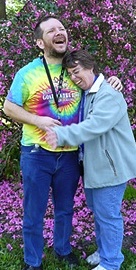
Some TBI survivors have a walking disability that causes them to walk slowly. My husband does, but the primary reason for him is lack of balance. He could walk faster if he could hold onto something (or someone). Available this summer, a new product from Japan might help. It’s a tricycle scooter that is powered by an electric motor and can go up to 15 mph. The electric motor is charged by a standing rider stepping on special pedals. Note the handrails, which will provide a balance aid. Don’t forget to wear a helmet! (Full story)


Newsboy thLongevity Gene Enhances Brain Function

 Recent research showed that a longevity gene variant is probably responsible for enhanced memory and higher IQ. Scientists want to understand how the protein coded for by this gene enhances these brain functions. There is much excitement about this protein, which is found circulating in the blood. Once it is known how the protein works in the brain, it may be possible to design therapeutic drugs that mimic the action of the variant longevity protein. Lots of interest is for the treatment of Alzheimer’s Disease, but such a drug might also help to restore memories or elevate IQ in some TBI and stroke survivors. (Full story)

SPEAK OUT! – Diane Caldwell

by

Donna O’Donnell Figurski

1. What is your name? (last name optional)Diane Caldwell

Diane Caldwell

2. Where do you live? (city and/or state and/or country)     Email? (optional)

Columbus, Ohio, USA     ladydi147@yahoo.com

3. What caused your survivor’s TBI?

Car accident – Sept. 24, 2010

4. On what date did you begin care for your TBI survivor? Are you the main caregiver? How old were you when you began care?

I started caring for my daughter after she was sent home from Dodd Hall, OSU, an In-patient rehabilitation facility, in December 2010. I was 53 years old. My daughter was 28.

5. Were you caring for anyone else at that time? (e.g., children, parents, etc.)

Yes. I was caring for my grandson – my daughter’s son.

6. Were you employed at the time of your survivor’s TBI? If so, were you able to continue working?

Yes. I was employed and somehow managed to keep my job, mainly because I have had the same employer for a 20-plus years. My daughter still required 24×7 care, but I was able to work from home for about 6 months until she could be left alone at home. She was bed-ridden and wheelchair-bound during that time.

7. Did you have any help? If so, what kind and for how long?

No. Occasionally her brother would stay with her while I went to the store, but her behavior was a little scary to him (i.e., she would be talking coherently one minute, and the next she wouldn’t know who he was).

8. When did your support of the survivor begin? (e.g., immediately – in hospital, when survivor returned home, etc.)

Immediately. She was life-flighted from the accident scene and was on life support in critical condition for several days. I went to the hospital daily.

9. Was your survivor in a coma? If so, what did you do at that time?

Yes. I went to the hospital every day, but at that time, the doctors thought she had a slim chance of making it. I still cared for my grandson. I prayed.

10. Did your survivor have rehab? If so, what kind of rehab? (i.e., In-patient and/or Out-patient and Occupational, Physical, Speech, and/or Other) How long was the rehab? Where were you when this was happening?

Yes. She had In-patient rehab (occupational, physical, and speech therapy), and then she had Out-patient rehab when she was sent home. Her rehab totaled about 5 months. I usually went with her to her appointments, as she required special transportation (due to the wheelchair) and was often left waiting for a return ride home. She was afraid to be left alone.

11. What problems or disabilities of your TBI survivor required your care, if any?

Short-term memory problems, emotional swings and instability, suicidal actions, personal safety issues

12. How has your life changed since you became a caregiver? Is it better? Is it worse?

My life is just different now. Some things are better, some things worse.  My life changed dramatically, as I was living alone previously. We walked through some dark days together, so it was very rough at first. My daughter’s personality changed, and her IQ dropped into the mildly retarded range. My daughter knew she was not who she used to be, and she didn’t embrace who she was after the accident for about 18 months. Today, my life is better. My relationship with my daughter has reached a depth most people never get to experience. I learned a lot about myself too, and I became a much more spiritual person. I believe in miracles!

13. What do you miss the most from pre-TBI life?

Time to myself, freedom to travel

14. What do you enjoy most in post-TBI life?

Sleeping!

15. What do you like least about TBI?

How it impacts relationships. For a while, I felt like I lost my daughter, even though she was alive. Everyone works through it differently.

16. Has anything helped you to accept your survivor’s TBI?

Yes. I got connected with OSU TBI Network.

17. Has your survivor’s injury affected your home life and relationships and, if so, how?

Yes. My daughter and grandson live with me and rely on me as a result of the TBI. It’s like being a single mom again.

18. Has your social life been altered or changed and, if so, how?

Yes. I am unable to attend functions where I will be away overnight. I don’t like leaving my daughter alone since she started having seizures.

19. What are your plans? What do you expect/hope to be doing ten years from now?

I guess I don’t really think about that too much. I would like to be retired by then and do some fun things with my daughter and grandson.

20. What advice would you offer other TBI survivor caregivers? Do you have any other comments that you would like to add?

Don’t isolate yourself! Learn as much as you can about TBI. Reach out for help. (I didn’t do that enough.) Be patient, loving, and caring. Take it one day at a time.DIane C. daughter


Thank you, Diane, for taking part in this interview. I hope that your experience will offer some hope, comfort, and inspiration to my readers.


If you would like to be a part of this project, please go to TBI Caregiver Interview Questionnaire for a copy of the questions and the release form.

(Photo compliments of Diane.)

Disclaimer: The views or opinions in this post are solely that of the interviewee.

(Reposted from my other blog – Donna O’Donnell Figurski’s Blog Sep. 3, 2012)

Meet Paula Nieroda 

Paula was David’s dance instructor for almost two years. She not only guided him through his dance steps, but she assessed his every movement to help him regain his balance.

Paula is much more than a dance instructor.

She is a wonderfully sensitive and compassionate young woman.

David and I took lessons with Paula once a week for nearly two years.


We learned a number of ballroom dances, including the Cha-Cha, the Tango, and the Swing – all very quick dances, which we did not do so quickly. We learned the Waltz and the Fox Trot, too. We stumbled around the dance floor amid the elegant contestants who were preparing for their next performance. They twirled and glided and dipped and swooped with feet barely touching the floor, while we firmly planted one foot and then the other in slow succession hoping that we would not topple over. We never did.

Paula taught David form – focusing on his posture. “Renew! Renew! Renew!” was her mantra – the reminder to David to stand taller.

When Paula moved to another studio, too far from us, we did not continue our lessons because we knew we could never replace her.

Paula is also a performance dancer and has competed and won many dance contests.  In the video below you will see Paula in action. In a pink fairy-princess gown, she glides over the floor with her partner, George Valasquez, who performs an amazing routine with only one leg.

Paula is truly an inspiration.

Watch this video to see what I mean. Truly AMAZING!!!!!


If you have a story to tell, please contact me at donnaodonnellfigurski@gmail.com

(Pictures compliments of ME.)

(Video compliments of YouTube.)


As I say after each post:

Please leave a comment by clicking the blue words “Leave a Comment” below this post.anim0014-1_e0-1

Please follow my blog. Click on “Follow” on the lower right corner of your screen. (It’s nice to know there are readers out there.)

If you like my blog, share it with your friends. It’s easy! Click the “Share” buttons below.

If you don’t like my blog, “Share” it with your enemies. I don’t care!

Feel free to “Like” my post.

Permission granted to “Reblog” my post.


Yoga May Help TBI Survivors

Newsboy th


Janna Leyde, whose father had a TBI when she was a teen, found help for herself in yoga. Later, as a yoga instructor, she decided to work with her father. They both saw that yoga seemed to bring significant benefits to him. Janna started a yoga program for people with TBIs, including many veterans. The Military is so convinced that yoga has helped soldiers returning from Iraq and Afghanistan with TBIs that they employ a yoga instructor full-time. (Full story)


Joyce Hoffman – Before her TBI

SPEAK OUT! – Joyce Hoffman

by

Donna O’Donnell Figurski


1. What is your name? (last name optional)

Joyce Hoffman

2. Where do you live? (city and/or state and/or country) Email (optional)

New Jersey, USA

3. When did you have your TBI? At what age?

April 8, 2009

4. How did your TBI occur?

Hemorrhagic stroke, i.e., a blood vessel erupted

5. When did you (or someone) first realize you had a problem?

I started to convulse at 4 am. My partner saw it, and he called 911.

6. What kind of emergency treatment, if any, did you have?
(e.g., surgery, tracheotomy, G-peg)

Tracheotomy

7. Were you in a coma? If so, how long?

Yes. 8 days

8. Did you do rehab? What kind of rehab (i.e., In-patient or Out-patient and Occupational, Physical, Speech, Other)?
How long were you in rehab?

In-patient rehab for 15 weeks, and then Out-patient rehab 2 or 3 times a year

9. What problems or disabilities, if any, resulted from your TBI?
(e.g., balance, perception, personality, etc.)

Right-sided weakness. Paralyzed arm. I use a quad cane for walking.

10. How has your life changed? Is it better? Is it worse?

Better—I wrote my 2nd book, “The Tales of a Stroke Patient,” with one hand, all 265 pages, within 2 years.

Worse—I miss my career as a senior technical trainer and writer for legal applications, and I go slowly now – one step at a time.

11. What do you miss the most from your pre-TBI life?

Total independence

12. What do you enjoy most in your post-TBI life?

Reading and computing

Getting together with friends and family

13. What do you like least about your TBI?

My speaking slowly when I want to talk faster

14. Has anything helped you to accept your TBI?

Time heals all, but I’m not completely there yet.

15. Has your injury affected your home life and relationships and, if so, how?

My partner had to take over, whereas I did most everything domestic before.

16. Has your social life been altered or changed and, if so, how?

A few friends remain. Most of them headed “for the hills.”

17. Who is your main caregiver? Do you understand what it takes to be a caregiver?

Cece is my main caregiver. She understands my dilemmas.

18. What are your future plans? What do you expect/hope to be doing ten years from now?

Doing the same thing I am now—plus more time for lectures

19. What advice would you offer to other TBI survivors

Patience

20. Do you have any other comments that you would like to add?

I am starting to NOT resent people who have the ability to go the beach or to run fast. I used to be a runner. My book tells it all. Click the link to buy it

The Tales of a Stroke Patient (from the publisher)

The Tales of a Stroke Patient (from Amazon)

The Tales of a Stroke Patient (Barnes & Noble)


Joyce Hoffman - After her TBI

Joyce Hoffman – After her TBI

Thank you, Joyce, for taking part in this interview. I hope that your experience will offer some hope, comfort, and inspiration to my readers.

(Disclaimer: The views or opinions in this post are solely that of the interviewee.)


If you would like to be a part of the SPEAK OUT! project, please go to TBI Survivor Interview Questionnaire for a copy of the questions and the release form.

diemodi jewelry

uniquely hand-crafted jewelry by donna

Welcome to Harmony Kent Online

The home of all things books

Pete Springer

Passionate Teacher and Future Children's Author

HOPE TBI

Helping Other People Excel - To Be Independent

For the Love of Books, Old and New

Katie Fischer, Writer and Reader of Stories

Charlie Bown

Children's Author

Jessica Hinrichs

“We write to taste life twice, in the moment and in retrospect.” ― Anais Nin

VIVIAN KIRKFIELD - Writer for Children

Picture Books Help Kids Soar

Mindy’s Writing Wonderland

For authors, parents, teachers & everyone who loves children’s books.

Kaitlyn Leann Sanchez

Literary Agent

Surviving Traumatic Brain Injury

TBI - Survivors, Caregivers, Family, and Friends

The Care Factor

Loving someone with a Traumatic Brain Injury

Brain Injury Support Group of Duluth-Extension

Brain Injury Information and SUPPORT

Brain Aneurysm Global Insight

Brain Aneurysm, cerebral hemorrhaging, hemorrhage stroke